Retail News CRM

Category: Telecom

Retail News Asia is committed to providing both local and global retailers with the latest Telecom & Telco news throughout the Asian market. This on a daily base.

  • AWS opens first Indian region

    AWS opens first Indian region

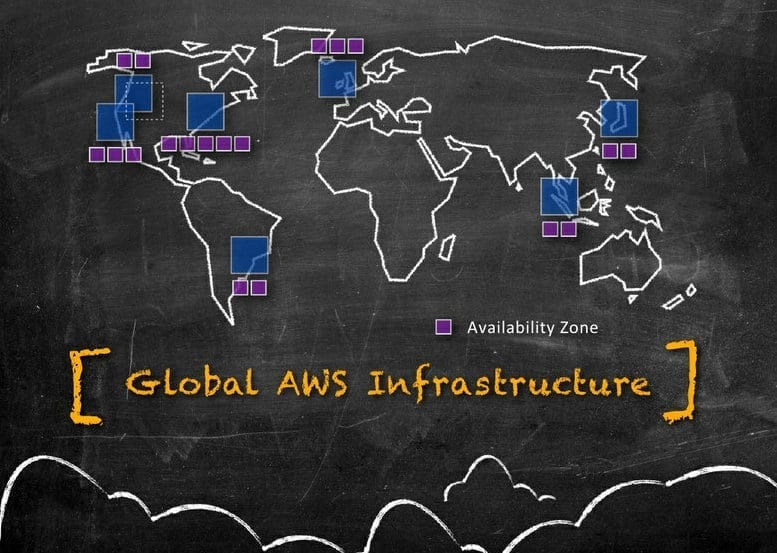
    AWS has launched two data centers in Mumbai, taking the total number of Availability Zones to 35 across 13 technology infrastructure regions globally. With these data centers, Mumbai becomes AWS’ sixth region in Asia Pacific.

    The new AWS Mumbai Region consists of two separate Availability Zones at launch. Availability Zones refer to data centers in separate, distinct locations within a single region that are engineered to be operationally independent of other Availability Zones, with independent power, cooling, and physical security.

    AWS customers focused on high availability can architect their applications to run in multiple Availability Zones to achieve even higher fault-tolerance.

    According to Andy Jassy, CEO of AWS CEO Andy Jassy said more than 75,000 customers in India are using other AWS Regions.

    “These same 75,000 Indian customers, along with others interested in starting use of AWS, have asked for an AWS India Region so they can move their applications that require low latency and data sovereignty,” he said.

    “We’re excited to make this available today, with the same pay-as-you-go pricing, ability to get started immediately without having to negotiate enterprise agreements or wait days for access, and unmatched functionality that customers enjoy in AWS Regions worldwide.”

    AWS is also partnering with India’s National Institute of Electronics and Information Technology to train 25,000 people on cloud technologies.
  • Vocus Acquires Netgen

    Vocus Acquires Netgen

    A substantial chunk of fiber is changing hands down under. Vocus Communications has announced plans to acquire Netgen Networks in a deal worth about $500 million.

    Nextgen had built a 17,000km fiber backbone across Australia with fiber into 1,100 buildings including 70 data centers.

    They were also a 50% owner with Vocus on the ACS project building a subsea cable between Perth, Singapore, and Indonesia, which Vocus will take 100% possession of. And they were building the North West Cable system between Darwin and Port Hedland to the oil, gas, and mining industries as well, which will also be bought by Vocus.

    The deal, which follows their recent purchase of M2, will see Vocus add substantial infrastructure muscle in an effort to better compete with Telstra, Optus, and TPG.

    Vocus already has some 700km of fiber hooking up 1,300 buildings in Australia, as well as a more extensive 4,200km of fiber over in New Zealand.

  • Australian NBN launches first HFC services

    Australian NBN launches first HFC services

    Australia’s nbn has announced the launch of the National Broadband Network’s first HFC services under the multi-technology mix model.

    The company in charge of overseeing the rollout and wholesale operation of the national network revealed that around 18,800 premises in Redcliffe in Queensland are now ready for service.

    Service providers in the area will be given access to peak wholesale speeds of up to 100Mbps uplink and 40Mbps downlink.

    The current NBN rollout plan calls for 875,000 HFC premises to be ready for service nationwide by June 2017, with 200,000 of these end-user premises activated on the network.

    The NBN was originally intended to use FTTP for more than 90% of Australia’s population, but on taking power three years ago the current government abandoned this model  in favor of a rollout using a mix of using a mix of FTTH, HFC and FTTN.

    At the time it was claimed this would allow the rollout to be completed faster and more cheaply than using FTTH, but the projected cost and timeframe of the multi-technology rollout has ballooned to be potentially nearly as expensive as the initial rollout plan.

    The in-opposition Labor party has pledged to use FTTP for an additional 2 million premises if it wins power. An election was held over the weekend and while it’s a close race and the votes are still being counted, experts expect the current government to win by a slim margin and form a minority government.

  • Vocus to buy Australia’s Nextgen Networks

    Vocus to buy Australia’s Nextgen Networks

    A substantial chunk of fiber is changing hands down under. Vocus Communications has announced plans to acquire Netgen Networks in a deal worth about $500 million.

    Nextgen had built a 17,000km fiber backbone across Australia with fiber into 1,100 buildings including 70 data centers.

    They were also a 50% owner with Vocus on the ACS project building a subsea cable between Perth, Singapore, and Indonesia, which Vocus will take 100% possession of. And they were building the North West Cable system between Darwin and Port Hedland to the oil, gas, and mining industries as well, which will also be bought by Vocus.

    The deal, which follows their recent purchase of M2, will see Vocus add substantial infrastructure muscle in an effort to better compete with Telstra, Optus, and TPG.

    Vocus already has some 700km of fiber hooking up 1,300 buildings in Australia, as well as a more extensive 4,200km of fiber over in New Zealand.

  • Hong Kong’s mobile penetration grows to 95%

    Hong Kong’s mobile penetration grows to 95%

    Hong Kong’s mobile subscriber base has reached saturation point, with a population penetration of 95%, according to mobile industry body the GSM Association (GSMA).

    The company’s new report into APAC’s mobile economy, published at Mobile World Congress Shanghai this week, shows that there are around 6.9 million mobile subscribers in Hong Kong.

    While the penetration rate has grown from 90% as calculated in last year’s study, the report notes that there is little room for growth.

    But in terms of the percentage of subscribers to 4G services it is another story, with only around 40% of Hong Kong subscribers having made the switch to the faster technology as of 2015. The GSMA expects this to increase to 71% by 2020.

    The report finds that as of 2015 62% of the APAC population was subscribed to a mobile service. The GSMA predicts that the region will add another 600 million new subscribers by 2020, increasing the penetration rate to nearly 75%.

    Mobile accounted for an estimated 5.4% of APAC’s GDP last year, equivalent to $1.3 trillion in economic value.

    “More than half the world’s mobile subscribers are based in Asia Pacific and the region will be the main engine of global subscriber growth for the remainder of the decade,” said Mats Granryd, GSMA Director General.

    “Rising subscriber penetration, alongside accelerating migration to faster networks and more advanced services, continues to fuel innovation and digitisation across both advanced and emerging markets in this highly diverse region. Mobile is helping Asia build digital societies that allow its citizens to access services, anytime and anywhere – and these mobile-powered digital societies are becoming major drivers of social and economic development.”

  • Globe picks NetApp SolidFire for cloud storage

    Globe picks NetApp SolidFire for cloud storage

    The Philippines’ Globe Telecom, via its Globe Business group, has deployed NetApp SolidFire’s all-flash scale-out storage platform to support its virtual private cloud and dedicated private cloud services.

    Globe Business provides a suite of products and services for mobile, fixed, broadband, data connections, internet and managed services.

    In order to accelerate its cloud offerings and give it a better competitive edge, Globe Business turned to NetApp SolidFire to modernize its data center infrastructure.

    With NetApp SolidFire’s scale-out design, customers can scale and control performance and capacity independently, without downtime or disruption. Data can be protected using NetApp SolidFire’s always-on data-at-rest encryption and real-time replication.

    “With its flexibility and cost efficiency, more and more companies in the Philippines are taking advantage of cloud computing,” said Mike Frausing, Globe senior advisor for enterprise and IT enabled services group. “As they demand higher performance versus just capacity, we realized that adding more disks to the rack was too expensive and inefficient.”

    Frausing said that with NetApp SolidFire, Globe customers have confidence that their needs for guaranteed levels of performance can be met. “We can offer reliable cloud services at a better price, providing a competitive — and a domestic — alternative to foreign cloud providers.”

  • Telstra sells most of its stake in China’s Autohome

    Telstra sells most of its stake in China’s Autohome

    Australian operator Telstra has sold the most of its majority stake in Chinese online car sales business Autohome to Ping An Insurance Group for $1.6 billion.

    Andrew Penn, Telstra CEO, said proceeds from the sale of a 47.4% stake in Autohome will be used to fund a capital management program that will start in the first half of the 2017 financial year.

    After the sale is completed, Telstra will retain a 6.5% interest in the company and will have one nominee director on the board.

    “Ping An will be an important strategic partner for Autohome. Its nationwide footprint in China and experience and expertise in auto financing, insurance and e-commerce mean Ping An is well placed to help Autohome develop outside of its traditional focus on online advertising,” Penn said in a statement.

    Autohome is an online destination for automobile consumers in China. It has a comprehensive automobile library and automobile listing information, as well as an advertising platform for automakers and dealers.

    In the first quarter 2016, the company reported a significant expansion of its transaction platform with a total of 4,957 new vehicles sold through its B2C transaction platform.

    Average daily unique visitors who accessed its mobile websites and mobile applications has also grown to 8.8 million and 7.2 million, respectively.

    Leng Peidong, President of Ping An Trust, said that with Ping An’s nearly 300 million online users, 150 million financial customers, longstanding relationships with car manufacturers and distributors, and a nationwide offline service network, it will be in a better position to transform Autohome into a full auto transaction service platform.

  • DoCoMo to provide 375Mbps LTE-A at Mt Fuji summit

    DoCoMo to provide 375Mbps LTE-A at Mt Fuji summit

    Japan’s NTT DoCoMo has announced plans to deploy LTE-Advanced at the summit of Mount Fuji, Japan’s highest and most famous mountain.

    The company will provide mobile services with maximum downlink speeds of 375Mbps as well as 3G service during the climbing season from July 10.

    The company will also offer a maximum downlink of 337.5Mbps on the four most heavily used routes on the 3,776 meter summit, the Subashiri, Gotemba, Fujinomiya and Yoshida trails.

    DoCoMo will also deploy Wi-Fi hotspots at some cabins on the slopes, and make shared tablets available in some cabins that support video streaming, translation app Hanashite Hon’yaku and other value-added mobile services.

    “Going forward, DoCoMo will continue to ensure that Mount Fuji climbers enjoy high-quality mobile services as part of its initiative to enhance the quality of mobile communications in expanded coverage areas around Japan,” the operator said in a statement.

    Mount Fuji is the 35th most prominent – or highest – mountain in the world and a UNESCO World Cultural Heritage Site.

  • Thailand legislature passes new frequency act

    Thailand legislature passes new frequency act

    Many NLA members also clashed on the composition of the NBTC board which will now be a unified board with 7 members instead of 11 with a telecoms and broadcasting sub-board. Many of the legislators feared that the changes in the criteria such as age and experience would lead to a board filled with career bureaucrats.

    The selection process will see a 7-member committee (consisting of the chair of the country’s three courts, chair of the national anti-corruption commission, auditor-general, comptroller-general and governor of the bank of Thailand) to select 14 candidates to be sent to the upper house to vote on.

    Earlier there was widespread concern over article 13 that would force the NBTC to comply with the Digital Economy Commission policy and article 19 that gave the DE Commission final say as to whether the NBTC had complied with their plans or not.

    The new article 15 also allows for shared use of spectrum while articles 24 and 25 forces the NBTC to consider the greater good rather than just money when holding a spectrum auction.

  • Airtel adopts BI platform from Cloudera

    Airtel adopts BI platform from Cloudera

    India’s Bharti Airtel has adopted Cloudera Enterprise as part of efforts to build a 360-degree view of its customers in India.

    The deployment aims to help the operator better leverage customer data to execute successful omni-channel campaigns and influence buyers in India’s highly competitive market.

    Airtel’s product offerings in India include wireless and fixed services, mobile commerce, high speed DSL broadband, IPTV, DTH, and national and international long distance services to carriers.

    With over 265 million customers across its India operations, Airtel needs to make sense of and leverage the huge volumes of customer and network data it collects on a daily basis from its multiple channels, which was previously stored in multiple traditional systems built over a period of time.

    With Cloudera Enterprise now at the core of Airtel’s information architecture, the massive volumes of data are in a centralized location, and available to all business users and groups.

    “As part of our digital journey at Airtel, our main focus is on providing the best customer experience with our new business intelligence (BI) and analytics platform, powered by Cloudera,” Airtel group CEIO Harmeen Mehta said.

    “Now, we are able to gain an even greater technical edge, empowering our marketers with intelligent data and analytics to make better decisions and improve the entire customer lifecycle with customized offerings.”

  • Trend Micro teams with NXP for virtualized CPE

    Trend Micro teams with NXP for virtualized CPE

    Trend Micro Incorporated has announced an agreement with NXP Semiconductorsto join forces for a virtualized Customer Premises Equipment (vCPE) project on NXP’s ARM-based NFV platform.

    “With the introduction of NFV, security is no longer limited to on-premise networks, bringing new opportunities to telecom carriers and providers for service delivery,” said Dr. Terence Liu, vice president, Network Threat Defense Technology Group, Trend Micro.

    “For more than 27 years, we have been committed to protecting our customers, and as technology evolves, we continuously innovate and develop solutions for next-generation networks such as NFV.”

    Trend Micro’s DPI technology provides network security and management functions, such as virtual patching, parental control and quality of services (QoS), and has been widely adopted in a variety of products, from home routers to enterprise-facing Intrusion Prevention System (IPS) and Next-Generation Firewall (NGFW).

    This vCPE integration is optimized for NXP’s QorIQ LS2085A processor in order to provide better performance for carrier-grade NFV environment.

    “NFV requires a scalable, open platform to deliver security throughout the network,” said Noy Kucuk, Vice President of Product Management for NXP’s Digital Networking business.

    “Integrating security acceleration and standard ARM CPUs, NXP’s QorIQ LS series of ARM-based processors lay the ideal foundation for NFV infrastructure. We’re pleased to collaborate with Trend Micro as service providers prepare large-scale vCPE deployments later this year.”

  • Indian telco sector to be worth over $100b by 2020

    Indian telco sector to be worth over $100b by 2020

    The Indian telecoms services market is on track to pass the $100 billion mark by 2020, maintaining its status as one of the fastest growing markets in the world, a new report predicts.

    Market Research Store forecasts that the market will grow at a CAGR of 10.3% for the period between 2015 and 2020 to reach $103.9 billion.

    Wireless services will grow at a 9.3% CAGR over the same period to reach $39.02 billion, with 4G services achieving a CAGR of a strong 26.6%.

    According to the report, increasing network coverage and shrinking tariff rates due to heavy competition have served as the main drivers of the market in recent years. Due to these factors the market has grown exponentially to emerge as the second largest market in the world.

    Bharti Airtel leads the Indian wireless market, followed by Vodafone, Idea Cellular and Reliance Communications. Reliance Jio Infocomm is meanwhile expected to have a disruptive impact on the market when it fully launches pan-India 4G services.

    The banking, financial services and IT enabled service industries are helping to drive demand for telecoms services as they seek to engage more with customers through mobile applications, the report states. Oil and gas is meanwhile emerging as another key industry segment.

  • MemSQL brings enterprise security to real-time Analytics

    MemSQL brings enterprise security to real-time Analytics

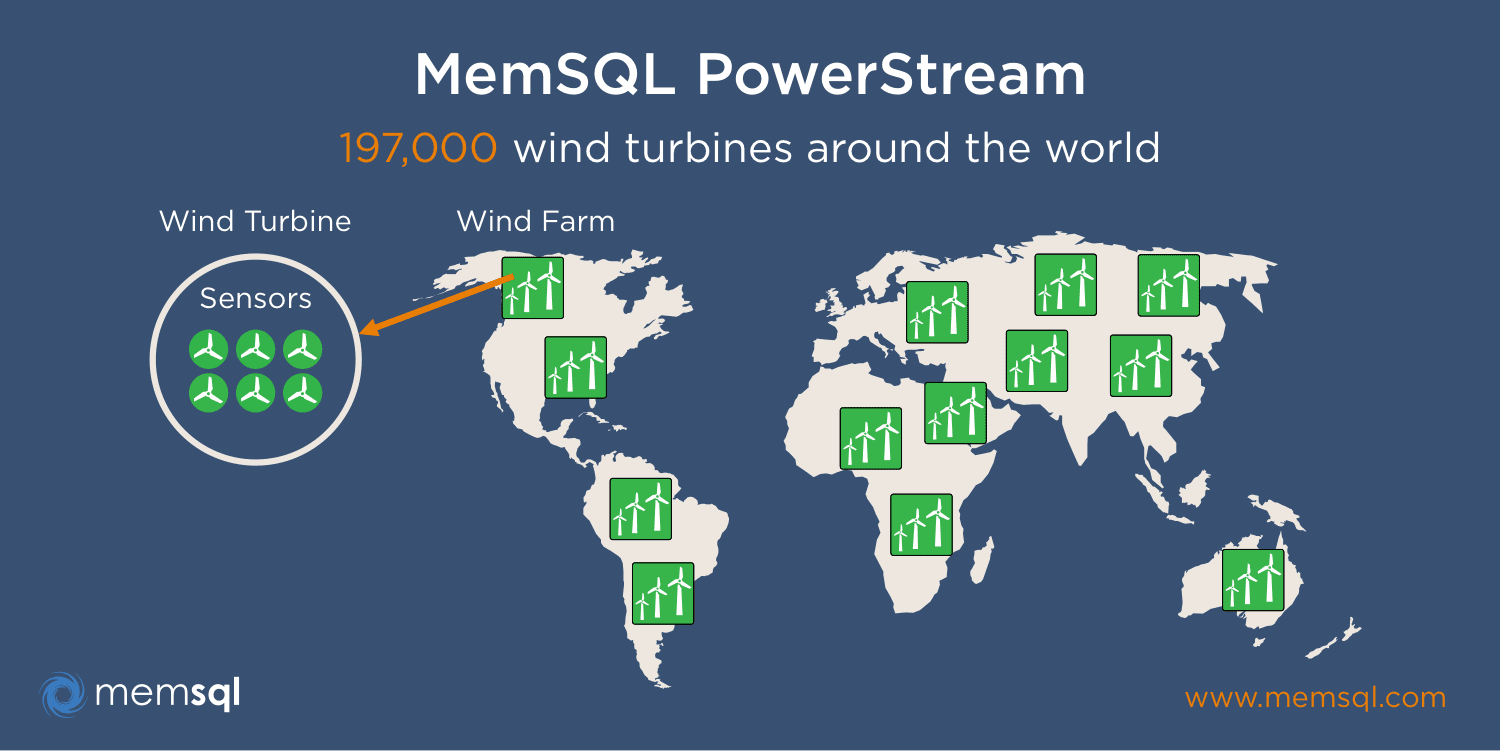
    MemSQL has introduced new enterprise security capabilities to further the adoption of solutions requiring both speed and advanced security.

    With this additional functionality, enterprises can streamline the security and administration of MemSQL, resulting in wider adoption and maximum protection in performance environments.

    Specifically, MemSQL is introducing Role-Based Access Control (RBAC) for its distributed database platform. RBAC provides enterprises a flexible way to set security measures by user role and group—all while maintaining maximum performance.

    “More companies across more industries now view real-time workflows as a critical technology enabler,” said Nikita Shamgunov, CTO and co-founder, MemSQL. “In many cases, security cannot be compromised just to keep up with the data. With the addition of RBAC, MemSQL customers can scale the number of users and roles to tens of thousands without compromising performance—absolutely critical in today’s real-time world.”

    MemSQL customers can now use simple and robust security configurations to create a role with specific capabilities, which then can be associated with a user and specified access. The RBAC feature was extensively run with a rigorous set of functional and performance tests, including inside a FIPS 140-2 environment.

    Shamgunov said real-time is the new standard for processing and analyzing data. Historically, companies with stringent security requirements have been kept at arm’s length from achieving real-time results.

    By including RBAC in its latest release, MemSQL furthers adoption of real-time data in environments requiring comprehensive security. This includes global industries such as healthcare, IoT, and government.

  • Cisco dives deeper into data center visibility

    Cisco dives deeper into data center visibility

    Cisco has announced Cisco Tetration Analytics, a platform designed to help customers gain complete visibility across everything — packet, flow, speed — in the data center in real time.

    Cisco Tetration Analytics gathers telemetry from hardware and software sensors, and then analyzes the information using advanced machine learning techniques.

    Tetration addresses critical data center operations such as policy compliance, application forensics, and the move to a whitelist security model. Through continuous monitoring, analysis, and reporting, the Tetration Analytics platform provides IT managers with a deep understanding of the data center that will simplify operational reliability, zero-trust operations and application migrations to SDN solutions and the cloud.

    With Cisco Tetration Analytics, organizations can understand what applications are dependent on each other throughout their data center and into the cloud, and move from reactive to proactive — make informed operational decisions and validate the effect of policy changes before they are implemented.

    Firms can also search across billions of flows in less than a second using Tetration’s forensics search engine and user interface, and continuously monitor application behavior to quickly identify any deviation in communication patterns.

    “Gaining much deeper visibility into the data center and automating actionable analysis across a company’s infrastructure marks a critical technology advancement in building secure digital business models like cloud, mobile and IoT,” said David Goeckeler, SVP and general manager of Cisco’s Networking and Security Business Group.

    “We believe the insights we gain from applications and the data center overall will enhance existing software solutions and drive the future development of new advanced software that will improve business operations, efficiency and customer experiences,” said Goeckeler.

  • Tata Teleservices may sell spectrum to pay DoCoMo

    Tata Teleservices may sell spectrum to pay DoCoMo

    India’s Tata Teleservices is reportedly considering pursuing a sale of part of its spectrum holdings to help raise funds for the compelled buyout of NTT DoCoMo’s stake in the operator.

    The company is looking into selling some of its 800-MHz and 1,800-MHz spectrum, and is sending feelers to rival operators that may be interested in the sale.

    Operators including Vodafone and Telenor had previously expressed an interest in acquiring part of Tata Teleservices’ spectrum, but the discussions at the time stalled due to a lack of clarity around spectrum trading regulations.

    But the operator’s efforts to sell its spectrum may well be complicated by the fact that most of its 1,800-MHz spectrum had been allocated under the earlier regulatory regime and is not eligible for trading.

    Indian spectrum trading rules also require operators to pay a substantial fee to liberalize the spectrum to be sold, which would reduce the potential proceeds.

    Tata Teleservices needs to raise money to fulfil its obligation to buy out NTT DoCoMo’s minority stake for $1.17 billion.

    DoCoMo announced in 2014 that it plans to exercise its option to compel Tata Group’s majority shareholders Tata Sons to buy out this stake for at least 50% of the acquired price, but the transaction has not yet taken place.