Category: Telecom

Retail News Asia is committed to providing both local and global retailers with the latest Telecom & Telco news throughout the Asian market. This on a daily base.

  • Indosat Ooredoo, Fortumo bring direct carrier billing to Indonesia

    Indosat Ooredoo, Fortumo bring direct carrier billing to Indonesia

    Indosat Ooredoo has partnered with mobile payments platform provider Fortumo to launch direct carrier billing in Indonesia.

    The partnership is expected to enable the Indonesian mobile operator’s 69.8 million subscribers make online payments by charging purchases to their mobile account, without the need to use a credit card.

    “This strategic collaboration with Fortumo will bring more benefits to Indosat Ooredoo customers and allow transactions at a wider network of merchants,” said Prashant Gokarn, chief of new business and innovation at Indosat Ooredoo. “We look forward to continuing to provide innovation that brings more value to our customers as part of our goal to become a leading digital telco.”

    Fortumo’s direct carrier billing platform is used by leading app stores (Google Play, Windows Phone Store), digital media companies (Sony, HOOQ, Gaana) and gaming companies (EA Mobile, Gameloft, Kinguin, Rovio).

    To enable global carrier billing for these merchants, Fortumo has partnered with more than 350 mobile operators across the world.

    “Connecting with Fortumo gives mobile operators immediate access to additional revenue from all the segments of the digital industry,” said Siddharth Sahi, VP of business development and carrier relations at Fortumo.

    The two companies cite data which show that there are over 65 million smartphone owners in Indonesia, but less than 5 million people have access to credit cards.

    They said this meant that a majority of the digital population cannot make online payments. As a consequence, digital merchants lose out on revenue from a majority of the population. Carrier billing resolves this problem by allowing any mobile phone owner (both prepaid and postpaid) to make payments through Fortumo.

  • India’s spectrum mega-auction set for Sept 29

    India’s spectrum mega-auction set for Sept 29

    India’s Department of Telecom has set the date for India’s largest spectrum auction to date, announcing that bidding will commence on September 29.

    The massive auction will be preceded by a pre-bid auction on Saturday. The government has also pledged to make the spectrum available to the winners within 30 days of receiving an upfront payment.

    In total more than 2,300 MHz of spectrum divided into 126 blocks will be auctioned next month. Analysts expect bidding to reach as high as $14.8 billion, while the government believes bidding could reach up to $83 billion.

    But operators have been less than enthusiastic, with Airtel’s CEO recently announcing that the company sees no “great need” for more spectrum, and Telenor revealing that its Indian subsidiary will sit out of the auction.

    Specturum in the 700-MHz, 800-MHz, 900-MHz, 1800-MHz, 2100-MHz and 2300-MHz bands will be put on the block.

    Winners of spectrum in the three lower bands will be required to pay at least 25% of their total bid within 10 days of the auction concluding, while the other bands will require a 50% down-payment.

  • AsiaSat, Digital Magic to create UHD content

    AsiaSat, Digital Magic to create UHD content

    Asia Satellite Telecommunications (AsiaSat) is collaborating with Digital Magic, a provider of advanced imaging solutions to co-produce UltraHD (UHD) content for AsiaSat’s UHD channel 4K-SAT, on AsiaSat 4.

    The co-production includes a knowledge-based UHD mini-series on satellite communications to provide an easy-to-understand introduction to topics such as how a satellite works, how it serves people and how it is used in broadcasting high quality content.

    “Compelling content is the key to drive UHD viewership. Creating original content is the first step of our collaboration with Digital Magic,” said Sabrina Cubbon, VP of marketing and global accounts of AsiaSat.

    “Digital Magic is an industry renowned content producer in UHD and VR. We look forward to developing more together for our audience in Asia,” said Cubbon.

    Percy Fung, production director of Digital Magic said initial content viewing among youth has suggested that this is a meaningful attempt to broaden public interest and knowledge in space and communications.

    “We are delighted to partner with AsiaSat, Asia’s UHD satellite broadcasting pioneer to create original, insightful content to educate and inform our viewers in the region,” said Fung.

    AsiaSat’s 4K-SAT channel is currently broadcasting a variety of full UHD content. Major TV operators in the Asia-Pacific have access to it via AsiaSat 4.

  • Singtel Group cues video tilt for regions

    Singtel Group cues video tilt for regions

    Singtel Group has launched “The 5-Min Video Challenge” a joint initiative by associates within the group, comprising Singtel, Optus, AIS, Airtel, Globe and Telkomsel.

    Winning content will be distributed and made accessible to over 600 million customers across the group.

    The short five-minute format is ideal for audiences accustomed to viewing content on mobile devices.

    “A pan-regional competition makes a lot of sense as the power of content is its ability to transcend geographical and language barriers,” said Mark Chong, CEO, International, at Singtel. “Our customers will be able to enjoy access to a rich variety of original content created by the most talented content-makers from the region.”

    The competition will be conducted at two levels – local and regional. Each associate will first invite aspiring or experienced local filmmakers to submit five-minute entries based on the theme “Connecting Lives”.

    The entries will be judged on criteria such as originality of content, storytelling and cinematography. Winning entries from the respective associates’ markets will then be judged at a regional level.

    The grand winner and runner-up will be announced at the grand finals, which will be held in Bangkok, on November 21. Cash prizes of $30,000 and $15,000 will be awarded to the grand winner and runner-up respectively.

    The regional winners will also get the opportunity to promote their videos on each associate’s mobile and video platforms to customers in the group’s markets across Asia, Africa and Australia.

  • MobiFone builds 300Gbps packet-optical backbone

    MobiFone builds 300Gbps packet-optical backbone

    MobiFone is leveraging Ciena technology to build the Vietnamese operator’s first high-capacity converged packet-optical  network.

    Currently provisioned with 300Gbps, the network spans more than 1,400 kilometers across the country from Hanoi to Ho Chi Minh City.

    This will help MobiFone provide high-speed mobile broadband services to businesses and consumers in more than 25 local provinces.

    With the network, MobiFone will be able to easily scale and automatically adapt network capabilities.

    Additionally, the network will use Ciena’s intelligent control plane technology to ensure survivability even in the case of multiple fiber cuts.

    ELCOM, a Ciena BizConnect channel partner, provided deployment services for this project.

    “Ciena’s cutting-edge optical platforms enable us to have a state-of-art backbone system. Demand for high-speed fixed and mobile data services, video content and the move to the cloud mean that network services in Vietnam have never been more important,” said Le Nam Tra, chairman of MobiFone.

    “With Ciena supporting the next evolution of the MobiFone backbone we can provide the scale and reach our consumer and business customers need for regional and international connectivity,” said the chairman.

  • NZ’s UFB network now reaches over 1m premises

    NZ’s UFB network now reaches over 1m premises

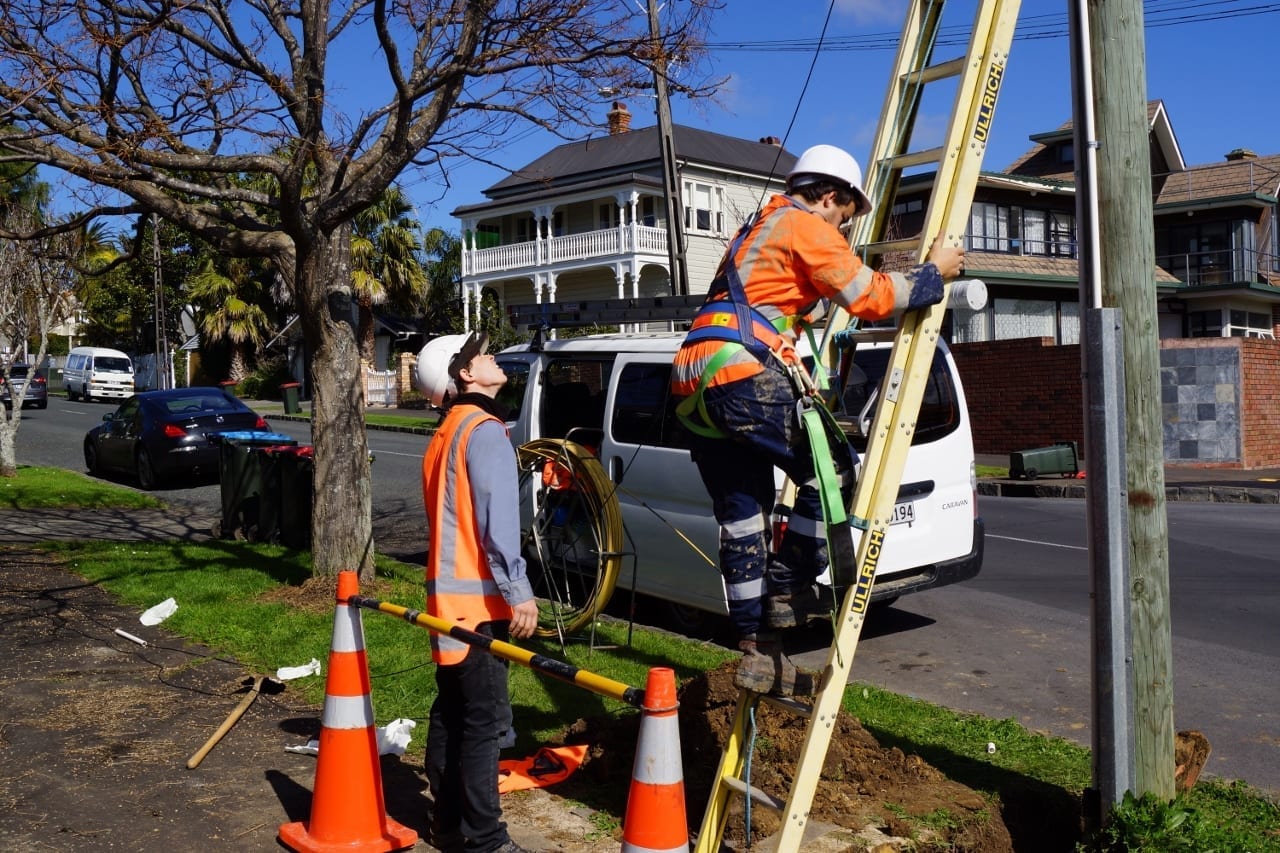
    More than one million premises in New Zealand, including households, businesses, schools, and hospitals, are now connected to the government’s Ultrafast Broadband (UFB) network.

    “This means 2.4 million New Zealanders are now able to connect to UFB, which is an outstanding achievement this far into the build,” said Communications Minister Amy Adams as she released the latest quarterly report on the UFB and the Rural Broadband Initiative (RBI) programs.

    The report noted that in the last quarter, approximately 240,000 users were connected to UFB, up 22.4% on last quarter. The uptake nationwide is at 23.9%, which covers 19 of 33 towns and cities.

    “There are now more than 830 new households and businesses connected to fiber every working day – more than one every minute – as New Zealanders realize the benefits of the government’s investment in high-speed broadband,” Adams said.

    “Internet connectivity has become an essential part of the day to day life, and access to faster broadband opens up opportunities across business, health, education and within the local community,” she added.

    The first phase of the UFB program aims to connect 75% of New Zealanders with fiber to the premise by end 2019. The network is capable of peak speeds of at least 100Mbps.

    Meanwhile, the government’s Rural Broadband Initiative (RBI) has also been completed and now benefiting 300,000 homes and businesses.

    The government has invested $300 million investment into the program to improve rural access to broadband connections.

    Adams said prior to the RBI build, only 20% of rural lines were capable of speeds around 5Mbps. With the completion of the first phase of the project, this has been increased to 90% of rural New Zealand households and businesses, with speeds well in excess of the 5Mbps threshold.

    The minister also reported that all New Zealand state and state-integrated schools are now able to connect under RBI or UFB, or the Remote Schools Broadband Initiative. Around 39 rural hospitals and integrated family, centers are able to access peak speeds of 100 Mbps under the RBI.

  • Globe to provide free Wi-Fi in LRT1 stations

    Globe to provide free Wi-Fi in LRT1 stations

    The Philippines’ Globe Telecom has agreed to provide free Wi-Fi services in all 20 stations of metro Manila’s Light Rail Transit System-Line 1 (LRT1).

    The company has agreed to provide Wi-Fi services to the roughly 400,000 daily LRT-1 passengers as well as Light Rail Manila Corp (LRMC) employees.

    Globe will also provide a fiber network extending the length of the system, covering all LRT-1 stations and LRMC’s depot in Pasay City, and deploy cell sites in each station to improve wireless connectivity.

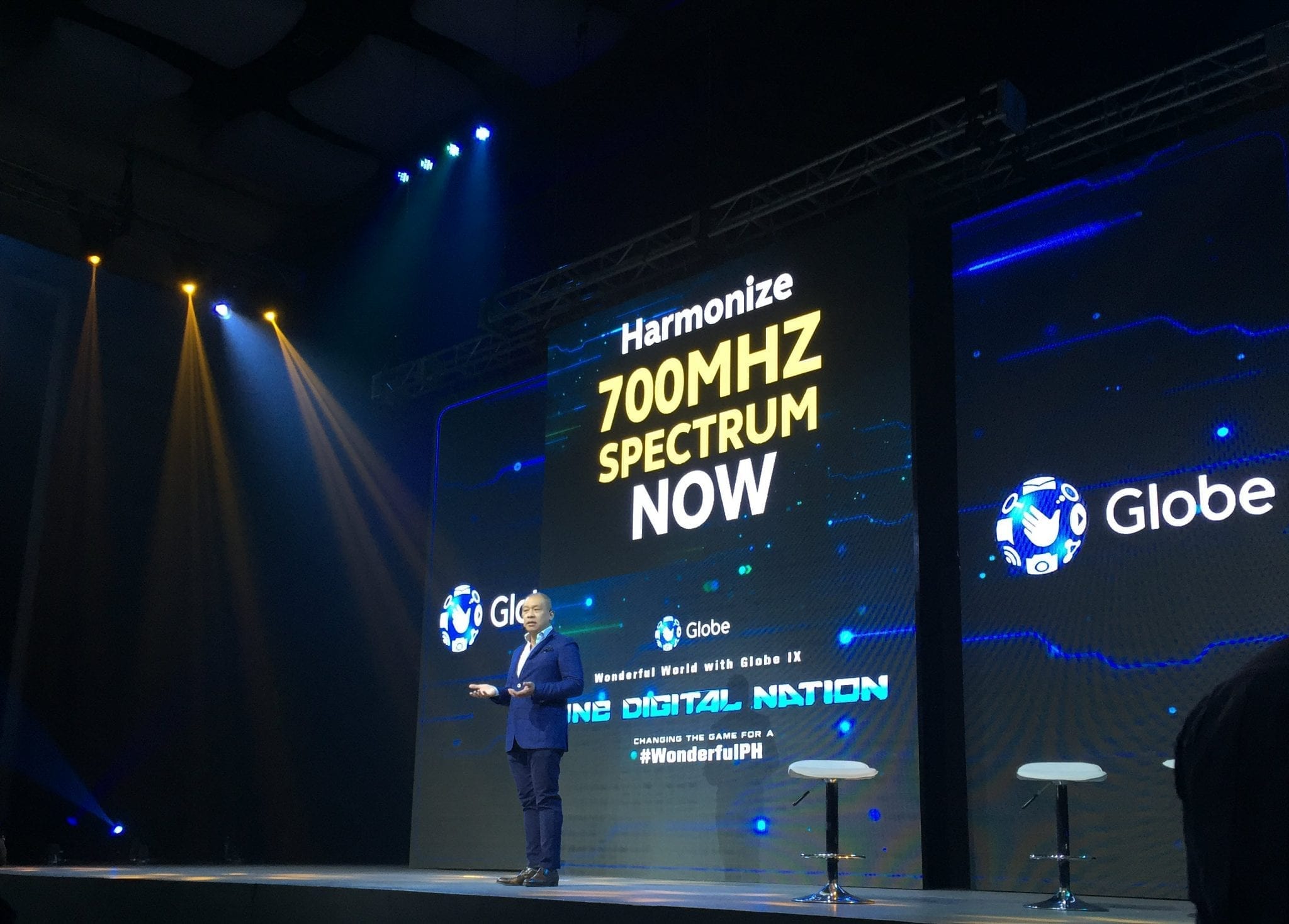
    Globe Network Technical Group’s SVP for program governance Joel Agustin said the company will use its newly-acquired spectrum in the 700-MHz, 1800-MHz and 2600-MHz bands to provide the capacity required to handle the massive mobile traffic volumes at the stations.

    “As the purveyor of the Filipino digital lifestyle, we, at Globe recognize customer demand for constant connectivity even as they are on the go,” he said. “We are confident that the deployment of free Wi-Fi services in all LRT stations will bring better communication or even improve work productivity for our customers.”

    The operator separately announced that data traffic through the Globe Telecom network grew 35% year-on-year in the first half of 2016 to 151 petabtyes.

    Mobile data revenues surged 46% over the same period to 17.8 billion pesos ($3.66 billion), the operator revealed in its recent results. This comprised 39% of total mobile revenues, up from 27% in 1H15.

  • Idea Q1 profit slumps 36.1%

    Idea Q1 profit slumps 36.1%

    India’s Idea Cellular has reported a steep 36.1% decline in net profit for its fiscal first quarter to 4.97 billion rupees ($74.4 million), as spectrum and investment costs weighed down the operator’s bottom line.

    But Idea, the nation’s third largest mobile operator, also revealed that its efforts to cut down on promotional offers helped revenue grow 7.9% to 94.86 billion rupees.

    The operator lost around 700,000 mobile subscribers during the quarter, taking its total to 183.2 million, and voice MOUs declined by 1.1% sequentially to 199.3 billion.

    By contrast, due to its high investments in the mobile data segment, Idea reported its highest ever net mobile data user additions of 5 million.

    The operator also recorded mobile data volume growth of 13.2% to 93.1 petabytes, while mobile data revenue grew by 4.1% to contribute 20.6% of total service revenue.

    Over the period, the company added 5,296 4G sites, taking its total to nearly 20,000. The operator’s 4G network now covers a total population of over 150 million across nearly 2,000 towns and villages. The company ended June with over 1.8 million active 4G subscribers.

    Overall 2G, 3G and 4G mobile data penetration has reached 49 million, and Idea reported a blended mobile data ARPU for the quarter of 142 rupees.

    Idea’s capex for the quarter meanwhile reached 10.8 billion rupees, in line with the operator’s projected capex budget for the full financial year of between 65 billion and 70 billion rupees.

  • China Telecom to turn Shenzhen into a Gigaband City

    China Telecom to turn Shenzhen into a Gigaband City

    China Telecom Shenzhen and Huawei have signed an agreement to deliver gigabit broadband connectivity to 900,000 homes in Shenzhen.

    The companies have entered a five-year deal that aims to transform Shenzhen into a “Gigaband City”, using next-generation optical line terminals and PONs to deliver 100% Gigabit coverage for communities in the city.

    Services will be available for residential users, governments and enterprises, and will be capable of enabling advanced services including 4K video and VR film streaming, Gigaband hotels and passive optical LANs.

    Based on the experience with the rollout, China Telecom and Huawei plan to jointly define the standards for a gigaband city, paving the way for future deployments.

    “China Telecom (Shenzhen) is dedicated to accelerating Shenzhen’s broadband network capabilities and together with Huawei we aim to rapidly transform into an ultrafast landscape,” the China Telecom subsidiary’s general manager commented.

    “This will enable Shenzhen to keep pace with consumer demand for new internet applications such as ultra-broadband (UBB) video, VR and AR, Gigaband campus, and smart homes. We believe a Gigaband city will also foster digital economy innovation in Shenzhen and establish Shenzhen as an oasis for inventors.”

    Announcing the agreement, the companies said this will mark the first time 1,000Mbps all-optical networks will be deployed on such a large scale.

  • Indosat Ooredoo launches m-payment for retailers

    Indosat Ooredoo launches m-payment for retailers

    Indonesia’s Indosat Ooredoo has launched a new mobile payment service for retailers, in collaboration with GoSwift International and banking chain BNI.

    The new D-Pay service will allow merchants to use their exsting mobile devices as multifunctional payment platforms, accepting payments based on Visa, MasterCard or JCB credit and debit cards, as well as eWallet services.

    D-Pay services for retailers come bundled with data, voice and SMS allocations from the operator.

    “D-Pay is the latest product from our Mobile Financial Business,” Indosat Ooredoo chief of new business and innovation officer Prashat Gokarn said.

    “In addition to our current products – electronic wallet, bill payments, eCommerce payments, domestic and international money transfer and branchless banking, D-Pay will help reduce cash collection and logistics costs for our eCommerce partners, which will in turn benefit customers with lower prices and assured deliveries.”

    He said the service is tailored for e-commerce companies, as well as SME retailers in need of alternative payment methods but unable to easily afford standard banking solutions, by allowing merchants who do not have access to traditional point of sale services to still accept card payments.

  • Globe, PLDT cleared to consolidate SMC case

    Globe, PLDT cleared to consolidate SMC case

    The Philippines’ Court of Appeals has approved an application from the nation’s two major operators to consolidate their legal challenge against the Philippine Competition Commission (PCC) over their acquisition of the telecoms assets of conglomerate San Miguel Corporation.

    Both Globe and PLDT have petitioned the court to compel the PCC declare the San Miguel transaction as “deemed approved.”

    The PCC is conducting a comprehensive review of the potential impact of the acquisition, which includes large allocations of spectrum, on competition and the public benefit.

    The regulatory body had been opposing efforts by the two operators to consolidate their petition into a single case.

    Globe general counsel Froilan Castelo said the court’s decision contradicts the PCC’s claim that the operators have been engaged in forum shopping.

    “Globe has followed the rules, and that motion to consolidate is just in accordance with Rule 31 of the Rules of Court,” he said.

    “This is only but fitting as all Globe’s actions on this matter are well within the bounds of the rules…  We are disappointed that it is the PCC itself that does not follow the rules – the rules of court when it opposes the consolidation of the cases; and their own rules.”

    Castelo also disputed the PCC’s claim that the operators have been uncooperative during the investigation process. He said Globe has cooperated fully with the government body, providing more information than required.

    “These submissions were done in good faith and went beyond what the PCC actually requires by their own rules.  In addition to these, Globe even sought a dialogue with the PCC to explain its position and answer any concern the PCC may have regarding the transaction,” he said.

  • Myanmar orders all SIMs registered by March

    Myanmar orders all SIMs registered by March

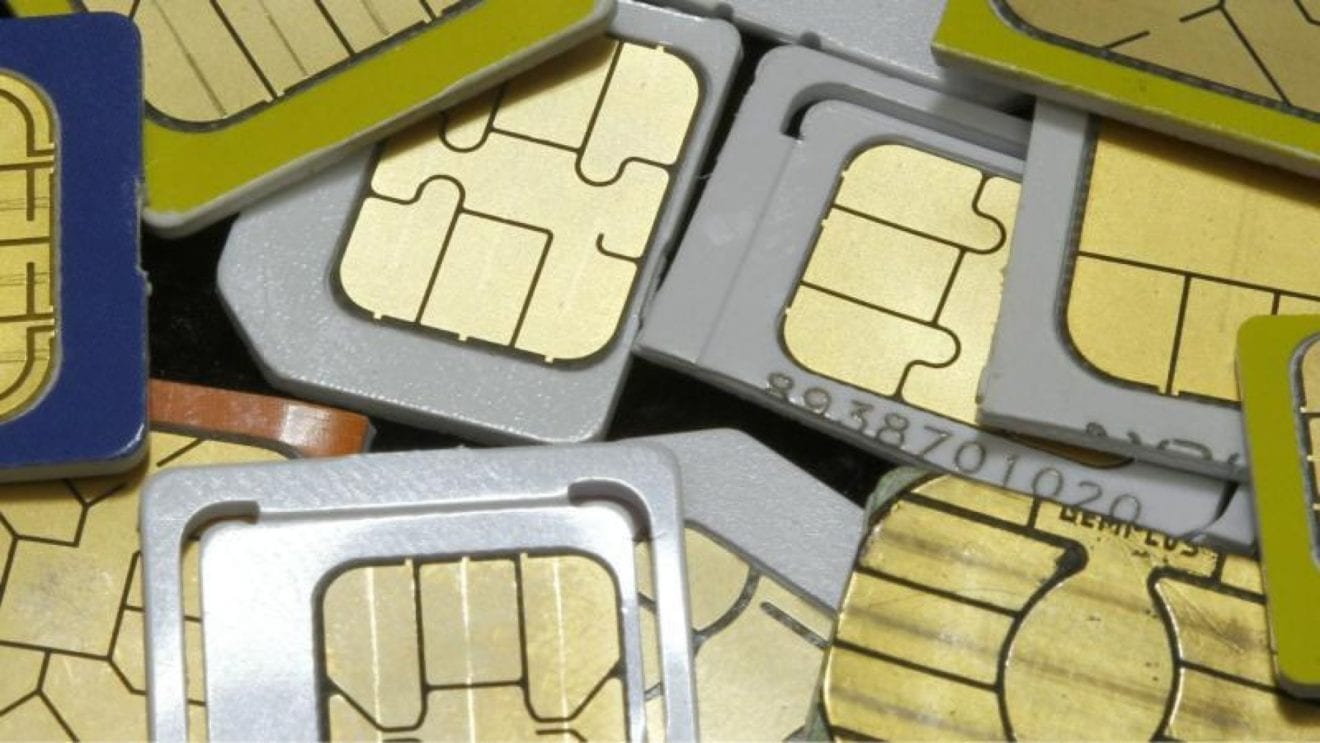
    Myanmar’s Directorate of Telecommunications has instructed the nation’s mobile operators to complete the registration of all SIMs by next March.

    The telecom regulator has revealed that any unregistered SIMs still operating by that time will be temporarily suspended.

    SIMs will need to be registered based on users’ national registration cards, student identity cards, drivers’ licenses or passports for foreign citizens, the report states, adding that the order is aimed at stimulating mobile banking and m-commerce in the nation.

    There are around 48 million SIM cards in Myanmar, a market where mobile penetration has increased by 35 percentage points over the past year to more than 89%.

    While there’s no data on how many of these are unregistered, the Directorate has stated that “many” SIM cards were sold to buyers who did not supply the required documents.

    With the order Myanmar is joining a growing number of APAC nations requiring SIM registration, including most recently Bangladesh.

    Thailand began cutting off unregistered SIMs last year, while Chinese regulators began ramping up efforts to crack down on unregistered SIMs.

  • PLDT opens Philippines’ biggest data center

    PLDT opens Philippines’ biggest data center

    Philippine service provider PLDT has opened the country’s biggest data center at major business district Makati City.

    The new facility has been built to serve a wide range of organizations, particularly those handling vital data such as banks, business process outsourcing (BPO) firms, IT and content providers and government institutions.

    Set up by PLDT subsidiary ePLDT, the newest VITRO Data Center sits on a nearly two-hectare property with 3,600-rack capacity. It is equipped with systems and facilities to guarantee continuous operations, ensuring that businesses can utilize robust and scalable digital infrastructure, as well as world-class 24/7 technical support capabilities.

    “PLDT is investing heavily in our VITRO data centers as we believe that these facilities are one of the basic building blocks of the country’s digital economy. This data center will be a vital resource for companies as they ramp up their own digital services,” said PLDT Chairman and CEO Manuel V. Pangilinan.

    The new earthquake-resistant, purpose-built data center in Makati is built on solid ground without seismic faults within its proximity. In addition, special architectural techniques and materials planning were implemented to provide the data center with fire-rated concrete walls and flood-protected design.

    As a result, VITRO Makati is rated to withstand earthquakes up to intensity eight in the Richter scale. The data center is also compliant with global design standards.

    “’PLDT recognizes how vital it is for enterprises to ensure stable operations despite changes in the external environment. The need for scalable and secure hosting facilities to house and manage critical platforms is also growing in importance as the enterprise becomes more data-driven as a result of continuous digital transformation initiatives,” said PLDT executive vice president and ePLDT president and CEO Eric R. Alberto.

    To address the growing concern over digital security, VITRO Makati offers one of the most secure and impenetrable structures in the Philippines with an eight-layer security design, guaranteeing that data and applications will always be protected.

    Each major component of the facility is configured with redundant counterparts in place that seamlessly operate to anticipate adverse events, including power generators and  Uninterrupted Power Supply (UPS) units, among others.

    As part of the VITRO network of data centers, VITRO Makati also serves as a carrier-neutral Internet Exchange facility that provides numerous IP peering services, enabling access to local and international content.

    VITRO Makati is also a Nexcenter-certified facility, allowing its clients to use globally standardized Nexcenter services of world leader NTT Com at some 140 locations in 84 cities of 19 countries, in addition to NTT Com’s Arcstar Universal One private-network service, which is already available in the Philippines and which is largely used by the country’s BPO industry.

    “As the world becomes even more digitally connected, Filipino enterprises must leverage on new technologies to ensure the security and resilience of their operations. PLDT’s digital platforms can enable enterprises to take advantage of disruptive technologies, secure their operations, and promote growth in their businesses,” said Alberto.

    The PLDT Group now operates seven data centers all over the country with a total rack capacity of nearly 7,000 to serve the needs of small, medium, and large enterprises across various industries, including banking, financial services, outsourcing, telecoms, and gaming.


  • Globe lifts 1H16 profit by 3%

    Globe lifts 1H16 profit by 3%

    The Philippines’ Globe Telecom has reported a 3% year-on-year increase in net profit and an 11% increase in revenue for the first of the year despite heightened competitive intensity.

    The operator recorded net income of nearly 9 billion pesos ($191.4 million), on the back of revenue of 53.8 billion pesos. Mobile revenue also grew 3% year-on-year to 45.7 billion pesos.

    Globe’s prepaid brands drove revenue growth for the quarter, with TM revenues up 5% and Globe Prepaid revenues growing 3%. Postpaid revenues grew a more modest 2%.

    Mobile data service revenues swelled 46% year-on-year to 12.2 billion pesos, offsetting an 11% decline in mobile voice revenue and a 16% slump in SMS revenues. Mobile data comprised 39% of total mobile revenues for the half-year period, up from 27% a year earlier.

    Home broadband revenues meanwhile grew 49% year-on-year to 7 billion pesos, while total subscribers increased 38% over the same period to 1.14 million.

    Corporate data revenues were up 55% to 5.9 billion pesos, driven by strong demand among Philippine enterprises for data connectivity and other telecoms services.

    “We are proud that the company’s overall results in the first half remained robust amidst the heightened competitive intensity and the unique challenges and opportunities posed by increasing levels of smartphone penetration and mobile postpaid ownership in the market,” Globe president and CEO Ernest Cu commented.

    “We believe that with the aid of the additional frequencies that we have recently acquired, Globe Telecom’s leadership as the preferred brand for Filipinos’ digital lifestyle choices will be strengthened moving forward.”

    The operator recently committed to use its newly-acquired spectrum to achieve coverage of 95% of the Philippines’ municipalities and cities by end-2018.

  • Unicom warns to expect an 80% profit slump for H1

    Unicom warns to expect an 80% profit slump for H1

    China Unicom has warned it expects to report an 80% year-on-year slump in net profit for the first half of the year as a result of a surge in expenses.

    In a stock exchange filing, the operator said that selling and marketing expenses grew significantly during the six month period.

    New tower usage fees resulting in the outsourcing of tower assets to new joint venture China Tower, higher energy charges and property rentals also contributed to the growth of expenses.

    China Unicom reported a profit for 1H15 of 6.99 billion yuan, so the company is estimating a profit fo the period of around 1.4 billion yuan.

    The operator noted that this is nonetheless a significant improvement of the 3.36 billion loss – excluding the gain from the tower asset disposals – recorded during the second half of last year.

    The filing also states that Unicom’s mobile business has “achieved initial success in overcoming operational challenges.”

    As a result the company achieved a net addition of mobile subscribers of 8.39 million during the period. This compares favorably to the operator’s performance last year, when the company recorded net losses of customers for consecutive months.