Retail News CRM

Category: Telecom

Retail News Asia is committed to providing both local and global retailers with the latest Telecom & Telco news throughout the Asian market. This on a daily base.

  • Dtac plans major prepaid brand revamp

    Dtac plans major prepaid brand revamp

    Thailand’s Dtac has announced a major prepaid brand revamp and introduced new promotional tariff plans as  part of efforts to attract at least 1 million digital consumers to its prepaid subscriber base.

    As part of the revamp, Dtac will replace its Happy prepaid brand as it moves to bring all its prepaid brands under the Dtac umbrella.

    The operator has allocated 200 million baht ($5.7 million) this year towards marketing the Dtac prepaid brand.

    Dtac has also introduced plans offering unlimited internet access and free calls within Dtac networks for 29 baht ($0.83) per day.

    Prepaid customers will also be offered free YouTube streaming from midnight to 8am and 24 hour music streaming.

    Around 80% of Dtac’s 25.5 million subscribers are prepaid customers, with the wide majority using the operator’s 3G network, statistics provided by the company show. Around 68% of Dtac’s prepaid customers own a smartphone.

  • BT seals deal to manage Exact network

    BT seals deal to manage Exact network

    BT has won a new contract to design, build and manage a fully secure global network for Exact, a provider of cloud business software.

    The 4-year contract covers the creation of an integrated IT infrastructure supporting internal applications and services used by Exact’s 1,600 employees in 14 countries across Europe, North America, Latin America and Asia.

    Next to an optimized global network, BT will provide connectivity into the global data centers hosting Exact’s business applications and data. The contract also leverages BT Cloud Connect for a high performance network connection to Microsoft Azure.

    BT will provide extensive, cloud-based protection against cyber threats, blocking known and zero-day threats before they reach the network. Lastly, BT will take over and manage Exact’s in-office – fixed and wireless – networks and help drive employee productivity by providing voice, video, conferencing and remote access services.

  • Salesforce moves into eCommerce with $2.8b M&A

    Salesforce moves into eCommerce with $2.8b M&A

    Salesforce.com is moving beyond CRM and into e-commerce with the acquisition of cloud service provider Demandware.

    It will use the purchase to kick-start a new field of business, the Salesforce Commerce Cloud, it said Wednesday.

    The company already has its Sales Cloud, Service Cloud, Marketing Cloud, Analytics Cloud.

    By rebranding Demandware Commerce Cloud as its own, Salesforce will be able to combine e-commerce, order management, point-of-sale, store operations and predictive intelligence into its own platform.

    Commerce Cloud will allow Salesforce customers to connect with their own clients in new ways, the company said, while Demandware customers will gain access to sales, marketing and analytics functions from Salesforce.

    “There are so many ways it accelerates our mission to transform retail,” Demandware CEO Tom Ebling said in a conference call to discuss the deal.

    Being part of Salesforce will add to Demandware’s credibility when approaching large accounts, he said.

    It will also help the company expand to new countries. “We’ve just got started in places like Japan and Italy but there are many other untapped geographies for us,” he said.

    A third area where it will benefit is omnichannel marketing, helping retailers engage customers everywhere. “The combination of CRM capabilities, knowledge of the customer, with the commerce engine will be a way to accelerate that capability,” he said.

    Salesforce’s Chief Product Officer Alex Dayon said the deal will increase its customers’ insight into their business.

    “Our customers’ information systems are going to be powered by data. You need a complete view of your customers. Having commerce as part of the CRM platform is important,” he said during the same conference call.

    He hammered home the need for more data in response to a question about Salesforce’s ad targeting capabilities.

    “For us it’s all about the data, whether you use your own data, your own targeting, or whether you connect to companies like Google or Facebook,” he said.

    The companies expect to close the deal, worth around $2.8 billion net of cash acquired, before August.


  • Globe launches first 700-MHz base station

    Globe launches first 700-MHz base station

    Philippine operators Globe and PLDT have wasted no time in taking advantage of their newly-acquired 700-MHz spectrum holdings.

    Globe Telecom has announced it has activated the nation’s first cell site that utilizes the 700-MHz band, less than a week after Globe and PLDT each acquired half of San Miguel Corporation’s (SMC) telecom assets.

    Globe executive Joel Agustin said the company plans an initial rollout of around 200 sites using the 700-MHz band.

    “The intention is that the first batch of the 200 sites we plan to roll out will be in areas where connectivity matters most to our customers as well as in locations with high convergence of users like here in the National Capital Region,” he said.

    Agustin said the 700-MHz band will be essential for the company’s efforts to improve indoor data coverage and to deploy LTE-based broadband in rural areas.

    PLDT separately announced that its wireless broadband unit Smart Communications will start using the 700-MHz spectrum it acquired through the SMC transaction this year as part of the accelerated deployment of its LTE service.

    The operator revealed it has been holding discussions with device manufacturers to introduce more affordable LTE smartphones and tablets compatible with the 700-MHz band into the country.

    Around 45% of subscribers to PLDT’s two wireless brands – Smart and Sun Cellular – are now using smartphones, up from 30% in 2015. But at present the majority of these are 3G/HSPA only handsets.

  • New Zealand opens technology center in Vietnam

    New Zealand opens technology center in Vietnam

    New Zealand has opened a new technology center at Quang Tring Software City in Ho Chi Minh City.

    The Kiwi Technology Center is envisioned to be a hub for New Zealand tech companies investing and doing business in Vietnam and the ASEAN region.

    The first companies to set up shop in the center include software services business Augen Software Group which won the Vietnam IT Excellence award last year, healthcare technology companies Orion Health and HealthTech and apparel manufacturing optimization firm ShapeShifter.

    “This is a fantastic opportunity for New Zealand technology companies and I look forward to more of them utilizing the Kiwi Connection hub and meeting with businesses from around the region who want to work with New Zealand companies and use technology services from within ASEAN,” said New Zealand’s Economic Development Minister Steven Joyce in a statement.

    Joyce also announced last week a project to build a New Zealand-Vietnam friendship bridge in Ho Chi Minh City to celebrate the ties between the two countries.

    Vietnam is New Zealand’s fastest growing trade market in Southeast Asia, with merchandise exports reportedly doubling since 2007.

  • Nokia identifies top five reasons for mobile churn

    Nokia identifies top five reasons for mobile churn

    Mobile subscribers worldwide are placing more importance on customer service and value as network quality improves, research from Nokia indicates.

    The top five factors motivating the decision to select or leave operators are cost and billing, network quality, customer care and service and device portfolios, a global survey shows.

    Customer care has grown to be about on par with network quality as a deciding factor for whether to stay with a mobile operator, the results suggest.

    Respondents indicated that customer care has 60% more impact on their loyalty than it did just two years ago.

    This is partly also due to the fact that networks are improving in mature markets. Customers in these regions reported a 13 percentage point improvement in their satisfaction with internet connection quality compared to 2014. But in emerging markets there was a slight decline.

    More than two thirds of respondents indicated they would leave an operator over network quality issues, with the speed and consistency of internet connections mattering more than either voice quality or network coverage.

    Respondents using 4G were 38% more likely to be satisfied with their data speed and 24% more likely to be satisfied with data consistency.

    But the report also suggests that 4G adoption remains far from universal. In the past year, only 38% of the respondents signed up for 4G, and almost a third do not know if their operators offer the technology.

    Price remains the most important factor when it comes to customer acquisition and retention, the survey shows.

    But mobile customers – particularly in mature markets – will often choose easy-to-understand terms and conditions over price. Nokia said this suggests that customers want more transparency when it comes to contract terms, rate structures and data fees.

    “We can see the marketing battles to acquire mobile subscribers are fierce. What we don’t see as well is the work operators do every day to retain customers. Our study shows how important that work is – and also how challenging it is as customers, attached to their phones, demand higher levels of service,” Nokia applications and analytics president Bhaskar Gorti said.

  • Global telcos eye stake in Vietnam’s Mobifone

    Global telcos eye stake in Vietnam’s Mobifone

    A number of international telecoms operators have reportedly expressed an interest in participating in the privatization of Vietnamese state-owned operator Mobifone.

    Companies including Norway’s Telenor, Sweden’s Comviq and Australia’s Telstra have shown interest in acquiring stakes in the company.

    Mobifone has an estimated brand value of $539 million. Plans for the privatization of the company have been in consideration since 2005 but the process has been repeatedly delayed.

    Now the government is pushing to complete the process in 2016-2017 as part of a push to hasten the privatization of state-owned enterprises.

    Australia’s Telstra could be a key partner for the operator. Telstra had previously been involved in the Vietnamese market as part of a partnership with Viet Nam Post and Communications, but exited the market in 2003. Now the operator is looking to return to the market by participating in the privatization of Vietnam’s telecom enterprises.

    Comviq is meanwhile a former partner to Mobifone and so it also has history in the market, while Telenor has been aggressively pursuing Asian expansion.

  • PCCW’s Viu debuts in Indonesia

    PCCW’s Viu debuts in Indonesia

    Vuclip, a PCCW Media company launched in Indonesia the over-the-top (OTT) video-on-demand (VOD) service Viu, which has already rolled out in Malaysia, India, Hong Kong and Singapore.

    To amplify its efforts to deliver throughout Indonesia, Vuclip has entered into strategic partnerships with IndiHome Fiber, Telkomsel and Samsung.

    These partnerships enable Viu subscribers to experience content that is delivered “at the fastest speeds, through the most reliable networks, on a variety of devices, at the most competitive rates available.”

    For IndiHome Fiber-to-the-Home (FTH) subscribers, Viu content will be delivered through Telkom’s bundled speed plans on the FTH network.

    Telkomsel and Vuclip have strategically partnered for Indonesians to enjoy Viu content through Telkomsel broadband networks, and special bundled data package pricing for consumers.

    Through Viu’s exclusive device partnership with Samsung, Samsung Galaxy users with select smartphones and tablets can access all Viu content when they activate the “Viu partner offer” via their Samsung Galaxy devices.

    “Mobile devices have driven internet growth in Indonesia. The number of Samsung Galaxy users who enjoy video streaming has also shown significant growth,” said Denny Galant, head of product marketing at Samsung Electronics Indonesia.

    Through our partnership, our Samsung Galaxy users with selected Samsung Galaxy models will be pampered with the latest Asian serials and other unlimited contents for 12 months,” said Galant.

  • Voot picks Ooyala to deliver ads

    Voot picks Ooyala to deliver ads

    Ooyala is now the ad delivery provider for Voot, a new over-the-top (OTT) service from Viacom18, a joint venture between Viacom and the Network18 Group.

    The company is using Ooyala Pulse to manage and deliver video ad campaigns across its new mobile app and desktop experience.

    By moving its entire video library, including content from COLORS, MTV and Nickelodeon, to its new OTT service, Viacom18 now has a unified digital destination for the 100-million-plus viewers currently on its traditional channels.

    Voot is now the exclusive online destination for the network’s content, with a more personalized and engaging experience. It will also have the largest library of premium kids content in India along with a wide range of original series and films that Voot will create.

    With Ooyala Pulse, Viacom18 has a single platform to sell, manage and deliver ad campaigns across its entire inventory.

    Voot can use Ooyala Pulse to tailor ad campaigns with granular functionality, supporting all industry-standard ad formats as well as ad placements. With forecasting analytics pre-built into Ooyala Pulse, the customer can see in real-time the current status of all ad campaigns, adjusting details as needed to ensure goals are met.

    “As OTT offerings gain traction in India, it’s vital that content providers keep personalization in mind, tailoring services to their viewers, while maintaining a clear monetization strategy,” said Keith Budge, Ooyala VP and general manager of Asia Pacific.

  • Telenor launches digital health service in Bangladesh

    Telenor launches digital health service in Bangladesh

    Telenor Health, the digital health unit of the Telenor Group, has introduced a digital health service in Bangladesh.

    The company’s first digital offering, Tonic, is a mobile-based integrated digital service that includes: Tonic Jibon (life), the first Bengali-language services that provides free science-backed information on how to build a healthier and happier life; Tonic Daktar (doctor), which enables members to access medical advice on basic health topics via phone 24 hours a day; Tonic Discounts, which offers exclusive discounts up to 40% on key services at more than 50 popular hospitals across Bangladesh; and Tonic Cash, which provides members compensation if they have been hospitalized for three consecutive nights or more, paid directly to a member’s mobile banking wallet.

    Telenor said the service is being offered in the first phase exclusively to its 57 million Grameenphone customers.

    Bangladesh Health Minister Mohammad Nasim and State Minister of Posts & Telecommunication Tarana Halim attended the official launch in Dhaka.

    “Harnessing technology in order to address basic health challenges is an area of growing interest for Telenor, especially in countries like Bangladesh,” said Sigve Brekke, President and CEO of Telenor Group.

    Telenor has been present in the country since 1997 and now serves more than 185 million customers across Asia. The company established Telenor Health to scale Tonic and other digital health services to other markets upon success in Bangladesh.

  • SmarTone launches cyber security suite

    SmarTone launches cyber security suite

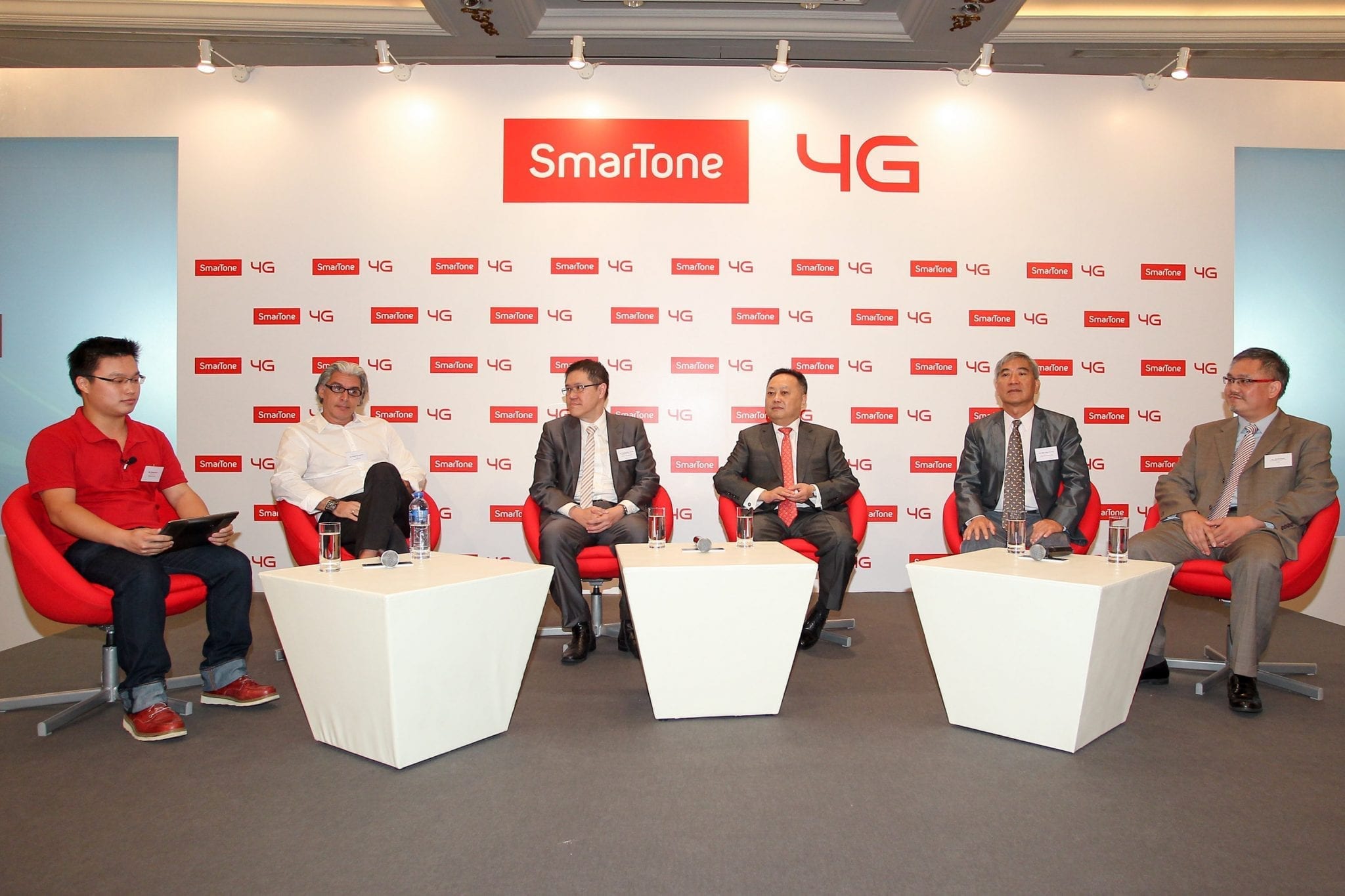
    Hong Kong operator SmarTone has launched ST Protect, an anti-cyberattack software with on-device AI and a Machine Learning behavioral engine designed to protect smartphones from known and even unknown threats.

    Cyberattacks have rocketed in recent years. In Hong Kong, there was an 86% increase in the number of security issues related to mobile devices in 2015 compared to the previous year. Globally, more than 87% of the top mobile apps have been hacked.

    Stephen Chau, SmarTone’s interim CEO, said the new product is design to help their customers to “actively combat” mobile security threats.

    “Recently we have observed the increasing trend of mobile threats and cyberattacks around the world as well as in Hong Kong, with WiFi attacks, viruses and malware continuing to become more prevalent,” he noted. “In many cases, these mobile security issues could lead to severe consequences for smartphone users – from financial loss to the exposure of their private data or personal communications to the public, and even ID theft. There is a pressing need for smartphone users to protect their phones.”

    ST Protect is powered by Zimperium, a US-based security and technology company that has invented the world’s first mobile AI intrusion prevention system. It provides continuous and real-time protection to smartphones against the following mobile threats.

    WiFi attacks and hacking, especially Man-in-the-middle (MITM) attacks, no matter whether users are in Hong Kong or overseas: ST Protect alerts users to immediately terminate unsafe WiFi connections if threats are found.

    ST Protect detects and stops abnormal app activities with patented behavioral analytics, and ensures apps only access permitted information. It also offers protection for known and unknown threats and even zero-day attacks. It also alerts users when their smartphone is under attack.

  • M1 launches carrier billing for BES12

    M1 launches carrier billing for BES12

    Singapore’s M1 has become the first operator in Southeast Asia to offer BlackBerry’s BES12 Cloud bundled with new or renewed business mobile plans.

    The operator is the first in the region to take advantage of BlackBerry’s Enhanced SIM-Based Licensing, which offers multi-OS support from a single console, including for personal and company-issued devices.

    The platform supports remote provisioning of corporate applications and the setting of usage rights over the portal.

    M1 will also offer upgrade options including more advanced EMM features, billed via a monthly subscription model using carrier billing.

    “M1 is pleased to be the first in Southeast Asia to bring the benefits of BES12 to customers with easy deployment through Cloud,” the company’s chief product development and corporate solutions officer Willis Sim said.

    “This partnership with BlackBerry simplifies the way customers buy and use mobility, driving efficiencies and ultimately helps businesses enhance the way they service their own customers.”

    Operators including Vodafone India, Taiwan’s Chunghwa Telecom, Malaysia’s Maxis and Celcom Axiata agreed to support carrier billing for BES12 last year.

  • Illegal OTT boxes are the new P2P piracy

    Illegal OTT boxes are the new P2P piracy

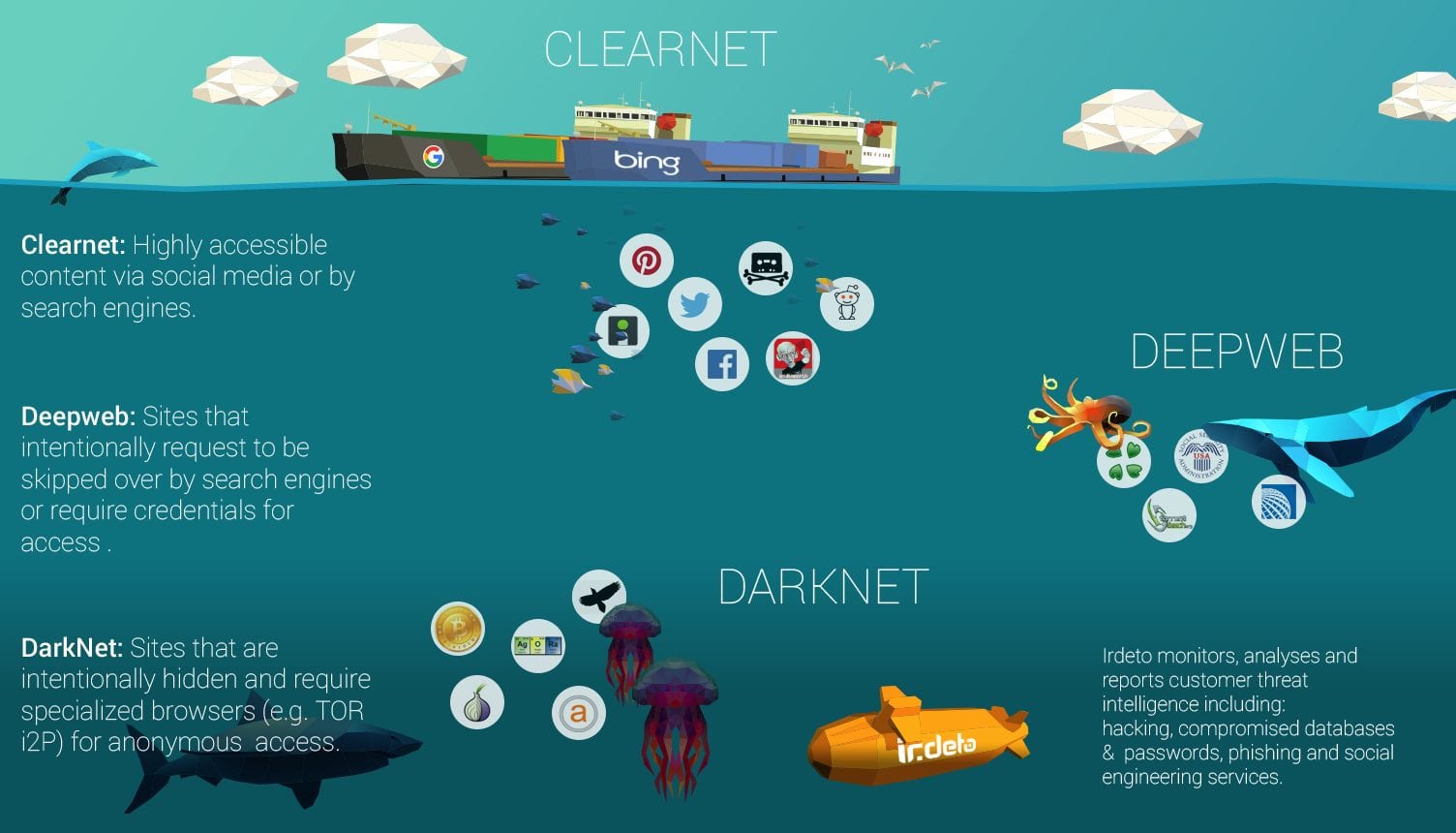
    Online video piracy is alive and well in 2016, but the threat landscape has shifted from straight conditional access (CA) technology and P2P file-sharing to illegal OTT set-top-boxes (STBs) that connect users to sites that look like professional OTT service providers with fancy EPGs, but are in fact hosting stolen content.

    “So these new-age pirates are no longer hacking the CA on the STB, they are selling their own STBs and delivering illegal content through them,” says Bengt Jonsson, VP of Asia-Pacific at Irdeto.

    Combating that involves some tried-and-true techniques like watermarking so stolen content can be identified. But that’s just the start, says Jonsson.

    “You also need a monitoring service to go and find stolen content on these sites and identify it,” he says. “And you need a takedown service where you go to the ISPs and tell them, ‘We represent this customer, this is their content and it’s pirated,’. And you have to monitor for compliance.”

    Irdeto supplies all of these services, and also has agreements with major e-commerce sites like Alibaba and eBay under which they will remove illegal OTT STBs from the site when Irdeto identifies them.

    However, says Jonsson, this kind of piracy is a global problem that requires cooperation from both the pay-TV operators (as well as industry organizations like CASBAA) and regulators who police copyright infringement.

    A challenge to the latter is jurisdictional issues – for example, what do you do when content produced in Australia is being pirated for an OTT box sold in Ukraine?

    “We start by using watermarking and fingerprinting to trace the source of the content, and from there we can locate the subscriber and block them and see where the traffic is going,” says Roger Harvey, Irdeto’s ANZ managing director. “So we can determine both where the pirate site is and where they got the content from.”

    The rest is up to legislation frameworks in each country to not only combat piracy, but keep up with changing delivery models such as the shift from linear pay-TV to multiscreen OTT.

    Interestingly, the ability to track and monitor stolen content also gives Irdeto’s customers valuable data on how popular certain content is and where.

    “We have what’s called a heat map, where our customers can see what content is being consumed in what area, legally or illegally, which shows demand for it,” Jonsson says. “An effective way to combat online piracy is to deliver a legal alternative, so with this, data content owners can see what viewers want so much that they’re willing to pirate it if it’s not available.”

    Last week, Irdeto partnered with Taiwan-based ALi Corp, which will integrate Irdeto’s security solutions on its latest generation chipset offerings for STBs.

  • $25 smartphones + one year unlimited browsing = profit!

    $25 smartphones + one year unlimited browsing = profit!

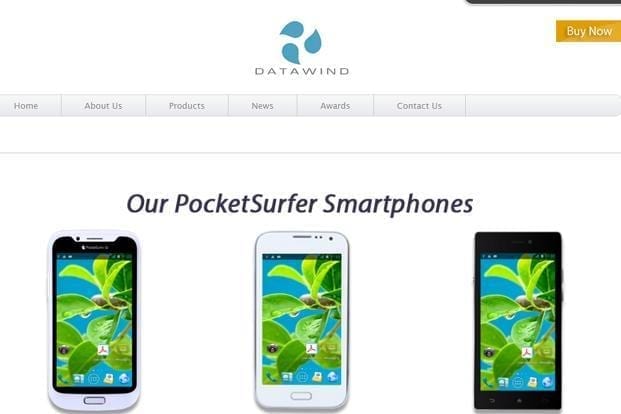
    Ontario-based Datawind offers entry-level smartphones and tablets starting at $25 – including one year of unlimited web browsing. The service has launched in India and is in talks to expand to countries in Southeast Asia and Africa.

    Suneet Singh Tuli, CEO of Datawind, said that a large market segment is still not exposed to mobile data. Of Indonesia’s 250 million people, 50 million have no mobile phones, and 100 million handsets 2G feature phones.

    To achieve rock-bottom prices, the Datawind phones are designed to be “good enough” using last-generation ARM Cortex A7 1.2 GHz dual-core CPUs and 512MB of RAM. Tuli said that the system-on-a-chip costs $2.50 today compared to $15 just a couple of years ago. Yet this budget chipset packs more power than the 2nd generation Apple iPad.

    Datawind compresses web pages on a server before being delivered to the device. A typical 2MB CNN page is compressed to 70KB.

    Unlike Facebook’s Free Basics curated selection, the entire internet is available for users to browse. Nor does Datawind engage in ad-injection or substitution.

    The company partners with telcos to buy data wholesale. In India they started with Reliance and Telenor and are adding more partners. While one year of unlimited web browsing is included, once they’ve had a taste of smartphones, many users choose to add-on voice packages or data packages for video streaming – this is how Datawind can negotiate to buy data at such low rates.

    For the telco this is about customer acquisition, not ARPU.

    “While we are not yet overall profitable, we are EBITDA profitable,” said Tuli. “We are not selling at a loss. For it to be sustainable it has to make commercial sense.”

    In India, Datawind claims 34% overall market share and 74% for the under-$100 segment.

  • gen-E launches OpsCenter InfiniView BI platform

    gen-E launches OpsCenter InfiniView BI platform

    gen-E launched its business intelligence platform OpsCenter InfiniView, which “goes deeper and broader than current advanced analytics software” by combining and analyzing data across an entire business and comparing it against thousands of industry best practice KPIs.

    The automated results and recommendations are presented via a real-time dashboard view to help leaders make better decisions, improve efficiency, and gain full insight into the health and performance of their business.

    OpsCenter InfiniView analyzes aggregated data and adds context to the data streams on how it impacts each other. This provides a top-down business perspective on what is happening in the environment and the reasons behind it to see how and what needs to be done to adjust the KPI.

    “Though advanced analytics has certainly accelerated digital transformation initiatives of some companies, current market solutions stop at providing visual representations of data, leaving much of the heavy lifting of analysis to department heads and business leaders,” said Marc Hayden, gen-E CEO. “OpsCenter InfiniView provides decision making support through actual insights – it’s more intelligent business analytics.”