Category: Telecom

Retail News Asia is committed to providing both local and global retailers with the latest Telecom & Telco news throughout the Asian market. This on a daily base.

  • Mahindra Comviva unveils MobiLytix Suite

    Mahindra Comviva unveils MobiLytix Suite

    Mahindra Comviva has launched the MobiLytix Suite, a big data-driven mobile analytics solution that generates actionable customer insights.

    The solution aggregates subscriber usage data across multiple touch points, enabling deeper and superior customer experience while improving revenue growth of telecom operators.

    The MobiLytix Suite promises to enable service providers to enhance customer experience. Its backbone is an analytical engine aimed at understanding the various events across a customer’s lifecycle and helps develop strategies to maximize a customer’s lifetime value.

    It also aids chief marketing officers and marketers to analyze hidden revenue generating patterns and formulate the appropriate product and growth strategies. In addition, seamless, real-time and omni-channel execution of personalized contextual marketing promotions ensure faster go-to-market and help operators realize incremental revenue opportunities.

    “Globally, operators are increasingly concerned about customer retention. They are also trying to monetize existing customers by cross-and-up selling additional services,” said Manoranjan Mohapatra, CEO of Mahindra Comviva.

    “With the MobiLytix Suite, we hope to establish a new business niche for customer and channel value management, driven by analytics and actionable insights,” the CEO said. “With our MobiLytix product line, we expect to be a significant player in one of the fastest growing segment in the mobility space.”

    Mahindra Comviva’s MobiLytix Suite enables operators to obtain real-time actionable insights with usage growth of about 5%. In addition, telecom operators can also get significant increase in the response and reach rates.

  • Nokia launches real-time mobile network analytics platform

    Nokia launches real-time mobile network analytics platform

    Nokia is launching “Real-Time Mobile Network Analytics”, said to be the industry’s first solution to give operators an end-to-end view of mobile networks from individual subscribers, applications, devices and operating systems, network elements, cells and calls.

    The analytics link the performance of applications and devices to network issues in real-time, effectively making every mobile device part of a network test bed.

    This enables operators to pinpoint potential causes of service degradation much more rapidly than they can today since they no longer need to consult a myriad of tools and correlate the data from them manually. It also offers engineering teams a proactive way to understand over the top (OTT) application impacts on the network and optimize opportunities.

    The Real-Time Mobile Network Analytics solution integrates three network analytics tools widely deployed by more than 200 operators.

    These include Nokia Wireless Network Guardian that provides engineering teams with analytics on applications, network and devices; Nokia Traffica that supports Network Operations Centers by linking application-level analytics to real-time troubleshooting and root-cause analysis in radio and core networks; and Nokia Network Performance Optimizer that provides deeper, call-level analytics.

    The combination of tools, sources data directly from radio access and core networks with fewer tapping points than standard solutions.  This reduces the need to expand interfaces for legacy network probes. It also offers open Application Programming Interfaces (APIs) that enable operators to use the collected data for their big data strategies.

  • Singtel launches mobile newsstand service

    Singtel launches mobile newsstand service

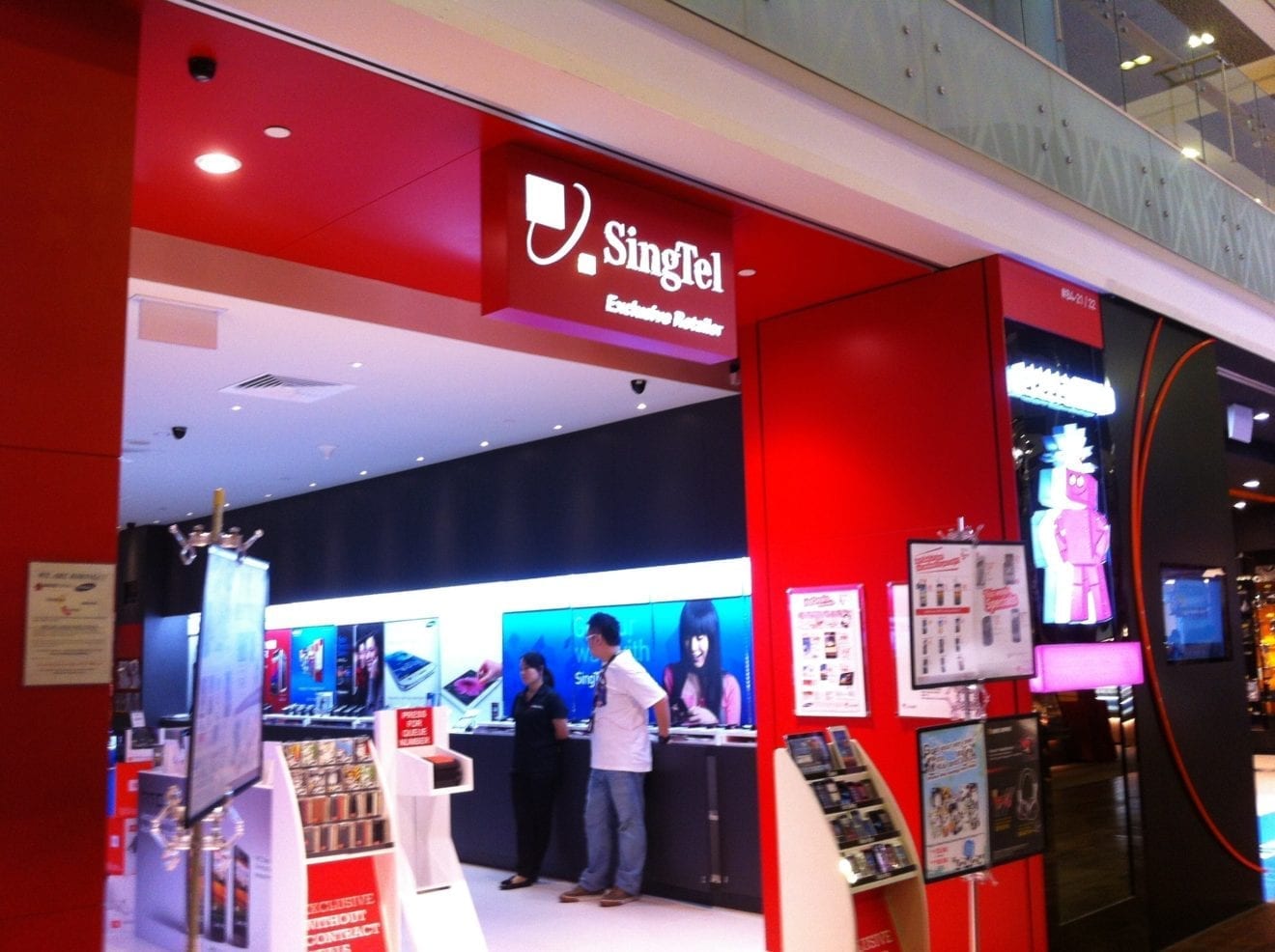
    Singtel has launched a new service offering subscriptions to digital newspapers and magazines at discount rates, and with unmetered access to their content.

    The Singtel Newsstand service will at launch offer Singapore’s largest newspaper the Straits Times, as well as international publications including the Wall Street Journal, TIME and Fortune Magazine.

    The titles will be offered at discounts of up to 20% off regular rates, and Singtel postpaid customers will be able to access online articles, podcasts and videos from the publications without drawing on their data allowances.

    Singtel said it plans to add other publications including the New York Times, the Economist and the Financial Times in the coming months.

    The operator will also offer postpaid customers the option to sign up for print subscriptions to the publications and be charged via their monthly mobile bill.

    Singtel has partnered with Samsung to offer a free three months subscription to Singapore customers who purchase Samsung devices from Singtel from now until mid next year.

    Singtel vice president of mobile marketing Diana Chen said the new initiative reflects the fact that the operator’s customers are increasingly using their mobile devices to access news and current affairs daily.

    “With Singtel Newsstand, we make premium news content from the world’s top publications more affordable and accessible than ever before,” she said.

  • Airtel Q1 profit falls 30.8%

    Airtel Q1 profit falls 30.8%

    India’s Bharti Airtel posted a 30.8% slump in net profit for the June quarter, as a steep 42.1% decline in the value of the Nigerian Naira reduced contributions from the operator’s African operations.

    Airtel reported a net profit for its fiscal first quarter of 14.62 billion rupees ($218 million). Consolidated revenues increased 8.4% year-on-year to 255.46 billion rupees, with India revenues up 10.3% to 191.55 billion rupees.

    Indian mobile broadband customers increased by 68.3% to 36.6 million, with data ARPU increasing by 21 rupees to 202 rupees. Total mobile data revenues grew 35.1% year-on-year to 35.25 billion rupees

    “The year has begun well with revenue growth of 10.3%Y-o-Y and continued revenue market share gains,” Airtel MD and CEO for India and South Asia Gopal Vittal said.

    “In continuation of our Project Leap announcement, we have now transparently opened up our entire mobile network to our customers so as to partner them in striving to deliver a world class experience.”

    African revenues adjusted for tower and operating unit sales meanwhile grew 3.8% year-on-year in constant currency terms, with data revenues increasing to $154 million, or 16.5% of overall revenues.

    Over the past 24 months, Airtel has sold tower assets in 11 African countries and divested its operations in Burkina Faso and Sierra Leone, raising a total of $3.25 billion.

  • Australia’s ACCC tackles broadband advertising

    Australia’s ACCC tackles broadband advertising

    Australian competition regulator ACCC has hinted it could introduce rules requiring ISPs to provide accurate information to customers about broadband speeds.

    The regulator has published a discussion paper seeking views on how consumer information about the speed and performance of broadband plans can be improved.

    ACCC chairman Rod Sims said the agency is concerned about the lack of clear information about performance of broadband services provided in advertising and related material.

    “At the moment, it is difficult for consumers to access accurate information as broadband advertising is not focusing upon speed and performance,” he said.

    “Consumers are being presented with little information or vague claims like ‘boost’ and ‘fast’, or just pictures in advertising of athletes or animals. Consumers need accurate information about broadband speed and performance so that they can understand if what they are being offered will actually meet their needs.”

    He noted that complaints about slow data speeds were the top internet-related complaint issue among reports to Australia’s Telecommunications Industry Ombudsman (TIO) in the first quarter of 2016, accounting for 2,159 reported issues.

    Given changes in the market and consumer expectations related to broadband performance, “the ACCC believes that it is timely to consider what further steps need to be taken in Australia,” Sims said.

  • Singtel, Ericsson demonstrate LAA on live 4G network

    Singtel, Ericsson demonstrate LAA on live 4G network

    Singtel and Ericsson announced they have completed a live trial of pre-standard License Assisted Access (LAA) technology on Singtel’s network.

    The trial in an office building at Serangoon North involved a 20 MHz block of licensed 1800-MHz spectrum, augmented with 20 MHz in the unlicensed 5-GHz band.

    A stationary live test achieved an LTE LAA throughput of 275 Mbps, while a second test demonstrated LAA’s ability to co-exist with Wi-Fi signals without degrading the Wi-Fi user experience.

    The trial also involved coverage testing to validate the technology’s ability to improve link performance, coverage and medium access control compared to Wi-Fi access points.

    Announcing the results, Singtel said the testing showcases the potential for LAA to improve network capacity for mobile customers, in a market where nearly 85% of mobile traffic is generated indoors.

    Due to the success of the trial the operator plans to progressively deploy LAA technology in Singapore over a two-year period starting in the first half of 2017, as part of efforts to evolve its networks in preparation for the introduction of 5G.

    The company said in the future, customers with LAA-capable handsets will be provided with peak download throughput of up to 450 Mbps.

    “To provide our customers with a superior mobile experience when they are indoors, we are continuing to invest in new technologies that will increase indoor 4G speeds,” Singtel managing director of networks consumer Singapore Tay Yeow Lian said.

    “We are pleased to be the first in Singapore to showcase LAA technology live. This is an integral part of the LTE-Advanced evolution and will bring us one step closer to our 5G goals.”

  • Singapore’s StarHub to triple LTE upload speeds

    Singapore’s StarHub to triple LTE upload speeds

    Singapore’s StarHub plans to start rolling out carrier aggregation and 64 quadrature amplitude modulation (QAM) technology by the end of the year to triple peak upload speeds to 150Mbps.

    The operator recently completed a trial of the technologies with Nokia, aggregating spectrum in the 1800-MHz and 2600-MHz bands.

    Following the successful tests, StarHub plans to start deploying the technology starting in the Marina Bay and Orchard areas in time for the city’s year-end celebrations. A nationwide rollout is planned for 2017.

    “The ability to upload quickly is fast becoming a necessity for our mobile customers. In fact, we saw a close to 50% increase in upload traffic year-on-year, as customers increasingly share high definition videos and photos instantly with the world,” StarHub CTO Mock Pak Lum said.

    “Collaborating with technology partners such as Nokia, we are driving innovation in 4G for the benefit of our customers amid continued growth in mobile data use.”

    Nokia head of Asia South Nicolas Bouverot added that the vendor is “committed to supporting StarHub in its quest to deliver a world-class service experience to its customers. Our technologies will enable the operator to improve the upload and download speeds of its 4G network even at peak traffic times to enrich the user experience.”

  • ClouDee set to disrupt businesses in Thailand with cutting-edge cloud telephony technology

    ClouDee set to disrupt businesses in Thailand with cutting-edge cloud telephony technology

    ClouDee cloud telephony services is being brought to the country for the first time through Thailand’s leading provider of international voice telephony services, SawasdeeShop, in partnership with Asia’s largest cloud-based communications provider, Knowlarity Communications.

    SawasdeeShop, established since 1999, is licensed by the National Telecommunication Commission of Thailand (NTC). With a registered capital of 150 million Baht, Sawasdeeshop has telecom switches operating in Thailand, Singapore, Malaysia, Hong Kong and New York and is interconnected to over 100 global telecom carriers.

    Cloud telephony provides telephony services on a cloud-based platform, redefining communication and is fast disrupting conventional telephony systems.  Within minutes of subscribing with ClouDee, users will receive a business phone number and have access to a feature-rich, enterprise-level communication system that has primarily been exclusive to Forbes 500 enterprises or large corporations.  ClouDee eliminates the need for hardware, installation and the high costs associated with a traditional PABX business communication system, making getting a 02 number for Thailand-based business, or over 60 international numbers for global businesses as easy as setting up a business email address.

    At a press conference held today, SawasdeeShop Founder and CEO Aswin Phlaphongphanich and Knowlarity Communications’ Founder and CEO Ambarish Gupta introduced SuperReceptionist and Smart IVR, two innovative communication solutions provided by ClouDee for Thailand’s growing business community.

    SuperReceptionist is a virtual receptionist service, or a smart operator, which activates a cloud-communication center with a powerful CRM for SMEs and start-ups. With its flexible API structure (Application program interface), Smart IVR provides customizable solutions for enterprise-grade communication requirements, which are unique to every organization.  Each product helps start-ups, SMEs and corporations to improve their revenues, save costs, generate leads, increase conversion rates, as well as enable greater mobility.

    According to the Office of Small and Medium Enterprises Promotion (OSMEP), there are around 2.7 million SMEs in Thailand, accounting for 37% of national GDP. ClouDee will initially aim to target 1000 customers across SMEs and enterprises and has invested Thai Baht 10 million in the partnership with Knowlarity Communications.

    Aswin believes that cloud telephony is the first step towards the future of business communications in Thailand.

    “The cloud is changing the way businesses operate and communicate. To simply put it, we are replacing aging PABX systems so that business owners can work smartly and leverage new technologies to their advantage. What ClouDee is doing to business telephony is what Yahoo and Hotmail did to email.

    “ClouDee is user-friendly, highly scalable and extremely affordable, appealing to emerging and established Thai businesses looking to maximize capacity and productivity by integrating SuperReceptionist  and Smart IVR.

    “We want to help SMEs and start-ups in Thailand drive a robust and effective sales and marketing process, and communication is key.  ClouDee can be applied to a wide variety of industries including logistics, healthcare and e-commerce, as well as travel and tourism.  With AEC, there has been rapid growth of businesses within Thailand and in the region. We also plan to roll out ClouDee to the CLMV region which is also experiencing a great rise in business development,” added Aswin.

    With headquarters in Singapore, Knowlarity Communications has a solid reputation for capturing the market share wherever it sets its sights and Ambarish has high expectations of the success of ClouDee in Thailand.

    “We are proud to be part of introducing cloud telephony to Thailand with ClouDee. This is an exciting market to be part of and many businesses are ready to utilize smarter, more streamlined and integrated communication tools,” Ambarish points out.

    Clients using ClouDee in Thailand as their business communication system currently include StockRadars, a Thai stock market management app, and Thailand based money transfer platform, coins.co.th.


  • Philippines to develop national broadband plan

    Philippines to develop national broadband plan

    Philippine president Rodrigo Duterte announced in his first State of the Nation Address (SONA) on Monday that he wants the newly created Department of Information and Communications Technology (DICT) to develop a national broadband plan to accelerate the deployment of fiber and wireless technologies to improve internet speed.

    He also announced that Wi-Fi access shall be provided at no charge in selected public places, including parks, places, public libraries, schools, government hospitals, train stations, airports, and seaports.

    A previous government initiative to establish a National Broadband Network (NBN) was scrapped in 2007 after the $329-million contract awarded to Chinese telecommunications firm ZTE for the project had been investigated in the Senate.

    In 2011, the then Commission on Information Communications Technologies (CICT) had also released a five-year digital roadmap that aimed to craft a vision for ICT use in governance, including the creation of a national broadband policy that would enable the environment for broadband development and use.

    Duterte’s call for a new national broadband plan came on the heels of a wide public clamor for fast and affordable internet. The Philippines had ranked poorly in many global indices for digital readiness.

    The country trails behind its Southeast Asian neighbors, for example, in the latest Network Readiness Index published by the World Economic Forum, which measures how economies use the opportunities offered by ICT for increased competitiveness. At 77th place in a 139-country study, the Philippines was behind Singapore (1st), Malaysia (31st), Thailand (62nd), Indonesia (73rd).

    Duterte’s assumption into office on June 30 came at a favorable time as the law mandating the creation of the DICT as the primary body that would create policies and drive the national ICT agenda was signed by former President Benigno Simeon Aquino III last May.

    The country’s first appointed DICT Secretary Rodolfo A. Salalima affirmed in his first media interview that the government cannot expect the commercial service providers to be in all parts of the country and there would be a need for the government to establish an ‘infostructure’ in the countryside and provide service.

    Shortly before Duterte’s inauguration as the country’s 16th president last June, Globe Telecom had called on the government to help develop broadband access in the Philippines by investing in internet infrastructure in rural and far-flung areas.Globe President and CEO Ernest Cu said in a media statement that telecommunication operators in the country are unable to deploy infrastructure in rural areas due to business viability issues.

    “There are a lot of localities in the country that cannot be reached economically. What we propose is for the government to build the infrastructure, such as submarine cables, and then rent these facilities out to telco operators,” he said, citing the case of Sulu and Basilan provinces in the Autonomous Region for Muslim Mindanao.

  • TOT said to plan TD-LTE trial next month

    TOT said to plan TD-LTE trial next month

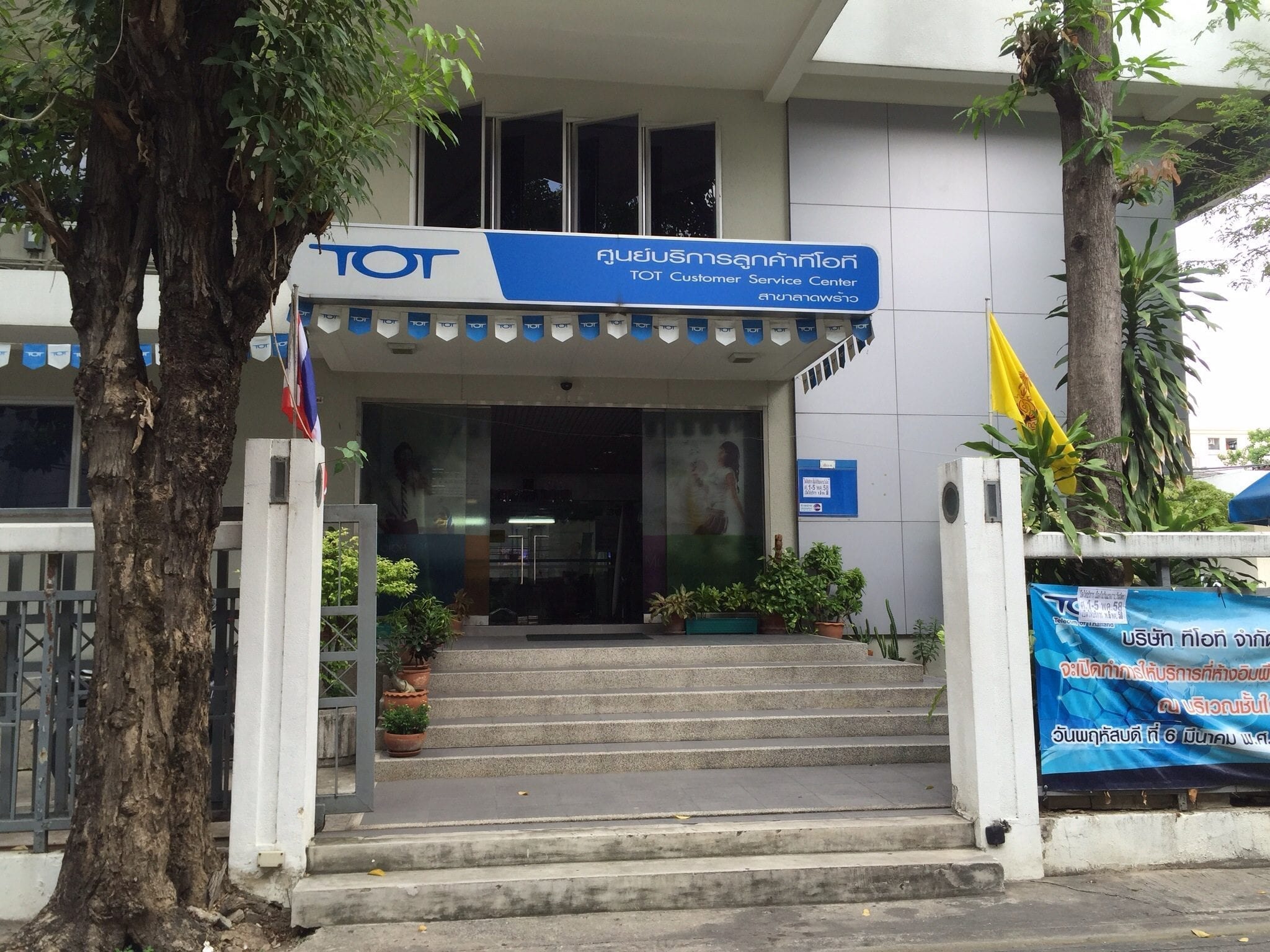
    Thai state-owned operator TOT reportedly plans to launch trial TD-LTE services over the 2.3-GHz band early next month.

    The operator is waiting for permission from regulator NBTC to use network equipment for the non-commercial trial service.

    Private operators AIS, Dtac and True Corp have been invited to join the trial, which is scheduled to begin on August 4, which is National Communications Day in Thailand.

    The trial will be conducted in Bangkok and Ratchaburi. TOT plans to install 20 2.3-GHz base stations along parts of the routes of Bangkok’s Skytrain public transport service. The trial in Ratchaburi will meanwhile use Huawei equipment.

    TOT holds 60 MHz in the 2.3-GHz band, and plans to invite international network suppliers and local operators to jointly introduce wireless broadband services over the spectrum, the report states, citing sources.

    The report states that TOT has already approached Huawei, Nokia, and Ericsson to discuss the project and plans to select the supplier with the best proposal to roll out the network.

    According to the sources, TOT plans to initially wholesale the 2.3-GHz bandwidth to local operators, and use the revenue from this agreement to finance its own 2.3-GHz rollout.

  • Ericsson CEO Hans Vestberg steps down

    Ericsson CEO Hans Vestberg steps down

    Ericsson has announced the resignation of long-serving CEO Hans Vestberg, effective immediately, as the company seeks to transform to adapt to changing market dynamics.

    Vestberg has also stepped down as president and as a member of the board of directors, but remains “at the company’s disposal” for a six month term of notice, the company announced.

    Executive vice president and CFO Jan Frykhammar will take the role of interim CEO until a permanent replacement is found.

    Vestberg has been with Ericsson for 28 years and has been serving as CEO for the last seven. But he has been facing pressure to step down as the company struggles with profitability in a period of slowing demand and intense competition.

    Last week the company reported a 24% decline in second-quarter net profit, along with an aggressive cost reduction plan aimed at turning around the company’s operations.

    “Hans has been instrumental in building strong relationships with key customers around the world and his leadership and energy have been an inspiration to employees and leaders across Ericsson,” Ericsson chairman Leif Johansson commented.

    “However, in the current environment and as the company accelerates its strategy execution, the Board of Directors has decided that the time is right for a new leader to drive the next phase in Ericsson’s development.”

  • 3 HK unveils new roaming services

    3 HK unveils new roaming services

    3 Hong Kong, the mobile division of Hutchison Telecommunications Hong Kong Holdings Limited (HTHKH), has introduced new monthly plans and roaming passes, enabling customers to use mobile services in Macau and six European countries.

    HTHKH chief operating officer Jennifer Tan said the monthly 3Like Home plans and two types of roaming pass are tailored to the needs of frequent leisure and business travelers traversing Macau and Europe.

    The monthly “3LikeHome” plans, which start at HK$168/month ($21.66) (HK and Macau) and HK$508 (HK, Macau and six European countries), will offer equal local and roaming data usage entitlements, plus a quota of voice minutes to be shared between local use and when roaming.

    Devices will be automatically connected to 3 Group networks when in Austria, Denmark, Ireland, Italy, Sweden and the UK, as well as Macau.

    The new plans will allow customers to make calls to numbers in the locality where they are present, and Hong Kong, or receive calls from any region without incurring additional charges. The roaming data element of usage allows customers making frequent business trips to access the internet in Macau and the six designated European countries as if they were in Hong Kong, the operator said.

    To meet demand at this busy travel time of the year, 3 Hong Kong has also launched one-off roaming plans including a 3-day ‘3 Macau Roaming Pass’ and a 10-day ‘3 Europe Roaming Pass’, which will provide free-to-use voice and data entitlements in Macau and six European countries for families and frequent leisure travelers.

    In addition, 3 HK is offering 90-minutes free daily WiFi service to all mobile users in the city, as the number of its hotspots exceeding 20,000 across the city.

    Until the end of September, any mobile user in Hong Kong can access WiFi service for three sessions to a total of 90 minutes a day using a smartphone, tablet or laptop at more than 20,000 WiFi hotspots run by 3HK.

    Tan said 3 HK will build 3,000 more WiFi hotspots in the second half of this year, bringing the total number to more than 23,000.

  • Aussie ISP takes on NBN with microwave broadband

    Aussie ISP takes on NBN with microwave broadband

    Lightning Broadband is offering fiber connectivity in parts of Melbourne and plans to guide its roll out plans based on demand. Potential customers are able to register for interest on the website.

    The ISP is offering 100Mbps symmetrical plans with unlimited data for A$120 ($90) per month on a 24-month contract. The NBN’s 100Mbps downlink plans offer only 25Mbps uplink.

    Lightning Broadband is also offering 25Mbps, 50Mbps and 75Mbps plans, starting from A$75.

    For business customers, Lighting Broadband will offer dedicated 1000Mbps symmetrical microwave links that will not share equipment with other users.

    Founder Jeremy Rich told that the company believes that many Australians are sick of waiting for the NBN to arrive in their area, and are interested in adopting high-speed broadband today.

    The NBN’s ambitious rollout plans have been delayed repeatedly since the project was announced.

    The project has also been scaled back under the recently re-elected government – the NBN was originally intended to deliver FTTH providing wholesale speeds of up to 100Mbps to 93% of the population, but has since been redesigned to use a mix of access technologies, including FTTN, HFC and fixed wireless.

  • Huawei grows 1H16 revenue by 40%

    Huawei grows 1H16 revenue by 40%

    Huawei grew its sales revenues for the first half of the year by 40% to 245.5 billion yuan ($36.6 billion), despite a decline in its operating margin.

    The vendor reported an operating margin of 12%, down from 18% in the same period last year, partly as a result of increased investment in the company’s smartphone business as part of an aggressive push to become the market leader in 4-5 years.

    “We achieved steady growth across all three of our business groups, thanks to a well-balanced global presence and an unwavering focus on our pipe strategy,” Huawei’s CFO Sabrina Meng commented.

    “We are confident that Huawei will maintain its current momentum, and round out the full year in a positive financial position backed by sound ongoing operations.”

    Huawei has not yet disclosed its profit for the half-year period. Looking ahead, the company said it plans to continue to adhere to its pipe strategy, and invest heavily in R&D in areas including 5G and the IoT.

    In the carrier business, Huawei said it is focusing its attention on supporting operators’ digital transformation in four core areas – business, operations, architecture, and networks.

  • Huawei, Vodafone reach 20Gbps speeds in 5G test

    Huawei, Vodafone reach 20Gbps speeds in 5G test

    Huawei and Vodafone have announced they reached 20Gbps wireless transmission rates during 5G field tests using high-frequency E-Band spectrum.

    The 5G mmWave field test covered both single and multi-user multiple-input multiple-output (MIMO) transmissions. The former achieved a 20Gbps EU peak rate, while the latter achieved a 10Gbps peak rate over a long range.

    Announcing the results, Huawei said this marks the first 5G outdoor field test using E-Band (71-GHz to 86-GHz) spectrum to reach the 20Gbps peak rate for a single user device targeted by ITU-R as a 5G requirement.

    The company said E-Band millimiter wave spectrum can be used as a complementary spectrum band to lower-band frequencies to deliver on the performance targets of the 5G standard.

    “This field test in an outdoor environment is a significant step in validating the performance of 5G in high frequency bands, improving our understanding of the capabilities of the technology,” Vodafone Group CTO Johan Wilbergh commented.

    Huawei rotating CEO Eric Xu added that 5G “will introduce full spectrum access to support AR, VR, Smart Automobile and other unknown new services,” and that “the joint trial of 5G mmWave connectivity in a real world radio propagation environment and co-existence of different radio links is encouraging.”