Retail News CRM

Category: Telecom

Retail News Asia is committed to providing both local and global retailers with the latest Telecom & Telco news throughout the Asian market. This on a daily base.

  • Ooredoo Myanmar launches 4G services

    Ooredoo Myanmar launches 4G services

    Ooredoo Myanmar has become the nation’s first operator to launch 4G services as part of a staged rollout.

    The operator has introduced 4G in parts of Yangon, NayPyiTaw and Mandalay, according to an FAQ on the company’s website.

    The company plans to cover half of Yangon’s townships, around 90% of NayPyiTaw’s townhips and all of Mandalay with the service.

    Over the next couple of months, Ooredoo Myanmar plans to upgrade around a quarter of its more than 3800 cell sites to 4G.

    But further rollouts will require more spectrum and cell sites, according to CEO Rene Maza. Ooredoo Myanmar plans to continue to expand its 4G network as it acquires these assets.

    Myanmar’s new Ministry of Transport and Communications recently revealed plans to auction 2600-MHz spectrum as part of its 100-day plan.

    Ooredoo Myanmar is offering 4G services at the same price as its existing 3G offerings.

    The operator’s main rival Telenor Myanmar is also gearing up to launch 4G services following successful tests in Yangon, Mandalay, Myawaddy and Muse.

  • Singapore government to spend $2b on ICT this fiscal

    Singapore government to spend $2b on ICT this fiscal

    Singapore’s soon-to-be-formed Government Technology Agency (GovTech) will continue to partner the ICT industry and invest in technologies such as data analytics, ICT infrastructure, and platform-as-a-service to develop citizen-centric services.

    GovTech, which will be established at the end of this year, will replace the Infocomm Development Agency of Singapore (IDA) and aim to lead technological transformation in government.

    The agency is expected to continue to partner the industry to co-create such digital solutions and will be calling for a projected S$2.82 billion ($2.04 billion) of ICT tenders across fiscal year 2016.

    These ICT tenders will comprise mainly infrastructure and ICT security bulk contracts due to some multi-year contracts ending in FY16, as well as contracts relating to agency-specific systems. Last year, SMEs accounted for more than half of the total contracted value of ICT tenders.

    One key focus for government procurement this year will be to enhance ICT infrastructure to better support the data and digital services needs of a Digital Government in a Smart Nation.

    For example, increased data center virtualization will allow the government to modernize its hosting of ICT applications and ensure faster time to production for new digital services.

    Wi-Fi will be extended to more areas within government schools to support smart learning. The government will also continue to invest in its cybersecurity efforts, with a bulk tender for IT security services to be called in this fiscal year.

    “We want to empower Singapore with possibilities through technology. To do that, investment in infrastructure is necessary so that innovative citizen-centric services can be built and enhanced on a strong foundation,” IDA managing director Jacqueline Poh said.

    “There will be opportunities abound for the government and industry to collaborate and build a smart nation together.”

  • Nokia could cut up to 15,000 jobs

    Nokia could cut up to 15,000 jobs

    Nokia could cut as many as 15,000 jobs worldwide as part of the cost-cutting program associated with its merger with Alcatel-Lucent, union officials estimate.

    A Nokia union steward as stating that based on the information received so far, the union estimates that the job cuts are likely to be around 10,000 to 15,000 jobs.

    This would represent as much as 14% of Nokia’s current global workforce of 104,000.

    So far Nokia has revealed plans to cut around 1,000 jobs in its home market of Finland, 1,400 positions in Germany and 400 in France. But Nokia has also agreed to create 500 R&D jobs in France as part of its compromise to win French government support for the Alcatel-Lucent takeover.

    A Nokia spokesperson declined to confirm or deny the figure to Reuters or give any updates on its negotiations with employee representatives. The company is conducting these negotiations in around 30 countries.

    The cost cutting program has the aim of cutting operating costs by around €900 million ($1 billion) by 2018 by reducing the overlaps between Nokia and the former Alcatel-Lucent.

    The program is also aimed at responding to the ongoing slowdown in the network infrastructure market. Nokia is forecasting a decline in network sales for the current financial year.

  • Globe urges govt to establish Department of ICT

    Globe urges govt to establish Department of ICT

    The Philippines’ Globe Telecom is encouraging the government to establish a new Department of ICT to help improve the state of local internet services and the nation’s digital readiness.

    Globe general counsel Froilan Castelo urged outgoing president Benigno Aquino to sign the bill that would create the new department before he leaves office next month.

    “The Philippines is in urgent need of an agency that will drive the country’s ICT development and help steer the country to realize its full potential as a digital economy where homes, businesses and individuals have access to fast and reliable data connectivity,” Castelo said.

    “We are hopeful that enhancing ICT development in the country by creating the DICT would enable more business organizations to work more efficiently, maximize productivity and contribute to sustaining the country’s economic growth.”

    Castelo said a policy framework for ICT development is sorely needed to help develop the nation’s internet infrastructure.

    Globe, for example, has faced regulatory hurdles inhibiting it from building more cell sites as part of its latest nationwide infrastructure program.

    The proposed bill would abolish the Information and Communications Technology Office, National Computer Center, National Computer Institute, Telecommunications Office, National Telecommunications Training Institute and all communications units of the current Department of Transportation and Communications.

    The functions of these departments would instead be taken up by the new DICT, which would also take responsibility for telecom regulator NTC, the National Privacy Commission and the Cybercrime Investigation and Coordination Center.

  • Telstra hit with two more outages

    Telstra hit with two more outages

    Australian operator Telstra has been hit with two more network outages in the span of three days, weeks after committing to invest to improve its network resilience.

    On Friday, Telstra confirmed it was aware of an unplanned service disruption affecting NBN voice and data as well as ADSL customers.

    Telstra said the issue its engineers have identified is “extremely complex, but in simple terms there was a fault with the device that manages the interaction between our network and all of the different types of customer modems.”

    While the bulk of restoration efforts occurred two and a half hours after the company announced the incident, it took until late Sunday afternoon to resolve residual issues and fully restore services.

    But on Sunday customers were reporting another outage affecting Telstra’s mobile and broadband networks in Sydney, Melbourne,Brisbane and Perth.

    Some customers reporting issues may still have been affected by the residual problems from the Friday outage, the report states. But the mobile outage, which affected data services for some customers, appears unrelated.

    Telstra has been struggling with a spate of network outages over the past few months. The operator recently committed A$50 million ($36.2 million) towards addressing the issue by installing new monitoring equipment and improving its capacity to handle numerous simultaneous re-registrations.

  • Reliance Jio said to close in on iPhone deal

    Reliance Jio said to close in on iPhone deal

    India’s Reliance Jio Infocomm is reportedly on the verge of securing a long-term partnership with Apple covering the supply of VoLTE iPhones for the operator’s upcoming 4G network.

    Executives from Reliance Jio parent Reliance Industries and Apple recently reached an in-principle agreement at a meeting in Mumbai, citing senior executives aware of the meeting.

    The prospective deal would reportedly see Apple supplying “a couple of million” iPhones with VoLTE support that will work on the operator’s network. Reliance plans to sell bundled iPhones through its sales and distribution network covering 120,000 retailers and e-commerce companies.

    Reliance Jio also plans to adopt the enterprise retail offerings developed by Apple and IBM for its retail network, to help improve the customer experience.

    Apple CEO Tim Cook has given in-principle agreement to such a partnership with Reliance Jio, the report states.

    Cook is said to have also used the meeting to make a pitch for Reliance Jio to adopt Apple Pay in Reliance Retail stores, and the company has agreed to evaluate the possibility of such a deployment.

    Reliance Jio recently revealed it had exceeded 500,000 LTE users despite only so far launching services for its employees and those of its partners and vendors. The operator’s long-awaited public launch is expected for later this year.

  • Ooredoo Maldives readies fixed broadband services with Alepo

    Ooredoo Maldives readies fixed broadband services with Alepo

    Ooredoo Maldives has selected Alepo to provide a fixed broadband charging and customer care solution for its nationwide fixed broadband network.

    The introduction of fixed broadband services — realized by a new fiber optic submarine cable — is expected to strengthen Ooredoo Maldives’ positioning as the most advanced fixed mobile service provider in the SAARC region.

    In its selection of Alepo, Ooredoo Maldives cited the company’s strong presence in the SAARC region, owing to its multiple recent projects in Afghanistan, Bangladesh, Bhutan, and Sri Lanka.

    “Alepo gives us confidence in the successful delivery, monetization, and customer experience of Ooredoo Maldives’ new fixed broadband services,” said Vikram Sinha, CEO at Ooredoo Maldives.

    To support Ooredoo Maldives’ fixed broadband business, Alepo will deploy its signature B/OSS framework, Alepo Service Enabler (SE).

    The carrier-class platform brings together convergent charging and billing, CRM, web self-care and mobile self-care, real-time analytics and business intelligence, in a single software environment.

    With Alepo SE, Oordeoo Maldives expects to be able to fully monetize and manage its data services, take data offers to market quickly, and ensure a convenient and modern customer experience.

    “Ooredoo Maldvies continues to set new technological precedents for communications service providers in the region,” said Vani Manian, technical Alepo’s director of Asia Pacific.

  • Company founded to revive Nokia mobile brand

    Company founded to revive Nokia mobile brand

    A new company has been established to revive the Nokia handset and tablet brand. The company, HMD Global, has lined up deals with Microsoft and Nokia to fulfil this goal.

    Nokia has agreed to grant the new company an exclusive global license to create Nokia-branded phones and tablets for the next ten years.

    In return, Nokia will receive royalty payments for all sales of Nokia-branded devices covering both brand and IP rights.

    Microsoft has meanwhile conditionally agreed to sell its feature phone business to HMD and Foxconn’s FIH Mobile for $350 million. With the deal, HMD will also acquire related design rights from Microsoft. This transaction is expected to close in the second half of the year.

    FIH is acquiring assets from Microsoft including device manufacturing, sales and distribution. HMD and FIH then plan to collaborate to build a global business for Nokia-branded mobile devices.

    With the moves HMD will become the sole global licensee for all Nokia-branded mobile devices, and plans to produce a full range of feature phones, smartphones and tablets. The new company plans to invest over $500 million in the next five years to support its foray into the market.

    After the Microsoft transaction closes, HMD Global will be led by Arto Nummela, a former Nokia executive who is currently the head of Microsoft’s mobile devices business for APAC and MEA, as well as Microsoft’s global feature phones business.

    Fellow former Microsoft executive Florian Seiche, now SVP for Europe sales and marketing at Microsoft Mobile, will also join the company as president.

    “Branding has become a critical differentiator in mobile phones, which is why our business model is centered on the unique asset of the Nokia brand and our extensive experience in sales and marketing,” Nummella said.

    “We will work with world class providers in manufacturing and distribution to move quickly and deliver what customers want.”

  • Globe rolls out fiber in world’s oldest Chinatown

    Globe rolls out fiber in world’s oldest Chinatown

    Globe Telecom has entered a collaboration with the city government of Manila to roll out fiber broadband technology in Binondo. This initiative will provide internet connectivity with speeds of up to 1Gbps to the world’s oldest Chinatown.

    Early this year, Globe made a call for local governments’ support for its initiative to build on its network infrastructure and provide better a internet experience for its customers, as part of efforts to transform the Philippines into a digital nation by 2020. The city government of Manila, led by Mayor Joseph Estrada, was the first government to respond to the call.

    The fiberization of the entire Binondo district, an age-old center of commercial activities in the capital, is expected to benefit business and residential establishments in the area and is expected to drive business growth in the district. The project will be completed in the third quarter of the year.

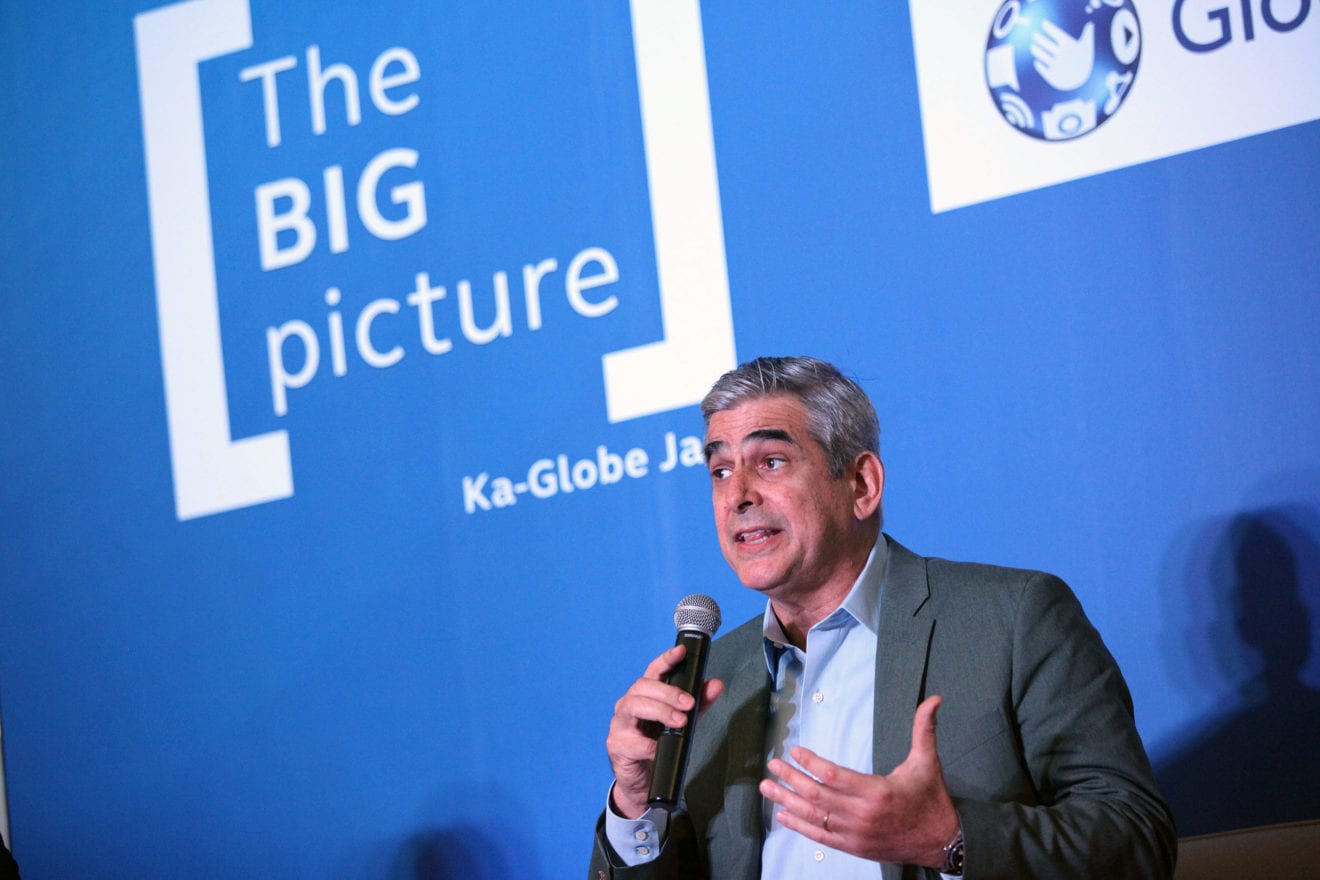
    “Globe is able to deploy fiber broadband technology in Binondo only because we are united with the local city government in realizing a vision of developing ‘connected communities’ where both enterprise clients and customers at home get to experience the full benefits of having world-class data connectivity,” Globe chief commercial officer Albert de Larrazabal said.

    “We hope to replicate the realization of this vision in many other areas in the country as we all aspire to further drive local economic growth.”

    The deployment of fiber broadband technology in Binondo will deliver ultra- fast internet to at least 5,000 new business and home subscribers as part of the initial rollout, Larrazabal said.

    Globe will also roll out small cell technology in various parts of Binondo as part of its efforts to expand network coverage and capacity.

    The pilot rollout of fiber broadband technology in Binondo forms part of Globe Telecom’s initiative of creating an internet super highway nationwide. By forming partnerships with other local government units, the operator plans to deploy fiber in 20,000 districts by 2020 that will provide internet access to around 2 million homes nationwide.

    Parallel to this, Globe will also invest in capacity enhancement for both mobile and wireline using different technologies that include 3G, LTE and Wi-Fi.

  • TrueMove backs out of 900-MHz auction

    TrueMove backs out of 900-MHz auction

    Thai mobile operator TrueMove has decided not to participate in the upcoming 900-MHz auction on May 27 after all.

    The decision was made public late last night in a leaked filing to the stock market regulator. Dtac had already announced it was not participating, which would likely leave AIS as the sole bidder in the auction.

    The auction for 10 MHz of 900-MHz spectrum will start at $2.1 billion, the last price by Jasmine in the December auction before it forfeited its deposit after being unable to raise funds to pay for the licence.

    The letter to the Securities Exchange Commission said that following the board’s meeting on May 16, True’s board has decided not to participate in the auction. True already has enough high frequency spectrum for capacity (on 1800 and 2100-MHz) and low frequency spectrum for coverage (850 via CAT and 900) to meet demand. True has a total of 55 MHz of spectrum which is enough for 2G, 3G and 4G services.

    Just days earlier at a panel organized by Thailand’s IT Press Club NBTC secretary-general Takorn Tantasit strenuously defended “his” decision to include True in the auction. “I have listened to every side of the argument. Whatever decision I make, it is possible I will be investigated and may face jail,” he said.

    Takorn also announced at the ITPC panel that AIS had decided to participate in the auction.

    Takorn had indeed decided to include True, but that decision was overturned by the NBTC board on spectrum cap grounds. The NBTC board in turn was overturned by the junta using article 44, the absolute power clause, in the interim constitution.

    Junta order 16/2559 section one paragraph 3 clearly states that the NBTC is to hold the auction in a way that is fair for the benefit to the state and to the people or to ensure competition. In order to do so the NBTC may amend any regulations needed but it has to report to, and receive authorization from, the leader of the national council for peace and order.

    The leader of the NCPO is Prime Minister General Prayut Chanocha.

    With Dtac firmly against participating in the auction at the elevated price, the need for a competition was used to overturn the NBTC board and allow True back in for more 900-MHz spectrum.

    Prime Minister and Junta leader Prayut Chanocha is currently in Russia so any decision is likely to be deferred until he gets back.

    All eyes are now on AIS which is understood to be convening its board to make a decision today (May 17) whether or not to participate in the auction.


  • Nepal Telecom lays fiber to Nepal-China border

    Nepal Telecom lays fiber to Nepal-China border

    Nepal Telecom has revealed it has completed a project to lay fiber at the Nepal-China border, paving the way for an interconnection with China Telecom.

    The company has deployed fiber from Kathmandu to the Rasuwagadhi border point via two other Nepalese districts. The deployment uses all-dielectric self-supporting (ADSS) technology, which allows fiber to be deployed without the use of a support or messenger wire to save on deployment costs.

    A spokesperson for Nepal Telecom told that the operator has already commenced installation of equipment for an interconnection with China Telecom’s extensive fiber footprint.

    This will allow the operator to directly link to the Hong Kong Data Centre – one of the two largest data centers in the Asia region – and to establish global connectivity through Hong Kong via China. The company will also connect with a hub in Singapore via India.

    Through these arrangements Nepal Telecom plans to improve the speed and increase the price of its services.

  • AIS abandons plan to rent TrueMove’s 2G network

    AIS abandons plan to rent TrueMove’s 2G network

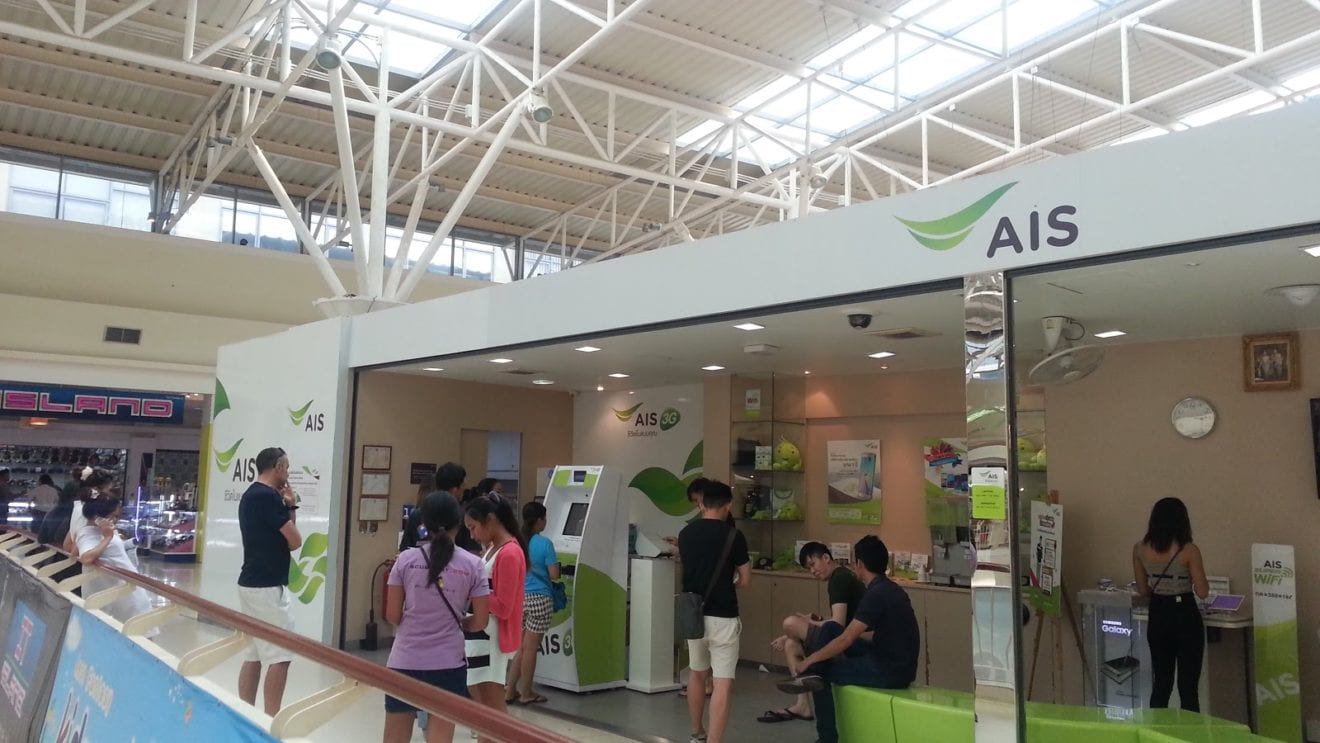
    Thailand’s AIS and TrueMove have abandoned plans to enter a mobile network rental agreement after being unable to accept mutually agreed upon terms.

    AIS no longer intends to rent TrueMove’s 900-MHz network to allow it to continue serving its 900-MHz 2G customers in the wake of the expiration of its 900-MHz license, telecoms regulator NBTC’s secretary-general told.

    The two operators had been negotiating a network rental agreement since mid-April, concentrating on network roaming on the 900-MHz spectrum and customer migration between AIS’s and TrueMove’s networks.

    The government had been encouraging AIS to rent True Move’s existing network to allow it to retain some of its existing 2G customers in order to end a dispute over an extension of AIS’s use of its 900-MHz network.

    AIS is reportedly also facing government pressure to hand over 8 million 2G customers to TrueMove to free up the 900-MHz spectrum due to be re-auctioned on May 27.

    But AIS intends to participate in the auction, and may therefore be able to secure the spectrum needed to ensure service continuity.

  • AWS to be anchor customer for Hawaiki cable

    AWS to be anchor customer for Hawaiki cable

    In March, the Hawaiki cable project announced its contract with TE Subcom had come into force. They had raised the necessary funds to kick off the construction phase, and yesterday we learned where some of those funds came from.

    Amazon’s AWS division has stepped up for a large chunk of capacity on the system, becoming a high profile anchor customer on a submarine cable system for the first time.

    The Hawaiki cable is the latest project aimed at hooking up Australia and New Zealand directly with the west coast of the USA, stopping in Hawaii and branching off to American Samoa with options to reach several more.

    It’s a route dominated today by the longstanding Southern Cross cable system, and one on which we have seen several failed attempts to build an alternative – especially by partisans on the New Zealand side. This is the first time the money has finally added up though. As currently planned, the cable will stretch 14,000km and deliver as much as 30Tbps of capacity.

    Amazon AWS joins Vodafone, REANZ, and American Samoa Telecom as anchor customers. It’s Amazon’s first foray into the world of submarine cable systems, but surely not its last.

    The cloud giant is merely joining its tech brethren like Google, Facebook, and Microsoft in taking an active role in the underlying infrastructure they all depend on, taking up some of the slack as global telecommunications operators themselves continue to shy away from undersea investments in favor of wireless and terrestrial fiber.

  • China Unicom to invest $2.1b in Shanghai

    China Unicom to invest $2.1b in Shanghai

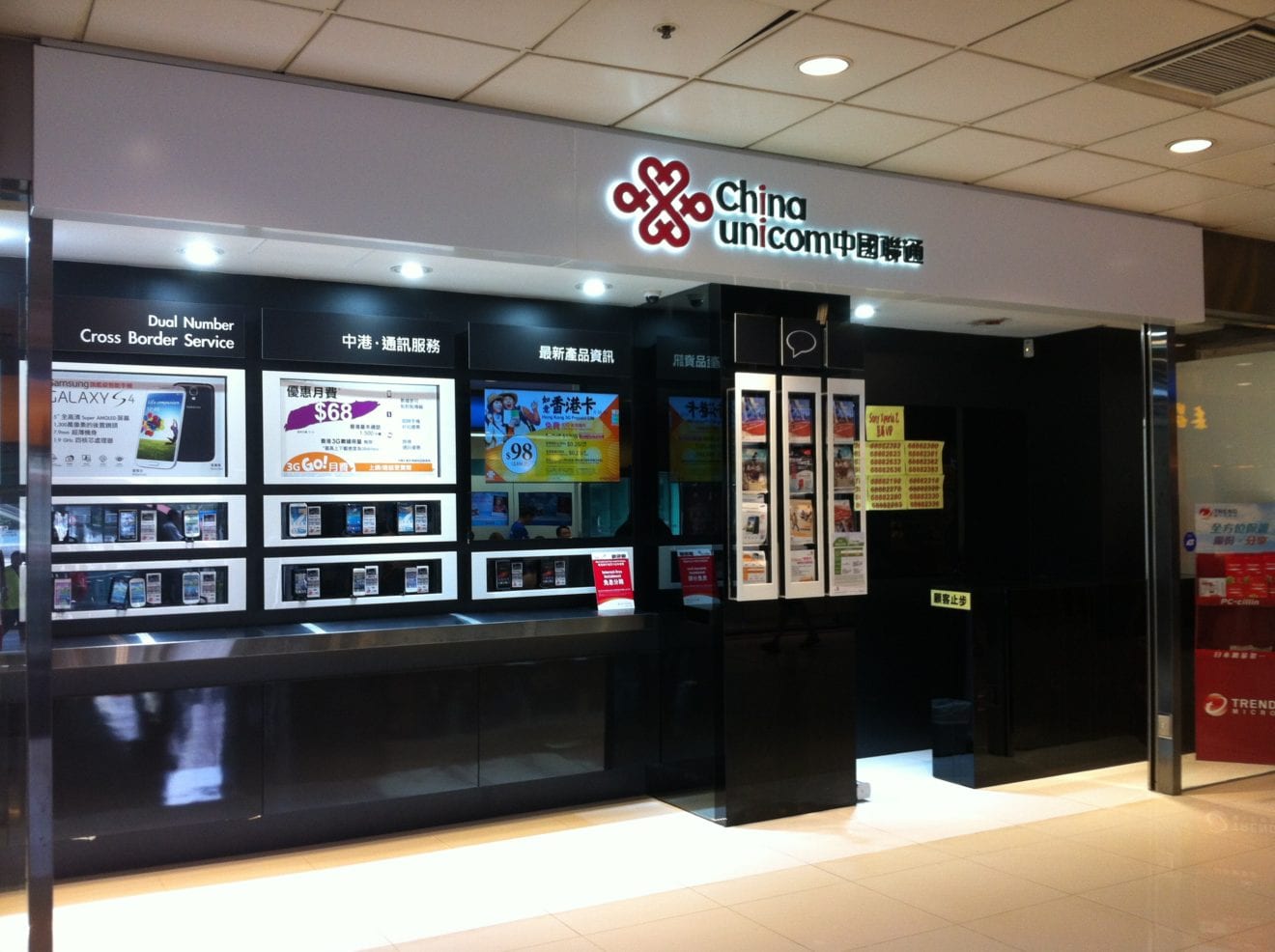
    China Unicom has announced a significant investment project involving expanding and upgrading its telecoms infrastructure, building new a IoT platform and data centers in Shanghai.

    The move comes shortly after the operator signed an “Internet+” cooperation agreement with the Shanghai municipal government.

    As part of the agreement, Unicom has committed to invest 14 billion yuan ($2.15 billion) to expand and upgrade its fixed optical network and wireless infrastructure in Shanghai over the next five years.

    The operator said it plans to deploy tri-band carrier aggregation on its 4G networkto boost network speeds from 150Mbps to 500Mbps by 2018 and to 1Gbps by 2020, according to C114.net.

    The company, China’s second largest mobile carrier by subscribers, aims to offer high-speed fiber and mobile broadband services at speeds of up to 1Gpbs in some key areas in the city.

    In addition, Unicom will deploy 10Gbps passive optical technology, which is expected to cover 6 million residences with FTTx by 2018 and 7 million by 2020. The operator aims to have citywide VoLTE coverage – including HD audio and video calls and VoWi-Fi services – this year.

    To help turn Shanghai into a smart city, Unicom said it will also deploy a city-wideNB-IoT (Narrow-band Internet of Things) platform for applications such as intelligent parking and environmental monitoring.  Construction of the NB-IoT network is expected to be completed in 2017 with the deployment of 3,000 network base stations.

    The operator also plans to build new data centers and big data infrastructure to provide could computing applications and services for urban management and social services.

    Unicom will also support SMEs’ “Internet+” transformation with innovative information services and its big data platform and cloud services.

    Another area of focus is to help address the basic needs of general public by promoting the use of innovation applications in various fields, such as transport, healthcare, education, travel and smart home.

  • Singtel full-year profit grows 2% despite forex hit

    Singtel full-year profit grows 2% despite forex hit

    Singtel has reported a 2% increase in net profit for the financial year ending in March to S$3.87 billion ($2.81 billion), despite negative foreign exchange movements.

    But operating revenue declined 1.5% to S$16.96 billion, the operator revealed. Excluding the impact of forex fluctuations, net profit would have grown 6% and operating revenue would have risen 4%.

    Earnings growth for the year was driven by a strong performance at Singtel’s regional mobile associates, particularly increased earnings from Indonesia’s Telkomsel. Pre-tax earnings contributions from these associates grew 5% to S$2.6 billion.

    For the fourth quarter, net profit was flat at S$946 million but would have grown 4% in constant currency terms. Regional associates’ pre-tax contribution grew 12%.

    “Mobile data was the bright spot. Our regional markets are now making their respective transitions from mobile telephony to mobile internet and harnessing the benefits of extensive investments in 3G and 4G networks and services,” Singtel Group CEO Chua Sock Koong commented.

    “We worked with our regional associates to navigate this shift from voice to data. In Singapore and Australia, our businesses were the first to launch innovative data add-on plans and zero-rated music services to meet customers’ increasing demands for OTT content services and data allowances, driving further data monetization.”

    Looking ahead to the current financial year, Singtel said that based on current economic forecasts, the operator expects to report a low single digit growth in consolidated revenue.