Category: Telecom

Retail News Asia is committed to providing both local and global retailers with the latest Telecom & Telco news throughout the Asian market. This on a daily base.

  • Jio Debuts 5G-Powered Wi-Fi

    Jio Debuts 5G-Powered Wi-Fi

    To enable 5G-for-all, Reliance Jio has introduced JioTrue5G-powered Wi-Fi services in high-footfall areas such as educational institutes, religious places, railway stations, bus stands, commercial hubs and more. This is in addition to the JioTrue5G service and the Jio Welcome Offer, launched recently in Delhi, Mumbai, Kolkata, and Varanasi. Jio teams are working round the clock to make additional cities go live and increase the availability of True5G-ready handsets.

    As a Shubh-Aarambh, along with JioTrue5G services, Jio has started JioTrue5G-powered Wi-Fi services in the temple town of Nathdwara, in Rajasthan.

    Akash M Ambani, chairman, Reliance Jio Infocomm Limited, said, “Service to humanity is one of the most endearing facets of Indian culture, the roots of which can be found in our socio-religious traditions. As stated earlier, 5G cannot remain an exclusive service to the privileged few or those in our largest cities. It must be available to every citizen, every home, and every business across India. This is a step in that direction to enable every Indian with JioTrue5G.”

    “Today, we have powered the first True5G-enabled Wi-Fi service at the holy town of Nathdwara and the temple of Lord Srinath Ji. With this, we will power many more such locations and allow them to trial our services. In addition, we welcome Chennai as our latest city to be added to Jio True5G Welcome Offer.”

  • Mobile virtual network operators hold 1% market share

    Mobile virtual network operators hold 1% market share

    With over one million subscribers, the country’s three mobile virtual network operators, who piggyback on large telecom companies, have a market share of 1%.

    iTel, Reddi and Local do not have their own infrastructure or radio frequencies and instead pay to use VinaPhone, Viettel, MobiFone, Vietnamobile, or Gtel’s.

    iTel, which depends on VinaPhone’s infrastructure and frequencies, has one million subscribers, according to the Ministry of Information and Communications.

    It reported revenues of VND442 billion ($18.4 million) this year, 4.5 times the whole of last year’s, and profits of VND28 billion.

    Reddi, which has nearly 50,000 subscribers, saw sales of VND15 billion. It had losses of VND27.8 billion and VND55.9 billion in 2020 and 2021.

    Local, which launched its services in mid-2022, focuses on providing low-cost data packages, which are preferred by young people.

    In April Digilife Vietnam Digital Services Company received a mobile virtual network operator’s license but has yet to begin offering services.

    Such companies focus on attracting customers interested in large data packages at reasonable charges such as workers, students and foreign tourists.

    Vietnam had nearly 120 million mobile phone subscribers, including some 93.7 million using smartphones, according to the ministry.

  • Airtel Launches ‘Always On’ IoT Connectivity Solution

    Airtel Launches ‘Always On’ IoT Connectivity Solution

    Bharti Airtel has announced the launch of the “Always On” IoT connectivity solution in India. Airtel’s “Always On” solution comprises the dual-profile M2M eSim which allows an IOT device to always stay connected to a mobile network from different Mobile Network Operators (MNOs) in the eSIM.

    The Airtel “Always On” solution complies with the Automotive Research Association of India (ARAI)’s AIS-140 standard, implemented by the Ministry of Road Transport and Highways (MoRTH). It specifies mandatory requirements related to connectivity and GPS tracking capabilities for devices in all passenger-carrying buses, private fleets and other public transport vehicles for tracking, safety and security purposes.

    As per law, all registered buses and taxis are mandated to install this device. The government of India recently made it mandatory for vehicles carrying hazardous goods to also have a tracker installed that complies with AIS-140 standards. In addition to these, there are emergency vehicles such as ambulances; vehicles from the mining and construction industries working in remote locations; and other mission-critical and intelligent communication use cases that need higher availability and reliability of the network.

    With its future-ready, GSMA-compliant platform; flexible API-based eSim lifecycle management on the feature-rich Airtel IoT Hub; and full compliance with Department of Telecom (DoT) M2M guidelines, Airtel is looking to acquire market leadership in this segment in the next few years.

    Speaking about the launch of the “Always On” AIS-140 connectivity solution, Ajay Chitkara, director and CEO of Airtel Business, said, “We are delighted to bring ‘Always On’ connectivity solution to our customers. We believe this is the next big opportunity in the IoT segment. Our strengths in the network, a modern and GSMA compliant platform offering real-time access to data and flexibility to integrate the solution with custom APIs will make Airtel Business stand out in the market.”

    The AIS140 solution has already been tested and adopted by some of the leading companies in the industry, like Lumax ITuran, Loconav and e-Trans. Lumax ITuran Telematics is a renowned name in advanced telematics technology and offers telematics products and services to the Indian automotive industry. LocoNav is the world’s fastest-growing fleet-tech company, with over 5 million vehicles on the road in over 50 countries. While e-Tra

  • ZTE Seals 5G Innovation Cooperation Agreement

    ZTE Seals 5G Innovation Cooperation Agreement

    ZTE has signed a 5G innovation cooperation agreement with True Group, a leading digital lifestyle enabler in Thailand.

    Under the agreement, both parties will focus on the 5G joint innovation center to develop 5G networks, digital services, smart islands, intelligent manufacturing, research innovation, talent training and other fields, with a great commitment to comprehensively carrying out 5G-oriented innovative technology and business cooperation.

    According to the agreement, both parties will set up a joint innovation lab in Bangkok’s True Digital Park to test and verify 5G technologies and applications. The innovative products, solutions and applications developed by these joint efforts will be directly deployed in the “Super South+” test field in Phuket, bringing the latest digital service experiences to local users.

    “True is ready to support the sustainable intelligence development of Thailand. True Group, with the strong collaboration with leading domestic and world-class international partners, is the only operator that has the complete range and coverage of 7 frequency bands, as well as the smart 5G technology with extensive network coverage of 77 provinces in Thailand,” said Manat Manavutiveth, president of True Group. “Under such circumstances, we are delighted to form the cooperation with ZTE to jointly drive network and infrastructure development and bring changes to the telecommunication sector in various dimensions.”

    “One of the highlights is the joint innovation lab at True Digital Park, reflecting True Group’s intention to focus on innovation development to create value for society and the country as well as our potentials and expertise in True Lab Innovation Centers located in the famous universities across the country. What’s more, the cooperation in the ‘Super South+’ Project in Phuket will help improve mobile network to serve the tourism industry in the southern area, which is one of the major destinations for tourists in Thailand. We are confident that this cooperation will create a complete True5G eco-system, develop innovation technology for maximum benefits as well as strengthening True5G genius network in order to sustainably enhance the life quality and provide ultimate experiences for Thai people and forge Thailand ahead to digital transformation,” added Manavutiveth.

    “ZTE continues to practice its own positioning as a driver of digital economy and insists on continuous technological innovation. Through joint innovation, ZTE will give full play to ZTE ‘s advantages in 5G technology, R&D innovation and 5G industry application,” said Mei Zhonghua, senior vice president of ZTE Corporation. “We are deploying minimalist, green, low-carbon and intelligent 5G networks for True in southern Thailand. To meet the needs of numerous islands and offshore operations in south Thailand, we provide customized ultra-long-distance coverage products, which will enable 5G coverage to reach 100KM over the sea and high-speed 5G digital services for tourists and marine operations.”

    Moving forward, the joint innovation lab will also expand to local ecological partners to form end-to-end 5G innovative applications, further empowering industry verticals. From local pilot to mature promotion, the lab – by forming a 5G ecosystem with cross-industry integration – will further change the production method, create greater economic value for Thailand and support Thailand’s digital transformation to achieve the “Digital Thailand” vision.

  • Nokia and AIS Fibre Trial Fastest Broadband in Asia

    Nokia and AIS Fibre Trial Fastest Broadband in Asia

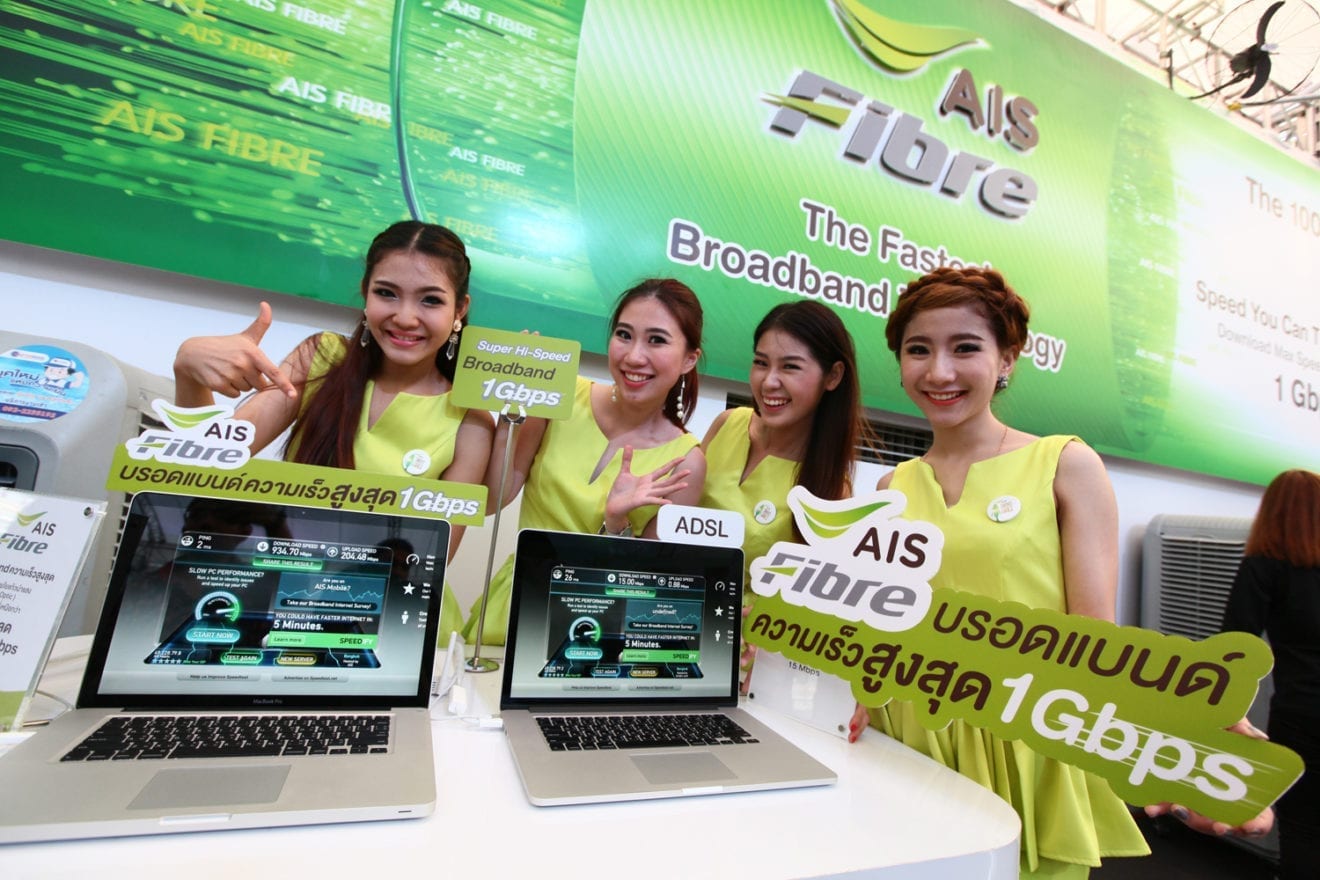
    Nokia and AIS Fibre announced the first trial of their 25G PON solution in Asia. AIS Fibre in Thailand trialed the technology using its existing optical line terminals (OLT), which have already been rolled out nationwide. The OLT was connected simultaneously to three end-user devices with a combined speed of 37.5 Gb/s using a 25G PON optical network terminal (ONT) at 25 Gb/s, an XGS-PON ONT at 10 Gb/s and a GPON ONT at 2.5 Gb/s. All services can be served with the same single fiber at the same time.

    AIS Fibre was the first operator to offer 100% optical fiber broadband services in Thailand. With this successful trial concluded, the company is set to realize its ambition to build the most future-proofed fiber optic home Internet network in the country.

    As new applications like virtual reality gaming and hologram calls enter the mainstream, AIS Fibre will be able to offer the services with super high speeds and low latency. Since AIS Fibre will be able to run GPON, XGS-PON and 25G PON services on the same fiber line, it can offer customers a full choice of speeds up to 25 Gb/s on the existing platform and without the need for intrusive excavation and laying of new fiber.

    25G PON also gives AIS Fibre the opportunity to offer enterprises a 10G + and lower latency replacement to Point to Point (P2P) connections which can be costly and are less scalable. The operator will also be able to use the technology for 5G backhaul, which will become increasingly important as it builds more cell sites required for higher frequency 5G.

    Thanit Chaiyaboonthanit, acting managing director of Fixed Broadband at AIS, said, “AIS Fibre prioritizes innovation that will provide the best services to our customers and gives us network technology which meets users’ future needs in terms of both speed and flexibility. This partnership with Nokia to trial 25G PON technology has yielded favourable results, inspiring us to believe that we can deploy it in the future.”

    Ajay Sharma, head of Thailand and Cambodia at Nokia, noted, “With enhanced speeds provided by 25G PON, fiber networks are evolving into being able to connect everything, everywhere. They play an important role in delivering any service to any endpoint, including residences, businesses and cell sites. We are proud to have been part of this important milestone.”

  • Singtel and Ericsson to Roll Out Singapore’s Most Energy-Efficient Radio Cell on 5G Network

    Singtel and Ericsson to Roll Out Singapore’s Most Energy-Efficient Radio Cell on 5G Network

    Singtel has announced the deployment of Singapore’s greenest radio cell, the Ericsson AIR 3268, to its 5G network. This is part of Singtel’s ongoing sustainability and decarbonization measures towards achieving net-zero emissions by 2050 and paves the way for more such radio cells to be deployed across the country to augment its nationwide 5G coverage.

    The AIR 3268 radio is expected to save up to 18% more energy and weigh approximately 40% less than earlier generations of 5G radios. At just 12kg, its proportions simplify upgrades and make new site acquisitions and installations easy on towers, rooftops, poles and walls – even in challenging locations. It also makes a 5G site 76% lighter than a 4G site that typically requires multiple radios while providing the same network capacity. This further reduces Singtel’s overall 5G network energy consumption, up to 58% lower than 4G today.

    The AIR 3268 is designed to provide real-time channel estimation and ultra-precise beamforming – or elimination of undesirable noise interference – to accelerate 5G mid-band spectrum deployment and boost capacity, coverage and connectivity speeds, thus enhancing mobile experiences for customers.

    Anna Yip, chief executive officer, Consumer Singapore, Singtel, said, “We are always looking for ways to deliver Singapore’s greenest 5G network while further reducing our carbon footprint. By integrating energy-efficient technologies into our operations and infrastructure, we aim to build a better, more sustainable future as we continue to deliver the best network performance and user experience to consumers and enterprises through our 5G solutions and services. With an optimized network, even end-users will be able to conserve energy on their mobile devices, making them part of the movement of building a better future together.”

    Martin Wiktorin, head of Ericsson Singapore and Philippines, noted, “Sustainability and energy efficiency are a priority for us at Ericsson. Deploying our energy-efficient AIR 3268 radio as part of Singtel’s 5G network is a significant step in our larger sustainability plan, which is focused on breaking the energy curve by activating energy-saving software, building 5G with precision and operating the site infrastructure intelligently. This will serve to manage mobile traffic growth while reducing energy consumption.”

    Deployment Simplicity and Improved Energy Efficiency

    Singtel 5G is a greener technology with higher data transfer rates compared to any previous wireless technology generation, working on a wide spectrum of 100 MHz, which provides cell capacity comparable to four Singtel 4G bands combined.

    The deployment of the AIR 3268, the lightest and smallest Massive MIMO (multiple-input and multiple-output) in the industry, is another step in Singtel’s energy-saving improvements as it explores smart and sustainable mobile technologies that optimize power and energy utilization in its operations.

  • Maxis in Metaverse Aims to Provide Immersive, Engaging Experiences for Customers

    Maxis in Metaverse Aims to Provide Immersive, Engaging Experiences for Customers

    Maxis is exploring the future of living, working, playing and learning in the metaverse. This is in line with its Rangkaian Kita Rangkaian Malaysia (RKRM) campaign to serve all Malaysians in every way possible and at all times.

    RKRM is the reinforcement and deepening of Maxis’ Always Be Ahead brand purpose. Maxis is driven by its evolution from a mobile telecommunications provider into a connectivity and digital solutions expert, one that offers solutions for every segment, powered by its leading 4G network and fiber coverage, as well as the best 5G innovation.

    While still in its preliminary stages, Maxis in metaverse aims to provide a unique destination for an immersive experience with highly engaging, relevant and rewarding interactions. Through the platform, Maxis provides a glimpse into the possibilities of what the future may look like from multiple perspectives – from essential services, customer engagement, enterprise solutions, gaming, talent procurement and immersive education – and is building an ecosystem of partnerships with multi-industry verticals.

    “The metaverse mirrors our brand purpose and our What’s Possible core value as it expands minds to the possibilities of what we can do in the digital future to continue serving our customers in the best possible way,” said Patrick Er, Maxis’ chief sales and service officer.

    In kickstarting this exploratory phase, Maxis has unveiled Malaysia’s first Virtual Telco Store in the metaverse, Maxis Centre Decentraland, a connected retail experience in the metaverse to benefit customers with specific offerings. Users will be able to shop for Maxis products and services using the latest 3D technology; view and develop ideas on how they can transform their homes with Maxis home devices powered by Maxis Fiber; and even purchase collectible NFTs through collaboration with Malaysian artists.

  • Telenor Asia Headquarters in Singapore to Capture New Market Growth

    Telenor Asia Headquarters in Singapore to Capture New Market Growth

    Telenor Group has announced the formation of Telenor Asia, a more independent regional entity with headquarters in Singapore. Telenor Asia will take on full oversight and responsibility for the company’s operations in Bangladesh, Malaysia, Pakistan and Thailand.

    “The strengthened team at our Singapore headquarters will add value to our operations and safeguard our regional interests. This will also help us ensure value creation of our assets. We will explore structural partnerships or, in the future, a potential IPO,” said Jørgen Rostrup, head of Telenor Asia.

    “The foundation for our continued growth in Asia is how our services help improve people’s lives and empower societies. In a recent survey we conducted of 8,000 people in South and Southeast Asia, a resounding 93% said that mobile connectivity improved their quality of life,” he added.

    Each market will now have dedicated Investment Management teams. These teams will take on an asset manager role and represent Telenor’s interests in local boards. The team in Singapore will also be strengthened with expertise in finance, operations, risk management, governance, people management and responsible business.

    In 2021, Telenor Asia signed merger agreements in Malaysia and Thailand. These mergers are the largest and second largest in Southeast Asia. When the two mergers are completed, Telenor Asia’s portfolio will comprise leading telco players in three large Asian markets, with more than 200 million customers and US$10 billion in revenue.

    To achieve a target of US$1.2 billion in cash flow by 2025, Telenor Asia will realize synergies from the two mergers and maximize opportunities across three areas.

    The first is increasing mobile adoption and data usage in Bangladesh and Pakistan. There are more than 150 million people in these two countries without mobile devices, and 50% of the current customer base subscribe to voice services only.

    Second, Telenor Asia will grow business-to-business (B2B) revenue. Current revenue contribution to Telenor Asia from this sector is around 5%, with large growth potential. Throughout the pandemic, when the overall telco sector was contracting, Telenor Asia’s B2B revenue was up by 10%.

    Third, focus will be placed on expanding customer value by offering services beyond core mobile connectivity, such as insurance, security and gaming products.

    Telenor has been present in Singapore since 1998 and has a diverse workforce of over 180 employees. Singapore is also home to Telenor’s global procurement company, where a team of skilled professionals manages complex supplier relationships and ensures responsible supply chains. Telenor Connexion, which provides cutting-edge IoT solutions, has a team of sales professionals covering Asia Pacific from Singapore. Telenor’s journey in Asia began with Bangladesh in 1997. Fast forward 25 years, Telenor has 165 mil

  • SIM Cards Must Now Be Registered With Telcos in the Philippines

    SIM Cards Must Now Be Registered With Telcos in the Philippines

    Mobile phone users in the Philippines must now register their SIM cards with their telecom provider after the country’s President, Ferdinand Marcos Jr., signed into law the SIM Card Registration Act.

    According to the official dispatch, the new measure aims to promote accountability in the use of SIM cards and help law enforcement to track those involved in crimes committed through mobile phones.

    Under the new law, all public telecommunications entities or direct sellers must require the SIM card user to show a valid identification document with a photo.

    The registered SIM card details will not be disclosed unless the user authorizes access to his information.

    Law enforcement agencies that conduct probes on purported crimes committed through phones may also submit a written request to telco firms to disclose the details of the SIM card holder.

    The two telecom giants in the Philippines, Globe Telecom and PLDT Group, had previously expressed support for this measure, saying they would be helping the government in preventing crimes committed electronically.

    The law consolidates the bills approved by the House of Representatives and the Senate.

  • Malaysia’s 5G Journey Back on Track for Wider Coverage

    Malaysia’s 5G Journey Back on Track for Wider Coverage

    Four Malaysia mobile operators, namely Celcom, Digi, YTL and TM, have finally sealed agreements to take up 65% of the government-owned 5G agency, Digital Nasional Berhad (DNB), to roll out the country’s 5G services.

    Ahead of their impending merger, both Celcom and Digi will take a 12.5% stake each, while YTL and TM will each have a 20% stake. The remaining two telcos, Maxis and U Mobile, have also agreed to purchase wholesale capacity from DNB, after talks of the two operators retracting their decision to take stakes in the government agency as they reportedly did not see benefits in being minority shareholders.

    5G is an important pillar in the digital economy. In an effort to realize 5G, a state-controlled 5G single wholesale network by Digital Nasional Berhad (DNB), owned by the Ministry of Finance Malaysia, was established in March 2021 to undertake the deployment of 5G infrastructure and extend 5G as a wholesale network.

    However, the road toward 5G has not been smooth sailing, as all stakeholders find it difficult to see eye to eye on how 5G is to be deployed in the country.

    Earlier this year, mobile operators debated with the Malaysian Communication and Multimedia Commission (MCMC) over terms for the country’s wholesale 5G network, with the four largest operators – Maxis, Celcom Axiata, U Mobile and Digi – pushing for two wholesale networks.

    Jointly, the operators countered the government’s proposal to seek at least a 51% stake in DNB, citing concerns over unaffordable 5G pricing for consumers and enterprise as an initial stumbling block. However, the government did not waver on its August 31,   deadline. It believes that a shared network will be more cost-effective and enable infrastructure development to speed up. On the contrary, some industry players are of the opinion that this deprives operators of the competitive advantage of differentiating their services.

    However, after initial hesitations, all six mobile operators in the country agreed to the 5G agreement, but with Maxis and U Mobile deciding to retract their decisions at the eleventh hour.

    While all six mobile operators have now firmed up their decision to move forward, the MCMC foresees challenges ahead for state-level rollouts owing to bureaucratic red tape by local authorities.

    By the second quarter, Malaysia’s 5G rollout had reached 27%. While this indicates progress made in terms of 5G service coverage, MCMC’s Chief Operation Officer, Datuk Mohd Ali Hanafiah Mohd Yunus, noted that there is still room for improvement when it comes to addressing the requirements of local councils and states for resolving bureaucracy issues.

    Deputy Minister of Communications and Multimedia Datuk Zahidi Zainul Abidin has even called for the 5G contract to be given back to MCMC as telcos have not been aligned with the government. Zahidi also encouraged the public to inform MCMC if an area has poor internet access so that telcos can be instructed to place transmitters at respective sites.

    “We at MCMC can only ask them or implore them to place these transmitters to increase the strength of the transmitters while DNB don’t have the authority to force them or reprimand them for not doing so,” Zahidi said. “That’s why I kept saying in this house to give this 5G rollout project back to the MCMC so we can then instruct these telcos to follow our instructions as we have an Act to compel them to do so.”

    Gaining Momentum in 5G

    According to IDC, there will be 6.2 million IoT connections in Malaysia by 2025, nearly doubling from just 3.9 million connections in 2020. In the report, IDC stated that “IoT alone will generate significant IP traffic, which further highlights the need for expanded backhaul bandwidth to support both 5G cell sites but also fixed aggregation at factories, stadiums, and various government and smart city locations.”

    As 5G penetration takes root in Asia, Malaysia is reportedly aiming to extend approximately 80% of 5G network coverage in populated cities, including Kuala Lumpur, Cyberjaya and Putrajaya by the end of this year, with plans to extend 5G to other cities by the end of 2024. As defined by MCMC, “populated areas” refer to areas with at least 20 people per square kilometer.

    In a recent report by Opensignal, Kuala Lumpur has the second highest 5G download speed of 376.6 Mbps among 11 cities in Asia Pacific, behind only Seoul, with a 5G download speed of 453.1 Mbps. The report cited that the reason behind Kuala Lumpur’s high ranking is that YTL Communications’ Yes 5G is the first and only operator offering commercial 5G services in Kluang, Malaysia, and hence, DNB has a lighter 5G network load compared to other Asia-Pacific cities.

    According to the Malaysian Investment Development Authority, Malaysia is expected to have 2.1 million 5G subscribers by 2025, or an estimated penetration of 6.6 5G subscribers per 100 people. By then, 5G is projected to contribute about RM5.3 billion to Malaysia’s gross domestic product.

    Mohd Ali Hanafiah has said that the country is on track for Phase 1, which spans 2020 to , with Phase 2 to be scheduled for the end of 2022 through 2025. Under this project, Malaysia aims to lay out plans for private and public sectors to provide wider coverage and a better broadband quality experience for its people, as 5G adoption grows.

    Investments for Phase 1 of the project are estimated at RM28 billion. 60% will be funded by the private sector, while the government will contribute to the remaining 40% via the Universal Service Provision (USP) fund to ensure that rural areas will be well covered to bridge the digital divide.


  • Two regulators open investigations into Optus over data breach

    Two regulators open investigations into Optus over data breach

    Two Australian regulators said on Tuesday they have opened investigations into Optus, the country’s No. 2 telecoms provider, after a breach of its systems resulted in the theft of personal data from up to 10 million accounts.

    The probes only add to headaches for Optus, which disclosed the breach on Sept. 22 and has since come under heavy fire from the government and the public for not preventing the massive cyberattack.

    The Office of the Australian Information Commissioner (OAIC) said it was investigating whether the Singapore Telecommunications Ltd-owned company took reasonable steps to protect customer data and comply with privacy laws.

    The Australian Communications and Media Authority (ACMA) said it was investigating whether Optus met its industry obligations as a telecommunications provider in terms of the keeping and disposing of personal data.

    Amid the widening fallout, the federal government has flagged it will overhaul data security laws to force firms that have had a cyberattack to notify banks about customers who may be compromised. Several law firms are also considering filing class action lawsuits.

    The OAIC said in a statement if it finds that “interference with the privacy of one or more individuals has occurred”, it may force Optus to take steps to ensure the breach cannot be repeated.

    The agency added that it finds there was a breach of Australian privacy law, it can seek civil penalties of up to A$2.2 million ($1.4 million) per contravention.

    ACMA Chair Nerida O’Loughlin said in a statement that failure by telecommunications providers to safeguard customer information “has significant consequences for all involved”.

    Australian Competition and Consumer Commission Chair Gina Cass-Gottlieb told a parliamentary hearing the regulator was receiving 600 calls a day from people concerned about the Optus breach, although few had been scammed as a result.

    Optus said in a statement that it had received formal notices of investigation from both regulators and that it would fully engage with them.

  • Airtel Debuts India’s First Virtual Reality Ads Powered by 5G

    Airtel Debuts India’s First Virtual Reality Ads Powered by 5G

    Airtel unveiled India’s first immersive Virtual Reality (VR) advertisement powered by 5G. The advertisement format on the Airtel Thanks app opens new avenues for brands to engage with consumers in an immersive environment that was previously not possible in the traditional advertising paradigm.

    The ultra-fast, low-latency 5G network ensures the 3D visuals and videos are life-like. Through this ad format, brands can offer their customers an immersive ad that is free of any lag, making it highly engaging. Airtel has roped in some of India’s leading brands such as PepsiCo and SonyLIV to create a pilot and demo the capabilities of this product at the Indian Mobile Congress.

    Today, the Indian advertising industry is in a flux, with more than 750 million mobile users increasingly spending more time on their mobile screens – an average of about 5 hours daily, according to an App Annie report. With reducing attention spans, brands are increasingly looking towards innovative mobile-first ad formats to connect with this next-generation audience, capture their attention and build awareness.

    Commenting on this, Adarsh Nair, CEO of Airtel Digital, said, “The biggest benefit of 5G is that it allows us to do more with low-latency. We are leveraging this technology to create India’s first ever immersive VR advertisement that offers brands a direct connect to consumers in a mobile-first environment. Brands can leverage this to create engaging, immersive and personalized experiences for their customers.”

  • Axis Communications Debuts First Axis Experience Center

    Axis Communications Debuts First Axis Experience Center

    Axis Communications has launched its first Axis Experience Center (AEC) in Singapore. Representing the first AEC in Southeast Asia, the state-of-the-art facility is designed to showcase cutting-edge security innovations and solutions. The launch reaffirms Axis’ commitment to elevating security standards not only in Singapore but also the broader region, for a smarter and safer world.

    The S$1 million Experience Center was unveiled at Axis Communications’ Singapore headquarters. The opening was graced by Jacqueline Poh, managing director at the Singapore Economic Development Board (EDB), as the Guest-of-Honor. Other distinguished guests included His Excellency Kent Härstedt, Ambassador to Singapore, Kingdom of Sweden, as well as senior leadership representatives from Axis Communications, Boudewijn Pesch, vice president, Asia Pacific, and Carl Malmqvist, regional director, South Asia Pacific.

    Through physical product showcases and interactive demonstrations, guests can experience first-hand the ability of future-ready technologies to deliver optimal security outcomes. This includes advanced surveillance systems encompassing features such as audio analytics, intrusion detection, automated access control systems as well as data analysis tools that yield actionable insights for better decision-making. As the 25th AEC globally, the Singapore facility is envisioned to serve as the center of excellence for the region. It will be joined by new AECs across key cities in Asia Pacific such as Kuala Lumpur, Jakarta, Bangkok, Bangalore, Mumbai, and Delhi, among others, unlocking further opportunities for growth and partnerships.

    Carl Malmqvist, regional director, South Asia Pacific at Axis Communications, said, “The digitalisation of Southeast Asia has reached a tipping point, driven by increasing awareness of the benefits that digital technologies can provide. We anticipate continued technology adoption and innovation to create opportunities for the growth of advanced security applications. Having an Experience Center in a regional business hub like Singapore provides Axis with the platform to better engage its ecosystem of stakeholders across Southeast Asia, facilitating collaboration essential to meet evolving security requirements in today’s increasingly networked environments. We look forward to working closely with trusted partners such as Singapore’s Economic Development Board to build smarter, safer, sustainable and efficient cities of the future.”

    Jacqueline Poh, managing director at the Singapore Economic Development Board, added: “We expect demand for advanced security solutions that incorporate digital technologies to grow in Southeast Asia as the benefits of digitalization become more widely known. Singapore’s strengths and capabilities in network security and advanced analytics, coupled with our hub advantages, make it an ideal location for the Axis Experience Center. We look forward to Axis’ plans to enhance our ecosystem by bringing private and public sector stakeholders together to address important and emerging security challenges.”

    Collaboration with like-minded industry partners both locally and regionally is a key factor in driving Axis’ growth in Asia. One such partner is Singtel, with whom Axis is currently exploring 5G use cases for security applications. 5G networks can support increased bandwidth that is essential for data aggregation and analysis, giving rise to more innovative security solutions in areas such as automation and machine learning.

    Dennis Wong, VP 5G Enterprise & Cloud, Singtel Group, noted, “Many enterprises are undergoing rapid digitalisation while exploring and developing 5G solutions for deployment in their industries. Singtel’s 5G network and Paragon MEC platform have been specially designed to help them address their business needs, improve operational efficiencies, and unlock new opportunities to advance in a 5G world. Such solutions, developed with industry partners like Axis, are currently being showcased and trialled at Singtel’s facilities such as the FutureNow Innovation Centre, Centre of Digital Excellence, as well as the 5G Garage, which is a live test facility, training centre and ideation lab. With the opening of the AEC, enterprises have a new avenue to secure the solutions and support they need to help them achieve their digitalisation goals and aspirations in Singapore and beyond.”

  • Globe’s ‘Historic’ Subsea Cable Project to Be Completed by April 2023

    Globe’s ‘Historic’ Subsea Cable Project to Be Completed by April 2023

    Globe has announced that it has landed fiber optic cable in eight provinces within just two months, on track to complete the landmark project by April 2023.

    The $150-million Philippine Domestic Submarine Cable Network (PDSCN), the longest domestic subsea cable project in the Philippines, has landed in Lucena City, Boac in Marinduque, Calatrava in Romblon, Placer in Masbate, Iloilo City, Bacolod City, Roxas City and most recently, the tourist island of Siargao in Surigao del Norte.

    “This is a historic subsea cable project that will bring better connectivity and data capacity to several communities who rely on communications for their day-to-day needs, including education, work and livelihood,” announced Globe Group President and CEO Ernest Cu.

    The sites are among 33 landing points of PDSCN, which has a total cable distance of about 2,500 kilometers. The project commenced in July and is set to finish covering all sites by April next year.

    “Despite disruptive weather events this wet season, our PDSCN project has been touching down its landing points as planned, bringing reliable fiber connectivity to remote and underserved areas,” said Arlene Jallorina, vice president for strategic infrastructure investments for Globe Business, Enterprise Group.

    The project kicked off in July at the Subic Bay when Globe, Infinivan, Inc. and Eastern Communications, along with Japanese vendor partner Kokusai Cable Ship Co., started transporting fiber optic cable manufactured by global firm Nexans to the landing points across the country.

    The project is seen to deliver connectivity crucial to the country’s recovery from the pandemic, as it will support the government, education, business and even recreational needs for reliable communication facilities.

    Further cable landings will be made in the coming months, including in Mactan, Cebu and Boracay, Aklan. Fiber connections will be activated thereafter.

  • Philippines Re-elected as ITU Council Member

    Philippines Re-elected as ITU Council Member

    The Department of Information and Communications Technology (DICT) has announced that the Philippines was re-elected to the International Telecommunications Union (ITU) Council on October 3 in Bucharest, Romania.

    One hundred and ninety-three member states of the ITU selected 48 states to lead the Council. The Philippines is among the 13 states selected from Region E (Asia and Australia), along with Australia, Bahrain, China, India, Indonesia, Japan, Korea, Kuwait, Malaysia, Saudi Arabia, Thailand and the United Arab Emirates.

    Represented by DICT, the agency said that the country commits to working towards the fulfillment of the ITU’s mandate to make the digital future inclusive and more accessible for everyone, especially in developing countries.

    “The DICT looks forward to working with all our stakeholders both in the public and private sectors to attain our common aspirations of a digitally empowered Philippines. As a country, we are very eager to take an active part in building a better digital future for all as our commitment under the Bucharest Declaration,” DICT Secretary Ivan John Uy said as he addressed the nation’s win in the ITU Council.

    DICT Undersecretary Jocelle Batapa-Sigue assisted in the country’s successful bid for re-election and will be representing the Philippines until the end of the Plenipotentiary Conference on October 14, 2022

    “To us in government, it may be just work, but for others, it may mean their lives, their food, their education, their health. Let’s help the world in the next four years with every [bit of] knowledge, every sharing we can share. The PH is blessed to stand among nations and have a voice in the next four      years. Let us show the world that DICT is a government agency of global standards. Let us use this seat, this voice to help build a better digital future,” Batapa-Sigue asserted.

    The DICT is expected to lead the country’s involvement in discussions and decision-making that will significantly affect the member states’ digital agenda. The Department also enjoins the support and collaboration of government agencies to achieve its goals as a Council member.