Category: Telecom

Retail News Asia is committed to providing both local and global retailers with the latest Telecom & Telco news throughout the Asian market. This on a daily base.

  • Public Cloud Services to Reach US$165.2 Billion in 2026

    Public Cloud Services to Reach US$165.2 Billion in 2026

    The public cloud services market in Asia Pacific, excluding Japan, will reach US$165.2 billion in 2026, according to IDC. The PCS market is to grow at a higher year-over-year (YoY) rate in 2022 at 31.4% in comparison to 30.0% in 2021, as cloud migration continues to accelerate. However, IDC expects the YoY growth rates to slow down beginning in 2023 with a YoY growth of 28.3%, to 22.4% in 2026.

    “Majority of organizations have pivoted rapidly toward a digital-centric modus operandi to adapt to new ways of operating, working and selling products and services amid various disruptions. These organizations progressively demand better outcomes from their adoption of digital technologies to increase efficiency, accelerate time to market, provide empathetic customer experience, make quicker decisions and respond faster to customers. In IDC’s view, cloud technologies are the core building blocks for the future of digital infrastructure that can meet these challenges,” said Estelle Quek, senior research manager, Cloud Services, IDC Asia/Pacific.

    Infrastructure as a service (IaaS) will achieve a market value of US$80.7 billion and make up 48.8% of the Asia-Pacific  PCS market in 2026. IDC predicts more organizations will continue to accelerate IaaS adoption to reduce risks associated with capital expenditure and to operate more efficiently and profitably. Organizations are progressively pursuing consistency, security, performance and compliance across all resources by deploying, operating and scaling digital infrastructure in dedicated datacenters (DCs), private cloud, PCS and edge locations.

    Platform as a service (PaaS) will reach a market value of US$27.4 billion, contributing to 16.6% of the Asia-Pacific PCS market in 2026. Growth is fueled by organizations that are gradually shifting application development in-house to have better control and those exploring ways to allocate development functions to non-IT staff using low-code/no-code platforms.

    Software as a service (SaaS) will grow almost three times, from US$20.8 billion in 2021 to US$57.1 billion in 2026, contributing to 34.6% of the entire Asia-Pacific PCS market by then. SaaS growth is attributed to continued adoption of core enterprise applications, such as customer relationship management (CRM) and enterprise resource management (ERM). These remain top priorities as organizations desire to obtain 360-degree visibility and better service for their customers and to improve internal planning and operations by streamlining business processes and activities.

    “The PCS market’s growth is fueled by organizations’ DX acceleration and cloud-first approach with continuous adoption of hybrid work, business, or operations and the desire to drive better business outcomes, improve efficiencies, and create an empathetic customer experience to augment customer retention rate and enhance pr

  • What Internet Speed Rankings Reveal about the State of Philippines’ Digital Infrastructure

    What Internet Speed Rankings Reveal about the State of Philippines’ Digital Infrastructure

    We live in an increasingly digital world. Today, computers, mobile devices, and the internet play key roles in our work, education, socialization, entertainment, and other daily activities. The rise of digital technology has only been accelerated further in recent years by the COVID-19 pandemic, when health and safety restrictions temporarily closed schools and businesses. At the height of the pandemic, many people had no choice but to work, study, and even shop for their everyday essentials via the internet.

    Even post-COVID-19, the world seems inevitably headed in the direction of a technology-dependent status quo. Unfortunately for the Philippines, internet services in the country have historically left much to be desired. Our overall download and upload speeds are notoriously slow, lagging significantly behind those of other Southeast Asian countries. Accessibility and affordability also remain pressing problems, as stable internet remains financially out of reach for the poorest of the poor. People living in rural or far-flung areas subsist with little to no internet connectivity and must often travel great distances to the closest cities for a better-quality connection.

    How exactly does the Philippines compare to neighboring countries in terms of internet speed and accessibility? What challenges do the public and private sector face in the attempt to improve digital infrastructure? And most importantly, what can be done to boost internet connectivity throughout the country, for all Filipinos? Read on for an in-depth exploration of these pressing questions.

    Evaluating Digital Quality of Life in the Philippines

    Just how fast (or slow) is the internet in the Philippines, really? Internet speed monitoring organization Speedtest by Ookla reported in August 2022 that the Philippines had risen a few spots in their global ranking of internet speeds. Ookla monitors fixed broadband internet connectivity in 182 countries worldwide and mobile internet connectivity in 140 countries.

    The Philippines’ fixed broadband median, for example, was ranked 45th in the world in July 2022, with an overall download speed of 78.33 megabits per second (Mbps). The country’s mobile internet median speed, meanwhile, sat at 84th place. Mobile median download speed in the Philippines was recorded at 22.56 Mbps.

    While current services have certainly made significant progress from years ago, both industry authorities and users on the ground insist it’s still not enough. In September 2022, a Netherlands-based subsidiary of Nord Security known as Surfshark released a global study ranking countries according to overall “digital well-being.” This ranking was based on five variables Surfshark termed fundamental digital life pillars—internet quality, internet affordability, e-security, e-government, and e-infrastructure.

    The Philippines sits at 55th out of 117 countries on Surfshark’s Digital Quality of Life (DQL) Index for 2022, a sharp tumble from its rank of 48th in 2021. Internet services in the country are described as providing only mediocre-quality connectivity, while simultaneously being among the least affordable in the world. This assessment is, for the most part, in line with what ordinary Filipino internet users have to contend with on the regular.

    Improving Internet Speed and Accessibility in the Philippines

    Many factors contribute to the current inadequacy of internet services in the Philippines, such as limited energy sources and the country’s susceptibility to natural hazards. Local telcos also assert that the Philippines’ rigorous regulatory landscape also hinders them from making necessary improvements. Putting up a single cell tower has been known to take as many as eight months, and much of that time is typically spent securing anywhere between 29 to 35 government permits. These include a barangay permit, mayor’s permit, occupancy permit, neighbor’s consent, radiation evaluation, and others.

    As things currently stand, there are only around 18,000 telecom towers installed around the Philippines. Experts assert the country needs around 50,000 more to achieve optimal internet coverage. Fortunately, the public and the private sector have started investing in more modern, more widespread digital infrastructure to help Filipinos thrive in the new normal. The government has already begun passing laws to scale back on the number of permits required to build cell sites. They’ve also approved legislation that allows the construction of cell towers in subdivisions and other residential areas and are considering a stronger common tower policy in the coming years.

    Telcos, for their part, have committed to accelerating the rollout of cell towers around the country and are leveraging partnerships with infrastructure companies and tech startups to make this possible. Working in tandem with both public and private partners, Globe Telecom has upgraded almost 7,000 mobile cell sites to 4G LTE and installed 572 new cell towers in the first half of 2022 alone. PLDT’s wireless division Smart Communications Inc. has likewise increased its total number of LTE and 5G base stations across the country to 76,600 in an attempt to bring mobile internet to more people around the country. Unity Digital Infrastructure, a unit of the Aboitiz Group formed in tandem with the Switzerland-based Partners Group, has also pledged an investment of PHP 6 billion to build 1,000 cell sites in the Visayas and Mindanao areas this 2022.


    Although internet quality and accessibility remain pressing problems nationwide, digital infrastructure in the Philippines is steadily improving thanks to productive public-private partnerships. By making intelligent investments, private companies and the Philippine government can steadily work toward better digital quality of life for the whole country.

  • NTT DOCOMO and NEC Test Energy Efficiency of AWS Graviton2 for 5G SA Core

    NTT DOCOMO and NEC Test Energy Efficiency of AWS Graviton2 for 5G SA Core

    NTT DOCOMO and NEC Corporation announced the completion of a trial to test the energy efficiency and high performance of AWS Graviton2 processors across key elements of the 5G core network (5GC). The trial demonstrated an average of a 72% reduction in power consumption against incumbent x86 processors using NEC’s 5GC software running on AWS Graviton2. The trial tested performance within a 5GC hybrid cloud environment leveraging AWS Graviton2 and DOCOMO’s on-premises Network Functions Virtualization (NFV) infrastructure.

    These results support the future realization of a hybrid cloud environment for telecommunication networks, which enables mobile operators to provide enhanced disaster-resilient networks to customers.

    AWS Graviton2 processors deliver a major leap in performance and help reduce the carbon footprint of IT workloads through energy efficiency. Traditionally, many telecommunication workloads need to reside on edge infrastructure, which have power and real estate constraints. AWS Graviton2 offers efficiency with very low cost, low power and a low hardware footprint. In this proof of concept, the use of Graviton2 reduced power consumption of 5GC by 72% on average.

    Following the completion of this first phase, the companies will now conduct a second phase trial to test the 5GC network function on AWS Outposts equipped with Graviton2 processors on DOCOMO’s premises.

    “We are delighted to announce that we achieved a significant reduction of power consumption of 5GC thanks to NEC’s advanced, cloud-native 5GC software and AWS’s innovative and highly efficient Graviton2,” said Naoki Tani, executive vice president, chief technology officer and executive general manager of the R&D innovation division of NTT DOCOMO. “We will continue collaborating on the PoC with NEC and AWS for future delivery of environmentally friendly and disaster-resilient 5G network service to our customers.”

    “The significant power reduction achieved through this trial indicates a big step forward in commercializing environmentally friendly, sustainable, next-generation mobile infrastructure. NEC will continue adopting cutting-edge, low-power technologies, such as Graviton2, for its UPF and vRAN domains. We aim to further contribute to building a sustainable society through provision of sustainable virtual networks and the realization of next-generation, low-power mobile infrastructure,” said Atsuo Kawamura, executive vice president, NEC.

    “Like many industries, telecommunications companies want to be able to ensure sustainability operations while maintaining the high-performance and quality of service their customers need and expect,” noted Adolfo Hernandez, vice president and general manager, telecom industry business unit at AWS. “AWS is committed to building a sustainable business for our customers and the planet and is thrilled to see the power savings Graviton2 delivers in telecommunications. We look forward to continuing to work with NTT DOCOMO and NEC to further expand the use of cloud and AWS technologies to advance sustainability and resiliency goals.”

  • Accelerating Digital Upgrades in the Public Sector

    Accelerating Digital Upgrades in the Public Sector

    Huawei has been working with governments across the globe to help them build a national digital foundation based on “one cloud” and “one network”; to promote the construction of national digital infrastructure; to further open key opportunities in various markets such as government, healthcare, education, and emergency response; and to accelerate the digital upgrade of the public sector.

    Huawei leverages its wide-ranging ICT capabilities of cloud-network synergy to deliver basic computing support and high-speed network services for inclusive digital services and converged public governance.

    In an interview with Huawei’s Global Public Sector team, they delved into the latest developments and business scope of Huawei’s Global Public Sector and shared their future strategic direction and vision of promoting the upgrade of national digital infrastructure.

    “One cloud means we are focusing on providing cloud services and cloud infrastructure to the various segments of public sector. We are building government cloud, education cloud, and cloud for all these segments, as well as network, which is also very important. We are building the government’s national backbone. We provide networking for schools, hospitals and various scenarios. And at the same time, we are looking for ecosystem partners across the globe to provide end-to-end solutions for global government and public sector,” said Simon Zou, Huawei’s vice president for global public sector.

    Huawei’s one cloud, one network strategy has so far covered more than 700 cities in more than 100 countries across the globe. Among the major successful projects that serve as a good example is their partnership with the government of Thailand. Huawei sees Thailand as a promising digital hub in Southeast Asia for its policies as well as its constant support of the digital economy.

    Among Huawei’s remarkable projects in Thailand is at Srinakharinwirot University (SWU), which is seen as a global demo site for smart education. This also sets a new standard for the digital transformation of universities and colleges across the globe. Huawei’s Intelligent Multi-Service Network Solution for Higher Education now serves as a complete response to the complex network requirements of SWU by offering campus-wide network connectivity, multi-network convergence and high-speed interconnection. “We provide the connection to millions [of] students across the world so they can have the internet access to the content they should enjoy. By doing this, we provide the students the equal rights to education,” Zou added.

    Aside from education, Huawei has also helped Thailand streamline its government operations by deploying its cloud technology in the country’s Government Data Center and Cloud (GDCC) project to support cloud adoption and transition in government.

    Key Challenges in Different Public Sectors Worldwide

    While Thailand has proven to be at the forefront of digital transformation in the region, not all its regional neighbors are on the same track.

    However, since the pandemic, many governments have updated their digital agendas. Koh Hong Eng, global chief public services industry scientist of Huawei, said, “We’ve been working with many governments around the world on digital transformation, and we could tell very clearly that COVID has actually accelerated their digital agenda. Most governments have realized that digital agenda is no longer an option, it’s mandatory for the survival of a country, not just competitiveness.”

    Koh, however, pointed out that no two governments are the same, especially for a big country. He has identified three key challenges that different governments are facing. First, many countries still lack the basics of connectivity and computing capabilities.

    Koh explained, “Digital transformation should be for the people, but without data, you cannot have digital transformation. And data is the new crude oil…so digital transformation needs to create values from the raw data. And without the pipe, you cannot have the oil. That pipe is always neglected, and that is challenge number one in many countries.”

    The next challenge is that many governments today have existing ICT infrastructures that are mostly silos. Koh stressed that having a single point of service is important. “No government can have a super department or super ministry, having a person as a teacher, a doctor [or] even police at the same time. That’s impossible. So, in any government – whether national level or city level – you need different professionals to provide different services. So, as a result, we tend to build silos infrastructure, and this is not people-centric…Digital transformation to me [is]you start with computerization, then go with digitalization and digital transformation; you should be people-centric. You want to provide people-centric services, whether to the citizens, to the businessmen [or] to the foreigner.”

    And another challenge that many countries still face is literacy and talent. Koh offered these as among the highlights in the digital transformation agendas of many countries, specifically in Thailand’s digital vision.

    Building a Robust Digital Infrastructure

    Vision and leadership, governance and structure, and a good local technology ecosystem — these are the key factors for a successful digital transformation according to Koh.

    He said that the digital agenda of a country covers three areas, namely: digital government, the most important, followed by digital economy and digital society.

    Koh said that for a digital economy to be viable, there needs to be trust. This means everyone – including citizens, businessmen and foreigners – must trust the government when they use the products or services of digital transformation.

    Koh cited Singapore as an example: “We built data centers around the world to run Huawei Cloud. We have five availability zones in Singapore to support Huawei Cloud. We have many Huawei Cloud customers outside Singapore. It means these customers trust Singapore when they use Huawei Cloud based in Singapore. This is why digital agenda must be backed by a strong government, strong governance that people can trust.”

    Furthermore, Huawei suggests the need for three types of cloud depending on the security, sovereignty and privacy of a government’s services and data. And Huawei has the technologies and services to support these three types.

    Koh names the first type as the public services cloud, where all e-government services can be accessed via the Internet. Second is the administration cloud, which is a platform for different ministries and departments to share information so as to offer people-centric services. Some of the customer details and citizen details will be there too. The third type of cloud is the security cloud, which is for very sensitive and very private data such as health records, criminal records and even the annual treasury budget.

    Meanwhile, from the supply perspective, Koh sees the public services cloud being offered by a private company, including Huawei or its partner, so long as it has its data center within the country’s jurisdiction. The administration cloud will likely be undertaken by the ministry that has the overall responsibility for ICT, he said. And finally, for the security cloud, it would be with the respective ministry that is in charge of a particular service, such as the Ministry of Health for health records.

    Since Huawei is creating the core driving force for a country’s digital transformation, it also offers its one-stop full-stack data center. Zou explained, “To construct a data center, first you need to understand the customer requirements; secondly, you need to have a precise engineering on location selection; thirdly, you need to design the data center. And you need to have a full capability to make the data center construction starting from level zero, which is the basic infrastructure – electricity, power supply – to make the data center more efficient. And you need the level one devices which is the data center facility devices like the modular data center to ensure the data center will be running. Then level two devices, which are the computing nodes, and the storage nodes. We are very proud that Huawei offers this full stack of capabilities.”

    And amid the continuing move by many countries to digital transformation, Huawei is committed to becoming a key contributor to their digital economy, particularly in the Asia-Pacific region.


  • AIS and ZTE to Launch ‘5G A-Z Center’ in Thailand

    AIS and ZTE to Launch ‘5G A-Z Center’ in Thailand

    ZTE and AIS have jointly launched Thailand’s first 5G innovation hub, named “5G A-Z Center.” Both parties have signed an MOU of a strategic partnership to develop 5G tech and enhance the digital infrastructure construction, to bring excellent 5G experiences to Thailand, and strengthen the country’s competitiveness on 5G.

    “We are here because 5G is a technology to power the country,” said Somchai Lertsutiwong, CEO of AIS. “As the network service provider with the most frequency spectra and the best network coverage in Thailand, we prioritize sustainable innovation for the country.”

    Currently, AIS has strategically partnered with ZTE on three components. Firstly, they are upgrading Thailand’s 5G network, not only in terms of speed, but also intelligence, to make the network control itself in real-time. At the same time, both parties have jointly developed solutions for business sectors and enhanced competitive capabilities under Thailand 4.0. In addition, they have delivered a vast range of 5G services to improve the quality of people’s lives in Thailand.

    “Towards the well-being of individuals and industries, the value-based digital development provides Thailand with soil of innovation,” said Xu Ziyang, CEO of ZTE Corporation. “The center is a seed of hope, and the alphabet ranging from A to Z also represents the end-to-end coverage. We will be dedicated to satisfying the needs of people and industries and creating a 360-degree digital and intelligent world.”

    At the center, ZTE has released a series of next-generation RAN products. The AAU (Active Antenna Unit) for 5G mmWave bandwidth, first jointly developed by ZTE and AIS, can support 1.2GHz and increase data throughput by 50%. The power consumption of the next-gen sub-6GHz TDD massive MIMO has decreased by 25%, reflecting the demand of Thailand to provide excellent user experiences. Moreover, the next-generation FDD 3G/4G/5G multi-mode Massive MIMO, with its performance improved by 100% compared to the previous generation, is going to be verified in the center and will be deployed in the network of AIS.

    In terms of 5G industrial applications, ZTE and AIS, with the aim of empowering various industries and promoting digital transformation through 5G, have demonstrated several industry application scenarios at the “5G A-Z Center,” including 5G AGV (Automated Guided Vehicle), 5G machine vision, 5G XR, 5G Holography and so on.

    In addition, both parties have launched the new 5G ZTE Blade A72 handset, which is expected to hit the market in October 2022, alongside other smart terminals such as 5G CPE and 5G Pocket Wifi.

    The cooperation between AIS and ZTE is a crucial step in achieving the goal of becoming a Cognitive Tech-Co by developing the 5G smart autonomous network. Moving forward, both AIS and ZTE will be committed to delivering better user experiences and bringing opportunities to the industries, thereby boosting the digital economy of Thailand.

  • Moving CX From Engaging With Service Providers to Deep Interaction With Products

    Moving CX From Engaging With Service Providers to Deep Interaction With Products

    Telstra’s Angela Logothetis, keynote speaker at FutureNet Asia, which is set to take place on October 18-19, at The Westin, Singapore, explains how the next phases in automation are to constantly evolve customers’ experiences of using cloud, edge and network products.

    Ms. Logothetis is executive group owner of edge, cloud and industrial networks at Telstra, which encompasses dedicated and private networks. Her job is to accelerate the adoption of these technologies by enterprises in parallel to and stimulated by the convergence of “the best of global compute with Australia’s best connectivity.” Although she has only been in her post at Telstra since February of this year, her rounded CV has prepared her as well as any for her pioneering role in crucial new territory for Australia’s biggest telecoms service provider.

    “We are really looking at automation from the aspect of how we best deliver an amazing product experience to organizations across Australia. Our automation goes all the way from our network through our IT stack and to the way we build strategic partnerships, including with cloud hyperscalers. We want automation around all those capabilities and to make them modular and expose them through APIs,” Logothetis states.

    She stresses the importance of decoupling the architecture “to build a highly digital, highly automated, amazing product experience using those capabilities. This enables us to be intuitive and agile in what we can deliver to the market; quarter after quarter, we’re getting more and more product experience out to the market. The [decoupling approach] gives us a high degree of reuse: I can reuse the capabilities in edge products. I’ve used them in cloud products and private network products. We are starting to get that consistency of experience across products as well.”

    The modular, API-enabled operating model is also fundamental to collaborating efficiently and effectively with partners. Telstra works with cloud hyperscalers as its cloud compute and edge compute partners, plus some of the large data center vendors and dominant OEM-type vendors. In this ecosystem, Telstra takes on either part or all of its partners’ technology stacks in this modular way via the APIs, then figures out “how we bring that together into a product we can market to our customers,” Logothetis explains. “Luckily, I work with partners that are building technology natively in this way.”

    She clarifies that “natively” in this context means both cloud native and softwarisation – building offers as-a-Service using APIs. She notes, “We are doing that inside Telstra and relying on our partners to do it so we can create this experience for the customer.”

    Automation Beyond Self-Service

    “People tend to think about automation as being about how a customer buys something from and engages with an organization; the order-to-activation process has always been key for telcos…Once we start to build automation, we look at the onboarding experience to make it faster and simpler for customers, so it’s just a clicking this or swipe that type of exercise.”

    Logothetis further stresses, “We have very good digital portals, in the consumer and enterprise spaces, and will continue to develop them. But the more recent innovation we’re working on with our customers is understanding how they use our products and what they want, including using telemetry data.” For example, if a Telstra customer has a cloud tenancy, how can they scale it up or create a new tenancy? How can they add AI on top of it? How can they move the tenancy closer to them? In other words, “It’s less of an interaction with us through a digital channel and more of an interaction with the product itself,” she details.

    While in the first instance, automating this product interaction is geared to the enterprise market where Telstra expects “really deep engagement with products,” according to Logothetis, “I think as we look out into AR and VR augmented and virtual reality, immersive experiences, and the metaverse – depending on [what] it ends up being – it becomes a very similar sort of scenario, right? It’s about how consumers engage with the product or act inside the product versus engagement between them and our organization.”

    Cloud Matters

    In the meantime, she says, “We talk about key things like hybrid and multi-cloud, which enable our customers to put their workloads in the place that best meets their demands. Some are best placed in the public cloud with any one of a number of public cloud vendors. For sovereignty and security reasons, some might need private cloud. For legacy reasons, some might run virtualized technology on a public or a private cloud. Other customers want private cloud workloads. We offer that spectrum.”

    Telstra has multiple partners at all layers of the cloud stack, and this is where edge compute comes into play. Logothetis says, “We start to talk about distributed computing, because customers will have more and more applications and data workloads with unique sets of requirements. Some they’ll want to have much closer to them because it’s data intensive – they want to collect, store and process the data close to where it is – or because they need actionable insights from it to correct a safety issue, say, or change a manufacturing process.”

    Distribute, Compute

    However, these needs might only apply during the day, not overnight, when instead some applications could run at the network edge or in the cloud. Logothetis explains, “I think this notion of distributed compute, with very good connectivity between it, and some smart software sitting on top, for an enterprise or a government organization, places workloads in the right place at the right time.

    “That’s what we’re working on. We already offer all those components today but where we see this industry and demand heading is that all those components work seamlessly together.”

    This is not an easy undertaking. So what are the challenges in this level of automation? And are the limitations of AI an issue? Logothetis’ view is that it depends on what you’re trying to automate and why. She says, “From my role, the trickiest thing is to establish what we are trying to deliver to the customer – a better experience of something they have today or using automation to come up with a fundamentally different experience, maybe something that didn’t exist before.”

    Starting With Desired Outcomes

    It’s refreshing to find an organization that starts by thinking about what they want to achieve and then reverse engineers to where it is today to figure out how to get there. It’s more common for telcos to focus on a shiny new piece of technology, then figure out what they can do with it and how to justify the investment. This common wrong-headedness is often compounded by technology becoming “legacy” at the fastest rate ever.

    Logothetis agrees, and furthers, “That all comes back to the principles of decoupled architecture with the APIs around it; then building this product experience we’ve talked about on top of that – that architecture and that way of interacting will enable us to be really agile in getting things to market and changing things quarter on quarter, based on what we see the customers doing with it.”

    Internal Ops Enable External Experience

    Telstra is also working on AIOps because, as she says, “If you have a highly manual back office or operations, it is very difficult to automate the experience. Even if it looks great on the surface, underneath, it’s like those images of swans sitting serenely on the surface, but their feet are moving frantically under the water. So internal automation and customer experience absolutely are linked, but not tightly coupled because we take a modular approach that is API-driven; then build this experience layer on top. As things change in the underlying organization or in the capabilities of ecosystem partners, we can bring things in without having to build a brand new product from scratch.”

    Logothetis emphasizes how important this is and that the ecosystem is “developing very quickly, particularly around the edge cloud and in private networks. The customer-facing parts are very much an ecosystem play, because customers want a broad spectrum of capabilities, and there’s no single vendor that they want to be totally tied into. Customers want multiple different things, and a big part of our role is to work as a part of that ecosystem and make it easy for our customers to work in that ecosystem as well.”

    She concludes, “We need to build the ecosystem from the experience for the customer and the engagement with the product, as well as building automation behind scenes, which is probably what you hear most about in the industry – things like automating provisioning and billing. That’s happening, but what we’re doing is really interesting – the automation of experience and interaction with products.”

    A version of this article was first published in September 2022 on the FutureNet World website.

  • PM Modi to Launch 5G in India This Week

    PM Modi to Launch 5G in India This Week

    Prime Minister Narendra Modi will be launching 5G services in India at the India Mobile Congress, according to the National Broadband Mission.

    Services will debut during the 4-day event, convening major telcos and ecosystem stakeholders as they discuss 5G plans and use cases. Leading telecom companies, including Reliance Jio, Bharti Airtel and Vodafone Idea, will be sharing 5G deployment plans then.

    This announcement comes a month after Union Minister Ashwini Vaishnaw informed all telcos to prepare for an impending 5G rollout. The government of India targets at least 80% 5G coverage in a short timeframe.

    The India Mobile Congress is jointly organized by the Department of Telecommunications and Cellular Operators Association of India. Through meaningful dialogue, India Mobile Congress 2022 will focus on the evolution path of existing technology and what it holds for businesses and individuals in the future.

  • Yonyou Rolls Out the Next-Gen Cloud ERP

    Yonyou Rolls Out the Next-Gen Cloud ERP

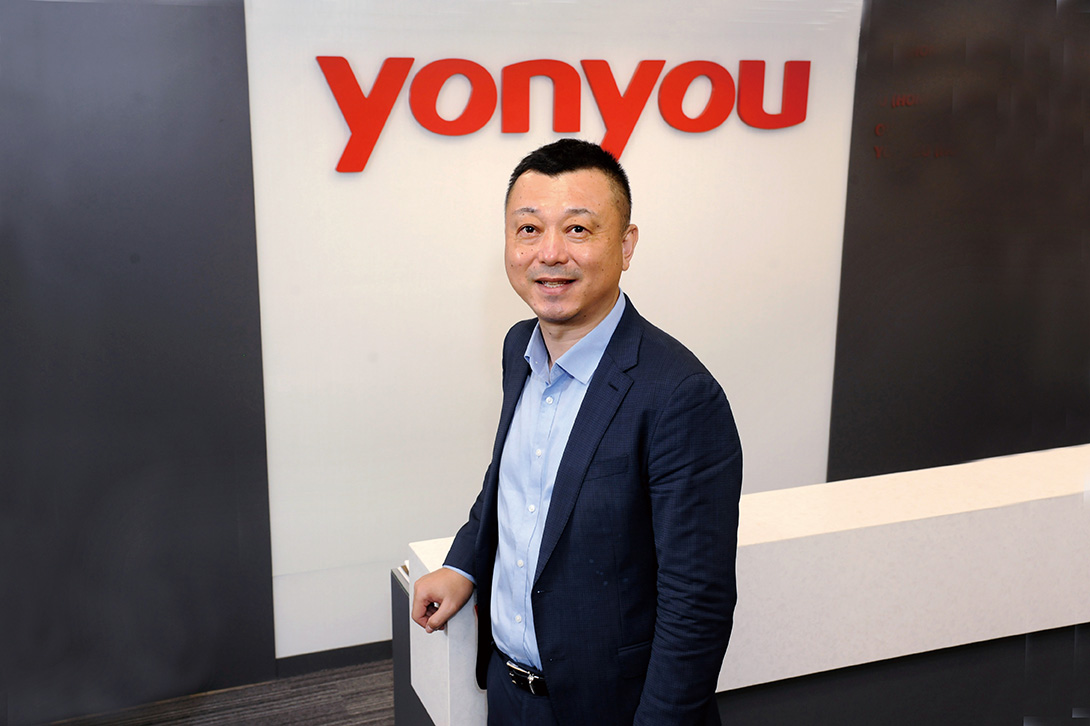
    With more and more organizations realizing the benefits of digital transformation, enterprise management software solutions and cloud service providers, Yonyou is also quickly expanding its digital ecosystem amid increasing business partnerships within various public and private sectors.

    Telecom Review Asia interviews Bowen Guo, general manager, Overseas Business Unit of Yonyou Network Technology Co., Ltd. and Yonyou (Hong Kong) Co., Ltd. on the vital role of high-quality and secure cloud services to maximize its business capabilities, especially amid its global expansion.

    Yonyou has been recognized by Gartner as one of the global top 10 ERP providers and is ranked by the International Data Corporation as the largest enterprise management software provider in China. Yonyou has over 230 branches and 10,000 ecosystem partners worldwide, providing best practices for cross-border enterprises.

    And to further strengthen its capabilities, the company is leveraging cloud-native technology. Yonyou sees the need for strong technical support and high global accessibility, such as what Huawei Cloud delivers.

    Secure and High-Quality Cloud Technologies

    As the largest B2B SaaS vendor in China, Yonyou is quickly building up a thriving digital ecosystem, prompting the need for more secure and high-quality services. And to provide secure technologies and support, the company continues to partner with Huawei Cloud for its strong technical support and high global accessibility.

    Guo stresses that the Huawei Cloud focuses on the IaaS and PaaS layers, while Yonyou focuses on the SaaS layer. And Huawei cloud mostly deals with the bottom layer or underlying technologies, thereby delivering high-quality services to Yonyou to help them serve their customers.

    As Guo explains, “Huawei cloud mainly focuses on the IaaS and PaaS layers. IaaS means the infrastructure, and I think Huawei is a leading player in providing a wide range of cloud infrastructure. It offers diversified infrastructure products, including cloud infrastructures, databases, middleware and security technologies. I think they can provide all-rounded businesses and technologies in these domains, and Huawei plans to develop the operating systems further. Thus, I believe that is also one of their advantages with the all-rounded infrastructure of Huawei cloud. Yonyou is actually growing with Huawei cloud.”

    As the ecosystem partner of Huawei, Yonyou is also maximizing the resources shared by Huawei Cloud, including customer resources and partner resources, as well as technological advantages in this domain.

    Yonyou’s New Product Lines 

    Yonyou has also launched its latest business innovation platform, the Yonyou BIP, or business innovation platform. The company boasts that this is its next-gen cloud ERP product for overseas users.

    Yonyou BIP is the company’s new generation cloud product platform. BIP consists of two business lines: the first one is YonBIP, which mainly aims at larger-sized customers; and the second is YonSuite, which primarily serves small and medium-sized customers. With these new product offerings, the company is working with Huawei to provide personalized and customized services to its customers.

    “So Yonyou BIP is our new generation cloud product platform. It follows the 1+3+X architecture. 1 indicates the technological platform, and 3 indicates the application in 3 domains, including human resources, financial services and supply chain. And X actually indicates our ecosystem, and it includes more than 10,000 ecosystem partners who work together with Yonyou to provide services to customers,” Guo.

    Guo stresses that their latest product developments allow for the acceleration of digital transformation of their partners and customers.

    Furthermore, Yonyou has also built a new data center in Singapore to support the business development of Yonyou BIP and help the company respond to some issues or challenges in Southeast Asia.

    Guo explains, “And now, we can provide better, localized cloud services to serve our customer segments in this region better. And then, we can better link or work with our ISV partners. These ISV partners can provide better-localized services. So, in addition to globalization, we must focus on localization. So, with the joint collaboration with the ISV partners, we can better comply with the local accounting rules or the human resources policies like the labor laws in the regions.”

    With 11 certifications from worldwide security authorities such as ISO 27001, EAL3+ and CSA STAR, Yonyou has largely enhanced data security and strengthened data storage capability by data deployment overseas. And Yonyou says that this, with the help of Huawei Cloud, will deliver reliable and secure cloud service to global customers.

  • Telin and Zenlayer to Deliver On-Demand Subsea Cable Services to Indo-Pacific

    Telin and Zenlayer to Deliver On-Demand Subsea Cable Services to Indo-Pacific

    PT Telekomunikasi Indonesia International (Telin), the largest telecommunications company in Southeast Asia, and Zenlayer, a massively distributed edge cloud service provider, signed a memorandum of understanding for joint development of a digital connectivity platform that provides on-demand subsea cable services.

    The joint development will combine the strong capabilities of both parties. As Telin continues to invest heavily in global subsea cable services, especially in the Indo-Pacific, Zenlayer’s platform will further digitize the service delivery for carriers, hyperscalers and global enterprises.

    “The fast-growing internet economy in the Indo-Pacific area has made the need for connectivity stronger than ever before. Here at Telin, we’re committed to optimizing our global infrastructure and enhancing our products and solutions to meet the rising market demands,” said Budi Satria Dharma Purba, CEO of Telin. “Zenlayer’s massive global scale and advanced technology to build on-demand, easy-to-use edge cloud platform makes them a perfect partner for our digital transformation. We look forward to helping more businesses connect into Southeast Asia and local companies expand globally.”

    “We are thrilled to power Telin’s digital transformation with our technology,” added Joe Zhu, CEO and founder of Zenlayer. “Through deep product integrations, we will bring a full suite of on-demand cloud networking services to mutual customers and take their user experience to an entire new level.”

    The partnership is a new milestone in the long-lasting relationship between the two companies. Since 2017, Telin and Zenlayer have had collaborations over edge data center and cloud networking services. Earlier this year, MDI Ventures, the investment arm of Telkom Indonesia, led the C+ round of investment in Zenlayer, further solidifying the latter’s position as the number one edge cloud service provider in the region.

    A leader in edge cloud, Zenlayer has the most robust infrastructure presence in the world’s fastest growing economic regions. The company has a strong commitment to Southeast Asia, with 62 edge nodes and extensive partnerships built in the region. It has helped numerous global businesses tap into the massive potential of the area with its high-performance compute and networking services.

  • Huawei Unveils Upgraded Intelligent Cloud-Network to Drive Digital Innovation

    Huawei Unveils Upgraded Intelligent Cloud-Network to Drive Digital Innovation

    At the summit entitled “Huawei Intelligent Cloud-Network, Leading Digital Innovation,” Huawei unveiled the upgraded capabilities of its Intelligent Cloud-Network Solution. Held during HUAWEI CONNECT 2022 Bangkok, the summit highlighted its capabilities covering three major scenarios — CloudFabric, CloudWAN and CloudCampus — which were created in an effort to meet customers’ changing requirements.

    Huawei also unveiled several new data communication products, such as the industry’s first Wi-Fi 7 AP, AirEngine 8771-X1T; the 400G-ready next-generation campus core switch, CloudEngine S16700; and the 4-in-1 universal-service intelligent router, NetEngine 8000 M4.

    As digital transformation advances, enterprise services pose a set of new requirements on data communication networks. First, massive numbers of IoT connections demand ultra-broadband and ubiquitous connectivity. Second, enterprise branch services are gradually moving to the cloud, requiring networks to provide flexible deployment and fast cloudification capabilities. Third, new services need to be rolled out on a large scale and services need frequent adjustments, requiring networks to be agile, secure, and efficient. Finally, video conferencing is becoming commonplace, meaning that networks have to provide deterministic experience assurance.

    Vice President of Huawei’s Data Communication Product Line, Sun Liang, noted that Huawei Datacom had developed the Intelligent Cloud-Network Solution through continuous innovation to address the preceding challenges. This solution provides key capabilities such as ultimate access experience, ultra-fast cloud access by branches, deterministic experience and efficient and simplified deployment.

    Liu Jianning, president of Huawei’s Global Enterprise Network Marketing & Solutions Sales Department, also released the “Wireless Intelligent Network Architecture White Paper.” Liu noted that one of the most important changes to campus networks is fully wireless.

    The future adoption of Wi-Fi 6 and Wi-Fi 7 poses new requirements on network bandwidth, architecture and O&M. To meet these new requirements, Huawei proposes the next-generation campus network architecture — wireless intelligent network architecture. This apparatus has seven unique features: fully-wireless, hyper-converged, ultra-broadband, simplified, low-carbon, secure and intelligent.

  • DITO and ZTE Launch Super Core Data Center in Philippines

    DITO and ZTE Launch Super Core Data Center in Philippines

    DITO Telecommunity, one of the major telecommunications corporations in the Philippines, has launched the DITO Super Core Data Center in Batangas, Philippines, powered by ZTE.

    The data center complies with the Tier III design standard and will become the first center in the Philippines to pass such standard certification. The DITO Super Core Data Center is designed to further improve local digital infrastructure and enhance data services.

    The design of the data center focuses on the security of network transmission through resiliency against natural disasters such as typhoons and earthquakes. The facilities also pay more attention to the growing concern of the telecommunications industry on energy efficiency and environmental protection in such design and operations.

    As the major partner of DITO Telecommunity in this project, ZTE has shared its rich end-to-end expertise, from analyzing local process specifications in the early stages of the project, consultation on construction solutions, to the design of solutions, and project delivery, ensuring the smooth and timely turnover of the data center.

    ZTE’s iDCIM intelligent management system has been adopted in the building’s equipment management to improve the operation efficiency of the data center and achieve green energy savings. The system manages operation parameters of the data center in real-time to provide data support for efficient energy saving and O&M.

    Compared to the traditional data center featuring multiple interfaces, complex procedures and a long construction period, the DITO Super Core Data Center employs ZTE’s micro-module solution, which is modular and standardized. Multiple modules can be installed in parallel, enabling the delivery time to be shortened by 60%.

    “We can regard the DITO Super Core Data Center as the heart of the body. Only a safe and healthy beating heart can support the business. The data center adopts the advanced and innovative technology in the industry. Through its multiple-level protections, the data center is truly reliable ,” said Wan Min, president of ZTE Philippines. “It will also become the first Uptime Tier-III data center in the Philippines. By adhering to energy conservation and emission reduction, it has achieved a lower PUE with an intelligent energy management system, which is efficient and environmentally friendly.”

    The launch of the DITO Super Core Data Center further solidifies the commitment of DITO Telecommunity to providing world-class telecommunication services for Filipinos, thus boosting the digital transformation of the Philippines.

  • PLDT to Start Construction Of Two Major ICT Projects by Year End

    PLDT to Start Construction Of Two Major ICT Projects by Year End

    PLDT Group announced that it will inaugurate the construction of its fourth cable landing station and the initial construction phase of the Asia Direct Cable (ADC) system by the end of the year.

    The two additional major ICT infrastructure projects follow the group’s build-out of the Philippines’ largest hyperscaler data center and the activation of Jupiter, the fastest international cable direct to the US and Japan.

    “After the successful launch and activation of Jupiter, PLDT hopes to lead the country to become the best Transpacific cable hub in Asia, as we work on delivering additional subsea cables and new cable landing stations in 2024,” said former PLDT VP and Technology Advisor for Enterprise Victor Aliwalas.

    The cable landing station in Baler, Aurora, to be completed by 2024, will supplement PLDT’s international gateway on the northern and eastern borders. The ADC cable, meanwhile, is expected to be completed by the end of 2023 and is strengthening the country’s data links in Asia.

    “Apart from the DC and the International connectivity, PLDT is also leading the charge on 5G rollouts and domestic fiber rollouts on top of all the other platforms to significantly increase the country’s take up of digitalization. We are not focusing on just one or two pillars, we are building out the entire ecosystem to work as a whole. We need a full working and energized system to support this hyperscale initiative and PLDT is determined to put together everything to be the strongest hyperscale player in the country, to establish and promote the Philippines as a hyperscale destination,” Aliwalas added.

    PLDT has been working closely with government agencies, including the Department of Trade of Industry and the Department of Information and Communications Technology (DICT), in positioning the Philippines as the next hyperscaler hub in the Asia Pacific, as the country transforms into a globally competitive and digitally empowered nation.

    “We believe that the hyperscalers industry will be the next growth engine of the Philippines. We are keen on helping hyperscalers cloud services and start-up ecosystem in the Philippines,” Aliwalas further noted     .

    DICT Secretary Ivan John Uy also recognized the crucial role of ICT in the social-economic development of the country, saying, “the value of information and communications technology or ICT is encompassing. It is necessary in every aspect of life, business, education, and in advancing our general scientific understanding.”

    “We still have a lot of improvement on key strategic areas such as digital infrastructure buildup to achieve the President’s goal of a digitally transformed Philippine government. Hence, it’s important for us to address the gaps that hinder our drive towards inclusive growth and innovation, especially the long-standing gap in the development of digital connectivity nationwide. And indeed, we want to work hand in hand with our partners to achieve this goal,” he added.

    Last year, PLDT joined the multi-agency government initiative to support the priming of the country’s digital readiness to attract global hyperscalers expanding in Asia, including it as the sixth key sector and highlighting the strong government and private sector partnership to cement the foundation of the Philippine digital economy.

  • SES and Digicel Partner to Provide Tonga Disaster Network Resiliency via O3b

    SES and Digicel Partner to Provide Tonga Disaster Network Resiliency via O3b

    SES and international mobile network operator Digicel will extend their partnership to provide the Kingdom of Tonga with long-term disaster resiliency to minimize bandwidth disruptions. Under the agreement, Digicel will benefit from SES’s expertise in offering disaster resiliency via SES’s O3b satellite constellation to deliver low-latency and high-throughput connectivity and protect the Tonga population from future communication interruptions in the event of a natural disaster. Launched in 2013, SES’s O3b satellites are orbiting 8,000km above the Earth’s surface in medium earth orbit (MEO) and deliver low-latency connectivity services to any area within 50° north or south of the equator. For the past decade, governments and businesses around the Pacific have been benefiting from the fiber-equivalent performance of the O3b satellite constellation.

    The Kingdom of Tonga has suffered two major connectivity disruptions in the last four years, the latest being the result of the Hunga Tonga-Hunga Ha’apai volcano eruption and subsequent tsunami in January 2022, which severely damaged undersea communication links. In the immediate wake of the disaster, Digicel leveraged SES’s geostationary earth orbit (GEO) satellite capacity to restore temporary connectivity on the islands, allowing Tongan residents to connect with their families and loved ones. As the damaged cable connecting the islands of Vava’u and Tongatapu in Tonga undergoes repair, SES’s MEO satellite service provides Vava’u residents with connectivity. Once the cable is fully repaired, it will become a resiliency service to the main cable that connects the island to Tongatapu.

    The new agreement will see Digicel use SES’s O3b satellite system, which will deliver multiple Gbps of capacity for quick-deploy connectivity to shield the islands in Tonga from potential communication disruptions in the future. The high throughput provided by SES’s O3b satellites will ensure reliable connectivity for first responders and the entire population of Tonga.

    “The islands in the Pacific are highly vulnerable to natural disasters, and it is vital during such crises to have resilient network connectivity. This is crucial in ensuring relief efforts can go smoothly and the affected populations can connect with their families and loved ones living in other parts of the world,” said John Turnbull, director of Pacific Region at SES. “With our continued partnership with Digicel, SES is glad to deliver high-performance, reliable connectivity to the residents in Tonga using our O3b satellites. SES’s second-generation MEO satellite communication system, O3b mPOWER, promises unprecedented flexibility, unparalleled throughput and scalability, all of which are key to providing resiliency for vulnerable communities across Asia Pacific.”

    “SES’s multi-orbit satellite fleet has enabled us to quickly deploy domestic connectivity to the island of Vava’u at a time when it is crucial to keep people connected. We are glad to extend our partnership with SES and continue leveraging their O3b satellite services to protect the residents of Tonga from future disasters,” said Mudassar Latif, chief technology officer at Digicel Group. “We look forward to future collaborations with SES to bring multi-orbit satellite communications to other markets in the Pacific, especially those that are vulnerable to natural disasters.”

  • Singtel and Intel Launch 5G MEC Incubator for Sustainable Enterprise Digitalization

    Singtel and Intel Launch 5G MEC Incubator for Sustainable Enterprise Digitalization

    Singtel has announced a strategic partnership with Intel to establish a 5G multi-access edge compute (MEC) incubator to unlock the potential of 5G connectivity and high-performance computing at the edge. This jointly established, next-generation 5G MEC incubator enables enterprises to develop new 5G use cases and advance the development of innovation applications across verticals.

    The incubator will be supported by Singtel’s Paragon, a one-stop orchestration platform for 5G edge computing and cloud services, and powered by Intel’s 4th Gen Xeon Scalable processors and Intel Data Center GPU, to enable enterprises to plan for 5G adoption in advance.

    Having reached nationwide 5G standalone coverage in Singapore recently, Bill Chang, chief executive officer, Group Enterprise and Regional Data Centre Business, Singtel, noted in his opening address that the latest collaboration with Intel marks an important milestone in the telco’s journey as a digital enabler for enterprises to transform with 5G.

    “Singtel’s 5G network and Paragon MEC platform are transforming operations in sectors such as advanced manufacturing, smart logistics, healthcare, retail, transportation and urban planning,” said CEO Chang . “With Intel, we’re collectively bringing together our best-of-breed knowledge, expertise, assets and ecosystem to help address business needs, improve operational efficiencies, unlock new opportunities and advance in a 5G world.”

    The alliance will focus on developing the application and ISV ecosystems to deliver transformational enterprise and consumer use cases like high-definition content delivery, cloud gaming, video analytics, virtual-augmented-mixed reality and metaverse.

    Christoph Schell, executive vice president and chief commercial officer at Intel, stated, “As enterprises navigate a significant digital transformation, technologies like 5G, edge, artificial intelligence and cloud play a key role in helping to deliver new use cases. Our collaboration with Singtel will help accelerate use of these technologies to solve real business challenges by utilising our unique combination of hardware and software spanning Xeon, GPUs, Smart Edge, OpenVINO and more, and also a broad portfolio of ecosystem innovations.”

    Through Singtel and Intel’s strong global ecosystem, enterprises can tap into expertise in connectivity, compute infrastructure, devices, applications and servers to power 5G use cases, including ready-to-deploy applications for rapid trials and pilots for R&D.

    Enterprises can expect always-on connectivity with high-performing applications that deliver lower latency and greater resilience to meet new business requirements. With this partnership, 5G MEC can be adopted more readily, reliably and affordably. Another key benefit is sustainable digitalization for enterprises, as Intel extends its expertise in CPU power and sustainable technology to provide sustainable technology from cloud to edge to help enterprises optimize power usage.

    As 5G continues to disrupt industries, Chang noted that growing 5G innovations with an ecosystem of partners “allows enterprises that scale 5G innovations built on the platform to gain a much larger market access through Singtel’s group of telcos in the region.”

  • APTelecom Captures Growth Opportunities in New Verticals and Emerging Markets

    APTelecom Captures Growth Opportunities in New Verticals and Emerging Markets

    During the 25th Submarine Networks World, Telecom Review Asia interviewed Eric Handa, CEO of APTelecom, to learn more about its Vision 2025 business plan to support growing verticals and ambitions to bridge the digital divide in emerging markets.

    APTelecom specializes in the subsea sector but has expanded its services to benefit more verticals as part of the Vision 2025 business plan. Can you share with us some developments?

    APTelecom started as a submarine cable specialist when it was first established about a decade ago, but we have since diversified our portfolio to include satellite and data center services. As part of this diversification, Vision 2025 enables us to pivot toward digital infrastructure consulting, with the subsea sector remaining our core competency, as we extend offerings to a wide range of verticals. This has led to strategic partnerships with organizations like Equinix.

    Our team and client base have expanded as our offerings grow in terms of breadth and depth. For instance, APTelecom extends terrestrial connectivity – complementing subsea connectivity – to deliver power-converged connectivity. Already, many cable landing stations are also doubling as edge data centers. As many traditional business ways are being transformed, APTelecom recognizes the need to pivot and better support businesses.

    Earlier this year, APTelecom launched a new investment arm to spotlight edge data center opportunities. What is the motivation behind this?

    From a technical and commercial perspective, proximity to the end user is driving the need for increased edge data centers. To cope with new demands, a typical data center needs to achieve a latency of 5-7 milliseconds to the end user – something that is not feasible from a connectivity standpoint from a single location to support applications including artificial intelligence and user-generated content.

    APTProcure serves as the investment arm to capitalize on the growing need for more edge data centers to support emerging markets not just in Southeast Asia, but also in Africa and the Middle East, in the coming 5-7 years.

    Can you tell us about some strategic partnerships forged and how APTelecom plays an integral part in bridging a digital divide?

    We have forged many meaningful partnerships, including with Angola Cables in Africa, which has enabled us to provide connectivity for global hyperscalers to deliver modern technologies to otherwise neglected areas in the world.

    Subject matter expertise and knowledge are critical building blocks to bridging a digital divide. APTelecom is able to bring both subject matter expertise and knowledge to the table to make a difference in underserved areas. Needless to say, capital is also required to provide much-needed financing. This is the impetus for establishing APTProcure, to provide opportunities to fund or finance projects requiring $4-5 million – projects often overlooked as they fall below a threshold of capital.

    To APTelecom, emerging markets represent an opportunity to address a digital divide and bridge the “haves” and “have nots” from a connectivity standpoint. We see many commercial opportunities in emerging countries, where we are particularly keen to support their growth in the area of sustainability. We believe that existing climate concerns require more actions and executions than discussions, and emphasize the importance of bringing connectivity to areas in the world that can exploit sustainable and green power – an area that is close to our heart. Be it in western Europe, Africa or the Middle East, this is also a key area where we are working with clients to unearth sustainable, green power. We believe that future cables will be built and deployed to where power is green and readily available to support and grow more underserved areas.