Category: Telecom

Retail News Asia is committed to providing both local and global retailers with the latest Telecom & Telco news throughout the Asian market. This on a daily base.

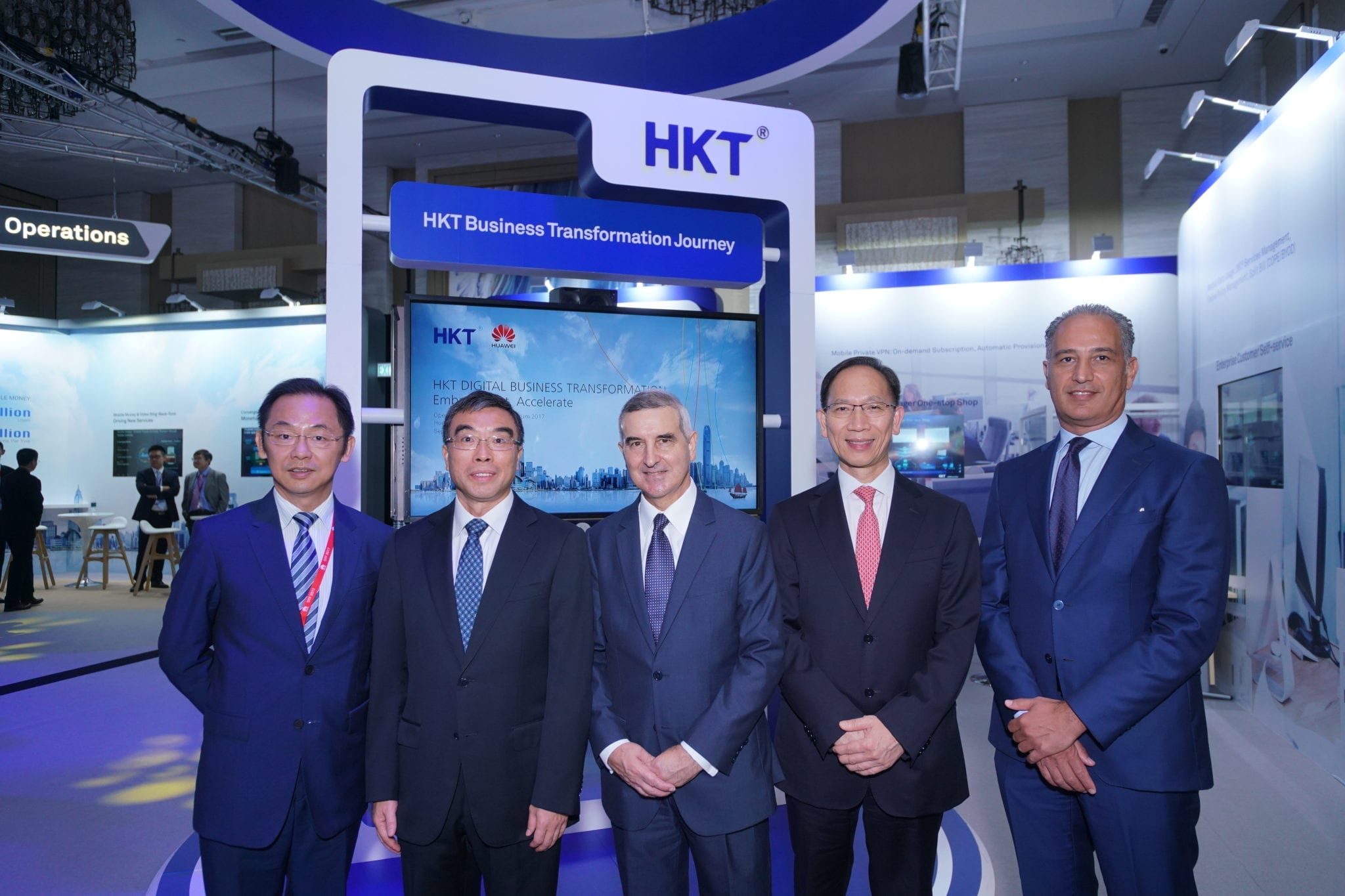
  • HKT Posts First-Half Results

    HKT Posts First-Half Results

    HKT announced a 3% increase in its total revenue for the first half of the year, amounting to HK$16,157 million, while total revenue excluding mobile product sales grew by 5% to HK$14,868 million.

    The company cites continued strong demand for high-speed broadband services alongside the growing adoption of its 5G services by both consumer and enterprise customers as the reason for their revenue growth.

    According to HKT’s press release, total EBITDA increased by 2% to HK$5,834 million, while adjusted funds flow increased by 2% to HK$2,377 million, and profit attributable to holders of Share Stapled Units increased by 1% to HK$1,910 million.

    Despite the pandemic’s negative impact on the Hong Kong economy, HKT said it remained focused on its strategic priorities in serving both the consumer and business segments and thus managed to achieve steady growth during the period.

    With the subdued consumer sentiment in the first half, its mobile business recorded a 2% growth in services revenue to HK$3,647 million for the six months ended 30 June. Local core revenue grew by 2%, benefiting from continued 5G adoption, growth in the company’s post-paid customer base, as well as higher revenue contribution from mobile enterprise solutions.

    Comparatively lower mobile product sales were recorded by HKT during the period as a result of elevated sales in the first half of 2021 following the delayed launch of popular handset models and the adverse impact of supply chain disruptions.

    EBITDA from the mobile segment increased by 2% to HK$2,122 million during the period, in line with growth in mobile services revenue.

    As individuals, households and enterprises returned to hybrid arrangements during the onset of the fifth wave, the Telecommunications Services (TSS) business continued to benefit on the back of its reliable and extensive fixed network, with revenue growing by 5% to HK$11,596 million.

    The consumer broadband business, meanwhile, witnessed further uptake of its high-speed fiber-to-the-home (FTTH) services and home Wi-Fi solutions, helping to lift average revenue per user (ARPU). The enterprise segment continued to demonstrate robust growth as both private enterprises and the public sector accelerated their digital transformation and smart city initiatives. As a result, the local data services business registered a solid revenue growth of 6% during the period.

    The International Telecommunications Services business achieved 9% growth in revenue, driven by increased global voice revenue, resilient data revenue supported by recent cable projects and      the growing adoption of our Console Connect platform. Total TSS EBITDA increased by 2% to HK$4,104 million, reflecting further operating efficiencies.

    HKT’s group managing director, Susanna Hui, said, “This May, together with PCCW Limited and in partnership with The Sandbox, HKT became the first Hong Kong-based integrated communications, media and technology organisation to join the metaverse. We aim to leverage our digital ecosystem to explore opportunities presented by Web3 by connecting the physical world with the virtual.”

    Hui added, “As we capitalise on our resources for the good of the public and our business, we shall continue to closely observe the macroeconomic environment for effective contribution and efficient business judgement, to ensure our capabilities and resilience yield sustained returns for unitholders.”

  • Google Opens Third Data Center in Singapore

    Google Opens Third Data Center in Singapore

    Google has opened its third data center in Singapore, marking 15 years since Google’s first office was established in Southeast Asia in the small city-state in 2007.

    Including this data center, Google has committed a total of $850 million in investment in Singapore to build the country into its regional hub for its network of data centers, cloud regions and subsea cables.

    The event was attended by Lawrence Wong, Singapore’s deputy prime minister and minister for finance, as well as other government and industry leaders, to celebrate Google Singapore’s 15th anniversary and Google’s Singapore cloud region’s fifth anniversary.

    The company noted that continued efforts will be reinforced to advance Singapore’s position as a leader in AI innovation. For instance, Google Cloud will partner with the Smart Nation and Digital Government Group to create novel AI solutions that will improve how Singaporeans work and live.

    As the Asia Pacific headquarters, Google Singapore has a team of 3,000 to support 2.5 billion people online across the region.

  • Airtel Pays 5G Spectrum Dues Upfront to Prep for 5G Roll Out

    Airtel Pays 5G Spectrum Dues Upfront to Prep for 5G Roll Out

    Airtel has paid Rs 8,312.4 crores to the Department of Telecom (Government of India) toward dues for spectrum acquired in the recently concluded 5G auctions.

    Airtel has paid four years of 2022 spectrum dues upfront. Airtel believes that this upfront payment, coupled with the moratorium on spectrum dues and AGR-related payments for four years, will free up future cash flows and allow Airtel to dedicate resources to concentrate on the 5G rollout single-mindedly.

    Over the last year, Airtel has also cleared Rs 24,333.7 crores of its deferred spectrum liabilities much ahead of scheduled maturities.

    Speaking about the pre-payment of dues Gopal Vittal, managing director and CEO of Bharti Airtel, said, “This upfront payment of 4 years allows us to drive 5G rollout in a concerted manner given our operating free cash flow. Airtel also has access to Rs 15,740.5 Cr in capital from the rights issue which is yet to be called. With the ideal spectrum bank, best technology and adequate free cash flow, we are excited to bring to the country a world-class 5G experience.”

    This month, Airtel announced that it has signed 5G network agreements with Ericsson, Nokia and Samsung to commence 5G deployment. The choice of multiple partners was said to enable Airtel to roll out 5G services spanning ultra-high-speeds, low latency and large data handling capabilities, which will enable a superior user experience and allow the pursuit of new, innovative use cases with enterprise and industry customers.

  • Console Connect Partners With Master Concept to Deliver Cloud Networking Solutions to Businesses Across APAC

    Console Connect Partners With Master Concept to Deliver Cloud Networking Solutions to Businesses Across APAC

    Console Connect by PCCW Global has today entered into a distribution agreement with Master Concept, an award-winning cloud technology advisor, to deliver agile cloud networking solutions to businesses across the Asia Pacific region.

    Master Concept provides cloud strategy, implementation and integration support, as well as training and platform enhancements to thousands of businesses across Asia Pacific. By integrating the Console Connect Software Defined Interconnection® platform within its cloud solutions portfolio, Master Concept can deliver further value to major cloud platforms and SaaS providers worldwide with higher levels of network security and performance for its enterprise customers.

    Through a single management portal, Master Concept can provision a range of cloud connectivity services for its customers, including direct Layer 2 connections to hyper-scale cloud providers, such as AWS, Google Cloud and Microsoft Azure, and Layer 3 mesh connectivity between and among different cloud providers and cloud regions.

    The platform, which can be integrated via API, is underpinned by PCCW Global’s high-performance network, offering comprehensive end-to-end SLAs that make it suitable for accessing mission-critical and latency-sensitive applications and workloads.

    Mr Michael Glynn, Senior Vice President, Digital Automated Innovation, PCCW Global, said, “Secure and flexible connectivity is fundamental to any cloud transformation project. We are excited to be working alongside Master Concept to enhance their cloud solutions portfolio and make it easier for enterprises to connect to the cloud across Asia Pacific and worldwide.”

    Mr Dennis Wong, Director and Co-founder, Master Concept, said, “Through Console Connect, we have been able to quickly bring new cloud connectivity solutions to market and help our enterprise customers get closer to the cloud. We look forward to growing our collaboration further through the new PartnerConnect program.”

    Mr Derek Chan, Director and Co-founder, Master Concept, said, “We are delighted to be one of the launch partners for Console Connect’s new global PartnerConnect program which enables Master Concept to deliver secure and agile cloud capabilities to our enterprise customers.”

    Console Connect’s PartnerConnect program is designed to drive revenue growth and customer success through the Console Connect Network-as-a-Service (NaaS) platform. The program helps managed services providers, systems integrators, value added resellers, and application providers extend their service portfolio, and securely connect their customers, clouds, and applications worldwide.

  • Vodafone and Kacific Partner for Satellite Mobile Backhaul in Papua New Guinea

    Vodafone and Kacific Partner for Satellite Mobile Backhaul in Papua New Guinea

    Kacific Broadband Satellites Group (Kacific) has partnered with Vodafone PNG to deploy the satellite operator’s mobile backhaul services, helping to greatly expand Vodafone PNG’s voice and 3G/4G data network into rural areas of Papua New Guinea.

    Vodafone PNG, based in Papua New Guinea and part of the Amalgamated Telecom Holdings (ATH) Group of companies from Fiji, successfully launched in April 2022, disrupting the nation’s telecommunications market. It is now in the process of rapidly expanding its network and customer base.

    Vodafone PNG has committed to wholesale bandwidth delivered by Kacific’s high-speed Ka-band satellite, Kacific1. The cost-effective mobile backhaul bandwidth will primarily be used for voice and data and will serve both residential and enterprise end-users.

    “Kacific and Vodafone PNG see huge potential for growth in Papua New Guinea, as well as a genuine thirst from the country’s citizens for affordable and reliable mobile and data services. Together, we aim to disrupt the market in a way that brings more choice and better connectivity to everyday people,” says Brandon Seir, chief commercial officer, Kacific.

    “There is real potential for satellite-based communication services to help Papua New Guinea increase access to communications services from 10 percent (in 2009) to 100 percent of the population – a goal of the nation’s strategic development plan, Vision 2050,” he adds.

    “In every market, we aim to be the best. With Kacific, Vodafone can provide the best coverage and increase local people’s access to reliable, high-speed voice and data services,” says Nirmal Singh, managing director, Vodafone PNG. “Kacific satellite services vastly reduce the cost and complexity of remote terminal installation, allowing Vodafone to rapidly deploy our network across the nation, including to the underserved rural areas. Together we are providing greater access on a large scale, helping increase Papua New Guinea’s basic infrastructure in order to grow and prosper.”

    Papua New Guinea is a nation of 9 million inhabitants using over 3.3 million mobile connections, amounting to a mobile penetration of 36%2. 3G coverage currently reaches around 73% of the population.

    It is the world’s third largest island country by size, with an area of over 460,000 km, with the vast majority of its population residing in rural areas. It also has one of the lowest population densities in the world, with citizens scattered between islands, coastal areas and mountainous highland terrains. These characteristics add significant costs and impediments to deploying mobile and data services via terrestrial networks. However, satellite services are well-placed to meet the challenges of the varied geography and dispersed population.

    The Kacific1 satellite provides widespread coverage in Papua New Guinea, including the main islands of New Guinea, New Britain, New Ireland and Bougainville as well as the surrounding smaller islands and waters.

    Vodafone PNG is the latest customer in the wider Pacific to benefit from Kacific’s affordable, high-speed mobile backhaul services.

  • SK Telecom to Help Upgrade Palau’s Communication Infrastructure

    SK Telecom to Help Upgrade Palau’s Communication Infrastructure

    SK Telecom (SKT) announced that its Vice Chairman Park Jung-ho and CEO Ryu Young-sang met with Surangel Whipps. Jr., the president of the Republic of Palau, to discuss cooperation to upgrade Palau’s communication infrastructure.

    SK Telecom also asked the Palauan government to support Busan’s bid to host the “World Expo 2030”.

    At the meeting, Vice Chairman Park Jung-ho said, “The World Expo 2030 Busan highlights the seriousness of the global climate change and the need for each country to take an active response. It will also serve as a great opportunity for Palau to experience Korea’s innovative technologies and methodologies to respond to climate change.”

    SKT CEO Ryu Young-sang also suggested cooperation with the Palauan government to upgrade Palau’s current 4G LTE infrastructure to 5G. “Based on SKT’s technologies and experience accumulated through the world’s first commercialization of 5G, we can work together to build 5G infrastructure in Palau,” said      Ryu Young-sang.

    According to SK’s press release, President Whipps showed great interest in SKT’s formidable 5G infrastructure built across Korea as well as other advanced technologies including AI, metaverse, IoT and cloud services. There was also discussion about renewable energy, another industry that SKT has much experience in.

    Meanwhile, in June this year, SKT has become the first Korean mobile operator to provide LTE roaming service to customers traveling to Palau, a popular tourist destination for Koreans.

  • China Mobile and ZTE Complete Commercial Trial of Co-Routing Detection

    China Mobile and ZTE Complete Commercial Trial of Co-Routing Detection

    ZTE, together with the Yunnan Branch of China Mobile, has completed the commercial trial of co-routing detection in China Mobile’s existing optical network in Yunnan province, China.

    The trial involves two scenarios: co-cable routing detection and co-ditch routing detection. The trial result shows that there will be an early warning of active/standby paths in the same optical fiber or route so that it can be bypassed in time based on fiber sensing. In addition, the originally dumb fiber resource will be visualized. Thus, the operator’s service reliability and network O&M efficiency can be greatly improved.

    As digital transformation is developing rapidly in all industries, the optical network is facing a systems intelligence need. And intelligent O&M emerges as one of the main focuses when addressing the problem of low service survivability caused by co-routing.

    To resolve this, China Mobile has cooperated with ZTE to verify the feasibility of co-cable and co-ditch routing detection of service paths on the existing network, including active/standby service routing detection and inbound/outbound service route detection at specific sites.

    According to the verification, ZTE’s optical network co-routing detection function can specifically detect co-cable routing of 14 optical cables and 54 fiber cores by dynamic parameter optimization, AI algorithm and experience threshold adjustment. Also, ZTE takes contrast analysis and on-site specialist inspection to exactly detect co-ditch routing of 12 optical cables and about 20 ditches in 4 core equipment rooms. The verification proves that ZTE can provide the operator with flexible optical network co-routing detection methods, along with real-time, accurate and reliable intelligent O&M measures, which well guarantees service survivability and alleviates the difficulty in dumb fiber resource management.

    “The function can effectively solve actual problems in production and operation. Before this, active/standby routes are planned on the resource management map and routing is determined manually, which leads to high error rate. Additionally, the accuracy of resource management information is hardly under control, thereby increasing routing risks,” said a spokesperson at the Network Management Center of China Mobile Yunnan.

    “In the original routing detection, people pulled or pushed the cable underground manually, which resulted in low efficiency and service interruption. However, the co-routing detection now leverages dumb fiber resources without service switching. The innovative function remarkably reduces manpower and ensures service survivability while allowing resource management information modifications and route re-planning to avoid service interruption losses,” he added.

    The trial will further promote the growth of the operator’s autonomous optical network and lay a strong foundation for its intelligent network in the “east-data-west-computing” project.

  • Globe Gains Approval to Sell 7,000 Towers

    Globe Gains Approval to Sell 7,000 Towers

    Globe announced that it received board approval to sell over 7,000 towers in what is to be the largest ever tower sale and leaseback deal in the Philippines.

    In a company disclosure, Globe said the tower assets offered for sale are comprised of 79% ground-based towers and 21% rooftop towers. The sale has been grouped into three distinct portfolios assigned to three different tower companies representing local and international groups.

    Globe said it expects to raise a significant amount of capital over the next few quarters by executing these transactions. Of the total proceeds, approximately 75% will be used to fund capital expenditures      to support ongoing network expansion and sustain industry-leading network consistency and reliability scores. The balance of 25% will be earmarked to cover 2023 debt servicing requirements.

    Globe said that this will significantly improve the overall health of its balance sheet and provide sufficient flexibility to properly compete in a dynamic market as well as further expand its digital ecosystem.

    As the biggest milestone of this initiative, Globe signed two sale and leaseback agreements for two portfolios consisting of 5,709 telecom towers and related passive telecom infrastructure for over 71 billion pesos.

    The first portfolio being sold consists of 2,180 telecom towers in Luzon, which will be acquired by MIESCOR Infrastructure Development Corp. (MIDC) for a total consideration of 26 billion pesos and be leased back to Globe for an initial period of 15 years. The first close for this portfolio is targeted      within the 3rd quarter of the year, with subsequent closings happening as and when closing conditions are met.  MIDC is a joint venture between investment firm Stonepeak and the country’s largest electric distribution utility company, Meralco.

    The second portfolio consisting of 3,529 towers will be sold to Frontier Tower Associates Philippines Inc. for 45 billion pesos and also leased back over an initial period of 15 years. The first closing target for this portfolio is set for the late third quarter, with subsequent closings happening as and when closing conditions are met.

    Globe is also in advanced discussions with one other tower company for the potential sale and leaseback of an additional ~1,350 telecom towers and related passive telecom infrastructure. This last portfolio is comprised of towers located in the Visayas and Mindanao islands. Globe expects to sign the sale and leaseback agreement with this tower company within the third quarter, with the first closing happening within the 4th quarter of the year.

    “These expanded long-term relationships with the tower companies show Globe’s commitment to help improve the Philippines’ internet condition, as well as our desire to have as many Filipinos enjoy the benefits of having access to reliable internet. We also believe that through these monetization efforts, Globe will be able to further improve overall operational efficiency, allowing us to serve our customers better, and supporting our goal of enabling the digital lives of Filipinos,” said Ernest Cu, Globe President and CEO.

    “We are very pleased with this landmark deal with Globe that marks a critical milestone in MIDC’s strategy to enter digital infrastructure space, which plays a pivotal role in driving economic growth and social well-being through digital inclusion. This also gives momentum to pursue more opportunities that will help us achieve our aspiration to become a trusted telco tower operator in the Philippines and eventually, a market leader in the digital infrastructure business,” MIDC Chairman, Ray Espinosa stated.

  • Thailand, Malaysia Among the New Google Cloud Regions in APAC

    Thailand, Malaysia Among the New Google Cloud Regions in APAC

    Google has announced that it is planning to expand its cloud services in more countries in the Asia Pacific, including Malaysia and Thailand.

    The company said in a statement that the move is to meet the growing demand for cloud services in the region.Google is bringing three new Google Cloud regions to Malaysia, Thailand and New Zealand — on top of six other regions that were previously announced: Berlin, Dammam, Doha, Mexico, Tel Aviv and Turin.

    It said that these new cloud regions represent their ongoing commitment to supporting digital transformation across Asia Pacific. It added that it will continue to invest in expanding connectivity throughout the region by working with partners in the telecommunications industry to establish subsea cables — including Apricot, Echo, JGA South, INDIGO and Topaz — and points of presence in major cities.

    When launched, these new regions will add to the internet giant’s 34 cloud regions currently in operation across the globe, 11 of them located in Asia Pacific. They deliver what Google says to be high-performance services running on the cleanest cloud in the industry.

    It added that enterprises across industries, startups and public sector organizations across Asia Pacific will benefit from key controls that enable them to maintain low latency and the highest security, data residency and compliance standards, including specific data storage requirements.

    “The new Google Cloud regions will help to address organizations’ increasing needs in the area of digital sovereignty and enable more opportunities for digital transformation and innovation in Asia Pacific. With this announcement, Google Cloud is providing customers with more choices in accessing capabilities from local cloud regions while aiding their journeys to hybrid and multi-cloud environments,” said Daphne Chung, Research Director, Cloud Services and Software Research, IDC Asia/Pacific.

  • Smart Partners With Omnispace to Explore Space-Based 5G Technologies

    Smart Partners With Omnispace to Explore Space-Based 5G Technologies

    PLDT’s wireless subsidiary Smart Communications is collaborating with US-based Omnispace to explore and demonstrate the capabilities of space-based 5G communications using low earth orbit (LEO) satellites.

    In a statement, the Head of PLDT’s Technology Strategy and Transformation Office, Arvin Siena said, “This collaboration with Omnispace will allow our companies to work together to define use cases for the Philippine market.”

    He added that possible use cases include enabling 5G connectivity in remote areas, incorporating IoT and sensors for use in monitoring weather disturbances and natural calamities, and augmenting network coverage for disaster relief, maritime and telematics for vessels and equipment.

    “This is also part of PLDT’s broader initiatives to future-proof our services, including Smart 5G. This includes exploring opportunities to team up with companies like Omnispace, to test the interoperability of our network with their 3GPP-compliant 5G non-terrestrial network (NTN), which will support the 5G ecosystem of the future,” Siena added.

    Having launched Omnispace Spark-1 and Spark-2 in April and May, respectively, the company recently completed the deployment phase of Omnispace Spark™. This program is the initial phase in the company’s development and delivery of the world’s first global 5G-capable satellite network.

    The Omnispace 5G NTN global network will interconnect with terrestrial or land-based mobile networks to serve mobile subscribers utilizing the company’s 2 GHz mobile satellite spectrum allocation and operating in 3GPP band n256.

    As the world’s first 3GPP-compliant 5G NTN system, the Omnispace network is expected to deliver the power of 5G directly to billions of devices everywhere, extending the reach of mobile connectivity to enable people and assets to communicate in real-time through a single, seamless global service.

    “We are excited to announce this collaborative agreement with Smart Communications, which shares our vision of delivering reliable mobile connectivity to consumer, government and enterprise users, everywhere,” said Brian Pemberton, Omnispace. “Together with Smart, we seek to bridge the digital divide, while also providing the communications infrastructure to power the development of the Filipino economy of the future.”

    PLDT and Smart’s pioneering foray into satellite-powered communication is part of their broader initiative to deliver world-class customer services across the country, complementing the nationwide rollout of their fiber infrastructure, and wireless networks based on 4G and 5G technologies.

  • Telstra Boasts Fastest Speed in Australia

    Telstra Boasts Fastest Speed in Australia

    Telstra is Australia’s fastest mobile network for the first half of 2022, based on results from the Ookla Speedtest Awards from January to June 2022.

    Telstra has a median download speed of 81.57 Mbps and median upload of 11.38 Mbps, representing an improved speed from the second half of 2021.

    Telstra also has the fastest mobile network speeds in the cities of Sydney, Greater Melbourne and Greater Brisbane – where nearly half of Australia’s overall population resides.

    “Keeping our customers connected is at the centre of everything we do, and one part of that is giving customers access to the largest and most reliable mobile network in Australia. That includes expanding our 5G coverage to allow for faster speeds as well as improving the capacity of our 4G network, and it’s also about the new technologies we’re developing like mmWave 5G,” Telstra commented.

    Telstra currently covers 80% of Australia’s population with 5G, with plans to roll out 5G to 95% of the population by 2025.

  • Tencent Cloud Teams Up With Acclivis to Bring Cloud and ICT Offerings in SE Asia, Mainland China and HK

    Tencent Cloud Teams Up With Acclivis to Bring Cloud and ICT Offerings in SE Asia, Mainland China and HK

    Tencent Cloud and technology services provider Acclivis Technologies and Solutions announced that they have signed a strategic partnership to bring private, public and hybrid cloud and ICT solutions to enterprises in Southeast Asia, mainland China and Hong Kong.

    Tapping Acclivis’ presence in Singapore, Malaysia, Indonesia, Thailand, Philippines and Hong Kong as well as Tencent Cloud’s expertise and experience in China, the collaboration primes both parties to be the go-to partners for Southeast Asian enterprises who want to access China as well as Chinese enterprises keen to expand in Southeast Asia.

    The combined platform will offer Tencent Cloud’s cloud computing services and industry solutions available for verticals including financial services, entertainment, gaming, media and entertainment, retail and more.

    Additionally, the collaboration also provides a one-stop ICT platform featuring the internet services, managed services and IT end-user support provided by Acclivis to address the diverse and interconnected needs of every enterprise’s digital transformation journey.

    This full-suite ICT platform will allow enterprises to enjoy a better customer experience through simplified IT management using AI and machine learning, and also reap cost savings from the synergies expected from the partnership.

    Further highlighting Tencent Cloud’s commitment to bringing only the best cloud solutions to every part of the world, Tencent Cloud said it is pleased to team up with Acclivis to serve Southeast Asian enterprises who want to expand their reach to China.

    Kenneth Siow, regional director for Southeast Asia and general manager of Singapore, Malaysia and Indonesia, Tencent Cloud International, said, “Enterprises all over Southeast Asia have clamored for cloud technology that would help them easily connect their businesses to China. We are pleased to enter this new agreement with Acclivis to help businesses and organizations expand their global footprints, whether they are from Southeast Asia or China.”

    Meanwhile, Marcus Cheng, CEO of Acclivis Technologies and Solutions, added, “Acclivis’ mission is to provide reliable and comprehensive ICT solutions to help organizations realize the power of digital transformation. Leveraging on our deep roots in Southeast Asia, our internet connectivity and managed services capabilities, and Tencent Cloud’s years of experience in providing cloud services to various industries, our new partnership will put us ahead of the curve to access greater opportunities in Southeast Asia and China.”

  • SmarTone to Terminate 2G Services on October 14

    SmarTone to Terminate 2G Services on October 14

    SmarTone said that it would terminate its 2G services on October 14. This comes after Hong Kong’s Office of the Communications Authority announced the Communications Authority’s decision to grant prior consent to the application by SmarTone to discontinue its 2G services.

    In a press release, the company said that in response to the massive growth of mobile data usage in recent years and the decreasing market demand for 2G services, spectrum resources currently deployed for 2G network will be reallocated efficiently to drive 5G network development, bringing more innovative services and a better network experience to its customers.

    SmarTone said that in entering the 5G era, the need for and usage of mobile data and digitalized services are growing. The number of SmarTone customers upgraded to 5G has been increasing. As of April 2022, the number of SmarTone customers using 2G handsets or devices only accounts for less than 0.1% of its customer base.

    To fully appropriate the existing spectrum resources utilized by the 2G network (i.e. the 900 MHz and 1800 MHz bands of spectrum), the spectrum will be reallocated on October14 to better provide more advanced mobile services to customers using SmarTone’s 4G and 5G networks. SmarTone’s existing 2G network will continue as normal until October 14.

    Norman Tam, Deputy Chief Executive Officer of SmarTone, said, “The value of ‘Building Network with Heart’ has always been at the core of SmarTone’s development, and we will continue to adapt to the ever-changing needs of our customers to deliver the best possible user experience in 5G and beyond.”

    To facilitate a smooth migration from 2G to more advanced mobile networks, SmarTone has been facilitating the affected customers to upgrade their 2G handsets or devices to options that have supported a higher generation mobile network since early 2021.

    SmarTone is also working with a few enterprise customers who are still using 2G devices to ensure their smooth transition to 4G/5G services. SmarTone will continue to assist the affected customers in their upgrade of handsets or devices for the enjoyment of its 4G/5G services, and endeavor to offer proper arrangements to those who do not intend to upgrade from 2G.

  • Singapore Strengthens Role as 5G Regional Innovation Hub

    Singapore Strengthens Role as 5G Regional Innovation Hub

    5G enables technologies such as AI, Digital Twin, and augmented and extended realities to seamlessly work together, a key need for businesses at the forefront of digital transformation, providing consumers with a better-quality experience. In advancing Singapore’s 5G ecosystem, the Infocomm Media Development Authority (IMDA) is working with the industry to unlock the real value of 5G by shaping new business use-cases and enabling enterprises to commercialize locally and globally.

    Lew Chuen Hong, Chief Executive, IMDA, said, “Singapore will continue to push the boundaries of innovation through frontier technologies such as 5G. We are excited to work with our industry partners to unlock the real impact of 5G. We look forward to seeing new and exciting ways 5G will benefit our businesses and consumers.”

    Three new 5G projects have been introduced to boost Singapore’s 5G ecosystem. Under IMDA’s 5G Innovation Programme, S$30 million has been set aside to accelerate the adoption and commercialization of 5G solutions.

    IMDA has announced the awarding of projects for Asia Pacific’s first 5G mobile edge computing for Mixed Reality and Holomedicine capabilities in health tech; the region’s first outdoor mass 5G-enabled cinematic quality AR experience; and Southeast Asia’s first maritime 5G augmented reality/virtual reality smart glasses solution.

    PSA continues to make waves, as the world’s first 5G mmWave port operations trial sees progress. Automated guided vehicles (AGVs) achieved a reduction in latency by 50% compared to the current 4G network. This will enable PSA to scale AGV operations at Tuas Mega Port beyond 2000 vehicles. Automated rubber tire gantry cranes (aRTG) have also seen significant stability in terms of throughput and low latency. 5G will enable PSA to completely automate its RTG operations and empower its staff for higher-value job roles and upskilling in new areas of work.

    IMDA’s partnership with Razer has also seen significant results. This first-ever mmWave trial for Razer was conducted at Ngee Ann City and Singtel’s Comcentre, and findings from this trial enabled a re-imagining of the mobile gaming experience with 5G-enabled gaming controllers.  Based on learnings from this trial, Razer has launched the Razer Kishi V2, a universal mobile gaming controller that promises a “console-class gameplay experience” for smartphones. It also launched the Razer Arctech, a heat-dissipating mobile phone cover that supports the heavy processing load required for a seamless gaming experience.

  • Will Satellite Technology Be a Game-Changer in the Philippines?

    Will Satellite Technology Be a Game-Changer in the Philippines?

    The Philippines will soon have the first satellite-based internet connectivity in the country as SpaceX’s Starlink is set to be up and running by the end of this year.

    Starlink is a satellite internet constellation under Elon Musk’s SpaceX, offering satellite Internet access coverage to 40 countries, and aims to expand globally. It features speeds of up to 200 Mbps and latency as low as 20ms for residential use.In July, the company announced that Starlink Internet Services Philippines Inc. will already be available in the country, the first in Southeast Asia to be welcoming what is dubbed Starlink Technology.

    The Philippine government said they welcome this latest industry development as this will help enhance connectivity nationwide. The Department of Information and Communications Technology (DICT) secretary joined SpaceX representatives in Manila during the announcement of SpaceX’s rollout.

    The country’s ICT chief, Ivan John Uy, said that SpaceX stands by its commitment to provide satellite internet access to remote areas in the country. “The DICT is closely following the directives of President Ferdinand Marcos Jr., that is to provide digital connectivity across the many islands of the Philippines by building the country’s digital infrastructure, that will also lead to effective e-governance.”

    He added, “This will bridge the digital divide in the country especially in an archipelagic country like the Philippines where laying fiber cables or establishing cell towers in mountainous areas can be challenging.”

    According to a report by DataReportal, the Philippines’ internet penetration rate reached 68%, or about 76 million internet users.

    There are currently three major internet services providers in the Philippines, including those operated by two telecommunication giants, PLDT and Globe. But with many areas in the country still unserved or underserved, demand for internet connectivity continues to increase.

    From this year into the next, the DICT aims to speed up the deployment of internet infrastructure to connect several regions in the country. The plan also includes building cell towers and hi-throughput satellites servicing certain provinces.

    And with the introduction of satellite technology in the country, officials say that this will serve as a solution to connectivity challenges.

    Starlink is expected to connect rural and remote areas where there’s unstable or completely unavailable connectivity. Through this development, DICT said Filipinos from far-off areas can have better access to education, health services and online banking, among other digital needs.

    And to ensure that people in these geographically isolated and disadvantaged areas get to access the internet, the government also said they may start the free rollout of Starlink-powered internet hubs by the first quarter of next year.

    Moreover, satellite technology will also be ideal for those countries prone to natural disasters like the Philippines. Based on the company’s experience in 40 countries since it began operation in October 2020, SpaceX Government Affairs Senior Manager Rebecca Hunter said that Starlink’s technology has withstood “all sorts of inclement weather,” including heavy rains and cloudy weather.

    Some major natural disasters in the Philippines have affected communication access, including last year’s typhoon, which damaged telecommunications infrastructure, leaving people without internet access.

    How is Satellite Technology Changing the Local Telecom Industry

    Since SpaceX unveiled its plans to launch its services in the Philippines, several other satellite internet services providers have also followed suit.

    One of the largest telecom firms in the country, Globe, announced in April that it partnered with AST SpaceMobile Inc. to deliver the first satellite broadband service directly to standard mobile phones in the country. The company said this is part of its expansion to improve such service across the nation     .

    Its major competitor, PLDT also boasts that it has completed successful testing of high-speed broadband connectivity with Canada’s Telesat’s Phase 1 Low Earth Orbit satellite. This test allows opportunities for the telecom operator and its wireless unit, Smart, to use innovations in the satellite industry to expand      high-speed mobile and Internet services to more hard-to-reach communities.

    The Head of Technology at PLDT and Smart, Mario Tamayo, said in a statement, “This year, with our successful test with Telesat, we are a step closer to bringing satellite connectivity innovations and services to businesses and homes in the deepest rural and remote areas of the country.”

    The Smart wireless unit has also collaborated with US-based AST SpaceMobile and is scheduled to test space-based cellular broadband technology.

    The third telecom player in the Philippines, DITO Telecommunity, recently announced that it is      also planning to deploy satellite technology in a bid to expand its coverage, especially to those underserved areas.

    Local media reported that the company was already in talks with prospective satellite service operators to achieve this goal.

    Last year, internet service operator, Converge, also partnered with a foreign satellite company to provide satellite broadband connections to more than 2,000 public schools.

    A report by local media, Business World, also suggested that the local telecommunications regulator is expecting more foreign satellite broadband providers to enter the market. However, no further details were revealed.

    Earlier this year, telecommunications firm Philippine Telegraph and Telephone Corp. (PT&T) teamed up with Singapore-based next-generation broadband satellite operator Kacific Broadband Satellites Ltd.      to “offer high-speed satellite internet at a more economical cost.”

    In 2019, the Asian Development Bank signed a deal to provide a $50 million financing package to      Kacific to deliver satellite-based, low-cost, high-speed, wholesale broadband internet connections to the Philippines and other countries in Asia and the Pacific.

    As to whether or not satellite technology is a threat to existing telecom service providers in the country, PLDT Group’s President and CEO, Al Panlilio, doesn’t think so. During a stockholder’s meeting last June, he said that they welcome new technologies, including satellite, as these would enable wider reach, including to remote communities.

    SpaceX Executive Rebecca Hunter, in concurrence, said that Starlink will not compete with the country’s telecom operators, but instead will fill in the gaps particularly in the unserved and underserved areas in the country to further expand connectivity.