Category: Telecom

Retail News Asia is committed to providing both local and global retailers with the latest Telecom & Telco news throughout the Asian market. This on a daily base.

  • MyRepublic Debuts Cloud-Native Platform-as-a-Service Under MyRepublic Digital

    MyRepublic Debuts Cloud-Native Platform-as-a-Service Under MyRepublic Digital

    MyRepublic has announced the launch of its platform-as-a-service spin-off company, MyRepublic Digital. The spin-off, helmed by industry veteran Jason Ong, aims to simplify and productize digital transformation for telcos and aspiring digital brands worldwide.

    MyRepublic Digital launches with its flagship product, Encore, a cloud-native, all-digital platform pre-built with industry-best practices and BSS/OSS features. The spin-off’s parent company, MyRepublic, began ten years ago when its founders envisioned the need for an asset-light, lean and agile telecommunications provider.

    Malcolm Rodrigues, CEO and co-founder, MyRepublic Group, said, “With network disaggregation and nationalization becoming commonplace worldwide, there is a growing need for operators to pivot away from infrastructure-based models and digitalise. We developed the playbooks, expertise and digital services to do that when we built MyRepublic, and today we see the culmination of a decade’s worth of effort with the launch of MyRepublic Digital.”

    Jason Ong, CEO of MyRepublic Digital, said, “I am excited to join the MyRepublic team. As a group, we have a proven business model that would help unlock value in any telecom business and are now ready to help other similar companies do likewise. Our proven Encore digital platform and expertise are core to our capabilities, and we are ready to showcase these to potential clients.”

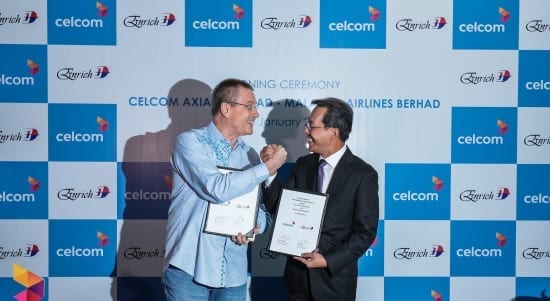
  • Celcom Partners With Allo to Boost Connectivity Solutions

    Celcom Partners With Allo to Boost Connectivity Solutions

    Celcom has announced that it has signed a partnership deal with Allo aimed at improving telco-related services and connectivity solutions.

    Among the areas that they seek to focus on are fiberization, network resiliency, connectivity, information and communications technology (ICT), internet of things (IoT), 5G and smart solutions.

    In a statement, Celcom said the partnership will enable a faster fiber infrastructure rollout by Allo while facilitating the rapid deployment of high-speed broadband in targeted industrial areas, network base stations and fiberization of Celcom-selected sites.

    The collaboration between Malaysia’s major telecom provider and Allo, a wholly owned subsidiary of Tenaga Nasional Berhad (TNB), will also seek to speed up the progress of smart cities through digital connectivity by both parties.

    “The development of a good digital ecosystem requires the cooperation between various sectors, including public and private sectors, towards achieving the nation’s aspirations that have been outlined in the government’s plans for the benefit of the people. Today’s initiative should be continued because the cooperation between companies will of course bring results that have high impacts to the people and the nation,” said Dato Sri Haji Mohammad Mentek.

    TNB President and CEO Dato’ Indera Ir. Baharin Din said TNB, through Allo, is fully committed to undertaking efforts that benefit the nation’s economic recovery and supports the Government’s initiatives to make lives better and brighter for Malaysians.

    “By leveraging on over 25,000km of TNB’s fiber optic infrastructure, Allo has peninsula-wide coverage to support a rapid and cost-effective deployment of high-speed broadband connectivity services. We believe the digital economy sector is crucial to the future development of Malaysia’s economy by supporting the growth of the nation’s GDP. Our role as the catalyst for the nation’s economy is closely related to the implementation of a modern, reliable, and extensive connectivity network as underlined in the MoU between Allo and Celcom today. Through a reliable connectivity ecosystem that is offered by Allo and Celcom, it can be a driving force for comprehensive value creation across the industry, the development of smart cities, and the ability to transform the socio-economic landscape in Malaysia,” he said.

    Commenting on the collaboration, Datuk Idham Nawawi, chief executive officer of Celcom Axiata Berhad said that Celcom and Allo’s strategic partnership will leverage the strengths of both organizations towards the acceleration of digitalization across Malaysian Homes and Enterprises as well as      significantly boost network operational efficiency.

    “The opportunity to provide high quality and affordable fibre connectivity to homes across the nation is immense, and through this partnership, both parties can play a much larger role and make significant impacts towards digitising Malaysian societies. The strength of Celcom with the widest mobile network and the potential reach of Allo’s fibre via TNB’s infrastructure opens this partnership to a world of new opportunities,” Idham said.

    The collaboration is also expected to boost efforts from Allo and Celcom to drive connectivity and digitalization across industries with technology solutions and services such as ICT cybersecurity solutions, cloud, data centers and managed services, as well as IoT smart city solutions.

  • Globe Deploys 933 5G Sites in 1st Half 2022

    Globe Deploys 933 5G Sites in 1st Half 2022

    Globe Telecom has announced that it has built 933 base stations in the first half of 2022 as part of its continued 5G rollout across the Philippines.

    Globe’s 5G network outdoor coverage has reached nearly 97% of the National Capital Region and 86% of key cities in Visayas and Mindanao.

    “Globe has been ramping up its rollout amid rising demand for 5G connectivity. The drive to build more and faster is fueled by our desire to deliver more improvements in our customer service experience that are consistent and reliable,” said Joel Agustin, SVP and head of network planning and engineering at Globe.

    As of end-June 2022, Globe has logged approximately 2.7 million devices on its 5G network.

    The telco giant is also accelerating its 5G roaming rollout to more countries in Asia, the Middle East and Europe to enable the connectivity experience for travelers and overseas Filipino workers.

    For data-related upgrades and expansion, Globe has already spent P50.5 billion out of its P89 billion capital expenditure allocation for 2022. The majority of the amount was used to build its fiber assets further, put up more cell sites, upgrade towers to 4G LTE and roll out 5G technology and in-building solutions.

  • M1 Launches Cloud Gaming Service Zolaz

    M1 Launches Cloud Gaming Service Zolaz

    M1 has announced that it is launching Zolaz, a cloud gaming subscription service that allows customers to play anywhere, anytime and on any device.

    Zolaz caters to both mid-core and casual gamers with an “all-you-can-play” on-demand gaming experience. Subscribers will gain instant and unlimited access to over 400 high-quality PC and console titles, including those by AAA publishers. Similar to Netflix and Spotify’s click-and-play models, games are streamed directly to users’ preferred devices without the need to wait for download and installation. A single account can be shared with up to four other profiles.

    Games in the catalog include the BAFTA Games Award-nominated first-person shooter, Metro Exodus; the action RPG co-op shooter from the Warhammer world, Warhammer: Chaosbane; and the popular party game, Overcooked. Individual high scores and game history can also be stored directly in the cloud, freeing up device data storage.

    “Cloud gaming has always been a possibility, but its potential has so far depended on network speeds, data tariffs and latency. M1’s True 5G network resolves this with its high speed and low latency so that graphically intensive games can now be seamlessly played on-the-go and without need for expensive hardware,” said Manjot Singh Mann, chief executive officer, M1. “M1 is on track to roll-out nationwide 5G outdoor coverage by the end of this year. Zolaz is part of our 5G ambitions to develop and launch 5G commercial use cases across consumer, enterprise and government sectors.”

  • ZTE Launches Industry’s Smallest 5GC Product

    ZTE Launches Industry’s Smallest 5GC Product

    ZTE Corporation has unveiled the industry’s smallest 5GC product, dubbed the Mini5GC.

    ZTE’s new Mini5GC features miniaturization, lightweight, simple networking, and ultra-high integration. The company states that it can well facilitate safe production, flexible adjustment of work sites, and efficient and accurate emergency rescue in mining areas.

    This is part of its continued innovations in 5G core network products to boost the in-depth development of 5G private networks.

    For Mini5GC, the number of general network functions is customized from more than 10 to just four, and the network communication and resource occupation are optimized. Thus, a lightweight 5GC can be deployed on one 1U server.

    Moreover, the size of the server is reduced to A3 paper, and its weight is reduced to less than 5kg. With high integration, the 5GC product has 5Gbps forwarding capability and excellent performance for the same size in the industry.

    With simple deployment, the Mini5GC can adapt to any rack, and its power consumption is about 100 watts. Also, through pre-installation of software and hardware upon delivery, on-site one-click modification, and plug-and-play the required services can be quickly launched in several hours.

    To date, ZTE’s Mini5GC has carried out pilot verification in five typical fields, including mining, transportation, manufacturing and government affairs. ZTE and SHAANXI ZHIN TECHNOLOGY CO., LTD. have jointly built a mine-use 5GC based on the Mini5GC to provide in-place data distribution for underground mining, so as to improve mining service efficiency and provide a high-availability network to ensure safe production in the mining area.

    Moving forward, ZTE says it will work with more industry partners to integrate product innovation and business model innovation to help operators explore intelligent digital development and boost the prosperity of the 5G industries.

  • China Broadband Communications Rebrands as CBC Tech

    China Broadband Communications Rebrands as CBC Tech

    Effective September 1, China Broadband Communications rebrands as CBC Tech to reflect the company’s vision to become a next-generation network-as-a-service (NaaS) provider. CBC Tech will focus on providing elevated customer experiences and technological innovations to enable global enterprises to grow in China, as well as empowering Chinese companies that plan to penetrate overseas markets.

    This rebranding marks a significant milestone for the company as it veers away from providing traditional telecom operator services. As a NaaS provider, CBC Tech will embrace cloud-native networks and security-as-a-service solutions to help enterprises advance. CBC Tech will also continue to strengthen R&D capabilities, enhance the eNet network to meet customers’ changing network and security needs and provide customers with an excellent digital experience.

    “Upgrading the CBC brand to CBC Tech aims to reshape the company’s vision, mission and culture to better integrate telecommunications and technology advantages in the transformation process, complete with an innovation roadmap. This transformation will be made through continual investment in people, technology and processes,” said Richard Fung, co-founder and CEO of CBC Tech. “CBC Tech will spare no effort to focus on business development and provide the best employee and customer experience. Our goal is to expand eNet network coverage to 50 markets outside of China in the next one to one and a half years.”

  • Huawei Launches Tech Seminar to Inspire Next-Gen Leaders

    Huawei Launches Tech Seminar to Inspire Next-Gen Leaders

    Leading global ICT provider, Huawei today hosts the 11th edition of the Seeds for the Future Program in Singapore. For the first time in conjunction with the program, Huawei also debuted the Tech to Build Your Career seminar at Singapore University of Technology and Design (SUTD), which participants learn about the future of tech careers and foster entrepreneurship.

    The seminar is a key component of the Seeds for the Future Accelerator camp starting from August 29 to September 2 in Singapore. Seeds for the Future is the global flagship CSR project run by Huawei since 2008. Aiming to inspire the next generation of leaders through technological innovation and cross-cultural exchange, the program has attracted over 12,000 students from 137 countries and regions to attend over the last 14 years. As of 2022, Huawei has trained a total of 203 participants in Singapore under the Seeds for the Future Program.

    Huawei Asia Pacific Seeds for the Future Program 2022 was first kicked off in Bangkok on August 19. During the 9-day digital boot camp, 120 outstanding students from 16 countries across the Asia-Pacific region enjoyed a cross-cultural digital journey in Thailand. 33 out of 120 were selected for the Acceleration Camp. During their stay in Singapore, they will be guided by entrepreneurial leaders from various tech sectors, which will inspire them to consider the practicability and realization of their ideas.

    “As part of Huawei’s Seeds for the Future Program, the Tech to Build Your Career seminar will connect the next-gen leaders from other ASEAN countries with top talents in Singapore and bring together great minds across the ecosystem to discuss, share and inspire ideas of innovation,” said Charles Cheng, managing director of Huawei International, “We believe that our collective effort will contribute to a more sustainable and progressive Singapore, and help the nation build a world-class talent pool in the long-term.”

    The Tech to Build Your Career seminar began with opening remarks from Prof. Low Hong Yee, head of pillar – designate, associate professor & director of the Digital Manufacturing and Design Centre, SUTD. In her speech, she identified potential opportunities and risks that the new era posed, while addressing how the students could prepare for the upcoming challenges and bring their ideas from ideation to realization.

    Culminated by a panel discussion, the session covered an array of topics, from entrepreneurship in the digital future to community creation in the digital era. It brought together a group of distinguished home-grown entrepreneurs including Zack Yang, chief operating officer and co-founder of FOMO Pay, Elroy Cheo, co-founder of ARC Community and Vivian Lim, co-founder and CEO of The Idea Co, lead curator and license holder for TEDx Singapore.

    The panelists shared their personal experiences on finding the right career path for themselves and how technology has played an important role in their self-discovery journey, regardless of future developments and application of blockchain technology or tech-enhanced community building. They also provided future outlooks into what the technology industry would look like and provided industry insights on which fields they predict will be suitable for young talents to pursue.

    The seminar closed with Tech4Good presentations, where participants were invited to present their solutions and ideas. Tech4Good is a competition designed to help young adults learn about the latest trends in digitalization and explore how digital technologies can address common social issues. Upon completion of the presentations, participants were given additional feedback and suggestions on how to strengthen their ideas.

    The winning team of the Huawei Asia Pacific Seeds for the Future Tech4Good Competition will be announced at the Awards Ceremony of its Seeds for the Future Accelerator Camp in September. The winning team, as one of the top 10 finalists, will continue their journey for Huawei Seeds for the Future Tech4Good Global Competition next January.

  • M1 Debuts 5G Offshore Coverage for Singapore’s Southern Coast

    M1 Debuts 5G Offshore Coverage for Singapore’s Southern Coast

    M1 Limited has announced that it will undertake an ambitious multi-year project that aims to provide ubiquitous 5G standalone (SA) offshore coverage for the southern coast of Singapore, including the surrounding waters of the southern islands.

    Extending 5G offshore coverage enhances connectivity in the larger maritime ecosystem and unlocks new use cases and applications. This is an important step in the maritime industry’s digital transformation efforts and its goal of becoming the next engine of growth for Singapore.

    In collaboration with, and with co-funding from, the Maritime and Port Authority of Singapore (MPA) and the Infocomm Media Development Authority (IMDA), M1 will provide a 5G standalone (SA) network to trial, develop and deploy new maritime 5G use cases under the IMDA Innovation and Ecosystem Testbed Programme and the MPA Innovation Lab – making this the world’s first public and largest maritime testbed at sea.

    The potential 5G use cases are targeted at enhancing the efficiency and safety of maritime operations and management. The use of 5G connectivity includes telemedicine to enable crew welfare at sea, delivery drones, maritime surveillance, and autonomous vessels as well as remotely controlled task-based robots, such as ship inspection and autonomous fire-fighting robots, that are used for more dangerous and labor-intensive tasks.

    “The launch of M1’s 5G standalone network provides low-latency, responsive, secured and high-throughput mobile connectivity to ensure more precise and reliable communications between the ships and the port. 5G has the capability to resolve long-standing pain points, and it will become the natural technology of choice for the maritime industry. As the first country to extend 5G standalone coverage to sea for maritime operations, M1 is excited to partner  MPA and IMDA to co-develop 5G solutions that will not only transform the industry but benefit the whole of Singapore’s maritime economy,” said Manjot Singh Mann, CEO of M1.

  • China Mobile Partners With ZTE to Unveil World’s First 5G NTN Field Trial

    China Mobile Partners With ZTE to Unveil World’s First 5G NTN Field Trial

    ZTE Corporation has announced its collaboration with China Mobile Research Institute, China Transport Telecommunications & Information Group, the Beijing Branch of China Mobile and other partners to showcase what it calls the world’s first 5G NTN (Non-Terrestrial Network) field trial at the 5G-Advanced Industry Development Summit in Beijing.

    The company said in its press release that this brings achievement breakthroughs in two aspects, ultra-long distances as far as 36,000 km and direct connection between mobile phones, that are enabled by two innovations including dynamic compensation of big latency and RF data conversion between the satellite and terrestrial.

    The trial was end-to-end and demonstrated services such as short messages and voice services, both with satisfactory performances. The trial included a comprehensive set of tests of the direct connection between the mobile phone and the satellite, which supports a network with ubiquitous connectivity, more use cases, highly integrated industry chains and low O&M costs.

    The trial was based on the 3GPP R17 and on a network architecture using high-orbit satellites for transparent forwarding to implement end-to-end link interconnection among terminals, satellites, terrestrial gateways, base stations, core networks and servers.

    The L-band satellite and terrestrial gateways, located between the NTN terminal and the base station, were responsible for air-interface message transmission. The terrestrial gateways were interconnected with the 5G NTN base station. The terminal was connected to the terrestrial core network and service platform through the satellite, gateways and NTN base station in turn to implement end-to-end service interconnection.

    During this trial, communication cases such as synchronization, broadcasting, accessing and data transmission, and services such as short text messages and voice messages were successfully tested. The latency of 64-byte ping is about 4s. The performance met the expectations, indicating the solution is very likely feasible. In the future, there will be emergency communication service pilot projects in Beijing, Yunnan and other provinces.

    Together with the terrestrial network, the 5G non-terrestrial network (5G NTN) forms an integrated ubiquitous network with a variety of use cases, highly integrated industry chains and low O&M costs. It uses satellite communication for powerful coverage to meet people’s demands for better accessibility of the mobile internet around the world and provide emergency, marine, remote areas and IoT communication services, facilitating the comprehensive development of CHBN (Customer, Home, Business, New).

    The satellite telecommunication network can reuse the cellular network and significantly reduce terminal cost. In addition, the number of cellular network base stations and centralized deployment can significantly reduce deployment and O&M costs.

    In this new stage of 5G-Advanced, this end-to-end 5G NTN field trial’s success helps build a solid foundation for a direct phone-to-satellite communication business model. This service provides users with more reliable and consistent experiences and connects space, air, ground and sea, forming an integrated ubiquitous network.

  • India’s Reliance to develop new smartphone with Google in $25 billion 5G push

    India’s Reliance to develop new smartphone with Google in $25 billion 5G push

    India’s telecom leader Reliance said on Monday it is working with Alphabet’s Google to launch a budget 5G smartphone as it laid out a $25 billion plan for introducing the next-generation wireless services within two months.

    Speaking at the company’s annual general meeting, Reliance Chairman Mukesh Ambani said Jio’s 5G network will be the world’s largest, launching in main cities including New Delhi and Mumbai before being expanded across India by December next year.

    Ambani, one of India’s richest men, said only that the phone being developed with Google would be “ultra-affordable”. The cheapest 5G phones retail for around $150 currently in India, where around 700 million people don’t have a smartphone.

    “To take the 5G mass market, a sub-$100 phone is imperative and Jio is rightly positioned to bring 5G to the masses,” said Neil Shah, vice president of research at Counterpoint.

    5G data speeds in India are expected to be about 10 times faster than those of 4G, with the network seen as vital for emerging technologies like self-driving cars and artificial intelligence.

    Reliance’s 5G plans throw down the gauntlet to rivals Bharti Airtel and Vodafone-Idea in the world’s second biggest mobile market. Shares in Airtel and Vodafone closed down 1.3% and 3.3% respectively in a weak Mumbai market where Reliance also slipped 0.78%.

    Jio, India’s biggest mobile carrier with more than 420 million customers, snapped up airwaves worth $11 billion in a $19 billion 5G spectrum auction earlier this month.

    The aggressive 5G strategy builds on Jio’s playbook of disrupting India’s telecoms market having sparked a price war in 2016 when it launched cheap 4G data plans and free voice services, and later a 4G smartphone costing just $81, again in partnership with Google.

    With a market value of $220 billion, Ambani’s business empire spans telecoms, retail, oil-and-gas and new energy.

    He said he was among those mentoring his children on a daily basis as they begin to take the reins at the company, with Akash and Isha assuming leadership roles in Jio digital and in retail respectively, and Anant joining the new energy business.

    Akash, 30, was also named chairman of the board of Reliance’s telecom unit in June.

    Ambani senior added that he would provide an update next year on IPO plans for Reliance’s digital and retail units, which raised around $22 billion from global investors such as KKR & Co Inc and Silver Lake in 2020.

    Reliance also announced the long-awaited integration of its grocery shopping app JioMart with investor-partner Meta Platform Inc’s WhatsApp, allowing users to shop via the messaging app.

    Separately, Isha Ambani said Reliance will launch a new consumer goods company this year, without giving details.

    Reuters exclusively reported in May that Reliance has plans to acquire dozens of grocery and non-food brands to build a $6.5 billion business to challenge foreign giants like Unilever

  • NOW Telecom’s Equity Restructuring Gets Nod

    NOW Telecom’s Equity Restructuring Gets Nod

    NOW Telecom Company has announced it was granted the approval of the Philippines’ Securities and Exchange Commission (SEC) for the increase of NOW Tel’s authorized capital stock, the quasi-reorganization of its equity and a stock split.

    Following the approval, the company increased the number of its authorized common shares from 14.59 million to 952.09 million and lowered its par value from Php100.00 per share to Php1.00 per share.

    Previously, the stockholders of NOW Corp approved the increase of the company’s stake in NOW Tel, for a total of Php600 million which was part of the proceeds from the placement received from the equity subscription of Velarde, Inc. to NOW Corp. The additional subscription from NOW Corp and other shareholders supported the increase in the authorized capital stock of NOW Tel.

    In addition, the SEC also certified the approval of the equity restructuring to fully expunge NOW Tel’s deficit as of December 31, 2020. The quasi-reorganization has allowed NOW Tel to eliminate its deficit, which will allow the company (NOW Tel) to declare dividends to its shareholders from its unrestricted retained earnings that may be generated subsequent to the quasi-reorganization.

    “This strategic initiative of NOW Tel is envisioned to support its growth plans. The three-step equity restructuring better positions NOW Tel for investors both domestic and foreign to participate in its equity. With the amended Public Services Act allowing up to 100% foreign ownership in public utility companies and this recent approval from SEC, NOW Tel can now proceed in its growth plans starting with its fundraising efforts including but not limited to tapping either the debt market or equity market, or both.” says Rene Rosales, NOW Telecom president and COO.

    Former President Rodrigo Duterte, in 2018, signed into law the proposed extension of NOW Tel’s franchise for another 25 years or until 2043.

  • ZTE Reports Double-Digit Gains in Revenue and Profit in H1

    ZTE Reports Double-Digit Gains in Revenue and Profit in H1

    ZTE has posted its financial results for the first half of 2022. According to the results, for the six months ended 30 June 2022, ZTE achieved operating revenue of RMB 59.82 billion, 12.7% higher than a year earlier. During the period, net profit attributable to holders of ordinary shares of the listed company reached RMB 4.57 billion, an increase of 12.0%, and net profit after extraordinary items attributable to holders of ordinary shares of the listed company amounted to RMB 3.73 billion, representing a year-on-year increase of 65.8%. Basic earnings per share was RMB 0.96.

    In the first half of 2022, ZTE, despite the challenges of the pandemic and complex external environment, has ensured the security and stability of its own supply chain, realized continuous delivery to its global customers and continuously improved the company’s operational quality and efficiency, leveraging its advantages of being an ultimate cloud company, rich experience in digital transformation, mature business continuity system, and its own self-developed cloud platform that can support tens of thousands of people across the globe to work online.

    ZTE has been committed to strengthening its end-to-end R&D investment and innovations. In the first half of 2022, the company’s R&D spending reached RMB 10.15 billion, accounting for 17.0% of its total operating revenue.

    From January to June of 2022, ZTE’s operating revenue in both domestic and international markets and its three major businesses (carriers’ networks, government and enterprise, and consumer business) all achieved double-digit increase year on year. For the domestic market, the operating revenue reached RMB 40.60 billion, a year-on-year increase of 12.9%, accounting for 67.9% of the total operating revenue, while for the international market, the operating revenue amounted to RMB 19.22 billion, a year-on-year increase of 12.3%, covering 32.1% of the total operating revenue.

    In terms of carriers’ networks, ZTE achieved an operating revenue of RMB 38.72 billion yuan, an increase of 10.5%, compared with a year earlier. In the operators’ traditional network market, ZTE proactively participated in the global 5G constructions including 5G network, Gigabit fiber network and 5G transport network, and continuously strengthened the competitiveness of its products and solutions, building excellent cost-effective networks for its customers and optimizing the market structure accordingly.

    To date, ZTE has entered into 5G cooperation with over 110 operators across the globe, covering major markets including Europe, Asia Pacific and the Middle East. Meanwhile, the company has actively seized the opportunity of domestic operators’ cloud-network transformation, and deeply integrated its own capabilities with their requirements while providing its well-matched products and solutions. ZTE has secured the domestic operators’ centralized procurements for multiple years.

    In terms of government and corporate business, ZTE’s operating revenue increased by 18.3% year on year to RMB 6.71 billion during the period. Focusing on the internet, finance, electric power, transportation, government affairs and the industry, and relying on its “Precision Cloud Network” and “Digital Nebula”, the company has deeply cultivated the digital transformation of the industry, promoted the deep integration of 5G and the industry, and fully participated in major projects such as the east-data-west-computing project in China. In addition, ZTE’s core products and solutions such as server and storage, data center, enterprise network, video conference, cloud computer and distributed database were widely applied in the government and corporate markets, gradually forming a good cloud network ecosystem.

    In consumer business, ZTE harvested revenue of RMB 14.39 billion, a year-on-year increase of 16.5% in the first half of 2022. ZTE, committed to offering its global users a seamless digital lifestyle in all scenarios, continued to make efforts in branding, products and channels to promote the sales of personal and household products.

    During the period, ZTE, while consolidating the businesses in the first curve represented by wireless and wired products, has been rapidly expanding its businesses in the second curve, including server and storage products, terminals, 5G industry applications, automotive electronics, and digital energy. In H1, the company has achieved around 40% increase year on year in terms of the operating revenue from its second curve business.

    Moving forward, ZTE, adhering to the positioning of “a driver of digital economy”, will keep continuously promoting its own digital transformation. The company will stay committed to building a highly resilient organization and implementing the “dual-carbon” strategy to achieve sustainable development. In addition, the company will actively strengthen cooperation with its customers, industries and ecological partners to jointly advance the development of the global digital economy.

  • India’s 5G to Rollout by October 12

    India’s 5G to Rollout by October 12

    India is expected to roll out 5G services by October 12, according to Ashwini Vaishnaw, union communication, electronics and information technology minister.

    Vaishnaw revealed that 5G prices will be reasonable for users and that 5G services will be scaled up after launch to reach more parts of the country in the coming two to three years, with a focus on delivering 5G connectivity to both urban and rural areas.

    India has entered its final stage of rolling out 5G services, with the government having issued spectrum allocation letters to telecom operators in preparation for the impending 5G rollout

    During the initial phase of rollout, 5G will reach 13 cities, namely Ahmedabad, Bengaluru, Chandigarh, Chennai, Delhi, Gandhinagar, Gurugram, Hyderabad, Jamnagar, Kolkata, Lucknow, Mumbai and Pune.

    Separately, PM Modi said during the Grand Finale of Smart India Hackathon 2022 that India is preparing to launch 6G by the end of the decade – which will be a boost to sectors such as gaming and entertainment.

  • M1 Onboards ZΩH as New MVNO Partner

    M1 Onboards ZΩH as New MVNO Partner

    M1 has announced ZΩH as its latest Mobile Virtual Network Operator (MVNO) partner. As a telecommunication service offering from enterprise network and ICT provider Lifeway Singapore, ZΩH will leverage M1’s advanced mobile network infrastructure to offer mobile services specifically to enterprise customers.

    ZΩH provides a diverse range of mobile and data roaming plans to corporate as well as SMEs. For M1, the collaboration gives it access to ZΩH’s customer base and enables the telco to expand its reach within the enterprise ecosystem.

    “M1 is proud to be the platform of choice for MVNOs in Singapore. We are delighted to be hosting ZΩH’s services on our network and ensuring that their customers are able to receive excellent coverage, reliability and speed. With our 5G roll-out, we look forward to supporting ZΩH’s enterprise customers and bringing state-of-the-art features to them,” said Alen Ng, head, corporate development, M1.

    “Partnering with M1 is an exciting step forward for Lifeway Singapore, to broaden customer reach and footprint as well as to improve customer experience in today’s digital world. Beyond that, the partnership gives us an opportunity to provide exciting offers and innovative bundles to meet customers’ specific needs,” added head of sales & marketing, Chris Loh, Lifeway Singapore.

    M1 continues to support MVNOs with new and unique value propositions that add to the telco industry’s overall development and infrastructure. M1 is the first telco in Singapore to establish a series of successful partnerships with MNVOs, beginning with Circles.Life in 2015 and more recently with Changi Recommends, MyRepublic and Geenet, enabling the MVNOs to deliver quality network services and experience.

  • Asia a Hotspot for US-China Cloud Giants

    Asia a Hotspot for US-China Cloud Giants

    Cloud computing momentum continues to build in Asia as cloud giants channel more attention toward the fast-growing region. Demonstrating this, Oracle Cloud, Google Cloud and Tencent Cloud successively announced – within a week’s time in August – expansion plans to capture cloud market opportunities in Asia.

    As one example, Oracle Cloud has just established a new Oracle Cloud Singapore Region to meet the rising demand for cloud services. According to Chin Ying Loong, regional managing director for ASEAN & South Asia Growing Economies (SAGE),

    Google Cloud, meanwhile, has its eye on Singapore’s neighboring country, Malaysia, where it announced the establishment of the first cloud region in the country, a move set to advance the next phase of the country’s economic growth. Google Cloud has said that this new region is its “most significant infrastructure investment in Malaysia to date to support its growing local customer base, including companies in regulated industries.”

    In addition, Google Cloud will also add a cloud region in Thailand. According to research by Google, with an economy expected to reach $57 billion by 2025, Thailand is a strategic cloud market that is predicted to churn out $79.5 billion in annual economic value in the country by 2030. This would put Google Cloud in direct competition with major industry players like AWS and Tencent. A new cloud region will also be added in New Zealand – totaling three new regions in the Asia Pacific.

    Karan Bajwa, vice president for Google Cloud, Asia Pacific, noted, “When they launch, these new regions will join our 34 cloud regions in operation around the world — 11 of which are located in Asia Pacific — delivering high-performance services running on the cleanest cloud in the industry.”

    Moreover, Google just opened its third data center in Singapore in August, in a move “to build the country into its regional hub for its network of data centers, cloud regions and subsea cables.”

    Also setting sights on different countries in the region, Tencent Cloud recently announced its partnership with CITIC Telecom’s subsidiary, Acclivis, to deliver private, public and hybrid cloud services, as well as ICT solutions to cater to the demands of enterprises in Southeast Asia, China and Hong Kong. Through this partnership, Tencent Cloud aims to expand its footprint beyond China to offer its services in Southeast Asian markets. According to IDC, Southeast Asia is the fastest-growing cloud computing market and is expected to be valued at $40.32 billion by 2025, attributed in large part to India.

    This wave of interest is spurred by increased cloud reliance as more organizations recognize the long-term benefits of embracing the cloud. Across Asia, governments are investing in cloud computing to fuel digital transformation, which in turn drives greater innovation in the private sector.

    In Asia Pacific, China is the largest cloud market, followed by Japan, India, South Korea and Australia. The clear cloud leaders in this region are AWS and Alibaba. According to Synergy Research Group, Asia Pacific now accounts for one-third of the global cloud market and is growing more rapidly than North America or EMEA regional markets.

    AWS, the global leader in the cloud computing market, posted a strong 33% revenue growth from its cloud business in the second quarter of 2021, signaling strong growth, albeit slower than the growth of rivals Google Cloud and Microsoft.

    Alibaba Cloud – the largest cloud provider in the Asia Pacific and the third largest globally, behind AWS, Microsoft and Google Cloud – posted a 60% hike in revenue in Southeast Asia alone last year, with plans to continue to leverage further overseas market opportunities outside of China.

    While China is dominated by local cloud companies like Alibaba Cloud and Tencent, the rest of the region is a playing field between Chinese and US cloud giants. The succession of cloud expansion announcements in the region is a clear indication that Asia is the coveted region for unprecedented cloud growth.