Category: Telecom

Retail News Asia is committed to providing both local and global retailers with the latest Telecom & Telco news throughout the Asian market. This on a daily base.

  • Docomo to launch 5G soon

    Docomo to launch 5G soon

    The first phase will include building a non-standalone 5G system based on trials that have already started in 2017, she said, adding that spectrum will be allocated by end of March 2019. Docomo is striving to commercialize 5G services in 2020, just in time for the Summer Olympics in Tokyo.

    “Since the standardization is set, it’s time to consider how to deploy a 5G network. We need to strategically deploy 5G in the necessary areas, with the necessary functions, and with adequate frequencies,” Lan Chen said.

    According to her, the first element of a successfully built 5G network is its ability to adapt to the continuous growth in data traffic and handle new business cases across various industries.

    Docomo started to shift from being a global communications company into a value co-creation company by partnering with key actors in the vertical market. The main driver of this transformation was the daunting challenges mobile operators face across the world, in addition, to need to get ready for 5G.

    In February, the company launched its 5G Open Partners Programme, with more than 1,400 companies already joining the initiative. “Our aim is to use 5G technology to enhance the user experience and use AI technology to expand the market,” Docomo president and CEO said.

  • Australia gets first 5G-enabled Wi-Fi hotspots

    Australia gets first 5G-enabled Wi-Fi hotspots

    “We have said we intend to lead on 5G and with these 5G-enabled Wi-Fi hotspots Australian consumers will be among the first people in the world to try the technology,” Mr. Wright said. “Taking 5G technology out of a lab and into the hands of consumers is another key milestone on Telstra’s roadmap to offering 5G services in 2019.”

    There are no 5G compatible commercial smartphones or tablets available today. By connecting 5G backhaul and infrastructure in the Southport Exchange, to a standard Wi-Fi access point then people can use the technology on their existing device, Telstra explained in a press release.

    Using Wi-Fi access as part of Telstra’s 5G technical program is a way to show the benefits of 5G capability in real-world conditions. The 5G hotspots will be open to anyone in the area and are free with a download limit of 10 GB per day per device.

    “Wi-Fi has limited throughput so a single hotspot alone cannot come close to reaching the limits of 5G at our Innovation Centre. By using multiple hotspots with potentially hundreds of smartphone users served through a single 5G device we are able to get closer to demonstrating 5G in a real-world environment,” Wright said. “Our 5G backhaul is capable of delivering download speeds of more than 3Gbps, which is capable of supporting around 1,000 HD movies being streamed simultaneously.”

    Telstra is also using mmWave spectrum and its 5G Innovation Centre to put a connected car on the road with the Intel 5G Automotive Trial Platform, one of the most advanced 5G prototype devices available in the world today.

    “Working with global technology companies Ericsson and Intel, we have put Australia’s first 5G connected car on the road. We are in the very early stages of development and are achieving download speeds approaching 1Gbps inside the car and the vehicle is also equipped with a Wi-Fi access point,” Wright said.

    “This shows how quickly technology is evolving. At the beginning of the year, our 5G prototype device was the size of a bar fridge and weighed more than 200 kilograms.  Now, in collaboration with Intel and Ericsson, we have one that has been shrunk down to the size of a personal computer and can be installed in a car.”

    The Connected Car will help Telstra to start getting real results on mobile performance over mmWave and ensure 5G network readiness.  These advances are part of a series of 5G related activities that Telstra, Ericsson, Intel and other technology companies will undertake on the Gold Coast in 2018.

    The 5G Innovation Centre is central to a $60 million investment Telstra has made to upgrade infrastructure on the Gold Coast to support growing demand and major events in the area.

    Actual broadband speeds experienced on the 5G enabled Wi-Fi hotspots and Connected Car will vary and are likely to be lower than the maximum depending on factors, Telstra said, such as the type of device being used, distance from the hotspot and the number of people connected to the hotspot at the one time. 

  • Vodafone NZ unveils agile and programmable network

    Vodafone NZ unveils agile and programmable network

    With an adaptive network, Vodafone can better support a growing enterprise customer base that requires high-capacity connectivity as business applications and workloads increasingly move to public cloud services (SaaS/IaaS) and cloud data centers both locally and internationally.

    Vodafone Technology Director Tony Baird says this deployment builds on a long-standing relationship. “Our long-standing collaboration with Ciena is a relationship we value greatly. The combination of top-echelon technology and impeccable customer service has put us in a winning position. As a result, we’re very comfortable in not only maintaining but growing our customer base, particularly those that require complex and unique network services.”

    Vodafone can also set customer-defined service policies and program its network to suggest the ideal capacity, hardware configuration and spectral placement for any channel, across any network path.

    Additionally, with Ciena’s Liquid Restoration capability, the operator can significantly improve service availability with flexible adjustment of deployed coherent optical capacity and route affected services across any available path in the network.

    “To respond to changes in end-user consumption and explosion in data usage, leading operators like Vodafone New Zealand must both automate and scale their networks,” said Rick Seeto, Vice President and General Manager, Ciena Asia Pacific & Japan. “They need a network that can adapt and respond, in real-time, to their customers’ ever-changing demands while transforming from a necessary capability to a strategic asset – that’s the basis of the adaptive network.”

  • Airtel and Telecom Egypt partner on global submarine cable systems

    The partnership grants Airtel the right to use fiber pairs of MENA Cable from Egypt to India with access to Saudi Arabia and Oman, and other fiber pairs from Egypt towards Italy. It also extends beyond MENA Cable, where Airtel will get the right to use a fiber pair from Egypt to France on TE North along with capacities on SMW5 and AAE1 cable systems.

    With this, Airtel will be able to further diversify its global network to serve the massive growth in demand for data services, particularly in emerging markets across South Asia, Africa and Middle East, while also benefitting from the favorable economics of Telecom Egypt’s existing wide cable systems network.

    Commenting on the partnership, Ajay Chitkara, Director and CEO, Airtel Business, said, “The partnership with Telecom Egypt underlines our commitment to provide world-class service experience to our customers. The partnership including MENA Cable and TE’s network will be a good addition to our global network portfolio and will provide us with a high quality and diversified new route to Western Europe and the rest of the world. With the explosion of data usage in emerging markets, including India and Africa, this asset will provide us a scalable and diverse high capacity highway to serve our customers. In particular, it will provide impetus to India’s emergence as a major regional internet hub serving customers across SAARC region, with seamless global connectivity.”

    Ahmed El Beheiry, Chief Executive Officer of Telecom Egypt, added“Telecom Egypt’s global network was built over the years through investments in consortiums as well as private international submarine cable systems. Our reach and position as an international hub with tens of Tbps lit capacity, makes us the partner of choice for Euro-Asian and Euro-African transit traffic. Telecom Egypt signed the agreement with OTMT to acquire MENA Cable with the aim of capitalizing on the growing traffic from India and Saudi Arabia to Europe and to obtain a new gateway to Europe through Italy. We are pleased to be able to sign the MoU with Airtel as well as to be able to bundle MENA’s assets with existing assets of the TE network. We aim to come back to the market with more details on the MoU and its financial impact once the deal is closed.”

    Egypt’s distinctive geographic location on the Red and Mediterranean seas has enabled Telecom Egypt to connect more than 11 cable systems from the East and 13 from the West linked with the Red-Med Corridor consisting of 7 diversified routes across Egypt. Telecom Egypt’s global network was built over the years through investments in international submarine cable systems, namely: TE North, ALETAR, SEA-ME-WE-3, SEA-ME-WE-4, SEA-ME-WE-5, IMEWE, EIG, and AAE-1.

    Airtel’s global network portfolio includes ownership of i2i submarine cable system connecting Chennai to Singapore, consortium ownership of SMW4 submarine cable system connecting Chennai and Mumbai to Singapore and Europe, and new cable system investments like Asia America Gateway (AAG), India Middle East & Western Europe (IMEWE), Unity, EIG (Europe India Gateway) and East Africa Submarine System (EASSy). It also has terrestrial express connectivity to neighboring countries including Nepal, Pakistan, Bhutan, Bangladesh and China.

  • Vietnamese operators to begin 5G testing as of 2019

    Vietnamese operators to begin 5G testing as of 2019

    Starting from the capital, Hanoi, the country aims to upgrade its mobile network along with the southern commercial hub of Ho Chi Minh City.

    “Vietnam should be among the first nations to launch 5G services in order to move up in global telecom rankings,” said Nguyen Manh Hung, the country’s minister of Information and Communications.

    Hung, previously the chairman and general director of Viettel Group, wants to reacquire Vietnam’s rank among the top countries worldwide in terms of major exporter of 5G gear through boosting the development of local equipment. He also plans to make the licensing and approval process easier for Vietnam’s IT sector.

    Several partnerships have been made in order to facilitate the procedures: VNPT has teamed up with Nokia on 5G, while MobiFone signed an agreement with Samsung Electronics to cooperate on 4G and 5G networks earlier this year.

    In 2017, Ericsson held the first 5G demonstration in the country in partnership with the Vietnam Authority of Radio Frequency Management.

    While MobiFone and VNPT are on the list of state-owned companies slated for privatization by 2020, Viettel is to remain in government hands.

  • Bharti Airtel meets growing data consumption with new independent fiber company

    Bharti Airtel meets growing data consumption with new independent fiber company

    The owner of the telecom company, Sunil Bharti Mittal, announced the appointment of Savargaonkar and acknowledged his new role. Savargaonkar was previously the company’s director of networks, equivalent to chief technology officer, and today, he will continue to report to Gopal Vittal, Bharti Airtel’s CEO.

    “Given the significant growth in data consumption in recent years, we believe a robust and independent infrastructure company that serves the growing need of fiber in the telecom industry is critical,” Vittal announced.

    Bharti Airtel is about to transfer its fiber optic cable network to a wholly-owned subsidiary, Telesonic Networks Ltd, through low sales. The company manages 246,000 km of fiber optics, which is aggressively rising to meet increasing data growth. “Fiber assets from Telesonic may eventually be transferred to this new subsidiary,” a source commented.

    Not surprisingly, Nitin Soni, director, Asian corporates, at Fitch Ratings, found that it was of common sense to have an independent company that owns fiber since Airtel had previously formed a telecom tower joint venture – Indus Towers – with Vodafone India and Idea Cellular.

    “There is no point of duplication on capex spending like tower infrastructure. India is one of those countries where price competitiveness is so high that most telcos are taking the rational decision to make independent companies,” he said.

    But in order to become a true independent company, Airtel would have to well play its cards and sell a majority stake. This way, it will attract other players to use the assets, not so far of what it’s doing with its tower business, Soni said.

    “If you keep having stake, it won’t be regarded as truly independent by competitors like Reliance Jio, and would continue to build its own fiber. Unless assets are leased by Jio, these independent companies can’t grow,” he added.

    Airtel also appointed Randeep Singh Sekhon as the new chief of technology for its India and South Asia operations, replacing Savargaonkar. Sekhon, who will also report to Vittal, has a previous experience in various senior leadership roles with telcos in Malaysia and Indonesia being earlier CEO of Hutchison 3 Indonesia.

    These new appointments were announced following several events that happened in the company such as the exit of Airtel’s chief technology officer for mobile networks, Shyam Mardikar, who is widely speculated to be joining a rival telco and the departure of Airtel’s enterprise business head Ashok Ganapathy replaced by Ajay Chitkara, who now oversees both the domestic and global enterprise operations.

    Forming the new independent fiber company coincides with the preparation for another battle with Reliance Jio on the fiber optic network–the country’s wired broadband market. Airtel and Jio are having an intense price war in the wireless segment.

    It is expected that Jio will offer a mass-market wired-broadband product bundled with Internet-based television programming starting at about Rs 500 a month, almost half the current market rates for similar services.

    According to Soni, Airtel will benefit from the expansion of the market as Jio enters, but there will be pressure on the ARPUs which will decline by 30-50%. “In the short-term, Airtel will face revenue EBITDA declines in the home broadband segment and we are sure that in the medium term, they will benefit from the expansion of the market,” he added.

    According to analysts, Airtel should also consider the competitiveness of the combined Vodafone-Idea Cellular company, which will have a comparatively strong fiber business through the recently acquired YOU Broadband business.

    Homes in 89 cities pan-India benefit from Airtel’s fixed-line telephone and broadband (DSL) services. The number is set to reach to least 100 key cities from 89 now with Airtel planning to set aside a sizeable portion of its Rs 24,000 crore capital expenditure plan for FY19 to expand its broadband network. Another 10 million-plus homes will be covered by FY21, t
  • Thailand’s AIS aims to educate people on importance of e-waste management through new campaign

    Thailand’s AIS aims to educate people on importance of e-waste management through new campaign

    The campaign encourages people to throw their electronic waste like old AC adaptors, old mobile phones, power banks, broken devices and others into e-waste bins which are equipped with IoT technology to collect and get rid of e-waste.

    The CEO of AIS, Somchai Lertsuitwong explained that the initiative is seeking to reduce carbon dioxide emissions equivalent to one million units and eradicate at least 100,000 pieces of e-waste by 2020.

    “AIS is heading towards its 30th year of operation and we take pride in being part of Thailand’s history. In the last three decades, especially in the continuous growth of the telecom industry contributing to a better quality of life among Thais nationwide,” Somchai said.

    He further added that “being No. 1 in the telecom industry is due to our dedication to the pursuit of creating innovative products and services for the benefit of society and the country.”

  • India has world’s cheapest mobile data rates

    India has world’s cheapest mobile data rates

    Cable.co.uk analyzed 6,313 mobile data plans from 230 different countries from October to November 2018.

    For India’s market, 57 mobile data plans were analyzed and found that the lowest rate per 1GB in the country was 1.41 Rupees ($0.02) while the highest was at 98.83 Rupees ($1.41).

    “A country whose young population has a particularly high technological awareness, India offers a vibrant smartphone market, with strong adoption and many competitors. Data, therefore, is quite staggeringly cheap,” the report mentioned.

    India is home to more than 430 million smartphone users and is the second-largest smartphone market in the world, with China being the first.

    Other countries with cheap mobile data packages include Kyrgyzstan at $0.27, Kazakhstan at $0.49, Ukraine at $0.51, and Rwanda at $0.56.

  • Australian enterprise markets show optimism in 5G adoption

    Australian enterprise markets show optimism in 5G adoption

    With 5G being available in the enterprise market, it is expected to generate around AUD45 billion ($31.1 billion) in value per year by the mid-2020s. The economic earnings will come from next-generation application development, IT services, platforms, and connectivity.

    In fact, a survey by the research company found 68% of IT and business leaders consider 5G as an integral part of their business strategy to make progress. Half of these respondents said it is as important for future development as it is for supporting existing services.

    The company stated that what future services are mainly expecting in 5G are the large data transfer capabilities, more reliable connectivity, and lower latency 5G will offer. This will provide a unity to change software architectures to account for real-time services and cloud-based AI architectures.

    The top three barriers to 5G investment cited were integration with current systems (34 percent); a lack of business cases (23 percent); and security concerns (17 percent). A lack of skills is also an issue with more than 25 percent indicating they will be looking for an outsourcing partner for developing services.

    Almost half of businesses surveyed assume the number of connected devices running on internal systems to increase at least five times within five years. Telsyte said the jump is powering innovation and experimentation in the IoT segment, as it found that one in four companies have already IoT-capable devices, but no formal strategy around them.

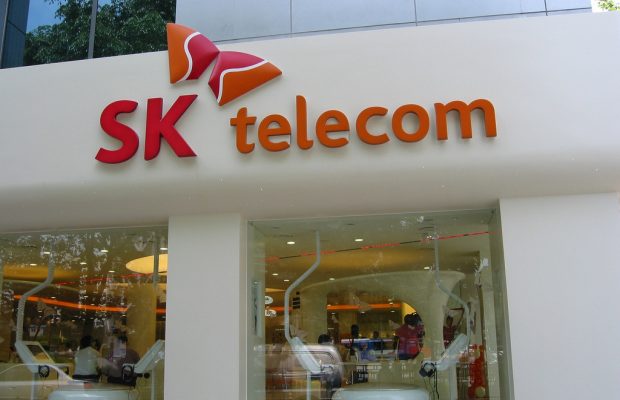
  • SK Telecom signs series of MoUs for greater smart city solutions

    SK Telecom signs series of MoUs for greater smart city solutions

    The South Korean Telecommunications operator announced the signing of the Memorandums of understanding (MoUs) with the Incheon Free Economic Zone (IFEZ) Authority and some others who are planning to build smart infrastructure with 5G and self-driving elements.

    The deals are meant to strengthen the country’s position in smart city development with regards to 5G network deployment, autonomous vehicles, and connected hospitals.

    “We will work closely with the IFEZ Authority to accelerate the IFEZ’s transition to a smart city powered by SK Telecom’s 5G network and mobility technologies,” said Park Jin-hyo, the operator’s CTO.

    As part of the deal, SK Telecom is expected to create a machine-readable HD map of the IFEZ area (which is comprised of Yeongjong, Cheongna, and Songdo) with information to help support autonomous vehicles. This information includes road conditions, lanes, and speed limits.

    “The HD map will b built with Dynamic Data Platform, a 5G-based real-time update solution for HD maps. Dynamic Data Platform automatically updates HD maps upon receiving road observation data from Advanced Driver Assistance Systems (ADAS) over 5G network,” said Jin-hyo.

    He added, “SK Telecom plans to install ADAS and 5G communication modules to public transport vehicles and official government cars in the IFEZ area to detect all changes in the road environment.”

    Both parties aim to work together to achieve smarter and safer transportation by taking into account the policies that will be put in place. In order to do this, they aim to build a data hub that will enable them to oversee the floating population.

    Another deal that was devised, was between SK Telecom and Yonsei University Health System which will provide 5G network solutions and smart technology to hospitals. The smart hospital that is in the making is forecasted to be opened by the beginning of 2020.

    “The 5G-powered digital hospital will be equipped with SK Telecom’s Ai speaker- NUGU- to enable patients with physical difficulties to easily control their beds, lighting, and TV with their voice. They can even use NUGU Call service to get medical assistance in case of emergencies,” SK Telecom stated.

    The hospital is also expected to have AR-powered indoor navigated which will use 3D mapping technologies to “enhance the convenience of patients and visitors”.

    This will allow patients in isolation wards to receive visitors through holographic projections. Additionally, facial recognition will be used on medical worker to ensure greater safety and security for the patients. “Unlike other access control systems that require some kind of contact – fingerprint, pass, etc- the face recognition system allows contact-free entry to help reduce the risk of infection”.

    They also plan to create an incubator for startups called Venturepolis which will be based in Songdo. Venturepolis will support startups that work with smart office solutions.

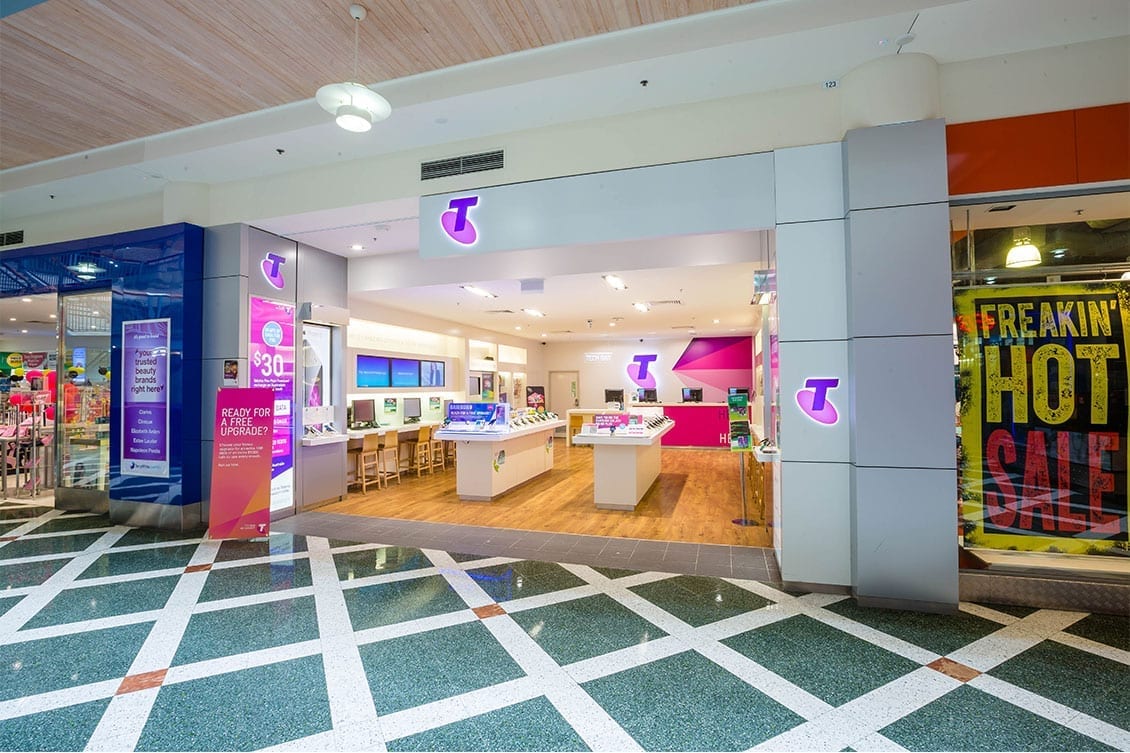
  • Telstra launches first 5G device in Australia

    Telstra launches first 5G device in Australia

    The Australian-based company began marketing its broadband plans for the new HTC 5G Hub and will soon start selling the Samsung Galaxy S10 5G. They also plan to introduce their mobile plans for the new technology by the end of June.

    The company said it would offer free 5G access for around 12 months.

    “We have already started building our 5G coverage in some areas and, as we did with 3G and 4G, we will progressively roll out the new technology over time,” said Telstra’s chief executive officer Andrew Penn in a statement.

    The operator is currently working on rolling out 5G in ten cities and plans to expand the coverage to around 35 other cities within the next 12 months.

    Telstra turned on 5G base stations back in December 2018 in some parts of Sydney and Melbourne all of which amounted to 187 5G-compatible sites in the two cities.

    They acquired 3.6GHz spectrum for AUD 386 million. The company claims to have around 60Mhz of contiguous 5G spectrum in Australia’s major capital cities and around between 50 to 80Mhz of contiguous spectrum in regional areas.

    “Our launch of the HTC 5G Hub is the moment 5G becomes a reality for Australian consumers,” said Penn.

    “Since 2016, we have been working with some of the world’s leading technology brands to ensure Australians are among the first in the world to be able to access 5G.”

  • SoftBank turns to Nokia for commercial 5G offering

    SoftBank turns to Nokia for commercial 5G offering

    As an existing supplier of multiple technologies to SoftBank, Nokia’s selection for 5G Radio re-enforces the strong relationship between the two companies, as SoftBank turn to Nokia’s end to end portfolio for 5G.  Nokia’s 5G AirScale supports multiple frequencies, in both distributed and centralized architectures, giving SoftBank tremendous flexibility in its network evolution.

    Nokia’s 5G AirScale will be deployed across Japan, bringing 5G RAN to businesses and consumers alike. The 5G investment will benefit consumers by bringing them a 5G enhanced Mobile BroadBand (eMBB) service, with 5G Ultra-Reliable Low Latency Connectivity (URLLC) and enhanced Machine Type Communication (eMTC) enabling multiple new applications and services for industries in the 5G era.

    John Harrington, Head of Nokia Japan, said, “We are delighted to continue our long-term relationship with SoftBank and to be working with them as a trusted end to end partner at such an important milestone in the transformation to 5G. We are committed  helping SoftBank launch its commercial 5G network.”

    Nokia now has 38 5G commercial contracts, including 20 with named customers. These contracts well illustrate the vendor’s strong thought leadership in 5G. Nokia will continue to be one of the best partners for customers by providing an end-to-end solution and contribute to transform both networks and businesses.

  • Cinia and MegaFon to develop new Arctic telecom infrastructure

    Cinia and MegaFon to develop new Arctic telecom infrastructure

    The arctic is one of the most environmentally protected areas in the world, making permits for laying cables to be very difficult to obtain.

    Ari-Jussi Knaapila, CEO of Cinia, said, “The Arctic cable will contribute to the socio-economic development of the Arctic areas. The cale is an environmentally sustainable way to boost global, regional and local economies. At the same time, the cable will connect three continents, covering approximately 85 percent of the world’s population.”

    The new route will offer low latency, physical diversity and high network availability which will serve the markets of Europe, some parts of Russia, Japan and North America.

    CEO of MegaFon, Gevork Vermishyan said, “MegaFon is proud to join a major international infrastructure project that will not only connect several continents via the Arctic but also will benefit MEgaFon as a leader of digital opportunities by enabling the development of network infrastructure for customers in the Arctic region and the Far East.”

  • South Korea discloses number of 5G subscribers

    South Korea discloses number of 5G subscribers

    Consumers have however filed some complaints related to the coverage and speed of 5G. The main problem was that mobile devices were displaying a 5G symbol when users on LTE were near base stations compatible with 5G. The Ministry confirmed that facing such issues is very normal given that operators are still building base stations and upgrading software.

    A total of 54,202 5G base stations have been deployed so far, an increase of 7 per cent from 22 April, however coverage in the country was still restricted to urban and more populous areas.

    Korea has been pioneering the journey to 5G deployment, being one of the first in the world to offer 5G to mobile consumers. Operators in the country had also launched commercial 5G services to businesses using mobile routers.

    Out of the 260,000 subscribers, KT, the country’s second largest operator, has announced it secured 100,000 subscribers so farm whereas SKT and LG Uplus are yet to reveal their figures.

  • Vodafone network outage affects several countries in Europe & Asia

    Vodafone network outage affects several countries in Europe & Asia

    Issues began at around 14:42 BST according to network monitor Down detector. Customers all over the UK reported issues and so did customers in Spain, Ireland, Italy, Germany, Greece, and Portugal.

    Many customers took to Twitter to express their frustration on the matter.

    Vodafone then acknowledged the outage and tweeted, “We are currently investigating a potential outage to our fixed and mobile services. We thank you for your patience as we work to get this resolved.”

    The company has around 19.5 million UK customers and around 444 million globally.

    Initially, it looked more like an isolated issue with customers in some UK cities thought to have been among those affected; however, Economics Correspondent Paul Cogan at Virgin Media TV noticed that Down Detector showed more maps with even more outages.

    He stated, “Vodafone’s problems don’t seem to be restricted to just Europe. Down Detector outage maps show problems in India, Australia, New Zealand, and Turkey.”

    The global disruption was then confirmed when Vodafone Ghana tweeted, “Vodafone Ghana wishes to apologize for the intermittent network challenges experienced by some of our mobile customers. Resolving it remains our topmost priority. We shall keep you updated. Thanks for your patience.”

    Vodafone then apologized for the inconvenience and said the services were back to normal. “This issue has now been fully resolved and normal service has been restored to customers. We thank you for your patience and sincerely apologize for the inconvenience caused.”

    The network outage comes a month after Vodafone set its launch date for its new 5G network in seven UK cities.

    The company last experienced an outage in October 2018.