Category: Telecom

Retail News Asia is committed to providing both local and global retailers with the latest Telecom & Telco news throughout the Asian market. This on a daily base.

  • SKT to provide first 5G live TV sports broadcast

    SKT to provide first 5G live TV sports broadcast

    SK Telecom has revealed plans to offer the world’s first live TV sports broadcast using a 5G network for the SK Telecom Open 2019 golf tournament.

    The tournament, which will be held as part of the KPGA Korean Tour, will be live broadcast on JTBC’s dedicated Golf TV channel and OTT video service oksuku using SK Telecom’s 5G network.

    The tournament, which commences today, will be broadcast live for selected areas using 5G coverage deployed for the third, fourth and ninth holes of the course.

    The company will also temporarily create a special section on the oksuku OTT platform to offer 5G-based live streaming and related video clips of the golf tournament.

    “As 5G-based live broadcasting is subject to no physical constraints, it can be widely utilized in areas including sporting events and on-site news reports,” SK Telecom VP and head of 5GX media business group Kim Hyuk said.

    “SK Telecom will continue to work closely with broadcasting networks to contribute to the advancement of the broadcasting system through 5G technologies.”

    The agreement follows soon after SK Telecom signed agreements with South Korea’s top three terrestrial television broadcasters to jointly develop a live broadcasting system based on the operator’s 5G network.

  • Trump signs order paving way for Huawei ban

    Trump signs order paving way for Huawei ban

    US president Donald Trump has signed an executive order paving the way for banning Chinese vendors including Huawei from supplying equipment for US telecommunications networks.

    The executive order declares a national emergency to give Trump the authority to regulate commerce and directs the Commerce Department to draw up an enforcement plan within 150 days.

    It has been designed to protect US telecommunications supply chain from foreign adversaries. While the order does not specifically name any countries or companies, it has been specifically promoted by members of Congress as being aimed at companies including Huawei, which has been labeled a security threat by US officials.

    The US government has been pressuring allies to prohibit Chinese vendors from supplying equipment for 5G rollouts, citing concerns that their equipment could be used by the Chinese government to spy on the communications of foreign nations. Countries including Australia have already yielded to this pressure.

    Meanwhile, Huawei, which has repeatedly denied any allegations that its equipment could be used this way, has separately revealed it is willing to sign no-spying pacts with governments to alleviate these concerns.

    The agreements, which could be negotiated with nation states including the UK, would involve the company committing to meet no-spy, no-backdoors standards.

    But Reuters cited comments from the German government pointing out that there is no indication that the Chinese government itself is offering such an agreement.

  • Ooredoo Myanmar signs 5G agreement with ZTE

    Ooredoo Myanmar signs 5G agreement with ZTE

    Ooredoo Myanmar has signed an agreement with ZTE to collaborate on 5G network deployment as part of the operator’s network modernization program.

    The two companies have signed a memorandum of understanding that will cover Ooredoo Myanmar’s 5G evolution from trials through to commercial deployment.

    During the first stage of the partnership, Ooredoo Myanmar and ZTE will evaluate potential test environments for Ooredoo’s 5G network. The network tests will be used to evaluate the performance of the 5G network ahead of commercial deployments.

    “It is a great pleasure to announce our MOU with ZTE Corporation, one of the leaders in advanced telecommunications technology,” Ooredoo Myanmar acting CEO Alok Verma said.

    “Ooredoo is the first telecom operator in Myanmar to launch initiatives towards 5G development, recognizing the potential of 5G, which will unlock the next generation of wireless technology with high speeds, ultra-low latency and greater capacities, unleashing new possibilities in mobility, manufacturing, healthcare, transportation and several other industries.”

    Ooredoo Myanmar’s parent company Ooredoo launched what it claims as the first live 5G network in Qatar during May last year. The company plans to arrange more 5G trials and commercial launches across its operating companies around the world over the next few months.

  • HGC expands collaboration with Salesforce, Enxoo

    HGC expands collaboration with Salesforce, Enxoo

    Hong Kong’s Hutchison Global Communications (HGC) has expanded its partnerships with customer relationship management company Salesforce and Salesforce platinum partner Enxoo to accelerate its digital transformation.

    HGC plans to use the collaboration to develop a streamlined customer journey across the sales cycle, product catalog, pricing tools, quotations and order management.

    The company will be able to take advantage of a set of open ad modular tools that will allow for greater flexibility when responding to customer needs.

    This includes the Salesforce Einstein AI platform, which HGC plans to use to make proactive decisions to serve customers better and maintain long-term customer loyalty.

    In addition, omnichannel tools will allow HGC to more quickly respond to requests for quotes for complex enterprise solutions, and to provide customers with self-service and procurement automation capabilities.

    HGC chief digital officer Jacqueline Teo added that the automated solutions will also support the creation of targeted marketing and engagement programs and to generate more meaningful insights about customers, which will eventually facilitate the expansion of HGC’s product and service portfolio.

    “We are passionate in delivering a new level of personalization, new ways of engagement for our customers, and in supporting our staff to embrace digitalization,” she said.

    “At every step of our digitalization journey, HGC will strive to optimize our services and solutions and to equip ourselves to meet dynamic market needs in the digital era. In future, we will continue to further expand our ecosystem for much better customer experience.”

  • SES Networks restores connectivity to PNG

    SES Networks restores connectivity to PNG

    SES Networks announced it worked with PNG DataCo to restore mobile and broadband services in Papua New Guinea following an outage caused by a major 7.2 magnitude earthquake.

    The earthquake near the town of Bulolo caused damage to critical terrestrial and subsea transmission nodes between Port Moresby and Madang.

    SES Networks’ contingency teams worked with DataCo to deliver an extra 1.5Gbps of bandwidth to ease network congestion on the operator’s damaged link. This additional bandwidth was made available within hours of receiving a request.

    “Together with DataCo, we are glad that connectivity has been restored swiftly to enable communications and critical disaster recovery services in the immediate aftermath of the earthquake,” SES Networks VP of global fixed data sales Imran Malik Khan said.

    “We recognize the importance of communications services in the event of natural disasters to facilitate quicker information transfer between families and communities, as well as to coordinate recovery and search-and-rescue operations. Our thoughts are with the affected communities, and we offer our well wishes.”

  • Vodafone M-Pesa applies for license extension

    Vodafone M-Pesa applies for license extension

    Mobile payments company Vodafone M-Pesa has applied for an extension on its prepaid payment instrument license while it explores merging with an associate or third party company.

    Vodafone M-Pesa, which is wholly owned by India’s Vodafone Idea, is seeking an additional extension of its license from the Reserve Bank of India.

    The company will be required to pursue a merger due to regulations preventing one entity from having a payments banking business and prepaid payments business under separate entities.

    Due to the merger between Vodafone India and Idea Cellular, the combined Vodafone Idea currently has a 100% stake in Vodafone M-Pesa as well as a 49% shareholding in the Aditya Birla Idea Payments Bank Limited.

    The company has already negotiated multiple extensions to its prepaid payment instruments, but only on a temporary basis as the company pursues a solution to gain compliance with the regulations.

  • Batelco completes structural separation

    Batelco completes structural separation

    Bahrain’s Batelco has completed its structural separation into wholesale and retail entities as part of the government’s fourth National Telecommunication Plan.

    Following the separation process, Batelco’s new infrastructure company NBNetco will work with the government to deploy a single national broadband and fiber backhaul infrastructure that will aim to provide all residents of the kingdom with high-speed internet access.

    Meanwhile retail entity Batelco Bahrain will take over the company’s retail and enterprise operations.

    Batelco has appointed Mohamed Bubashait as the CEO of NBNetco, and Mikkel Vinter as the new CEO of Batelco Bahrain.

    Both companies will continue to be owned by Batelco, but will be operated independently.

    The separation process has also involved the restructuring of executive management teams of the separated entities, as well as the separation of operational systems and human resources functions.

    Batelco chairman Sheikh Abdulla bin Khalifa Al Khalifa commented that the company expects that the separation will create new horizons for Batelco and opportunities to invest in digital technology.

  • NEC to deploy CCTV and traffic management system in India

    NEC to deploy CCTV and traffic management system in India

    NEC Corporation Technologies India (NECTI), an IT and network technologies integrator subsidiary of NEC, has been awarded a contract as the master system integrator for installing CCTV surveillance and traffic management systems in India’s Gurugram City.

    Under the project, selected locations in Gurugram will be fitted with a variety of CCTV cameras to perform traffic enforcement and general surveillance across 115 sectors of Gurugram and Manesar. The project was awarded in March 2019 and is expected to be implemented within this year.

    To support the implementation of a comprehensively integrated video surveillance system, NECTI will set up IP-based outdoor security cameras across various identified locations in the city. The video surveillance system from NEC will help in enforcing traffic discipline through the use of AI-based analytics software such as Automatic Number Plate Recognition (ANPR) and Red Light Violation Detection (RLVD).

    The system will monitor traffic junctions and other sensitive areas to identify traffic offenders and issue alarms. Subsequent e-challans (electronic fines) can be issued to offenders who are captured flouting traffic rules with the help of these systems.

    In the first phase of the project, approximately 1,200 high definitions (HD) and ultra high definition (UHD) cameras are expected to be deployed in over 200 traffic junctions, sending video feeds to monitoring centers 24 hours a day. The project will utilize the dedicated Optical Fiber Backbone currently being laid out by the Guwahati Metropolitan Development Authority (GMDA) using robust ring network topology.

    Cameras deployed in key selected locations will be equipped with facial recognition technology featuring NeoFace Watch, NEC’s flagship facial recognition software platform, to identify persons of interest and other suspicious elements to support law enforcement efforts.

    Commenting on the occasion, Takayuki Inaba, Managing Director, NEC Technologies India, said, “Gurugram, one of Delhi’s major satellite cities, is host to many leading brands and representatives from across the world and is widely acknowledged as a finance and technology hub. We are honored to be awarded this project and contribute to Gurugram’s smart city ambitions.

    The Gurugram Municipal Development Authority added, “The current population of Gurugram is estimated to be close to 2.5 million and is expected to grow rapidly over the next few years. We need to constantly aim and strive to work towards enhancing public welfare, and NEC’s leading position in the field of public safety is paramount behind our decision to work with them. We are hopeful that the successful implementation of this project will propel Gurugram into an attractive city to live, work and visit.”


  • Singtel full-year profit falls 44%

    Singtel full-year profit falls 44%

    Singtel Group has reported a 44% slump in net profit for the financial year ending in March, partly as a result of lower contributions from the group’s regional mobile associates.

    Net profit declined to S$3.10 billion ($2.26 billion), despite revenue remaining stable at S$17.37 billion, and growing 4% in constant currency terms.

    But the bottom line was impacted by an exceptional gain last year arising from the divestment of a 75% stake in NetLink Trust – the company established by Singtel to deploy Singapore’s national broadband network.

    Losses at Indian mobile associate Airtel, a lower contribution from Indonesia’s Telkomsel, and the erosion of revenue from carriage services also contributed to the decline.

    During the fourth quarter, Singtel’s wholly-owned Australian subsidiary Optus reported a 10% increase in revenue, while Singtel’s domestic Singapore business reported 1% higher revenue and 5% higher ebitda.

    “We have executed well to our strategy amid tougher industry, business and economic conditions. The fundamentals of our core business remained strong,” Singtel Group CEO Chua Sock Koong said.

    “We gained market share in mobile across both Singapore and Australia led by our product innovations, content and services that were well-received by customers. Our digital businesses Amobee and Trustwave continued to deepen their capabilities and to scale. Looking ahead, we will accelerate our digitalization efforts to drive better customer experience and improve productivity and cost structure by transforming our processes.”

  • Vodafone to sell New Zealand subsidiary for $2.23b

    Vodafone to sell New Zealand subsidiary for $2.23b

    Vodafone Group has arranged to sell a 100% stake in Vodafone New Zealand to a consortium of investors for NZ$3.4 billion ($2.23 billion).

    The consortium comprising New Zealand infrastructure investment company Infratil and Canadian investment company Brookfield Asset Management have executed a conditional agreement to buy out Vodafone’s New Zealand subsidiary.

    Under the agreement, Infratil and Brookfield will each contribute NZ$1.03 billion towards the purchase price, with the remainder to be funded through debt reduction and equity conversion.

    Vodafone New Zealand is the market’s largest mobile operator and second largest retail fixed broadband provider, with over 1,500 mobile sites and over 10,000km of cabling nationwide. The operator generated revenue of NZ$2 billion for the financial year ending in March.

    Pending approvals from New Zealand’s Overseas Investment Office and Commerce Commission, the merger is expected to close by the end of August.

    Upon completion of the merger, Vodafone Group and the new owners of Vodafone NZ plan to enter a multi-year partnership that will cover arrangements such as preferential roaming deals.

    The partner agreement is also expected to give Vodafone NZ access to Vodafone Group’s global IoT platform and centralized procurement agreements.

    Vodafone NZ CEO Jason Paris described the agreement as to the “best of both worlds” for its customers.

    “We’ve got the backing of two new world-class and long-term investors plus we can continue to tap into Vodafone’s global expertise, including all the services our customers value such as global roaming, global procurement, and the world’s largest IoT platform,” he said.

    “The key things will stay the same – our strategy, our people, our management team, our brand, and our ability to tap into Vodafone’s global products and services. What changes is our owners, who back our ambitious plans for New Zealand and who share our views on the importance of creating sustainable, long-term profitability in order to reinvest in the future.”

  • Viettel completes Vietnam’s first 5G call

    Viettel completes Vietnam’s first 5G call

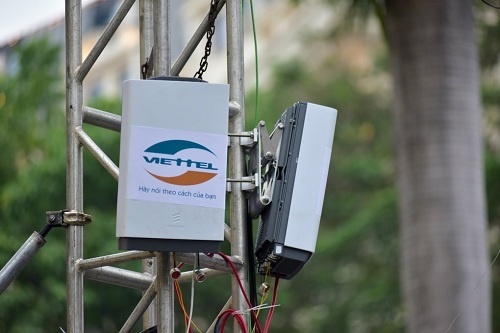
    Vietnamese military-run operator Viettel has completed the nation’s first 5G call in collaboration with Ericsson.

    During the trial, conducted as part of Viettel’s ongoing 5G technical testing program, the companies achieved a downlink speed of 1.5Gbps to 1.7Gbps.

    The Vietnamese government has been pushing for Vietnam to become one of the world’s early 5G adopters to help ensure the nation is at the forefront of the Industry 4.0 revolution.

    As part of these efforts, the government aims to ensure Viettel and other providers cover 5G in all of Vietnam’s high-tech zones, national innovation centers and smart factory areas by 2020.

    Viettel commenced deployment of Vietnam’s first 5G base stations in April as part of these trial efforts.

    The operator plans to test 70 5G base stations in Hanoi and Ho Chi Minh City in June in preparation for larger-scale deployment.

  • Japan bans handset-mobile service bundles

    Japan bans handset-mobile service bundles

    The Japanese government has passed a new bill aimed at reducing mobile prices for consumers and stimulating competition in the mobile market. The new bill includes provisions banning operators from offering bundled device and mobile plans under a single price package.

    The new law, which is due to take effect as early as the third quarter, is aimed at addressing a practice that consumers and lawmakers have complained make it difficult to compare prices between operators.

    Incumbent operators NTT Docomo, SoftBank and KDDI have been under pressure to reduce their mobile charges to help alleviate the financial pressure on consumers. As part of its efforts, the government has been seeking to address the issue of mobile operators offering device subsidies in exchange for relatively high prices for mobile services.

    Responding to this pressure, Docomo last month introduced a simplified fee structure that it says will have the effect of reducing mobile rates by up to 40%, and its rivals are considering following suit.

    The amended legislation also introduces new penalties for companies using misleading sales tactics, as well as a new registration requirement for handset retailers for regulatory purposes.

  • IoT-related data breaches on the rise, study shows

    IoT-related data breaches on the rise, study shows

    There has been a dramatic increase in IoT-related data breaches specifically due to an unsecured IoT device or application since 2017, says a study released by The Santa Fe Group.

    The study found these breaches accounted for 26%, up from 15%, and the figures might actually be greater because most organizations are not aware of every insecure IoT device or application in their environment or from third party vendors.

    More alarmingly, organizations surveyed have no centralized accountability to address or manage IoT risks.

    Less than half of company board members approve programs intended to reduce third-party risk and only 21% of board members are highly engaged in security practices and understand third party and cybersecurity risks in general.

    More than 80% of respondents believe their data will be breached in the next 24 months.

    “This study proves it’s no longer a matter of if but when and board members of organizations need to pay close attention to the issue of risk when it comes to securing a new generation of IoT devices that have found their way into your network, workplace, and supply chain,” said Cathy Allen, founder and CEO of The Santa Fe Group, Santa Fe, NM.

    “The study shows that there’s a gap between proactive and reactive risk management. The time to address this issue is now and not later.”

    The study also identifies the following areas in which organizations need to improve:

    • While respondents believe a positive tone at the top is important to minimizing business and third-party risks, few companies represented in this study are making board-level governance an essential part of their risk management program.
    • The IoT threat landscape is expanding rapidly, yet many companies are not assigning accountability or ownership to the management of IoT risks.
    • Staffing and budgets are not adequate to manage third-party IoT risks.
    • Third-party risk management (TPRM) programs should include IoT risks in order to evolve and mature their practices.
    • IoT risk assessment and due diligence must move from trust assurance to verify control validation techniques.
    • Companies should be prepared for IoT regulatory oversight to rise.
    • Most companies do not conduct employee training programs on the risks created by IoT devices. Such training must begin now.
  • Consumers willing to pay a premium for 5G

    Consumers willing to pay a premium for 5G

    Despite concerns surrounding the commercial proposition of 5G technology, smartphone users are willing to pay an average of a 20% premium for 5G services, according to Ericsson.

    The company’s latest ConsumerLab report on the 5G consumer potential finds that half of the early adopters would be willing to pay as much as 32% more for 5G.

    But consumers’ willingness to pay a premium for 5G is reliant on operators introducing new use cases and payment models and providing a consistently high uplink and downlink speed, the report finds.

    Meanwhile, 5G is expected to drive usage behaviors that also promise to increase revenues. The study finds that 5G is expected to significantly increase video consumption, both by enabling streaming in higher resolutions and through the increased use of augmented reality, virtual reality, and other new formats.

    Ericsson predicts that one in five smartphone users’ data usage could reach more than 200GB per month over 5G devices by 2025.

    Consumers also expect that 5G will bring additional benefits such as reducing network congestion in dense urban areas and introducing more home broadband choices.

    Based on the research, Ericsson ConsumerLab has drawn up a consumer roadmap of 5G use cases involving 31 different applications and services.

    These applications are divided into six categories – entertainment and media; enhanced mobile broadband; gaming and AR/VR applications; smart home and fixed wireless access; automotive and transportation; and shopping and immersive communications.

    “Trough our research, we have busted four myths about consumers’ views on 5G and answered questions such as whether 5G features will require new types of devices, or whether smartphones will be the silver bullet for 5G,” Ericsson Research head of ConsumerLab Jasmeet Singh Sethi said.

    “Consumers clearly state that they think smartphones are unlikely to be the sole solution for 5G.”

  • Vietnam makes its very first 5G phone call

    Vietnam makes its very first 5G phone call

    Vietnam’s first 5G phone call was made Friday on the network of Viettel, the country’s largest telecommunications company. The trial called, made publicly with the participation of the Ministry of Information and Communications, showed that the speed of Viettel’s 5G mobile network connections reached 1.5-1.7 Gigabits per second, far exceeding the theoretical limit of the 4G network and equivalent to the speed of optical cable.

    Viettel said it will expand the test to Hanoi and Ho Chi Minh City, the nation’s two biggest cities, and expects to launch the commercial service in 2020. The military-run company said it is looking at many pricing plans for commercial 5G services.

    Minister of Information and Communications Nguyen Manh Hung, who led Viettel earlier, said the event marked Vietnam as one of the earliest nations in the world to successfully test the 5G network, after the U.S., Australia, Japan, and South Korea.

    “We all want to take the lead in the fourth industrial revolution and develop information and communications technology so that Vietnamese locals and businesses can compete in the global economy, and therefore, the earlier we launch the 5G service, the better,” he said.

    Viettel became the first firm to receive permission to trial 5G services in January. It was followed by MobiFone.

    Last November, Hung said at a conference that Vietnam should test 5G in 2019 and ensure nationwide coverage by 2020.

    “Vietnam should be one of the first countries to launch the network, at least in Hanoi and HCMC,” he had said. The country had been one of the last in Southeast Asia to roll out 4G services.

    5G is the latest generation of mobile Internet connectivity and should offer much faster speeds and more reliable connections on smartphones and other devices compared to the current 3G and 4G technologies.