Category: Telecom

Retail News Asia is committed to providing both local and global retailers with the latest Telecom & Telco news throughout the Asian market. This on a daily base.

  • Optus expanding 5G fixed wireless service

    Optus expanding 5G fixed wireless service

    Australia’s Optus has announced plans to expand its 5G fixed wireless service to more areas of the country by the end of the month.

    The wholly-owned Singtel subsidiary announced that by the end of the month, it will deploy 5G in three more communities in the state of New South Wales, one in the Australian Capital Territory and one in Brisbane.

    One of Optus’ early 5G fixed wireless areas, in a suburb of New South Wales capital Sydney, has recorded peak download speeds of 295Mbps and is achieving average speeds of 100Mbps, Optus said. This is an improvement on the 170Mbps peak speed achieved during a launch in January.

    The operator currently has more than 70 5G-ready sites nationwide and has earmarked the first of its planned 30 5G sites in the state of Victoria, which will be switched on within the next few months.

    Optus Networks managing director Dennis Wong said the early adopters of its 5G service are providing insights into the initially expected use cases for 5G. Analysis shows that customers are currently using 5G fixed wireless for traditional purposes.

    “Our first customers are currently using 5G for video downloads, internet connectivity and browsing, but we see exciting 5G consumer applications in the future including a much richer AR and VR gaming experience and improved in-home device connectivity,” he said.

    “Despite being in its infancy, we are already gaining valuable insights into the new 5G technology [including] a better understanding of how to best tune the technology to improve performance. We are also gaining valuable insights around how to adjust our network and its technical features to support interoperability of multiple devices.”
  • Rajeev Sethi takes helm at Ooredoo Myanmar

    Rajeev Sethi takes helm at Ooredoo Myanmar

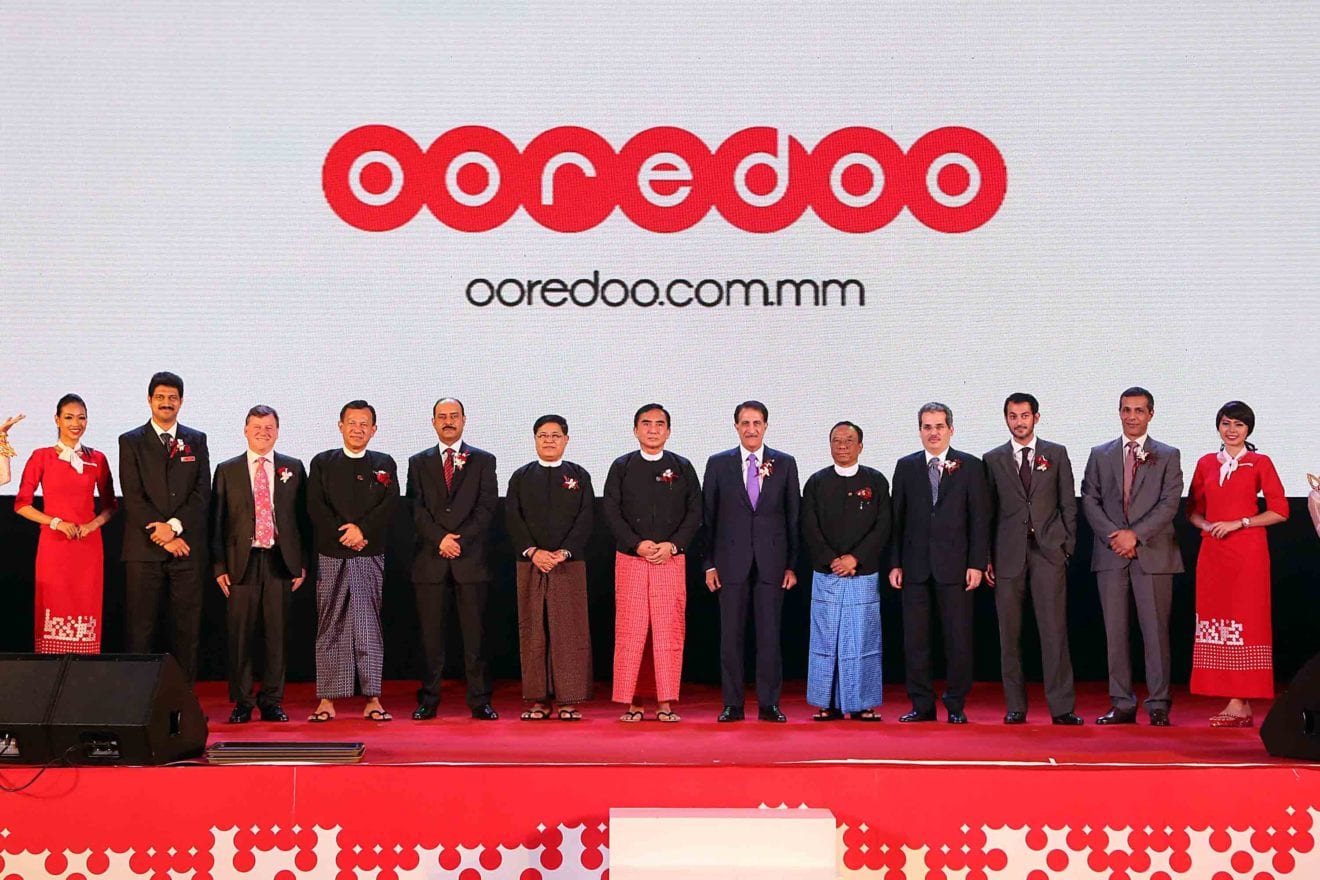
    Qatar-based Ooredoo Group has appointed Rajeev Sethi (pictured) as chief executive officer of Ooredoo Myanmar.

    He succeeds Vikram Sinha, who continues to stay on as a member of the company’s board.

    Sethi joins Ooredoo Myanmar from Airtel Africa, where he served most recently as chief commercial officer.

    He comes with over 24 years of work experience, of which 15 have been in the telecoms industry, holding leadership roles in multinational companies including Grameenphone in Bangladesh, Uninor India, Vodafone India, Hewlett Packard and Hutchison Telecom.

    Equinix has appointed Yee May Leong as managing director of South Asia to lead the company’s business strategy in Singapore and Indonesia.

    Leong is based in Singapore and reports directly to Samuel Lee, president of Equinix Asia-Pacific.

    Leong brings to the table with over 30 years of experience in the ICT sector.

    Prior to joining Equinix, Leong served as vice president of the communications sector for IBM in Asia-Pacific, overseeing the company’s strategic business development in ASEAN, Australia, India, Korea and New Zealand.

    Prior to that, she has also held senior management positions in leading technology companies including IBM, Lotus, F5 Networks and Orange Business Services.

  • HKT wins smart parking system contracts

    HKT wins smart parking system contracts

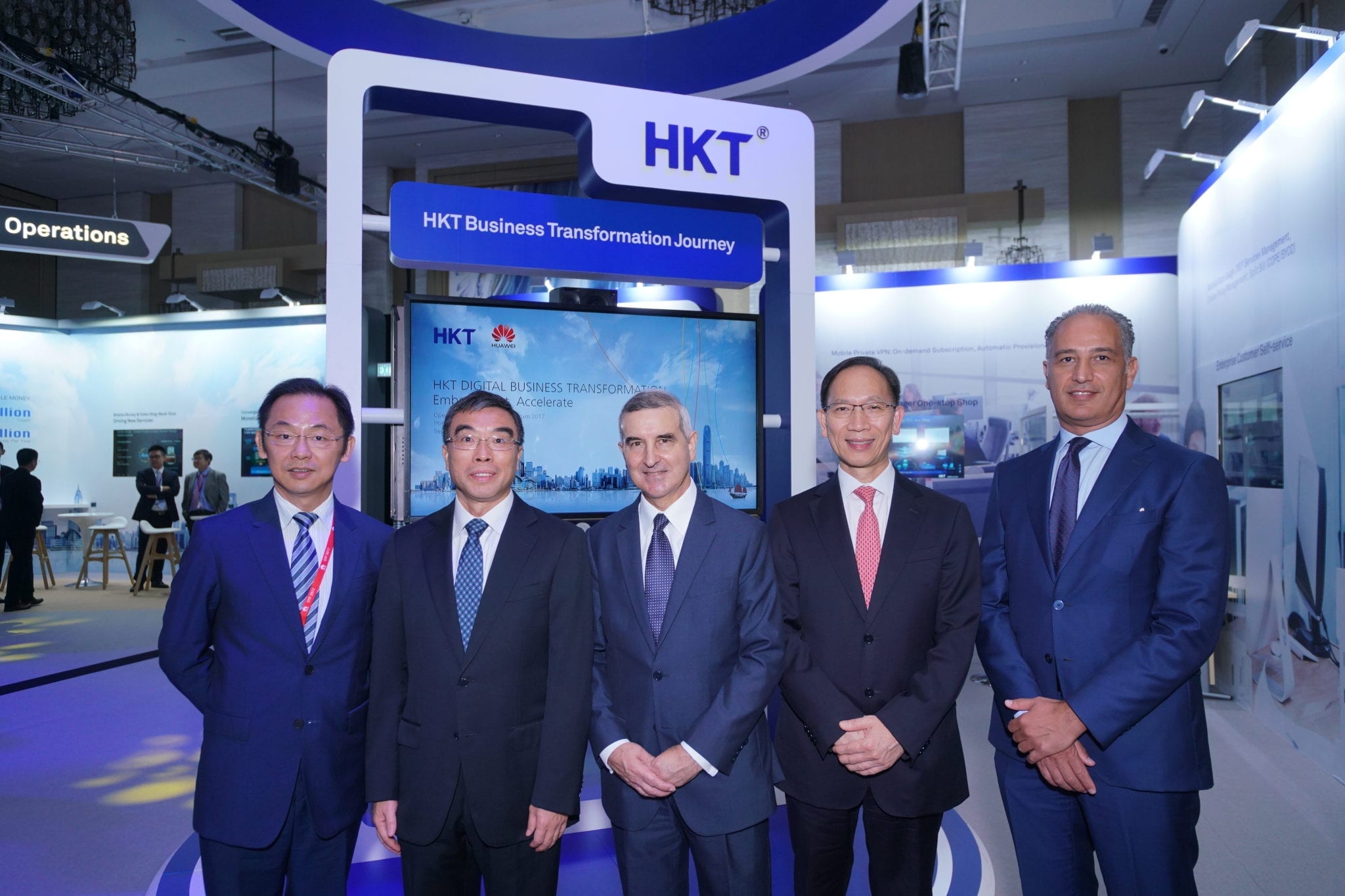
    Hong Kong operator HKT has secured HK$680 million ($86.6 million) worth of contracts to design, deploy and manage a new-generation smart parking meter system in Hong Kong.

    The two contracts with the HKSAR government’s Transport Department will see HKT deploy a mobile app-enabled parking meter system as part of the government’s Smart Mobility initiative.

    The system will use vehicle sensors to detect the occupancy of parking spaces and provide real-time information on parking vacancy for motorists. It will also allow users to pay parking fees with multiple payment methods, including credit that can be topped up to the app remotely.

    In addition, data from the system will be collected ad provided to the Transport Department to conduct parking analysis. The new parking meters will gradually replace existing meters in Hong Kong Island, Kowloon and the New Territories by early 2022.

    HKT’s contract includes the design, development and implementation of the new parking meters, as well as management, operation and maintenance of the system.

    “At HKT, we are very committed to helping accelerate Hong Kong to become a smarter city and empowering digital transformation for enterprises,” HKT Commercial Group managing director Tom Chan said.

    “We have been investing on advanced ICT and digital solutions in the last five years. We will continue with our dedication to develop innovations with latest technologies to empower the development of Hong Kong.”

  • SKT showcases potential of 5G in VR streaming

    SKT showcases potential of 5G in VR streaming

    SK Telecom is demonstrating the potential of 5G to enable virtual reality video streaming by developing exclusive VR content for a popular reality TV series.

    The company is offering 100 exclusive VR clips related to the Produce X 101 idol audition program on the oksuku OTT video service.

    The new content, added to a dedicated menu within the SKT-5GX section of the streaming app, will be provided to SK Telecom customers free of charge. The company is currently offering around 400 VR video clips on this section of the streaming app.

    SK Telecom said it has utilized 5G technologies for the planning, filming and delivery phases of the project. The company used 3D ultra-high definition video cameras to film joint performances, and applied video distortion correction technology to produce realistic and natural 3D video.

    “SK Telecom is witnessing a dramatic rise in the use of VR video contents on ‘oksusu’ since the launch of its 5G service,” the company’s 5GX VP and head of service business group Yang Maeng-seog said.

    “SK Telecom will continue to provide customers with a differentiated 5G experience by rapidly expanding dedicated services and contents on diverse themes.”

  • Telstra to launch HTC 5G Hub next week

    Telstra to launch HTC 5G Hub next week

    Australian operator Telstra has is taking pre-orders for what it is calling the country’s first 5G mobile device. The HTC 5G Hub will be available in Telstra stores from next Tuesday.

    The HTC 5G hub is a 5G and 4GX (LTE-Advanced) media hotspot designed for both enterprise and consumer use.

    The hotspot can support up to 20 Wi-Fi enabled devices as well as a gigabit Ethernet connection and provides an all-day battery life.

    For corporate customers, the device offers corporate VPN authentication and remote wipe capability. For the consumer segment, the device offers a voice-activated remote control for other home smart devices and media hub capabilities.

    Telstra CEO Andy Penn said the launch of the device was an important milestone in the operator’s transition to 5G.

    “Our launch of the HTC 5G Hub is the moment 5G becomes a reality for Australian consumers. Since 2016, we have been working with some of the world’s leading technology brands to ensure Australians are among the first in the world to be able to access 5G,” he said.

    “HTC has been a key partner for Telstra, innovating new technologies and driving greater connectivity for our customers. This launch of Australia’s first 5G mobile device is a testament to that partnership and we are proud to be launching it today”.

    At launch, customers will be able to access 5G in selected areas of Adelaide, Brisbane, Canberra, the Gold Coast, Hobart, Launceston, Melbourne, Perth, Sydney and Towoomba, he said.

    “This is just the start. The roll out of 5G coverage is ongoing and, as 5G develops, there will be more devices and more technologies to come. But this is an important step we take today, as the first Australian network to offer mobile 5G”.

  • Google to ban Huawei’s access to Android

    Google to ban Huawei’s access to Android

    Huawei’s consumer business has been dealt a potentially devastating blow to its future prospects after US president Donald Trump formally added the vendor to a list of companies that American companies cannot trade with if they don’t obtain a license.

    Huawei was added to the entity list of banned companies covered by the national emergency Trump declared last week, which gave him the power to regulate commerce to ostensibly protect national security.

    In the wake of Huawei being added to the list, Google has barred Huawei from receiving some updates to Android, announcing that it is “complying with the order and reviewing the implications”.

    US Chipmakers including Intel, Qualcomm, and Broadcom also reportedly told employees that they will cease supplying Huawei until further notice.

    But the US Commerce Department has subsequently issued a three-month exemption allowing Huawei to continue to purchase and access American products in order to maintain existing networks and provide software updates to existing devices.

    The exemption will not Huawei to purchase US components for new products. On the bright side for Huawei, the Commerce Department has announced it may extend the exemption further than the initial 90 days.

    In various communications including one sent to Globe Telecom in the Philippines, Huawei has pledged to continue providing security updates and after-sales services for its devices.

    Huawei founder and CEO Ren Zhengfei has meanwhile taken a bullish stance over the impact of the ban, telling Japanese media that the company’s growth “may slow, but only slightly.”

    The vendor had been anticipating the ban for some time, and has been investing in producing homegrown chips and further developing its own operating system in preparation.

    Ren has rejected the prospect of building manufacturing facilities in the US – even if the government asks Huawei to.


  • Cisco expects 5G windfalls in the future

    Cisco expects 5G windfalls in the future

    Cisco is primarily known for its switches and routers for service providers and enterprises. It has not been a big competitor in the radio access networking space against vendors such as Ericsson and Nokia. But on its fiscal third-quarter 2019 earnings call this week, Cisco CEO Chuck Robbins mentioned “wired and wireless” networking a few times.

    “We are moving into an era of truly immersive and pervasive wireless connectivity, which generates demand for high density, low latency performance, for real-time experiences over both wired and wireless networks,” said Robbins, according to a Seeking Alpha transcript. “Our guys like to say behind every great wireless network is a great wired network,”

    In fact, the company has been hired by Rakuten to help it build its new greenfield mobile network in Japan. Cisco is building Rakuten’s network functions virtualization infrastructure (NFVi) with 4,000 edge nodes. In addition to software, Cisco is delivering routing and switching hardware. And Cisco is also the primary systems integrator for Rakuten’s virtualized telco cloud.

    On its earnings call, Robbins said, “With our newest Catalyst 9000 family additions, we have completed the most comprehensive enterprise networking portfolio refresh in our history. We have rebuilt our entire access portfolio with intent-based networking across wired and wireless.”

    Robbins also mentioned 5G, saying Cisco is helping telcos build out their core networks ahead of large-scale 5G rollouts. Although Cisco is already selling packet core technology to carriers for their new 5G networks, “the big play for us is when they begin to evolve their networks to accommodate the traffic,” he said. “And we’ve always said we felt like that would be sometime in calendar 2020.”

    Carriers are leveraging their existing core networks to run the early trials on 5G. “We believe that sometime in the future when the number of connections increases and the capacity gets to a point, then they’re obviously going to begin to build out these new backbones dedicated to the 5G infrastructure, where we will generally come into play,” he said.

    Although Robbins focused on telcos’ core networks in the earnings call, the company has investments in Altiostar, a startup that has developed RAN virtualization technology. Altiostar is also working with Rakuten.

    Finally, Robbins talked a bit on the earnings call about Wi-Fi 6. Cisco recently announced new Wi-Fi 6 access points across its Catalyst and Meraki portfolios, as well as the Catalyst 9600 core switch family.

    “Wi-Fi 6 is effectively what used to be called 802.11ax,” said Robbins. “And, what’s happening now is when you get these high-performance access points into the organizations and you get the low latency immersive experience possibilities, then it’s also going to drive the need to upgrade the backbones.”

  • DoT aims to issue trial 5G spectrum in June

    DoT aims to issue trial 5G spectrum in June

    India’s Department of Telecom has reportedly put facilitating 5G technology trials at the top of the agenda within its 100-day action plan for whichever party wins the upcoming Lok Sabha (lower house) elections.

    The allocation of 5G trial licenses could take place as soon as the new government takes over, which could be in June.

    The 100-day action plan also includes developing policy on trial spectrum and technology testing, standardization, regulatory policy and the establishment of use case labs, the report states.

    Areas of focus include simplifying the process of obtaining experimental licenses as well as approvals for experimental products and services.

    Depending on their readiness, operators could commence 5G network trials in June. The telecom ministry has recommended that the trial run for a three month period, with options to expand this to up to a year if operators need more time to prepare.

    Samsung, Nokia and Ericsson have been approved to participate in the trials with incumbent operators Reliance Jio Infocomm, Bharti Airtel and Vodafone Idea. The government has not yet decided whether to allow the participation of Chinese vendors including Huawei.

  • China driving global cellular IoT adoption

    China driving global cellular IoT adoption

    An “exceptional adoption” in China has lifted the global number of cellular IoT subscribers by 70% to reach 1.2 billion in 2018, says a report released by Berg Insight.

    The research firm predicts that there will be 9 billion IoT devices connected to cellular networks worldwide by 2023.

    China, which accounted for 63% of the global installed base in 2018, is expected to continue to be the key driver for IoT adoption, as the Chinese government is actively driving adoption as a tool for achieving domestic and economic policy goals.

    “China is deploying cellular IoT technology at a monumental scale”, said Tobias Ryberg, principal analyst and author of the report.

    According to data from the Chinese mobile operators, the installed base in the country increased by 124% year-on-year to reach 767 million at the end of 2018.

    China has overtaken Europe and North America in penetration rate with 54.7 IoT connections per 100 inhabitants, Ryberg said.

    He said the role of the government is the main explanation for why China is ahead of the rest of the world in the adoption of IoT.

    “The most distinctive characteristic of the Chinese IoT market is however the way that the government is systematically using new technology to implement its vision for urban life in the 21st century,” Ryberg said.

    “At the same time the private sector also implements IoT technology to improve efficiency and drive innovation.”

    China has witnessed widespread adoption of connected cars, fleet management, smart metering, asset monitoring and as well as new consumer services like bike sharing.

    The report also analyses the IoT business KPIs released by mobile operators in different parts of the world and found significant regional differences.

    While China has the world’s highest IoT penetration rate, Europe seems is doing better job in terms of monetizing the IoT business.

    According to the report, the monthly ARPU for cellular IoT connectivity services in China was only €0.22 ($0.25), compared to € 0.70 in Europe.

    Global revenues from cellular IoT connectivity services increased by 19% in 2018 to reach €6.7 billion. The ten largest players had a combined revenue share of around 80%.

  • China Mobile is world’s most valuable telco brand

    China Mobile is world’s most valuable telco brand

    China Mobile is the most valuable telecoms brand in Asia-Pacific, and the third most valuable in the world, according to Brand Finance’s latest Telecoms 300 brand value report.

    China Mobile’s brand value has increased 4.6% in 2019 to $53.22 billion, cementing its position behind AT&T ($87 billion) and Verizon ($71.15 billion) on the top 20 leaderboards.

    Other Asia-Pacific operators in the top 20 include Japan’s NTT Group (5th with a brand value of $41.67 billion), China Telecom (9th, $20.63 billion), Japan’s SoftBank (10th, $19.29 billion) and au (11th, $16.62 billion), Australia’s Telstra (14th, $10.5 billion), and China Unicom (16th, $10.23 billion).

    But with the exception of China Mobile and au, whose position on the leaderboard remained unchanged, all the Asia-Pacific operators in the list fell either one or two places.

    Further down the list, Vietnam’s Viettel had a strong performance, with its brand value increasing by 36% to $4.3 billion, while Ooredoo increased to 41st on the top 50 rankings with a 12% increase in brand value to $3.78 billion.

    The report also ranked telecoms brands by relative strength based on metrics including marketing investment, stakeholder equity, and business performance.

    By these criteria, Thailand’s AIS was named the world’s strongest telecoms brand, overtaking China Mobile. Malaysia’s Digi was ranked as the third largest brand, while relative newcomer Reliance Jio Infocomm from India was named fifth. Telkom Indonesia (8th) and Singtel (9th) also made the top 10.

  • ViewQwest to offer services over TM’s HSBB network

    ViewQwest to offer services over TM’s HSBB network

    Singapore-based fiber operator ViewQwest is expanding its footprint in Malaysia through a new partnership with Telekom Malaysia.

    ViewQwest, which currently has its own fiber network in parts of the Klang Valley and Johor, plans to use Telekom Malaysia’s HSBB network to significantly enhance its availability.

    Through the network reselling agreement, ViewQwest will offer services anywhere Telekom Malaysia offers its Unifi fiber service.

    According to the report, ViewQwest plans to introduce new broadband plans under the agreement in June or July. Speed and pricing will depend on available bandwidth and last mile infrastructure.

    The company will bundle Mesh WiFi products to new subscribers to ensure optimal Wi-Fi experiences, as well as value-added services including a geoblock circumventing Freedom DNS service.

    ViewQwest has revealed it is open to pursuing more joint ventures, acquisitions or network sharing partnerships aimed at allowing it to continue expanding in Malaysia.

  • ZTE opens first cybersecurity lab in China

    ZTE opens first cybersecurity lab in China

    ZTE has launched the first in a series of planned dedicated cybersecurity labs aimed at reassuring customers of the security of its solutions, and developing end-to-end security products and services.

    The new lab in Nanjing, China will help ZTE provide customers with end-to-end security products and services.

    It also aims to help ZTE increase transparency and enhance trust with all third parties, including customers and global regulators, in light of the national security concerns that are prompting several countries to ban the use of equipment from Chinese vendors in 5G rollouts.

    The lab will provide security assessment and audit services such as source code review on ZTE products including 4G and 5G solutions.

    It will also offer security design audit, procedural document review, black box testing and penetration testing services, and facilitate research and development collaborations with other industry stakeholders and academia.

    Moving forward, the company plans to collaborate with major security organizations to jointly conduct security assessment, certification, training and consulting.

    Following the establishment of the Nanjing lab, ZTE plans to also launch cybersecurity labs in Italy and Belgium respectively in the near future as it builds out a global network.

    “The security lab is an open and cooperative platform for the industry,”  ZTE CSO Zhong Hong said during a speech at the opening of the new lab.

    “ZTE plans to gradually achieve the cybersecurity goals through three steps: first, meeting the requirements of cybersecurity laws, regulations and industry standards as well as certification schemes; second, conducting an open dialogue to enhance transparency and establishing cooperation with customers as well as regulatory agencies; and third, sustaining the open cooperation mechanism to contribute to cybersecurity standardization.”

  • NBTC finalizes terms of 700-MHz auction

    NBTC finalizes terms of 700-MHz auction

    Thailand’s National Broadcasting and Telecommunications Commission has finalized the proposed terms of next month’s 700-MHz auction, and has briefed the prime minister on the progress with the sale.

    The regulator plans to commence the sale of three slots of 700-MHz spectrum on June 19,.

    The three slots will each have a base price of 17.584 billion baht ($555.05 billion) for 10MHz of bandwidth, which can be payable in up to 10 installments.

    Last month the NBTC announced relief measures for the three owners of 900-MHz licenses by agreeing to split the license fees into 10 installments instead of the current four. But a condition of taking advantage of the larger number of installments will be purchasing one of the 700-MHz slots.

    According to the report, the three 900-MHz license holders – AIS, TrueMove and dtac – have expressed an interest in taking advantage of the relief measures, but are waiting on more terms of the 700-MHz allocation before making a decision.

    But True Move has previously indicated it does not plan to take part in the 700-MHz auction, although it has been pushing for an extension on its 900-MHz license payments.

    Proceeds from the sale will be used to compensate six digital TV broadcasters which have agreed to return their licenses to the regulator.

    A public hearing on the draft terms of the 700-MHz allocation will be held next week.

  • India’s handset market slumps 25% in Q1

    India’s handset market slumps 25% in Q1

    India’s mobile device market slumped 25% year-on-year during the first quarter of 2019 due to a collapse in the feature phone segment, according to CyberMedia Research (CMR).

    The research firm estimates that feature phone shipments shrank by around 49% during the quarter, while smartphone shipments grew by 10%.

    4G-enabled handsets represented 66% of total devices shipped during the quarter, with 2G-only devices accounting for the remainder.

    “The overall market decline was on expected lines for Q1 2019. The above industry average stock build-up at the end of the previous quarter resulted in lower shipments. Also, the recent change in eCommerce rules in India impacted the online dependent players,” CMR Industry Intelligence Group lead analyst Narinder Kumar said.

    Samsung led the overall mobile market during the quarter with a 22% market share, but China’s Xiaomi led the smartphone market with a 30% share to Samsung’s 27%. Xiaomi also continued to rule the low-cost segment for devices below 7,000 rupees with a 41% market share, while Samsung topped the mid-range 7,000 rupees to 25,000 rupee segment.

    The top five leaderboards was rounded out by LYF (13% market share), Vivo (6%) and Lava (6%).

  • Japan to create 10b 14-digit mobile numbers by 2021

    Japan to create 10b 14-digit mobile numbers by 2021

    Japan’s communications ministry plans to create around 10 billion 14-digit phone numbers in anticipation of the 5G era.

    The 14-digit numbers starting with the code 020 will be introduced by 2021 at the latest.

    The current stock of 11 digit mobile numbers is expected to run out as early as the 2022 financial year.

    In response, a panel of experts has proposed to introduce the new numbers once the necessary preparations are complete, and Japan’s big three mobile operators NTT Docomo, KDDI and SoftBank have agreed to the proposal.

    Now the ministry has announced it will draft a report on the matter as early as June and aims to complete a ministerial ordinance by the end of the year.

    New numbers will be allocated to the operators early if they complete the necessary upgrades ahead of schedule, the report states.

    Japan currently uses 11 digit numbers starting with 090, 080 and 070 for mobile phones, and with 020 for IoT devices.