Category: Telecom

Retail News Asia is committed to providing both local and global retailers with the latest Telecom & Telco news throughout the Asian market. This on a daily base.

  • Docomo, Ericsson complete 5G glass antenna trial

    Docomo, Ericsson complete 5G glass antenna trial

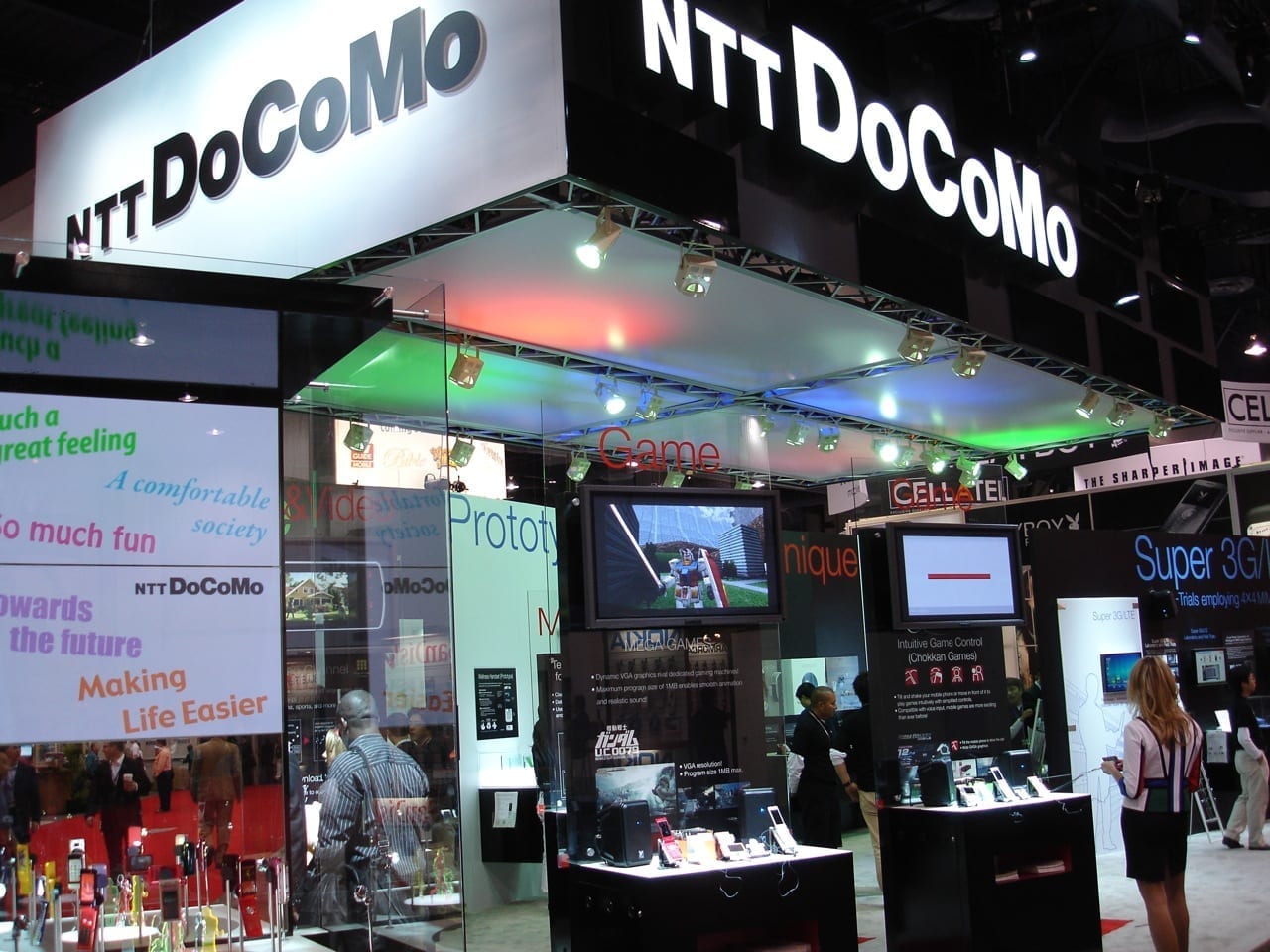
    Japanese operator NTT Docomo and glass solution provider AGC Group have collaborated with Ericsson to complete what the companies believe to be the world’s first trial of 5G communications using a glass-embedded antenna.

    The trial used an antenna embedded in synthetic fused silica glass to transmit and receive 28-GHz 5G radio signals.

    Validation testing used a vehicle fitted with multiple antennas and traveling about 30 km/h. Using the antenna, the companies achieved downlink speeds averaging 1.3Gbps within a 100 meter range, and maxing out at 3.8Gbps at 400 MHz.

    The glass antenna prototype has the potential to overcome challenges associated with high-band 5G spectrum being unable to adequately penetrate windows, the companies said.

    It could potentially be attached to window surfaces in buildings, vehicles and railway cars to enable stable, high-speed 5G communications under challenging indoor and in-vehicle conditions.

  • SoftBank signs 5G deals with Ericsson, Nokia

    SoftBank signs 5G deals with Ericsson, Nokia

    Japan’s SoftBank has signed 5G deployment contracts with both Ericsson and Nokia as it prepares to launch services over its newly-granted 5G spectrum.

    Ericsson has announced it has been selected as a primary vendor for the deployment of a multi-band 5G network utilizing Softbank’s 3.9-GHz to 4-GHz and 29.1-GHz to 29.5-GHz spectrum bands.

    SoftBank will deploy radio access network equipment including products from the Ericsson Radio System portfolio to allow it to enhance its existing LTE network while optimizing its 5G network.

    SoftBank and Ericsson have been trialing 5G technologies since 2015, and have since expanded their collaboration to include 5G testing of multi-bands, including 28-GHz and 4.5-GHz.

    SoftBank and Ericsson have been partners since the 2G era and we are thrilled to support them on this latest part of their technology journey,” Ericsson SVP and head of North East Asia Chris Houghton said.

    “With the help of our advanced product portfolio, SoftBank can unlock the potential of 5G for Japanese society and we look forward to building on our long-standing partnership.”

    Meanwhile SoftBank will deploy Nokia’s 5G AirScale technology across Japan, enabling the delivery of 5G mobile broadband, ultra-reliable low latency connectivity (URLLC) and machine type communication (eMTC) services.

    SoftBank plans to launch 5G services with Nokia’s AirScale solution in both distributed and centralized RAN configurations, according to Nokia Japan head John Harrington.

    “We are delighted to continue our long-term relationship with SoftBank and to be working with them as a trusted end to end partner at such an important milestone in the transformation to 5G. We are committed to help SoftBank launch their commercial 5G network.”

  • Docomo, Tohoku Uni to use AI for gum disease detection

    Docomo, Tohoku Uni to use AI for gum disease detection

    NTT Docomo and Tohoku University have launched a research initiative to jointly develop a service using AI technology to detect periodontal disease.

    The AI-based service will photograph a person’s gums with a smartphone and analyze gum color and shape, compensating for photo brightness and camera shake, to determine the risk of periodontal disease.

    Docomo said the service combines the operator’s expertise in AI technology with Tohoku University’s expertise in oral diseases and extensive data on medical examinations and research.

    It provides a practical, everyday solution to help users to understand their personal risks by facilitating better communication with dentists and increased examinations aimed at preventing early-stage periodontal disease from becoming serious.

    Docomo and Tohoku University also plan to use their AI technology for the detection of additional oral diseases, such as temporomandibular disorders and oral cancer.

    A device-based tool for determining disease risks is slated for commercial launch by March 2023.

    In Japan, periodontal disease is present in 61% of adults in their 20s, 71% in their 40s and 75% in their 60s, according to a survey conducted by Japan’s Ministry of Health and Welfare in 2016.

    Confirmation of the disease requires going to dental office to be examined, which is often inconvenient for working people.

    The Japanese Society for Oral Health Magazine estimated in 2018 that only 4.3% of people between the ages of 40 and 70 receive examinations and many do not consult dentists until symptoms become severe.

  • Altran, Wind River developing end-to-end NFV platform

    Altran, Wind River developing end-to-end NFV platform

    Engineering and R&D services provider Altran has announced a partnership with critical infrastructure software provider Wind River to develop an end-to-end networks functions virtualization (NFV) platform.

    Under the agreement, Altran is using Wind River Titanium Cloud, an NFV infrastructure software platform for telecom operators, to develop a platform that incorporates NFV in the data center and at the network edge.

    Altran has designed its VNF Management and Orchestration Platform to help operators lower costs, accelerate service delivery and meet customer demands for high availability.

    The platform will provide an environment for vendors to deploy virtual network functions (VNFs) on Wind River infrastructure software.

    The platform will take advantage of Altran’s programmable VNF Lifecycle Management solution – which can integrate with any VNF as well as with third-party orchestrators – and its integrated policy engine.

    “The Wind River Titanium Cloud ecosystem provides outstanding infrastructure for highly available, robust and agile virtualization platforms needed in telecommunications networks and industrial control,” said Altran North America group SVP and chief engineering officer N. Mohan Rangan said.

    “We are delighted to be a part of Wind River’s initiative. Service provider customers will benefit greatly from a comprehensive NFV platform that handles a wide variety of sophisticated VNFs.”

  • Shared services models fuel demand for mobility-as-a-service

    Shared services models fuel demand for mobility-as-a-service

    Shared mobility business models that focus on integrated and digitally connected ecosystems that offer unified multi-modal mobility services and personalized user experiences will find high adoption all over the world.

    “Globally, companies are planning to commercialize autonomous shuttles between 2020 and 2022, backed by favorable government initiatives in North America, the UK, China, Japan, and Dubai,” said Abhishek Iyer, research analyst, Mobility at Frost & Sullivan.

    “There will be an increase in the number of partnerships and rollouts of new technologies such as autonomous shuttles, blockchain, and Artificial Intelligence (AI), which will enhance user experience and operation.”

    Iyer noted that governments across developed cities are building testing infrastructure and piloting autonomous shuttles to evaluate viability and user experience. “Approximately 10 to 15 cities can be expected to conduct autonomous shuttle trials on public roads in 2019. Cross-industry collaborations for connected technologies, integrated payment capabilities, shared mobility insurance and financial services will also prove to be critical for future success,” he commented.

    The researcher suggested that further growth opportunities will come with industry participants partnering with stakeholders from other industries such as banking and financial services (BFS) and insurance to lower costs and generate fresh revenue streams.

    Other opportunities include adopting business models such as vehicle subscription services, demand responsive transit (DRT), ride-hailing and carsharing to create opportunities for data monetization. This will also allow them to leverage their investments and partnerships to develop autonomous and emission-free vehicle technologies.

  • Demand for seamless indoor-outdoor location tech on the rise

    Demand for seamless indoor-outdoor location tech on the rise

    ABI Research noted that of the 205 companies it surveyed for its Location Technologies Supply Chain and Ecosystem Tracker, 24% of them are currently offering solutions covering both indoor and outdoor location services.

    The researcher cited growing need for seamless indoor and outdoor integration and supply chain visibility forcing more companies at the lower layers of the technology supply chain to create more flexible technology offerings.

    Computing the position of a person or asset outdoors is usually done via Global Navigation Satellite System (GNSS) technology, although in some cases auxiliary technologies like cellular networks or to lesser extent low-power wide area (LPWAN) solutions may also be used at lower tracking accuracy.

    But GNSS signals do not perform well indoors suffering from difficulty to penetrate well and interference issues. Location technologies like Bluetooth low energy (BLE), ultra-wideband (UWB), RFID, or Wi-Fi are best suited for these environments.

    “As things stand, there is a hard line between the indoor and the outdoor technologies and services used for location use cases. Offering seamless tracking between these two environments raises the possibility of having unprecedented visibility into the supply chain, as any item can be tracked end-to-end between factories, warehouses, and retailers up to the point-of-sale,” remarked Henrique Rocha, research analyst at ABI Research.

    Some of the benefits from acquiring visibility into the supply chain include more efficient planning and less asset shrinkage, which quickly revert to business owners in the form of ROI.

    ABI Research noted that 63% of location companies featured in its report offer indoor solutions only. Indoor tracking is still more demanding than outdoor tracking in the industrial and logistics spaces as it often requires high accuracy and real-time tracking capabilities of individual assets, as well as on-site dedicated infrastructure.

    With a consolidating location ecosystem, however, it is expected that more companies will turn to offering full supply chain visibility solutions, which require seamless indoor/outdoor tracking.

    While several companies offer both indoor and outdoor location solutions separately, only few have managed to offer a single end-to-end solution providing seamless indoor/outdoor tracking capabilities.

    One of the most common combinations for seamless asset tracking involves BLE communication for indoor tracking and GNSS for outdoor tracking, with an LPWAN like LTE-M used to relay location data.

    Because different location technologies are often designed to operate in specific environments and address specific needs and use cases, an increasing number of technology suppliers are now opting for designing solutions compatible with multiple technologies to give their clients the flexibility to deploy these solutions across varied use cases and applications.

    “Manufacturing and warehousing verticals are some of the most technologically demanding in the asset tracking space. In this ecosystem, companies stand out only through scalable business models. One way of achieving scale is by implementing seamless indoor and outdoor tracking. Solution providers are not oblivious to this and by this time next year, we anticipate an approximate 30% growth in the number of companies offering indoor/outdoor location services,” Rocha concluded.

  • India plans to implement fixed number portability

    India plans to implement fixed number portability

    India’s Department of Telecom has asked telecoms regulator Trai to draw up recommendations for the planned implementation of nationwide fixed number portability.

    The department has sent a reference to the regulator on fixed line portability in line with the government’s planned ‘one nation, one number’ policy.

    As part of the proposal, India would transition to 10-digit fixed line numbers, by merging current STD codes with the seven to eight digit landline numbers.

    India started implementing mobile number portability since 2010, starting with specific telecoms circles or service areas. The ability to port numbers between service areas was introduced in July 2015.

    Since 2010 India’s mobile operators have fielded more than 428.4 million porting requests.

    But according to the report, the Department of Telecom expects the implementation of fixed number portability to be significantly more complicated, due to issues including copper last mile connectivity and the presence of competing fixed line service providers.

    As a result, the department expects the consultation and recommendation drafting process to be a protracted one.

    Porting landline numbers could also take more time than porting mobile numbers – which can currently be completed in between two to four days.

  • Samsung and Apple phone business still going down

    Samsung and Apple phone business still going down

    The latest report from Gartner shows global smartphone sales declined 2.7% in the first quarter of 2019. The fallout continues for both Apple and Samsung, each recording quarter one revenue of 17.6% and 8.8% respectively. The other smartphone maker, Huawei, despite a lack of presence in the US, is the only vendor in the top three rankings that reported positive growth across all regions, growing 44.5% with shipment totaling 58.4 million units.

    “Demand for premium smartphones remained lower than for basic smartphones, which affected brands such as Samsung and Apple that have significant stakes in high-end smartphones,” said Anshul Gupta, senior research director at Gartner. “In addition, demand for utility smartphones declined as the rate of upgrading from feature phones to smartphones has slowed, given that 4G feature phones give users great advantages at a lower cost.”

    Slowing innovation in flagship smartphones and rising prices continued to extend replacement cycles. The two countries that sell the most smartphones, namely the US and China, saw sales decline by 15.8% and 3.2%, respectively, in the first quarter of 2019.

    Huawei’s fortunes are in question, however, as news of the pullout of its licensing by Google of the Android operating platform, have seen a stoppage by retailers of Huawei-branded smartphones.

    “Unavailability of Google apps and services on Huawei smartphones, if implemented, will upset Huawei’s international smartphone business which is almost half of its worldwide phone business. Not the least it brings apprehension among buyers, limiting Huawei’s growth in the near term,” said Gupta.

    Rounding out the top five are the two other Chinese brands – Oppo and Vivo, each reporting an increase in unit shipments in the first quarter. Falling off the top five is Xiaomi which, Gartner estimate, shipped 27.2 million units – 200,000 thousands unit fewer than Vivo.

  • Globe to ramp up network expansion program

    Globe to ramp up network expansion program

    The Philippines’ Globe Telecom has pledged to ramp up its network expansion and modernization program to cater to soaring demand for mobile data.

    The operator revealed that mobile data traffic on its network grew to 370 petabytes during the first three months of 2019.

    This represents a 105% increase from the 180 petabytes recorded a year earlier, and a 421% increase from the first three months of 2016.

    Data traffic growth is also driving revenue growth, with Globe Telecom reporting consolidated service revenues of the quarter of 36 billion pesos – up 13% year-on-year – and mobile data traffic accounting for 16.5 billion pesos of this total.

    “With the explosion of data traffic consumption, building more cell towers and modernizing our network infrastructure will continue to play a fundamental role in delivering superior quality of experience to our customers,” Globe CEO Ernest Cu said.

    “This is why we will continue ramping up our network rollout and utilizing next-generation technologies to enhance the way our customers experience mobile data.”

    Around 68% of Globe’s total capex budget for the first quarter of 8.8 billion pesos was allocated towards enhancing data-related services. During the quarter the company escalated its cell site deployment and invested in improving its network capacity.

  • AU Optronic signs Taiwan’s first sustainability-linked loan

    AU Optronic signs Taiwan’s first sustainability-linked loan

    DBS Bank Taipei Branch signed a three-year, TW$2 billion ($63.5 million) sustainability-linked loan with AU Optronics – an optoelectronic solution and LCD-LED manufacturer.

    Under the terms of the conditions, the interest rate will be based on the manufacturer meeting sustainability performance targets.

    DBS Bank Taiwan general manager Lim Him Chuan said that there is a growing trend for corporates to adopt more sustainable practices in their business operations. While seeking business growth, they are also considering social, environmental and governance factors.

    In 2018, DBS Group inked four sustainability performance-linked loans amounting to over S$600 million ($435.8 million), demonstrating the bank’s commitment to sustainability while offering financial innovation to customers.

    For DBS Bank’s sustainability-linked loans, corporates are evaluated based on an annual sustainability review report assessed by an external independent party, tracking the performance of corporates in terms of governance, environmental and social criteria. When the borrower meets or exceeds pre-determined ESG targets, the interest rate will then be reduced. Borrowers not only share their commitment to sustainability but are also entitled to a competitive interest rate.

    The bank’s, head of institutional banking Tony LuoGroup further explained that unlike green loans which are used to exclusively finance or re-finance eligible green projects, capital from sustainability-linked loans can be used for general corporate purposes. This provides more flexibility to borrowers, and the impact goes beyond environmental aspects to cover comprehensive ESG developments of an organization.

  • HMD Global expands enterprise recommended portfolio

    HMD Global expands enterprise recommended portfolio

    HMD Global, licensee for the Nokia smartphone brand, has received Android Enterprise Recommended certification to three new devices in its portfolio.

    The three new devices include the Nokia 9 PureView, the recently announced smartphone with a five-camera array, as well as the Nokia 4.2 and 3.2 devices.

    HMD Global now has 14 Nokia branded devices that have received Android Enterprise Recommended Certification – more than any other smartphone brand.

    More than 50 organizations worldwide – including SAP, contacting and manufacturing company Ineco and industrial design company Mukava – have already deployed devices within this portfolio.

    Google’s Android Enterprise Recommended certification program requires devices to meet an elevated set of hardware, software, security update, user experience and other specifications. It is designed to act as a benchmark for the user experience in a variety of enterprise use cases.

    HMD Global said its recent market research found that 98% of enterprises within the European companies covered by the study use the Android Enterprise Recommended program to influence their choice of devices.

  • StarHub selects Red Hat to help train its engineers

    StarHub selects Red Hat to help train its engineers

    Singapore’s StarHub has selected Red Hat to provide specialized training for its Integrated Network Engineering team to help them keep abreast of best practices in next-generation cloud-based platforms.

    Under the agreement, StarHub engineers will take part in the Red Hat Training and Certification program based on the Red Hat OpenStack Platform, which the operator has deployed across its infrastructure.

    The program will include hands-on and lab-based training designed to help them better understand Red Hat tools to enable the faster delivery of OpenStack solutions, as well as training and knowledge of selected tools and solutions for various real-world scenarios.

    The Integrated Network Engineering team is tasked with designing and maintaining efficient and scalable fixed and wireless networks for StarHub’s Singapore operations. It is led by StarHub CTO Chong Siew Loong.

    “Our networks can only be as good as the team managing them. This is why at StarHub, we invest in the development of our people to maintain the high levels of professional competency required to offer our customers the best network experience,” Chong said.

    “Amid rapid technological advances, we work with renowned software companies like Red Hat to hone skills that are not only relevant today, but a catalyst for future innovation.”

  • India’s Netplus to deploy Nokia GPON technology

    India’s Netplus to deploy Nokia GPON technology

    Indian multi-system operator Fastway Media’s broadband division Netplus has contracted Nokia for a high-speed broadband deployment in Northern India.

    Under the agreement, Netplus will deploy Nokia’s GPON technology to cater to the growing demand for higher capacity, speeds and quality.

    Initial deployments will focus on the states of Delhi, Punjab, Haryana, Rajasthan and Uttar Pradesh. Netplus will use the upgraded network to provide high-speed broadband, IPTV and quad play services.

    “The demand for high speed and quality broadband is increasing across the country. Our network infrastructure will allow us to provide a best-in-class broadband network to our subscribers. We have been the front-runners in delivering high-speed broadband services across 135 cities in 6 states,” Fastway Group CEO Prem Ojha said.

    “ We are confident that Nokia’s field-proven products and solutions will enable us to enhance the overall quality of our services and will also empower Netplus Broadband in delivering converged services that include hi-speed broadband, Smart Voice, and OTT and IPTV services.”

  • Globe digitally transforms Semirara Island

    Globe digitally transforms Semirara Island

    The Philippines’ Globe Telecom worked with the nation’s largest coal producer Semirara Mining and Power Corporation (SMPC) to digitally transform Semirara Island in Antique.

    The 55 square kilometer island is home to the Philippines’ richest coal reserves, and is home to a number of coal workers and their families who rely on mobile connectivity a digital applications in their daily life.

    As part of the project, Globe, SMPC and the local government collaborated to upgrade all mobile towers in the island with LTE technology.

    The partners are also adopting a modern payroll solution for the mining company in collaboration with Ant Financial subsidiary Mynt and Ayala that takes advantage of Globe’s GCash mobile money service.

    In addition, Globe will work with public and private high schools in the island on digitally-enabled education initiatives.

    The Digital Thumbprint Program, developed by Globe in conjunction with Singtel and its Australian subsidiary Optus, has already been used to aid the education of 1.9 million students across the Philippines.

  • Philippines publishes common tower rules

    Philippines publishes common tower rules

    The Philippines’ Department of ICT has published the rules and regulations for the new common tower provider regime with the goal of building or converting at least 2,500 common towers across the nation.

    The rules will pave the way for deployments in properties owned by the departments, other government agencies, and hard-to-access areas identified by the market’s mobile operators.

    With the rules, the DICT has committed to streamlining the issue of licenses for the deployment of telecommunications equipment in towers not built by the independent tower companies participating in the scheme.

    They also seek to encourage voluntary sharing of towers by incumbent mobile operators by offering incentives in the form of allowing companies to build passive infrastructure in government properties and to enable operators to offer, transfer and convey existing tower resources to tower sharing entities.

    Independent tower companies participating in the scheme will need to be at least 20% owned or in a consortium with companies with at least five years of experience constructing, owning, operating and/or maintaining towers.

    They must also be wholly independent of mobile operators to ensure they offer non-discriminatory access and have reached agreements with the DICT and secured the required permits.

    The DICT said that to date 22 tower companies have signed memoranda of understanding with the department over the common tower initiative.

    “This is the starting point of more comprehensive policy for our initiative on passive infrastructure sharing. This will help tower firms to acquaint themselves in our telco industry,” DICT acting secretary Eliseo M. Rio Jr. said.