Category: Telecom

Retail News Asia is committed to providing both local and global retailers with the latest Telecom & Telco news throughout the Asian market. This on a daily base.

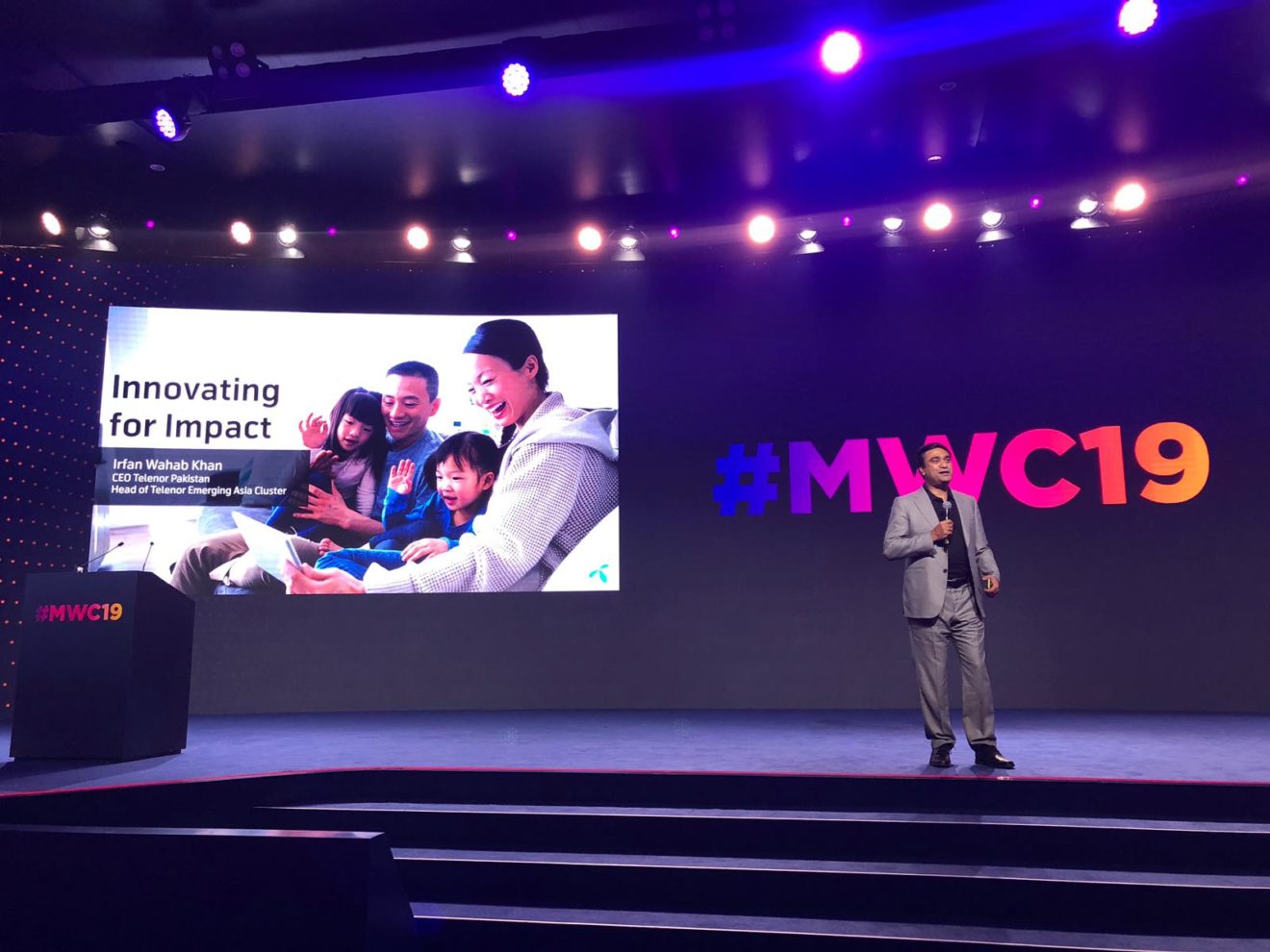
  • Irfan Wahab Khan at MWC Shanghai 2019

    Irfan Wahab Khan at MWC Shanghai 2019

    Telecommunications has accelerated development of key sectors, spurring economic growth and opening countless avenues to empower individuals and societies, said Irfan Wahab Khan, Head of Telenor Group’s Emerging Asia Cluster and CEO of Telenor Pakistan, at the Mobile World Congress (MWC) in Shanghai. His keynote at MWC, ‘Pioneers of Intelligent Connectivity’, also shed light on how intelligent connectivity and Telenor Group’s disruptive innovation are transforming lives of millions, enabling basic civic rights through mobile birth registration and equipping the unbanked with mobile financial services, among others.

    MWC Shanghai 2019 highlighted how ICT-powered solutions and services are creating strong socioeconomic impact. Irfan highlighted the advent of the Asian Century and role of Telenor Group in transforming health, financial services and agriculture in Asia. In particular, he listed innovative mobile-based solutions like Bangladesh’s ‘Tonic’, Myanmar’s ‘WaveMoney’, and Thailand’s ‘Smart Farmer’, which are providing a myriad of digital health services, safe money transfers, and IoT farming solutions respectively to millions of people.

    In addition, he shared how Telenor Group is using big data to help predict outbreak of chronic diseases like dengue in Pakistan and malaria in Bangladesh. The partnership between Telenor Microfinance Bank in Pakistan with its Malaysian counterpart Valyou has also introduced Pakistan’s first blockchain-based cross-border remittance service, powered by industry-leading blockchain technology developed by Alipay of the Ant Financial Services Group.

    “Mobile connectivity and the internet are the greatest equalisers of our day. They impact nearly every aspect of life today, driving social interactions and creating new business opportunities. Through the power of connectivity, Telenor Group has been connecting people to what matters most for the past 160 years. We will continue to do so through disruptive innovation that empowers societies and improve lives, in order to secure a better future for all,” said Irfan.

    MWC Shanghai 2019 is focusing on technologies of the future that include 5G, IoT, AI, big data, blockchain and beyond. The event features the most influential and industry dominating companies and organizations coming together to explore the depths of Intelligent Connectivity. Through the MWC19 Shanghai platform, leading companies take charge of industry-focused discussions, influence the future of connectivity, and unveil new intelligently connected technologies. In addition to his keynote and other MWC engagements, Irfan is also set to hold meetings with global tech leaders, partners and innovators in technology to explore opportunities through the technology-driven ecosystem.


  • Vietnam’s Vingroup new factory to produce 125m smartphones

    Vietnam’s Vingroup new factory to produce 125m smartphones

    Vingroup JSC, Vietnam’s biggest listed firm by market value, said on Monday it has started work on a second smartphone factory with a capacity to produce 125 million units a year.

    The new factory in the capital, Hanoi, will vastly increase Vingroup’s current capacity of five million units at its facility in the northern city of Haiphong, the conglomerate said in a statement.

    Construction is expected to be completed by early 2020 and the jump in capacity will help the company meet orders from Europe and the United States, Vingroup CEO Nguyen Viet Quang said in the statement.

    “After a period of deploying and participating in the smartphone manufacturing industry, our products have been positively received by the market,” Quang said.

    “We received many processing orders from major partners in Europe and the United States. That’s why we have invested in a factory with 25 times the capacity of our current factory in Haiphong, to meet with domestic and international demand,” he added.

    A company spokesman declined to provide the names of the European and US partners.

    Vingroup launched its smartphone brand, Vsmart, in December last year, seeking to win market share from popular brands Samsung and Apple in Vietnam, which has a population of 95 million people.

    Vsmart phones use chips from Qualcomm and run Google’s Android operating system, and went on sale at a price of 3.39 million dong ($145) to 6.59 million dong ($282).

    In March, the company began selling Vsmart phones in Spain and planned to expand into other European markets. Its phones went on sale in regional neighbour Myanmar last month.

    It is part of a diversification strategy that has seen Vingroup, once focused on real estate and retail, become Vietnam’s first fully-fledged domestic carmaker in 2018.

    Electronics is a vital part of Vietnam’s economy as firms such as Japan’s Sony Corp and South Korea’s LG Electronics and Samsung Electronics reorganise production in the face of slumping global demand.

    Samsung said in December it will close one of its mobile phone plants in China as it focuses on low-cost countries like Vietnam, where it is the largest single foreign investor.

    In April, LG Electronics said it would stop making smartphones in South Korea and move production to Vietnam.

    South Korean chips-to-energy conglomerate SK Group said last month that it had agreed to buy 6.1% of Vingroup for $1 billion as it expands its investments in Vietnam.

  • Ooredoo Myanmar and friends launch digital literacy campaign

    Ooredoo Myanmar and friends launch digital literacy campaign

    Ooredoo Myanmar, Facebook and the GSMA have jointly launched a digital literacy campaign to raise awareness and increase adoption of mobile internet in Myanmar. The “Internet 1O1” (Internet One on One) campaign aims to inform and educate first time and new internet users, through one-on-one training at Ooredoo retail points and exclusive stores across the country, particularly in rural areas.

    According to GSMA Intelligence, around 21 Million people are using mobile internet in Myanmar out of a population of 54.1Million people.

    One of the biggest barriers to connectivity is a lack of digital literacy. This initiative aims to guide users through the multiple uses and benefits of the Internet and help them to do so responsibly. Ooredoo Myanmar, Facebook and the GSMA believe that digital literacy initiatives across the countrywill support internet users in Myanmar to use the internet responsibly and be empowered by it.

    Internet 1O1 will be available to consumers in Ooredoo retail stores where in-store promoters will walk consumers through internet education materials including: an easy-to-understand video explaining: Whatthe internet is, how to access it and how to stay safe online as well as showing the type of useful information consumers might need.

    Ooredoo Myanmar’s CEO Mr. Rajeev Sethi said “We are very proud to partner with industry leaders like Facebook and the GSMA in this initiative to educate the people of Myanmar on how to safely be connected, well informed and benefit from the internet. This is the first step of our “Learn with Internet to enrich your digital lives” CSR program. This initiative will enhance Myanmar citizen’s digital lives.”

  • Tencent launches first overseas video streaming in Thailand

    Tencent launches first overseas video streaming in Thailand

    Chinese tech giant Tencent Holdings Ltd launched its first overseas video streaming service in Thailand on Friday, as it ramps up its presence outside China.

    Tencent is diversifying from its core Chinese gaming business, which has been beset by regulatory problems, pushing revenue growth to its slowest-ever in the first quarter.

    Tencent’s existing Thai user base made the country a good first target for its push into Southeast Asia, said Jeff Han, Senior Vice President of Tencent Penguin Pictures, which produces original content for the streaming business.

    “This is the market we need to first enter to try to see whether an overseas launch could be a success for us, so we can continue the challenge,” Han told reporters in a group interview in Bangkok.

    “We have our priority markets… the Chinese-speaking markets, which will be more receptive to our offerings,” he said.

    In Thailand, Tencent Video will be called WeTV and feature original Chinese content from Tencent Penguin Pictures with Thai dubbing, and content created with local partners, Han said.

    He declined to comment how much the company was investing overseas.

    WeTV adds to Tencent’s music streaming service JOOX and the mobile version of PUBG games in Thailand.

    Tencent’s video streaming subscriptions increased 43% in the first quarter of 2019 on an annual basis, contributing to a growth in digital content revenue, according to its latest results.

    Tencent Video in China claims over 89 million subscribers and more than 200 million daily active users.

  • Globe Telecom launches SE Asia’s first 5G broadband service

    Globe Telecom launches SE Asia’s first 5G broadband service

    Philippines’ Globe Telecom Inc on Thursday launched Southeast Asia’s first 5G broadband service, with embattled Huawei Technologies Co Ltd providing the equipment, a win for the Chinese firm despite cybersecurity worries from Western nations.

    The telecoms firm aims to offer high-speed internet to tens of thousands of homes and offices in key urban centres as part of its $1.2 billion capital spending this year, Alberto de Larrazabal, Globe’s chief commercial officer, told reporters.

    Globe would use Huawei’s equipment like radios and modems to deliver 5G quality broadband internet, he added. Huawei and Finland’s Nokia were Globe’s equipment providers for its 4G service.

    The United States had warned that next-generation 5G equipment, which some telecoms experts see as more vulnerable to attack than previous technology, could be exploited by the Chinese government for spying if supplied by Huawei, which the company denies.

    Washington, a treaty ally of Manila, had persuaded governments and telecoms operators to shun Huawei, the world’s largest maker of telecommunications equipment.

    Globe hired independent firms “to ensure that our security protocols are up to date, to make sure privacy and security issues are addressed,” de Larrazabal said.

    Philippine consumers, the world’s top social media users, often get frustrated with slow and choppy internet connections. The Philippines’ mobile internet and fixed broadband speeds lag behind its neighbours, data from Ookla’s Speedtest Global Index showed.

    It ranks 107th among 178 countries in terms of fixed broadband speed at 19.55 megabits per second (Mbps) versus the global average of 59.6 Mbps. Among 140 countries, it ranks 107th in terms of mobile internet speed at 15.10 Mbps, nearly half of the 27.22 Mbps global average.

    Globe is owned by Philippine conglomerate Ayala Corp, with Singapore Telecommunications Ltd holding a minority stake.

  • Huawei reportedly cuts shipments of its phones

    Huawei reportedly cuts shipments of its phones

    After being banned from accessing its U.S. supply chain, Huawei decided in May to stop taking orders for its low and mid-range handsets that aren’t powered by the company’s Kirin chipsets. Huawei has reportedly stockpiled a year’s worth of chips and components in anticipation of such a ban, it is now cutting shipments of its higher-end handsets. The report states that earlier this month, the company started cutting orders for the Huawei P30 line, which includes the P30 Pro. The latter is the manufacturer’s most premium handset at the moment. While U.S. carriers can’t stock Huawei’s phones,  earlier this year retailer B&H offered U.S. consumers the Latin American version of the P30, P30 Pro and P30 Lite adding a one-year U.S. warranty. However, since the U.S. ban, B&H has stopped selling these models.

    Today’s report notes that Huawei has also started cutting orders for the upcoming Mate 30 series. Not expected out until October, the line includes the Huawei Mate 30 Pro; this model would normally be considered Huawei’s most technologically advanced phone of the year. With the ban, it isn’t clear what new features will be included in the device. Currently, expectations call for the Mate 30 Pro to sport a 6.7-inch AMOLED display with a QHD+ resolution. The device could be equipped with a pair of chips from Huawei’s HiSilicon unit, namely the Kirin 985 SoC and the Balong 5000 5G modem chip.

    Barring a sudden removal from the U.S. Entity List, Huawei’s new phones will most likely ship with its own HongmengOS (aka ArkOS) pre-installed. Huawei has its own app distribution platform called App Gallery, but it remains to be seen how much developer support ArkOS will get.

    Internally, Huawei expects its international phone shipments to drop by 40% to 60% this year. Of the 206 million units it delivered in 2018, about half were shipped out of China; that means that the company believes it will see total shipments drop by as many as 60 million handsets this year. Just last quarter, the manufacturer shipped 59 million smartphones worldwide, up over 50% year-over-year. At that pace, Huawei was on track to deliver just under 240 million units for 2019. Now the company is looking at a figure in the neighborhood of 140 million to 160 million smartphones. While Huawei planned on becoming the top smartphone manufacturer in the world next year, that goal will have to be scrapped for now.

    Once Huawei uses up the inventory of Kirin chips it does have, things are going to get tough for the company. With chip design firm ARM Holdings cutting ties with Huawei (the company is headquartered in the U.K. but uses some American technology), the company might have to turn to an open source replacement. And the software from U.S. companies that the manufacturer uses to design its chips will also have to be replaced. While Huawei apparently did have the foresight to develop its own operating system and stockpile chips and key parts, it appears that the company might not have alternate plans for everything it needs to be self-sufficient.

    For those coming in late, Huawei ended up in this predicament because of U.S. lawmakers’ fears that the company’s products will spy on American corporations and consumers. Under Chinese law, the communist government can demand that Huawei gather intelligence on its behalf. Huawei has repeatedly denied that its phones and networking equipment contain any sort of backdoors; its chairman, Liang Hua, said back in February that if the Chinese government asks him to spy, he will defy them. The executive added last month that he would sign a no-spy document with any country. Ironically, that took place on the same day that the U.S. first announced Huawei’s placement on the Entity List.

    While U.S. President Donald Trump admitted in May that Huawei was placed on the list for security reasons, he added that “it’s possible that Huawei even would be included in some kind of a trade deal. If we made a deal, I could imagine Huawei being possibly included in some form, some part of a trade deal. It would look very good for us.” At this point, Huawei brass is probably hoping that the U.S. uses the company as a bargaining chip to obtain better terms from China in a new trade agreement. After all, the president was able to save ZTE from its U.S. export ban and it too is considered a national security threat.

  • Telegram CEO blames China for cyber attack

    Telegram CEO blames China for cyber attack

    One of the top ten most popular messaging apps in the world is Telegram, available for iOS and Android. Not as widely used in the U.S., the app offers end-to-end encryption and group chats for as many as 200,000 people. The app also can share videos, even those with large file sizes, and documents of any type. A tweet from Telegram CEO Pavel Durov blames China for a cyberattack that hit the Telegram app and affected its subscribers earlier this week.

    Durov says that a large Distributed Denial of Service (DDoS) attack originated from internet addresses inside China. These DDoS attacks sent huge amounts of requests at one time to Telegram, clogging up the app and making it unusable for many subscribers. The executive called it a “powerful,” targeted attack that was related to the protests taking place in Hong Kong. Huge throngs of protestors are complaining about a new law that will allow people in the city to be extradited to China. Durov said that in the past, similarly sized DDoS attacks coincided with protests in Hong Kong,

    Because of the encryption used to hide the content of messages, Telegram is popular among protestors in any country, allowing them to coordinate plans with up to 200,000 people out of the eyeshot of authorities. A DDoS attack on Telegram would prevent the protestors in Hong Kong from making arrangements to gather at a certain place and time.

    The Chinese government denied that it was responsible for the attack. Chinese foreign ministry spokesman Geng Shuang said at a briefing yesterday that he was unaware of the incident.

  • Ericsson comes up with super high-tech anti-smartphone-theft solution

    Ericsson comes up with super high-tech anti-smartphone-theft solution

    Over the past few years, manufacturers have made great strides to discourage smartphone theft. These are usually locking mechanisms, which block the phone from ever being used by someone else than its user — either through biometric scanners or the good old passcode. And if a thief tries to reset your device, it will usually become a brick, which will not activate unless your personal password is entered on boot.

    But that hasn’t stopped thieves entirely. For one, they like to try their chances — some users still don’t lock their phones. And two, some phones can still be hacked into after a factory reset. So, additional solutions are always welcome. Swedish company Ericsson (remember the partnership Sony-Ericsson?) has come up with and patented a very high-tech anti-theft system. It’s called “Adaptive Friction” and currently only exists on paper, filed as a patented idea.

    Basically, the phone will use multiple sensors to maintain constant awareness of its contextual environment — whether it’s in a pocket, on a table, in a purse, et cetera. It will do this by analyzing data from its microphones, light sensor(s), camera(s), and gyroscope. Whenever a hand is laid on the device, it will quickly try to determine whether or not it’s being grabbed by its owner — it will do so by analyzing the grip (whether it’s a secure and confident grab, or a cheeky corner pinch) and even by utilizing biometric sensors to analyze the person’s heartbeat and compare it to known heartbeat patterns of the rightful owner.

    If the phone determines that it’s being nabbed by an unknown person, it will begin vibrating at ultrasonic frequencies, which should — in theory — make it super slippery and hard to pinch out of a pocket. Hence the name “Adaptive Friction” The patent does state that the technology can also be used to make the phone extra grippy and stick to the user’s hand when being used, thus making it harder to drop, which also sounds pretty interesting.

    Of course, this sounds like a whole ton of tech that needs to be tuned in order to make this work quickly and reliably. As with any patent — there’s no guarantee we’d see it in a phone any time soon (if ever), but this one definitely has some interesting “out of the box” thinking.

  • Huawei insists global smartphone production levels are as Expected

    Huawei insists global smartphone production levels are as Expected

    There’s been much ado about Huawei’s tough road ahead as key US partners and major parts suppliers are prepared to turn their backs on the world’s second-largest smartphone vendor at the end of a 90-day reprieve granted shortly after President Trump’s announcement of a potentially business-ending ban.

    But although it’s pretty obvious the political tensions are already negatively impacting the Chinese company’s sales and brand image in the Western Hemisphere, Huawei reps and executives continue to insist the situation is not as bad as certain reports make it out to be. After essentially suggesting the White House didn’t do the tech giant any favors by giving it the aforementioned “stay of execution”, Huawei is adamantly denying a fresh rumor regarding current smartphone production.

    In a short statement issued to Cnet and a number of other international news outlets, the company specifically and explicitly refuted the claims made in a Chinese media report about a Foxconn manufacturing shutdown of Huawei mobile devices. Apparently, “global production levels are normal, with no notable adjustments in either direction.”

    At first glance, that may seem reassuring, but clearly, these are extremely volatile circumstances, with lots of moving parts and unpredictable future developments. Just because Huawei might be going about its business like nothing has happened or is about to happen, that doesn’t mean a production halt or at least a downgrade are not in the pipeline. If the embargo on collaborations with US companies stands, market researchers expect a significant slowdown of the Chinese tech giant’s incredible recent growth.

    For the time being, it looks like Huawei is working on the assumption the US-China trade war will somehow cool down in the next couple of months, allowing it to continue selling hundreds of millions of Android phones around the world.

  • Huawei to sell subsea cable business

    Huawei to sell subsea cable business

    Huawei is reportedly planning to sell its subsea cable business according to a buyer’s filing.

    Made on 31 May 2019 to the Shanghai Stock Exchange, the filing showed that Hengtong Optic-Electric Co, an optical telecoms network vendor, had signed a letter of intent with Huawei Technologies to buy its 51% stake in Huawei Marine Systems.

    Through no price was given, the deal is set to be financed through a combination of cash and shares.

    The news comes weeks after President Trump issued an executive order on “information and communications technology and services supply chain” which gives him and the rest of the US government unprecedented power to ban any business dealing. The order bans Huawei from buying technology from any US company without a license from the US government.

    A few days after the order was issued, the US government then relaxed its embargo on Huawei until 18 August. The Department of Commerce (DoC) issued a temporary general license which sets out limited exclusions to the order giving operators time to get their plans in order.

    “The temporary general license grants operators time to make other arrangements and the Department space to determine the appropriate long term measures for Americans and foreign telecommunications providers that currently rely on Huawei equipment for critical services,” said Secretary of Commerce Wilbur Ross. “In short, this license will allow operations to continue for existing Huawei mobile phone users and rural broadband networks.”

    It has been rumored that the sale of Huawei Marine is happening because the company is now facing stronger scrutiny, which may affect its ability to win new business.

    Speaking to the FT, Fergus Hanson, head of the International Cyber Policy Centre at the Australian Strategic Policy Institute, said, “It’s becoming a more difficult environment when trying to negotiate deals to build cables because [Huawei] is so much in the spotlight.”

  • BT chooses Juniper Networks to unify services for cloud initiative and 5G future

    BT chooses Juniper Networks to unify services for cloud initiative and 5G future

    BT will develop its 5G capabilities further after striking an agreement with Juniper Networks. The network developer will support BT in the delivery of its Network Cloud infrastructure initiative, which will allow various lines of its business on a single platform.

    A more flexible, virtualised network infrastructure will allow the biggest British telco to create new converged services for mobile, Wi-Fi, and fixed networks.

    It will also bring about a range of new applications that evolve services such as internet access, TV and business network functions.

    After EE, BT’s subsidiary, launched 5G in the UK on May 22, Guillaume Sampic, enterprise strategy director at BT, said that the benefits of 5G to businesses in terms of latency, speed, reliability and volume will “be a step change” from 4G.

    Commenting on the Juniper Networks agreement, Neil McRae, chief architect at BT, said: “BT is a global leader in ultrafast services, with growing demand from our ultrafast broadband services and ultrafast 5G services and has the perfect opportunity to combine several discrete networks into a unified, automated infrastructure.

    “This move to a single cloud-driven network infrastructure will enable BT to offer a wider range of services, faster and more efficiently to customers in the UK and around the world.”

    The Network Cloud infrastructure initiative will integrate seamlessly with BT’s other partners and solutions to move it closer to an automated and programmable network, which will benefit services such as ISP, TV, IT and its voice, mobile core, radio access and internal applications.

    BT is investing in a range of Juniper solutions across various tenants within the BT network, including a dynamic end-to-end networking policy and control for telco cloud workloads using Contrail Networking, cloud operations management using AppFormix and a scalable and flexible spine and leaf underlay fabric using the QFX Series.

    “As a renowned global service provider, BT is a shining example of how to evolve networks to become more agile,” said Bikash Koley, CTO, Juniper Networks. “By leveraging the ‘beach-front property’ it has in central offices around the globe, BT can optimise the business value that 5G’s bandwidth and connectivity brings.

    “The move to an integrated telco cloud platform brings always-on reliability, along with enhanced automation capabilities, to help improve business continuity and increase time-to-market while doing so in a cost-effective manner.”

    Capacity recently spoke with Juniper Networks to learn more about its cloud-based SD-WAN solution and how differs from the competition.

  • GMS selected as an international A2P SMS partner

    GMS selected as an international A2P SMS partner

    Global Message Services (GMS) has been chosen as an international application-to-person (A2P) messaging hub and managed services partner with the UAE’s du.

    The partnership will see the global messaging provider, which since 2006 has expanded globally with a current reach of 900 mobile operators, secure du’s network and manage its inbound international A2P SMS traffic.

    “Connectivity and communication are core pillars of our operations and we are always in a constant drive to explore ways to improve the quality of service delivery for our end customers,” said Hany Aly, executive vice president of enterprise business at du.

    “We are happy to partner with GMS in effective monetisation of international A2P traffic. Ultimately, the benefits will be plentiful for both du and GMS with the monetisation of our SMS channels and we look forward to building our expertise and trusted solutions in this field as our partnership ensues.”

    du’s intention to improve service quality and unlock new revenue streams was perfectly in line with GMS’s ambition to extend its global monetisation footprint.

    Successful achievement is preceded by conducting a deep analysis of the legal, technical and commercial environments, identifying weak spots which need to be eliminated and implementing the necessary steps to secure the network. In line with this, du and GMS have established direct connectivity over Signalling System No.7 (SS7).

    SS7 connectivity offers an edge over other technologies in that it is of very high quality, speedy and most importantly, offers complete transparency, providing correct delivery reports to the traffic generator (enterprise) for all messages and thereby giving the full picture to both the enterprise and the MNO.

    “du stands out for its approach and attention to detail, and GMS has the exact same vision on doing business. We believe that GMS’ expertise will enable du to maximise its messaging business and achieve steady revenue growth,” added Iurii Makarenko, managing director of GMS (pictured).

    GMS multi-channel messaging platform, Hyber, allows enterprises to deliver messages across different channels worldwide: SMS, Push, OTT messengers, email, etc. GMS is Viber’s official partner.

  • Tata Communications launches IoT marketplace

    Tata Communications launches IoT marketplace

    India’s Tata Communications has announced the launch of an IoT marketplace aimed at strengthening and accelerating India’s growing IoT ecosystem.

    The new marketplace is designed to link enterprise customers with IoT service providers to enable customers to easily develop tailored IoT solutions.

    Partners including device manufacturers, software developers to start-ups and system integrators will use the platform to market, deploy and manage IoT solutions for customers ranging from government to enterprises to startups.

    Customers will be able to select from the available offerings and deploy them on a plug and play basis.

    India’s enterprise IoT market is on track to grow at a CAGR of 35% through 2023, Frost & Sullivan predicts. But a lack of standardization, interoperability and connectivity in the IoT market is inhibiting further adoption.

    “We believe that this first-of-its kind initiative provides a missing link that will make a difference to how disparate IoT components are brought together to create a unified experience in designing a solution or ultimately purchasing one; thereby enabling customers to deploy these solutions with ease and achieve their strategic goals using IoT,” Tata Communications head of IoT Alok Bardiya said.

    In support of India’s IoT ecosystem, Tata Communications is also deploying an LPWAN network that has so far been rolled out in 45 cities India-wide.

  • Indonesia’s VisioNet enters cloud partnership with Epsilon

    Indonesia’s VisioNet enters cloud partnership with Epsilon

    PT VisioNet Data Internasional (VisioNet) has selected Epsilon to deliver its Direct Cloud Connect solution for its enterprise customers in Indonesia.

    Through the partnership, VisioNet’s Indonesian enterprise customers will benefit from on-demand access to leading cloud service providers (CSPs) with scalable, private, and secure cloud connectivity.

    Direct Cloud Connect is offered using Epsilon’s MEF-certified Ethernet service delivered in granular bandwidth ranging from 2Mbps up to 100Gbps. It is delivered via Epsilon’s Software-Defined Networking (SDN) platform, Infiny by Epsilon.

    This enables VisioNet to connect to multiple CSPs, including Alibaba Cloud, Amazon Web Services, Microsoft Azure, Google Cloud Platform, and a growing number of other options.

    “Indonesia has one of the most exciting cloud markets in South East Asia and has shown tremendous growth over the last five years. Our work with VisioNet will simplify and accelerate how Indonesia enterprises connect to the cloud and enable them to deploy hybrid cloud strategies easily,” said Jerzy Szlosarek, CEO at Epsilon.

    “We see exponential growth in digital services in Indonesia, and cloud demand is growing alongside eCommerce, fintech and digital content. We see an opportunity to seamlessly add Cloud Connectivity to expand our service offering and enable our customers to optimize how they connect to a variety of CSPs,” Miko Yanuar, CTO and CSMO of PT Visionet Data Internasional.

  • INDIGO cable system ready for use

    INDIGO cable system ready for use

    The new INDIGO subsea cable linking Singapore, Indonesia and Australia has completed commissioning and is ready for use.

    The INDIGO consortium – consisting of Google, Indonesia’s Indosat Ooredoo, Singtel, and Australia’s SubPartners and Telstra – are now able to leverage the new cable system to enable capacity increases on demand.

    The 9,200km INDIGO cable system can support a capacity of up to 36Tbps. It consists of the 4,600km INDIGO West cable between Singapore in Indonesia and Perth on the west coast of Australia with a branching unit to Jakarta, and the 4,600km INDIGO Central cable between Perth and Sydney on the east coast of Australia.

    INDIGO uses new spectrum sharing technology which will allow consortium members to each independently manage capacity on the cable.

    Alcatel Submarine Networks built the new cable system under an agreement reached with the consortium members in April 2017.

    “The development of the INDIGO cable system strengthens the link between our Australian network and the fast-growing South East Asian markets and will deliver our customers faster connectivity and dramatically improved reliability,” Telstra head of international Oliver Camplin-Warner said.

    Bandwidth demand between Asia and Australia is predicted to reach 75Tbps by 2025, TeleGeography predicts.

    “As South East Asia and Australia become increasingly interconnected, a high-speed and robust connectivity infrastructure plays a critical role in catalyzing the development of digital economies across the regions,” Singtel VP of carrier services Ooi Seng Keat said.

    “The completion of INDIGO will accelerate the roll-out of next-generation technologies that rely on low latency and high-bandwidth connectivity such as high-definition video, autonomous vehicles, Internet of Things and robotics applications.”

    As well as its domestic operations in Singapore, Singtel is the 100% owner of major Australian operator Optus.