Category: Telecom

Retail News Asia is committed to providing both local and global retailers with the latest Telecom & Telco news throughout the Asian market. This on a daily base.

  • Nokia to open Cognitive Collaboration Hubs

    Nokia to open Cognitive Collaboration Hubs

    Nokia has announced plans to open a network of Cognitive Collaboration Hubs to drive collaboration between operators and enterprises on the development of AI-powered use cases. By hosting development on the Nokia AVA cognitive services platform, the hubs will reduce operators’ time to market and increase their return on investments in data analytics.

    The Cognitive Collaboration Hubs build on the success of Nokia Cloud Collaboration Hubs established in 2018, which have attracted substantial interest from operators to help them build new cloud-based capabilities.

    The hubs aim to provide a catalyst for operator strategy development and help them solve key challenges by applying analytics and AI techniques. Agile development processes are used to jointly create use cases, test and put them into operation within weeks.

    Typical application areas focus on network operations, network performance, customer experience and data monetization. 5G is another key focus, and Nokia is currently working with several US operators on the use of machine learning to improve 5G network planning – for example to help identify the best site locations or Massive MIMO beamforming configurations.

    “Network operators are eager to deploy AI to improve network operations and strengthen customer relationships,” GlobalData service director for telecom technology and software John Byrne said.

    “Nokia’s Cognitive Collaboration Hubs can help accelerate those plans by providing a space for operators, partners and enterprises to co-create new AI solutions utilizing a mix of data science and telco domain expertise.”

    Nokia is already engaged in a number of AI-based trials with operators worldwide. For example, in Turkey, Nokia and Türk Telekom are testing machine learning based artificial intelligence technologies on new generation mobile and fixed networks by using Nokia’s artificial intelligence assistant MIKA and AVA cognitive services platform.

    Nokia is also announcing a new innovation to improve road safety and passenger experience. Driver Behavior Analytics provides real-time analysis of data from commodity sensors delivering useful data insights for government authorities, the automotive industry and commercial enterprises.

    Advanced insights derived using a proprietary smartphone application to deliver information on aggressive driving, inadequate road conditions or dangerous junctions.

  • India’s copper cabling market to reach $862m by 2023

    India’s copper cabling market to reach $862m by 2023

    The India structured cabling market is projected to reach $861.6 million by 2023, according to Research and Markets.

    Increasing demand for copper cables, growing data center market, higher product launch activities by the market players, and rising demand for bandwidth solutions are the major factors driving the growth of the market.

    Based on wire category, the India structured cabling market is divided into Cat5e, Cat6, Cat6A, and Cat7. The most popular category, Cat6 held the largest market share in 2017. Cat6 owed its popularity to the backward compatibility of this cable with Cat3, Cat5, and Cat5e cable system while providing at least 150 MHz of more frequency range than older types of cables that provides a cost-effective solution for the end users.

    In India, demand for Cat6A is surging owing to its low cost/feature characteristics. It is forecast to grow at 11.9% CAGR. Cat6A cable provides a better cost-effective solution than Cat7 cable and double the bandwidth than Cat6 cable.

    On the basis of application, the India structured cabling market has been categorized into data center and LAN. Data center is expected to register faster growth in the market, during the forecast period, owing to growing demand for cloud computing and cloud storage. This demand is fulfilled by increasing number of data centers in the country.

    The market for data centers in India is expected to reach a value of $4.1 billion by 2020. Tier I cities predominantly, Mumbai, New Delhi, Chennai, Bengaluru, and Pune are expected to be the main locations for data centers in the country.

    Copper cabling has been providing a flexible, reliable, and economical communication medium since decades. Initially, commencing with the analog telephone and continuing with present high-speed digital networks, copper cabling has been the preferred choice for much of the communications infrastructure installed in India’s residential, commercial, industrial and institutional buildings.

  • India may allocate 5G trial spectrum in June

    India may allocate 5G trial spectrum in June

    The Indian government is reportedly planning to allocate spectrum to mobile operators for 5G trial services in June.

    A panel established to set the terms for 5G trials is expected to soon begin deliberations on the spectrum that will be allocated for the trials, as well as the trial time period and other factors, citing government sources.

    Operators could then commence trials in July or August, and a spectrum auction for commercial 5G services may take place from September onwards.

    According to the report, the Department of Telecom is currently in the process of appointing an auctioneer and drafting bid documents for the online auction.

    Incumbent operators Bharti Airtel and Vodafone Idea have reportedly engaged vendors including Huawei, Ericsson and Nokia over the proposed trials.

    But the mobile industry has expressed concern that the expected high cost of 5G rollouts could further damage the financial performance of what is already a highly indebted industry.

    The market’s three operators – which also include Reliance Jio Infocomm – have an estimated total net debt of nearly 8 trillion rupees ($114.15 billion), due in part to high spectrum prices during previous auctions.

  • AT&T joins Global Telco Security Alliance

    AT&T joins Global Telco Security Alliance

    The Global Telco Security Alliance, the industry alliance founded by Singtel, SoftBank, Etisalat and Telefónica. has welcomed a new member in US telecoms giant AT&T.

    The inclusion of AT&T will significantly increase the global presence and resources available to the alliance, which was first launched in April 2018.

    AT&T, which has joined the group as an equal member, has become the first North American member of the alliance.

    AT&T recently enhanced its cybersecurity capabilities and technologies though the acquisition of cybersecurity solutions provider AlienVault for an undisclosed sum. The acquisition target was converted into a wholly-owned subsidiary of AT&T named AT&T Cybersecurity.

    Globally, the alliance now has access to the expertise of more than 6,000 security experts and a global network of more than 28 Security Operations Centres. Combined, the members of the alliance have more than 1.2 billion customers in more than 60 countries across APAC, Europe, the Middle East and the Americas.

    “We are thrilled to be the first telco in North America to join the alliance, and to do so as a founding member,” AT&T Cybersecurity president Barmak Meftah said.

    te“Hackers have well established and organized communities that cooperate to produce cyber threats and it’s time large network operators work together to help deliver disruptive innovations and enable our global customers to detect and respond to threats faster and protect their digital footprint.”

  • Tata Comm, Syniverse enter managed IPX tie-up

    Tata Comm, Syniverse enter managed IPX tie-up

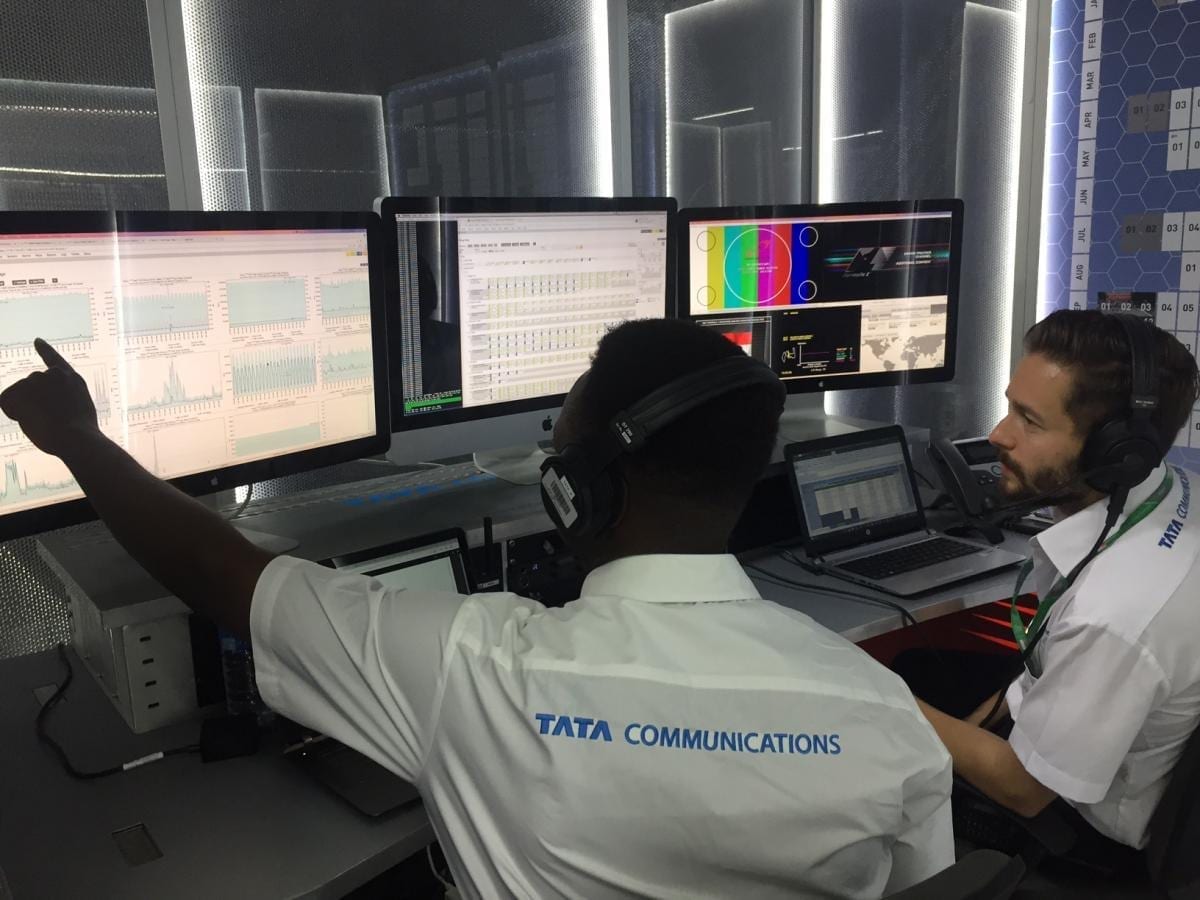
    India’s Tata Communications and US-based technology and business services provider Syniverse have teamed up to create what they are billing as the first fully-managed, end-to-end IPX network interconnection partnership for operators.

    The IPX network partnership will combine platforms that support 5G and IoT to create a comprehensive foundation for global mobility services.

    Under the IPX network partnership, Syniverse and Tata Communications will collaborate to manage traffic traveling via interconnection between the two companies’ networks to enhance quality of service and improve capacity and connectivity.

    The two operators will leverage each other’s IPX network to expand the reach of global mobile service provider customers. Both companies will have access to nearly 300 directly connected IPX/GRX customers, for a total reach of nearly 800 mobile operators.

    Customers will also be provided with enhanced monitoring, reporting, redundancy and quality of service, according to Tata Communications chief product officer Anthony Bartolo.

    “By joining forces with Syniverse, we’re one step closer to our goal of creating an environment where everything and everyone can become seamlessly connected, anywhere in the world,” he said.

    “As our customers leverage next-generation IoT and mobility services to drive their digital transformation, they need a solid foundation to ensure that they are able to capture, move and manage information seamlessly and securely worldwide. The powerful combination of Tata Communications’ and Syniverse’s capabilities and global reach will enable them to do just that.”

  • Telenor Pakistan partners with Netflix

    Telenor Pakistan partners with Netflix

    Telenor Pakistan today announced its partnership with Netflix, the world’s leading internet entertainment service. As part of this partnership, Telenor’s postpaid and corporate customers in Pakistan will be able to add their Netflix subscription fee to their monthly mobile bill, eliminating the need to share additional credit card or debit card details.

    New and existing Netflix subscribers in Pakistan will be able to select the option to pay through their Telenor mobile bills from the payments page of Netflix. They can simply complete this process by entering their Telenor mobile number, followed by the OTP (one time password).

    “Leading Pakistan’s digital transformation, we are always on the lookout for innovative ways to integrate solutions and maximize utility for our customers,” said Sardar Abubakr, Chief Digital & Strategy Officer at Telenor Pakistan. “Telenor Pakistan’s partnership with Netflix will help us achieve that through our industry-first Direct Carrier Billing (DCB) service. With this partnership, our customers will be able to get seamless access to Netflix’s stellar catalogue of original and licenced content.”

    Netflix launched its service in Pakistan in 2016 enabling its members to enjoy unlimited, ad-free entertainment on any internet connected mobile phone, laptop, desktop, tablet, or television.  More than 139 million Netflix paid members in over 190 countries enjoy TV series, documentaries and feature films across a wide variety of genres and languages.

    To promote digital and e-commerce ecosystem in the country, Telenor Pakistan launched Direct Operator Billing (DOB) in 2014 in collaboration with mobile payments company Fortumo and digital & social games publisher Gameloft for purchase of exclusive Gameloft titles and content from the gaming ecosystem. Direct Carrier Billing (DCB) was launched in 2017 through which customers may purchase content from Telenor Apps and Google Play Store, Gamebird related content and now for Netflix subscriptions as part of their mobile bills.


  • Singtel, Optus complete international 5G AR video call

    Singtel, Optus complete international 5G AR video call

    Singtel and its wholly-owned Australian subsidiary Optus have completed a 5G augmented reality video call between Singapore and Australia as part of their preparations for the introduction of the next generation mobile technology.

    The joint trial was conducted using Ericsson networking equipment as well as OPPO 5G test devices running on Qualcomm’s inaugural Snapdragon 5G chipset.

    Augmented reality technology was used to provide instant on-screen annotations during a call conducted at the operators’ respective live 5G sites.

    According to the companies, the technology has the potential to open up a range of new possibilities for enterprises, such as the ability to deliver live on-the-job training and remote assistance.

    In the consumer space, augmented reality communications use cases will include holographic calls and the ability to deliver a virtual tactile shopping experience.

    “This call is a significant marker in our journey to 5G as we develop a robust 5G ecosystem to ensure that our enterprise and consumer customers will enjoy an enhanced connectivity experience,” Singtel group CTO Mark Chong said.

    “5G is a key enabler that will bring the future of augmented reality, autonomous vehicles and smart cities closer to reality.”

    Singtel and Ericsson launched a 5G Centre of Excellence in Singapore in 2017, and recently opened the first live 5G facility in the market in collaboration with Singapore Polytechnic.

  • Telstra to trial 5G in banking sector

    Telstra to trial 5G in banking sector

    Australia’s Telstra has used this week’s Mobile World Congress to announce a partnership with Commonwealth Bank of Australia And Ericsson to trial 5G edge computing technologies in the financial services sector.

    The three-way collaboration will involve testing end-to-end banking solutions over 5G technology in an effort to explore the future of banking.

    The companies will evaluate how 5G edge computing can help reduce the network infrastructure currently required at bank branches to support high-speed transactions.

    Speaking at the event, Telstra group executive for networks and IT Nikos Katinakis said 5G has the potential to transform the global financial services sector.

    “5G edge computing is all about bringing the network closer to the user or application. For financial institutions like Commonwealth Bank, it will help to enhance existing banking applications as well as deliver new use cases such as artificial intelligence, all supported by a range of software defined networking solutions,” he said.

    “Together with Ericsson, we are pleased to be working closely with Commonwealth Bank, an industry leader, to help them design and deliver the next generation of banking services, powered by Telstra’s 5G technology and using edge computing.”

    Katinakis added that the lessons learned from the collaboration will be applicable to other industry verticals beyond financial services.

  • Vodafone Idea taps Ericsson for 5G-ready LTE upgrade

    Vodafone Idea taps Ericsson for 5G-ready LTE upgrade

    Vodafone Idea has contracted Ericsson to deploy 5G-ready LTE equipment as part of its network consolidation and modernization program. Under the agreement, Ericsson will help integrate the networks of the merged Vodafone India and Idea Cellular. As part of the contract, Ericsson will supply radio systems and transport equipment from its 5G-ready Ericsson Radio System portfolio.

    The deployments will provide Vodafone Idea with high capacity, low latency microwave backhaul and an easy upgrade path to 5G.

    Vodafone Idea plans to consolidate its existing deployed 2G and 3G network to maximize spectrum availability for LTE. This will be followed by ongoing optimization of the network in order to enhance end-user experience.

    “We have been strategic partners to both Vodafone India and Idea Cellular for several years, and now we enter a new phase of partnership with this deal with Vodafone Idea,” Ericsson head of SEA, Oceania and India Nunzio Mirtillo said.

    “The 5G-ready solutions in the Ericsson Radio System portfolio will help boost the capacity of Vodafone Idea’s LTE network and broaden the availability of high-quality mobile broadband services for its customers. These deployments will play an important role in building [the operator’s] future-ready 5G network.”

    Vodafone India and Idea Cellular completed a $23 billion merger in September, but the combined company is currently operating both the Vodafone and Idea brands independently.

  • Samsung supplying 5G NR solutions for Sprint

    Samsung supplying 5G NR solutions for Sprint

    Samsung has announced at Mobile World Congress this week that it is supplying its 5G new radio solutions for US operator Sprint‘s 5G new radio solutions.

    Sprint is deploying Samsung’s 5G NR solution, which combines Samsung’s existing Massive MIMO technology with new software and a new channel card, in one of its first 5G cities, Chicago.

    The operator plans to launch its 5G network in Chicago, Atlanta, Dallas and Kansas City in May as part of a nationwide launch, and plans to go live in five more cities in the first half of 2019.

    Sprint has been using Samsung’s Massive MIMO technology in its 2.5-GHz TD-LTE network since 2018. The modular nature of the upgrade will allow Sprint to offer both LTE and 5G services on the same radio using the split-mode capabilities of the MIMO solution.

    “Our collaboration on massive MIMO has delivered significant LTE capacity and speed enhancements,” Sprint SVP of network deployment and operations Scott Santi said.

    “With 5G, we look forward to giving Sprint customers even greater experiences from gaming and entertainment services, to IoT and business applications.”

    Samsung is showcasing its 2.5-GHz 64-transmit 64-receive Massive MIMO unit at its Mobile World Congress booth in Barcelona.

  • China Mobile, partners launch first 5G devices

    China Mobile, partners launch first 5G devices

    Members of the China Mobile-led 5G Device Forerunner Initiative have used Mobile World Congress to announce the launch of their first batch of devices, including China Mobile’s own in-house developed Forerunner One.

    Forerunner One is a 5G mobile smart hub device powered by Qualcomm’s inaugural Snapdragon X50 5G modem.

    The device supports connections in sub-6GHz 5G frequencies including the 2.6-GHz band, and is designed to convert high-speed 5G data into Wi-Fi and WiGig signals.

    It comes installed with Android 9.0 and an AI voice assistant, and is expected to reach the market in the first half of 2019.

    Meanwhile the members of the initiative have also used the event to launch four 5G chipsets – from Qualcomm, Huawei, MediaTek and Unisoc respectively – as well as 5G devices from Huawei, vivo, OPPO, ZTE, Xiaomi and Samsung.

    Some of the launched devices support both nonstandalone and standalone 5G, and others support peak throughputs of up to 4.67Gbps in sub-6GHz frequencies.

    The 5G Device Forerunner Initiative was established a year ago during the GTI Summit in Barcelona. So far 36 members comprising all aspects of the device industry have participated in the initiative.

  • Cisco announces $5b financing for operators’ 5G transition

    Cisco announces $5b financing for operators’ 5G transition

    Cisco announced that it is planning to fork out $5 billion funding over the next three years to help its customers for network transitions to 5G. Cisco said “the 5G movement is in steep ascent and service providers face significant financing pressures as they prepare for this 5G revolution.”

    Cisco’s recent Mobile VNI Forecast shows that by 2022, the average 5G connection (22 GB/month) will generate nearly three times more traffic on the networks than the average 4G connection (8 GB/month).

    Service providers must expand their networks to support this growth. At the same time, they must invest in new 5G services to stay competitive, the vendor said in a statement. Cisco said it is planning to commit $5 billion in 5G funding via Cisco financing over the next three years to help its customers succeed with their network transitions to 5G.

    Meanwhile, Cisco has also announced a raft of announcements with Asian mobile carriers including Bharti Airtel, KT, Softbank and Rakuten

    Cisco is helping Bharti Airtel to build India’s largest 5G-ready, IP-based automated network. Airtel aims to deliver enhanced subscriber experiences and offer high-speed mobile access for its mobile customers in the country.

    Airtel’s IP-based network architecture will enable new functionality, including segment routing, traffic engineering and Ethernet VPN that helps ensure seamless interoperability and the ability to leverage existing investments in its MPLS-TP network. The automated IP network architecture will also give Airtel the ability to enhance its services to SMBs and enterprises.

    The deal with KT will see Cisco transitioning KT’s network architecture to better manage 5G traffic with advanced routing and automation software, intelligent analytics and machine learning.

    The network includes a 5G routing backbone with Cisco Network Convergence System Router 6000 and ACI on Nexus 9000 switching platform at KT’s distributed data centers in the country.

    In Japan, Cisco is helping SoftBank to deploy Segment Routing IPv6 (SRv6) in its 5G mobile network to help the Japanese telco reduce capex and opex. It is also helping Rakuten Mobile Network to launch the world’s first virtualized, cloud native mobile network by October 2019.

    Cisco is also using the MWC2019 to unveil a host of products and services covering 5G, WiFi 6, smart city and connected cars.

  • Maxis to launch full 5G trials with Huawei

    Maxis to launch full 5G trials with Huawei

    Malaysia’s Maxis has signed an agreement with Huawei during Mobile World Congress in Barcelona to accelerate 5G development in Malaysia.

    Under the agreement, the companies plan to collaborate on full-fledged 5G trials involving end-to-end systems and services.

    The memorandum of understanding was signed by Maxis CEO-designate Gokhan Ogut and CTO Morten Bangsgaard, as well as Huawei rotating chairman Guo Ping, president of Southern Pacific Jeffery Liu and CEO of Malaysia Michael Yuan.

    “Maxis has long started its 5G journey, and we are already focusing on live trials, investments and evolving our network infrastructure to be ready for a future where smart solutions will be part of everyday life,” Ogut commented.

    “We are pleased to be working with world class technology leader and long term partner Huawei on our 5G trials, and to be a pioneer in bringing the latest technologies to Malaysia once again.”

    Huawei said that to date it has signed over 30 commercial 5G contracts and shipped more than 40,000 5G base stations across Europe, Asia and the Middle East.

  • Rakuten using Red Hat technologies in mobile rollout

    Rakuten using Red Hat technologies in mobile rollout

    Japan’s Rakuten announced it has arranged to use open source technologies provided by Red Hat in its upcoming end-to-end cloud native mobile network.

    The network, which is scheduled to launch in October, will use Red Hat’s open hybrid cloud technologies, Rakuten announced at this week’s Mobile World Congress in Barcelona.

    Rakuten Mobile Network has built an NFV based network supported by Red Hat Enterprise Linux, the Red Hat OpenStack Platform and Red Hat Ceph Storage software-defined storage solution.

    The deployment will support the planned launch of 4G mobile services, and leave Rakuten Mobile Network well placed to roll out 5G services subject to government licensing approval.

    “Our vision is to build a network that innovates at the speed of software and scales at the speed of cloud, and with a culture founded in technical and operational innovation, we are uniquely positioned to achieve that. We are excited to work with leading partners from around the world such as Red Hat as we work to create the world’s first end-to-end fully virtualized cloud-native network,” Rakuten Mobile Network CTO Tareq Amin said.

    “End-to-end automation for both network and services is a pillar of our systems building strategy, and by using Red Hat’s open source technology we can achieve automation and auto-scaling, enabling more productive operations and allowing us to provide cost-effective services to our customers.”

  • Telcos fear surging energy costs due to 5G

    Telcos fear surging energy costs due to 5G

    More than 90% of mobile operators fear that the arrival of the 5G era will result in significantly higher energy costs, according to research from data center equipment provider Vertiv and 451 Research.

    A survey of mobile operators, released at Mobile World Congress in Barcelona, found high interest in technologies and services that can improve energy efficiency of 5G networks.

    More than 90% of respondents expressed an interest in the emerging energy savings as a service (ESaaS) model of reducing energy costs.

    This model involves working with energy partners to use technologies including IoT sensors, artificial intelligence and other connected technology to gain real-time insight into energy consumption patterns and where improvements can be made.

    Vertiv has predicted that the move to 5G will increase total network energy consumption by up to 170% by 2026, with the largest increases expected in macro, node and network data center areas.

    Despite this and other challenges ahead, the survey also indicates that operators are optimistic about the potential of 5G, and believe the 5G era will start in earnest in 2021. Nearly nine in 10 (88%) respondents to the survey are planning to deploy 5G in 2021-2022.

    To support the transition to 5G, 37% of operators have deployed multi-access edge computing technology, with a further 47% planning to do so.

    451 Research research vice president Brian Partridge said the survey sought to deliver clarity around operators’ hopes and fears around 5G and edge deployments,

    “The two toughest connectivity challenges for supporting 5G topologies were revealed to be upgrading access and aggregation layer networks and adding new backhaul links,” he said.

    “Survey respondents indicated that the availability of high quality connectivity to distributed POPs and ease of site acquisition were viewed as the most critical enablers to 5G success. We were frankly surprised by some of these results and believe it brings clarity to the level of transformation the industry now faces.”