Category: Telecom

Retail News Asia is committed to providing both local and global retailers with the latest Telecom & Telco news throughout the Asian market. This on a daily base.

  • RCS and OTT to fuel A2P business messages to 3.5tr by 2023

    RCS and OTT to fuel A2P business messages to 3.5tr by 2023

    A new study from Juniper Research found that 3.5 trillion business A2P (Application-to-Person) messages will be delivered by 2023, up from an estimated 2.5 trillion in 2019, a 40% growth.

    The new Juniper Research paper, A2P Messaging: SMS, RCS & OTT Business Messaging 2019-2023, forecast that the rich media interactivity of RCS (Rich Communications Suite) would make the emerging messaging technology popular for retail and marketing business use cases.

    It claimed that this enhanced functionality will drive RCS traffic to an average annual growth of 290% over the next 4 years, to help the growth of operators’ total messaging revenues.

    Not enough

    However, despite strong growth, RCS will account for only 2% of all A2P traffic by 2023, reaching 56 billion A2P messages. The research suggested that A2P messaging users will continue to use SMS owing to the familiarity of the protocol. As a result, it claimed that the growth of RCS will be mostly driven by new traffic, rather than the migration of existing traffic from SMS.

    Research author Sam Barker remarked, “Future growth of RCS traffic will be driven by users migrating away from dedicated mobile apps. The technology will develop to become the first point of contact for RCS users to engage with brands over mobile devices within 5 years”.

    OTT business messages future slowed by fragmentation

    The research also found that OTT business messaging platforms, such as WhatsApp for Business, will deliver 236 billion messages by 2023. However, they will continue to suffer from a fragmented user base across multiple messaging applications.

    The research cited the use of CPaaS (Communications-Platform-as-a-Service) solutions as essential to enable fallback onto the ubiquitous SMS protocol to ensure message termination. Additionally, it found these platforms will allow the collection of insightful data, including contact preferences, to enable A2P business users to optimize messaging campaigns.
  • 22 5G devices announced to date

    22 5G devices announced to date

    A total of 22 5G user devices from 14 manufacturers have been announced to date, according to figures from mobile industry consultant Hadden Telecoms.

    The devices span a number of form factors, including smartphones, customer premises equipment, MiFi devices and USB models, and include the new category of foldable phones.

    These devices are expected to launch this year to support early 5G launches, with some announced devices being carrier or market specific.

    According to Hadden Telecoms’ research, as of this month 5G smartphones have been announced from Huawei, LG, Motorola, OnePlus, Oppo, Samsung, TCL, Xiaomi, and ZTE.

    Meanwhile Huawei has announced the largest number of CPE products at four. D-Link, HTC, Inseego, Netgear, Nokia, Samsung, and TCL have also unveiled 5G CPE.

  • Huawei ready to replace Android if it loses legal battle

    Huawei ready to replace Android if it loses legal battle

    Huawei is being attacked from all sides, and even though the Chinese company seems to have been cornered, it still has the will to fight. Huawei recently sued the United States, as a means to fight a ban that prevents its telecom equipment from being purchased and used by government institutions.

    The same ban prohibits major US government contractors from using Huawei equipment, a major blow for the Chinese company’s local telecom business. Although the legal battle between Huawei and the US is just beginning, the former has everything prepared in case of a negative outcome.

    Huawei’s executive Richard Yu said in a recent interview with Die Welt that his company already has its own operating system ready to replace Android and Windows.

    We have prepared our own operating system, if it turns out we can no longer use these systems, we will be ready and have our plan B. Huawei started working on its proprietary ecosystem seven years ago, following a US investigation that also targeted ZTE. According to Yu, Huawei will continue to use Google and Microsoft operating systems, but if the legal battle intensifies, it won’t hesitate to switch to its own ecosystem.

    The bad news for fans of the Chinese brand is that not even Huawei believes in the success of its own ecosystem. A Huawei spokesperson was cited saying that the company doesn’t expect to use its “backup systems” and that it doesn’t actually want to use them.

  • Hyperscale operator capex jumped 43% in 2018

    Hyperscale operator capex jumped 43% in 2018

    New data from Synergy Research Group revealed that hyperscale operator capex reached over $32 billion in Q4, outperforming the first three quarters of the year, which had themselves set records.

    Full-year hyperscale capex jumped 43% to almost $120 billion. Meanwhile telco capex was over double that of hyperscale operators, but notably telco spending remained at the same level as the previous two years. The top five hyperscale spenders in 2018 were Google, Amazon, Microsoft, Facebook and Apple. Coincidentally their aggregate 2018 capex was almost identical to the capex of the top five telco spenders – China Mobile, AT&T, Verizon, NTT and Deutsche Telekom.

    The hyperscale data is based on analysis of the capex and data center footprint of 20 of the world’s major cloud and internet service firms, including the largest operators in IaaS, PaaS, SaaS, search, social networking and e-commerce.

    Outside of the top five, other leading hyperscale spenders in 2018 included Alibaba, Tencent, IBM, JD.com and Baidu. Much of the hyperscale capex goes towards building, expanding and equipping huge data centers, which have now grown in number to 439.

    The telco data is based on tracking and analysis of the world’s 40 largest telcos, which in aggregate account for 85% of the communications services market.

    “The hyperscale operators are quickly becoming the capex kings of the IT world,” said John Dinsdale, a chief analyst at Synergy Research Group. “On average hyperscale operator revenues are growing by 20% per year driven by expansion of cloud services, e-commerce, social media and online advertising; and it is notable that the leading players are investing an ever-increasing share of their revenues into capex. This is in stark contrast to telcos who are seeing neither revenues nor capex growing. We do not see these trends changing any time soon.”

  • Smart, Nokia to pilot 5G deployments in schools

    Smart, Nokia to pilot 5G deployments in schools

    The Philippines’ PLDT and mobile division Smart have signed an agreement with Nokia to pilot the deployment of 5G technologies and services in schools.

    The agreement will see PLDT, Smart and Nokia collaborate to identify real-world 5G standalone solutions for use in schools, colleges and universities, including arificial intelligence, drones and advanced IoT applications.

    The companies will levearge the PLDT-Smart Technolab in Makati and the Nokia Technology Center in Quezon City for the project.

    In addition, the agreement covers deploying 5G standalone products and services, such as 5G handsets and applications, in the Philippines.

    “We are happy to partner with Nokia to help develop intelligent solutions and technologies for the benefit of the Philippine education sector,” PLDT-Smart chairman and CEO Manuel V. Pangilinan said.

    “As the country’s leading and most trusted technology enabler, PLDT and Smart are excited to work with Nokia and the academe in realizing our 5G vision,” added the company’s chief revenue officer Ernesto R. Alberto.

    PLDT and Smart claim to be the best positioned company to deploy 5G in the Philippines due to its status as the operator as the country’s most extensive fiber network, which now spans over 244,000 route kilometers.

  • 4 in 5 APAC operators plan to deliver 5G for sport events

    4 in 5 APAC operators plan to deliver 5G for sport events

    More than four in five (81%) operators in Asia-Pacific plan to deliver 5G services to major live sports and esports event organizers, according to research conducted by Ovum for Amdocs.

    The research found that operators in the region view sports events such as the Tokyo 2020 Olympic Games as an opportunity to create new enterprise services grounded in 5G communications.

    As well as 5G, 81% of APAC operators plan on offering IoT-related technology and services to stadium owners and tournament organizers to create efficiencies in stadium management, and 56% plan to offer services that will improve fan experiences, such as introducing the ability to order food and beverages over mobile devices.

    Operators anticipate new commercial opportunities from supporting major sporting events with 5G. Around 44% of operators in the region believe 5G will drive growth in terms of ARPU and 32% believe it will boost their enterprise business.

    Meanwhile 50% of Asia-Pacific operators believe that 5G will drive growth in sports TV subscribers, and 43% believe it will drive mainstream adoption of virtual reality services.

    To capitalize on these opportunities, 81% of operators plan on creating new partnerships with broadcasters and OTT service providers.

    The same proportion are planning to create new partnerships with device manufacturers, 64% are seeking direct partnerships with sports venues, and 56% want partnerships with social media and video game companies.

    But operators are also anticipating network related challenges regarding new 5G services for sports and esports. When asked about the biggest expected challenges, 69% cited issues with delivering the required levels of capacity and connectivity to support live HD video, and 56% cited indoor coverage to stadiums.

    “Operators see both short-term benefits in supporting sports with 5G, including growth in ARPU and their media business line, as well as longer-term benefits, such as enhanced brand appeal among younger demographics,” Amdocs CMO Gary Miles said.

    “Furthermore, working with new types of partners on 5G and sports will give operators a vital role in a new digital business ecosystem. Out of a multitude of potential 5G use cases, our research shows that sports and esports is certainly among the most compelling.”

  • GateHouse Telecom developing universal satcom interface

    GateHouse Telecom developing universal satcom interface

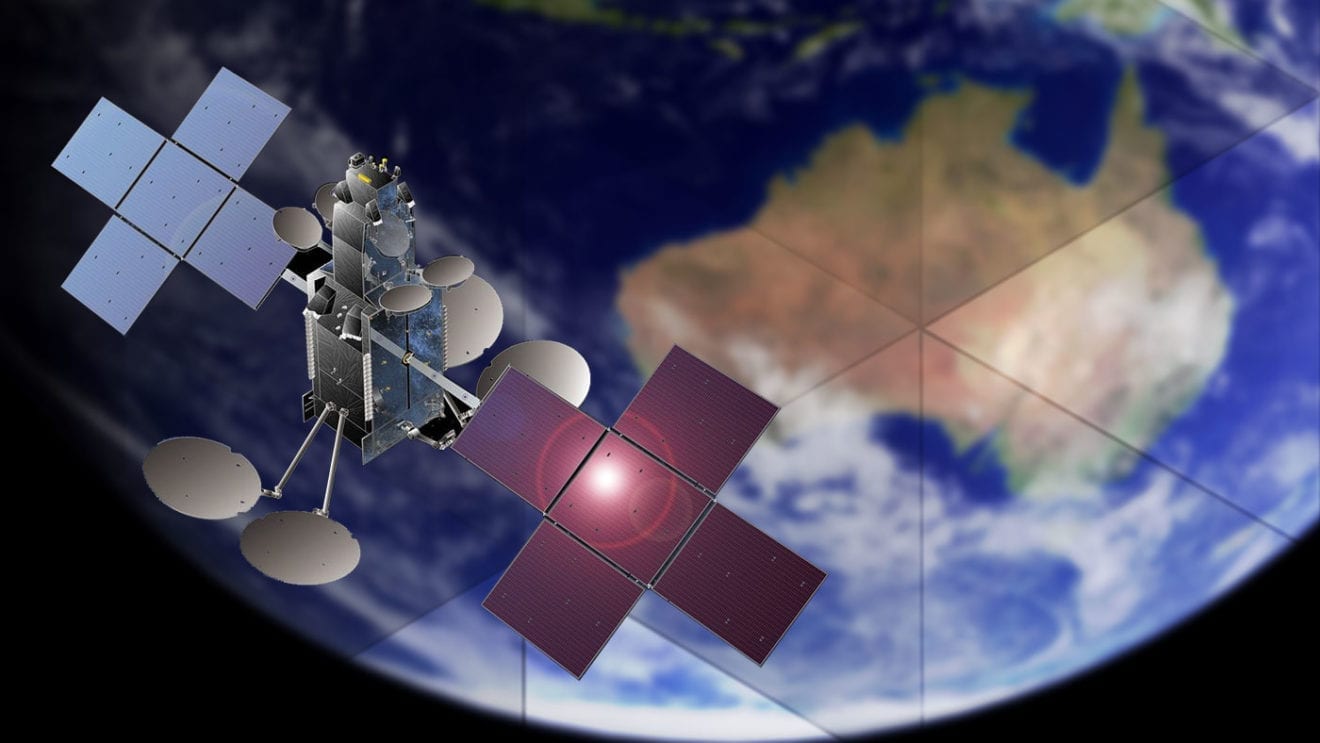
    Satellite industry software provider GateHouse Telecom has revealed it is developing a technology that will allow a single physical satcom terminal to use multiple satellite systems.

    The company is developing a new interface that will allow users to run the same satcom terminal hardware and interface on different satellite services.

    GateHouse Telecom product manager Svend Holme Sørensen said the project reflects the company’s belief that there is a need for a universal satcom application interface.

    “To stay connected, user terminals have to adapt to changes in data routing and frequent changes of satellites,” he said.

    “Our new software platform, when based on software defined radio hardware, combined with the increasing availability of multi-service antenna systems opens the possibility of operating terminals on several satellite systems.”

    He said such demand appeared to be reflected in discussions at this year’s SmallSat Symposium in Silicon Valley.

    “There seems to be a general wish to run satellite constellations using network management functions, for example, software defined networks. However, this kind of functionality goes beyond the existing protocol specifications used today.”

    Using the same hardware terminal for multiple satellite systems would allow developers and engineers to bring down user terminal costs by increasing volumes to improve business cases.

  • PTCL engages Nokia to deploy 100G OTN

    PTCL engages Nokia to deploy 100G OTN

    Pakistan’s PTCL has deployed a new 100G optical transport network in partnership with Nokia.

    The Nokia DWDM network utilizes PTCL’s extensive fiber footprint to provide multipath redundancy.

    It will be instantly upgradeable to 200G and 400G per wavelength as demand dictates, and the software-defined network (SDN) capabilities of the solution will allow the operator to increase network capacity and efficiency.

    The network also uses set-partition quadrature phase shift keying (SP QPSK) modulation technology to allow PTCL to cover very long distance links with improved signal-to-noise tolerance and latency.

    Finally, the solution has been designed to allow for the easier launch of services based on ROADM (reconfigurable optical add-drop multiplexer) technology.

    “We are committed to providing a world class network experience to our subscribers and this deployment is a significant step in that direction,” PTCL CTIO Saad M Waraich said.

    “Nokia’s state of the art optical network technology and their expertise will help us to differentiate our portfolio as we provide our business and consumer subscribers with faster and more reliable broadband and carrier services.”

    Nokia this week also announced it has secured a five-year contract to expand the 4G network capacity and coverage of another Pakistani operator, Jazz.

  • US trails world in 5G mid-band spectrum

    US trails world in 5G mid-band spectrum

    The mid-band spectrum is critical to 5G but the United States trails other countries in mid-band availability, according to a 2018 Analysys Mason study, which shows other countries plan to make over four times more licensed mid-band spectrum available than the US by 2020.

    Next-generation 5G networks rely on a mix of high-, mid- and low-band spectrum. Low-band spectrum carries signals over long distances and was the foundation for the first four generations of wireless networks. High-band spectrum travels much shorter distances, but offers the greater capacity required for data-intensive applications. Mid-band spectrum blends the attributes of both, delivering high capacity across larger geographic areas.

    In 2018, Analysys Mason compiled the mid-band spectrum plans of 13 countries, including the United States, to produce a report for US wireless industry association CTIA.

    Among the key findings of a 2018 compilation of mid-band spectrum plans in 13 countries around the world suggests that by the end of 2020:

    • On average, countries included in the study will make 4 times more licensed mid-band spectrum available than the United States.
    • Japan is planning to make ten times more licensed mid-band spectrum available than the United States.
    • China is planning to make more than seven times more licensed mid-band spectrum available than the United States; the United Kingdom is planning to make nearly five times more licensed mid-band spectrum available.

    “Resources available to US operators are improving, but spectrum in the mid-band remains limited compared to other leading 5G markets,” said Janette Stewart, a principal with Analysys Mason and the lead author of the report, “Mid-band spectrum will be key to wider-area 5G coverage.”

  • Automated frequency coordination at tipping point

    Automated frequency coordination at tipping point

    Automated spectrum management databases and algorithms are an important public policy tool for meeting surging demand for low-cost high speed wireless broadband connectivity, according to a new report from the Dynamic Spectrum Alliance (DSA).

    The report argues that automated frequency coordination (AFC) is critical to allowing more efficient shared use of underutilized spectrum bands, while protecting incumbent services from interference.

    The DSA, which includes members including Amazon, Facebook, Google, Microsoft, Cisco and Hong Kong’s Applied Science and Technology Research Institute (ASTRI), released the report yesterday at an event co-sponsored by the Congressional Spectrum Caucus in the US.

    It argues that automated spectrum management systems have reached a tipping point for adoption worldwide, and that these systems will greatly extend the supply of wireless connectivity in markets that adopt them.

    AFC also has the potential to lower transaction costs and help national regulatory authorities meet the growing and very diverse spectrum needs of both industries and individuals.

    The US FCC is considering the use of AFC systems to manage spectrum capacity across several bands for licensed and unlicensed use. The EU and the UK are also conducting consultations over adopting AFC systems for shared spectrum access.

    “At a time when regulators are under increased pressure to meet wireless connectivity demands, AFC is critical to enable more efficient shared use of underutilized frequency bands while protecting incumbent services from interference,” DSA board chairman Paul Garnett said.

    “Automated spectrum databases are now a proven means of achieving large-scale, low-cost, and virtually real-time access to communications capacity that would otherwise go unused.”

    Other members of the DSA include HPE’s Aruba Networks, Broadcom, Ruckus Wireless, the IEEE and the Taiwan Institute for Information Industry.

  • 5G will power outdoor robots in the future, but not now

    5G will power outdoor robots in the future, but not now

    Low latency and cloud intelligence are the two main features of 5G that will significantly change the deployment of mission critical and business critical robots, particularly those deployed outdoors. ABI Research argues that the commercialization of a 5G network is expected to usher in the significant growth of commercial robotics.

    Shipments of 5G robots are expected to reach 570,000 by 2027, largely deployed in mission critical and business critical settings. Outdoor applications that will be enabled by 5G connectivity include public safety and first responders, critical asset inspection, last mile delivery and transportation, precision agriculture, field extraction, and haulage.

    Traditionally, high-speed broadband connectivity is only available to robotics systems in indoor environments via Wi-Fi and broadband fiber. Therefore, existing outdoor commercial and industrial robots are often fully autonomous devices with onboard intelligence. With 5G, robots’ capabilities will be upgraded.

    “Existing onboard capabilities, such as object and people detection, path planning, and optimization can be shifted to the cloud to benefit from a larger set of data lake,” said Lian Jye Su, Principal Analyst at ABI Research.

    “At the same time, robotics systems will have access to capabilities that could not be previously hosted on existing systems. At present, remote control appears to be the focus, with Toyota’s T-HR3 and Naver’s AMBITEX, but the real game-changers will be conversational Artificial Intelligence (AI) and swarm intelligence. 5G’s low latency will enable robotics vendors to augment the onboard intelligence or even move parts of it to the cloud to introduce new capabilities to existing robotics hardware. Enterprise users will be able to connect their fleet of outdoor robots to the cloud and enjoy the performance, scalability, and flexibility of the cloud-based intelligence.”

    In order to enable 5G capabilities, robotics vendors must work closely with connectivity and chipset vendors in their design and prototyping phase to maximize the benefits of ubiquitous connectivity. Qualcomm has recently launched the Robotics RB3 Platform, powered by its Snapdragon 845 SoC with future 5G upgradability and Inseego has partnered with CloudMinds to provide 5G connectivity to the XR-1 Cloud Robot.

    By integrating LTE and 5G connectivity from the onset, robotics vendors can provide a clear roadmap in terms of future upgrades. The clear connectivity roadmap will provide the industry guidance on the future capabilities that cellular connectivity can enable.

    This includes multi-access edge computing that provides computing, networking, and caching at the network edge and wide area machine-to-machine communication that facilitates situational awareness and information exchange between mobile robots, cloud platforms and surrounding infrastructure.

    “In the long run, 5G will become the de facto connectivity method for outdoor robots. As a global standard, 5G enjoys economies of scale. This brings down the total cost of ownership of 5G networks and the price of 5G modem chipsets, allowing robotics developers to integrate 5G connectivity with ease,” Su concluded.

  • Globe opens its first Esports Center

    Globe opens its first Esports Center

    The Philippines’ Globe Telecom has announced the launch of its first Esports Center, aimed at supporting various local esports communities.

    The Esports Center at Play Nation in the UP Town Center in Quezon City will offer various initiatives including esports competitions, as well as support helping gamers create live streaming content and interact with other members of different esports communities.

    Globe SVP and head of content business group Nikko Acosta said the facility will help Globe’s Games and Esports division achieve one of its key goals of strengthening support for esports in the Philippines in cooperation with various fan communities.

    “We want to bring together different communities of popular games like Arena of Valor, Rules of Survival, League of Legends, and Tekken – among others – in one venue to upgrade their knowledge and gauge their skill levels with others through peer learning of new strategies and techniques,” he said.

    “We are positioning esports as a real sport, to make a gamer into a real athlete harnessing both physical and mental attributes by playing it right,” Acosta added, mentioning the company’s #PlayItRight advocacy campaign, which seeks to emphasize the importance of discipline, nutrition, physical wellness, and cognitive development in esports.

  • Airtel, TTSL could be hit with $2.15b bill over merger

    Airtel, TTSL could be hit with $2.15b bill over merger

    India’s Bharti Airtel and Tata Teleservices may need to pay nearly 150 billion rupees ($2.15 billion) in spectrum charges to the government to clinch approval for their planned merger.

    The Department of Telecom is preparing to issue the demand as a condition for granting approval for the merger, unnamed DoT officials told.

    The expected bills will cover unpaid license fees, spectrum usage charges and a one-time spectrum reallocation charge. It will include a 120 billion rupee charge for Bharti Airtel and a 28 billion rupee charge for Tata Teleservices.

    DoT approval is the last remaining major hurdle that the companies will need to clear to approve of the merger, which was announced in 2017. The deal has already been signed off on by the National Company Law Tribunal.

    According to the report, license fees, which will be based on adjusted gross revenue, may further add to the cost.

    But the department is already expecting the operators to appeal the one time spectrum charges with the Telecom Disputes Settlements and Appellate Tribunal (TDSAT).

    The operators may also potentially seek to block DoT’s efforts to demand spectrum usage charges based on the legal uncertainty over the definition of an operator’s adjusted gross revenue, against which annual license fees are calculated.

  • Jazz contracts Nokia for 4G network expansion

    Jazz contracts Nokia for 4G network expansion

    Pakistan’s Jazz has contracted Nokia to expand the operator’s 4G network capacity and coverage.

    Under the five-year agreement, Nokia will provide its radio solutions for Jazz’s network in the central and southern Punjab province as well as the Sindh and Baluchistan provinces.

    The rollout area will cover densely populated cities including Faisalabad, Multan, Bhawalpur, Rahimyar Khan and Sukkur, allowing Jazz to provide improved services for customers.

    The deployment will include Nokia AirScale base stations for expanded 4G coverage and Massive MIMO technology for enhanced capacity and speed.

    “Expanding 4G coverage across all cities and towns in Pakistan is one of the key strategic pillars of Jazz to fuel the consumption of broadband services,” Jazz chief technology and information officer Khalid Shehzad said.

    “Nokia’s advanced equipment coupled with its commitment to provide quality professional services will ensure that our subscribers enjoy superior service experience. It will help us maintain our growth momentum and attract new subscribers.”

  • Vodafone Idea doubles 4G speeds in Mumbai

    Vodafone Idea doubles 4G speeds in Mumbai

    India’s Vodafone Idea has announced it has doubled 4G download speeds in the Mumbai metro area as part of a major network modernization program in the city.

    The operator is deploying new technologies in the metro area including Massive MIMO, small cells and more TD-LTE cell sites, and has so far deployed more than 5,000 such sites across several regions.

    As part of the network upgrade, Vodafone Idea has also installed over 1,900 pieces of dedicated indoor coverage equipment at high rises and commercial buildings.

    Vodafone Idea’s capacity and coverage in Mumbai has also benefited from 4G spectrum refarming conducted as part of the network consolidation between the former Vodafone India and Idea Cellular, which combined to become Vodafone Idea last year in a $23 billion merger.

    “I am happy to announce that ‘Mumbai just got two times faster’ which means that our customers will now experience two times the download speeds on the 4G network,” Vodafone Idea business head Sunil Tolani said.

    This is based on statistics from Valu Connex Telecom Services indicating that average download speeds in Mumbai have improved by 2.16 times compared to prior to the modernization program.

    “We will be utilizing multiple [advertising] media like OOH [out-of home], radio and digital to reach out to our audience and hope they will enjoy the benefits of our focused network initiatives in Mumbai,” Tolani concluded.