Category: Telecom

Retail News Asia is committed to providing both local and global retailers with the latest Telecom & Telco news throughout the Asian market. This on a daily base.

  • Vodafone Idea contracts Nokia for LTE expansion

    Vodafone Idea contracts Nokia for LTE expansion

    India’s Vodafone Idea has awarded Nokia a contract to improve the operator’s LTE coverage and capacity.

    Under the contract, Nokia will provide Single RAN Advanced, massive MIMO and small cell technology across multiple Indian telecoms circles to support the operator’s network consolidation and modernization program.

    The small cell deployment will help improve both indoor and outdoor coverage and capacity in the circles. Vodafone Idea will also adopt dynamic spectrum sharing technology to make the most productive use of the converged company’s spectrum.

    “Vodafone Idea is undertaking the world’s biggest telecom network integration in India [following the merger between Vodafone India and Idea Cellular], and creating India’s most advanced, secure and cost-efficient network,” Vodafone Idea CTO Vishant Vora said.

    “Extensive use of UBRs, dynamic spectrum sharing, massive MIMO and HetNets are key to our plan in this integration exercise, and we are very happy to partner with Nokia to deploy these futuristic, next generation technologies to prepare a future-proof network for the digital era.”

    Last month Vodafone Idea also contracted Ericsson to deploy LTE equipment for the network integration program, including radio systems and transport equipment from Ericsson’s 5G-ready Ericsson Radio System portfolio.

  • Cambodia’s SINET to expand into residential market

    Cambodia’s SINET to expand into residential market

    Cambodia’s largest enterprise-focused ISP SINET has selected Nokia to support its expansion into the residential market with FTTH services.

    Under the agreement, Nokia will roll out a nationwide access network starting in major housing apartments and gated communities – known as borey – in Phnom Penh and Siem Reap.

    SINET plans to deliver broadband services targeted at residents living in newly built gated areas and apartment buildings using Nokia’s Gigabit capable GPON Mini optical line terminal solution.

    SINET CEO Meta Sy said the company plans to use the high speeds and qualities available with GPON technologies to stand out from the crowd and gain a competitive foothold in the residential market.

    “The Cambodia market is crowded with low-quality residential broadband services available at low prices using many off-the-shelf access equipment with little consideration to long term quality and reliability,” he said.

    “When we decided to deploy GPON in borey and housing apartments, we wanted a quality-based and future-proof offering that would set us apart from the competitions. That means the service has to be on-par with international broadband standard in terms of speed, reliability, efficiency and ease of troubleshooting which are key criteria why we selected Nokia.”

  • Ooredoo launches global blockchain initiative

    Ooredoo launches global blockchain initiative

    Blockchain is a fast-growing digital enabler, with safe, secure, and reliable “distributed ledger” technology providing a permanent digital record of ownership that allows every part of a transaction to be verified.

    While many organizations may know blockchain powering cryptocurrency, there are wider applications of blockchain empowering solutions that can save time and money, and can enhance information security and privacy.

    According to a recent report by IDC, global blockchain spend will grow over 10-fold from $1.5 billion in 2018 to $11.7 billion by 2022.

    As a digital enabler, Ooredoo Group already works closely with public, private and academic sectors in its global footprint to develop blockchain solutions that can create new value in the digital space and enrich people’s digital lives.

    Ooredoo Group’s new blockchain initiative is an open call for innovators to develop blockchain partnerships, solutions, and protocols across business-to-business and business-to-consumer sectors.

    Sheikh Saud Bin Nasser Al-Thani, group chief executive officer, Ooredoo, said: “Blockchain will facilitate new digital business models and revenue in the next five years – helping organisations to run better and to transform people’s daily lives. Using blockchain, organisations and their customers can optimise costs, find new levels of efficiency, transparency, and trust, and enable secure digital payments.”

    For example, property developers can provide smart contracts for ensuring titles, deeds, and facilities management are accurate and secure. Banks can better track cross-border payments, and logistics companies can track and trace products. Healthcare providers can enable digital patient records to optimise treatment. Mega-event organizers can introduce virtual digital payment tokens for merchandise and food and beverage. Sports teams can have real-time athlete health and performance metrics and also manage fan loyalty programs.

    With Ooredoo Group’s Blockchain Initiative, Ooredoo aims to leverage its experience and industry-leading solutions in blockchain combined with 5G, cloud, and the Internet of Things to deliver the biggest benefits to organisations and to customers.

    The Initiative is also bringing together subject matter experts from across the company’s global footprint and business units, including small- and medium-sized businesses, commercial, digital, and legal.

    Sheikh Saud said: “Our Blockchain Initiative aims to open the blockchain floodgates, leveraging global best practices to deliver localised innovation across many of the world’s fastest-growing markets. Our open call to blockchain innovators will also explore integrating blockchain with artificial intelligence and machine learning, cloud, and the Internet of Things.”

  • SK Telecom using quantum cryptography for 5G security

    SK Telecom using quantum cryptography for 5G security

    South Korean mobile carrier SK Telecom said it will use quantum cryptography technology to ensure security of its 5G mobile networks.

    The mobile carrier said Monday it has completed applying Quantum Random Number Generator (QRNG) technology of ID Quantique (IDQ), to its 5G subscriber authentication center. The move is designed to prevent hacking and ensure quantum-safe security.

    “The subscriber authentication process is the first and essential step in verifying a mobile device user before he/she is granted access to any voice and video data service, SMS, etc,” SK Telecom said in a statement.

    “Security in this process is crucial since the leakage of authentication key value can lead to serious crimes such as eavesdropping and hacking.”

    In February 2018, SK Telecom invested $65 million into IDQ to accelerate development of quantum technologies for the IoT and telecoms markets.

    SKT plans to expand the use of QRNG in its long-term evolution (LTE) networks in April.

    The mobile carrier will also strengthen security further by applying IDQ’s quantum key distribution (QKD) technology to its 5G and LTE networks between Seoul and Daejeon – the area which has highest mobile data traffic in the country- next month.

    QKD provides cryptographic security based on the laws of quantum mechanics. It enables two parties to produce a shared random secret key known only to them, which can then be used to encrypt and decrypt messages, the mobile carrier noted.

    “As security emerges as one of the most important issues in the 5G era, SK Telecom is determined to provide the most secure 5G network and focus on expanding the ecosystem by developing quantum cryptography technologies,” SK Telecom CTO Park Jin-hyo said.

    SKT will further enhance the safety and security of its mobile networks by expanding the application of quantum cryptography technologies by stages, Park added.

  • Konnectivity to buy out remaining shares of M1

    Konnectivity to buy out remaining shares of M1

    Konnectivity, the joint venture buying out Singapore’s M1, has revealed plans to embark on a multi-year transformation of the operator to enhance its competitiveness in the market. The venture revealed it will compulsorily acquire the remaining shares in M1 after securing a 94.55% stake.

    Konnectivity, which is jointly owned by Keppel Corporation and Singapore Press Holdings, announced it will exercise its rights to acquire all remaining M1 shares at the offer price of S$2.06 ($1.52) per share, and then take the company private.

    After the compulsory acquisition, Konnectivity will own 80.69% in M1, while Keppel Corp subsidiary Keppel Telecommunications and Transportation will own the remainder.

    After the acquisition closes, Keppel Corporation and SPH plan to work with M1 on a transformation strategy focused on the three prongs of innovation, technology adoption, and digitalization to help Singapore’s smallest operator better compete with larger rivals Singtel and StarHub.

    “As a member of the Keppel Group, M1 looks forward to working closely with the Keppel Group and with SPH to accelerate the changes needed to deliver even more innovative and compelling products and services, to stay ahead of the competition,” M1 CEO Manjot Singh Mann said.

    “M1 shall endeavour to transform to be at the heart of convergence of various digital services and technologies that present day consumers and enterprises demand. Keppel and SPH bring with them their organisational strengths and stability, which will help us chart our growth plans aggressively, while seeking significant opportunities of synergy with them.”

  • Telenor Pakistan and National Defence University exchange Ideas to Leverage Technology for Development

    Telenor Pakistan and National Defence University exchange Ideas to Leverage Technology for Development

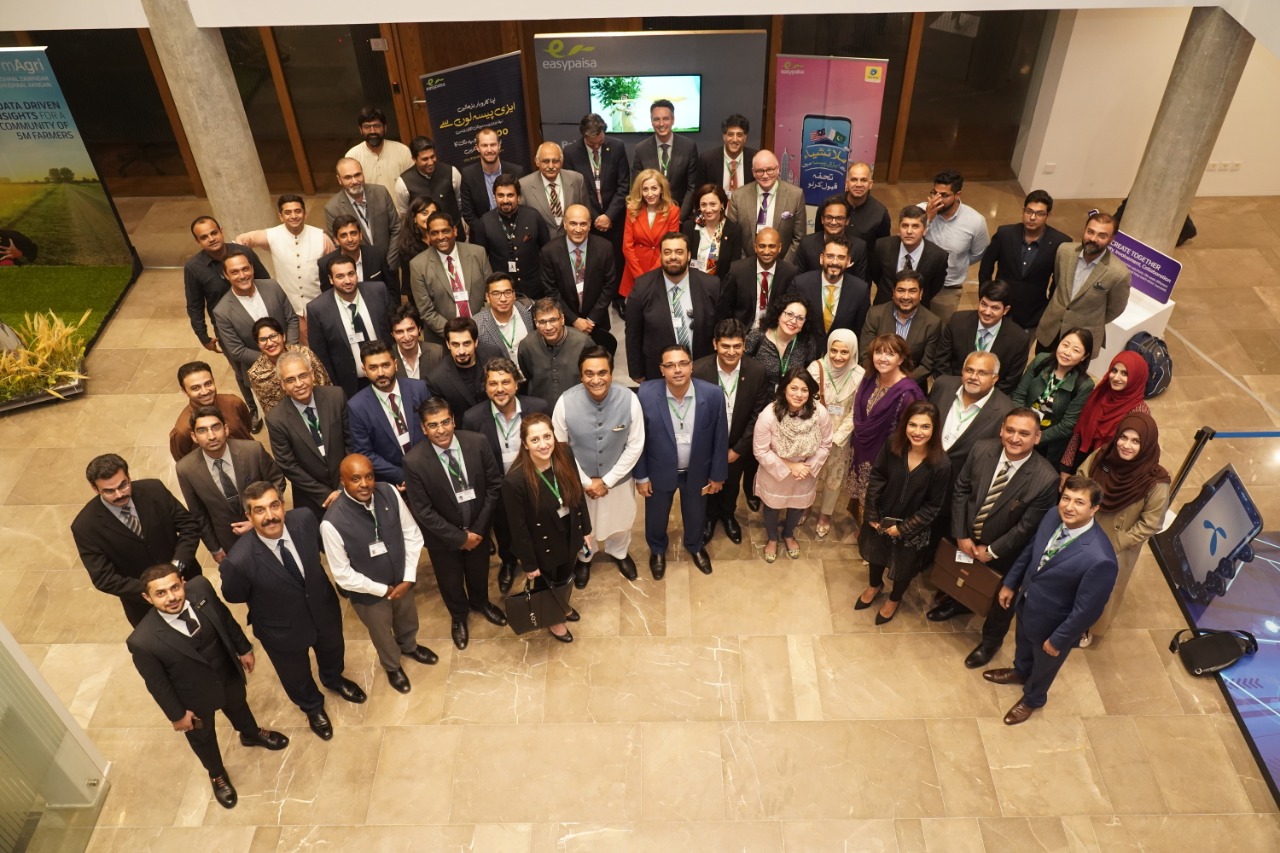
    Telenor Pakistan recently hosted a dinner for a delegation from National Defence University (NDU) Islamabad at its 345 Campus comprising of management of two organizations and participants of International Workshop on Leadership and Security (IWLS).The purpose of the event was to engage in a dialogue on how technology can play a vital role towards national development and empowering societies and to highlight to the international delegates some of the successful and impactful digital initiatives of Telenor Pakistan.

    The high level event was hosted by Irfan Wahab Khan, CEO Telenor Pakistan along with his management team and attended by the faculty and participants of IWLS-1 including delegates from China, Kingdom of Saudi Arabia, Jordan, Myanmar, Tunisia, South Africa, Argentina, Portugal, New Zealand, Sri Lanka, Finland, Romania, UAE, Syria and The UK. The delegates were given a walkthrough of the latest digital innovations at Telenor Pakistan followed by the tour of the Telenor 345 Campus.

    Mr. Irfan Wahab Khan, CEO Telenor Pakistan opened the event and said that access to technology can have important ancillary benefits and it can help empower people, increase productive investment and consumption and raise productivity and income. “As Pakistan’s leading digital services provider with a strong rural presence, and movers of many industry-first initiatives, we at Telenor Pakistan are fully geared to impact and transform various sectors of Pakistan’s economy through smart connectivity, digitalization of services and platforms and greater financial inclusion of the people of Pakistan. As a forward-looking growth organization, Telenor Pakistan is driven by its ambition to provide intelligent technologies to create better national outcomes through our innovation focus involving the use of Artificial Intelligence, Data Analytics and Blockchain. This model is aligned with our purpose to provide the Government, businesses and people of Pakistan to what matters most to them and allows us to be their partner of choice in their digital transformation.” he added.

    Telenor is leading the ICT-powered digital revolution in Pakistan with a number of innovative products and industry first solutions. The company is firmly focused on digitalization for the masses and has pioneered financial services aimed at higher financial inclusion.

    The participants of the International Workshop being held at NDU appreciated Telenor Pakistan’s ambitions for digital development which are well aligned with the Government’s ambition of a Digital Pakistan. “It’s imperative that we know what developments have taken place in the recent past and what technology holds in store for our future, in order to harvest the benefits. Our findings show that responsible tech is on the rise, even in the midst of technology’s rapid leaps. Technology used in the efficient way will contribute to a sustainable tomorrow.” they added.

    Telenor Pakistan believes there are immense opportunities through technology with a stronger focus on value creation, innovation, enterprise solutions, customer experience and strategic partnerships which are aligned with the company’s promise to deliver on its vision of empowering societies and connecting people to what matters most.

  • Vodafone Fiji to spend $97m to expand 4G coverage

    Vodafone Fiji to spend $97m to expand 4G coverage

    Vodafone Fiji is investing $207 million Fijian dollars ($96.9 million) to expand its LTE-Advanced coverage to around 96% of the population, from the current 60%. The operator has announced plans to expand the coverage of its “4G plus” network to almost all of Vanualevu, Tavueni, Rabi and the Laucala Island. The 5G-ready upgrade will also cover expanding capacity to meet demand for high speed mobile broadband coverage in the uva-Nausori-Lami Corridor, and the Western Division areas.

    The phased rollout program will involve expanding the number of base stations from 390 to more than 600, almost all of which will support LTE-Advanced. In addition, 100 existing 3G base station will be converted to 4G+ and pre-5G base stations.

    Announcing the investment, Vodafone Fiji regional CEO Pradeep Lal said data usage on the company’s network has surged from 10 petabytes to 400 petabytes over the past two years.

    “Globally, for network technology providers like us, the demand for data is driven largely by Internet of Things (IoT) and the need for access to data at any time anywhere,” he said.

    “It has therefore become a business imperative for network technology providers like Vodafone to provide ubiquitous access to data 24/7. Every electronic gadget that now gets produced in the world, comes with the option to be connected to the internet either through a SIM card or WIFI.”

    Fiji’s smartphone penetration has meanwhile grown to 78%, ahead of the global average of 75%, while the number of active connections to the Vodafone Fiji network now exceeds 1 million.

  • Mislatel postpones launch date to early 2021

    Mislatel postpones launch date to early 2021

    The Philippines’ Mislatel has postponed the expected start date of its commercial operations to early 2021 as a result of delays receiving a key certificate that will allow it to operate.

    Mislatel, the joint venture established and selected to become the Philippines’ third operator, has moved the start date from its initial target of late 2020.

    Mislatel is jointly owned by China Telecom and local businesses owned by tycoon Dennis Uy.

    The company is still waiting on the issuance of a certificate of public convenience, but the Department of ICT is still waiting on a ratified Congressional resolution on the validity of Mislatel’s operating franchise before this certificate can be issued.

    If the certificate is still not issued this month as anticipated, the commencement date could potentially be delayed further.

    Last month the Senate approved a change in ownership of the franchise Mislatel intends to operate under to the consortium, in order to circumvent issues surrounding the validity of the franchise as a result of former non-compliance with its terms.

    The franchise, which had been held by a company owned by Uy that was also known as Mislatel, had required the commencement of operators within a year of its issuance. This requirement had not been fulfilled, leading to concerns that the franchise was null and void. The Mislatel consortium had also failed to notify the government about a change in ownership of the franchise.

    But the Senate overwhelmingly voted for a resolution to approve the change of ownership to maintain the validity of the franchise.

  • Silent roamers in decline as “roam like at home” goes global

    Silent roamers in decline as “roam like at home” goes global

    A Juniper Research study revealed that operator revenues from international mobile roaming are expected to recover slightly, following a decline in 2017 after the introduction of RLAH (Roam Like at Home) in Europe and other markets.

    But overall roaming revenues are expected to stay flat over the next 4 years, representing around 6% of total operator billed revenues and $51 billion in value.

    RLAH enables mobile users to use their monthly voice, data and messaging allowance while roaming without incurring additional charges.

    RLAH going global

    The new research, Mobile Roaming: Regulations, Opportunities & Emerging Sectors 2019-2023, found that, driven by the introduction of RLAH packages in EU and other regions such as North America and Asia-Pacific, the roaming market witnessed a significant rise in data usage and traffic.

    In 2017, Juniper estimates that data traffic grew by 200% globally and by 260% in West Europe.

    Research author Nitin Bhas added: “While the overall proportion of silent roamers continues to fall in many markets, driven by RLAH and cheaper bundles, the market also witnessed operators extending RLAH to more countries over the past 12-18 months. Additionally, a number of neighboring countries are announcing roam-free intra-regional agreements, similar to the EU.”

    Juniper estimated that the proportion of silent roamers not using any data roaming services in 2018 accounted for 51% of total data roamers globally, down from 72% in 2013.

  • V-MORE announces planned Thailand expansion

    V-MORE announces planned Thailand expansion

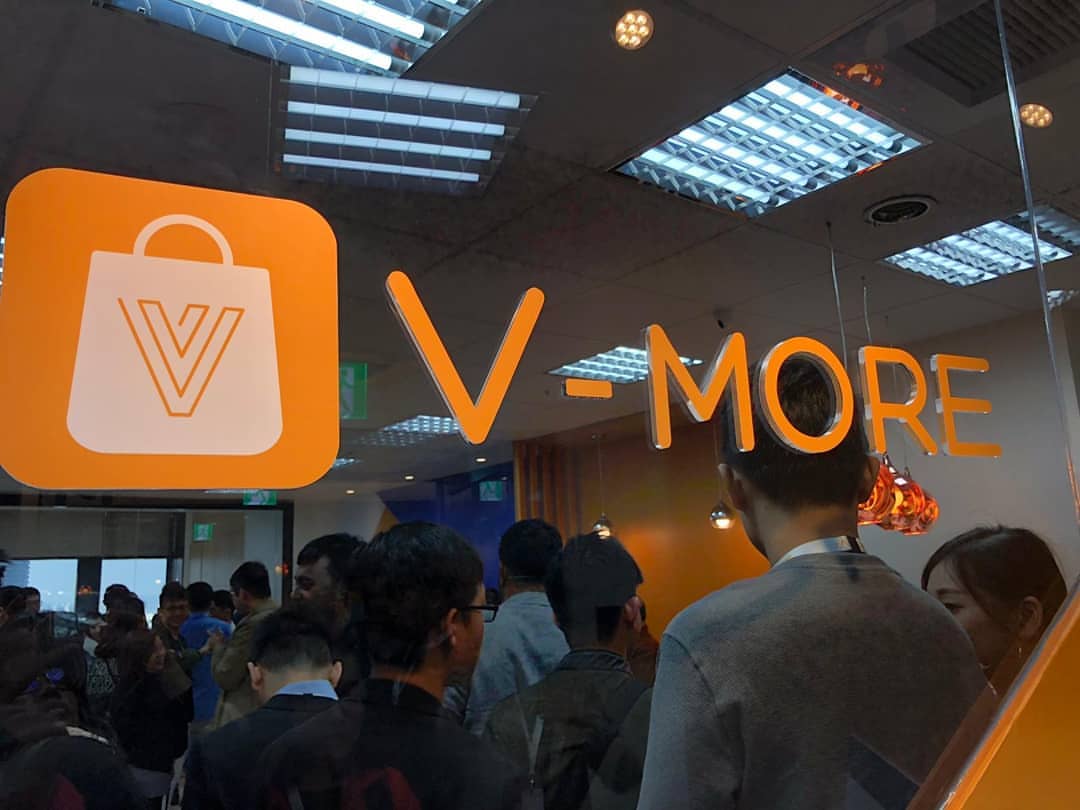
    V-MORE, an e-commerce supply chain management platform, has revealed its intention of expanding into Thailand.

    V-MORE aims to recruit new Thai e-commerce merchants as part of its expansion strategy and has rolled out onboarding programs for new merchants and users.

    V-MORE is a one-stop marketplace where consumers can shop and be rewarded at over 500 marketplace and shopping sites including leading online brands, hotel and flight booking sites, technology as well as food and beverages merchants. Thai merchants can participate in its e-commerce program and increase their exports to other countries in Asia and beyond.

    “We are pursuing a plan of expansion and hope to achieve revenue growth through mass adoption by users and merchants in our ecosystem. Thailand is fast becoming the leading e-commerce market, and we seek to increase our user and merchant base through user incentive programs, brand awareness and marketing programs,” said Sir Eldee Tang, CEO and Founder of Noble Vici Group.

    According to research, there are more than 57 million internet users in Thailand who are well-versed with digital technologies, mobile and e-commerce. The market is valued at $3.5 billion and is expected to generate revenue growth rate of 13.2% annually, reaching $5.8 billion by 2022.

    “We look forward to new local merchants to come on board our platform and welcome sellers and buyers to experience the online marketplace for the first time,” Eldee added.

  • Qualtrics Announces New Industry-Leading Data Privacy and Governance Capabilities

    Qualtrics Announces New Industry-Leading Data Privacy and Governance Capabilities

     Qualtrics, the leader in experience management, announced a new suite of industry-leading data protection and governance capabilities to help organisations comply with the latest global data protection and security policies. XM Controls will allow XM programme managers to manage users, permissions, data, compliance, security and costs as they build Customer, Employee, Product and Brand Experience solutions on the Qualtrics XM Platform™.

    The new capabilities will help organisations standardise the collection of experience data (X-data) — the opinions, beliefs, emotions and sentiments that people have about their experiences with the organisation.

    A recent Qualtrics study of data privacy professionals found that 65% of all organisations use multiple survey tools and 45% of these organisations don’t even know how many survey accounts exist within the organisation.  This fragmentation leads to data silos, security and compliance risks and disjointed customer experiences.

    As organisations look to close experience gaps, we are seeing a wave of CIOs and IT leaders mandate the breakdown of X-data silos and institutionalise a standard governance model for managing their customer, employee, brand, and product experiences,” says Zig Serafin, President of Qualtrics. “XM Controls provide IT leaders the confidence to standardise on the Qualtrics XM Platform, enabling them to seamlessly manage thousands of employees collecting, analysing and acting on X-data across the organisation.” 

    New suite of industry-leading XM Controls include:

    Admin Dashboard – Qualtrics has reimagined the Admin centre with a series of new, intuitive reports that provide actionable insights to Qualtrics admins for monitoring the health of an organisation’s XM deployment. The reports are built around usage, consumption, activity and user engagement – making it easy for admins to drill down into specific areas, flag violations and take immediate action.

    Access Controls – Qualtrics now makes it easy for organisations of any size to centralise X-data on a single platform. With new access management capabilities announced today, IT leaders can enable their employees to sign up for a Qualtrics account through a personalised, self-enrolment workflow while managing permissions at scale.

    Data Controls – Infosec and compliance leaders can now govern all data collection and user management from one place, helping them stay in compliance with their internal and external data handling requirements. Data Controls include:

    • XM Directory acts as a single system of record of all individuals providing X-data. With updated XM Directory settings, admins can govern all respondent interactions and control contact frequency across all feedback channels from a centralised admin console.
    • GDPR One-Touch Data Deletion makes it easy to service GDPR Right to Erasure requests by locating and deleting a data subject’s surveys, responses, tickets and contact information. This saves data protection officers and IT leaders the intensive effort of locating and cleaning customers’ personal data from different locations.
    • Sensitive Data Policy helps organisations manage compliance with their data privacy regulations by setting up Data Loss Prevention (DLP) controls for handling sensitive X-data. Using admin policies and machine learning, these controls allow admins to prevent the collection of sensitive X-data and detecting, notifying and redacting any sensitive data collected on the Qualtrics XM Platform.

    Cost Management – With a new set of capabilities around resource tagging, Qualtrics enables business and IT leaders to easily meter and monitor consumption and track it back to the specific user, team, department or project. This makes it easy for IT to allocate costs for internal chargebacks, removing the burden of pooling budgets.

    Security Controls – Announced in 2018, the security controls allow Qualtrics admins to set up security policies governing their XM deployments – from multifactor authentication to account lockouts to password strength management.

    Qualtrics Security Certifications


    Qualtrics is the only experience management provider to hold three of the most important security accreditations – FedRAMP, ISO 27001 and HITRUST, to meet the security requirements of the most highly regulated industries and organisations.

  • Telenor Pakistan, is celebrating its 14th anniversary with a renewed commitment to empowering Pakistan

    Telenor Pakistan, is celebrating its 14th anniversary with a renewed commitment to empowering Pakistan

    Pakistan’s leading telecom and digital services provider, Telenor Pakistan, is celebrating its 14th anniversary with a renewed commitment to empowering Pakistan. Since the beginning of its commercial operations in 2005, the company has emerged as the second largest cellular operator in the country with 44 million strong and growing customer base and 28% share in the Pakistani telecom market. Telenor Pakistan has also become the leader of ICT-powered digital transformation in the country.

    Telenor Pakistan’s journey comprises many industry first initiatives and benchmarks including the country’s first and foremost mobile banking service, Easypaisa, best-in-class data and broadband services, multiple-award winning digital solutions for agriculture and civic rights, Voice Over LTE (VoLTE) enabled network, and the industry’s first and only 4.5G service, to name a few. The company recently established its new headquarters in Islamabad that is built to induce innovation and creativity into solutions for the customers. Since its inception, Telenor Pakistan has taken a frontrunner position in building and developing a digital ecosystem in Pakistan and is a key enabler of the country’s national digital agenda.

    Throughout its operations, Telenor Pakistan has ensured that its purpose of ‘connecting people to what matters most to them’ is fully integrated to its products and services along with ways of doing business. Keeping sustainability a priority in all business processes and policies, Telenor Pakistan’s solutions are enabling socioeconomic growth and development in the country which is reflective of the company’s commitment towards giving more power to its customers through innovative digital connectivity.

    “Since the beginning, Telenor Pakistan has been a strong proponent of technology being the answer to socioeconomic challenges,” said Irfan Wahab Khan, CEO Telenor Pakistan. “We have always been on the lookout for new ways to extend the benefits of technology not only to our customers, but to millions of Pakistanis who are yet to be digitally and financially included. With proliferation of mobile phones, we realized there’s no better way to empower them than leveraging the strong tele-density in the Pakistani market. That is when our digital interventions to empower our society shifted gears and today we lead the industry with disruptive solutions in agriculture, civic rights, IoT, emerging solutions in entertainment, and more. This is only the start of an exciting journey ahead,” he added.

    During the past 14 years, Telenor Pakistan has powered the country’s digital ecosystem using a multilateral approach that includes continuous increase in network footprint, innovative products & services, and making connectivity affordable. Besides ensuring best-in-class services and expanding our network to underserved and unserved areas, Telenor Pakistan’s portfolio of affordable data devices and services is enabling accelerated digital uptake in the country. Initiatives like Telenor Velocity, Youth Forum (TYF) and Ignite encourage a sustainable entrepreneurial mindset across the country and within Telenor Pakistan.

    Telenor Pakistan has made substantial contributions in the form of investment in the country that include over $3.5 billion in spectrum and infrastructure, over $2.5 billion in the national exchequer, and over $70 million in the new Islamabad HQ. Telenor Pakistan’s impact on the society has also been significant with over 1,600 direct jobs, enablement of the wider economy, and measures for sustainability in the supply chain. The impact that the company’s digital interventions are making in areas like financial services, agriculture, and ensuring easy access of civic rights through digital birth registration is redefining sustainability and setting new standards.

    “We thank Pakistan and millions of Pakistanis for choosing us as their preferred telecom and digital solutions provider,” said Irfan Wahab Khan, CEO Telenor Pakistan. “On our 14th anniversary, we pledge to continue serving Pakistan by supporting our national inclusion agenda, being a gateway to the latest technological innovations and creative solutions to meet our customers’ needs, and giving them more reasons to love Telenor. We are here to stay and our commitment to empowering Pakistan only gets stronger with each passing year. With continued support from the government and our cherished customers, we are on the road to achieving greater milestones in the coming times.”

  • Telenor Myanmar extends non-stop roaming to Malaysia, Singapore

    Telenor Myanmar extends non-stop roaming to Malaysia, Singapore

    Telenor Myanmar has expanded its unlimited international data roaming service to Malaysia and Singapore, one month after the launch of the new service in Thailand.

    The company’s non-stop data roaming pack offers unlimited data in the three international markets for total fees of 999 kyats ($0.65) for three days of service. Speeds are uncapped for the first 1GB per day, and then shaped to 512kbps.

    Prepaid and postpaid customers can activate the service on the MyTelenor APP, sending a message to a dedicated number, or dialing a different number.

    “We are amazed by the support we have seen on our latest roaming product for visitors to Thailand. So we decided to extend this popular service to Malaysia and Singapore which we know as the other two most frequently visited countries in Southeast Asia,” Telenor Myanmar CMO Amaresh Kumar said.

    “We have made international roaming affordable for everyone and we welcome our customers to experience the only worry-free data roaming packs that users can get in Myanmar.”

    Thanks to the connections of parent company Telenor from Norway, Telenor Myanmar now offers roaming services with 171 partner operators in 125 countries, with its 4G roaming service currently available in China, Thailand, Malaysia, Singapore, Japan, UAE, Canada, Macau, Taiwan, New Zealand, Sweden, Belgium and Norway.

    Meanwhile subscribers to 227 operators from 134 countries can use their overseas SIMs with the Telenor network in Myanmar.

  • SK Telecom builds 5G mobile edge computing open platform

    SK Telecom builds 5G mobile edge computing open platform

    SK Telecom unveiled its mobile edge computing (MEC) open platform, which it says can enhance response times in 5G data communications. The operator plans to open up its MEC platform to enterprise customers to enable them to offer new services.

    MEC, which will be used in 5G networks to deliver ultra-low latency data, enables operators to cut down on latency by installing tiny data centers at 5G base stations. SK Telecom says MEC can cut latency by 60%. Applications such as AR/VR services, cloud gaming services, autonomous driving and fleet management, and real-time live broadcasting will all make use of MEC in 5G networks.

    “By opening up the ‘5G Mobile Edge Computing Platform’, SK Telecom will secure the basis for expanding the MEC-related ecosystem and accelerating the release of 5G services,” said Park Jin-hyo, CTO of SK Telecom, in a statement. “SK Telecom will join hands with diverse companies throughout the globe to boost the adoption of MEC-based services.”

    SK Telecom is releasing an API that enterprise customers can use to develop MEC-based 5G services. The company is betting enterprise customers can use the platform to improve efficiency and QoE by reducing latency in communications. A smart factory, for example, can use the MEC platform and a 5G network to increase response time of manufacturing robots.

    At Mobile World Congress this year, the operator teamed up with MobiledgeX to demo a MEC-based industrial AR service. SK Telecom is also working with the Telecom Infra Project (TIP), the Facebook-backed tech initiative, to build out an ecosystem for MEC developers.

    SK Telecom also successfully conducted a 4G-5G network dual connectivity test with Samsung, using Samsung’s E-UTRAN New Radio Dual Connectivity (EN-DC) tech, which is based on the 3GPP 5G NR standard.

    The test checked network device interoperability using dual connectivity technology on 4G and 5G networks using Samsung’s Galaxy S10 5G smartphone and its virtual core (vCore) product that supports 4G and 5G simultaneously. The companies were able to achieve data rates of 2.65 Gbps on a 5G smartphone, with 1.5 Gbps coming from 5G using 3.5-GHz frequency and 1.15 Gbps coming from LTE using 1.8-GHz, 2.1-GHz, and 2.6-GHz frequencies.

    SK Telecom says the technology can be used to improve transmission data speed by 80% by leveraging the 4G and 5G dual connectivity.

  • China Unicom profit spikes 457.8% in 2018

    China Unicom profit spikes 457.8% in 2018

    China Unicom has reported a more than five fold growth in net profit for 2018 as a result of strong data revenue growth and benefits from the company’s mixed ownership reform program.

    The annual results show a 457.8% spike in net profit to 10.19 billion yuan, contributing to what the operator called a “V-shaped rebound in profit” following its financial woes in 2016, when the operator’s annual profit shrank by nearly 95%.

    Operating revenue grew 5.8% to 290.88 billion yuan, with service revenue up 5.9% to 260.68 billion yuan.

    Mobile service revenue for the year grew 5.5% from the prior year to 165.1 billion yuan, with mobile data revenue jumping 13.7% to 104.8 billion yuan.

    China Unicom meanwhile recorded total 4G net additions of 45.05 million for the year, taking its total 4G subscriber base to 220 million. This represents 70% of the operator’s total mobile customer base, an eight percentage point increase from 2017.

    Total fixed broadband subscribers meanwhile increased by 4.3 million to more than 80 million, but fixed broadband revenue declined to 42.3 billion yuan due to intense competition and ongoing mobile substitution.

    The operator’s results represent the first full year of implementation of the mixed ownership reform program, which has involved opening up investment in a Chinese mobile operator to private investors for the first time.

    As part of the program, at the direction of the Chinese government, Unicom sold a 35% stake in the company to a group of 14 investors in 2017.

    “Looking ahead, the mixed-ownership reform has powered up the company with differentiated advantages, bringing invaluable opportunities for development,” China Unicom chairman and CEO Wang Xiaochu said.

    He said the company plans to continue to pursue growth based on its “Five New” operating strategy.

    “We intend to unleash more institutional benefits brought by New Governance, activate greater internal vibrancy with New DNA, achieve better efficiency and returns with New Operation, tap into the broader blue ocean with New Energy, and put together greater synergetic advantages with New Ecology.”