Category: Telecom

Retail News Asia is committed to providing both local and global retailers with the latest Telecom & Telco news throughout the Asian market. This on a daily base.

  • Fujitsu wins upgrade contract in US

    Fujitsu wins upgrade contract in US

    Three wins for three vendors plus some quantum security worth a look:

    Fujitsu Network Communications is helping US-based Midwest Fiber Network with a network upgrade. MFN, which is a consortium of nine RLECs in Iowa, is deploying 200GbE based on Fujitsu’s 1FINITY S100 layer 2 switch and Virtuora Network Control Solution. The upgrade will boost capacity for MFN’s member companies, both in an immediate sense and in terms of future expansion.

    Nokia has won a deal down in East Africa. Liquid Telecom’s Kenya subsidiary has announced a two year deal with Nokia that will see it deploy a 100G DWDM regional network. Initially that will mean 500Gbps connectivity to data centers and landing stations in not just Kenya but also inland to Rwanda, Uganda, and DR-Congo. The upgrade will be powered by Nokia’s 1830 Photonic Service Switch.

    Juniper Networks has announced an expansion of its relationship with LINE Corporation, making it the company’s networking vendor of choice. LINE’s instant messaging application has some 164M active monthly users around the Far East. The infrastructure supporting that app now includes Juniper’s MX960 routers in Tokyo, Osaka, and another unspecified overseas location.

    And on Tuesday ADVA said its FSP 3000 is part of the UKQNtel transport network.  Along with BT, ID Quantique, and the universities of Cambridge and York, the company has put together a quantum key distribution link over a 120km route between BT’s Adastral Park hub and Cambridge.  ADVA’s Ensemble Controller is managing the infrastructure as well.

  • HKBN, TVB extend partnership to enterprise segment

    HKBN, TVB extend partnership to enterprise segment

    Hong Kong fixed line operator HKBN and broadcaster TVB have expanded their strategic partnership to the enterprise market, offering business customers coupons offering discounts on each other’s services bundled with a contract.

    Under the collaboration, business customers of both companies will be eligible for discounts worth up to 50% of their total service contract for digital marketing and telecommunications services respectively.

    For example, enterprises subscribing to dedicated HKBN solutions with a contract sum of HK$100,000 ($12,739) will receive a coupon worth up to HK$50,000 for settling advertising fees on the myTV SUPER and Big Big Channel marketing channels.

    Likewise, subscribers to the marketing and advertising plans will be granted a coupon worth up to 50% of the value towards newly subscribed HKBN enterprise solution services.

    The myTV SUPER OTT platform is the largest in Hong Kong with over 7.3 million registered users. TVB’s ad booking manager allows businesses to advertise on the channel for a fee as low as HK$1,000.

    Big Big Channel meanwhile provides on-stop video marketing solutions, ranging from video planning and production to delivering contents to the Big Big Channel app.

  • SP Telecom offers direct connection to Google Cloud

    SP Telecom offers direct connection to Google Cloud

    SP Telecom, a joint venture between ST Engineering and Singapore Power group, has become the first network service provider in Singapore to announce support for Google Cloud Partner Interconnect.

    With the agreement SP Telecom, a fiber network provider which builds its network using the passive infrastructure of Singapore’s national power grid, will allow customers to connect to Google Cloud Platform globally.

    The connectivity will be enabled by SP Telecom’s Cloud Interconnection Service to enable direct connectivity to Google Cloud, while taking advantage of SP Telecom’s network infrastructure.

    SP Telecom will provide direct connectivity from customers’ facility to Google Cloud’s points of presence at the Equinix SG3 or Global Switch Singapore data centers.

    SP Telecom VP of product management and business line IT Tan Choon Chai said SP Telecom’s network infrastructure being built on diverse paths that run along the Singapore power grid provides  a reduced risk of network interruption from a power outage or active equipment failure.

    “Today’s rapidly digitizing environment has called for businesses to turn to cloud platforms to support their business needs. SP Telecom is pleased to partner with Google Cloud to bring more flexible and convenient connectivity options to help enhance business operations,” he said.

    “Coupled with our in-built network diversity capabilities, customers can be assured of a network infrastructure which provides resilient network connectivity capable of withstanding risks of network interruption.”

  • Docomo to expand overseas 5G trials

    Docomo to expand overseas 5G trials

    Japan’s NTT Docomo has arranged with partners in the US, Israel and Japan to collaborate on 5G trials in Guam, with the aim of verifying 5G-compatible systems and equipment for business solutions.

    Under the collaboration, NTT Docomo will provide the 5G test network, while solution partners will provide 5G-based products and services for use by testing by local field partners.

    These field partners comprise the electricity utility Guam Power Authority, the University of Guam, local wedding services provider ARLUIS Wedding Guam and United Airlines Guam.

    The Guam Power Authority will test 5G VR training solutions provided by Israel’s Humaneyes Technologies, as well as 5G monitoring with AI technology developed by Aegis Systems.

    The University of Guam office of IT will test a 5G AI-based robot system for identifying examinees from PLEN Robotic, and 5G monitoring with AI technology from US-based Smart Home Sentry.

    ARLUIS Wedding Guam will test a 5G multi-screen video live streaming solution from AMATELUS, while the United Airlines Guam Marathon Organizer will test a series of 5G drones, tourism, sports photo upload and 5G robotics solutions.

    Docomo also announced that it has opened a new 5G Open Lab in Guam, its first center outside of Japan for testing and verifying 5G technologies.

    A number of Japanese and overseas companies have already announced an intention use the facility to collaborate on cross-border 5G testing in partnership with Docomo.

  • LTE device ecosystem grew 26% in the last year

    LTE device ecosystem grew 26% in the last year

    The LTE device ecosystem has expanded by 26% over the past year to reach 13,700 devices, according to the Global Mobile Suppliers’ Association (GSA).

    The LTE Ecosystem report published by the industry body found that devices have been launched by 705 manufacturers, including devices supporting the FDD LTE and TD-LTE standards and the LTE-related cellular IoT standards LTE Cat-M1 and narrowband IoT.

    Meanwhile the nascent 5G device ecosystem is taking shape. As of mid-March, the GSA had identified 34 announced devices – including regional variants, including 11 smartphones.

    This is an improvement on the 22 5G devices identified by mobile industry consultancy Hadden Telecoms in a report issued earlier in the month

    According to the GSA, devices have been announced across seven form factors – phones, hotspots, indoor customer premises equipment, outdoor customer premises equipment, modules, dongles or adapters, and USB terminals.

    The industry body said it expects the global 5G device ecosystem to grow rapidly as more commercial 5G services are launched.

  • Singtel targets Millennials with all-digital mobile plan

    Singtel targets Millennials with all-digital mobile plan

    Singtel has announced the launch of an all-digital mobile service plan targeted at technology-savvy Millennial customers.

    The new product, GOMO Mobile, offers functionality including immediate online sign up and same-day SIM card delivery, 24/7 live chat for customer service inquiries and a dedicated customer care app.

    The S$20 GOMO Mobile plan includes 20GB of data, 200 minutes of talktime and 200 SMS. The no-contract plan is based on a 30-day payment cycle, and additional allocations can be instantly purchased using a debit or credit card.

    As part of its strategy of targeting Millennials, Singtel is also offering lifestyle rewards such as discounts at selected hipster restaurants and cafes, and plans to expand these rewards to include ride hailing, entertainment events and activities and travel promotions.

    Singtel is also offering a GOMO Travel SIM that provides 3GB of data for 10 days across eight overseas destinations – Australia, Hong Kong, Macau, Taiwan, Indonesia, Malaysia, Thailand and Philippines.

  • 211 operators globally investing in 5G

    211 operators globally investing in 5G

    At least 211 operators across 87 countries are investing in 5G, according to statistics compiled by consultancy company Hadden Telecoms.

    Operators investing in 5G are at a variety of stages, ranging from network deployments, to technology testing, demonstrations and pilot trials.

    To date, 15 operators have commercially launched 5G services, including Telstra and Optus in Australia, which are offering fixed wireless 5G services on the 3.6-GHz band. Vodafone Australia and the market’s national broadband network operator NBN Co are also investing in 5G.

    South Korea’s KT, LG U+ and SK Telecom meanwhile switched on their 3.5-GHz 5G networks last year, initially for enterprise customers only, and are planning to simultaneously launch commercial services for consumers shortly.

    The list of operators investing in 5G in Asia Pacific also includes China’s big three operators China Mobile, China Telecom and China Unicom, Hong Kong’s 3 Hong Kong, China Mobile Hong Kong, HKT and SmarTone, and India’s Bharti Airtel, BSNL and Reliance Jio Infocomm.

    In Japan, KDDI, NTT Docomo, Rakuten Mobile and Softbank are spending heavily on 5G, while Malaysia’s Celcom, DiGi, Maxis, Telekom Malaysia and U Mobile and the Philippines’ Globe and PLDT are also trialing the technology.

    Singapore’s M1, Singtel and StarHub, Sri Lanka’s Dialog Axiata and Mobitel, Taiwan’s APT, Chunghwa Telecom, Far EasTone and Taiwan Mobile, Thailand’s AIS, Dtac, TOT and TrueMove and Vietnam’s Viettel are also at various stages of 5G development.

    “Operators globally are preparing for the large-scale introduction of 5G, the first services have launched, and the devices ecosystem is rapidly building and poised for the imminent scale availability of a range of smartphone models,” Hadden Telecoms director Alan Hadden said.

    “Dozens more operators are expected to launch their respective 5G services in the coming 12 months.”

  • 5G crucial to Vietnam’s development

    5G crucial to Vietnam’s development

    Vietnam’s deputy prime minister Vu Duc Dam has thrown his support behind the adoption of 5G in the nation, stating that 5G will be crucial to Vietnam’s development.

    During the recent ASEAN Conference on 5G, the deputy prime minister acknowledged that the government will need to proactively support businesses to ensure they are more confident in investing in 5G, the official newsletter of the Communist Party of Vietnam.

    During the conference, Dam said the technology will not only provide major speeds improvements but involve changes in global production methods. He suggested that participants use the Vietnam-organized conference to discuss the pathway to 5G development in the ASEAN region.

    Vietnam aims to become one of the world’s early adopters of 5G. Several Vietnamese operators have been allocated licenses to trial the technology in Hanoi and Ho Chi Minh City ahead of a commercial launch.

    Also at the event, Vietnam’s ICT minister Nguyen Manh Hung also stated that 5G will be the most vital part of the infrastructure required for the future digital economy.

  • Broadband access equipment revenue hits $3.4b in Q4

    Broadband access equipment revenue hits $3.4b in Q4

    The market was bullish in last year’s fourth quarter for broadband access equipment revenue, according to a report, but Converged Cable Access Platform (CCAP) spending declined.

    Dell’Oro Group announced on Monday that broadband access equipment revenue hit $3.4 billion, growing 8% year over year in last year’s fourth quarter compared to the same quarter in 2017.

    Increased shipments of GPON optical line terminals (OLTs) and DOCSIS 3.1 customer premises equipment (CPE) counteracted a decline in CCAP spending.

    “FTTH deployments globally continue to show strength,” said Dell’Oro’s Jeff Heynen, research director, broadband access and home networking, in a prepared statement.  “Both 2.5 Gbps GPON and 10 Gbps EPON equipment marked year over year increases, particularly in China. The gains on the telco side helped to offset surprising weakness in cable CCAP spending, as MSOs delay new capacity purchases while they determine how to move forward with distributed access architectures (DAA).”

    Among other capabilities, DAA will give the cable industry a better starting point for virtualized networks and software-defined networking. At last year’s SCTE Cable-Tec Expo, SCTE President and CEO Mark Dzuban said during a panel discussion that the cable industry needed to do a better job of defining DAA in order to launch it at scale.

    Total cable access concentrator revenue was down 18% year over year, mainly due to a slowdown in CCAP license purchases in North America. Cisco, Arris, Casa Systems and Harmonic are among the leading CCAP vendors.

    The total number of DSL port shipments grew 16% year over year with VDSL ports increasing 13% and G.fast ports increasing by a whopping 232%, according to Dell’Oro.

    PON OTL shipments grew 6% over the same timeframe, driven by strong demand for 2.5 Gbps GPON units in China and across the entire Asia-Pacific region.

    Overall, Dell’Oro’s fourth-quarter 2018 Broadband Access Quarterly report said that 2.5 Gbps GPON, 10 Gbps EPON and Gfast equipment all saw increased spending in the quarter.

  • Telenor Pakistan and Alibaba Cloud come together to provide cloud-based services

    Telenor Pakistan and Alibaba Cloud come together to provide cloud-based services

    Telenor Pakistan, the country’s leading telecom and digital services provider has partnered with Alibaba Cloud, the cloud computing arm of Alibaba Group, to become the authorized distributor of Alibaba Cloud products and services in Pakistan.

    The signing took place at Telenor Pakistan headquarters ‘345’ where Dr. Alex Li, General Manager, South Asia of Alibaba Cloud and Sardar Mohammad Abubakr, Chief Digital & Strategy Officer at Telenor Pakistan, sealed the partnership.

    Through the partnership, Telenor Pakistan will be selling Alibaba Cloud’s suite of business solutions to local enterprises across the country. The collaboration will allow customer organizations to protect their business critical applications and data with world-class security as they choose to migrate to Alibaba Cloud.

    In today’s increasingly digital world and exploding data needs, organizations are fast moving to cloud services instead of buying and managing physical servers to have their data management and security needs met. Processing data in the cloud also means that as the business grows, it can keep up with increased traffic.

    Alibaba Cloud provides cloud computing products in computing, database management, networking, security, and storage that can be deployed globally. The service delivers superior results in all product capabilities ranging from computing, user & network management, and security & compliance to scaling, developer services, enterprise integration and management tools.

    Telenor Pakistan’s partnership with Alibaba Cloud will provide a gateway to facilitate the cloud market in the country and in a fast evolving landscape, enable businesses to robustly manage their data management and digital transformation needs” said Sardar Mohammad Abubakr, Chief Digital & Strategy Officer at Telenor Pakistan.

    “We are happy to partner with one of Pakistan’s top digital service providers for distribution of our suite of cloud products and services in the country,” said Dr. Alex Li, General Manager, South Asia of Alibaba Cloud. The partnership will further our vision of fostering the development of cloud market in Pakistan and help the country move faster towards its digital transformation goals,” he added.

    Through this partnership Telenor Pakistan will be providing Alibaba Cloud’s services exclusively to its business customers to further their scale, accuracy in analytics and business security.


    # # #


    Press Contact

    Anam Abbas

    Corporate Communications, Telenor Pakistan

    [email protected]


    About Telenor Pakistan

    Telenor Pakistan is 100% owned by Telenor Group and has a footprint spanning throughout the country. With a subscriber base of over 44 Million, it is the second largest mobile operator in Pakistan. Telenor launched its operations in Pakistan in 2005 and has a workforce of over 1,600 employees. For more information, please visit: www.telenor.com.pk


    About Alibaba Cloud

    Established in 2009, Alibaba Cloud (www.alibabacloud.com), the cloud computing arm of Alibaba Group, is among the world’s top three IaaS providers, according to Gartner, and the largest provider of public cloud services in China, according to IDC. Alibaba Cloud provides a comprehensive suite of cloud computing services to businesses worldwide, including merchants doing business on Alibaba Group marketplaces, start-ups, corporations and government organizations. Alibaba Cloud is the official Cloud Services Partner of the International Olympic Committee.

     

  • Telenor Pakistan CEO to lead Telenor Group’s Emerging Asia Cluster

    Telenor Pakistan CEO to lead Telenor Group’s Emerging Asia Cluster

    Telenor Group today announced that effective 1 April, 2019, Irfan Khan, CEO of Telenor Pakistan, will assume additional leadership role as Telenor Group Executive Vice President and Cluster Head for Emerging Asia, joining Telenor Group’s Executive Management Team.

    “Irfan Khan is a valued leader within Telenor Group and has an accomplished history at Telenor Pakistan. I am pleased that he will take lead over our important growth markets in the Emerging Asia Cluster, in addition to retaining his role as Chief Executive Officer of Telenor Pakistan,” says Sigve Brekke, President and CEO of Telenor Group. “I am confident that Irfan will continue to lead our dedicated and talented teams to success, connecting the cluster’s more than 130 million customers with services that matter to them and creating value for our shareholders. I’d like to also thank Irfan’s predecessor in this role, Petter-Børre Furberg, for his leadership and achievements across our Asia region over the last several years.”

    In becoming Head of Telenor Group’s Emerging Asia Cluster, Irfan Khan will join Telenor Group’s Executive Management Team and will report directly to Telenor Group President and CEO, Sigve Brekke. Petter-Børre Furberg will become CEO of Telenor Norway and step out of Telenor Group’s Executive Management.

    Irfan Wahab Khan was appointed Chief Executive Officer of Telenor Pakistan on 1 August 2016. He had served in the position of Deputy CEO and Chief Marketing Officer (CMO) of Telenor Pakistan since April 2013. He has been with Telenor for 14 years and was the first employee in Telenor Pakistan when he started as Executive Vice President and Head of Corporate Affairs Division in 2004. Since then he has served in various positions within Telenor Group both in Asia and Europe, including Vice President Devices and Vice President – Head of Asia Distribution. Mr. Khan is also a Board Member of Telenor Microfinance Bank.

  • AI-controlled on demand bus services planned in Japan

    AI-controlled on demand bus services planned in Japan

    Japan’s Mitsubishi Corporation and Nishi-Nippon Railroad Co. have established a new joint venture to provide commercial on-demand-bus (ODB) transit services controlled by artificial intelligence.

    The joint venture, Next Mobility, will commence operations in April 2019 (as planned) in Island City, which is located in Fukuoka City’s Higashi-ward.

    Lacking profitability and drivers, many of Japan’s public passenger road transportation (PPRT) providers are struggling to develop efficient and sustainable services. Island City is undergoing a wave of development, and with more residential, commercial and port facilities going up, traffic is getting heavier. There are concerns in the area about parking shortages, worsening traffic congestion and a lack of public transportation.

    To help address these concerns, the AI-controlled ODB services provided by Next Mobility JV are being rolled out in Island City on a one-year, trial basis. The purpose of the trial will be to verify these services’ effectiveness and commercial feasibility. By improving public transit and making it more readily available to citizens, the trial hopes to encourage people to leave their cars at home and help to build more efficient and sustainable transportation networks

    AI-controlled ODB is a new concept of public bus transit services. The AI generates routes automatically and in real time based on passenger requests submitted through smartphone apps. It uses deep learning to accumulate operational data on rider destinations and traffic conditions, enabling the buses to run more efficiently the more they are used. Passengers can also use their smartphones to book rides and can even pay with their credit cards. The booking and dispatching system has been developed by Spare Labs Inc., a Canadian Company.

    Nissan Motors has agreed to sponsor the project and provide its ten-passenger Nissan Caravans for the trial. They will be driven by taxi drivers dispatched from Fukuoka Nishitetsu Taxi Fukuoka City and companies located in Island City will also be supporting the project by promoting its use throughout the area.

    MC and NNR hope that this ODB service will ultimately help to realize a model for sustainable, efficient and seamless public transit, servicing both Island City and other areas throughout Japan.

  • BSNL to offer carrier billing for Amazon Prime

    BSNL to offer carrier billing for Amazon Prime

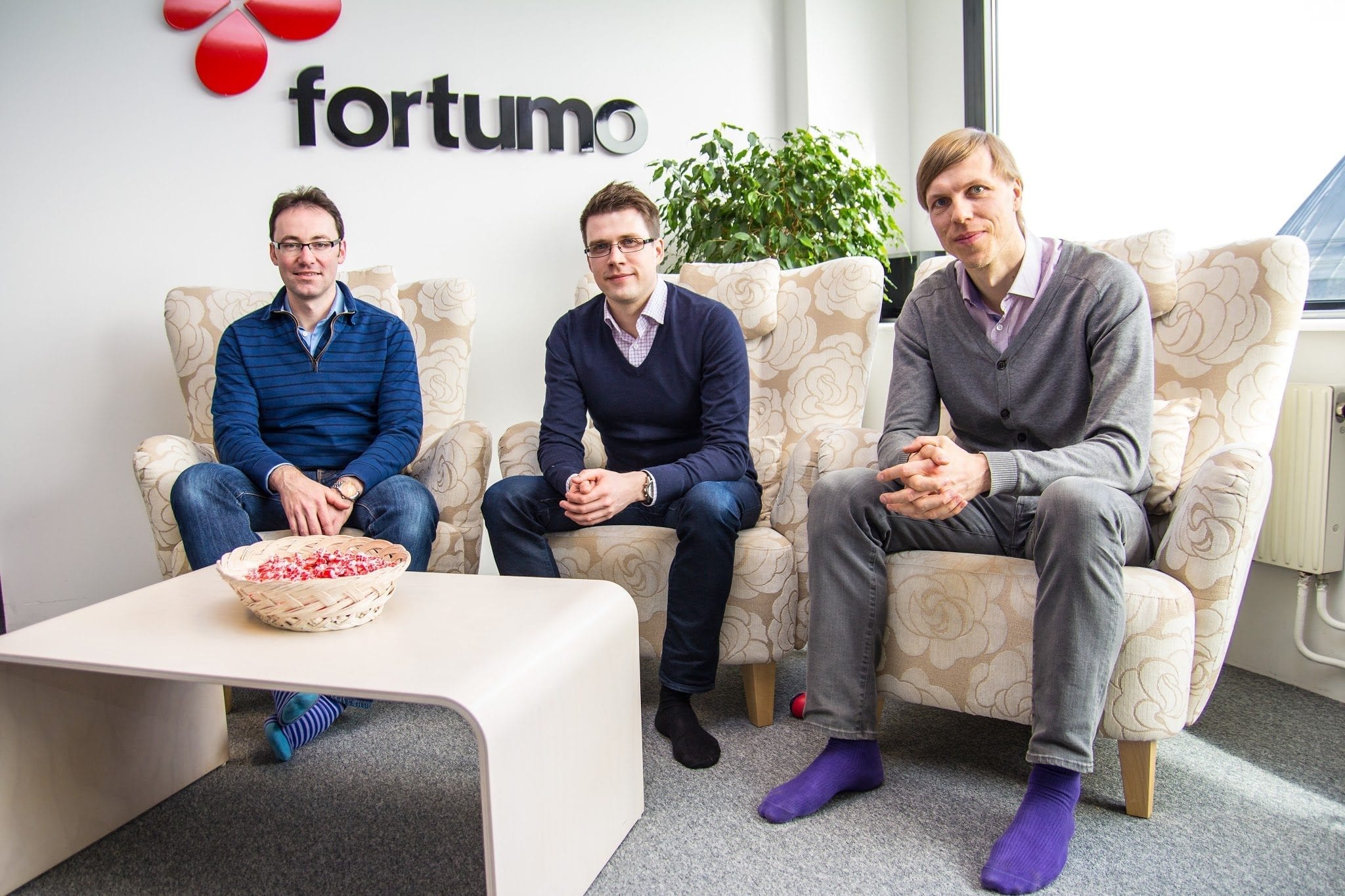
    Mobile technology company Fortumo is providing its Trident Bundling Platform for India’s BSNL to help the state-owned operator distribute Amazon consumer services in the market.

    With the integration, BSNL is offering subscribers one years’ subscription to the Amazon Prime shopping and entertainment platform on certain of its plans.

    The Trident Bundling Platform is designed to allow operators to establish and expand partnerships with OTT service providers by allowing the delivery of digital products packaged with mobile services to support carrier billing.

    OTT companies need only integrate with the platform once, and can then establish multiple bundle partnerships across a variety of potential commercial scenarios.

    Fortumo VP of global business development Andrea Boetti said such operator partnerships are ideal for markets such as India, where smartphone penetration in the country is above 35% but only 3% of the adult population owns a credit card.

    “Interest towards VOD services is today growing the fastest in South-East Asia, Europe and the Middle East. Local telecommunication companies and their marketing capabilities offer the best way for VOD providers to engage this audience,” he said.

    “Fortumo’s Trident supports VOD providers in getting these new users on board as quickly as possible.”

  • Telstra awarded 131 cell sites under Black Spot program

    Telstra awarded 131 cell sites under Black Spot program

    Australia’s Telstra has announced it has been awarded 131 sites as part of the fourth round of the government’s Mobile Black Spot program.

    The operator will deploy a mixture of new mobile base stations and small cells at the 131 locations, and will contribute $23.3 million of the $55.6 million co-investment required to fund the new sites, with the remainder coming from the federal and state governments.

    The new sites will include 49 in New South Wales, 23 in Western Australia, 22 in Victoria, 19 in South Australia, and 18 in Queensland.

    Telstra said it has so far deployed more than 550 new mobile base stations across regional and rural Australia as part of the Mobile Black Spot program.

    Meanwhile the operator expects to have spent a total of around A$8 billion ($5.66 billion) in total mobile investment over the five years ending in June, with nearly A$3 billion of this spent in rural areas.

    “Our investments will help towns and communities relying on mobile connected devices more than ever before,” Telstra CEO Andy Penn said.

    “The partnerships we have formed with Governments at all levels are providing connectivity and services to many areas of Australia where it was otherwise uneconomical to do so.”

    He said Telstra’s mobile network now spans nearly 10,000 base stations covering more than 2.5 million square kilometers.

    The announcement came shortly after the government revealed it has allocated a further A$160 million for the Mobile Black Spot program, which has now been extended to a further two rounds.

  • Huawei, ZTE consider local manufacturing in India

    Huawei, ZTE consider local manufacturing in India

    Both Huawei and ZTE are evaluating plans to establish local manufacturing facilities in India to avoid the 20% tariff imposed on the import of telecommunications equipment.

    ZTE is carefully evaluating the feasibility of local manufacturing in India, including of mobile devices, the company’s president of global sales Xiao Ming told.

    If the government offers enough incentives to support a cost advantage, ZTE would love to shift many of its manufacturing factories in India.

    Meanwhile Huawei is progressing a plan to resume Indian manufacturing of telecom equipment and enterprise products, the report states.

    Huawei ceased production from its Indian facilities last year due in part to low demand, but the company is evaluating establishing a new plant for its carrier business and enterprise as a result of the tariffs.

    Meanwhile Ericsson, which already has manufacturing facilities in India, plans to expand these capabilities to commence exports of locally-manufactured equipment to more countries.

    Nokia also manufactures equipment in India, and has developed a local supply chain for components to minimize the 10% duty on imports of components to be manufactured locally.