Category: Telecom

Retail News Asia is committed to providing both local and global retailers with the latest Telecom & Telco news throughout the Asian market. This on a daily base.

  • Telenor appoints Irfan Khan to head the group’s Asia operations

    Telenor appoints Irfan Khan to head the group’s Asia operations

    Telenor Group has appointed Irfan Khan, chief of Pakistan unit, as executive vice president and cluster head for the Norwegian telecom group’s emerging Asia operations, effective from April 1, 2019.

    Khan (pictured) succeeds Petter-Børre Furberg, who will take up a role as CEO of Telenor Norway and move out of the group’s executive management team.

    As a result of the move, Khan will join Telenor Group’s executive management team and report directly to Telenor Group CEO and president Sigve Brekke.

    “I am confident that Irfan will continue to lead our dedicated and talented teams to success, connecting the cluster’s more than 130 million customers,” said Brekke. “I’d like to also thank Irfan’s predecessor in this role, Petter-Børre Furberg, for his leadership and achievements across our Asia region over the last several years.”

    He will also continue as CEO of Telenor Pakistan, a role he assumed in August 2016 following a three-year stint as deputy CEO and CMO of the business.

    Khan has been with Telenor for 14 years and was the first employee in Telenor Pakistan when he started as EVP and head of corporate affairs division in 2004.

    In Asia, Telenor has operations in Pakistan, Thailand, Bangladesh, Myanmar and Malaysia.

    Line appoints founder Jungho Shin as co-CEO

    Japan-based Line announced its founder and “chief wow officer” (CWO) Jungho Shin (pictured) will take up an additional role as co-CEO from April 1.

    As the co-CEO, Shin will now also focus on bolstering the competitiveness of Line’s services and promoting innovation, while Takeshi Idezawa will concentrate on the management, as well as revenue, organizational structure, human resources, and recruitment, the company said in a statement.

    Line said the decision was made during the company’s board meeting and the appointment comes as the company began what it calls its second growth phase this year, moving into new business domains such as fintech, AI and blockchain.

    “By having Idezawa and Shin commit to their respective areas of expertise under this new structure, the aim is to strengthen and enhance Line’s management structure, enable nimbler decision-making, and deliver world-class services that will accelerate Line’s growth, both in Asia and globally,” the company added.

    Shin was appointed as CWO in February. He has been with the company since its start, most recently serving as chief service officer since April 2018 and chief global officer before that.


  • HPE launches cloud advisory service

    HPE launches cloud advisory service

    Hewlett Packard Enterprise has announced HPE Right Mix Advisor, an offering that aims to help businesses develop their hybrid cloud strategies.

    HPE Right Mix Advisor recommends which workloads and applications are ideal to move to public clouds, or keep in private clouds, and how to migrate those workloads to achieve the right mix of hybrid cloud according to each business’s specific need.

    Many organizations find identifying their right mix to be a significant challenge, due to the complexity of their environment and the rate of change in technology and business. HPE said its new advisor aims to be the systematic approach businesses need to develop their hybrid cloud strategies with confidence.

    “IT executives have noted to us that identifying the optimal fit for their individual workloads is one of their top challenges today,” IDC’s Jed Scaramella said. “Past approaches that relied on best practices and manual analysis are now too costly and time consuming.”

    HPE Right Mix Advisor is built upon experience from over 1,000 hybrid cloud engagements, best practices from Cloud Technology Partners and RedPixie, and automated discovery capabilities from iQuate.

    Millions of data points are quickly collected from the customer’s IT landscape, from CMDBs such as ServiceNow, and from external sources such as cloud vendor pricing models. In a recent engagement, for example, nine million IP addresses across six data centres were examined.

    HPE Pointnext experts work with the client’s IT teams to analyze the data using proprietary tooling and placement algorithms. The result is a data-driven recommendation of the right workload placement strategy, as well as a phased plan to get there.

  • Nokia unveils Factory in a Box 2.0

    Nokia unveils Factory in a Box 2.0

    Nokia is showcasing the second generation of the vendor’s Factory in a Box container solution at the 5G Arena during Hannover Messe 2019 in Germany.

    Factory in a Box 2.0 is designed to demonstrate how industry 4.0 solutions for manufacturers can be packed, transported and brought online within hours.

    The solution combines additive manufacturing technologies with augmented and virtual reality and robotics solutions, as well as connectivity using Nokia’s private 4G/5G equipment.

    Meanwhile a semi-automated production workflow has been integrated with Nokia’s Worldwide IoT Network Grid, which is designed to help mobile operators deliver a better global IoT experience to enterprise customers.

    Finally, the solution is designed with a Nokia Digital Automation Cloud, which is targeted at industrial environments large and small.

    “We could tell from the positive feedback we received on the Factory in a Box last year that there is a lot of potential for this concept in the manufacturing industry,” Nokia VP of supply network and engineering Grant Marshall aid.

    “This year, we have raised the bar again, and Factory in a Box 2.0 is now connected to Nokia WING and has Nokia DAC on board, making it even more flexible, secure and efficient.”

  • Huawei profit grows 25.1% Last Year

    Huawei profit grows 25.1% Last Year

    Huawei has reported a solid 25.1% increase in net profit for 2018 despite the continuing political challenges the vendor has been facing in the US and other markets.

    The Chinese vendor reported a net profit for the year of 59.3 billion yuan ($8.83 billion), on the back of a 19.5% increase in revenue to 721.2 billion yuan.

    Sales in the vendors’ core carrier business declined slightly to 294 billion yuan, but consumer business revenue surged 45.1% from 2017 to reach 348.9 billion yuan as Huawei carved out a higher share of the global smartphone market.

    Enterprise revenue also grew 23.8% to 74.4 billion yuan, due to demand for the company’s cloud, big data, AI and IoT solutions.

    Commenting on the results, Huawei rotating chairman Guo Ping appeared confident that the company can weather the impact of decisions by regulators in markets including the US, Australia and New Zealand  to restrict the vendor from providing equipment to segments of their respective markets over national security concerns.

    “Through heavy, consistent investment in 5G innovation, alongside large-scale commercial deployment, Huawei is committed to building the world’s best network connections,” he said.

    “Throughout this process, Huawei will continue to strictly comply with all relevant standards to build secure, trustworthy, and high-quality products. As we work towards this goal, we have been explicitly clear: Cyber security and user privacy protection are at the absolute top of our agenda.”

    He added that the company is “confident that the companies that choose to work with Huawei will be the most competitive in the 5G era, and countries that choose to work with Huawei will gain an advantage for the next wave of growth in the digital economy.”

  • Philippines taps UNDP to accelerate free Wi-Fi rollout

    Philippines taps UNDP to accelerate free Wi-Fi rollout

    The Philippines’ Department of ICT (DICT) has signed a partnership agreement with the United Nations Development Program (UNDP) aimed at fast-tracking the deployment of free Wi-Fi access in public places.

    Under the agreement, the UNDP will provide support for the government’s Pipol Konek – Free Wi-Fi Internet Access in Public Places Project.

    The UNDP will conduct area-based network analysis of target sites, oversee monitoring of project impact, and continue to provide technical training to stakeholders involved in the rollout.

    The UNDP and the DICT will meanwhile jointly take charge of project oversight. The project participants plan to hold workshops and consultative meetings to address the challenges with the rollout and investigate potential solutions.

    The DICT sought the assistance of the UNDP in September last year to expedite the project and aid in the capacity-building initiatives of the companies involved in the rollout. A formal signing ceremony was held last week during the first project board meeting.

    “Today as we set to seal this meeting of minds, the Department is optimistic that our goals of providing free Internet access and promoting knowledge-building among our citizens will soon be realized,” DICT acting secretary Eliseo M Rio Jr said at the signing ceremony.

  • Dominic Barton joins Singtel board

    Dominic Barton joins Singtel board

    Singtel has appointed Dominic Barton (pictured) as an independent director with immediate effect, the Singaporean telco announced Monday.

    Barton is currently global managing partner emeritus of McKinsey & Company. Prior to that he was global managing partner of McKinsey until July 2018, a role he held for nine years. He has also served as chair of the board of Canadian mining company Teck Resources since October, 2018.

    “Dominic brings rich expertise and insights from across a broad swathe of industries, having advised clients in banking, consumer goods, tech and industrials over three decades of consulting,” said Singtel chairman Simon Israel said. “The diversity of his experience will be invaluable as Singtel’s digital transformation takes the group into businesses and partnerships that cut across multiple industries.”

    The Singtel Board now comprises 12 directors: Simon Israel (chairman), Chua Sock Koong (Group CEO), Gautam Banerjee, Dominic Barton, Bobby Chin Yoke Choong, Venky Ganesan, Bradley Horowitz, Gail Kelly, Low Check Kian, Peter Mason, Christina Ong, and Teo Swee Lian.

    HKBN names Elinor Shiu marketing chief for residential services

    Elinor Shiu, CMO, Residential Services, HKBN Group

    HKBN Group has named Elinor Shiu (pictured) as chief marketing officer, residential services.

    In her new role, Shiu will lead the marketing strategies and operations of the group’s residential market business. She has also joined the group’s management committee, overseeing HKBN’s continued growth with six other senior executives, according to a company announcement.

    Shui has extensive experience in marketing management and business operations. She has held several senior positions across the group’s residential and enterprise solutions business before becoming head of marketing in 2018.

  • Digital Realty breaks ground on third Singapore data center

    Digital Realty breaks ground on third Singapore data center

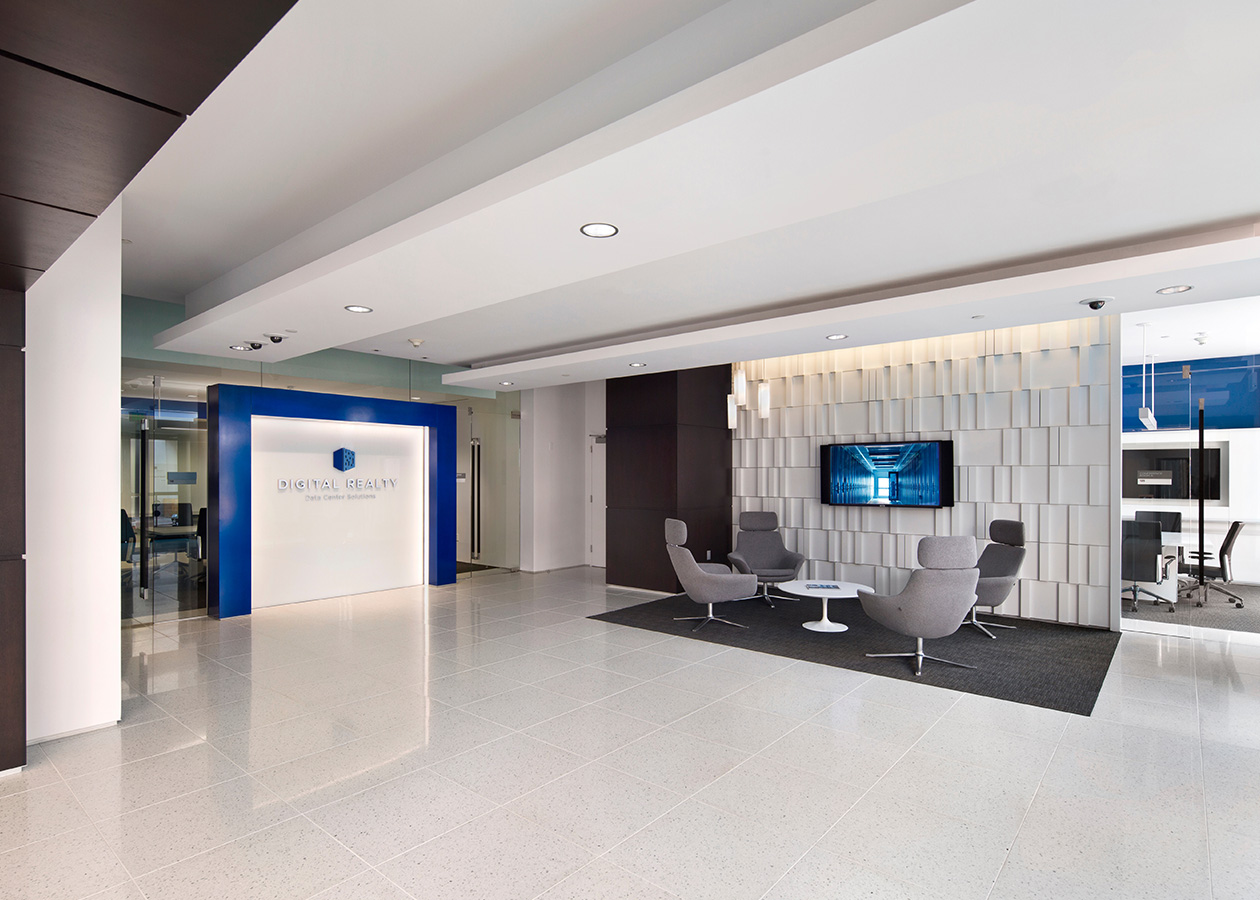
    Data center, colocation and interconnection provider Digital Realty has commenced construction of its third data center facility in Singapore.

    The 12,800 square meter plot of land will be the foundation of Digital Loyang II (SIN12), an expansion and further development of a Digital Loyang Connected Campus.

    SIN12 will be located less than 25km from Singapore’s CBD and will capable of supporting up to 50 megawatts (MW) of IT capacity. The new facility will span a gross floor area of 34,000 square meters.

    The facility is expected to be operationally ready in the second quarter of 2020.

    Digital Realty has so far invested a total of $500 million developing its first two facilities in Singapore.

    “The development of SIN12 reaffirms Digital Realty’s commitment to supporting Singapore’s digitalization efforts and smart nation initiative,” Digital Realty CEO A. William Stein said.

    “As more global technology brands increasingly look to expand their digital footprint, Singapore remains their preferred destination. With the addition of SIN12 to our connected campus, customers will soon be given new ways to connect, extend their reach and find new business opportunities through our global data center platform.”

    SIN12 will also be incorporating sustainability features into the construction of the facility that aims to lower power usage effectiveness (PUE) to between 1.2 to 1.3, making it the best PUE in a commercial data center in Singapore.

    “Sustainability will also play a big role in the development of SIN12. Our vision is to build the greenest commercial data center within the region,” added Stein.

  • SK Telecom streams AR dragon in Korean stadium

    SK Telecom streams AR dragon in Korean stadium

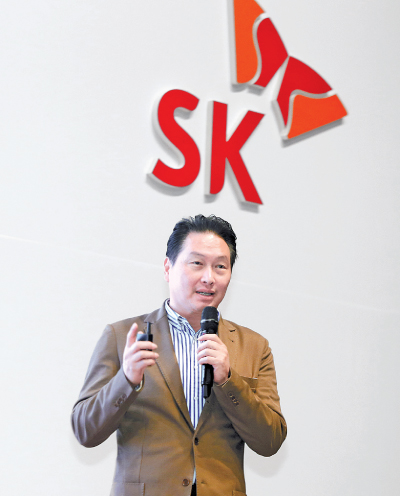
    SK Telecom has announced it has used augmented reality to simulate a fire-breathing dragon at a sports stadium as part of its ongoing development of new 5G-powered services.

    Using augmented reality technology, the large fire-breathing wyvern was streamed flying around the SK Happy Dream Park during the opening day of the Korea Baseball Organization.

    The dragon was streamed both to the LED baseball scoreboard installed at the stadium and via sports broadcasting channels for fans watching the game on TV and smartphones.

    To achieve large scale augmented reality streaming, SK Telecom used its self-developed augmented and virtual reality technologies including the eSpace and T real Platform solutions.

    The demonstration arose from SK Telecom’s focus on the development of 5G-based services to support its commercial network, which launched in December last year. Augmented and virtual reality are a key area of focus for the company.

  • EU-wide security approach planned for 5G

    EU-wide security approach planned for 5G

    The European Commission (EC) has outlined plans to establish a common European Union approach to the security of 5G networks.

    The EC has recommended a series of operational steps and measures aimed at ensuring a high level of security of 5G networks across the EU.

    The recommendations for EU member states include legislative and policy measures designed to protect the nations’ economies, societies and democratic systems.

    As part of the program, the EC has recommended that each member state complete a national risk assessment of 5G network infrastructures by the end of June.

    Member states have also been urged to update their respective security requirements for network providers and include conditions for ensuring the security of public networks, especially when granting 5G spectrum licenses.

    At the EU level, the Commission and the European Agency for Cybersecurity (ENISA) has been tasked with completing a coordinated risk assessment by the start of October, which will be used to help member states agree to a set of mitigating measures that can be used at a national level.

    “Protecting 5G networks aims at protecting the infrastructure that will support vital societal and economic functions – such as energy, transport, banking, and health, as well as the much more automated factories of the future,” commented European Commissioner in charge of the digital economy and society Mariya Gabriel.

    “It also means protecting our democratic processes, such as elections, against interference and the spread of disinformation.”

  • DiSa unveils integrated mobile warranty program

    DiSa unveils integrated mobile warranty program

    Singapore-based digital security company DiSa Limited aims to pioneer a new integrated mobile phone warranty program, and has signed up M1 as the first operator to offer the program to its mobile users.

    The new insurance offering, developed to tackle the rising global trend of e-wallet theft, will allow victims of theft of their e-wallets to make a claim for an amount up to the retail cot of the phone.

    Every phone covered under the warranty program will be tagged with DiSa’s encrypted 3S smart barcode, which is designed to prevent invalid returns.

    “DiSa is delighted to provide this unique Cyber Theft Warranty to M1 customers. With the proliferation of mobile payments, more and more phone users are finding themselves exposed to cybercrimes, some at very sophisticated levels,” DiSa group executive Eddie Chng said.

    He noted that the proliferation of e-wallets, the rising tide of mobile fraud and the  growing use of smartphones for two-factor identification exposers smartphone owners to significant risks if their device is stolen.

    “DiSa is confident that our solution will give peace of mind to smartphone users and add value to M1’s services.”

    Worldpay estimates that payment by e-wallets makes up 10% of e-commerce spending in Singapore.

    But research from the Cyber Security Agency of Singapore found that a wide majority of consumers are concerned about the risk of having their financial and personal information exposed through malware infected mobile devices.

  • Unitel introduces eSIMs to Laos market

    Unitel introduces eSIMs to Laos market

    Vietnamese military-owned operator Viettel has announced that its subsidiary in Laos Unitel has become the first mobile operator in the market to launch eSIM technology.

    The Unitel eSIM service was introduced at the beginning of March, and Unitel is aiming to encourage at least 10,000 customers to exchange their physical SIMs for eSIMs by the end of 2020.

    With the launch, Laos became the seventh of the 10 ASEAN member states to introduce eSIM technology.

    It is also the fourth market in Southeast Asia that Viettel has introduced eSIMs to. The company and its subsidiaries were the first mobile operators to offer the technology in Myanmar, Vietnam and Cambodia.

    Meanwhile another Viettel mobile brand in Laos, Metfone, has become the first operator in the market to launch mobile credit top ups using QR code scanning rather than scratch cards.

    Viettel deputy general director Tao Duc Thang said the introduction of eSIM technology marks the beginning stages of Viettel’s goal of digitally transforming the global telecommunications landscape, and becoming a pioneer in IoT technologies.

    “Viettel has well-prepared platforms and infrastructure and has made digital transformations in its fields such as telecommunications and information technology,” he said.

    “This includes application of the latest technologies in the world for a more convenient life.”

  • ZTE swings back to black in Q1

    ZTE swings back to black in Q1

    ZTE expects to have swung back to profit in the first quarter, after reporting an annual loss in 2018 as a result of the temporary ban on its import of components from US vendors.

    The Chinese vendor estimates a net profit for the first quarter of 800 million yuan ($118.9 million) to 1.2 billion yuan, which compares to a profit of 1.69 billion yuan in the first quarter of 2018.

    The first quarter results are nevertheless an improvement on the 6.98 billion yuan ($1.04 billion) loss the company recorded for the full year 2018.

    ZTE blamed its performance on the impact of the ban on the import of components from US companies imposed by the US government due to ZTE allegedly violating US sanctions on Iran by conspiring to sell equipment with US components in the market, as well as the $1 billion settlement agreement ZTE reached to have this ban overturned.

    Revenue for the year  meanwhile fell 21.4% to 85.51 billion yuan despite signs of recovery in ZTE’s major businesses of wireless networks, wireline networks and mobile devices.

    ZET has meanwhile announced it has been intensifying its investment in 5G research and development.

    The company has so far submitted more than 7,000 5G standard proposals and 3,000 5G patent applications to international organizations, and has declared over 1,200 standards of 5G standard-essential patents to the European Telecommunications Standards Institute (ETSI).

  • Thailand delays 700-MHz auction

    Thailand delays 700-MHz auction

    Thai telecom regulator NBTC has postponed plans to hold a 700-MHz auction for at least three months due to delays establishing details of the auction terms.

    The regulator no longer expects to be able to hold the 700-MHz auction in May as originally planned, citing comments from the NBTC’s secretary-general.

    Instead the earliest timeline for the auction date may be August or September, as related conditions of the auction, including the reserve price, will not be concluded until May.

    Other terms which still need to be established including the process for recalling 700-MHz spectrum to be auctioned and the compensation regime for companies affected by the recall. The regulator needs at least three months to complete related procedures.

    According to the report, the delay is also aimed at giving operators more time to arrange bank guarantees.

    The NBTC plans to push on with the auction regardless of the official outcome 2019 Thai general elections –  Thailand’s first general election since the 2014 coup – which was held on Sunday.

  • 3 seconds for mobile video to loadon Singapore’s 4G networks

    3 seconds for mobile video to loadon Singapore’s 4G networks

    In Opensignal’s recent State of Mobile Video report, we lauded Singapore’s high achievements in Video Experience. It was one of a handful of countries that earned a Very Good score on our 100-point Video Experience scale, and individually, all three of Singapore’s major operators met the same high standard in our operator breakdown of video quality. But what’s behind that “Very Good” score? We thought this would be a good opportunity to examine the particulars of operators’ high ratings in Singapore over LTE networks, which account for the vast majority of our video tests in the country. We focused on two major components of our Video Experience calculation: 4G Video Loading Time and 4G Video Stalling Occurrence.

    Our first metric, 4G Video Loading Time, is fairly self-explanatory. It’s the average period of time mobile users have to wait for a streamed video to begin playing over an LTE connection. Singapore consumers, quite frankly, don’t spend much time staring at loading icons as you can see in our first chart. The longest Video Load Time in our measurements was on Starhub’s networks, and that wait was only 2.7 seconds. Singtel and M1 were statistically tied at 2.4 seconds, making them incrementally faster in Video Load Time than StarHub, but the differences between the three were practically negligible.

    Our next metric 4G Video Stalling Occurrence measures the proportion of users that experience an interruption in playback after a video begins streaming. If a video halts to buffer or stutters due to a weak connection, then those moments when pictures aren’t moving are all factored into our Video Stalling Occurrence metric.

    While 10% 4G Video Stalling Occurrence isn’t uncommon even in countries with advanced 4G infrastructures, Singapore’s operators came in well under that mark. Starhub had the highest rate of stalling at 4.3% in our analysis, followed by Singtel at 2.9%, but the real star of the show was M1. Its 4G Video Stalling Occurrence score was just 1.6%, meaning interruptions in video playback were rare among our users.

    No single factor explains why mobile video quality is so good in Singapore. It’s true that Singapore is one of the fastest countries in the world when it comes to download, but while speed does have some impact on Video Experience, faster isn’t always better when it comes to video quality. Countries with higher download speed averages than Singapore actually often do much worse in Video Experience, according to our analysis. Latency has a bearing on Video Loading time, as the faster a video request traverses the network the sooner that content begins buffering and playback starts. And our analysis has shown Singapore’s operators are among the best in the world in maintaining nimble, low-latency networks.

    Finally, consistency of connection speed plays a major role in Video Experience. Last month, Opensignal published a report titled The 5G Opportunity, which highlighted the wild swings in 4G Download Speed over the course of a day we see on networks around the world.

    Video is particularly sensitive to fluctuations in speed. A video that plays without difficulty one moment may find itself suddenly starved for bandwidth in the next if download speeds suddenly drop due to congestion or other factors. In Singapore we found the same speed fluctuations as in other countries, but the difference was Singapore’s operators were able to maintain strong connections despite those fluctuations. According to our analysis, average 4G Download Speeds in Singapore never dropped below 41.4 Mbps no matter the hour of day. And a consistent 40 Mbps connection is more than enough to support all but the most demanding HD video streams.

    Singapore is preparing for the entrance of TPG, a fourth operator that aims to shake up competition in the Singapore mobile scene. While TPG will likely try to challenge Singapore’s three incumbents in pricing, it will be interesting to see if TPG can also be competitive from a mobile network experience perspective. The three incumbents have already set a very high bar in Video Experience as well as speed, availability and latency. It will be difficult for a network to match those standards right out of the gate.

  • Docomo trials drone-based tower inspection in Indonesia

    Docomo trials drone-based tower inspection in Indonesia

    Japan’s NTT Docomo and Indonesian tower provider PT Solusi Tunas Pratama (STP) have commenced a trial in Indonesia involving the use of drones to inspect telecom towers.

    During the pilot of the Docomo sky for Tower Inspection service, the companies will use drones to photograph base stations and telecom towers and transmit the information to a command center in real time.

    The system is based on an operational drone-based tower inspection system developed by Docomo for use in its own network across Japan. It is designed to support the Docomo sky ground control station app for assistance in inspection tasks and remotely piloting the drones.

    For the trial, Docomo will provide its cloud-based platform for operational support and data analysis for faster and more accurate tower inspections.

    According to the companies, the trial service is well suited to markets including Indonesia, where rapid urban development is resulting in the construction of tall buildings and transport infrastructure that can interfere with radio propagation from telecom towers.

    The two companies hope to test the technology in other locations and facilities before launching a full-scale commercial service later in the first half of the year.