Category: Telecom

Retail News Asia is committed to providing both local and global retailers with the latest Telecom & Telco news throughout the Asian market. This on a daily base.

  • China Mobile, ZTE launch maritime broadband solution

    China Mobile, ZTE launch maritime broadband solution

    ZTE and the Zhejiang branch of China Mobile have jointly launched commercial trials of a new maritime broadband satellite solution.

    The solution, Heweitong, is designed to help solve common problems of maritime communication, such as poor coverage, slow data rate, and high cost.

    It will allow people at sea to communicate and access the internet by merely installing a mobile app on their smartphones.

    During the trial period, China Mobile and ZTE are offering the solution for free. Once commercially launched, the companies expect the cost to be 90% lower than traditional marine communications solutions.

    Heweitong has already undergone verification testing involving more than 50 ships and nearly 300 users in the Bohai Sea, the East China Sea and the South China Sea.

    The project forms part of China Mobile’s goal of offering ubiquitous connectivity via an integrated space, sky and land based communications solution.

  • Openet names Regan marketing development VP for APAC

    Openet names Regan marketing development VP for APAC

    Openet has appointed Tony Regan as vice president of market development for the APAC region, the BSS firm announced earlier this week.

    In his new role, Regan will run Openet’s market development team in APAC, working closely with regional sales VP and sales team to drive the company’s continued expansion in the region, the company said.

    Prior to joining Openet in 2016, Regan held various senior roles within the Telefonica group in Ireland, Spain and Latin America. In his previous role at Openet, Regan ran the company’s consulting division, advising operators on strategy development and execution.

    Regan will be based in Openet’s APAC headquarters in Kuala Lumpur, Malaysia.

    Openet was established in Kuala Lumpur in 2006 and has grown to provide regional service and support, managed services and software development for all of Openet’s APAC customers. The company employs over 180 people in Malaysia.

    Eric Updyke to take helms at Spirent Communications

    Spirent Communications has appointed a new chief executive officer. Eric Updyke, a former Amdocs executive, has started working for the company on April 1, and will take up the CEO role on May 1.

    Updyke will succeed retiring CEO Eric Hutchinson, who will step down on May 1. The company had announced last November that Hutchison planned to retire after 37 years of working for Spirent. He has held the CEO position since being appointed in 2013.

    In a statement, Spirent said Updyke “has extensive experience in international business management with a strong technical understanding of the markets in which Spirent operates.”

    He has worked in various sections of the industry over the last 30 years and has led transformative growth programs on a global scale.

    Updyke joins Spirent from Amdocs, where he most recently served as president of the company’s services group, with responsibility for its managed services, testing and system integration businesses.

    Prior to joining Amdocs, Updyke held executive roles at Nokia Siemens Networks and AT&T.

  • Autotalks trials C-V2X on Chinese road

    Autotalks trials C-V2X on Chinese road

    Israeli vehicle-to-everything (V2X) communications solutions provider Autotalks has announced the successful completion of cellular V2X field trials in China.

    The trials on a public road, conducted in collaboration with an unnamed large Chinese technology company, validated Autotalks’ C-V2X capabilities, including a communication range of over 2km with a nominal range of around 1.5km.

    The successful field test involved the use of hardware compliant with standards body 3GPP’s Release 15 for V2C communications improvements.

    Autotalks has been building momentum in China in a bid to target the large local market, growing its partner ecosystem and increasing staff.

    The company is a member of the government’s IMT-2020 (5G) Promotion Group, as well as the China Industry Innovation Alliance for the Intelligent and Connected Vehicles (CAICV) and China ITS (intelligent transport systems) Industry Alliance.

    In November, Autotalks recruited former Ceragon Networks country manager Yang Xiaobing to lead up its Chinese business development efforts out of its branch in Beijing.

    In February, Autotalks partnered with Taiwanese fabless semiconductor company MediaTek for a project focused on cooperating on integrating V2X and telematics technologies.

    Autotalks also recently launched the first global V2X solution supporting both C-V2X and dedicated short range communications (DSRC) technologies, the two main connected vehicle standards being adopted by car manufacturers.

  • Global fixed broadband subs to reach 1b by year-end

    Global fixed broadband subs to reach 1b by year-end

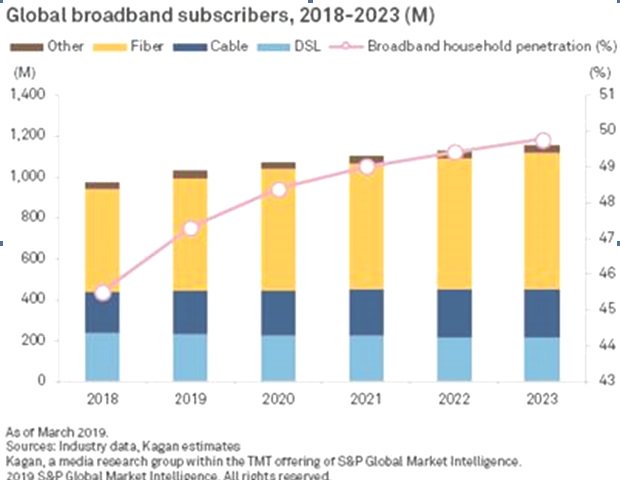
    The global fixed broadband market is on track to reach 1 billion subscribers by the end of 2019, driven by unprecedented growth of fiber connections in Asia Pacific, particularly China, according to Kagan.

    At the end of 2018, broadband subscriptions reached 974.7 million while broadband household penetration reached 45.5%, up from 43.2% in 2017. However, household penetration is projected to remain under 50% until 2025, the S&P Global Market Intelligence research unit said.

    Kagan: Global broadband subscirbers 2018-2023

    Source: Kagan

    China and US remain by far the largest fixed-broadband markets, together accounting for half (50.7%) of the global total in 2018. China alone claims 40.1% of the global total and 74.4% of Asian broadband subs due to large-scale fiber deployments as part of the country’s national Broadband China project.

    Singapore maintains the highest fixed-broadband household penetration in the world, at over 100%.

    In terms of access technology, 51.4% of the global fixed broadband subscribers are using fiber-to-the-premises (FTTP), which overtook DSL in 2016 to become the largest fixed-broadband platform on a global scale.

    FTTP remains the fastest-growing fixed-broadband platform, growing by 13.8% year over year in 2018.

    According to Kagan, fiber subscriptions have overtaken DSL in Asia and Eastern Europe, with China, Japan, Russia, South Korea and US being the five largest fiber-optic markets in the world.

    Western Europe, the Middle East and Africa are still in favor of using DSL, making it the dominant multichannel platform in these continents, while cable leads in North America and Latin America.

  • Telin Singapore secures OSPAR certification

    Telin Singapore secures OSPAR certification

    Indonesia’s PT Telkom has announced that its subsidiary in Singapore has secured certification that will allow it to serve a wider range of clients in the financial sector.

    Telin Singapore has completed an Outsourced Service Provider Audit Review (OSPAR) report signifying its compliance with the Association of Banks In Singapore (ABS) guidelines.

    The certification will allow the company to increase its client base in the financial sector, as local financial sector companies require technology service providers to be in compliance with ABS guidelines.

    An independent audit is a part of this certification process, and OSPAR meets this requirement.

    In addition, Telin Singapore has achieved Payment Card Industry Data Security Standard Compliance (PCI DSS) for companies that handle branded credit cards from the major providers.

    “The OSPAR proves that our controls and processes are secure and robust. Through obtaining OSPAR, our financial services clients could rest assured that their data is securely stored according to the highest security standards in our data centers,” Telin Singapore CEO Andreuw Th.A.F said.

    “A loss or breach of customer confidential data and disruption to banking services will result in reputational and financial damage to the financial institutions.”

  • Changing of guard at Spark

    Changing of guard at Spark

    New Zealand incumbent Spark announced that its managing director Simon Moutter (pictured) has resigned from the telco. Moutter will leave the positions of MD and a director of the company from July 1. Jolie Hodson, currently customer director at Spark, will take over as chief executive.

    Spark chair Justine Smyth said the company has been undertaken succession plan from within the business by giving potential internal candidates opportunities over time to demonstrate they have the right leadership capabilities.

    “Jolie is an accomplished leader with a strong record of delivering results and managing complex business units and to be able to appoint an executive of Jolie’s calibre and experience is a testament to the quality of the talent within the company,” she said.

    She has led major programmes related to Spark’s business transformation and has been a key driver of the company’s growth strategies in business cloud and IT services. Her most recent role has been customer director, with responsibilities across Spark’s consumer and retail operations, large corporate and government customers, and cloud services businesses.

    Previously, she was CEO of the former Spark Digital unit and chief financial officer.

    Smyth said Moutter became MD in 2012 and had done so in the expectation of a likely five- to seven-year tenure.

    “In almost every respect, Spark today is a vastly different company to the one that Simon re-joined in 2012. We are New Zealand’s leader in wireless communications, with a rejuvenated mobile business across both Spark and Skinny brands, a promising IoT business and a determination to be at the forefront of 5G,” she said.

    In 2014, Moutter led the transition of Spark changing its name from Telecom. He had helped the telco transform in many other ways including improving diversity and inclusion in the workplace, Smyth said.

    Moutter has also recently driven an “agile” restructure of Spark and an aggressive drive into sports content and streaming.

    This will be the second time Moutter has left the telco.

    Moutter served as chief operating officer between 2003 and 2008 before leaving to become chief executive of Auckland Airport.

    Moutter returned to Spark in 2012 to take the top job with the expectation that he help turn around the company after a demerger of Chorus in 2011.

    “I’ve given my absolute best to putting Spark onto a positive track over the last seven years, so the company can fully deliver on its purpose to ‘help all of New Zealand win big in a digital world,” he said.

    “I feel it’s the right time to pass the leadership baton on.”

    Moutter said he hadn’t made any decision about what he will do after he finish at Spark, other than spend the first couple of months with his family.

  • Philippines’ House to hold common tower hearing

    Philippines’ House to hold common tower hearing

    A Philippines’ House of Representatives committee will next week hold a hearing on the government’s common tower policy to address the industry opposition and potential legal hurdles of the proposal.

    The House Committee on ICT will look into the status of the Department of ICT’s common tower policy during a hearing scheduled for Monday, committee chairman Victor Yap told.

    Representatives of Globe Telecom and PLDT, the National Telecommunications Commission, the Department of ICT and the Philippines Competition Commission are all expected to attend.

    Under the proposed policy, tower companies will be allowed to build and operate common telecom towers that can be leased to operators. The DICT has signed agreements with a number of tower companies ahead of the introduction of the policy.

    As well as helping to improve the Philippines’ telecommunications infrastructure, the common tower policy is aimed at allowing the market’s upcoming third operator Mislatel more quickly deploy a mobile network.

    But Globe and PLDT have objected to the draft terms, which had proposed that the number of cell site builders be restricted to two registered tower providers.

    According to the operators, this could lead to an infringement of the rights to own and establish cell sites that is stipulated in their legislative franchises.

  • V2X apps to drive $1.2b market by 2022

    V2X apps to drive $1.2b market by 2022

    The latest SNS Telecom & IT research, V2X (Vehicle-to-Everything) Communications Ecosystem: 2019 – 2030 – Opportunities, Challenges, Strategies & Forecasts, suggests that global spending on V2X (Vehicle-to-Everything) communications technology – based on both IEEE 802.11p and C-V2X (Cellular V2X) standards – will reach $1.2 billion annually by the end of 2022.

    V2X communications technology allows vehicles to directly communicate with each other, roadside infrastructure, and other road users to deliver an array of benefits in the form of road safety, traffic efficiency, smart mobility, environmental sustainability, and driver convenience.

    V2X is also helping pave the way for fully autonomous driving through its unique non line-of-sight sensing capability which allows vehicles to detect potential hazards, traffic, and road conditions from longer distances and sooner than other in-vehicle sensors such as cameras, radar, and LiDAR (Light Detection and Ranging).

    Adoption on track

    Although legacy V2I (Vehicle-to-Infrastructure) technologies are currently in operational use worldwide for ETC (Electronic Toll Collection) and relatively simple V2I applications, advanced V2X systems – capable of supporting V2V (Vehicle-to-Vehicle), V2I and other forms of V2X communications – are beginning to gain broad commercial acceptance with two competing technologies vying for the attention of automakers and regulators. These are the commercially mature IEEE 802.11p/DSRC (Dedicated Short Range Communications) standard, and the relatively new 3GPP-defined C-V2X (Cellular V2X) technology which has a forward evolutionary path towards 5G.

    With an initial focus on road safety and traffic efficiency applications, Toyota and General Motors (GM) have already equipped some of their vehicle models with IEEE 802.11p-based V2X technology in Japan and North America.

    Volkswagen will begin deploying IEEE 802.11p on volume models in Europe starting from 2019, while Geely and Ford plan to integrate C-V2X in their new vehicles by 2021 and 2022 respectively.

    Luxury automakers – including BMW, Daimler, Volkswagen’s subsidiary Audi, and Volvo Cars – already deliver certain V2X-type applications through wide-area cellular connectivity and supporting infrastructure such as appropriately equipped roadwork trailers.

    Challenges ahead

    Despite the ongoing 802.11p/DSRC versus C-V2X debate, regulatory uncertainty and other challenges, global spending on V2X communications technology is expected to grow at a CAGR of more than 170% between 2019 and 2022. SNS Telecom & IT predicts that by the end of 2022, V2X will account for a market worth $1.2 billion, with an installed base of nearly 6 Million V2X-equipped vehicles worldwide.

    The report noted that despite the ongoing 802.11p/DSRC versus C-V2X debate, regulatory uncertainty and other challenges, global spending on V2X communications technology is expected to grow at a CAGR of more than 170% between 2019 and 2022. SNS Telecom & IT predicts that by the end of 2022, V2X will account for a market worth $1.2 billion, with an installed base of nearly 6 Million V2X-equipped vehicles worldwide.

    While Toyota and other Dedicated Short Range Communications (DSRC) proponents are pushing ahead with their plans to roll out IEEE 802.11p in North America, Europe and Japan, pre-commercial C-V2X deployments have recently gained considerable momentum, spearheaded by cellular industry giants such as Qualcomm and Huawei – with support from automakers including Ford, BMW, Daimler, Groupe PSA, SAIC, Geely, Volkswagen’s luxury brand Audi, and Jaguar Land Rover (JLR).

    Regional markets are also visibly divided with the Chinese Government backing C-V2X, Europe leaning towards IEEE 802.11p through its recently published delegated act on C-ITS (Cooperative Intelligent Transport Systems), and heated debates ensuing in the United States as a result of the 5GAA’s waiver request to allow C-V2X deployments in the 5.9-GHz band.

    Betting on the future

    As a result, a number of automotive OEMs are beginning to adopt a flexible approach by choosing to deploy different technologies in different regions as they commit to V2X. For example, although GM has equipped its Cadillac CTS sedan vehicles with IEEE 802.11p in North America, the automaker is actively working with business partners to prepare for C-V2X deployment in China.

    Besides becoming a standard safety feature on an increasing number of vehicles, V2X communications technology – through its unique non line-of-sight sensing capability – will play a critical role in ensuring the safe and efficient operation of autonomous driving systems, particularly with the commercialization of next-generation V2X standards, specifically 5G-V2X and IEEE 802.11bd.

    The globally harmonized 5.9-GHz band continues to remain the preferred spectrum for V2X communications technology, with the exception of Japan – where the national regulator has allocated a single 9 MHz channel in the frequency range 755.5 – 764.5 MHz for safety-related applications based on V2V and V2I communications.

    Early discussions are ongoing for the potential use of new bands, most notably in the 3.4 – 3.8 GHz and 5.9 – 7.2 GHz frequency ranges, as well as millimeter wave spectrum for LOS (Line-of-Sight) and high data rate V2X applications. Recent field trials using 39-GHz spectrum in the United States have demonstrated that millimeter propagations for V2V communications can work well in the distance range of 100 meters, without advanced beamforming techniques.


  • Telcos to use AI to fight SMS fraud and drive A2P messaging revenue

    Telcos to use AI to fight SMS fraud and drive A2P messaging revenue

    Juniper Research is forecasting that total operator revenues from A2P (Application-to-Person) messaging services will reach $62 billion by 2023, up from $43 billion in 2019.  This represents a growth of 42% over the next 4 years.

    The research firm also claimed that revenue growth will be driven by operator efforts in mitigating messaging fraud over grey routes, alongside the emergence of rich-media messaging technologies including RCS (Rich Communications Suite).

    The Juniper research, A2P Messaging: SMS, RCS & OTT Business Messaging 2019-2023, also found that increased investment in SMS firewalls and AI (Artificial Intelligence) will drive down operator loss due to grey route SMS messages to $4 billion by 2023. This represents a fall from $10 billion in 2019, further contributing to operators’ messaging revenue growth over the next four years.

    Grey route SMS includes A2P messages disguised as P2P (Peer-to-Peer) traffic to exploit the lower costs compared to directly connected A2P SMS. Juniper estimates that 24% of A2P SMS messages will be delivered via grey routes in 2019, however efforts in improving SMS firewall capabilities will drive this down to below 10% by 2023.

    Meanwhile, RCS business messaging will account for under 10% of operators’ A2P messaging revenue by 2023. However, the research claimed that RCS business users will continue to use SMS for simple notifications, such as OTPs (One Time Passwords) owing to the low cost and simplicity. The research identified the integration of mobile payment capabilities directly into the RCS client to provide a differentiation point to SMS and increase RCS traffic.

    Research author Sam Barker added “RCS will provide operators with additional revenue opportunities beyond simple message termination. Operators must explore the advertising ecosystem and mobile payments over RCS to exploit their substantial subscriber bases to generate fresh revenue streams.”

  • M1 taps UOB for QR code payment

    M1 taps UOB for QR code payment

    Singapore operator M1 has partnered with the nation’s United Overseas Bank (UOB) to offer PayNow as a payment mode for M1 customers.

    Under the agreement, M1 customers can now make mobile payments for purchases via PayNow at all M1 Shop outlets, as well as make monthly bill payments via PayNow by scanning the QR Code on the bill.

    M1 is the first communications provider in Singapore to enable retail customers to make e-payments via PayNow, providing customers with an additional payment option, in addition to existing payment modes. UOB is the key provider of PayNow Corporate services to M1, and will help enable the safe and hassle-free scan-and-pay experience for M1’s customers.

    To pay for in-store purchases, customers need to scan a dynamic QR Code that is generated at the counter using the mobile banking application of any PayNow participating banks with QR scanning functionality. Customers can also use PayNow to pay for their monthly bills by scanning the dynamic QR code on their bill statement. Customers can complete the payment by confirming the transaction details that have been automatically filled in, such as the payment amount and recipient.

    “Today, about eight in 10 consumers in Singapore have adopted e-payments and PayNow is a very convenient e-payment platform which will enhance our customers’ payment experience. This new initiative is one of many, as part of our digitalization journey to deliver a seamless digital experience for our customers,” M1 CMO  P. Subramaniam said.

  • Hyperscale operators to boost colocation market

    Hyperscale operators to boost colocation market

    Synergy Research Group (SRG) says hyperscale operators are the fastest growing customer category for colocation providers. For both wholesale and retail colocation, 2018 revenue from hyperscale customers grew much more rapidly than revenues from other service provider customers and from enterprises.

    While the overall colocation market grew by 10% in 2018, revenues from hyperscale operators grew by 24% in the wholesale segment of the market and by 16% in the retail segment. Enterprise spending on wholesale colocation was relatively flat in 2018 compared to 2017, while enterprise spending on retail colocation grew by 7%.

    Synergy’s Q4 and year-end data shows that the total colocation market grew to over $34 billion in 2018.

    Growth was strongest in the APAC region, with China, Hong Kong, Japan and Singapore showing the highest growth rates in the region. Hyperscale operators comprise the world’s major cloud and internet service firms, including the largest operators in IaaS, PaaS, SaaS, search, social networking and e-commerce. The other service provider category includes telcos, non-hyperscale cloud providers and internet service firms, hosting/outsourcing companies and content & digital media service providers. The enterprise category includes all other industry verticals plus government and the public sector.

    “It comes as no surprise that hyperscale operators are providing a boost to colocation providers, as they are on a charge to rapidly extend their worldwide data center footprint and in 2018 ramped up their capex by no less than 43%,” said John Dinsdale, a chief analyst at Synergy Research Group.

    “In order to support this rapid growth they cannot just build their own data centers, so they also need to rely on colocation providers to lease out both large wholesale facilities and capacity at smaller edge locations. Hyperscale operators are becoming an ever-more important source of business for leading colocation companies such as Equinix, Digital Realty, Interxion, CyrusOne, QTS and GDS.”

  • Dtac, CAT, TOT to collaborate on 5G testbeds

    Dtac, CAT, TOT to collaborate on 5G testbeds

    Thai state owned operators TOT and CAT Telecom and privately-owned operator Dtac will collaborate on the development of 5G testbeds in the nation.

    The operators have signed a public-private partnership agreement to conduct both laboratory and live testing of 5G use cases at the 5G testbeds at Chulalongkorn University and the Eastern Economic Corridor.

    Applications due to be tested will focus on applications including smart farming, smart cities and environmental management.

    Specifically, TOT will test smart poles for smart city applications, CAT Telecom will trial 5G equipped air pollution sensors, and Dtac plans to test 5G connected drones to support real-time precision farming.

    The report cites Dtac CEO Alexandra Reich as noting that collaboration with vertical industries including co-investments will be essential for securing the resources required to pay for 5G infrastructure development.

    Meanwhile Dtac is urging the government to develop a clear 5G spectrum roadmap encompassing high, mid and low band spectrum, and including a clear allocation timeline, in order to support the industry’s preparations for the launch of 5G in Thailand.

  • Shanghai launches 5G trial district

    Shanghai launches 5G trial district

    The City of Shanghai has launched 5G trials in the Hongkou district, which also has the distinction of having a gigabit broadband network.

    The 5G trial, backed by China Mobile, involves providing full coverage of the district.

    During a commencement ceremony for the trial, a 5G video call was placed using the Huawei Mate X foldable 5G smartphone.

    The city plans to deploy over 10,000 5G base stations by the end of the year, and over 30,000 by 2021.

    As part of the trials, the city also plans to provide support for over 100 companies developing 5G-related application scenarios.

    The wide-scale trial follows Huawei’s deployment of trial 5G services at Shanghai’s Hongqiao Railway Station in February.

    Other Chinese cities are also investing in taking an early lead with 5G deployments, including Chengdu in the Sichuan province and Wuhan in Central China.

    The latter city has deployed a trial 5G network encompassing over 100 5G base stations to explore developments in autonomous vehicles, drones and satellite-based positioning, the report states.

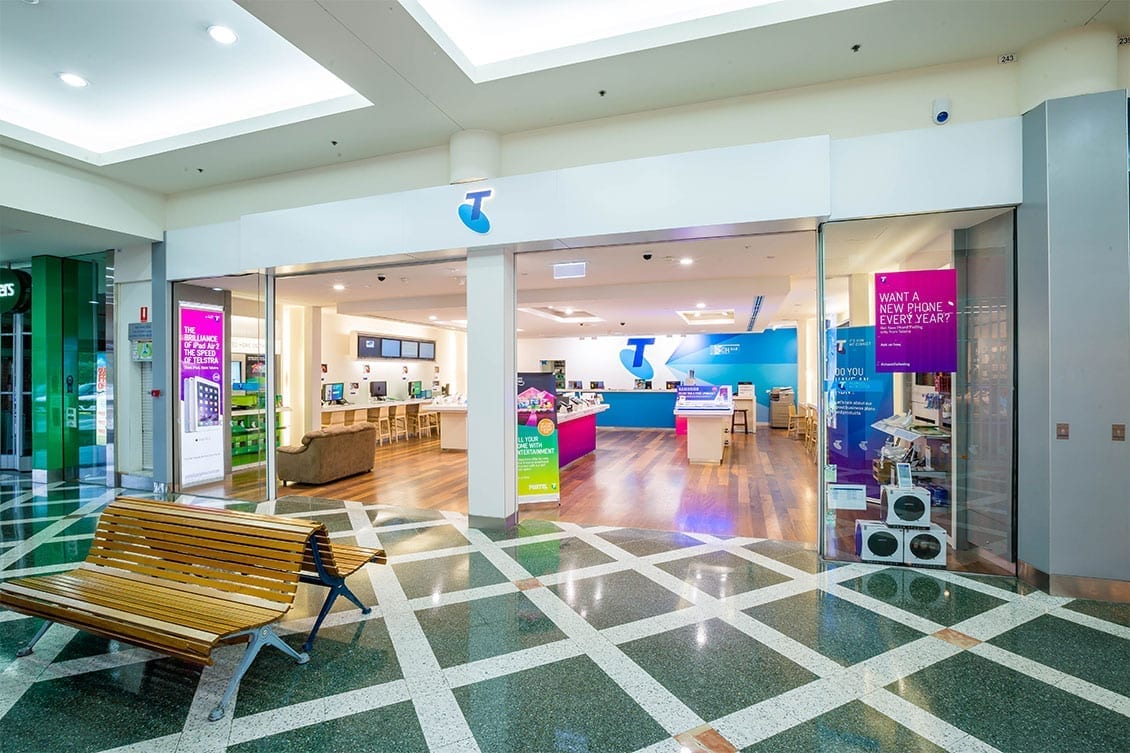
  • Telstra launches tiered loyalty program

    Telstra launches tiered loyalty program

    Australia’s Telstra has announced a new tier-based loyalty program designed to allow customers to earn points for every dollar they spend with the operator.

    The Telstra Plus program will be available to both prepaid and postpaid customers. Members will accumulate points they will be able to exchange for discounts on new devices and accessories.

    Through partnerships, Telstra will also offer access to benefits such as discounted sport and movie tickets and complementary extras.

    Membership to the tiered system will be calculated based on spend over the previous 12 months. The higher tier services include benefits such as priority call handling and 24×7 tech support, as well as yet to be announced entertainment bonuses.

    Telstra CEO Andy Penn said Telstra plans to extend the new offering to its roughly 8 million customers from May.

    “Every service, subscription or hardware repayment will see customers earn points towards new technology, and we think that’s a pretty powerful offer,” he said.

    “The first 5G devices will be available with Telstra soon, opening up even more opportunities for Australians to get more out of life through technology and helping our customers take advantage of all our network has to offer… In addition to the better value we provide our customers through our larger network coverage and data speeds, we’re upping the ante through rewarding our customers for their loyalty over time.”

  • Dialog Axiata announces 5G pilot service

    Dialog Axiata announces 5G pilot service

    Sri Lanka’s Dialog Axiata has launched what it says is South Asia’s first fully standards based 5G pilot service in collaboration with Huawei.

    The successful demonstration involved the use of the operator’s Huawei-based RAN and core network with the most current 5G non-standalone architecture to transmit data to a 5G smartphone.

    Dialog Axiata group chief executive Supun Weerasinghe said the trial marks another step towards the operator’s introduction of 5G in the region. The operator has to date upgraded over 20% of its base stations to support Massive MIMO technology, giving them 5G ready status.

    “The success of South Asia’s first demonstration of a mobile 5G service is yet another milestone following our launch of a fully functional pre-commercial 5G network and builds on our significant investments into high speed broadband network infrastructure in Sri Lanka,” he said.

    “Dialog will continue to deliver on its promise of delivering the future today by leveraging the unique capabilities of 5G technology, to spearhead the country’s transformation into a regional technology hub.”

    Dialog Axiata launched its pre-commercial 5G network at the end of last year, demonstrating South Asia’s first fully functional and standards compliant 5G transmission using commercial grade base stations.