Category: Telecom

Retail News Asia is committed to providing both local and global retailers with the latest Telecom & Telco news throughout the Asian market. This on a daily base.

  • Telecom Fiji to deploy 10G PON

    Telecom Fiji to deploy 10G PON

    Telecom Fiji has announced it will deploy the first all-optical 10G PON fiber network in the South Pacific, in partnership with Huawei.

    The operator plans to use the network to deliver gigabit network services for both households and enterprise customers.

    Huawei has been contracted for the deployment, which is aimed at enhancing the operator’s customer experience while significantly reducing networks operations and maintenance costs.

    “By adopting this 10G PON solution, the competitiveness of our fixed broadband in Fiji has now significantly enhanced… We are fully confident to maintain our technological leadership in the South Pacific island markets,” Telecom Fiji general manager of sales and marketing Joseph Naua said.

    “We are also proud to work in partnership with Huawei on the deployment of the 10G PON network. At present, the 10G PON network deployment is moving on a fast track, and Huawei will continue to invest and innovate in the ultra-broadband domain.

  • Japanese telcos assigned 5G spectrum

    Japanese telcos assigned 5G spectrum

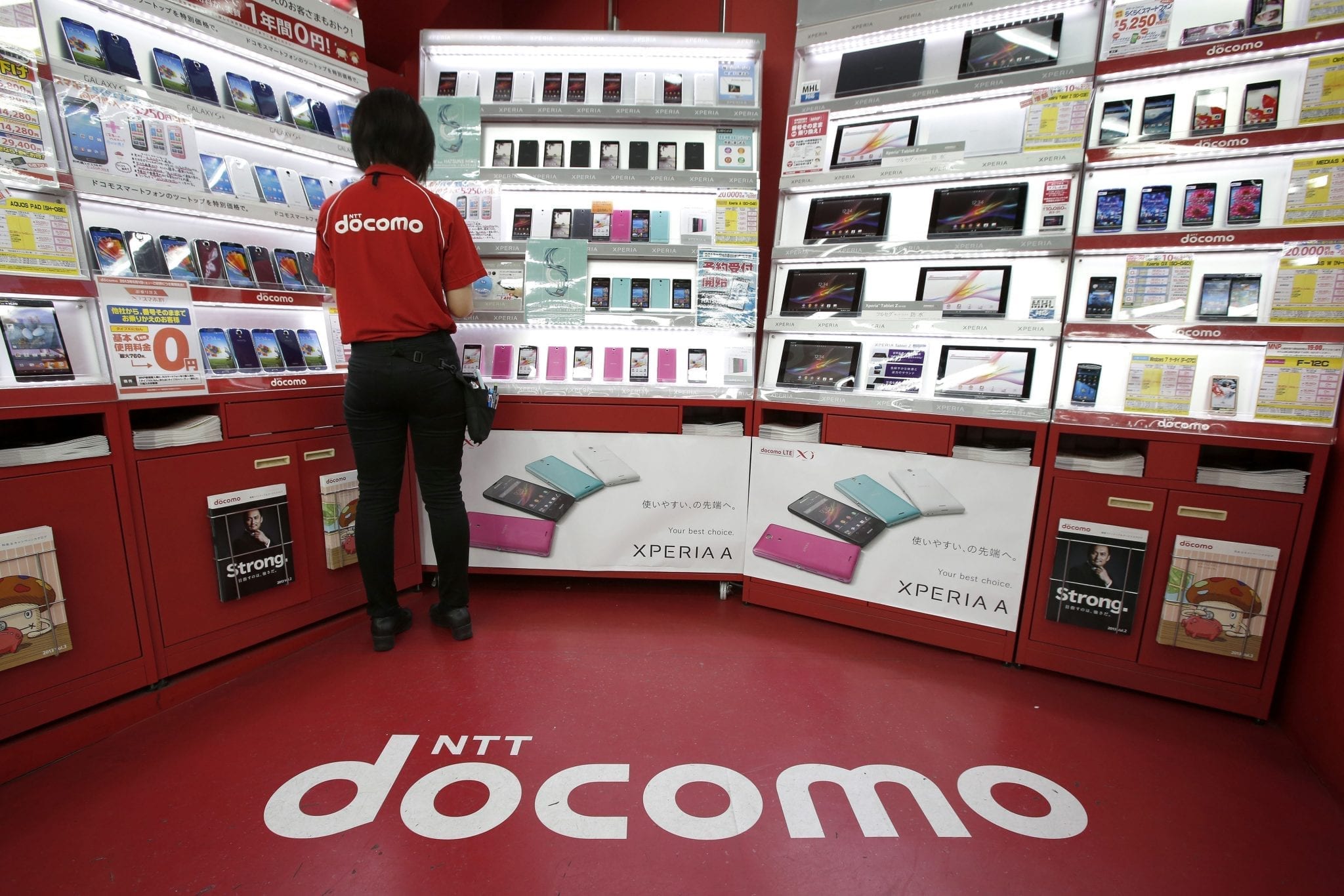
    Japan’s telecom ministry has allocated 5G mobile spectrum to incumbent operators NTT Docomo, KDDI, and Softbank, as well as local e-commerce giant Rakuten.

    The Ministry of Internal Affairs and Communications has approved the allocation of spectrum after determining that the companies’ applications met the conditions of the allocation.

    The four companies plan to invest heavily in 5G, spending a combined 1.6 trillion yen ($14.4 billion) over the next five years. Docomo is planning the largest spend, with goals to invest at least 795 billion yen in 5G over this time.

    The four plan to commence commercial 5G services in 2020, with KDDI and SoftBank planning to commence advertising for its services in March.

    Rakuten Mobile, Japan’s upcoming newest market entrant, meanwhile plans to commence 4G services in October 2019 and 5G services in June 2020.

    The conditions for the allocation of spectrum included commitments to commence services in every prefecture of the nation within two years, and set up 5G base stations in at least half the country within five years.

    According to the report, Docomo and KDDI are each targeting more than 90% 5G population coverage by the end of the five years, while SoftBank is targeting 64% coverage while Rakuten is aiming for 56%.

  • Docomo Ventures invests in Singapore’s Kpisoft

    Docomo Ventures invests in Singapore’s Kpisoft

    NTT Docomo Ventures, a wholly owned subsidiary of NTT Group, has made an investment in Singapore-headquartered cloud-based enterprise management solutions provider Kpisoft.

    NTT Docomo Ventures has acquired shares of Kpisoft through its third-party allotment, the company said. Financial details of the transaction were not disclosed.

    According to Docomo Ventures, the solution provided by Kpisoft is designed to analyze data that exists in EPM, BI, human resources management and other relevant systems within an enterprise on a single platform.  The solution has a function that can automatically distribute the analytical findings directly to individual employees in an action proposal form by using machine learning and natural language processing.

    This enables enterprises to make use of analytical findings on enterprise performance and directly and automatically support the actions of individual employees, the company noted.

    Docomo Ventures further said it has made the investment because it “highly expects” the services and knowhow Kpisoft provides will bring added values to EPM or BI the NTT Group offers.

    Reliance Jio Digital Services acquires Haptik

    Meanwhile India’s Reliance Industries, through its subsidiary Reliance Jio Digital Services, has acquired artificial intelligence firm Haptik for Rs 700 crore ($100 million).

    Reliance Jio will hold about 87% of the business with the rest being held by Haptik founders and employees through stock option grants, according to a company release.

    As part of the transaction, Haptik’s existing major shareholder Times Internet will exit the company.

    Akash Ambani, director at Reliance Jio Digital Services said the acquisition underlines the company’s commitment to further boost the digital ecosystem and provide Indian users conversational AI enabled devices with multi-lingual capabilities.

    “We believe voice interactivity will be the primary mode of interaction for Digital India,” Ambani said in a statement.

    “We are delighted to announce this partnership, and look forward to working with the experienced team of Haptik in realizing this vision for offering greater connectivity and rich communication experiences to the billion+ Indian consumers.”

    Founded in 2013, Haptik is chat based virtual concierge mobile application. It client base includes Samsung, Coca-Cola, Future Retail, KFC, Tata Group, Oyo Rooms and Mahindra Group.

    The Haptik team will continue to drive growth of the business, including the enterprise platform as well as digital consumer assistants.

    “This transaction enables Reliance Jio to leverage Haptik’s capabilities across various devices and touch points in the consumer’s journey. The investment focus is on enhancement and expansion of the platform, with an addressable market opportunity of over 1 billion users in India,” the company said in a statement.

  • Viettel deploys Vietnam’s first 5G base stations

    Viettel deploys Vietnam’s first 5G base stations

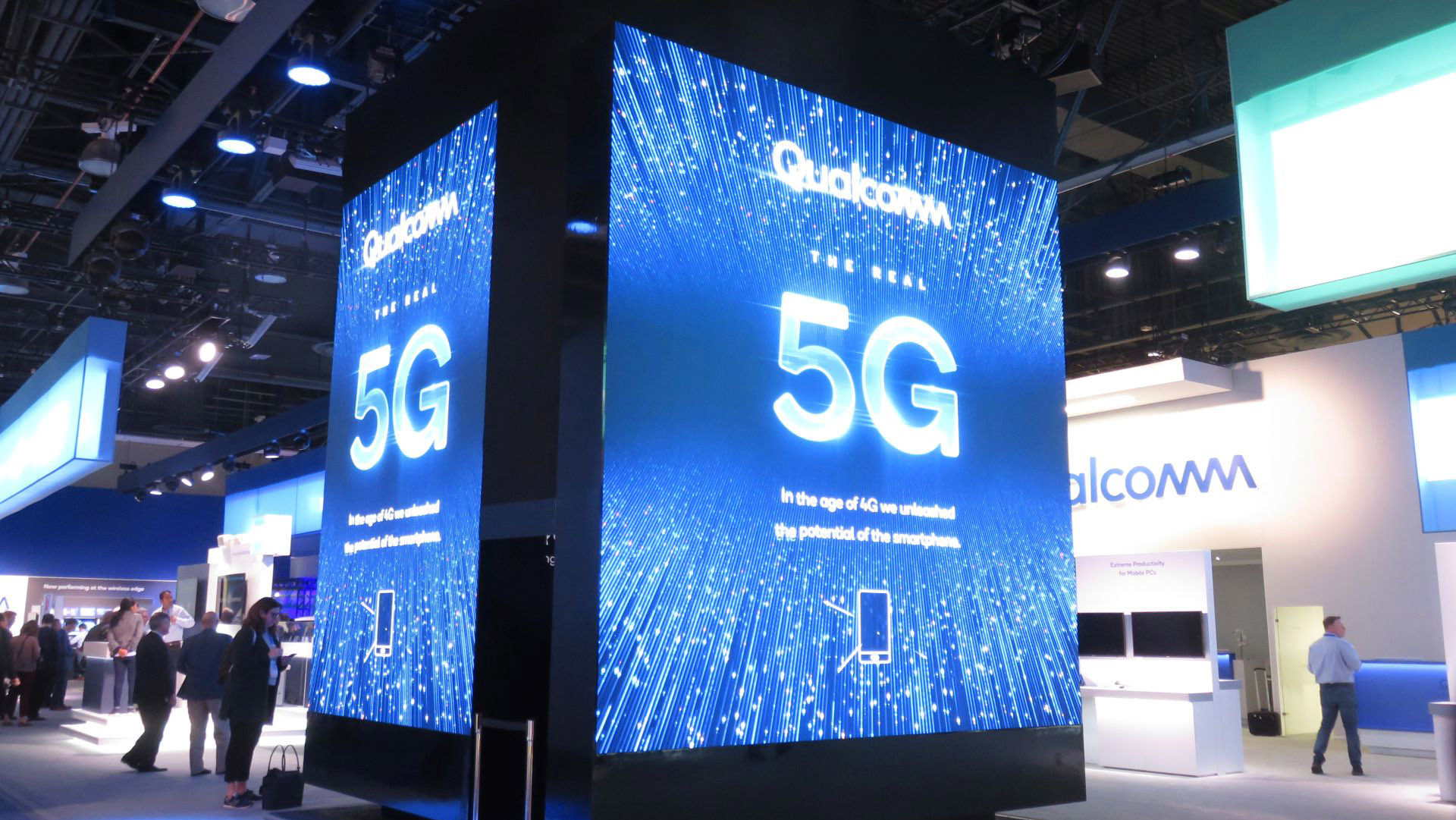
    Vietnamese military-run operator Viettel has installed Vietnam’s first 5G base stations in Hanoi ahead of planned 5G trials.

    The operator has deployed three test 5G base stations at various offices, and expects to switch them on for trials in early May.

    Viettel plans to test 70 5G base stations in Hanoi and Ho Chi Minh City in June in preparation for a large-scale deployment, the report states.

    Viettel plans to be one of the early adopters of 5G, targeting a commercial launch in 2020. Viettel is taking the lead in the deployment of the technology in the market.

    At the recent ASEAN Conference on 5G in Vietnam, minister of information and communications Nguyen Manh Hung said 5G represents an opportunity for Vietnam to change its global rankings by stimulating growth in the digital economy.

  • Thai telcos fear excessive costs from new cable policy

    Thai telcos fear excessive costs from new cable policy

    The Telecommunications Association of Thailand (TCT), the industry body representing Thailand’s major operators, has argued that the policy will impose excessive costs on telecommunications service providers and may prove to be impractical.

    The association is urging the government to subsidize construction costs for the underground pipelines that would hold the currently overhead cables, and has suggested that operators would be willing to pay “reasonable” rental fees for this passive infrastructure.

    But as it stands, the association has stated that it is concerned that operators would be required to pay rental fees for underground pipelines that are up to 100 times higher than the current price paid for using overhead poles – nearly 20,000 baht per kilometer per month, compared to around 200 to 300 baht for per kilometer per month for overhead poles.

    Meanwhile the association has also proposed an alternative model involving using a combination of underground pipes and overhead poles that in some cases could use tubing that can group all cables together.

    This would help the government achieve its goal of helping to beautify the city while being a more affordable option to locating all cables underground.

  • China’s 5G investments may be slowing

    China’s 5G investments may be slowing

    While China is certain to be one of the world’s largest 5G markets and has been spending heavily to gain an early lead in 5G adoption, there are signs that 5G momentum is slowing down in the market.

    This was one of the conclusions of a new report from IDTechEx Research on the 5G technology market forecast for the next 10 years.

    The report found that China’s big three operators China Mobile, China Telecom and China Unicom have all announced 5G capex budgets that are lower than expected.

    China Unicom plans to spend between 6 billion yuan ($893.3 million) and 8 billion yuan on 5G in 2019, while China Telecom has allocated 9 billion yuan. While market leader China Mobile has not disclosed its projected 5G spending, the report forecasts that its spending will be in the region of 17 billion yuan.

    The total 5G capex budget allocated in China (34 billion yuan) for 2019 is therefore significantly lower than the projected 50 billion to 100 billion yuan.

    Factors behind the lower than expected spending include greater activity to upgrade 3G networks to 4G, falling per-subscriber revenue and the uncertainty over whether 5G investments will generate returns, the company said.

    Based on slower than expected 5G deployment schedules, the total contribution of 5G for the telecoms sector could be reduced from the projected $200 billion by 2029 to $160 billion.

    But operators are projected to invest around $200 billion to $350 billion for 5G development from 2020 to 2030.


  • Spark New Zealand names Grant McBeath customer director

    Spark New Zealand names Grant McBeath customer director

    Spark New Zealand has appointed Grant McBeath (pictured) as its new customer director on the company’s leadership “squad”, effective July 1.

    McBeath will replace current customer director Jolie Hodson, who will become Spark’s chief executive from that date.

    Commenting on McBeath’s appointment, Hodson said “he has a strong track record of building high performing teams and delivering for customers not only at Spark, but in his time in global executive roles in companies like Nokia.”

    McBeath joined Spark in 2013 as general manager of sales for the consumer and SMB business, alongside acting for six months as CEO for Spark Home, Mobile and Business operations before becoming Channel Leader, Consumer and SMB when Spark adopted an “agile” restructuring program.

    From July 1, Spark’s leadership “squad” will have eight members: Jolie Hodson (chief executive), Grant McBeath (customer director), David Chalmers (finance director/CFO),  Melissa Anastasiou (general counsel), Joe McCollum (HR director), Matt Bain (marketing director), Tessa Tierney (product director), and Mark Beder (technology director).

    NTT appoints Kazuhiro Gomi CEO for new research unit

    NTT Corp has appointed Kazuhiro Gomi as president and CEO of NTT Research Inc, a new unit the Japanese telco created on April 1.

    Kazuhiro Gomi, who assumed the new roles on the same date, will continue to serve on the board of directors for NTT Communications and retain his current role as president and CEO of NTT America.

    He joined NTT Corp in 1985 and took up several management positions across the group, including global business VP at NTT Communications and COO of NTT America before being promoted to president and CEO of NTT America in 2010.

    According to NTT, the new research arm will focus on advanced R&D to further develop and accelerate research activities originating from NTT Laboratories in Japan.

    NTT will launch laboratories-Quantum Science & Computing Laboratories, Cryptography & Information Security Laboratories, and Medical & Health Informatics Laboratories- in July, which will become the core of NTT Research.

  • Verizon launches collaboration service in 80 markets

    Verizon launches collaboration service in 80 markets

    US-based telecommunications operator Verizon has launched a new collaboration service which will enable the company’s network customers to integrate their voice infrastructure to a Microsoft Teams environment across 80 markets.

    The new service will take advantage of Direct Routing and Verizon’s SIP Trunk connectivity to give users access to Microsoft Teams’ collaboration features, which include the ability to call to and from traditional phones, VoIP or mobile phone lines using the platform.

    Verizon is using its Session Border Control as a Service (SBCaaS) solution to deliver the virtualized, cloud-based service.

    Other capabilities within the Microsoft Teams unified communications platform include persistent workplace chat, video meetings, file storage and collaboration, and application integration.

    Teams is built on the Office 365 Groups subscription-based office productivity suite, and is now in use by 500,000 organizations worldwide.

    “Enterprises are always looking for tools and solutions for better productivity and collaboration,” Verizon SVP of business products Shawn Hakl said.

    “By integrating Verizon’s SIP Trunking into Microsoft Teams, users get the best of both worlds. They are able to have reliable communication services from Verizon, seamlessly integrated into their Microsoft Teams collaboration software.”

  • BT signs three-year deal with NATO

    BT signs three-year deal with NATO

    The UK’s BT has extended its relationship with the North Atlantic Treaty Organization (NATO) military alliance, announcing a contract to support the alliance’s global operations.

    Under the three year contract with NATO’s Communications and Information Agency (NCI), valued at €5.9 million ($6.64 million), BT will provide support services to more than 70 NATO locations internationally.

    This will include sites spread across the Alliance’s 29 member countries, as well as other locations.

    “Digital transformation is a strategic driver for multinational organisations. Like many of our global customers, NATO faces a dynamic operational landscape and looks to harness the latest digital tools and technologies to enhance its performance,” BT CEO of Global Services Bas Burger said.

    “With our global secure network and expertise as a trusted supplier to governments, international agencies and multinationals, BT is well placed to support NATO in an increasingly digital world.”

    The NATO alliance consists of 29 member states from North America and Europe.

  • Global public cloud spend to 17.5% in 2019

    Global public cloud spend to 17.5% in 2019

    Gartner forecasts worldwide public cloud services market will grow 17.5% in 2019 to reach a total of $214.3 billion, up from $182.4 billion in 2018.

    Cloud system infrastructure services, or infrastructure as a service (IaaS) is forecast to grow 27.5% in 2019 and reach $38.9 billion, up from $30.5 billion in 2018 (see Table 1). The second-highest growth rate of 21.8% will be achieved by cloud application infrastructure services, or platform as a service (PaaS).

    Gartner research vice president, Sig Nag, says “we know of no vendor or service provider today whose business model offerings and revenue growth are not influenced by the increasing adoption of cloud-first strategies in organizations. What we see now is only the beginning, though. Through 2022, Gartner projects the market size and growth of the cloud services industry at nearly three time the growth of overall IT services.”

    Gartner expects that by the end of 2019, more than 30% of technology providers’ new software investments will shift from cloud-first to cloud-only. This means that license-based software consumption will further plummet, while SaaS and subscription-based cloud consumption models continue their rise.

    “Organizations need cloud-related services to get onboarded onto public clouds and to transform their operations as they adopt public cloud services,” said Nag. Currently almost 19% of cloud budgets are spent on cloud-related services, such as cloud consulting, implementation, migration and managed services, and Gartner expects that this rate will increase to 28% by 2022.

    “As cloud continues to become mainstream within most organizations, technology product managers for cloud related service offerings will need to focus on delivering solutions that combine experience and execution with hyperscale providers’ offerings,” said Nag.

    He sees the complementary approach as driving both transformation and optimization of an organization’s infrastructure and operations.

  • Indonesia’s FiberStar extends collaboration with Huawei

    Indonesia’s FiberStar extends collaboration with Huawei

    Indonesia’s FiberStar has signed an agreement with Huawei to jointly expand high-speed fiber network services in the market.

    FiberStar recently partnered with Huawei to build a 1Tbps backbone DWDM network linking Jakarta with Surabaya. The network consists of submarine and terrestrial cables that form a ring network with a total length of more than 3000 kilometers.

    Building on this cooperation, the companies signed a memorandum of understanding at the Huawei ISP Summit Asia Pacific 2019 in Bali to strengthen collaboration in the field of fixed networks and data centers.

    FiberStar co-founder and director Thomas Dragono said Huawei shares the company’s vision for the digital transformation of Indonesia.

    “Being the pioneer of Indonesia’s neutral infrastructure service, and considering Huawei’s advancement in the optical communications field, we have both decided to explore a deeper and stronger partnership,” he said.

    “The consensus on the advantages of optical network technologies and evolution trends are the basis of cooperation between both parties. We will leverage the advanced DWDM and MPLS technology to expand the coverage of networks in Indonesia, and further facilitate the growth of the digital economy in Indonesia.”

    FiberStar was established in 2014 as a subsidiary of Indonesia’s biggest conglomerate the Salim Group.

    The company is Indonesia’s biggest carrier-neutral infrastructure provider, offering coverage to 92 Indonesian cities across the nation’s main islands including Sumatra, Java, Bali, Kalimantan, and Sulawesi.

  • Nepal to shut down CDMA from 2022

    Nepal to shut down CDMA from 2022

    The Nepal Telecommunications Authority (NTA) has reportedly decided to switch off CDMA services in Nepal from 2022.

    The regulator’s Radiofrequency Policy Determination Committee has decided on a policy of CDMA network shutdowns in order to pave the way for refarming spectrum in the 800-MHz band.

    Currently only Nepal Telecom operates an active CDMA service, under the brand Sky. The service is currently available in most areas of the country, but the user base is low due to the preference for GSM services in the market.

    Nepal Telecom had decided in 2017 to stop investing further in both CDMA and Wimax, but has not currently set a date for the network shutdown.

    The operator plans to return its 6 MHz of 800-MHz spectrum to the regulator after the network shutdown.

  • Mobitel to invest $50m in 5G this year

    Mobitel to invest $50m in 5G this year

    Sri Lankan national mobile service provider Mobitel has revealed plans to invest $50 million this year to deploy a 5G network and upgrade its network infrastructure.

    The operator, a wholly-owned subsidiary of Sri Lanka Telecom, has commenced 5G trials ahead of a planned rollout.

    While Sri Lanka was the first country in South Asia to introduce 3G and 3.5G technology, Mobitel does not expect it to be the first to introduce 5G, the report states.

    Meanwhile Mobitel has been investing heavily to upgrade its 3G network to 4G, having spent around $100 million to convert around 100 3G base stations. The operator plans to continue the 4G upgrade, with plans to soon switch off its 3G network.

    Mobitel has now invested around $600 million over its 25 year history. But despite heavy investments and foreign exchange losses, the company managed to increase its revenue by around 10% last year.

    Mobitel is the second largest mobile operator in Sri Lanka after Dialog Axiata, with around 22.6% market share.

  • Carriers to account for 20% of digital content sales

    Carriers to account for 20% of digital content sales

    The proportion of worldwide digital content paid for via carrier billing is expected to nearly double over the next 5 years, said Juniper Research.

    The study, Direct Carrier Billing: Forecasts, Player Strategies & Emerging Opportunities 2019-2024, revealed that with most leading app stores and content providers now seeking to enable carrier billing as an option, consumer spend via the mechanism is expected to rise from $28 billion last year to nearly $90 billion by 2024.

    It claimed that carrier billing deployments would benefit both operators and content publishers; allowing the former to generate a revenue stream from content while enabling the latter to gain subscribers by using carrier marketing channels.

    Juniper claimed that the convenience and growing availability of carrier billing would see it increasingly used for content subscriptions as well as impulse purchases.

  • Singtel extends VIA mobile wallet alliance

    Singtel extends VIA mobile wallet alliance

    Singtel has announced a further expansion of its emerging cross-border mobile payment alliance via an arrangement with Singapore Changi Airport.

    Subscribers to Thailand’s AIS will soon be able to use their AIS GLOBAL Pay mobile wallets to make payments across all four Changi Airport terminals in their home currency.

    AIS, one of Singtel’s regional mobile affiliates, is the first international member of the VIA Alliance, which launched in October. Other member mobile wallets to be added later this year include K Plus from Thailand’s Kasikorbank and Axiata Digital’s Boost Malaysia.

    Singtel also recently arranged to allow users of mobile wallets within the VIA Alliance to make payments in Japan through a partnership with Tokyo-based NETSTARS.

    Singtel plans to progressively expand the VIA alliance to include its other regional associates Airtel in India, Globe in the Philippines, Telkomsel in Indonesia, as well as more non-operator entities.

    “With Singapore welcoming over half a million visitors from Thailand every year, we are excited to enhance the retail experience for them with the ease, familiarity and convenience of seamless transactions,” Singtel International VP of business Soon Sze Meng said.

    “Having the many merchants in Changi Airport on board VIA will enable Thai travelers to enjoy a wide range of cashless dining and retail options from the moment they touch down, while these merchants will capture new customers and revenue.”