Category: Telecom

Retail News Asia is committed to providing both local and global retailers with the latest Telecom & Telco news throughout the Asian market. This on a daily base.

  • Singapore is APAC’s top Smart Fiber City

    Singapore is APAC’s top Smart Fiber City

    Singapore is the top Smart Fiber City in Asia-Pacific, according to a new ranking released at the FTTH Council Asia Pacific Conference in Wuhan, China.

    The inaugural Smart Fiber Cities ranking list Singapore as the region’s Champion, due to the city’s 93% FTTH/B coverage, 100% 4G coverage and its over 10,000 Wi-Fi hotspots.
    For the regional rankings, FTTH Council Asia-Pacific evaluated cities with high FTTH/B coverage based on the innovative and useful solutions that have been developed to take advantage of this infrastructure.

    Cities were raked in two categories – champs and challengers. Champs have almost complete fiber coverage city-wide and have reached maturity in smart projects that have been deployed. They also generally have a comprehensive smart city framework in place and smart projects already in operation.

    Challengers meanwhile are actively deploying fiber infrastructure to meet their smart city ambitions, but their fiber-based smart services are usually limited to specific domains.

    Behind Singapore in the Champs category are Tokyo in Japan and Seoul in South Korea with roughly 90% FTTH coverage, followed by Hong Kong, Busan in South Korea, and Melbourne in Australia.

    Chinese cities meanwhile took the first three spaces in the Challenger category, with Shanghai on top with round 90% FTTH/B coverage, followed by Hangzhou and Wuhan. Runners up included Malaysia’s Selangor, Jakarta in Indonesia, Bhubaneswar in India and Ho Chi Minh in VIetnam.

    “The research into Smart Fiber Cities shows that we are just at the beginning of these developments. Across APAC, we see many mature projects in areas such as e-government and security, with 5G-based applications in, for example, transport and disaster management coming up,” FTTH Council Asia-Pacific president Venkatesan Babu said.

    “We have great expectation for the large numbers of pilots in areas such as healthcare, smart grids and autonomous traffic. We look forward to closely follow new developments in the coming years.”

  • IoT to drive BLE market to 1.6b devices by 2023: ABI

    IoT to drive BLE market to 1.6b devices by 2023: ABI

    ABI Research forecasts that Bluetooth Low Energy (BLE) devices will exceed 1.6 billion annual shipments by 2023. Growth in segments like smart home, beacons and asset tracking, emerging IoT applications, alongside growth in existing key markets and the emergence of audio over BLE will enable the technology to achieve a CAGR of 27% between 2018 and 2023, tripling in size.

    Andrew Zignani, senior analyst at ABI Research, says the growth in BLE stems from continued technical enhancements that take advantage of opportunities arising from growing number of applications in various vertical markets.

    “BLE’s ubiquitous support in mobile devices, combined with its ability to support mesh networking, beacon functionality, and most recently, centimeter level location accuracy with the introduction of Bluetooth 5.1 and radio direction finding (RDF), is enabling BLE to be increasingly leveraged within smart consumer devices, larger scale home and commercial building automation environments, and RTLS deployments with more stringent accuracy requirements,” says Zignani.

    By 2020 Bluetooth is anticipated to enable high-quality audio streaming over BLE, providing a boost for the existing headset market and the emerging True Wireless audio device market.

    Zignani cites announcements at CES2019 such as Dialog Semiconductor demonstrating an audio over BLE proof of concept utilizing their SmartBond SoCs. “From 2020, we expect the Bluetooth audio market to take advantage of upcoming enhancements to better support truly cable-free earbud experiences while enhancing the battery life and user experience, though it may take some time for the standardization process to translate to wider mobile and ecosystem support,” explains Zignani.

    BLE chipset providers continue to innovate to provide further improvements in power consumption, further extending battery life and enabling support for battery-free devices via energy harvesting.

  • Docomo to cut mobile rates by up to 40%

    Docomo to cut mobile rates by up to 40%

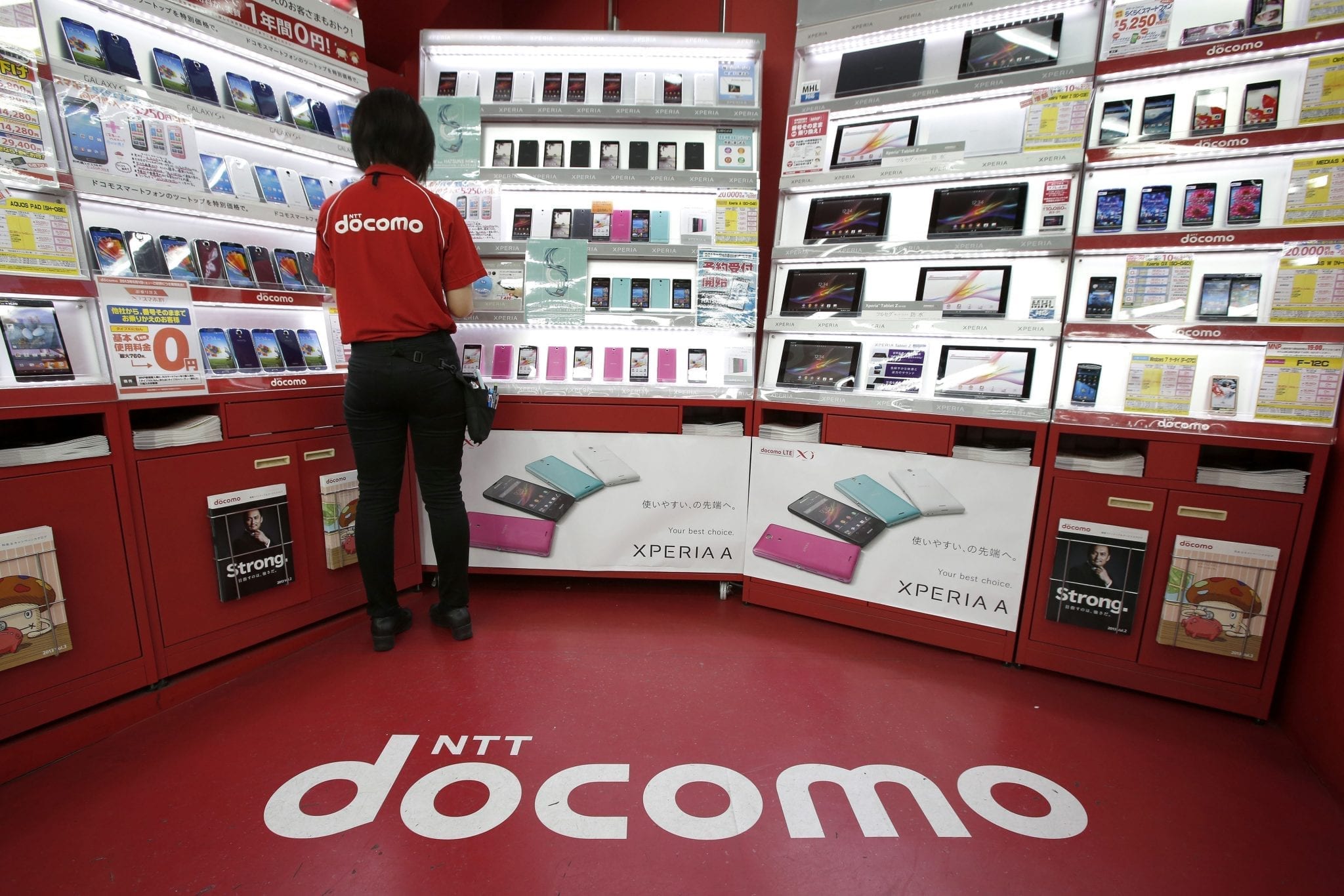
    Japan’s NTT Docomo has announced a new simplified mobile service fee structure that the operator says will reduce mobile charges by between 20% and 40%.

    The operator plans to completely separate handset and service fees and unify voice, SMS and data charges in response to criticism that its existing plans have been too complicated and hard to understand.

    The new plans are divided into two categories – a “Gigalight” plan which will charge based on data consumed, and a flat rate “Gigaho” plan for heavy data users.

    Docomo also plans to start offering family discounts of 500 yen ($4.46) per month for contracts covering two family members, and 1,000 yen per month for contracts with three or more members.

    Docomo’s new fee structure is also a response to pressure from the Japanese government on operators to reduce mobile service fees to bring them in line with prices in comparable markets.

    The operator expects that the new fee structure could reduce its income by as much as 400 billion yen ($3.6 billion) per year.

  • China raids Ericsson after license fee complaints

    China raids Ericsson after license fee complaints

    Last Friday, Chinese investigators raided Ericsson’s offices in Beijing after receiving complaints about the licensing fees that Ericsson charges phone makers.

    Amid the background of increased global tension over Chinese vendors’ 5G technology being banned by the US and other countries, officials from China’s State Administration for Market Regulation (SAMR) are looking into Ericsson’s patent licensing practices after receiving complaints.

    In an email to FierceTelecom, an Ericsson spokesman confirmed that the company was under investigation by SAMR.

    “Ericsson can confirm that the Chinese SAMR has formally initiated an investigation due to complaints against Ericsson’s IPR licensing practices in China. Ericsson is fully cooperating with the investigation and will refrain from further comments while it is ongoing.

    “At Ericsson, we license our industry leading patent portfolio on FRAND (Fair, Reasonable and Non-Discriminatory) terms and conditions and have always been committed to these FRAND principles.”

    Last month Ericsson claimed to have 49,000 patents, while Huawei counted 87,805 in its 2018 annual report.

    The Wall Street Journal said that roughly 20 SAMR officers raided Ericsson’s Beijing offices on Friday. Earlier this year, Chinese mobile phone makers complained about Ericsson’s licensing practices. Chinese media reports implied that licensing fees paid to Ericsson would increase with the rollout of 5G technologies and services.

    China’s People’s Posts and Telecommunications News said in an online report that Chinese smartphone vendors were concerned that Ericsson would impose 5G patent fees on top of the current fees for 3G and 4G technologies.

    China-based Huawei is battling Apple as the world’s second-largest smartphone maker behind Samsung.

    Last month, Huawei filed a lawsuit against the US government challenging a recently passed law that bans federal agencies from buying Huawei products.

    Huawei was the top vendor globally in the wireless packet core (WPC) market last year while rivals Ericsson and Nokia rounded out the top-three spots. A February report by Dell’Oro said that Huawei was the largest global equipment service provider last year with more than a 30% market share.

  • Indians bought 50% more 4G devices in 2018 says CMR

    Indians bought 50% more 4G devices in 2018 says CMR

    The latest CMR report, the Annual 4G LTE Devices India Market Review Report 2018, revealed that Indian consumers purchased 50% more 4G LTE devices in 2018 year-on-year, with shipments surpassing 200 million units. 4G devices include mobile phones, tablets and data cards. In 2018, 4G devices had a 64% market share.

    While 4G LTE enabled mobile device shipments crossed 60%, the 4G LTE tablets accounted for 44% of the total tablet shipments. 4G LTE contributed for 100% of the data cards shipped in calendar 2018.

    “4G is enabling Indians everywhere to raise above their social and economic challenges and connect with new possibilities. The 4G device penetration in India continues to gain traction, with 4G mobile phone and 4G tablet shipments on the rise. Reliance Jio Infocomm has been the X-factor,” said Prabhu Ram, head – Industry Intelligence Group (IIG), CMR.

    During the year, LYF led in the 4G LTE mobile handset segment with 33% market share, while Lenovo dominated the 4G LTE tablet market with 40% market share. LYF is the only Indian brand in the leaderboard shipping 4G LTE mobile handsets.

    Narinder Kumar, lead analyst-IIG, CMR, predicts 4G adoption will continue in CY2019 driven by 4G feature phones and bundled offerings at the entry level contributing to growth in 4G device shipments. Video and music streaming will fuel this 4G growth. “Over the long run, we anticipate 4G to play a major role in smart cities, and especially smart homes,” said Kumar.

    CMR analysts see 4G continuing to dominate the Indian market until 2024. That said, 5G should see a spike in adoption in India by 2023. CMR anticipates a modest spike for 5G by 2023, with CMR internal estimates pointing to 5G smartphone shipments in India to top 140M by 2025.

    “At CMR, our internal research estimates point to the 5G enabled devices contributing to 3% of the total smartphone shipments by 2021, and potentially reaching 16% by 2025. The course of 5G in India will be driven by how Jio plays its cards,” added Prabhu.

  • Microsoft said to be prepping its own AirPods challenger

    Microsoft said to be prepping its own AirPods challenger

    We know that Amazon is working on a pair of wireless earbuds that are supposed to offer better sound at a cheaper cost than Apple’s very popular AirPods. Now, according to Thurrott, it appears that Microsoft will also take a shot at Apple’s AirPods with its own wireless earbuds that could be named Surface Buds. This information comes from sources familiar with the company’s plans. Just as Apple’s AirPods come with Siri integration, and Amazon’s earbuds will be equipped with the Alexa virtual assistant, the Surface Buds will feature Cortana.

    The project has the code name of Morrison, possibly named after the late Jim Morrison who was the lead singer for The Doors. This won’t be the first set of earbuds to be released by the company. Back when Microsoft sold its Zune music player (its Apple iPod competitor), it sold wired earbuds as an accessory for users of the device. Besides being equipped with Cortana, the Surface Buds are expected to feature noise cancellation and technology that will allow users to more easily read content from their phones. We would expect the product to be compatible with both Android and iOS devices.

    If Microsoft is on the ball, it will have the Surface Buds available in time for the holiday shopping season. Besides Apple’s AirPods and Amazon’s upcoming earbuds, Microsoft will also be competing with the recently launched Samsung Galaxy Buds.

  • Jio raising $3.89b for tower unit spinoff:

    Jio raising $3.89b for tower unit spinoff:

    The fiber network unit Reliance Jio Infocomm is reportedly planning to raise around 270 billion rupees ($3.89 billion) in syndicated loans to help expand the newly created infrastructure business.

    Jio Digital Fiber plans to use the proceeds to expand its business and allow it to serve external customers from the telecom, ISP, power and other sectors.

    Reliance Jio is spinning off its fiber business as well as its tower business into standalone subsidiaries in an attempt to monetize the assets. The tower business is being spun out into Reliance Jio Infratel.

    Reliance Jio received approval for the demerger plan from the National Company Law Tribunal last month.

    Meanwhile Reliance Jio has reportedly also crossed the 300 million subscriber mark after just two and a half years in operation, putting it close to second-placed rival Bharti Airtel, which has around 340.3 million customers.

    According to Indian media, it took Airtel 19 years to pass the 300 million subscriber mark. If Reliance Jio continues its trajectory, it will knock former market leader Airtel into third place. The 2018 merger between Vodafone India and Idea Cellular created the current market leader Vodafone Idea, which has over 400 million customers.

  • Vietnam, Ericsson open IoT Innovation Hub

    Vietnam, Ericsson open IoT Innovation Hub

    The Vietnamese government has launched the first IoT Innovation Hub in the nation, in collaboration with Ericsson.

    The new center aims to provide a platform for IoT research and development, as well as commercial startups and IoT-related education.

    It will allow mobile operators, businesses, students, researchers and startups to develop and test IoT applications, and support the commercialization of IoT-based products.

    At an opening ceremony for the new Innovation hub, Vietnam’s Ministry of Science and Technology signed collaboration agreements with state-owned operators Viettel and VNPT, as well as a number of local universities, to support the operation and development of the center.

    Also at the event, Ericsson president of Vietnam, Myanmar Cambodia and Laos Denis Brunetti said the establishment of the center will help promote collaboration with Vietnam and Sweden in building initial platforms for innovation activities in Vietnam.

  • ZTE, China Mobile, Ericsson conduct 5G-4G VoLTE call

    ZTE, China Mobile, Ericsson conduct 5G-4G VoLTE call

    ZTE, the Guangzhou branch of China Mobile and Ericsson have announced a joint demonstration of a VoLTE voice and video call between 5G and 4G smartphones.

    The successful call, completed at the end of March, utilized non-standalone 5G networks provided by different vendors, as well as China Mobile Guangzhou’s existing 4G network.

    It used ZTE’s 5G and 4G smartphones for the VoLTE voice and video call, as well as network equipment from the two vendors.

    Guangzhou is one of five 5G pilot cities for China Mobile, which is investing the most heavily in 5G among China’s big three mobile operators.

  • Lack of clarity will stump 5G growth

    Lack of clarity will stump 5G growth

    As the first commercial deployments of 5G start to appear, the stage is set for consumers finally to find out what the powerful next-generation mobile standard promises can bring: an ambitious and far-reaching technological advance that transforms virtually all aspects of human activity—how we experience life, conduct business, create goods, and build societies.

    That’s the theory and the hope.

    For many in the industry 5G will set the stage for incredible change. However with standards are still being rolled out, it remains a confusing landscape, with varied and sometimes conflicting interpretations of what 5G is and what to expect from it.

    This confusion is impacting not just consumers but also complicating the industry’s ability to measure itself against a standard set of 5G expectations and requirements.

    To optimize short-term and long-term 5G adoption, it is imperative that clarity regarding what 5G is and when each capability will be available is established for both consumers and the ecosystem. To that end, IHS Markit follows the official 3GPP definition of 5G but also believes that this description needs to be understood within the context of everyday experience and concepts.

    According to the IHS Markit whitepaper, The promise and potential of 5G, 5G will improve existing services and enable new use cases, such as driverless cars, immersive entertainment, zero-delay virtual reality, uninterrupted video and no-latency gaming. On the industrial front, 5G will be key to expanding and realizing the full promise of the internet of things (IoT), with the technology’s impact to be felt in smart homes, smart cities and smart industries.

    “The marketplace implicitly understands 5G represents an unprecedented growth opportunity, with the initial smartphone rollout set to generate record shipment volumes,” said Francis Sideco, vice president at IHS Markit. “However, fewer people understand the iterative nature of major technology rollouts such as the one we are going through now with 5G—a process involving multiple major updates that will add new capabilities in the coming years. With each of these updates having the potential to significantly disrupt the market’s competitive dynamics, it’s critical for companies to clearly understand the implications of each rollout or risk falling behind the competition.”

    New 5G technical standards will eventually enable the creation of applications that could open new opportunities, inform new business models and transform everyday life for multiple industries and billions of users throughout the world.

    However, many of these capabilities won’t be available in initial 5G rollouts, but instead will arrive in subsequent releases of the standard to be implemented over the next few years. Each of the releases will deliver new challenges and opportunities not only for the wireless industry but also every industry for which the new use cases are envisioned. To fully realize the potential of these opportunities, competitors will need to understand and capitalize on new capabilities even before they are fully introduced.

    The 5G standard’s next release is already on the horizon, with the expected introduction of Release 16 in late 2019. The upcoming release will deliver highly desirable enhancements, including far greater reliability and peak data rates of 20 Gbps downlink and 10 Gbps uplink.

    “This next phase of implementation and rollout will trigger a race among mobile network operators to meet and take advantage of these performance enhancements. The winners of this race are likely to gain a competitive advantage as they gear up for the next wave of growth,” Sideco said.

    Future revisions will spur similar competitive battles, as 5G adds major new capabilities and expands into other markets beyond mobile communications, such as mission-critical applications and massive internet of things (IoT) deployments.

    “For companies throughout the technology supply chain—from network operators, to smartphone brands, to industrial and automotive device manufacturers and electronics suppliers—it will become increasingly important to understand the changes brought by each phase of the 5G deployment and to be ready to capitalize on the latest capabilities to gain a competitive advantage,” concludes Sideco.


  • Cloud fueled data center spending growth to $150b in 2018

    Cloud fueled data center spending growth to $150b in 2018

    Synergy Research Group (SRG) says a 30% spike in public cloud spending the data center hardware and software market grow to $150 billion in 2018. In addition, the requirement for ever-richer server configurations also drove up enterprise server average selling prices.

    Spending on enterprise data center infrastructure grew by 13% in part driven by the 23% growth in private cloud or cloud-enabled infrastructure, which helped to offset a marginal decline in traditional, non-cloud infrastructure.

    In terms of market share, ODMs in aggregate account for the largest portion of the public cloud market, with Dell EMC being the leading individual vendor, followed by CiscoHPE and Huawei. The 2018 market leader in private cloud was Dell EMC, followed by Microsoft, HPE and Cisco.

    Private cloud or cloud-enabled infrastructure accounted for a little over a third of the total. Servers, OS, storage, networking and virtualization software combined accounted for 96% of the data center infrastructure market, with the balance comprising network security and management software.

    “Cloud service revenues continue to grow by almost 50% per year, enterprise SaaS revenues are growing by 30%, search/social networking revenues are growing by almost 25%, and e-commerce revenues are growing by over 30%, all of which are helping to drive big increases in spending on public cloud infrastructure,” said John Dinsdale, chief analyst at Synergy Research Group.

    “We are also now seeing some reasonably strong growth in enterprise data center infrastructure spending, with the main catalysts being more complex workloads, hybrid cloud requirements, increased server functionality and higher component costs,” added Dinsdale.

  • Cloud gaming could make up half of 5G data traffic by 2022

    Cloud gaming could make up half of 5G data traffic by 2022

    Cloud gaming could generate as much as 50% of 5G data traffic by 2022, based on the rapid progression of cloud gaming services in recent months.

    That was one of the key findings presented during a recent livecast hosted by Openwave, which was attended by over 50 operators, including Vodafone, Orange, Deutsche Telekom, Verizon, AT&T and Telefónica.

    According to Openwave, most operators believe cloud gaming could represent 25% to 50% of 5G data traffic by 2022.

    As mobile operators deploy 5G networks, it’s vital that mobile operators prepare for the disruptive impact that cloud gaming could pose, the company noted.

    “The recent emergence of cloud gaming platforms including Google Stadia, Apple Arcade, Microsoft xCloud and Snap Games has not escaped the attention of the operator community,” said John Giere, president and CEO of Openwave Mobility. “Over-the-top (OTT) players have ambitious plans to become the ‘Netflix for gaming’, hosting libraries of thousands of instantly accessible games that, ultimately, will consume three to four times the amount of bandwidth on 5G networks, compared to standard definition video traffic. Needless to say this will impact mobile operator data strategies.”

    “While 5G network rollouts are still in their infancy, OTTs are already planning augmented, virtual and mixed reality services, in addition to cloud gaming. Combined with the expected continued growth of streaming video, these services will rapidly eat into the additional bandwidth provisions of 5G.”

  • Airtel launches e-book app store

    Airtel launches e-book app store

    India’s Bharti Airtel has expanded its OTT portfolio with the launch of a new app store for e-books.

    The Airtel Books app currently offers over 70,000 e-books from Indian and international authors, including some of the latest launch titles.

    The app will include a subscription service offering access to a curated selection of the e-books, priced at 129 rupees ($1.87) for six months and 199 for 12 months. Customers can also purchase books on a per-item basis.

    Airtel Books will be available to both Airtel and non-Airtel customers via both iOS and Android.

    Airtel is offering all users a complimentary 30 day trial and access to free titles from the Readers Club component of the app. Smartphone customers will also be offered five free books from a selection of over 5,000 paid e-books.

    The new OTT app adds to Airtel’s existing digital content portfolio, which includes offerings including the Wynk Music subscription service and Airtel TV.

    “Airtel Books is another major milestone in our journey towards building a world-class digital content portfolio. E-books is a fast growing segment along with music and video, thanks to large screen smartphones becoming the cornerstone of digital lifestyle,” Airtel CEO for content and apps Sameer Batra said.

    “We are delighted to roll out this initiative and take it to the smartphone users across India through our deep distribution reach.”

  • 5G to drive backhaul revenue growth through 2028

    5G to drive backhaul revenue growth through 2028

    The global satellite backhaul market is expected to reach over $32 billion in revenue by 2028, with 5G supporting one third of the overall market, according a new report released from NSR.

    According to the report, mobile wireless backhaul is the largest opportunity in this space, as satcom becomes a mainstream solution and 5G opens opportunities for satellite to seamlessly integrate with the global telecom ecosystem.

    Trunking also appears to be re-born via lower capacity costs and slowdown in fiber expansion, while hybrid networks represent a long-term play for emerging OTT content distribution models, the research firm said.

    The direct impact of 5G in satcom won’t be seen before mid-2020s, but growth will be sizable, generating one of every three new dollars for backhaul capacity revenues through 2028.

    The ground segment has a key role to play in the integration of satcom into 5G, by responding to new performance requirements and making the solution transparent and easy to adopt for mobile operators.

    “The combination of competitively priced capacity with advanced ground segment makes satcom a relevant solution for mobile network operators continually seeking new sources of revenue and who are increasingly capex-conscious and risk-averse,” stated Lluc Palerm, NSR senior analyst and report author.

    “The transition to broadband is accelerating in areas like Latin America, where for the first time in 2018, 4G generated the highest share of traffic over satellite versus 2G and 3G.”

    Satcom can also find the upside of OTT in hybrid networks.

    NSR said satellite is still king for content broadcasting, and as content moves to the edge to support the explosion on IP Video and new formats like UHD and eventually VR/AR proliferate, satcom will emerge as a key tool in the ecosystem.

    Business models are evolving quickly, resulting in the increased demand for managed services.

    “With MNOs focusing on core services and minimizing capex exposure, managed services are the perfect match between satcom’s streamlined operations for remote areas and the MNO need to continue expanding coverage profitably,” the research firm noted.

    “New technologies like small cells expand the addressable market into the most ARPU-constrained and remote locations, where revenue-sharing schemes are gaining traction.”

  • Airtel contracts Ericsson for VoLTE upgrade

    Airtel contracts Ericsson for VoLTE upgrade

    India’s Bharti Airtel has contracted Ericsson to expand its voice over LTE (VoLTE)services to cater to growing demand.

    Under the agreement, Airtel will deploy Ericsson’s Cloud VoLTE solution, which is used to deliver HD voice enabled VoLTE services onto a customer data center.

    Ericsson Cloud VoLTE includes a virtual IMS and supporting nodes to add VoLTE services onto existing LTE data networks.

    The upgrade forms part of Bharti Airtel’s network transformation program, Project Leap, and is aimed at helping Airtel carve out a larger share of the growing Indian VoLTE market. Ericsson’s latest Mobility Report predicts that there will be 780 million VoLTE subscriptions in India by 2023.

    “We remain committed to building a state-of-the-art future-ready network as part of…Project Leap, and delivering best-in-class digital experiences to our smartphone customers,” Bharti Airtel CTO Randeep Sekhon commented.

    “This partnership with Ericsson will allow us to rapidly increase VoLTE capacity to serve our growing traffic, and make our network prepared to easily introduce new communication services today and in 5G.”