Category: Telecom

Retail News Asia is committed to providing both local and global retailers with the latest Telecom & Telco news throughout the Asian market. This on a daily base.

  • SoftBank JV to invest $125m in Project Loon

    SoftBank JV to invest $125m in Project Loon

    Japan’s SoftBank has announced that its joint venture HAPSMobile will invest $125 million in Google’s Project Loon to advance the use of high-altitude vehicles to carry mobile base stations.

    HAPSMobile, the joint venture between SoftBank and US-based unmanned aerial vehicle systems company AeroVironment, was established in 2017 to conduct network equipment research and development for the high-altitude platform station (HAPS) business.

    Under the agreement with Google, Loon has been given the right to invest the same sum in HAPSMobile at a later date.

    The two companies have also agreed to actively explore commercial collaborations to accelerate the development of high altitude network connectivity solutions, such as the network of stratospheric balloons that Loon is trialling to deliver internet access to unserved areas of the world.

    Potential areas of collaboration being negotiated include enabling flight vehicles from each party to connect and share the same network connectivity in the air, as well as the establishment of a wholesale business that would allow HAPSMobile to utilize Loon’s vehicle and technology, and allow Loon to utilize HAPSMobile’s in-development unmanned aircraft.

    Other possibilities include a jointly developed communications payload that is adaptable to multiple flight vehicles, a common gateway or ground station that could be deployed globally and used by both companies to provide connectivity over their platforms, and adapting Loon’s fleet management system and temporospatial SDN for use by HAPSMobile.

    “Building a telecommunications network in the stratosphere, which has not been utilized by humankind so far, is uncharted territory and a major challenge for SoftBank,” SoftBank CTO Junichi Miyakawa said.

    “Working with Alphabet’s subsidiary Loon, I’m confident we can accelerate the path toward the realization of utilizing the stratosphere for global networks by pooling our technologies, insights and experience. Even in this current era of coming 5G services, we cannot ignore the reality that roughly half of the world’s population is without Internet access. Through HAPS, we aim to eliminate the digital divide and provide people around the world with the innovative network services that they need.”

    “We see joining forces as an opportunity to develop an entire industry, one which holds the promise to bring connectivity to parts of the world no one thought possible,” Loon CEO Alastair Westgarth added.

    “This is the beginning of a long-term relationship based on a shared vision for expanding connectivity to those who need it. We look forward to what the future holds.”


  • Indonesia’s Teleglobal acquires capacity on SES-12

    Indonesia’s Teleglobal acquires capacity on SES-12

    Indonesia’s PT Indo Pratama Teleglobal has arranged to provide broadband access to underserved rural areas of the country via an agreement with satellite operator SES Networks.

    Under the five-year agreement, Teleglobal will use the SES-12 satellite and SES Networks’ managed data services to provide internet access and mobile backhaul services to 150,000 remote sites.

    Teleglobal has contracted 1.3GHz of capacity on the SES-12, which has six regional beams and 72 high throughput user spot beams.

    Teleglobal was selected by Indonesia’s Ministry of Communication and Information Technology to deliver rural capacity to complement the ongoing Palapa Ring project, which aims to connect the major islands in Indonesia with 11,000km of undersea fibre-optic cables to provide broadband internet infrastructure.

    The Indonesian Internet Service Providers Association (APJII) estimates that internet penetration in rural Indonesia is just 48%, compared to 72% in urban areas. It is even lower outside the most populous island of Java, falling to only 2.5% in some outlying provinces.

    “At Teleglobal, we believe in the power of connectivity, in opening new doors of opportunity to communities in Indonesia and around the world,” Teleglobal director Candra Indianto said.

    “With the new service offering, Teleglobal is bridging the digital divide and bringing much-needed e-Government and other essential services to the underserved rural communities of Indonesia. SES Networks’ unparalleled global reach and operational expertise make them the ideal partner to provide reliable, high-speed broadband connectivity to all corners of Indonesia.”

  • Verizon to waive $10 5G fee for three months

    Verizon to waive $10 5G fee for three months

    Verizon will waive for three months the $10 fee it planned to charge subscribers for accessing its 5G network. After launching in Chicago and Minneapolis earlier this month, the carrier announced an additional 20 cities across the US where it will turn on 5G services this year.

    Verizon said it’ll waive the charge for subscribers in Chicago and Minneapolis. A few of the reviewers reported disappointing results using the network, and some recommended consumers don’t pay for the service until the network is expanded and the kinks are worked out.

    While most people who tested the network reported achieving speeds of 300-600 Mbps, there were plenty of problems with finding the 5G network signal, or keeping the Motorola Z3 phone connected to it.

    During Verizon’s quarterly earnings call April 23, Verizon CEO Hans Vestberg said the network in those initial two cities was “performing as expected on a brand new technology being deployed for the first time in the world.”

    “As more features within the network become available for deployment through ongoing software innovation, we will provide increased coverage, improved capacity and greater throughput,” Vestberg said, according to a transcript of the call provided by Motley Fool.

    Verizon’s deployments in Chicago and Minneapolis used the carrier’s millimeter wave (mmWave) spectrum technologies to deliver high speeds in dense urban areas. But as Wave7 Research’s Jeffrey Moore told FierceWireless this week, mmWave technologies tend to have weak signal propagation, pointing to concerns about the urban use case for the technology when there are large buildings and other obstacles that can block the signal.

    Vestberg seemed to concede that there are challenges with mmWave during the earnings call. “We all need to remind ourselves, this is not a coverage spectrum,” he said. It’s unclear if those considerations factored into Verizon’s decision to wave the $10 fee for its 5G network.

  • Globe extends GoWiFi service to over 2,000 sites

    Globe extends GoWiFi service to over 2,000 sites

    The Philippines’ Globe Telecom has announced it has expanded its GoWiFi public WiFi service to more than 2,000 sites across the country.

    The operator is now providing over 20,000 access points nationwide, up from 15,000 in 2018, and the network is hosting 18 million sessions per month, Globe said.

    During the year, Globe plans to further expand the network to cover more health clinics and hospitals, colleges and universities, and retail establishments.

    The service is also currently available at major transit points including the Ninoy Aquino International Airport (NAIA), as well as Metro Rail Transit (MRT) and Light Rail Transit (LRT) stations.

    Globe provides a free GoWiFi service with a maximum allocation, as well as a paid service than can be used to extend usage beyond the free allocation.

    Both services are available to all users with WiFi-enabled devices and select international numbers, and provide speeds of up to 100Mbps depending on location.

  • Vietnam gets its first MVNO Provider

    Vietnam gets its first MVNO Provider

    Indochina Telecom has become the first MVNO in Vietnam, operating on the VinaPhone network. The operator is initially introducing services for workers in industrial parks in nine provinces and cities.

    Indochina Telecom has been attempting for over a decade to launch MVNO services in Vietnam, the report states. The company had initially failed to negotiate an MVNE deal with Viettel, but has secured one with VinaPhone, the mobile subsidiary of VNPT.

    The company plans to introduce a variety of packages tailored to different groups and user segments, and will cooperate with Vietnam’s mobile network operators to negotiate the best deals.

    Indochina Telecom’s introductory package provides unlimited under 20 minute within network and 30 minute out of network calls for 77,000 dong ($3.31) per month.

  • SK Broadband agrees to merge with t-broad

    SK Broadband agrees to merge with t-broad

    South Korea’s SK Telecom has arranged to merge its fixed broadband subsidiary SK Broadband with the nation’s second largest cable TV operator t-broad to help both companies weather rapid changes in the pay TV market.

    Under the proposed merger, which still requires government approval, SK Telecom would take a 74.4% stake in the combined company.

    Meanwhile t-broad’s parent company Taekwang Industrial would take a 16.8% stake in the company, with the remaining held by financial investors, treasury stock and others.

    The merger ratio has been set at 75:25 based on corporate valuation analysis, the companies said. The two companies have also attracted additional investment of 400 billion won from financial investor MiraeAssetDaewoo.

    As of June 2018, t-broad had around 3.14 million subscribers. Adding SK Broadband’s IPTV subscriber base of 4.54 million recorded at the same period, the combined entity would become a media company with around 8 million subscribers.

    But the two companies could face difficulty securing competition regulatory approval for the merger due to this figure.

  • SenRa, myDevices launch IoT in a Box in India

    SenRa, myDevices launch IoT in a Box in India

    Pan-India LoRaWAN network service provider SenRa is teaming with IoT firm myDevices to launch an IoT solution for industrial use in India.

    The solution, called IoT in a Box, will initially be rolled out to provide end-to-end commercial refrigeration monitoring solutions for the Indian market.

    “We are excited to bring myDevices’ IoT in a Box solution offerings to the Indian market,” said Ali Hosseini, CEO of SenRa. “This collaboration will allow us to increase adoption of LoRaWAN in India and in its mainstream market. IoT in a Box is an off-the-shelf solution which will rapidly enable digitalization PAN India.”

    According to SenRa, there are over 90 million commercial refrigeration units in operation around the world and the global demand for commercial refrigeration equipment is expected to increase 4.5% each year through 2020.

    The company believes the partnership with myDevices will help drive India’s digital movement into industries yet to be penetrated in the Indian market.

    With India’s IoT market poised to touch $15 billion by 2020, new and cost-effective solutions are an integral part of driving the market growth and IoT adoption in India.

    The IoT in a Box’s commercial refrigeration temperature monitoring offering will now drive IoT adoption into industries such as retail, supply-chain management, logistics, healthcare, and even hospitality.

    The company believes the myDevices’ IoT in a Box solution and SenRa’s LoRaWAN network services will allow businesses like pharmaceutical labs, supermarkets, corporate cafeterias, restaurants, hospitals, and food manufacturing units to better monitor and manage their refrigerators and deep-freezing units remotely and in real-time.

  • Alibaba Cloud Ranked First in Asia Pacific by Gartner

    Alibaba Cloud Ranked First in Asia Pacific by Gartner

    Alibaba Cloud, the cloud computing and data intelligence arm of Alibaba Group, has been named first in Asia Pacific(*) market share for IaaS (Infrastructure as a Service) and IUS (Infrastructure Utility Services) in two consecutive years as per Gartner’s latest report revealed earlier this month named Market Share: IT Services, 2018. It has also retained its top three global provider position in the same space.

    According to this Market Share conducted by global analyst firm Gartner, Alibaba Cloud led the Asia Pacific market for IaaS and IUS with 19.6% market share (+4.7% market share gain from 2017). The technology innovator is followed by 11.0% and 8.0% market shares of the second (AWS) and third player (Microsoft) respectively in Asia Pacific in 2018.

    Alibaba Cloud boasts a strong network in Asia Pacific, with 15 availability zones in the region outside mainland China, covering Hong Kong, Singapore, Australia, Malaysia, Indonesia, India and Japan markets. It is the only global cloud provider that has set up local data centers in Indonesia and Malaysia, offering a wide range of cloud and data analytics products.

    “It is very encouraging that our continued dedication to enabling cloud development across industries in both Asia Pacific and globally(**) has been recognized by world’s leading research and advisory company. As the only global cloud provider originated from Asia, we will continue to champion millions of businesses through our world-class infrastructure, advanced analytics tools and thriving ecosystem.” said Lancelot Guo, Vice President of Alibaba Group and Head of Strategy and Marketing at Alibaba Cloud.

  • SATO Launches Cloud-based Labeling Data Management Service

    SATO Launches Cloud-based Labeling Data Management Service

    Restaurant chains, supermarkets and retailers spread across wide geographic areas face serious challenges with data management for product labeling. As labeling data updates are often supported by system administrators but carried out by local teams, the process has traditionally been time-consuming, entailing a process fraught with possibility of error. Research shows two top priorities among organizations in terms of data management are increasing efficiency and protecting their reputation and brand. Over half (52%) of organizations maintain high-quality data for the purpose of increasing efficiency, while 39% do so to protect their brand1.

    With SATO App Storage, users can streamline processes and ensure the highest level of accuracy in their labeling operations. By centralizing management of labeling data, food and retail chains can ensure product information is always up to date and accurate. Administrators can arrange for updates of label data and label designs to be automated in real time or scheduled for specified locations. The SATO system reduces the time required for data management operations by over half2 when performing label data updates. It automates updates of apps and printer settings when replacing printers and streamlines management of seasonal label data for holidays and price markdowns.

    Also the service features a cloud network of proven security, safety and high availability with best-in-class SLA performance, an Intrusion Prevention System (IPS) to prevent exploits and SSL/HTTPS encryption for secure communication.

    “Our secure and maintenance-free cloud printing service ensures up-to-date data anytime, anywhere for peace of mind and cost savings,” said Hayato Shindo, President of SATO International Co., Ltd. “Paired with our native value-added services that enable management of label data, design templates and the devices themselves, SATO now offers a comprehensive labeling management solution.”

  • Microsoft, BMW team up to drive industrial IoT adoption

    Microsoft, BMW team up to drive industrial IoT adoption

    Microsoft and BMW have teamed up on a new initiative that they say will speed up the adoption of industrial IoT solutions.

    The two announced  at Hannover Messe earlier this month that they plan to develop an Open Manufacturing Platform (OMP) aimed at enabling faster and more cost-effective innovation in the manufacturing sector.

    In manufacturing today, production and profitability can be hindered by complex, proprietary systems that create data silos and slow productivity.

    The OMP is designed to break down these barriers with the creation of an open technology framework and cross-industry community, the companies said in a joint statement.

    It is expected that the initiative will support the development of smart factory solutions that will be shared by OMP participants across the automotive and broader manufacturing sectors.

    The goal is to significantly accelerate future industrial IoT developments, shorten time to value and drive production efficiencies while addressing common industrial challenges, the companies said.

    The OMP will be built on the Microsoft Azure industrial IoT cloud platform. BMW already manages more than 3,000 machines, robots and autonomous transport systems on Azure cloud, IoT and AI. The company said it will provide use cases to other manufacturers who sign up to the platform.

    Microsoft and BMW said they aim to bring in more manufacturers and suppliers and the goal is to have between four and six partners with them, working on 15 use cases by the end of the year.

    According to the companies, members will have access to reference architecture with open source components to integrate their own systems and a repository of data models to apply machine learning solutions.

    The platform meets the interoperability standards established by OPC.

    “The use of open international industry standards such as OPC UA in the OMP community enables manufacturers, machine builders and suppliers to integrate their existing equipment and systems efficiently and securely,” said Stefan Hoppe, president and CEO of the OPC Foundation. For a long time, companies have promoted proprietary, closed ecosystems — the OMP commitment to open development will shape tomorrow’s manufacturing.”

  • 5G helps Ericsson swing to profit in Q1

    5G helps Ericsson swing to profit in Q1

    Ericsson swung back to a 2.4 billion kronor ($254.3 million) net profit for the first quarter of 2019, partly as a result of the growth opportunities being afforded by 5G.

    Total sales increased 13% year-on-year to 48.9 billion kronor, driven by growth in North America due to the market’s early lead in the deployment of 5G.

    Ericsson CEO Börje Ekholm commented that the company has to date announced an industry-leading 18 commercial 5G deals.

    Meanwhile Ericsson managed to improve its gross margin to 38.5% from 35.9% due to improvements in its networks and managed services segments.

    But while network equipment sales grew 10% year-on-year during the quarter quarter, managed services revenue fell 5% over the same period as a result of scheduled contract exits.

    “As previously communicated, we continue to take strategic contracts and incur costs for 5G field trials and, in addition, by end of 2019 we expect large-scale deployments of 5G to commence in parts of Asia,” Ekholm said.

    “Combined, this will gradually impact short-term margins but strengthen our position in the long term. The impact of strategic contracts and 5G field trials was limited in Q1. The 5G market is gaining momentum and we are well positioned to capture opportunities.”

    Meanwhile Ekholm revealed it is now in the early stages of negotiating a settlement to close an investigation by both the US Securities and Exchange Commission (SEC) and the Department of Justice (DOJ) into allegations the company was involved in a bribery scheme in certain EMEA markets.

  • Google’s Curie cable reaches Chile

    Google’s Curie cable reaches Chile

    Google’s submarine cable empire now hooks up another corner of the world. The company’s 10,000km Curie submarine cable has officially come ashore in Valparaiso, Chile.

    While there are a few steps left before RFS I’m sure, the Curie cable system now connects Chile with southern California. it’s a four-fiber-pair system that will add big bandwidth along the western coast of the Americas to Google’s inventory.  Also part of the plans is a branching unit with potential connectivity to Panama at about the halfway point where they can potentially hook up to systems in the Caribbean.

    Subcom’s CS Durable brought the cable ashore on the beach of Las Torpederas, about 100km from Santiago. In Los Angeles the cable terminates at Equinix’s LA4 facility, while in Chile the company is using its own recently built data center in Quilicura, just outside of Santiago.

    Google has a variety of other projects going on around the world as well, as the company continues to invest in its infrastructure.  Google’s projects tend to happen pretty quickly, as unlike the rest of us they don’t necessarily have to spend time finding investors to back their plans.

  • Huawei taps Infosys to help its build cloud ecosystem

    Huawei taps Infosys to help its build cloud ecosystem

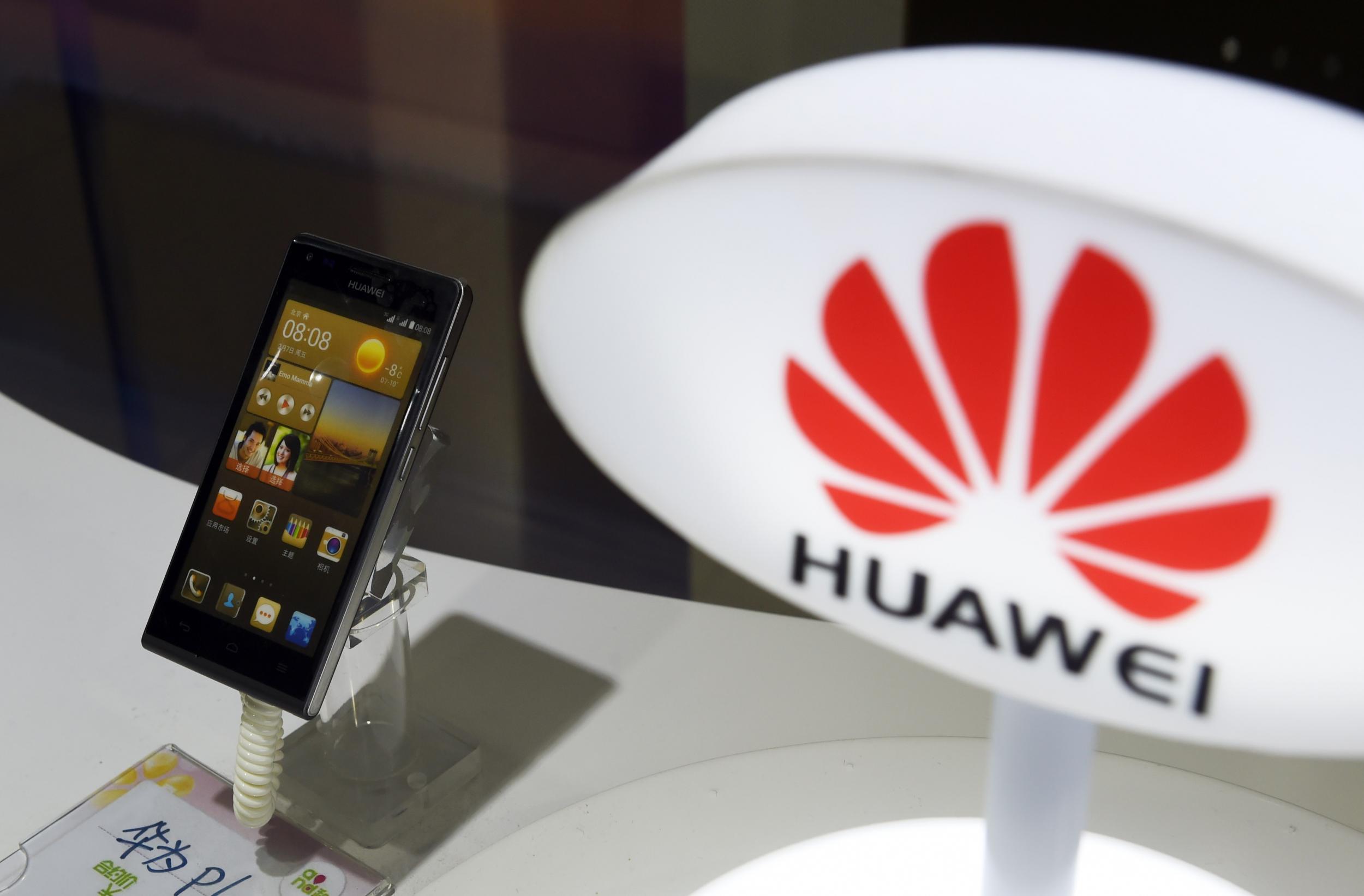
    Huawei’s continued quest to be one of the world’s largest cloud players took a small step forward with the announcement of a new partnership with Infosys.

    Huawei Cloud has signed a memorandum of understanding (MOU) with India-based IT firm Infosys in order to help enterprises transition to the digital cloud. As part of the MOU, Infosys will join the Huawei Cloud Partner Network (HCPN) in order to better blend Infosys’ products with Huawei Cloud’s offerings.

    “Combining Huawei Cloud’s product innovation and Infosys’ strengths in next-generation digital services, we will help our clients accelerate their transition to the cloud,” said Infosys President Ravi Kumar, in a prepared statement. “As part of this engagement, we will provide a suite of technologies hosted on Huawei Cloud, such as workload migration solutions including SAP and other enterprise workloads.”

    Over the past several years, Huawei has made a determined effort to become one of the world’s largest cloud providers, but it faces stiff competition from Amazon Web Services, Microsoft Azure, and Google Cloud. Closer to home, Huawei also competes with China-based Alibaba. Alibaba has been making a concerted effort to expand its cloud business into Europe.

    According to a February report by Synergy Research Group, Amazon Web Services increased its market share at the end of last year to the point where it is equivalent in size to the next four competitors combined. In order, Microsoft, Google, IBM and Alibaba held the top spots after AWS, according to Synergy Research Group.

    While Huawei wasn’t mentioned among the top cloud providers in the report, it has been trying to build a cloud ecosystem since at least 2016 when it first launched its “All Cloud” strategy for ICT infrastructure. A year later, Huawei announced it was seeking cloud computing partners to become the world’s fifth largest cloud provider behind AWS, Azure, Google and Alibaba.

    Given its size, Huawei Cloud may be able to muscle its way into cloud markets that are currently underserved by the top four companies, but there are also a host of medium and regional cloud companies.

    In this week’s first quarter earnings report, which was the company’s first, Huawei touted the artificial intelligence capabilities that are in Huawei Cloud.

    “Huawei CLOUD remains committed to innovation. It aims to build the best possible hybrid cloud, provide full-stack AI solutions for intelligent industries, and make inclusive AI a reality,” the company said in its earnings report. “More than one million enterprise users and developers have chosen to work with Huawei Cloud. In Q1, Huawei Cloud services were launched in Singapore, and Huawei Cloud released its AI model market.”

    In yesterday’s press release, Huawei said the number of HCPN partners had exceeded 6,000. Working with those partners, Huawei Cloud has added 2,800 applications that are available in 23 regions around the world.

  • SP Telecom to build alternative fiber network in Singapore

    SP Telecom to build alternative fiber network in Singapore

    Singapore-based telecommunications joint venture SP Telecom has engaged PCCW Solutions as a consultancy partner to help design and deploy the company’s planned alternative fiber network.

    The company has provided details of its plans to build an alternative to Singapore’s next-generation national broadband network (NG-NBN).

    SP Telecom, a joint venture between ST Engineering and Singapore Power Group, is deploying its network alongside the power lines operated by SP Group to create a separate fiber infrastructure to the NG-NBN.

    SP Telecom’s network will serve as the only rival to the NG-NBN common network infrastructure, offering route diversity and redundancy for enterprise customers.

    The alternative data fiber network will utilize SDN-NFV capabilities in a bid to allow users greater control, visibility and scalability of their network assets, as well as built-in cybersecurity capabilities.

    These capabilities will allow for the deployment of network functions as a service on demand without the need for costly hardware investment.

    SP Telecom plans to offer services including access to an IoT-as-a-Service platform, edge cloud resources, and bandwidth provision on demand.

    “An increasing number of businesses rely on their communications systems for mission-critical applications. They can no longer afford any downtime that can cause major problems and significant losses in terms of costs, productivity and reputation,” SP Telecom CEO Titus Yong said.

    “As SP Telecom forges forward towards providing an advanced solution that supports Smart City developments, we are confident that the consultancy partnership with PCCW Solutions will enable our plans of becoming an advanced network provider to meet fast-evolving digital needs globally.”

  • United Kingdom said to reject calls for Huawei 5G ban

    United Kingdom said to reject calls for Huawei 5G ban

    The UK government has reportedly approved Huawei supplying some 5G equipment for operators in the nation despite warnings from intelligence agencies and the US government of a potential security risk.

    Leaked discussions believed to have been held at the UK government’s National Security Council meeting from Tuesday indicate that Huawei will be able to supply non-core 5G network components including antennas.

    According to the leaked details, the UK’s prime minister Teresa May ignored warnings from some senior ministers to make the decision.

    Approval would also put the UK government at odds with its Five Eyes allies the US and Australia, which have made moves to ban Huawei from providing 5G equipment in their respective markets.

    While the UK government has denied that a final decision has been made, government ministers are also calling for a full investigation into the leak of the National Security Council discussions about Huawei.

    Huawei has repeatedly denied concerns from the US and some other nations that its equipment could be used to facilitate espionage by the Chinese government.