Category: Telecom

Retail News Asia is committed to providing both local and global retailers with the latest Telecom & Telco news throughout the Asian market. This on a daily base.

  • Airtel taps Ciena for high-speed backbone network

    Airtel taps Ciena for high-speed backbone network

    India’s Bharti Airtel has contracted Ciena to deploy a large-scale photonic control plane backbone network that will connect more than 4,000 towns across the nation.

    Under the agreement, announced at Mobile World Congress in Barcelona, the companies will collaborate to deploy a network spanning 130,000km.

    The network deployment, which the companies said will be one of the world’s largest photonic control plane deployments, forms part of Airtel’s Project Leap network transformation program.

    Airtel plans to use the network to serve exploding demand for high-speed data services, and to enable the delivery of high-speed broadband to end users over 4G/5G/FTTH architectures.

    For retail and enterprise customers, the network will also support bandwidth on demand, optical VPNs, latency based routing and dynamic data center interconnection.

    Airtel CTO Randeep Sekhon said the backbone architecture will be capable of working with data rates of 400Gbps and higher, and delivering low-latency software-controlled connectivity for cloud infrastructure.

    “Airtel has always pioneered the introduction of cutting-edge network technologies to serve its customers. We are pleased to work with Ciena to build one of world’s largest optical spine and leaf networks, which is also a big step towards 5G readiness by leveraging our huge fiber assets,” he said.

    “This will not only scale our network for massive capacity but also protect traffic and enhance service delivery to all our customers. It will also help Airtel further strengthen its position as a key enabler of digital experiences in an increasingly connected world.”

  • VMware announces 5G-ready Telco Cloud platform

    VMware announces 5G-ready Telco Cloud platform

    VMware has announced the launch of its 5G-ready Telco Cloud platform, as well as new solutions aimed at helping ease operators’ migration to 5G.

    Announced at Mobile World Congress in Barcelona, the new Telco Cloud platform is optimized for both 4G and 5G using a single architecture that supports both networks.

    “5G is at a massive inflection point, and planning decisions made today will have far reaching financial and operational ramifications for CSPs going forward,” VMware EVP for strategy and corporate development and GM for Telco NFV Group Shekar Ayyar said.

    “By moving away from the inflexible, hardware-defined architectures of the past, and rolling out 5G as a fully-virtualized architecture right out of the gate, telcos will be able to beat competitors to market with new value-added services and improve the performance and operational efficiencies of their networks. VMware today provides the best foundation for the 5G-ready telco cloud.”

    The company also announced new and upgraded solutions in its telco portfolio aimed at helping operators prepare their networks for 5G.

    These include VMware Smart Assurance 10, that will provide full integration with VMware vCloud NFV, the new VMware NSX-T 2.4 Data Center release, and an expanded VMware Ready for NFV Certification Program.

    The upgraded portfolio also includes Vmware HCX – which is designed to help operators build hybrid highways interconnecting heritage infrastructure and 5G environments on which commercial OpenStack ecosystem workloads can be migrated to a distributed, multi-cloud architecture.

  • China Unicom hosts 5G in smart education conference

    China Unicom hosts 5G in smart education conference

    China Unicom is collaborating with Chinese gaming and mobile application developer NetDragon WebSoft to develop 5G-enabled future classroom applications.

    The operator jointly held a 5G + Smart Education Industry Education conference in Wuhan to demonstrate the potential of 5G to transform the education process.

    The conference, which was also organized by the National Engineering Research Center for E-Learning of Central China Normal University and National Engineering Laboratory for Educational Big Data, ad co-organized by NetDragon, Huawei and the China Information Communication Technologies Group Corporation.

    At the conference, China Unicom demonstrated the use of 5G and holographic technology to provide a new-experience open physics lecture to students across different regions simultaneously.

    NetDragon WebSoft also  demonstrated a wide range of education products, including Holographic Interactive Learning, VR Immersion Classroom, One-Stop Learning, and other educational products.

    “5G will become a crucial foundation for our country’s information and communication construction, as well as the key to the development of industrial internet and artificial intelligence,” China Unicom deputy general manager Liang Baojun said.

    “In this context, China Unicom, as one of the leaders in the telecommunication industry, will jointly conduct 5G business research with multiple industrial enterprise partners to lay the foundation for promoting full commercial use of 5G. At the same time, we will leverage on resources from our existing network, incubation of 5G application and support from our industrial chain to fully support the development of education in China.”

  • Broadband Forum releases home Wi-Fi test standard

    Broadband Forum releases home Wi-Fi test standard

    With the rapid development of 4K TV, online gaming and smart homes, statistics from Broadband Forum show that more than 1 billion users now have access to fixed broadband, and Wi-Fi has become an essential part of broadband services provided by operators.

    Operators are increasingly providing service packages featuring Wi-Fi to enhance the home broadband experience of end users. This has created a compelling need to optimize Wi-Fi performance to support end-to-end performance of broadband services, including development of 4K video and VR services, and to minimize operators’ operating and maintenance costs.

    This need is highlighted by Ovum reports, which show that Wi-Fi problems account for 30% to 60% of operators’ broadband complaints.

    Clearly, home Wi-Fi quality is vital to both delivering a high-quality broadband experience and to operators’ operational efficiencies, yet there were no existing unified performance testing standards – until now.

    To address this issue, Broadband Forum announced the release of the first Wi-Fi performance test standard – Technical Report 398 Indoor Wi-Fi Performance Test Standard (TR-398) – during Mobile World Congress 2019.

    TR-398 is the first standard that systematically and quantitatively evaluates home Wi-Fi device performance across six dimensions: receiver sensitivity, throughput, coverage, multi-user support, anti-interference, and stability.

    By defining Key Performance Indicators (KPIs), such as the Wi-Fi equivalent bandwidth (throughput), rate at different distances, and throughput for multiple online users, the standard helps telecom operators and end users select optimal Wi-Fi solutions.

    The TR-398 standard describes the purpose, test scope, conditions, test cases, and standard thresholds for indoor home gateway Wi-Fi performance testing, helping telecom operators efficiently test indoor Wi-Fi performance, develop home networks and video services, and improve home broadband experience.

    From its inception as a project within Broadband Forum, TR-398 has received extensive industry attention. More than 16 operators and equipment vendors have actively participated in and supported the drafting of the standard.

    Many operators around the world are known to be planning to use TR-398 as the Wi-Fi performance admission specification for home broadband customer-premises equipment (CPE).

    According to Broadband Forum CEO Robin Mersh, Wi-Fi is the key infrastructure for broadband Internet access in the connected home and for a high-quality ultra HD video experience.

    “Wi-Fi performance of single gateways must meet service requirements and comply with standards to accelerate industry development,” said Mersh. “The goal of TR-398 is to define carrier-class home Wi-Fi performance. We are delighted that a critical mass of key industry players has participated in crafting this standard and are excited for the role that this standard will play in enabling a superior broadband experience in the connected home of the future.”

  • Axiata Digital joins Singtel’s cross-border m-payment alliance

    Axiata Digital joins Singtel’s cross-border m-payment alliance

    Singtel Group and Malaysia’s Axiata Digital have signed an agreement to collaborate in the areas of mobile financial and digital services to promote the growth of the ASEAN digital economy. Under the agreement, Axiata Digital will join Singtel’s cross-border mobile payment alliance VIA, expanding the alliance’s footprint beyond Singapore and Thailand to Malaysia.

    Axiata Digital operates the Boost Malaysia mobile wallet, which as 3.7 million customers and 66,000 merchant points across the nation.

    In addition, the Singtel Group’s Open Platform payment gateway will partner with Axiata Digital’s API platform to enable cross-sharing of product portfolios.

    Both parties have also agreed to jointly promote and drive cross-border payments and to explore collaboration around rewards and loyalty programs.

    VIA was launched in October with Thai partners AIS and Kasikornbank. AIS is one of Singtel’s regional mobile associates. Singtel group plans to expand the VIA initiative to cover other associates Bharti Airtel in India, Globe in the Philippines, and Telkomsel in Indonesia.

    “We are delighted to welcome Boost Malaysia on board the VIA alliance, which gives us presence in an important new market. This shows the tremendous potential for us to grow cross-border mobile payments even beyond the countries where Singtel’s regional associates operate,” Singtel CEO Arthur Lang commented.

    “VIA’s continued expansion will provide consumers with the ease and convenience of using one mobile wallet to pay across multiple regional markets as they travel. We look forward to more partners joining VIA.”

  • SoftBank deploying Cisco SRv6 network

    SoftBank deploying Cisco SRv6 network

    Cisco is collaborating with SoftBank on the world’s first Segment Routing IPv6 (SRv6) deployment. With the anticipation of the coming 5G era, Cisco has been assisting SoftBank to deploy an SRv6 network nationwide to build a future network architecture that is extremely scalable, with improved reliability, flexibility and agility, all while helping to reduce capex and opex.

    Current mobile networks are deployed as divided networks, with several layers and complicated control plane processing, which makes it difficult to respond to strict quality requirements like in the case of 5G. Deploying SRv6 in a 5G mobile network aims to simplify network layers and integrate user plane functions from end-to-end with only IPv6 protocol.

    “Converging 5G features into the end-to-end IPv6 layer with Segment Routing capabilities, is the key to embodying 5G in a simple, scalable architecture,” SoftBank CTO Junichi Miyakawa said.

    “With the depth of portfolio and strong network knowledge that Cisco brings to the table, we knew together we could bring our vision to life.”

    “SoftBank has kept an intense focus on improving service quality for its customers, which can be challenging when trying to reduce costs,” said Sumeet Arora, Senior Vice President of Service Provider Networks, Cisco. “With the launch of SRv6 network programming, it is pioneering the next phase of IP networking through automation, and championing the needs of its customers.”

    Cisco is leading the disruption in the industry with its technology innovations in routing, 5G, subscriber experience (mobile, cable, fixed), automation, optical and optics. Together with its Customer Experience team of experts, Cisco enables service providers, media and web companies to reduce cost and complexity, helps scale and secure their networks, and grow their revenue.

  • Indian telcos call for fiber deployment fund

    Indian telcos call for fiber deployment fund

    Indian operators are calling for the establishment of a fund to help incentivize deployments of fiber across the country ahead of the introduction of 5G.

    The Cellular Operators Association of India (COAI) has urged the government to offer incentives including tax relief, rationalization and reduced red tape on investments in order to encourage the deployment of more fiber.

    The industry body believes a national policy should be established that would include the introduction of uniform and reasonable approval processes and right of way policies.

    As part of the government’s National Digital Communications Policy, the government is considering introducing incentives, and establishing a special purpose vehicle to grant low-interest loans to operators to fund network expansion.

    The policy also calls for the introduction of a new National Fibre Authority to help meet operators’ needs for fiber backhaul. The government aims to increase India’s fiber footprint fivefold by 2022 to around 7.5 million route kilometers. According to the policy, less than a quarter of current telecom towers are connected to a fiber backbone.

  • Juniper Networks to buy Mist Systems for $405m

    Juniper Networks to buy Mist Systems for $405m

    Juniper Networks has arranged to acquire Mist Systems, a provider of cloud-managed wireless network solutions powered by artificial intelligence, for $405 million. Juniper Networks plans to use the acquisition to fill wireless gaps in its enterprise networking portfolio through the addition of Mist’s WLAN platform.

    Mist’s AI-driven wireless platform is designed to enhance the reliability of Wi-Fi networks. The company has also developed an AI-driven virtual assistant to simplify wireless troubleshooting.

    The company also uses virtual Bluetooth low energy technology, combined with Wi-Fi and IoT connectivity, to provide location-based wireless services to customers, including indoor wayfinding, proximity notifications, traffic analytics and asset tracking.

    Juniper Networks CEO Rami Rahim said he expects the acquisition to enhance the company’s presence in the cloud-managed segment of the wireless networking market, and to allow it to expand AI-driven network management capabilities across the end-to-end enterprise network.

    “Mist Systems is a great fit for Juniper and for our enterprise customers,” explained Rami Rahim, CEO of Juniper Networks,” he said.

    “Juniper and Mist share a common strategic goal. We believe in the Software-Defined Enterprise and Mist’s focus on bringing AI to IT is consistent with our core belief that we need to simplify operations and improve customer experience while lowering costs.”

    The acquisition still requires regulatory approvals and is expected to close by the end of the second quarter.

  • M1 to be delisted after crossing buyout threshold

    M1 to be delisted after crossing buyout threshold

    Konnectivity Corp has succeeded in its takeover attempt for Singapore’s third largest operator M1 and will now take the company private. Konnectivity, the joint venture established by major M1 shareholders Keppel Corp and Singapore Press Holdings, has announced in a stock exchange filing that its share in M1 has now crossed the 90% threshold.

    With fewer than 10% of shares now owned by the public, M1 now no longer meets the threshold of listing on the Singapore stock exchange and will be delisted.

    Remaining shareholders will have until March 18 to accept the S$2.06 ($1.52) per share buyout offer if they do not want to own shares in a delisted company.

    Keppel and SPH first mounted their buyout offer for M1 in January, after announcing an intention to do so in December. Their joint venture Konnectivity gained majority control of M1 in mid-February.

  • Operators not ready to exploit 5G opportunities

    Operators not ready to exploit 5G opportunities

    Syniverse’s global survey of service providers reveals that the industry is banking on driving new revenues from enterprise 5G opportunities, and that many have yet to develop the underlying payment, partnership, and interoperability systems that will allow a 5G ecosystem to monetize itself and flourish.

    Enterprise focus

    The survey highlights the degree to which 5G ecosystems are expected and prepared to play a significant part in an operator’s business model. Nearly 60% of respondents say that 5G will swing their organization’s focus to enterprise ecosystems, 77% of respondents expect their organizations to lead 5G ecosystems and offer advanced enterprise services, such as network slicing.

    Confident in recouping their investment in 5G enterprise plays, 90% of service providers surveyed said they have made progress in identifying vertical market opportunities. However, respondents raised significant concerns about the practical challenges of engaging in a new ecosystem that will entail many new partners, payment mechanisms and security challenges.

    Challenges remain

    Seventy-four percent acknowledged that coordinating multiple partners is somewhat or the most difficult challenge, followed by maintaining service quality (70%), and revenue-sharing mechanisms (65%).

    Where multiple partners require billing and charging, as many as 83% of respondents identified security and immutability of ecosystem transactions as a somewhat or most important feature, followed closely by the ability to allocate revenue between all partners (78%).

    Despite the scale of these specific concerns, as many as 51% say they have not yet identified, or are only just beginning to identify, their technical requirements for multi-party billing, reconciliation, and payment solutions.

    “One of 5G’s defining aspirations is that it offers service providers the capability to expand beyond the traditional consumer boundary by supporting enterprise services brought about by the internet of things (IoT), with such innovations as smart cities, self-driving cars, and robotics,” said Bill Hurley, chief marketing officer, Syniverse.

    “The ability to ensure operators can monetize these ecosystems is a particularly important aspect, along with the ability to ensure that every contributor to those ecosystems gets their fair share of revenue. Without monetization and related financial security, ecosystems just won’t grow.”

    Not ready

    The survey highlighted further concerns about the industry’s readiness to effectively monetize 5G, with just 10% of respondents saying their existing systems are suitable for multi-party billing, reconciliation and payment solutions in 5G. Ecosystem complexity also raises specific challenges around invoicing and paying non-operator partners.

    Seventy-seven percent of respondents see fraudulent activity as somewhat or the biggest challenge in this area, closely followed by revenue assurance for billing, and settlement vs. contract data (71%).

    Blockchain future

    Syniverse affirm development effort around the application of emerging technologies like blockchain as a means to transcend industry silos. This technology will ultimately allow universal payment processing and reconciliation among any company or provider across any technology by securely validating and managing transactions.

    It also sees blockchain as allowing companies to efficiently and securely overcome the inherent 5G challenges associated with security, monetization, and connecting partners.

    Anticipating a future dominated by 5G, Syniverse launched a 5G signaling service that supports cross-network connectivity for the IoT, artificial intelligence (AI), and virtual reality (VR), as well as interoperability with 4G and 3G networks.

    It is also partnering on a virtualized network that is already powering 30 million connected cars in Asia that all need globally accessible cellular connectivity. In addition, challenges around security of transactions in 5G ecosystems are being addressed by firewalls and a private global network that protect data from cyberattacks arising from IoT devices being connected to the internet.


  • Thai telcos to establish telecom CERT

    Thai telcos to establish telecom CERT

    Eight Thai telecom operators have reportedly signed an agreement to establish a dedicated telecom computer emergency response team (CERT).

    The operators, which include incumbents AIS, Dtac and True as well as state-owned operators TOT and CAT, will establish the CERT over the next 12 months.

    The collaboration will initially involve sharing information about cyber threats, as well as collaborating on analytics to deal with threats to state agency websites and e-commerce sites.

    Other signatories include Symphony Communication, CS Loxinfo and United Information Highway.

    The move to establish a dedicated industry CERT is in line with the cybersecurity bill recently passed by Thailand’s National Legislative Assembly. The telecom body will be the second industry CERT to collaborate with the national CERT after the finance industry.

    The telecom CERT will be self-regulated and managed by the Telecommunications Association of Thailand, the report states.

    The association is seeking funding of 20 million baht ($630,000) from telecoms regulator NBTC to help pay for the establishment of the CERT. The full budget has not yet been set, but all members are expected to contribute.

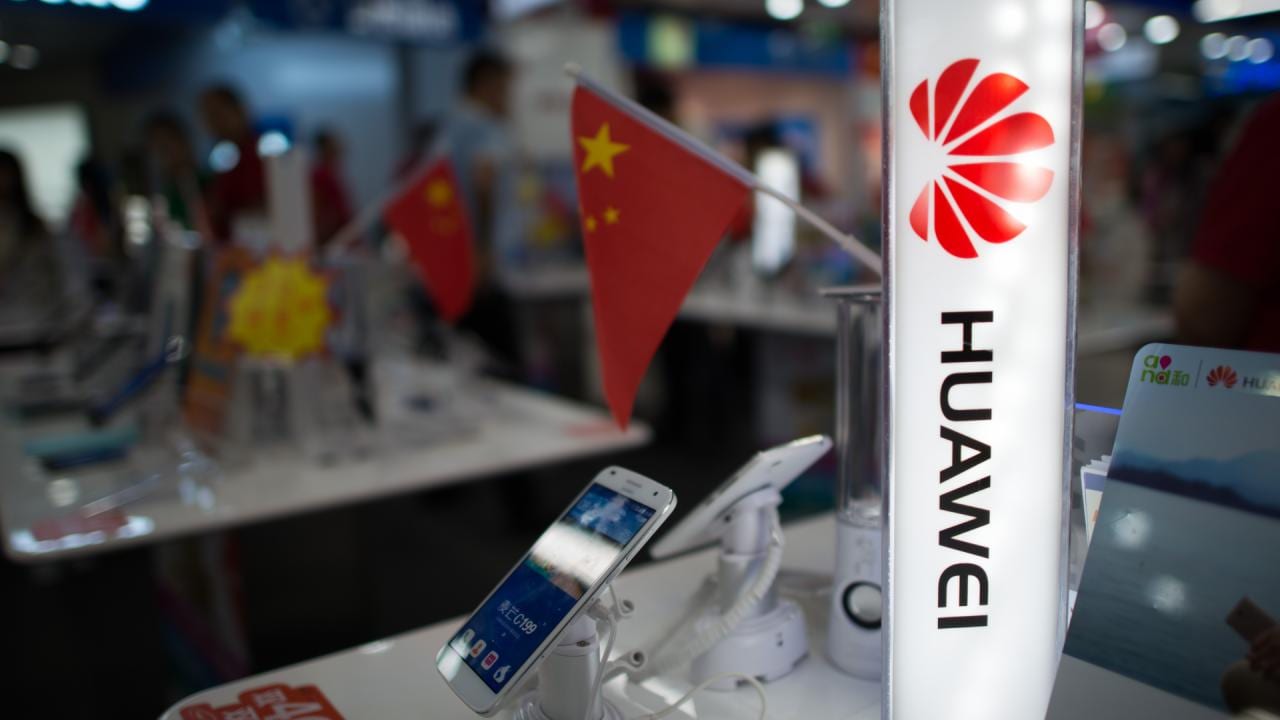
  • New Zealand bans Huawei from 5G mobile network

    New Zealand bans Huawei from 5G mobile network

    From offering mobile payment services such as WePay and Alipay to hiring front-desk staff proficient in Mandarin, the New Zealand Chinese Travel and Tourism Association was not short of advice for Kiwi tourism operators on how to benefit from an influx of mainland Chinese visitors to New Zealand this year.

    “Chinese tourists enjoy spontaneous travel so there are a lot of last minute bookings. For businesses who’d like to attract Chinese tourists, this is the major challenge for them,” association chairman Simon Cheung said in a promotional video.

    But preparations for the 2019 China-New Zealand Year of Tourism – a campaign by both governments to strengthen economic and bilateral ties – were cast in doubt when China postponed the launch event, which was expected to take place in Wellington next week. Huawei is banned, but where is the backlash in New Zealand?

    New Zealand Prime Minister Jacinda Ardern on Tuesday acknowledged that the country’s relationship was complex and not without challenges, but dismissed talk there was a rift. But she revealed that dates for her first official trip to China, planned for the end of last year, still had not been finalised.

    “I have been issued with an invitation to visit China, that has not changed. We continue to find dates that would work,” she said.

    Her admission fuelled concerns from opposition parties and the media that ties, already tense after Ardern’s government blocked Chinese telecom giant Huawei from the nationwide roll-out of a 5G data network over “significant national security concerns”, were deteriorating further.

    Last weekend, an Air New Zealand flight en route to Shanghai was turned back to Auckland, with some reports suggesting it was due to how paperwork on board the plane had referred to Taiwan. According to Bloomberg, the airline said the Boeing 787-9 Dreamliner was not yet certified to fly to China, but had been “unfortunately assigned” the flight.

    The Civil Aviation Administration of China last year told foreign firms and airlines not to refer to Taiwan as anything other than a Chinese territory on their websites.

    Former New Zealand government trade consultant Robert Scollay said from the point of view of those in the country, China’s latest actions “raised the question of whether this is a temporary expression of displeasure or if it means something more significant”.

    After Wellington’s decision on Huawei, which it took in support of its fellow members in the Five Eyes intelligence alliance, there was a debate on whether it had finally chosen a side in its long-running balancing act between the United States and China – its two most important economic partners.

    But Chinese foreign ministry spokesman Geng Shuang on Friday dismissed the suggestion, saying both countries had a common interest in ensuring healthy and stable ties. “China is willing to work with New Zealand on the basis of mutual respect, equality and mutual benefit to promote the continued development of China-New Zealand relations,” Geng said.

    Noakes from the University of Auckland said he was not convinced ties had deteriorated, despite recent events. “The really unlucky thing is that the perceived souring of ties dovetails with commonly held misperceptions of what China is and what engagement with China means for New Zealanders.”

    Jason Young, director of New Zealand Contemporary China Research Centre at the Victoria University of Wellington, had a more ominous take.

    “This can become a self-fulfilling prophecy,” he said. “We talk ourselves into having a bad relationship with China, and that’s quite dangerous.”

  • 5G to change life, drive innovation

    5G to change life, drive innovation

    Korea’s Finance Minister Hong Nam-ki said once the world’s first 5G smartphone is introduced at the end of March and 5G connectivity is in full swing, life will improve significantly.  “Commercialized 5G is a core infrastructure of the fourth industrial revolution as it superconnects everything in real time and transfers massive amounts of data at high speeds,” Finance Minister Hong said during a meeting on innovation-led growth Wednesday. “The 5G smartphone, which is to be launched for the first time in the world in March, and 5G telecommunications services will be used in interactive education and digital health care, which will contribute significantly to the quality of life.”

    He said the government has been working on establishing the foundation for the commercialization of 5G, including distributing the 5G frequency to telecommunication companies in June 2018, expanding R&D investments and even setting a new tax rate – a maximum of 3 percent – for companies building the 5G network.

    “This year, the three telecommunication companies – SK Telecom, KT and LG U+ – are expected to invest more than 3 trillion won [$2.67 billion]” in 5G, Hong said.

    Samsung Electronics is expected to hold an event at the end of March to introduce its first 5G smartphone, dubbed the “Galaxy S10 X.” It will also be celebrating 10 years since the mobile phone manufacturer released its first Galaxy phone.

    In December, the company tested its 5G smartphone as the three Korean mobile telecommunication companies officially switched on 5G-network services for clients in the greater Seoul area and in some of the larger cities in the country.

    Finance Minister Hong said the commercialization of 5G services will spark innovation and convergence in various industries, including manufacturing, logistics, health and medical services, even in disaster prevention and management.

    5G is estimated to have maximum data transmission speeds 20 time faster than 4G.

    According to the government, 5G connectivity will not only increase the access to virtual and augmented reality, including wireless holograms for education or entertainment, but with the help of 5G, autonomous vehicles will roam the streets while traffic control will be managed more efficiently by applying artificial intelligence technologies in real time.

    Smart factories with wireless robots and quality control and delivery by drones will become a reality.

    By 2026, the global 5G equipment and device market is expected to be worth around 344 trillion won, while the telecommunication service market will be worth around 410 trillion won and the 5G-based convergence market about 1,440 trillion won.

    By 2030, the economic effects of 5G will be valued at an estimated 47.8 trillion won in Korea, which is equivalent to 2.5 percent of the country’s economy.

  • SK Telecom to launch data analyzer with Microsoft

    SK Telecom to launch data analyzer with Microsoft

    Korea’s No. 1 mobile carrier SK Telecom said Wednesday it will collaborate with U.S. software giant Microsoft for big data solutions to expand its presence in the global market. SK Telecom said it signed a development and global business cooperation agreement with Microsoft in Silicon Valley to step up development and global marketing in big data analysis.

    Under the partnership, SKT will launch its real-time big data analyzer, Metatron, on Microsoft’s public cloud platform Azure.

    Metatron provides quick and easy data analysis, which also includes data collection, storage and visualization processes. Azure is the world’s second-largest public cloud provider, used in 140 nations across the globe.

    The two companies agreed to launch the big-data-based asset performance-management service for the commercial market in July.

    “The partnership is expected to set the ground for Metatron’s footprint in the global market,” Choi Yong-jin, SKT’s data labs director, said in a release.

    Already well-established in its domestic market, SK Telecom has focused on leveraging its mobile network technology expertise and increasing revenue in content, software and security.

    During MWC Barcelona, set to open next Monday, the company plans to demonstrate its 5G technology, including quantum-safe cryptography solutions and mobile edge computing.

    Quantum-safe technology encrypts transmitted data using special quantum keys, which prevents interception or theft.

    Edge-computing systems process data locally, in nearby data centers or on devices, which eases the strain on networks and improves data reply times.

  • Huawei confident of 5G role in Vietnam

    Huawei confident of 5G role in Vietnam

    Huawei Technologies says it has a good chance to be a supplier of 5G equipment to Vietnamese service providers. Fine Fan, CEO of Huawei Vietnam, said that the Chinese company is in talks with Vietnamese partners on conducting 5G trials later this year. “We are confident of expanding in Vietnam,” Fan said, adding that Vietnamese Minister of Information and Communications Nguyen Manh Hung “is open to every provider.”

    Fan said that Huawei cannot be beaten on quality or cost in Vietnam. “Huawei will provide better technology and solutions, along with financial support to local operators to deploy 5G.”

    Huawei’s expression of confidence comes as major mobile carriers in Vietnam have previously announced plans to develop 5G networks using equipment from other suppliers, including Ericsson, Nokia and Samsung Electronics.

    Viettel, the country’s largest telecommunications company, became the first firm to receive permission to trial 5G services last month.

    The company has earmarked $40 million for the development of its own 5G chipset, but was also considering using technology from Ericsson and Nokia, its president and CEO Le Dang Dung said.

    Last November, Minister Hung said at a conference that Vietnam should test 5G in 2019 and ensure nationwide coverage by 2020.

    “Vietnam should be one of the first to launch the network, at least in Hanoi and HCMC,” Hung said. The country had been one of the last in Southeast Asia to roll out 4G services.

    Huawei has been the largest provider of 2G and 3G network equipment in Vietnam, though the company lost its lead when 4G arrived, CEO Fan said.

    Vietnam’s telecom market was estimated at more than $16 billion in 2016, with the three state-owned providers, Viettel, MobiFone, and VNPT, accounting for 95 percent of the market.

    5G is said to offer speeds 100 times faster than 4G, primarily used for smartphones and other similar devices. 5G is also expected to support new applications like remote medical procedures and autonomous driving.