Category: Uncategorized

  • How Cryptos Bait Clients

    How Cryptos Bait Clients

    Traditional banks look on as clients are cleverly lured away by cryptocurrency providers.

    How about a Lamborghini? The latest iPhone? Or simply five bitcoins? Cryptocurrency providers dangle potential prospects with the allure of never-ending riches as a way of smoothing their entry into the world of digital currencies.

    Greed is always the start. Bitcoin, as the world’s eminent cryptocurrency, is constantly at a new high. Kick yourself for not being invested. One thing is sure. You always want to know more.

    Landing on Some Platform

    You start searching the internet and find plenty of stuff when you look up crypto or bitcoin. That is also where many crypto platforms lurk, ably guiding users to their websites. An example of that is crypto.com. It paid a tidy sum for the domain name – and it almost always features at the top of any search engine.

    But cryptos do a great deal more than just that to get new clients. Their second play is a simple one. Get current clients to recommend their platform and they often spend a good deal of money doing just that.

    Starting Bonus

    Up to $50 or $100 a head are on offer for new clients. It allows them to start buying and selling coins immediately. They can also transfer them to other platforms or simply pay the money into their bank accounts if they want to. It allows them to experience the brave new crypto world without risking their own money. As it is often at the start that beginner’s mistakes are made – but when that happens at least they haven’t lost real money.

    Entry Quiz

    Crypto firms have been banging on the ad drum in the U.S. in a big way, particularly when the government was sending stimulus checks out. Cryptocurrency investments were touted as a great inflation hedge. The pitch worked and the main American platforms saw buoyant uptake as a result.

    Coinbase, a known listed crypto provider, has found another way to attract users. Anyone interested can answer a quiz. They are rewarded with coins that they can send to their private banking account should they want to. But what they are really after is getting them to playfully engage with virtual money early on.

    Simple Apps

    The providers also do everything they can to cut complexity and become as attractive to as many people as possible. Internet domain names are difficult to remember – so they offer simple apps with very few functions for beginners. Practiced, experienced users are directed to broader websites.

    Storytelling is also rampant. Investors and clients are frequently relayed heartwarming stories about how the lives of some have been changed since they started investing in crypto.

    Ask the CEO

    Such stories can also be told live at so-called Ask-Me-Anything (AMA) rounds. The heads of the platforms make themselves available online to tell everyone what their business model is. They also try to allay the uncertainties of anyone interested. It provides a genuine, real-world touch.

    They also answer one of the main burning questions proactively. How do investors actually get their money back? The companies cooperate with the main credit card companies including Visa and Mastercard. You can use crypto for normal purchases online. Not only does that build confidence – but it also integrates digital money into daily life.

    Naturally, they don’t refrain from pointing out the regulatory licenses they have in order to leave a serious, institutional impression. But new clients have to look closely if they actually want to understand what license the providers have and what it is for.

    Using it for Mortgages

    In the meantime, crypto providers have a range of products on offer. No one really needs a legacy bank anymore. Mortgage anyone? No problem. High-interest deposit? No problem. Instantaneous payment to the other side of the world? No problem.

    What are the established banks doing against all of this? Instead of actively trying to keep clients, they instead try to scare them off by threatening a dire picture of catastrophic losses. They often build barriers when clients appear to become interested in digital money. Banks and sometimes credit card companies often don’t execute payments for crypto platforms.

    But with that, they risk angering their clients – possibly pushing them away completely.

  • Grammarly update brings major improvements to iPhone and iPad apps

    Grammarly update brings major improvements to iPhone and iPad apps

    Grammarly, the cloud-based app that checks your spelling, grammar, punctuation, and clarity to suggest better solutions for your writing style is getting an important update, which adds important features to iPhone and iPad apps.

    Apart from bumping the app to version 2.0, Grammarly developers introduced a brand-new editor for iPhone and iPad, which promises to offer users writing feedback on long-form documents, as well as personal statistics and milestones to help them improve while using the app. More importantly, the new editor is compatible with hardware keyboards too.

    Next in line, we have support for Safari extensions, which allows users to bring the app to just about any mobile web app. Last but not least, Grammarly Keyboard, one of the several apps included in Grammarly, now allows users to access the service’s writing suggestions in any mobile app.

    Of course, the usual bug fixes and performance improvement changes are included in the update too, so if you’re a long-time Grammarly user, then you’ll probably notice some of these too. Keep in mind that Grammarly requires a monthly subscription, but it will considerably improve your writing style, as well as highlight mistakes and makes suggestions for non-native speakers.

  • Coca-Cola to fully acquire Gatorade rival BodyArmor for $5.6 bln

    Coca-Cola to fully acquire Gatorade rival BodyArmor for $5.6 bln

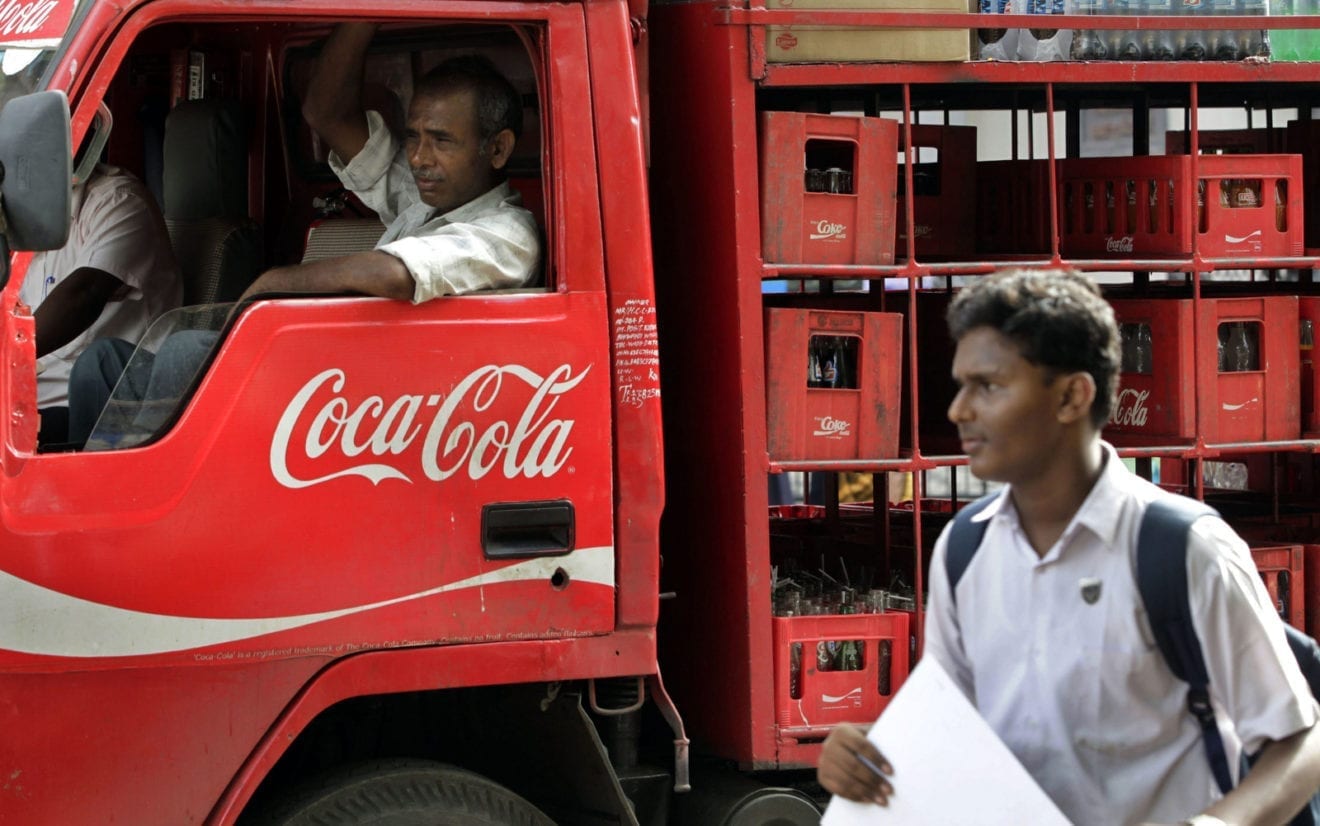
    Coca-Cola said on Monday it would buy the remaining stake in BodyArmor it did not already own for $5.6 billion, as the soda maker amps up its sports drink portfolio to take on market leader, PepsiCo Gatorade.

    The deal marks a shift in strategy for the world’s largest beverage maker after it spent the last year offloading or discontinuing brands, including its own energy-drink brand, to focus on Coca-Cola sodas.

    The deal, which values BodyArmor at about $6.59 billion, is Coca-Cola’s largest for a single brand; It comes about three years after the company bought British coffee chain Costa for $5.1 billion.

    BodyArmor, which markets itself as an electrolyte-filled energy recovery drink for athletes, currently makes about $1.4 billion in annual retail sales and has a 50% growth rate, Coca-Cola said.”It gives Coke a strong stable of products in the rapidly growing sports hydration category. It’s a nice premium brand that has an opportunity for expansion over time,” Edward Jones analyst John Boylan said about BodyArmor that gained popularity after basketball star Kobe Bryant backed it in 2013.

    However, Boylan believes the massive deal would only “give Coke a solid No. 2 position in an attractive category”.

    Coca-Cola, which had first acquired a 15% stake in BodyArmor in 2018, said the brand’s co-founder Mike Repole will stick around after the deal to advise on the marketing and packaging of products.

    At the time Coca-Cola took its initial stake, BodyArmor was valued at $2 billion, according to a Sunday Wall Street Journal.

    The deal comes as Coca-Cola and rival PepsiCo face immense supply chain bottlenecks, forcing the companies to raise prices to counter higher freight and raw material costs. PepsiCo has even said it has had to deal with a shortage of Gatorade bottles.

  • Melbourne retail to reopen last Friday

    Melbourne retail to reopen last Friday

    It’s been a grueling 20 months for many Victorians who have gone in and out of lockdown, but on Friday the state is set to welcome a raft of new freedoms — and will potentially say goodbye to some COVID-19 restrictions once and for all.

    As the state reaches its 80 percent double-dose vaccination milestone, regional Victoria and metropolitan Melbourne will follow the same rules, while gyms, retailers and entertainment venues will reopen to the fully vaccinated.

    Leanne Walsh, an instructor and co-owner of a small martial arts school in Craigieburn to Melbourne’s north, said she was excited to welcome students again.

    “We’re just looking forward to opening up when we can,” Ms Walsh said.

    “During the lockdown, we lose contact with our students and obviously then have to rebuild our student base.”

    Her center has been closed for most of the year, but she said it has been “coping very well” thanks to business grants provided by the state government during the pandemic.

    But Ms Walsh said questions remained around the reopening of her business and said it would be a challenging journey to “COVID normal” as her martial arts school negotiated new policies like the vaccine mandate.

    “I don’t know that we can open on Friday, as I need to clarify if the students need to be double-vaccinated,” she said.

    “It’s really just the vaccinations that are a little unclear as we don’t fall into the mainstream gym or community sport.”

    The Victorian government has said it will move into a “vaccinated economy” once 90 percent of people over the age of 16 receive their two doses, with only fully vaccinated people allowed to go to gyms, retail stores, theatres, and other venues.

    At that 90 percent milestone, expected on November 24, caps and density restrictions will also be scrapped and masks w

  • Taxi firm Vinasun revenue plunges 10 times

    Taxi firm Vinasun revenue plunges 10 times

    Taxi firm Vinasun saw its revenue in the third quarter plunge 10 times to VND23 billion ($991,000) as the fourth Covid-19 wave wrecked the transport industry.

    The company posted a loss of VND91 billion, its seventh losing quarter in a row, increasing the chances of being delisted from the Ho Chi Minh Stock Exchange (HoSE).

    Months of strict social distancing in HCMC, where the company mostly operates, have caused revenue to plunge due to restrictions on public transport.

    In the first nine months, revenue fell by nearly half year-on-year to VND400 billion. It subsequently recorded a loss of VND188 billion.

    In the next 12 months, the company needs to pay nearly VND100 billion in loans.

  • Ducati Resumes Factory Tours At Borgo Panigale

    Ducati Resumes Factory Tours At Borgo Panigale

    Guided tours inside the Ducati Factory have resumed from October 2021, after having been discontinued due to the coronavirus pandemic. The Ducati Museum re-opened with pandemic safety regulations in place in May 2021, but the factory had not been open for tours, until now. Visitors during the factory tour will have the opportunity to walk through the production lines, observing what goes inside the factory where Ducati motorcycles are created. The tours are guided and can be booked on Mondays and Fridays of each week.

    Three separate morning tour slots are open, as well as three-afternoon slots. Online booking is on the dedicated platform for both factory tours and Museum visits. In order to ensure the safety and health protection of visitors and workers, access to the facility will be possible by reservation only during the hours indicated with a limited number of entries. The presentation of a valid EU Digital COVID Certificate is mandatory, with the exception of children under 12 years and people unfit for a vaccination with a medical certificate, Ducati announced in a press statement.

    The ticket for the Ducati Museum tour is 17 Euros (around ₹ 1,840), while a combined Museum and Factory tour ticket is for 32 Euros (approximately ₹ 2,785), and will be a day-long tour. For high school students, Ducati is also opening its interactive Physics in Motion laboratory (Fisica in Moto) ba

  • French energy company invests in Vietnam rooftop solar developer

    French energy company invests in Vietnam rooftop solar developer

    French company EDF Renewables has made an undisclosed investment into a rooftop solar power developer subsidiary of VinaCapital, seeking to profit from the booming industry in Vietnam.

    With the investment SkyX Energy, the holding company of SkyX Solar that has 30 megawatt-peak of solar projects under operation, plans to invest more than $100 million into further develop 200 megawatt-peak of rooftop solar and distribute energy solar projects for customers over the next few years, VinaCapital stated.

    “The potential for renewables in Vietnam is enormous, and we are keen to expand our footprint in the country by drawing on our global know-how in rooftop solar solutions,” said Yalim Ozilhan, Southeast Asia director of EDF Renewables.

    In recent years, Vietnams’ rooftop solar energy sector has grown from virtually nothing into Southeast Asia’s leading solar market, with cumulative rooftop solar capacity totaling 9.3 gigawatts by the end of last year, VinaCapital said.

    EDF Renewables is an international leader in renewable energies, with a gross installed capacity of 13.8 gigawatts worldwide.

    SkyX Solar invests, designs, builds and operates solar systems for its commercial and industrial customers in Vietnam.

    Founded in 2003, VinaCapital is a leading investment management firm headquartered in HCMC, with a diversified portfolio of over $3.7 billion in assets under management.

  • AirAsia Group reorganises airline units; eyes Cambodia airline venture

    AirAsia Group reorganises airline units; eyes Cambodia airline venture

    AirAsia Group has formed a new holding company for its four airline units, in a group-wide business reorganization to better distinguish its airline and digital ventures.

    The group says its four airlines — in Malaysia, Philippines, Thailand and Indonesia — will now come under the AirAsia Aviation Limited holding company.

    Current group president for airlines Bo Lingam will helm the company as its chief executive.

    AirAsia Aviation will be one of the eight “digital portfolio companies” in the group’s stable — the other companies include cargo and logistics venture Teleport, MRO unit Asia Digital Engineering, as well as its AirAsia “Super App”.

    AirAsia Group chief Tony Fernandes said in August that “a split” between the group’s core airline business and its digital ventures is inevitable “at some point”.

    The group doubled down on its digital offerings amid the coronavirus crisis, which has pummelled its airline business. It first launched AirAsia Digital in September 2020, comprising five portfolio companies in areas such as payment services, logistics, food and travel.

    In the latest announcement, Lingam says the “structural change” will help “facilitate strong projected growth” across the group’s offerings.

    “The AirAsia Aviation Limited entity holds our existing airline investments and paves the way for new airline ventures to be formed in due course,” he says.

    Lingam hinted at Cambodia as one potential market for such a venture. He says: “We will continue to review new markets to operate from in the future, like Cambodia for example, when we can connect [Southeast Asia] once again with the best value fares and lifestyle offerings.”

    AirAsia in November 2020 said it was “actively exploring” opportunities for a local airline presence in the Indochina region, though it did not elaborate further.

    Separately, AirAsia Aviation has also set up a consulting division, which Lingam says is “tasked at reviewing new airline partnerships and franchise opportunities”.

    He remains hopeful of an imminent recovery, helped by a ramp-up in vaccinations in its key operating markets. For instance, Malaysia, where the group is based, has recently eased interstate travel restrictions.

    “Pleasing progress is also underway in our other airlines in Thailand, Indonesia and the Philippines as services are resuming in line with accelerated vaccination rates and the easing of travel restrictions in our key markets,” he adds.

  • Apple wants you to install iOS 15.0.2, iPadOS 15.0.2 and watchOS 8.0.1

    Apple wants you to install iOS 15.0.2, iPadOS 15.0.2 and watchOS 8.0.1

    On Monday, Apple released iOS 15.0.2, iPadOS 15.0.2 and watchOS 8.0.1. The update for both the iPhone and iPad fixes a couple of bugs related to the Find My app. It also includes a major security fix for a flaw that Apple says is already under attack by hackers.

    Discovered by an anonymous researcher, CVE-2021-30883 “may be able to execute arbitrary code with kernel privileges. Apple is aware of a report that this issue may have been actively exploited.” Keep in mind that CVE-2021-30883 could allow an attacker to exploit the IOMobileFrameBuffer and “execute arbitrary code with kernel privileges” and take over your device.

    The bug fixes cited by Apple in iOS 15.0.2. will take care of the following issues:

    • Photos saved to your library from Messages could be deleted after removing the associated thread or message.
    • iPhone Leather Wallet with MagSafe may not connect to Find My.
    • AirTag might not appear in the Find My Items tab.
    • CarPlay may fail to open audio apps or disconnect during playback.
    • Device restore or update may fail when using Finder or iTunes for iPhone 13 models.

    Apple drops iOS 15.02 to add a needed security patch and some bug exterminations

    The iPadOS 15.0.2 update helps users with the following problems:

    • Photos saved to your library from Messages could be deleted after removing the associated thread or message.
    • AirTag might not appear in the Find My Items tab.
    • Device restore or update may fail when using Finder or iTunes for iPad mini (6th generation).

    And watchOS 8.0.1 helps patch these issues for Series 3 users:

    Apple releases an update to watchOS 8.0.1 beta

    Software update progress may not be displayed accurately for some Apple Watch Series 3 users

    Accessibility settings may not have been available for some Apple Watch Series 3 users.

    To install iOS 15.0.2. go to Settings > General > Software Update. Follow the same directions for iOS 15.0.2. For watchOS 8.0.1, open the Watch app on your iPhone and tap General > Software Update. Make sure your iPhone is at least 50% charged and that it is connected to Wi-Fi. The handset must be within close range of the Apple Watch in order for the update to download and install.

    Apple originally released iOS 15 on September 20th and followed that up with iOS 15.0.1 which exterminated a bug preventing iPhone users wearing a face mask from unlocking their devices using Face ID. With iOS 15.0.1, users wearing an unlocked Apple Watch that they have signed into can unlock their handsets without using their passcodes.

    The company is beta testing iOS 15.1 which will return SharePlay to the operating system. SharePlay allows users to share video and audio content with other FaceTime users on the same chat. It also allows users to store a digital copy of their vaccination card in Apple Wallet and adds certain features to the iPhone 13 Pro camera including ProRes. The latter compresses video but does so on a lossless basis.

    All you need to know about ProRes is that it improves the quality of the videos you shoot with your iPhone. ProRes is available only for the iPhone 13 Pro and iPhone 13 Pro Max. To enable ProRes, go to Settings > Camera > Formats > and enable the Apple ProRes toggle. Keep in mind that ProRes video capture will use plenty of your storage. Apple reminds users that one minute of 10-bit HDR ProRes uses 1.7 GB of storage for HD and 6 GB for 4K.

    ProRes capture supports up to 30fps at 4K and up to 60fps at 1080p for iPhone 13 Pro devices with 256GB of storage and higher. Devices that top out at 128GB of storage are limited to 1080p capture at 30fps.

    And with iOS 15.1, users will be able to disable the auto macro mode feature. This will allow users to turn off the feature that automatically enables a macro shot when using the ultra-wide-angle lens to zoom in real tight on a subject.

  • Vietnam footwear exports slip on Covid-19 impacts

    Vietnam footwear exports slip on Covid-19 impacts

    Vietnam’s footwear exports plunged 44.2 percent year-on-year to about $700 million in September, according to the Vietnam Leather, Footwear and Handbag Association (Lefaso).

    Meanwhile, handbag exports also decreased by 48 percent.

    However, the industry still recorded positive growth overall thanks to increased momentum in the first half of the year.

    In the first nine months of 2021, footwear exports crossed $13.3 billion, up nearly 10 percent over the same period in 2020, while handbags exports slipped 3.7 percent year-on-year to around $2.24 billion.

    The U.S. remained a major export market for Vietnamese footwear and handbags, accounting for 41 and 44 percent of the total, respectively. EU ranked second at nearly 23 and 22 percent of footwear and handbag exports.

    Lefaso said prolonged social distancing has forced 80 percent of leather and footwear factories in HCMC, Dong Nai, Binh Duong, An Giang, and Kien Giang, accounting for 70 percent of the industry’s import and export turnover, to stop production.

    Businesses in the northern and central regions reduced production by 30-50 percent due to labor shortages, supply chain disruptions and other factors.

    The lack of containers, high cost of logistics and international shipping (5-10 times), expensive fuel and the rising price of imported raw materials have majorly impacted the industry.

    The association also said that conditions for receiving Covid-19 relief were too tough and relevant administrative procedures too complicated, making it difficult for businesses to access the promised support.

    Although the situation has improved since the end of September, production under the “new normal” has a long way to go, it said.

    Lefaso recommended that leather and footwear businesses reduce costs, take advantage of supportive policies and create favorable conditions, in line with safety protocols prescribed by the Ministry of Health to attract workers back to work.

    Businesses also need to make good use of incentives under free trade agreements, especially CPTPP and EVFTA, to boost exports in the last months of 2021, the association said.

  • Singapore retail sales growth halts in August

    Singapore retail sales growth halts in August

    Singapore retail sales growth – excluding motor vehicles – remained static in August, following July’s 2-per-cent increase.

    Of the estimated $2.9 billion in retail sales (excluding vehicles), online sales accounted for 16.4 percent, a similar proportion as in July. By category, the strongest online was computer & telecommunications equipment, with 56.5 percent of turnover online rather than in-store. Online accounted for 31.5 percent of furniture & household goods sales and 14 percent of supermarkets & hypermarkets.

    In terms of overall category sales, most sectors recorded year-on-year declines in sales during August. Optical goods & books were worst affected – down by 9.6 percent – followed by department store turnover, down by 8.5 percent.  Sales through petrol service stations and of watches & jewelry rose by 23.7 percent and 7.9 percent respectively, driven by higher petrol prices and greater demand for watches, said Statistics Singapore.

    Meanwhile, sales of food & beverage services fell 6.7 percent in August compared to the 6-per-cent decline in July, due mainly to stricter dine-in restrictions this year.

  • Yume launches click-to-donate scheme to reduce food waste

    Yume launches click-to-donate scheme to reduce food waste

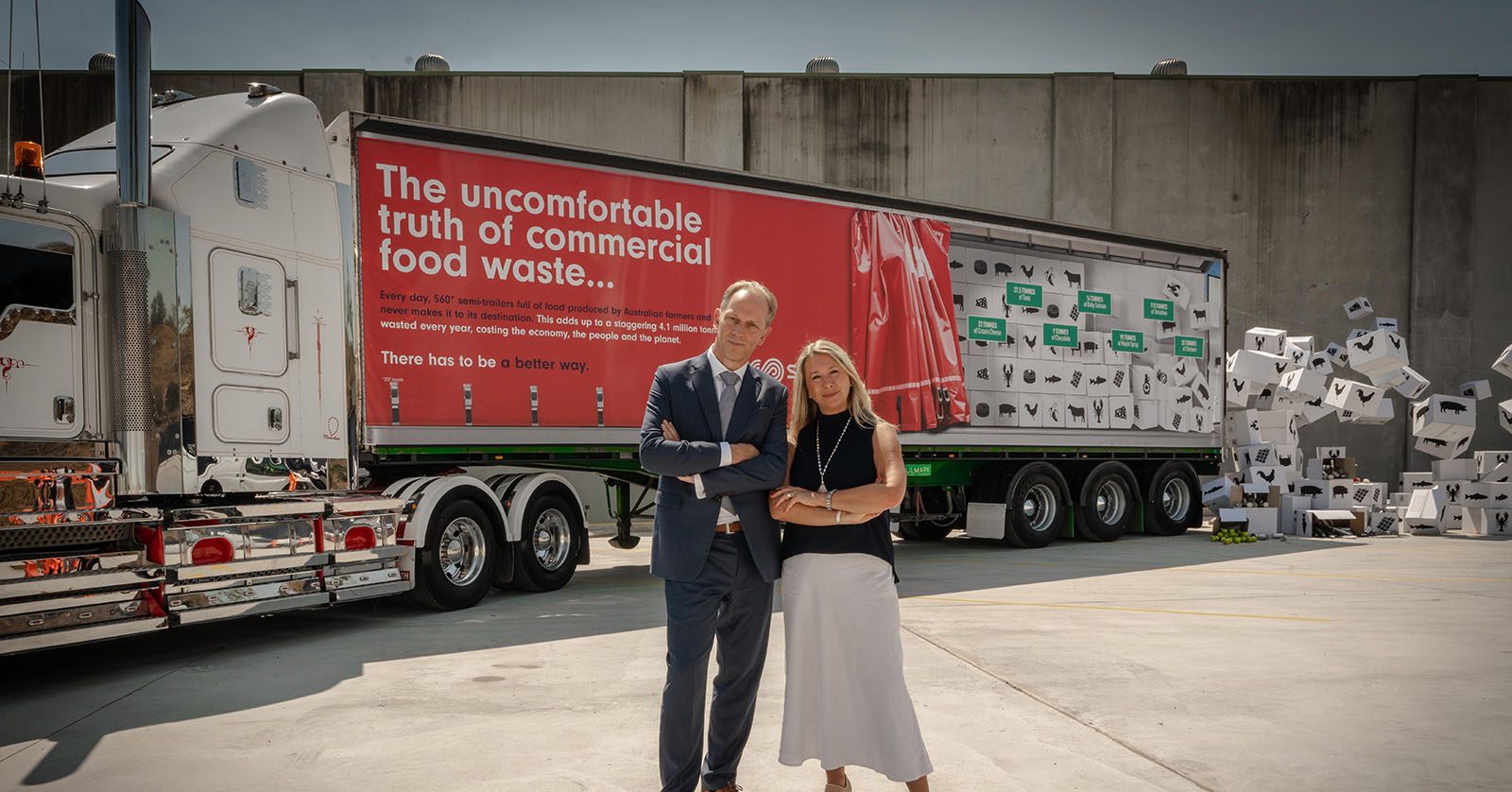
    The social enterprise has developed a one-stop solution for producers to sell or donate surplus food, all on the Yume platform.

    In August, Yume CEO and founder Katy Barfield said: “No one has invested money into streamlining the end-to-end clearance process plug in, so that is what we’re doing.

    “We want to manage it from surplus right through to sale or donation. We don’t want to change what the companies are doing; we just want to make it efficient.”

    For five years, Yume CEO and founder Katy Barfield has worked with commercial food manufacturers and primarily produces to cut the amount of food waste generated by the sector.

    While the focus on finding and selling high-quality surplus food on the Yume platform has been hugely successful – to date it has prevented close to three million kilograms of food from going to waste while returning more than $8 million to Australian businesses – there has been an ongoing issue of food not sold still going to waste.

    “We saw this as an opportunity to improve the food donation initiatives already happening within large-scale food producers,” Barfield said.

    With a $165,000 Victorian Government grant through the Recycling Victoria Circular Economy Business Innovation Centre (CEBIC) in FY21 to expand the platform to enable food suppliers to seamlessly donate surplus food to food rescue organizations, the role technology could play for the social enterprise was recognised.

    Yume was part of the Victorian Government’s start-up agency Launch Vic’s CivVic Labs Program, which works with companies to utilize technology more effectively. The Atlassian Foundation volunteered time to work on the project.

    LaunchVic CEO Dr Kate Cornick said they were keen to see Yume take the next step in its journey.

    “The capital they have secured will help them refine their product offer and propel their long-term growth,” Cornick said.

    Pilot partners

    Unilever, Mars Food, and General Mills partnered with Yume to pilot the program. Unilever Food Solutions managing director Australasia Yezdi Daruwalla said: “Partnering with Yume means we have an efficient and streamlined process to donate surplus products to those in need. Since 2018, we’ve prevented 40,000 kilograms of surplus food from going to waste – this is equivalent to 79,526 kilograms of CO2 prevented from being released into the atmosphere, and 7.7m litres of water from going to waste.

    “Now with Yume’s updated platform the process is even more straightforward and just this month we sent hundreds of cartons of tea to Foodbank Victoria, with the simple click of a button,” Daruwalla said.

  • HSBC Adds Digital Investment Tools to Woo Millennials

    HSBC Adds Digital Investment Tools to Woo Millennials

    The bank is enhancing its digital investment capabilities with a series of new solutions, including $0 commission stock trading, wealth coach and a revamped fund investment platform.

    HSBC has launched three digital solutions, including Trade25, Wealth Coach and the enhanced FlexInvest platform to better cater to millennials, a segment that accounted for nearly 50 percent of the bank’s new customers in Hong Kong in the first half of this year.

    Our new solutions focus on addressing what matters most to our young customers, ensuring that they have the necessary tools to embark on their wealth journey and thrive financially in the long run, Brian Hui, HSBC head of customer propositions, international and marketing, wealth and personal banking, Hong Kong, said.

    Designed for traders aged 18 to 25, Trade25 provides $0 commission and $0 platform fees for trading Hong Kong, U.S. and China A shares, and includes a financial education hub for customers to learn and boost their stock trading knowledge.

    The Wealth Coach gives young customers personalized advice on investments and personal finance via mobile chat or Zoom, and the FlexInvest unit trust investment platform is being upgraded to allow customers to easily identify their preferred funds for building their investment portfolio.

    According to the bank, millennials are one of the key pillars of HSBC’s Asian Wealth strategy. In Hong Kong, the number of new to bank millennial customers for the first six months in 2021 jumped by over 30 percent, compared to the same period last year.

    It attributed this growth to its «HSBC One» proposition and its Wealth A0 investment education and empowerment campaign, launched in the second quarter of the year.

  • Facebook, Instagram, WhatsApp, Messenger are all up again

    Facebook, Instagram, WhatsApp, Messenger are all up again

    If you’re having a problem using Instagram, WhatsApp, Messenger, and Facebook this morning, it’s not you. It’s them. subscribers to the two social media sites and the two messenger apps have been having problems refreshing their screens this morning as a worldwide outage is affecting those apps. These sites are also not working on desktop devices as well.

    If you’re wondering why those four sites are having problems at the same time, it might have slipped your mind that Facebook owns Instagram, Messenger, and WhatsApp. DownDetector shows that the outages started this morning at 11:45 am ET. The number of complaints about the loss of Facebook connectivity surged to 124,000 on DownDetector from 22 in just 30 minutes.

    Facebook was forced to turn to Twitter to issue a statement that says “We’re aware that some people are having trouble accessing our apps and products. We’re working to get things back to normal as quickly as possible, and we apologize for any inconvenience.”

    Facebook issuing a tweet to make an important statement about a major worldwide outage is like the CEO of Pepsi enjoying a Coke at lunch. Or imagine if Tim Cook was caught with the Samsung Galaxy S22 Ultra in his hands.

    Third-party experts believe that the problem is related to a change made to networking instructions that are used globally to access Facebook’s systems. It could take some time for everything to return to normal for Facebook and its apps. That’s because the outage has been described by DownDetector as “widespread and global in scale.

    An internal memo sent to all Facebook employees says that the company’s global security team “was notified of a system outage affecting all Facebook internal systems and tools.”

    Those familiar with what is going on inside the company say that the outage has also impacted Facebook’s internal systems as well as with voice calls and work apps used for calendar appointments. The office staff is reportedly communicating with each other via Zoom.

    In a company memo, Facebook’s global security operations center said that the outage was “a HIGH risk to the people, MODERATE risk to Assets and a HIGH risk to the reputation of Facebook.” There have been messages posted on social media that have tied today’s global outage with some of the scrutiny and bad publicity Facebook has recently received. On CBS-TV’s 60 Minutes newsmagazine, a Facebook whistle-blower named Frances Haugen, who worked on the company’s civic misinformation team, said Facebook would always choose “profit over safety.”

    Among those who enjoy passing along conspiracy theories, the timing of the outage seems suspicious having occurred the morning after Haugen’s interview on national television. Those who believe that the outage was created on purpose by Facebook say that the company didn’t want subscribers posting negative comments about.

    Instagram was acquired by Facebook in 2012 for $1 billion in a deal that many consider the most lucrative in tech history. Today, Instagram is valued at over $100 billion. A little more than two years later, Facebook closed on its acquisition of WhatsApp, a deal that was valued at over $21 billion by the time it closed.

    The outage has currently been going on for over five hours which is unusually long for such a service disruption. Tom Daly, a networking expert who co-founded internet company Dyn, explained this by noting that “They have a massive infrastructure with a massive amount of complexity and they have to resolve all of that complexity to recover.”

  • Gentle Monster opens Haus Shanghai

    Gentle Monster opens Haus Shanghai

    Luxury eyewear label Gentle Monster has unveiled the design of its first Haus concept store outside South Korea in Shanghai, the world’s largest Gentle Monster store.

    The launch of the Shanghai store follows the opening of Haus Dosan in Seoul earlier this year, opening chapter two of the Haus project. Featuring a ‘Future Retail’ theme, the four-story Haus Shanghai houses fragrance brand Tamburins’ first physical store in China and dessert brand Nudake.

    “Haus Shanghai provides more than a commercial experience,” Gentle Monster said in a statement. “By inciting emotional provocation in visitors, Haus aims to deliver an unprecedented cultural experience.”

    Gentle Monster combines retail experiences, pop-ups, and art exhibitions inside the 3270sqm retail space. Haus Shanghai’s first floor houses the Nudake store, where visitors can find a variety of artistic desserts. Gentle Monster’s signature six-legged walking robot, The Probe, is located at the centre of the floor alongside kinetic horses, “capturing Nudake’s spirit of experimentation and fantasy”. Visitors can also find various forms of collaged media art and aesthetic furniture here.

    The second floor, Gentle Monster’s largest retail space, is designed under the theme ‘Circulation’ with pliant art pieces cutting through the centre, forcing an unexpected flow of traffic inside the space.

    Meanwhile, the third floor presents a large exhibition space designed for media art exhibitions and collaboration pop-ups. At the heart of the space, a robotic face called ‘The Giant’ is located alongside sculptures and installations, depicting the theme ‘The Giant Who Arrived at the Bird Village’.

    China’s first Tamburins flagship store is situated on Haus Shanghai’s top floor, “expressing elegance and individuality through the delicate balance of spatial elements”. The space is highlighted by a wall art installation ‘Twig’ covered in tree branches, illustrating “the intersection of luxury and rawness through the combination of contrasting materials”.