Blog

  • Samsung store catches fire a day before Galaxy S8 announcement

    Samsung store catches fire a day before Galaxy S8 announcement

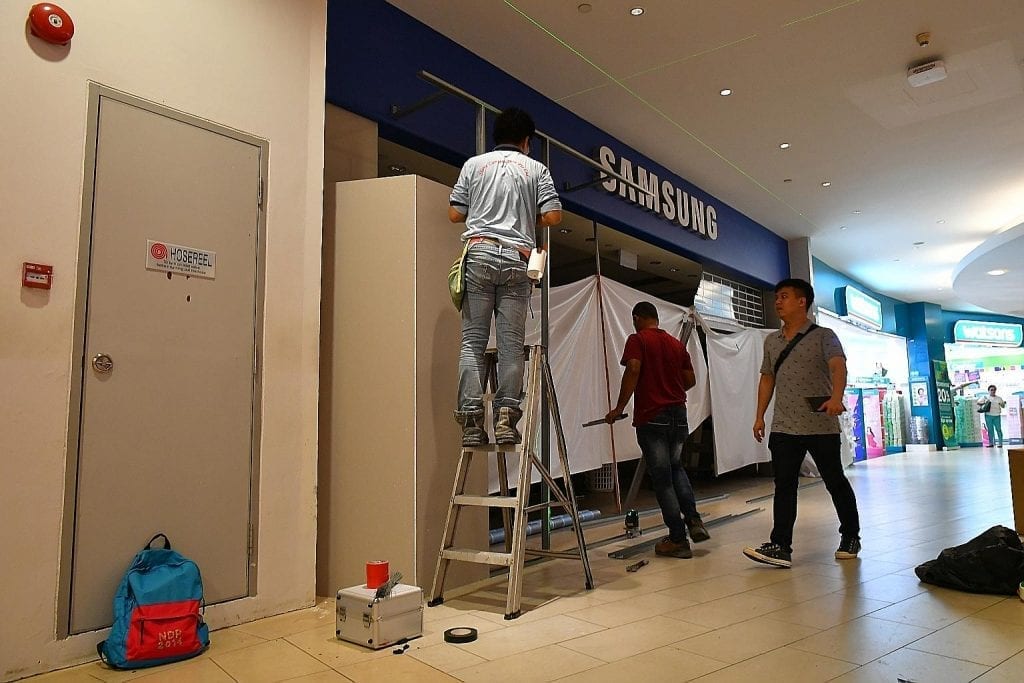
    A Samsung outlet in Singapore caught fire this morning, causing neighbouring shops in the mall to close temporarily for safety and cleaning, reports Channel News Asia.

    It’s not the first time Samsung has had trouble with fires. The company had to kill the Note 7 line following two recalls after reports of the phones exploding into flames last year. Its washing machines were also defective, and could have exploded, forcing the company to also recall the products citing “injury risks.” The two incidents have led to backlash from Samsung customers.

    “We were alerted to a fire at the Samsung Experience Store at AMK Hub in the early hours of Tuesday morning before store opening hours,” the South Korean phone manufacturer confirmed in a statement.

    “The fire was extinguished by water sprinklers in the store and no one was injured during the incident. We are currently assessing the property damage and working closely with the authorities to determine the cause of the fire.”

    The store will remain temporarily closed while investigations are ongoing, says Samsung.

    Samsung will announce the Galaxy S8 tomorrow — hopefully the new phones won’t go up in flames too.

  • Yangon food court a first for Myanmar

    Yangon food court a first for Myanmar

    Myanmar has its first Japanese-style food court, thanks to a joint venture between City Mart Holdings and Japanese trading company Sojitz Corp.

    Tokyo Dining City, home to six restaurants, opened on Wednesday inside a new commercial building in Yangon’s CBD. The Yangon food court can seat 200 diners and primarily targets office workers.

    Tokyo Dining City Myanmar

    “Japanese food has gained great popularity in Myanmar and there are many Japanese restaurants here,” Zar Ni Kyaw, operations manager of Tokyo Dining City, said in an interview with local media.

    “What makes us different from the others is that we aim to present genuine Japanese dining and Japan’s culture of hospitality to our customers in Myanmar.”

    The two companies say they plan to open more such food courts elsewhere in Myanmar in the future.

  • Lily builds new life for youth in Thailand

    Lily builds new life for youth in Thailand

    Helping young people who are living in disadvantaged communities has always been a passion for Lily Simpson and her late husband John.

    The former Ipswich residents spent many years working with people who have disabilities and assisted them to achieve independent life skills.

    After numerous trips to Thailand, the pair realised there were many children who needed help, which prompted them to form their own charity.

    “We had been travelling to Thailand volunteering with disadvantaged children in various orphanages for many years,” Mrs Simpson said. “During these visits we noticed that there were many youth and young adults in the most disadvantaged and at risk categories who were not receiving training and assistance in the life skills necessary to survive and thrive.

    “God placed it on our hearts to reach out to these people and ask them to work together with us to improve their future.”

    The pair moved to Thailand in 2012 and in that time co-founded the Chii wi mai, which means “new life” in Thai.

    “It is the aim of the service to provide an individualised approach in assisting youth and young adults to access the vocational and learning opportunities of their choice to achieve their dreams and goals,” Mrs Simpson said.

    “In 2013 Chii wi mai received registration and we officially commenced our ministry.”

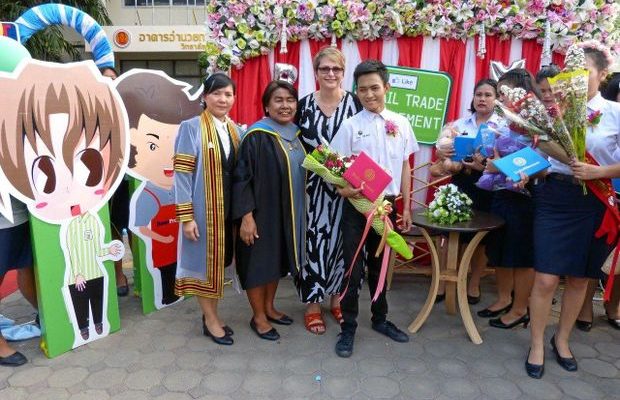
    One of the young people who has benefited from Lily and John’s generosity is a young Thai boy named Sanya.

    “Sanya has studied hard and overcome many challenges in his life to achieve his goal,” she said.

    “He was born HIV positive, both of his parents passed away, he is blind in one eye from a virus he got when he was three years old and lived in an orphanage until he was 16.

    “He has a grandmother whom he loves dearly, and she makes a living selling flowers at the market in another town.”

    With their help, Sanya recently graduated with a Diploma in Retail Management and plans to study for the next two years.

    Mrs Simpson got up at 4am and caught a plane to Khon Kaen so she could be present at his graduation ceremony.

    “Sanya had a dream and he is well on his way to achieving it and I am so glad Chii wit mai is part of his life,” she said.

    “John was so proud of Sanya, but last July he passed away unexpectedly. He was missed by all of us.”

    Mrs Simpson also had help in providing a better future for Sanya, thanks to the Kiwanis Club of Brisbane.

    “Without their financial support for the last eight years, Sanya may not have been able to continue with his education,” she said.

    “Sanya and I are very grateful and Sanya has written a letter to thank Kiwanis for all they have done for him.”

  • Octogenarian new ambassador for Reebok China

    Octogenarian new ambassador for Reebok China

    Octogenarian Wang Deshun, a silver-haired actor known as “China’s hottest grandpa”, is Reebok China’s newest brand ambassador.

    Wang, who was born in Shenyang in 1936, stars in the sports brand’s latest Chinese video campaign “Be More Human” alongside actress Yuan Shanshan and actor Wu Lei.

    The senior citizen first caught attention in 2015 when he strutted bare-chested down the runway for a local designer in Beijing Fashion Week.

    “Only seriously getting into fitness at the age of 70, Wang’s example has helped reshape China’s views on aging and shown you’re never too old to pursue your goals,” says Reebok, which aims to become “China’s best fitness brand”.

    It is expanding its new lifestyle retail concept FitHubs, which integrate retail, fitness and other activities for customers. There are locations already in Hangzhou, Qingdao and Wuhan, with 50 scheduled to open this year. Reebok, owned by Adidas, plans to have 500 FitHubs by 2020.

    Its focus is on three key categories: running, training and classics. This year it is especially promoting its running line.

    “With running in particular experiencing an unprecedented surge in popularity in China in recent years, the category is a key focus for this year,” says the company.

  • Diesel Myanmar opens monobrand store

    Diesel Myanmar opens monobrand store

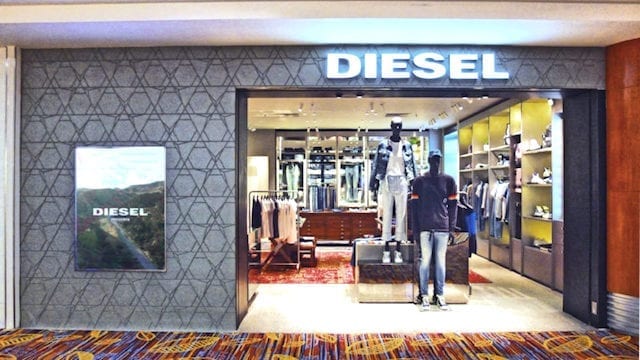
    Diesel Myanmar has opened its first monobrand store, at Yangon International Airport.

    With a new design concept, the 100 sqm outlet was conceived in collaboration with Japanese architectural firm Wonderwall, headed by interior designer Masamichi Katayama.

    In collaboration with Diesel artistic director Nicola Formichetti, the Tokyo team came up with the concept of an apartment space, like a “symbolic new house” for the brand.

    The Italian lifestyle brand says the design aims to create a distinctive atmosphere in which the customer can feel at home.

    The store’s opening coincides with launch of Diesel’s latest spring/summer collection.

    Meanwhile, Diesel plans further travel-retail openings in Singapore and Guam.

  • CapitaLand Vietnam opens The Oxygen Mall

    CapitaLand Vietnam opens The Oxygen Mall

    CapitaLand Vietnam has opened a shopping centre, The Oxygen Mall in Ho Chi Minh City’s District 2.

    Located at the base of the high-end residential development The Vista, The Oxygen includes three stories with over 8000 sqm retail space and is primarily targeted to residents.

    The mall tenants are mainly F&B operators, with a wide variety of cuisine on offer: “East meets West” fusion food as well as eateries such as Starbucks, Tous les Jours, Gaxeo, Shalom, Kogi Zip Korean BBQ and Genshai supermarket.

    The centre also includes an artistic co-working space called Toong on third floor, which spans more than 1000 sqm. Toong offers a conducive working environment to startups and small and medium enterprises for more than 300 members.

    “By harnessing the knowledge, expertise and experience accumulated from CapitaLand Group, The Oxygen will enhance the vibrancy of the shopping scene and experience in District 2 and surrounding areas,” says Chen Lian Pang, CEO of CapitaLand Vietnam.

    Besides the space for Vista residents, The Oxygen will also serve other activities such as garage sales, Sunday markets, birthday parties, charity events, and other festivals.

    CapitaLand said this week it plans to significantly increase its S$2.1 billion multi-asset class presence in Vietnam, including a possible Raffles City in Ho Chi Minh City.

  • PLDT, Globe launch cut-price call packages

    PLDT, Globe launch cut-price call packages

    Philippines operators PLDT and Globe Telecom have both cut mobile voice rates to as low as 1 peso ($0.02) per minute, in response to slumping voice usage and a regulator-encouraged cut in mobile termination rates last year.

    Globe and PLDT’s wireless division Smart have both introduced add-on packages for mobile subscribers offering a set allocation of calls for low rates.

    Globe has introduced an add-on pack for its higher-tier postpaid customers that costs 299 pesos for 300 minutes of calls to any network.

    Prepaid customers will be able to take advantage of a GoCall50 add-on pack providing 50 minutes of calls to any network valid for three days, while subscribers to Globe’s TM service can pay 5 pesos for 5 minutes of calls to any network for a day.

    Smart has meanwhile introduced a Call 50 promo providing 50 minutes of calls to any network valid for three days.

    Late last year, Globe and PLDT both agreed to cut voice interconnection rates by 16.7% to 4 pesos per minute for mobile calls and by 38% to 4 pesos per minute for mobile calls, in response to encouragement from regulator NTC. As part of the agreement to cut the mobile termination rate, the operators also committed to reduce rates for customers over time.

    Both operators have also been facing the common industry issue of subscribers continuing to substitute traditional voice calls with OTT messaging and VoIP usage, which has been contributing to a decline in voice revenue.

  • Mulberry Asia launches with Challice as partner

    Mulberry Asia launches with Challice as partner

    English luxury brand Mulberry Group has launched Mulberry Asia in partnership with Challice, which will run its business in China, Hong Kong and Taiwan.

    Mulberry Asia will start trading in Hong Kong from April 3, with a subsidiary in China and a branch office in Taiwan expected to follow this year.

    Mulberry owns 60 per cent of the share capital of Mulberry Asia, with Challice holding the balance.

    There will initially be four stores: two in China, one in Hong Kong and one in Taiwan. The new JV will also manage regional wholesale sales. A Chinese-language Mulberry.com site will be launched along with a regional omni-channel platform, with the partners planning “significant” marketing investment in north Asia.

    Mulberry plans to invest about £3 million (US$3.7 million) in additional support over the next two years to build brand awareness in the region.

    In the near term, a store will be opened in Shanghai, while stores in Beijing and Hong Kong will be relocated.

    Founded in the UK in 1971, Mulberry is best known for its leather goods.

  • Umami Burger Japan launches in Tokyo

    Umami Burger Japan launches in Tokyo

    American-style dining has again crossed the Pacific, with the latest offering, Umami Burger Japan, having a distinct local slant.

    While conceived in the US, the fast-food chain takes its names from the Japanese concept of umami, one of the basic tastes as distinct from sweet, salty, bitter and sour.

    It follows such brands as Carl’s Jr, Shake Shack and Taco Bell to Japan, and on its opening day in Tokyo drew a queue of more than 100 people. It is just a few minutes’ walk from Omotesando Station.

    Umami Burger Japan - Aoyama Tokyo

    Rocket News 24 sent in writer PK to check out the store on opening day. Umami Burger dates back to 2009 has has been included in Time Magazine’s list of 17 “most influential” burgers. While he arrived an hour before the 11am opening time, already more than 50 people were lined up. By the time the doors opened, the queue had doubled in size.

    Umami Burger Japan - Aoyama Tokyo.1

    PK says he was finally seated around noon, and to gain a more rounded perspective, ordered two burgers – the namesake umami burger and the Japan-original teriyaki burger at ¥1380 (US$12.50) each, and a side order of truffle fries for ¥800.

    With its house ketchup, roasted tomatoes, shiitake mushrooms and crispy Parmesan cheese chip, plus a medium-rare beef patty, PK writes that the umami burger tickled his taste buds. “Each flavour complemented the others for an overall perfect combination.”

    The teriyaki burger came topped with red onions, perilla leaves, fried lotus root, cabbage and a wasabi aioli sauce.

  • Korea to launch virtual reality shopping mall

    Korea to launch virtual reality shopping mall

    A virtual reality shopping mall is set to be launched in Korea, backed by the government.

    The Ministry of Trade, Industry & Energy says it will be rolling out the mall during this year’s Korea Sale Festa – Korean Black Friday – in October.

    The ministry hopes that consumers will be able to use to shop and place orders and have the goods delivered to their doorstep.

    This video gives an idea of what shoppers can expect when the design is complete.

    According to the ministry, although the global retail industry recognises VR or AR shopping as the industry’s future, key players such as eBay and Alibaba are still in the testing phase.

    Korean VR technology 2

    The ministry is inviting retailers to join its initiative starting this week to establish virtual outlets on the upcoming platform. The deadline for applications is April 10.

    “We’re hoping for our project to provide new business opportunities and create a whole new market,” a ministry official said.

  • Amazon buys Middle East marketplace Souq.com

    Amazon buys Middle East marketplace Souq.com

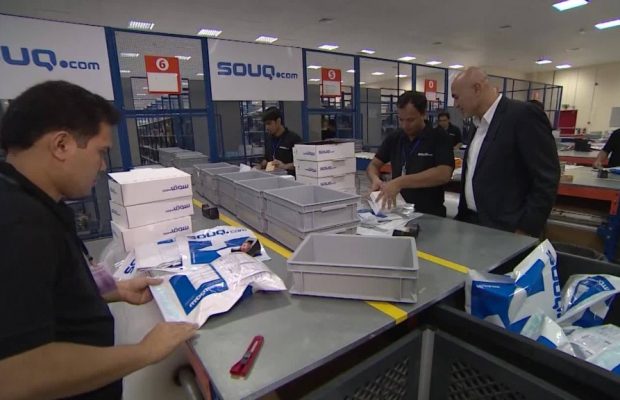
    US e-commerce business Amazon has bought the leading online marketplace in the Middle East, Souq.com.

    “Joining the Amazon family will enable Souq.com to continue growing while working with Amazon to bring even more products and offerings to customers worldwide,” the US company said in a statement.

    Souq.com is the largest online retail and marketplace platform in the Arab world, featuring more than 8.4 million products across 31 categories such as consumer electronics, fashion, health and beauty, household goods, and baby. The site attracts more than 45 million visits per month, with localised operations in the KSA, UAE and Egypt.

    “Amazon and SOUQ.com share the same DNA – we’re both driven by customers, invention, and long-term thinking,” said Russ Grandinetti, Amazon senior VP, international consumer. “Souq.com pioneered e-commerce in the Middle East, creating a great shopping experience for their customers. We’re looking forward to both learning from and supporting them with Amazon technology and global resources. And together, we’ll work hard to provide the best possible service for millions of customers in the Middle East.”

    Souq.com co-founder and CEO Ronaldo Mouchawar described the deal as “a critical next step in growing our e-commerce presence on behalf of customers across the region”.

    “By becoming part of the Amazon family, we’ll be able to vastly expand our delivery capabilities and customer selection much faster, as well as continue Amazon’s great track record of empowering sellers.”

    Subject to conditions, the acquisition is expected to close in 2017.

  • Vietnam convenience store growth to lead Asia

    Vietnam convenience store growth to lead Asia

    Vietnam will be the fastest-growing convenience market in Asia by 2021, predicts international grocery research organisation IGD.

    According to the researcher, Asia’s grocery market will be the largest in the world with predicted 6.3 per cent of compound annual growth rate, up to US$4.8 trillion by 2021.

    Of that, the convenience store sector will see double-digit compound annual growth in the next four years.

    IGD predicts the Vietnam convenience store market will grow by 37.4 per cent in that time, followed by the Philippines at 24.2 per cent and Indonesia at 15.8 per cent. Those figures are based on assessments of the performance of the leading convenience store operators in each market.

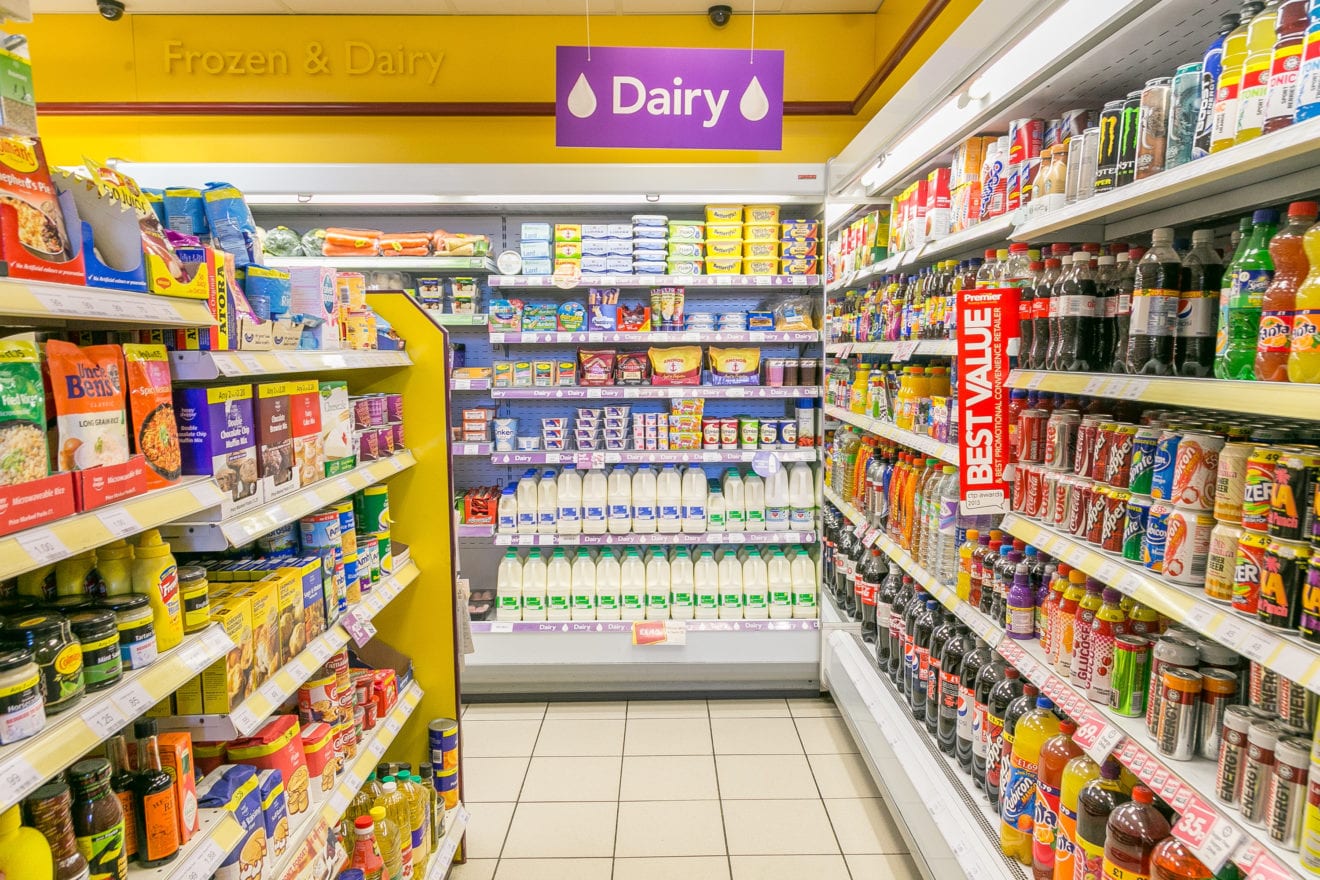
    Cstores IGD

    During the past couple years, Vietnam convenience stores have become popular destinations, especially for young consumers. Savvy operators, like Circle K and FamilyMart have recognised local demand for c-stores as a place to not only shop but to hang out as well, providing an air-conditioned area to consume freshly-served convenience foods and snacks, up-to-date merchandising systems, a mix of imported and local goods and –  in some stores – even free Wi-Fi.

    It is also easier for businesses to get licences for stores with footprints under 500 sqm.

    According to IGD, Vietnam, the Philippines and Indonesia share similar characteristics that make their convenience markets particularly ripe for growth, including:

    • Store expansion: In all three markets, major players are speeding up store roll-outs in a battle for marketshare. For example, the number of c-stores operated by the top five retailers in the Philippines has more than doubled during the last five years and retailers are gradually shifting their focus from the capital to more provincial areas for greater opportunities.
    • Local players are gaining a stronger foothold: Asia’s convenience market has traditionally been dominated by Japanese retailers, such as 7-Eleven (which has yet to debut in Vietnam), FamilyMart and Aeon. However, there have been more market consolidations and partnerships and most noticeably, domestic players such as VinMart in Vietnam and SM Retail in the Philippines have been scaling up their operations and establishing leadership in their local markets.
    • Neighbourhood mini-supermarkets are becoming more popular: Apart from the modern convenience store format, local operators such as Indonesia’s Indomaret and Dairy Farm’s Wellcome format in the Philippines have developed a successful neighbourhood mini-supermarkets model, which better cater to local needs. These mini-supermarkets are typically between 150 and 300 sqm in size and are located in residential areas, with a focus on fresh food, top-up grocery and food-for-tonight.

    Thanks to the positive economic outlooks of all three countries, consumers are shifting from traditional wet-markets to the so-called modern trade, like convenience stores and supermarkets.

    Increased GDP per capita and foreign investment have also encouraged the market growth.

    “Among all the brick-and-mortar grocery channels, convenience shows the strongest growth prospects in Asia, thanks to rapid urbanisation, a growing young population and greater levels of disposable income,” says Nick Miles, head of Asia-Pacific at IGD.

  • We expect to grow over 100% in India this year says Xiaomi CEO

    We expect to grow over 100% in India this year says Xiaomi CEO

    Xiaomi chairman and CEO Jun Lei is a sales man to the core – he even tries to market the $1 pen that his company sells as he winds up an interview. The company, which crossed $1 billion revenue in India last year and managed to grab the second spot behind Samsung, plans to go aggressive in the country, which Lei views as the second most important market after China.

    It is also looking at stronger brickand-mortar retail presence in India and elsewhere as its focus on the online-only model has been blamed for losing momentum in sales. While being upbeat on India, Lei sees many obstacles — from a complicated tax regime to weak infrastructure and poor broadband connectivity. Excerpts:

    Do you agree with the view that India is next China?

    India is the most important market after China. We look forward to continue to grow in India. Similar to China, we believe that India will experience same transformation in 10 to 20 years.

    PM Narendra Modi has focused a lot on Make in India initiative. Do you think India can become a factory to the world?

    Of course, we believe in that. We will first satisfy the needs of the local market… then we could consider the possibility of exporting.

    Do you face problems regarding infrastructure, government policies?

    From an optimistic point of view, we believe that the Make in India initiative has been pushed and adopted widely. We still see a lot of obstacles. For example, a lot of states have different tax rates. This could further complicate manufacturing and sales aspect. We look forward to GST to come in. We think India’s tax currently is much higher than China. Warehouse logistic costs are quite high. We also need a lot of effort in the transportation efficiency. Internet infrastructure is also a challenge. In China, 4G bandwidth is popular where a lot of cities are pushing for free Wi-Fi. We believe all these are worth the attention of the Indian government.

    Will there be higher focus on brick-and-mortar stores now?

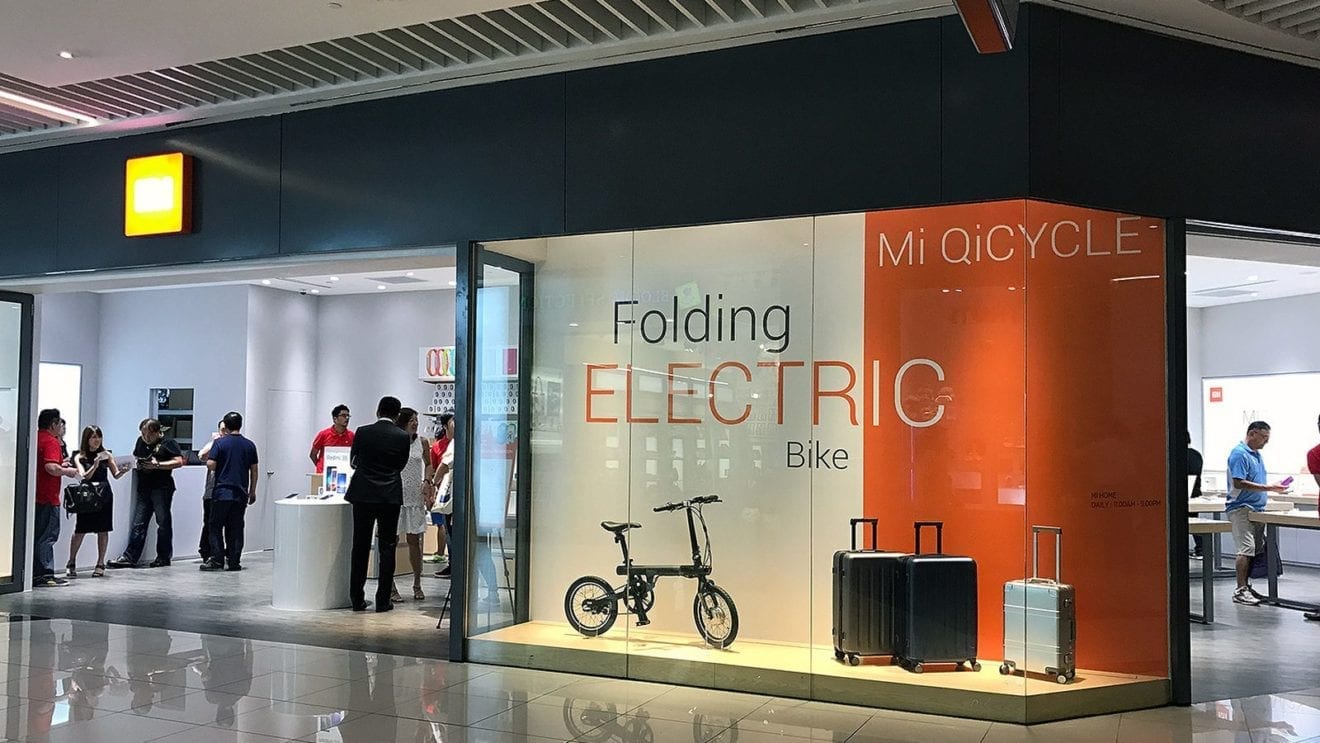
    Online enabled us to reach our dreams of high efficiency. We’re trying to use the same Internet-plus philosophy when it comes to (offline) retail. In China, we initiated the concept of Mi Home. We’re trying to reach the same efficiency level when we do offline retail compared to our online efficiency. We’re trying to price it at the same level for offline as well. We need to ensure that there’s value for money. We need to ensure that our channels and partners are also successful and make profits. Our focus this year will be to continue to extend our market share in online and then experiment with the Internet+retail concept.

    How many stores will you require?

    We have expanded offline retail through 10,000 (multi-brand) shops. Recently, we have partnered with four big retail chains in South India. We are planning to open our own stores.

    Do you intend to make investments in Indian startups?

    We have invested in a few Indian companies. We have announced our investments in Hungama, India’s largest radio platform. We invested in a few more but we have not publicly disclosed them. Xiaomi has invested in 165 companies worldwide by 2016-end. We emphasize on building the ecosystem around us as smartphone is the infrastructure of mobile internet. It really requires a lot more applications and services to further accelerate the industry. So, we really believe in supporting mobile start-ups in India.

    In China sales have been below expectations…

    In the past two years, we have indeed faced some challenges in China. It is mainly due to the fact that we reached 50% market share in the online smartphone market in China. For us to continue our growth, the key challenge is to enter offline. Last year, we made definitive improvements and progress in offline in China. We have made a major breakthrough in understanding how to do retail offline in an e-commerce manner. We are now back on track for rapid growth as our China momentum is picking up. We expect India business to grow over 100% this year.

  • Hermes promises year of ‘digital change’

    Hermes promises year of ‘digital change’

    French luxury retailer Hermes plans to update its digital strategy this year with an initial test run “in a small country”, according to chief executive Axel Dumas.

    He says 2017 will be “a year of digital change for us”, with the company’s e-commerce sales showing “significantly higher” growth rate than overall turnover.

    Dumas says he is proud of the result considering the company’s website “sort of stumbles along”.
    During the Christmas season, the Hermes e-shop was the group’s best-performing outlet for global neck-tie sales.

    “Hermes was the first luxury brand to launch e-commerce, in 2001, especially in the US,” says Dumas. “We are primarily retailers and wanted to handle our own online sales directly rather than hand over this business to an external corporate site.”

    However, he admits the website has aged while new technologies have forged ahead.

    “In wanting to maintain great image quality, we lagged behind in getting a mobile app,” says Dumas, also acknowledging a lack of clear organisation for the website.

    “To recreate the magic of Hermes, we decided to make a site where people could lose themselves. The result: people were really lost,” he says.

    “We hope to launch the new site this year. We will first run a test in a small country.”

  • Singtel, Telkomsel to Launch Mobile Remittance Service in Indonesia

    Singtel, Telkomsel to Launch Mobile Remittance Service in Indonesia

    Singapore Telecommunications, known as Singtel, is partnering with Indonesian operator Telkomsel to launch a real-time mobile remittance service in Indonesia, to boost its mobile money initiatives and tap into the relatively unbanked market in that country.

    The service is the first collaboration for Singtel and Telkomsel “on mobile money initiatives to drive innovation in both markets,” according to a press release on Sunday.

    The new service allows customers in Singapore to send money to about 4,500 cash withdrawal points across Indonesia via the Singtel Dash app, a mobile payments solution. The locations are post office branches managed by PT Pos Indonesia, a state-owned company responsible for providing the country’s postal services.

    Both telcos have also announced future plans to offer a mobile remittance service to Telkomsel’s TCash, an app which offers a digital mobile money service in Indonesia.The remittance service will involve SingCash, a subsidiary formed by Singtel in 2011 to provide mobile remittance and payment services.

    “Indonesia is one of our main remittance corridors,” said Yuen Kuan Moon, chief executive of Consumer Singapore at Singtel. There are 200,000 Indonesians living and working in Singapore, with outward remittances from Singapore to Indonesia worth over $409 million annually.

    Currently, remittance money services in Singapore remain limited and many workers resort to taking days off to go to remittance outlets in order to send money home.

    Singtel is making a push into digital technologies as competition in Singapore’s telcos industry continues to intensify. It announced earlier in March that it is working with e-commerce player Lazada Singapore to create an online marketing portal for small and midsize enterprises.