Blog

  • South Korean group in advanced talks to buy into AirAsia leasing unit

    South Korean group in advanced talks to buy into AirAsia leasing unit

    A little-known South Korean group is in advanced talks to acquire a stake in AirAsia Bhd’s aircraft leasing unit, according to three people familiar with the matter.

    Two of the people said a deal would value AirAsia’s fully-owned unit, Asia Aviation Capital, at roughly $900 million.

    Privately-owned KOTAM, or Korea Transportation Asset Management, has been picked as the preferred bidder, the people said, with one adding that state lender Korea Development Bank (KDB) was tapped to provide funding, though it was not clear whether the bank had agreed to back the deal.

    Philippines AirAsia CEO Dexter Comendador (3rd from left), Clark International Airport Corporation (CIAC) President-CEO Alexander Cauguiran (4th from left), and Central Luzon Regional Tourism Director Ronaldo Tiotuico (2nd from right) are flanked by flight attendants during the send-off ceremony for the inaugural flight of AirAsia from the Clark International Airport (CRK) to Kalibo in Aklan, one of the routes to the world-famous Boracay. A total of 146 passengers took the inaugural flight going to Kalibo. The Kalibo flight arrives at 1:10 p.m. and departs from the Clark airport at 1:35 p.m. every Mondays, Tuesdays, and Wednesdays.

    Philippines AirAsia CEO Dexter Comendador (3rd from left), Clark International Airport Corporation (CIAC) President-CEO Alexander Cauguiran (4th from left), and Central Luzon Regional Tourism Director Ronaldo Tiotuico (2nd from right) are flanked by flight attendants during the send-off ceremony for the inaugural flight of AirAsia from the Clark International Airport (CRK) to Kalibo in Aklan, one of the routes to the world-famous Boracay. A total of 146 passengers took the inaugural flight going to Kalibo. The Kalibo flight arrives at 1:10 p.m. and departs from the Clark airport at 1:35 p.m. every Mondays, Tuesdays, and Wednesdays.

    KOTAM is part of Kukje Maritime Investment Corp., known as KMarin, which was founded in 2005 and has a fleet of 46 ships, according to its website.

    KOTAM, KDB and AirAsia did not have immediate comment.

    A successful deal would mark South Korea’s biggest move into the $256-billion global aircraft leasing sector, which has attracted others in Asia, including Industrial and Commercial Bank of China, BOC Aviation, China’s acquisitive HNA Group, and Japanese banks.

    KOTAM and AirAsia are negotiating final terms of the purchase of a majority stake in the leasing unit, one of the sources said. Asia’s biggest budget airline has sought buyers for its subsidiary since last year, and has said it aimed to close a sale early this year.

    A deal with KOTAM could still fall through, and two sources said that Air -Asia has not closed the door to a deal with a Chinese bidder.

    The sources declined to be identified as the negotiations are ongoing and confidential.

    South Korean insurers, asset managers and securities firms are attracted to aviation finance as aircraft leases offer fixed returns and are often seen as relatively safe transactions.

    Paid for in US dollars, aircraft are comparatively easy to release to various airline operators across the world.

    Reuters reported in December that AirAsia had received strong interest from North Asian firms, besides many Chinese companies.

    One of the sources said AirAsia was becoming concerned about Chinese buyers’ ability to close a deal due to China’s recent measures to tighten controls on money moving out of the country.


  • ​​Robinsons Store launches first​ ​Go Lokal! store in Robinsons Place Manila

    ​​Robinsons Store launches first​ ​Go Lokal! store in Robinsons Place Manila

    Robinsons Department Store, in partnership with the Department of Trade and Industry (DTI) opens today the first Go Lokal! store in Robinsons Place Manila.

    Robinsons Department Store, an affiliate of Robinsons Retail Holdings Inc., is the first mainstream outlet to launch Go Lokal!, a public-private collaboration between DTI and local retailer partners that aims to showcase modern and indigenous quality products crafted, designed, and created by innovative Philippine micro, small and medium enterprises (MSMEs).

    The Go Lokal! program has been designed to serve as incubation, marketing, and branding platform for the best of Philippine MSMEs products including next generation One Town One Product (OTOP) offerings. This new market access platform via a design-led concept store is set to revolutionize the way hard-to-find and artisanal Filipino products are sold in the local market, and will bring together a specially-curated line-up that ranges from food, apparel, accessories, home décor, gadgets and gift items. They can be found in consumer-frequented locations as a mainstream distribution channel for world-class Filipino products while offering value for money for targeted consumers and tourists.

    Trade Secretary Ramon Lopez said DTI is more than excited to open its first mainstream  Go Lokal! store with Robinsons Department Store as its dynamic partner in this effort of maximizing market access and providing exposure to our MSMEs. “Go Lokal! is truly a vibrant model for MSME development and inclusive business. We are happy that committed partners like Robinsons have taken on this challenge. We look forward to opening more outlets in their malls and department stores across the country,” Sec. Lopez said.

    Robina Gokongwei-Pe, President and COO of Robinsons Department Store, said that the program will benefit MSMEs because it’s a mainstream platform that brings them closer to a more diverse market and creates positive effects to the economy by encouraging entrepreneurship. “This partnership with DTI is Robinsons Department Store’s contribution to nation-building by providing our entrepreneurs an environment where they can be passionate about their businesses and prosper from their efforts, as we create opportunities for MSMEs to grow, succeed and make an impact to the retail industry,” said Gokongwei-Pe.

    Johnson Go, General Manager of Robinsons Department Store, said that Go Lokal! is Robinsons Department Store’s way of supporting Filipino entrepreneurs into their initial foray into more mainstream markets by making them more accessible to both local and foreign consumers. “The diverse product line of Go Lokal! brings together the best products that the Philippines has to offer which are world-class locally-made quality products by our MSMEs,” said Go.

    The DTI Secretary also said that aside from providing market access for MSME products, the Go Lokal! program is a platform for new entrepreneurs to test the marketability of their products without the fear of losing rental and commercial costs because their experience is free of charge

    Portion of Go Lokal! revenues will go to the various corporate social responsibility (CSR) projects of Robinsons Department Store including the government’s drug rehabilitation program.

    Robinsons Department Store, an affiliate of Robinsons Retail Holdings Inc., is the first mainstream outlet to launch Go Lokal!, a public-private collaboration between DTI and local retailer partners that aims to showcase modern and indigenous quality products crafted, designed, and created by innovative Philippine micro, small and medium enterprises (MSMEs). Launching the partnership recently were (l-r) Mr. Johnson Go, General Manager of Robinsons Department Store; DTI Bureau of Domestic Trade Promotion Director Rhodora Leaño; DTI Assistant Secretary for Industry Promotion Group Rosvi Gaetos, Secretary Ramon Lopez of the Department of Trade and Industry, Ms. Robina Gokongwei-Pe, President and COO of Robinsons Department Store; Mr. Irving Wu, Robinsons Malls Operations Director for Luzon and Ms. Maricar Reyes, celebrity endorser of Robinsons Department Store.


  • Ho Chi Minh City may tax online sales next month

    Ho Chi Minh City may tax online sales next month

    The city is making serious steps to collect sales taxes from small and home-based online business owners. Ho Chi Minh City’s tax department has said it will work with related departments to impose sales taxes on businesses running on Facebook and other online shopping sites.

    The department would submit the taxing plan to the city’s government for approval early next month, an unnamed official from the department told.

    The department said it would coordinate with information and trade departments, internet providers, banks and post offices to collect the tax.

    Last month, the trade department proposed the city work with Facebook on measures to collect tax from businesses running on the site.

    The General Department of Taxation later agreed with the proposal, saying it is working on measures to tax the businesses operating on Facebook, YouTube and Vietnamese messaging app Zalo.

    Tightening tax collection from online businesses is part of a plan to enhance state budget revenue collection.

    The city’s intent on taxing online sales has stirred up different opinions.

    Many said the tax collection is not an easy job for the authorities as many online retailers use anonymous accounts for transactions, not to mention that most purchase or sales transaction are cash-based.

    Vietnam’s e-commerce market, which has one of the world’s fastest growth rates, jumped 37 percent to around US$4 billion in 2015, data from the Ministry of Industry and Trade show.

    The growth rate is about 2.5 times faster than that in Japan, according to Tran Duc Tam, an industry expert.

    The government has projected revenue by Vietnam’s online retail to hit $10 billion by 2020, accounting for 5 percent of the country’s retail market.

    Retail sales in the first quarter of 2017 rose an estimated 9.2 percent from a year ago to $40.5 billion, the government said Wednesday, after an annual rise of 10.2 percent last year to $118 billion.

    Up to 60 percent Vietnam’s population is online.

  • Huawei Malaysia opens KL flagship

    Huawei Malaysia opens KL flagship

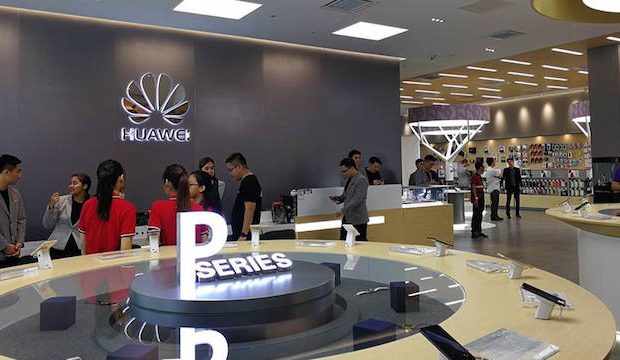
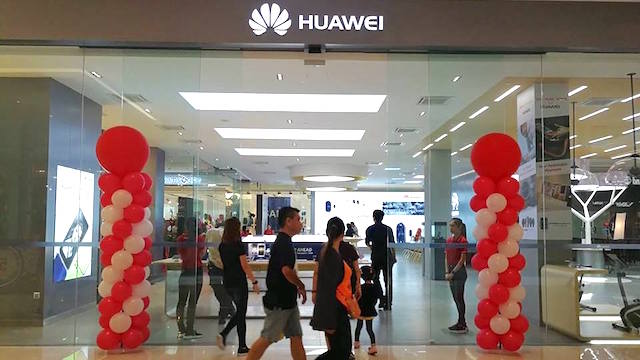
    Huawei Malaysia has opened its largest flagship store, at the Pavilion KL in Kuala Lumpur.

    On the fifth floor, the store will be a one-stop centre providing on-site services and send-for-repair services, as well as a private product consultation service.

    Its shelves feature a range of smart devices including phones, tablets and wearables.

    Huawei Malaysia Pavilion KL 2

    In conjunction with the store opening, the Chinese handset maker has a special promotion for the first 100 customers – a Swan speaker for a RM1000 (US$225) or more spend.

  • Film festival in Beijing shuns Korean movies

    China blocked the screening of Korean films at the upcoming 7th Beijing International Film Festival, the latest retaliatory measure against Seoul for the deployment of a U.S.-led antimissile system.

    Film industry sources confirmed Tuesday that Korean films were invited to partake in the annual film festival in Beijing, which runs from April 16 to 23, but they are not going to be screened because of Chinese authorities’ orders.

    Since the announcement last July of Seoul and Washington’s decision to deploy the Terminal High Altitude Area Defense, or Thaad, system to Korea, China has taken various retaliatory measures against the Korean entertainment industry, including unofficial bans on Hallyu, or Korean wave, content, as well as restricting tour packages to Korea and a crackdown on Korean retail stores in China.

    “The Beijing International Film Festival has invited Koreans but have suspended this because of Chinese authorities’ orders,” one film industry insider said. “Thus, it appears Korean films will not be screened at the film festival.”

    Last year, top young Hallyu stars including Lee Min-ho and Kim Woo-bin were in the spotlight at the film festival in Beijing, which launched in 2011. Lee, who starred in the 2016 comedic action film “Bounty Hunters,” a co-production project among Korea, China and Hong Kong, took part in the opening ceremony of the festival last April, which was broadcast on state television.

    There were several Korean films that were screened and made shortlists for awards last year. This year, no Korean films are reported to be on the preliminary screenings list.

    The eight-day Beijing International Film Festival is held by the General Administration of Press, Publication, Radio, Film and Television of the People’s Republic of China and the People’s Government of Beijing Municipality.

    China’s Administration of Press, Publication, Radio, Film and Television, which is responsible for broadcast policy, has been reported as being behind the order to production companies to stop making programs with Hallyu content as well as joint projects with Korea.

    Earlier this month, a Korean-Chinese co-production starring Korean actor Ha Jung-woo with Chinese actress Zhang Ziyi fell through after Ha faced trouble with getting a visa from China and other problems.

    News about Hallyu entertainers and Korean films is rare on Chinese television and in newspapers these days, and no Korean movie was released in China last year though about four films are usually released in theaters in China annually.

    The Chinese government became even more aggressive in its retaliation following the finalization of the government swapped land with Lotte Group at the end of last month to find a home for the Thaad battery. Lotte’s businesses in China were particularly targeted.

    When asked by a reporter for Seoul’s response to China’s blocking of Korean films and the continued retaliations for the Thaad deployment, Cho June-hyuck, spokesman for the Ministry of Foreign Affairs, replied that the Korean government is “paying close attention to the series of measures taking place within China.”

    Cho continued in a briefing Tuesday, “Our government holds the consistent position that under no circumstance should civilian exchanges between two countries, which form the foundation of bilateral relations, face artificial handicaps, and will actively respond to China’s unfair measures in order to minimize the damage against Korean companies.”

    The Foreign Ministry also spoke up against the destruction of South Korean flags in China following the Thaad fallout, saying it has lodged a strong protest with Beijing.

    Several Taegeukgi, or Korean national flags, were found torn in pieces in health clubs in Tianjin earlier this month in a sign of anti-Korea sentiment.

    “The national flag symbolizes the dignity of the country and our government takes the destruction of our flag in some regions in China seriously and gravely,” said Cho. He said that the Chinese government responded it recognizes the gravity of the destruction of the flags and will take necessary measures including retrieving destroyed flags.

  • Audi halts A4, A5 production at Ingolstadt over parts shortage

    Audi halts A4, A5 production at Ingolstadt over parts shortage

    German luxury carmaker Audi will halt production of the A4 and A5 luxury models at its Ingolstadt base this week until Thursday due to a parts shortage after a fire at a supplier, it said on Monday.

    Audi produces 1,400 A4 and A5 models per day at the plant, its largest, so it will lose 5,600 vehicles this week. A fire at a supplier making front wall cladding had disrupted parts deliveries, a spokeswoman said on Monday.

    About 8,500 of the 43,000 workers Audi employs at the plant will be affected and will not be working between Monday and Thursday, she said. Production of A4 and A5 models at a plant in Neckarsulm had not been affected.

    German news agency Deutsche Presse-Agentur reported the stoppages earlier on Monday.

  • Alibaba exploring blockchain to counter food fraud

    Alibaba exploring blockchain to counter food fraud

    Chinese e-commerce giant Alibaba will work with Australia Post and natural health firm Blackmores to combat the rise of counterfeit food being sold across China.

    The partners said they will work together to increase the traceability of food products and reduce the risk of fraud, and will explore new technologies for the initiative.

    The technologies to be explored include blockchain technology – a decentralised and highly available database – which could obtain crucial details from suppliers about where and how their food was grown and map its journey across the supply chain.

    The technology has the potential to enable up-to-date audits, increasing transparency between producers and consumers.

    Australia Post executive general manager for parcels and StarTrack CEO Bob Black said the project would help guarantee that only genuine Australian products arrive safely into the hands of Chinese consumers. Australia prides itself as a trusted exporter of high quality food.

    “Our food producers have a global reputation as being a clean, green and safe provider of food and we are pleased to help deliver a solution to enhance the integrity of their produce,” Black said.

    Food fraud is known to be one of the biggest issues facing the global food industry, considering the potential health risks associated with adulteration and loss of trust from consumers and governments. In recent years counterfeiters have targeted popular Australian products such as health supplements, beer and wine, honey and cherries.

    Last month, the two companies also signed an agreement to extend Australia Post’s online storefronts beyond China to Malaysia, Singapore and Indonesia using the e-commerce network Lazada, which Alibaba has a majority stake.

  • APAC to have nearly 1b IoT connections by 2025

    APAC to have nearly 1b IoT connections by 2025

    Asia Pacific will remain the single largest region for IoT cellular connections through to 2025, with the market accounting for nearly 1 billion connections by this time, Strategy Analytics predicts.

    The automotive, utility and security vertical markets will drive growth in connections over the forecast period, the research firm said.

    Strategy Analytics expects IoT cellular connections to grow to more than 2.4 billion in 2025, with automotive, utilities and security together accounting for over 46% of global connections.

    Across the forecast period, the automotive vertical market will not only remain the single largest global consumer of IoT cellular connections, but increase its market share position by 2025.

    ”With the industry focusing on the path to 5G and low power 3GPP offerings, such as LTE Cat M1 and NB IoT, coupled with a variety of established connectivity platforms, there are lots of choices for cellular connectivity in IoT and the outlook has never been brighter,” Strategy Analytics executive director of enterprise and IoT research Andrew Brown said.

    “However, the bewildering array of choices also runs the risk of creating confusion for customers with regard to which technologies should be employed in which use cases.”

    Matt Wilkins, Senior Analyst IoT Research at Strategy Analytics added that “the growth in cellular connections underlines the importance of cellular networks in IoT, with networks not just being used to facilitate simple connections, but increasingly supporting rich data that will enable new and compelling use cases.”

  • Singapore fintech startup OOjiBO raises S$3.6M to serve the unbanked

    Singapore fintech startup OOjiBO raises S$3.6M to serve the unbanked

    Singapore-based fintech startup OOjiBO has raised a S$5 million (US$3.6 million) in a  Pre-Series A round led by Centurion Private Equity. Wong Kok Hoe, Director at Centurion, managed the investment and joined OOjiBO’s board of directors.

    The mobile payments platform plans to use its investment to launch into two new emerging markets in Southeast Asia — Indonesia and Thailand. It will also begin cross-border remittance within countries where OOJiBO has a presence. Currently, OOjiBO is only available in Myanmar.

    Launched in November 2014, OOjiBO was founded by co-founder and CEO Yeng Fook Hoo, a veteran in the banking industry with over 40 years of experience. Prior to OOjiBO, Yeng, who is in his 60s, started and listed the largest credit card terminal and payment system in South East Asia, GHL System. He retired after running it for 15 years.

    After three years, he came out of retirement to build OOjiBO with two co-founders, William Pu and Wong Hok Seng, also experienced professionals in the finance industry.

    OOJiBO says its solution works as a full stack retail banking system on a mobile phone. It offers a full suite of services from p2p transfers, retail payments, interest bearing accounts, e-commerce payments, cross-border remittance, cash in/cash out service, debit/credit card virtulisation, utilities payment and mobile phone top-ups.

    It is phone agnostic and can be used on both smartphones and feature phones. In areas where data connections are poor or non-existent, the OOjiBO system will automatically switch to an STK (SMS) format. This solution allows it to deliver financial inclusion to people living in rural areas or places with frequent electricity outages.

    “We have also designed ourselves to solely work on the mobile network and not requiring other infrastructure or the need to fully integrate into an existing core bank system. This has allowed us to bring the cost of reach and banking significantly lower. Basically, beyond your existing device, there is no other infrastructure that is needed to be installed or built”.

    One key feature that OOjiBO says makes it different from many e-wallets or digital platforms, which typically relies on a frontend system, is its agency network.

    “We run our own network of agents to create branchless banking. We believe in an offline-online model. Through owning our own agency network we are able to control our cost structure and not rely on other people,” says OOJiBO.

    “Our agency network has also allowed us to reach areas that were not previously available, for example, the Kachin state in Myanmar. Kachin state is still going through civil war and is a mountainous area, however through our agency network, we are able to operate within the region to bring much needed financial inclusion to the people of Kachin.”

    The other key feature of its system is its security feature.

    OOjiBO has created a hardware and software security chip that enables encryption and key rotation system. Depending the level of KYC and limit of transaction amount, it issues a physical sim sticker that contains a security chip and module that will do encryption each time a transaction is sent and received.

  • Sportswear retailer streamlines trade operations in China

    Sportswear retailer streamlines trade operations in China

    Adidas Group wants to kick off its expansion in China on the right foot. The sportswear brand plans to bolster its retail sales network to 12,000 outlets in China by 2020, with much of the growth slated for smaller cities. However, the company also knows that conducting international trade within China can be difficult and complex due to challenges presented by huge import and export volume, and minimal advance notice of regulatory changes.

    As a result, Adidas began searching for an automated solution to help reduce manual-based operations, minimize clearance delays and compliance risks, and respond to regulatory changes quickly. The company found its solution through the CTM platform from Amber Road.

    Specifically, Amber Road’s CTM InSight function will equip the Adidas China team with self-compliance capabilities, which will help them conduct comprehensive and regular internal audits to proactively identify and resolve non-compliance issues with agencies in a timely fashion. Meanwhile, the CTM Business Intelligence (BI) Dashboard will supply information to centralize management, improve clearance process visibility, and enhance internal controls.

    By implementing Amber Road’s CTM solution, Adidas Group will be well prepared to apply for China Customs Advanced Certified Enterprise (AEO) status, which will enable the company to enjoy international trade facilitation measures, according to Kae-Por Chang, managing director, Amber Road China.

  • CapitaLand inks contract to manage mall at new SingPost Centre

    CapitaLand inks contract to manage mall at new SingPost Centre

    CapitaLand, through its wholly owned shopping mall business, CapitaLand Mall Asia, has signed a contract to manage the upcoming mall at the new SingPost Centre.

    This is the third mall management contract that CapitaLand has inked in slightly over six months, after securing the first two in China, the comnpany said on Tuesday (March 28). With this contract, CapitaLand said its network in Singapore will increase to 20 shopping malls with a combined gross floor area (GFA), excluding car park, of about 14.2 million square feet (sq ft).

    Mr Jason Leow, CEO of CapitaLand Mall Asia, said, “The signing of our first third-party mall management contract in Singapore – also our third across Asia in quick succession – demonstrates the scalability of our asset-light expansion strategy to grow our assets under management. We continue to be on the lookout for suitable opportunities to enlarge our retail footprint through third-party management contracts, to complement our core strategy of developing, owning and managing malls in Asia.”

    SingPost Centre is located in the up-and-coming Paya Lebar Central, next to the Paya Lebar MRT interchange station. CapitaLand currently owns and manages three malls in the eastern part of Singapore, namely Tampines Mall, Bedok Mall and Jewel Changi Airport, which is scheduled to open in early 2019.

    CapitaLand will oversee the pre-opening and retail management for the five-storey SingPost Centre mall, which has 269,000 sq ft of GFA, excluding car park, and a net lettable area of about 175,000 sq ft.

    Targeted to open in the second half of this year, SingPost Centre will house the new General Post Office, which combines traditional counter service with technology-enabled innovations such as POPStations and eSAM machines over a space measuring 3,330 sq ft. The General Post Office will also have a heritage corner, where customers can enjoy a learning journey through SingPost’s 150 years of history.

    Other tenants at SingPost Centre include NTUC FairPrice, Golden Village, Kopitiam, other retail brands, family entertainment outlets and enrichment centres.

    CapitaLand announced last August it is embarking on enlarging its retail footprint through management contracts with the signing of an agreement to manage the retail component of Fortune Finance Center in Changsha, China. In January this year, CapitaLand signed another agreement to manage a mall in La Botanica township in Xi’an, China.

  • Esprit jewellery set for revamp with new partner

    Esprit jewellery set for revamp with new partner

    The Esprit jewellery line-up is set for a major revamp after the appointment of a new licensee, Versteegh modeaccessoires effective July 1.

    Esprit says that with more than 60 years of experience in the wholesale trade, Versteegh brings valuable know-how and important expertise in the field of fashion accessories to the partnership.

    “Thanks to their excellent supplier network, Versteegh is able to guarantee short and reliable delivery times. The Esprit-branded jewellery collection from Versteegh will be available internationally in Esprit’s own retail stores and online,” said Maria Pambori, VP head of global licenses/product with Esprit.

    “Together with our new partner, we want to excite our customers with a product portfolio that reflects the latest trends and interprets them through the philosophy of our brand Esprit. With Versteegh we have found a partner who attaches great importance to quality, has a keen sense of trends and thus perfectly meets our high requirements.”

    Versteegh director Frans Lenting said the positioning of Esprit offers his company an ideal platform for its products.

    “We are looking forward to making a great impression on Esprit customers with our collections.”

    Headquartered in Houten in the Netherlands, Versteegh is an international wholesaler in the field of fashion jewellery and accessories. Its own design and styling team regularly provides for new collections.

    Alongside jewellery, the company also sells bags, sunglasses, watches, hair accessories and gloves.

  • Online retailers feed craving for fresh food on demand

    Online retailers feed craving for fresh food on demand

    Gmarket launched a service on Monday called Gtable that provides seasonal fresh food from farms around Korea. The online retailer will oversee the entire process, including selection of fruits and vegetables, washing and packing them, and delivery.

    For Gmarket, whose main business model is providing an online sales channel to individual merchants, the launch of an in-house service with such high degree of direct management is rare.

    “We noticed that more consumers were purchasing fresh food online,” said Park Young-geun, head of the fresh food team at Gmarket. “The service aim is not just delivery but to suggest a more healthy lifestyle to our users.”

    The service is starting with nine products including salads, oranges, nut mixes and vegetable sets, mainly priced between 10,000 won ($9) and 30,000 won.

    For the past decade, the dominant retail channel for fresh food has been brick-and-mortar discount chains. Buying groceries online, though, is becoming a more popular option, especially among young people living alone who don’t need to buy in bulk and childless couples who don’t consume as much as families with children. Both demographic groups are growing in Korea.

    As a result, many online retailers with fresh food services are packaging their groceries in small sets. Lotte.com’s Garak Store, for example, which delivers vegetables and fruit purchased from daily wholesale auctions at Garak Market, a traditional Korean marketplace in Garak-dong, southeastern Seoul, lets consumers buy in small quantities, even by the gram.

    The market for online groceries is a promising one. Last year, 1.73 million won worth of fruits, vegetables seafood and meat were bought online, according to Statistics Korea, a 20 percent increase from 2015.

    Among its peers, Auction was the first to spot an opportunity in selling fresh food online. In 2014, it launched the service Farmer Story, which directly connected producers and consumers. Farmer Story posted six-fold sales growth during last year’s second half compared to 2014.

    WeMakePrice was the next online retailer to enter the market, in October last year, with Sinseonsaeng, a portmanteau of “fresh” and “mister” in Korean. The company is targeting single-person households with its small packaged groceries and fast delivery. During the first nine weeks, the number of orders jumped almost fivefold and sales volume increased fourfold.

    Ticket Monster jumped on the bandwagon in January with Tmon Fresh. Apart from the small packaging that rival services offer, Tmon Fresh also gives customers the option of choosing when to receive deliveries. The company reported a 240 percent increase in grocery sales after Tmon Fresh’s launch.

    SK Planet, operator of online retail platform 11st, in December acquired the start-up Hello Nature, which runs a service that sends groceries to consumers within 24 hours.

    For a long time, fresh food has been considered an exception in an age when people can buy clothing, electronics and even daily necessities like diapers and toilet paper online. One concern is that something could go wrong with the produce during transportation. Another is prevailing convention that fresh food ought to be bought in person, where customers can thoroughly examine the produce themselves and ask vendors questions.

    This hesitance means credibility has become an essential differentiating factor for competing e-commerce grocers. On top of fast delivery, companies are making sure consumers know that their food teams are putting in extra effort to ensure product quality. WeMakePrice, for instance, touts its more than 2,000-square-meter (21,000-square-foot) refrigeration facility in Gwangju, Gyeonggi.

    “We believe online shopping platforms have a chance in the groceries market if they can prove that they can provide products of freshness and quality equal to the level of discount chains,” said Ha Song, head of the direct buying team at WeMakePrice.

  • CapitaLand to manage SingPost Centre

    CapitaLand to manage SingPost Centre

    CapitaLand, through its wholly owned shopping-mall business CapitaLand Mall Asia, has signed its first third-party shopping centre-management contract in Singapore to run the new SingPost Centre.

    Described as a world-first, Singapore Post is currently building the 25,000 sqm shopping centre which will allow online and offline retailers to showcase their products, side by side.

    The SingPost mall marks the third management contract CapitaLand has inked in about six months, the other two being in China.

    With this contract, CapitaLand’s network in Singapore will increase to 20 malls with a combined gross floor area (GFA), excluding parking, of about 14.2 million sqft (1.3 million sqm).

    CapitaLand Mall Asia CEO Jason Leow says the signing of its first third-party mall management contract in Singapore – also its third across Asia in quick succession – shows the scalability of the group’s asset-light expansion strategy to grow assets under management.

    SingPost Centre is in the eastern part of Singapore, where CapitaLand owns and manages three malls – Tampines Mall in Tampines Regional Centre, Bedok Mall in the rejuvenated Bedok Town Centre and Jewel Changi Airport, scheduled to open in early 2019.

    Five-storey mall

    Under the contract, CapitaLand will oversee the pre-opening and retail management for the five-storey SingPost Centre mall, which has 269,000 sqft of GFA, excluding parking, and a net lettable area of about 175,000 sqft.

    “With CapitaLand as our mall manager, we will be able to optimise the returns from this property while we focus our attention on our core business of postal services and e-commerce logistics,” says SingPost covering group CEO Mervyn Lim.
    Targeted to open in the second half of this year, SingPost Centre will house the new General Post Office, which combines traditional counter service with technology-enabled innovations such as PopStations.

    Other tenants at SingPost Centre include Golden Village, Kopitiam, NTUC FairPrice, retail brands, family entertainment outlets and enrichment centres.

  • Nissan will introduce 8 new premium products by 2021

    Nissan will introduce 8 new premium products by 2021

    India’s third largest passenger car exporter Nissan Motor India confirmed that the company is planning to introduce eight new models in different segments by 2021. The company also confirmed that its Nissan brand will be focussing on premium products and Datsun will concentrate on compact segments.

    Guillaume Sicard, President, Nissan India Operation on the side-lines of Nissan Terrano facelift launch said:

    “The structure of Indian market is you have a certain set of population who need global products, they are well travelled and they also have the bank power. So, we can offer that with Nissan. We are also lucky to have two brands which is also difficult to manage at times but it’s also a strength. Datsun is for the first – time four-wheeler buyers, The brand concentrates on emerging markets and India is the leading country in terms of decisions for the Datsun brand. This is where we have the biggest potential. We have 20 cars for over 1000 habitants and so India is paradise for OEMs. If we manage infrastructure correctly, it can be a paradise for everybody.”

    Sicard expressed his reservations about the future of sub-4 meter cars in India and confirmed that Nissan would not be coming up with a sub-compact sedan. Nissan aims to bring in premium SUVs and cars. The company also hinted a possible comeback of Nissan Teana sedan and Nissan Patrol SUV along with other affordable luxury products but did not share more details on upcoming products.

    “We are very careful with our compact cars. Talking about Nissan, it is not positioned in the compact market. We want to bring in slightly upper market SUVs and cars. We want to position Nissan as a high technology brand. The future of the sub-4 meter vehicles is not so clear. In terms of taxations we still have some doubts. This is the uniqueness of Indian market and so being a global car maker we are looking at it and are very careful to what we plan as well. No sub-4 meter cars for Nissan, we might have one but will not be our focus. If the sub-4-meter rule still exists we will develop new cars under Datsun brand.” Sicard added.

    In the upcoming financial year, Nissan will launch its first hybrid SUV in India – Nissan X-Trail hybrid which will come to India as a completely built unit. The company also confirmed that a flow of new products will roll out from beginning of 2018. Nissan in India has been manufacturing products in alliance with Renault at its Renault-Nissan Alliance plant in Chennai and going forward the company claims 100% differences from its products with Renault.

    Guillaume Sicard said: “There will be 100% differences in terms of both the brands, similar products is not something which we would like to repeat and I will be very transparent in terms of strategy, which was an interesting idea from the start which worked very well but with maturity of the Renault-Nissan Alliance obviously we are going to separate more and more even though we will continue to keep making synergies in terms of platforms and engines which the customer doesn’t see to obtain the best price possible for the alliance for the retail market.”

    Sooner or later the Alliance will also see the Mitsubishi contributing to the overall synergy. While the details on the role of Mitsubishi specially in India is still under the wraps the President of India operations did mention that Nissan is meeting Mitsubishi at global level and India is a major part of the on-going discussions. The objective of the Alliance is to find and create win-win situation for both the companies.

    “This is the spirit of the alliance that Carlos Ghosn has developed so far and we are in the understanding mode, expertise mode and project mode for the time being and for sure we will find synergies. This is the objective of the alliance and we will soon find synergy in India.” Said President of India operations.

    In the 2017-18 financial year, Nissan confirms that its exports will decline as the new generation Nissan Micra which has debuted in many global markets will not be built or sold in the India. Nissan currently exports to over 100 countries and Nissan Micra is the top exported model for the company from India. Current generation Nissan Micra will continue to be sold in the domestic market and to a few export markets retaining the model. However, the export for the same will be at a slower pace confirms the Indian arm of the Japanese car maker.

    Guillaume Sicard commented that “Next year exports will decline slightly because of the Micra, but year after it will really pick up as we will be on the high export programme. We have capacity in the plant close to 500,000 units. There is always possibility to do more, we can invest more if required. For me to keeping 1/3rd of production for exports from India is the safe side of the strategy.”

    By 2021, with new products coming in the company is also looking to phase out Nissan Micra and Nissan Sunny then. Nissan Motor India is not looking to flood Indian market with a lot of products but want to get it right with its offering.

    “I think number of cars in our portfolio is not important as much as to be spot on to what you offer. If you look at the structure of the market, I think there is a threshold in the industry, for a product to be significant in terms of economy of scales and financial efficiency it has to cross a sales of 50,000 units. You have about 22 cars that are sold above 50,000 sales.”

    “Out of the 22 cars, You have 11 Maruti Suzukis, six from Hyundai and then after you have one of the six brands. To reach 50,000 mark is extremely difficult for global OEMs. Instead of expanding the portfolio, We are planning to introduce may be up to three models to be successful to reach that 50,000 mark. This is the way to monitor your success. There is no need for us or any global OEM to have a lot of products to be efficient in India.” Sicard concluded.