Blog

  • Dairy Queen signs to expand into South Korea

    Dairy Queen signs to expand into South Korea

    US fast-food restaurant company International Dairy Queen (IDQ) has signed a multi-unit development agreement to expand into Korea.

    It plans to open 50 DQ Grill & Chill locations within the next five years in conjunction with privately held M2G USA Investment, which has a diversified business portfolio including restaurants, hotels, public storage, household appliance manufacturing, shoes and global real estate. M2G USA Investment is also a partner for Taco Bell restaurants in Korea and the US.
    IDQ president/CEO John Gainor says the brand is continuing to expand into new markets internationally. In Korea its outlets will serve a full range of food options, including its signature GrillBurgers, chicken-strip baskets, chicken sandwiches, salads and sandwiches.

    Korea’s DQ Grill & Chill restaurants will also feature the full menu of DQ treats, including the signature Blizzard Treats, MooLatte frozen coffee-flavoured beverages, soft-serve cones, sundaes and cakes.
    The DQ system has more than 6700 locations, more than 2200 of them outside the US. IDQ is a subsidiary of Berkshire Hathaway, led by investor Warren Buffett.

  • Local banks post 4.5pc pre-tax profit rise

    Local banks post 4.5pc pre-tax profit rise

    Local retail banks achieved a moderate 4.5 percent growth in pre-tax profit between January and September this year, the Hong Kong Monetary Authority said yesterday.

    Annualized net interest margin — which measures the difference between the interest income generated by retail banks and the amount of interest paid out to their lenders – stood at 1.32 percent during the period.

    The figure stayed broadly the same as last year, Hong Kong’s de facto central bank said.

    It noted though that the January to September figure marked a slight improvement from the 1.3 percent recorded between January and June this year.

    HKMA attributed profit growth of local banks mainly to an expansion of their income from foreign exchange and derivatives operations and in dividends received from subsidiaries.

    A decline in their operating expenses also boosted the banking industry, but a fall in fee and commission income may offset profit growth.

    As retail banks’ total deposits increased at a faster pace than total loans, the loan-to-deposit ratio of retail banks declined to 55.2 percent at the end of the third quarter from 57 percent a quarter earlier.

    Retail banks’ total loans increased by 1 percent during the period, with loans for use in Hong Kong rising by 1.2 percent and loans for use outside Hong Kong expanding by 0.2 percent.

    The authority said lending by local banks in the mainland expanded by 3.2 percent to a combined HK$4.55 trillion at the end of the third quarter from the previous quarter.

    The HKMA said the loan-to-deposit ratio of local banks declined to 55.2 percent from 57 percent and the setback is attributed to a faster increase of deposits compared to loans that were disbursed to customers.

    Meanwhile, the Hong Kong interbank offered rate, or the rate of interest charged on short-term loans, continued to rise for the 11th day yesterday. One-month HIBOR yesterday edged up to 0.68 percent from 0.675 percent a day earlier, while three-month HIBOR increased from 1 percent to 1.00964 percent, according to data from the Hong Kong Association of Banks.

  • Hong Kong retail banks’ profits up 4.5 per cent in first three quarters

    Hong Kong retail banks’ profits up 4.5 per cent in first three quarters

    Hong Kong’s retail banks saw a modest rise in profits in the first three quarters of the year thanks to improved income from foreign exchange activities.

    According to figures from the Hong Kong Monetary Authority, retail banks in the city saw their pre-tax operating profits rise by 4.5 per cent in the first nine months of the year in comparison with the same period of 2015.

    The HKMA said that the growth could be attributed to increases in both income from foreign exchange and derivatives operations and from dividends received from subsidiaries, while a decline in operating expenses also contributed to the improvement.

    The three elements provided increases of 4.5, 3.5 and 4.1 percentage points respectively to the banks’ profitability.

    These increases were offset, however, by a fall in fee and commission income, which led to a 7.8 percentage point reduction.

    The profit improvement over the first three quarters marks a turnaround in performance after banks had a troubling early part of this year. In the first quarter of 2016, retail banks’ profits fell by 4.8 per cent, albeit in comparison to a strong first quarter in 2015, in which incomes were boosted by large trading volumes in stock markets in both Hong Kong and mainland China.

    Last summer’s turbulence in the Shanghai stock exchange, as well as the hit to sentiment from the sudden devaluation of the yuan in August meant that Hong Kong banks had a difficult third quarter in 2015, making it easier to post good figures for the third quarter of this year, as well as the first nine months of the year as a whole.

    Banks in Hong Kong received a further boost last week when interest rates rose in the city, following the Federal Reserve’s decision to raise the rate in the US.

    The rise in interest rates should enable the banks to gain greater returns on cash that has been deposited with them, which they are unable, or have chosen not, to lend out.

    In Hong Kong, this is a sizeable amount, and according to the HKMA’s figures, in the first three quarters, retail banks’ total deposits increased at a faster pace than total loans. This meant that their loan-to-deposit ratio declined to 55.2 per cent at the end of September from 57.0 per cent at the end of June.

  • ‘Cloud’ powers Thai e-commerce group’s regional expansion

    ‘Cloud’ powers Thai e-commerce group’s regional expansion

    In August this year, Thailand’s e-commerce enterprise Ascend Group has finished migrating its existing businesses as well as new ventures to the cloud, a move that is expected to support its ambitious regional expansion plans.

    The Ascend Group owns and operates business-to-consumer (B2C) marketplaces WeMall and iTrueMart, and the consumer-to-consumer (C2C) platform WeLoveShopping. It also operates TrueMoney, a wallet solution for digital payments, among other allied businesses.

    Chaiwat Ratanaprateepporn, Chief Technology Officer of Ascend Group, said the company is looking beyond the country’s borders to expand its e-commerce business in the ASEAN region.

    “Most of the operations we have now in ASEAN are under the TrueMoney business. We have Myanmar and Thailand as headquarters, then we have businesses in Cambodia, Vietnam, Indonesia and the Philippines,” he said. Services currently consist of mobile wallet, remittance, top up services, bill payments and the e-commerce payment gateway.

    With a combined population of approximately 600 million, the ASEAN region has a booming e-commerce landscape, which is only logical for the Thai group to target.

    The Ascend Group’s cloud journey started in November 2014 when the company adopted a “cloud first” policy. This has allowed the company to reduce infrastructure build time, improve flexibility and accelerate speed-to-market.

    Chaiwat said the cloud journey is among the preparations it is doing for the expansion move.

    “Why we are moving to the cloud? Our TrueMoney business in Thailand has been around for more than 10 years, while our e-commerce business has been around for just over three years. But we want our start-up companies (though they are no longer startups) to have the same capabilities. They were born in the cloud and are using cloud technologies to move fast and offer customers better services,” he explained.

    In the first quarter of 2015, iTrueMart, an e-commerce retail destination for home appliances and electronic products, hit critical mass.

    “We looked for alternative solutions on how we can manage the traffic and cost and using the technology so we decided to move to Amazon Web Services (AWS). Later that year, we also moved some of the services of TrueMoney to AWS as well,” Chaiwat recounted.

    In the second quarter this year, Ascend also moved the services of WeLoveShopping.com completely to AWS. Thus, its three flagship e-commerce websites are already 100 percent in the cloud. For TrueMoney, however, the company is opting for a hybrid cloud strategy because of the different banking regulations in each of the six ASEAN countries, which make it difficult to operate purely on the cloud.

    Chaiwat, who oversees the digital transformation of the company’s IT infrastructure, shared that when the company launched the WeMall in Thailand, they did so without adding new technical staff to implement, operate and support in addition to iTrueMart.

    “And that is because we leveraged the innovative tools and technology of AWS,” he said. “Ultimately all of this innovation will allow us to better serve our customers and create efficiency that will result in better value for people who shop on Ascend Group’s e-commerce properties.

    The company’s goal is to become the leading e-commerce business in the ASEAN region and leverage the digital technology to expand business opportunities for merchants in Thailand and the region.

    Next steps in the cloud

    What is next for Ascend Group’s cloud journey?

    Chaiwat disclosed that the company’s cloud strategy comprised of three steps. The first step or Version 1.0 is moving the services to the cloud, which they accomplished in the past two years. The second step or Version 2.0, which is being implemented now is using the technology the technology to do more optimizations for cost savings, more automation so they can gain better productivity in the workforce.

    The next step or Version 3.0, which will be implemented starting next year, is really moving to more high-end technology as the data and analytics, machine learning and other capabilities that will help us serve the customers better.

    “What we are aiming ahead are data and analytics. Right now, we are data-driven, meaning we use analytics to do reports on how the transactions are growing. But this is business intelligence, not yet analytics. We are aiming to move there using the capabilities of AWS,” he said.

    For companies starting on their own cloud journey, Chaiwat said it is important to identify or define the benefits that they would want to derive from the cloud. It should help in creating guidelines and the roadmap.

    He stressed, however, that going to the cloud is not all about the benefits. “The company has to transform the workforce, upskill them, and adopt a different mindset and way of working,” he said.

    Nick Walton, Head of ASEAN at AWS, affirmed that e-commerce in Southeast Asia is booming, especially e-commerce on mobile devices.

    “AWS has analytics for mobile, which I think will be relevant for Southeast Asia,” he said. “There are two types of e-commerce – the new e-commerce providers (online only) and the bricks and mortar retailers that are adding the e-commerce experience to the mix. We look at the ability to quickly scale up, get promotions to market quickly, make the needs very successful sales. The last thing you want is a very successful marketing campaign that is let down by the website not performing.”

    The other place for e-commerce is analytics. “This is where we see a good application of the AI technologies like Amazon Polly, a service that turns text into lifelike speech,” Walton noted.

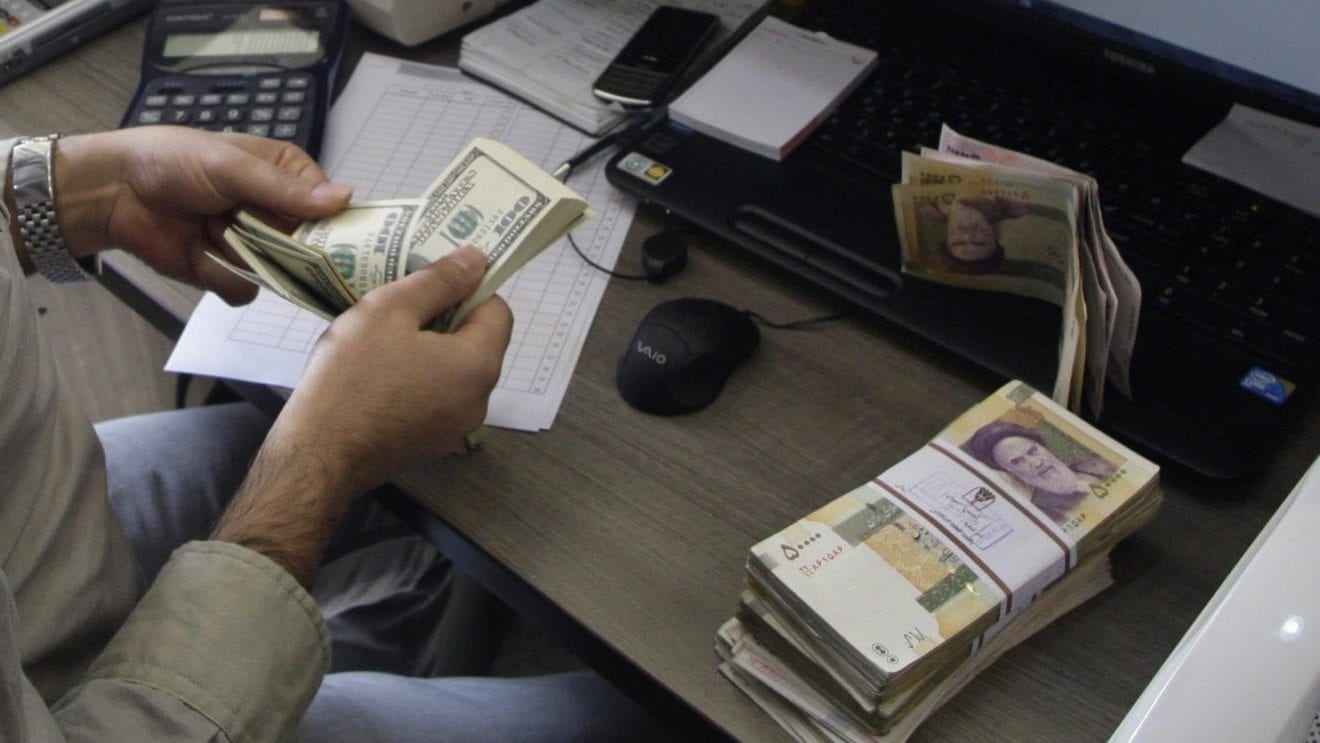
  • When a gold retailer starts selling sunglasses

    When a gold retailer starts selling sunglasses

    Warmer than expected Christmas weather appears to be providing little comfort for Hong Kong’s retail sector this year. Business has been cold at many outlets despite a projected rebound in mainland visitor arrivals.

    Otherwise, what can explain a gold shop branching out into sunglass sales and news that the city’s biggest karaoke operator is scaling down its operation?

    Let’s talk about the gold retail chain first.

    I’m referring to Luk Fook Jewellery, which has just opened its first eyewear store — “Vision Gallery”.

    The new venture comes after the company announced last month a 31.5 percent slide in same-store sales for the six months ended September compared to the same period a year ago.

    The eyewear store has been put up in a prime location, next to an H&M outlet, on Dundas Street in Mongkok.

    Luk Fook is said to have signed a two-year lease for the 600-square-foot retail space, offering a monthly rental of HK$128,000.

    Though the rent is just half what the previous tenant, bankrupt home appliance chain DSC, was paying earlier, there is still this question: why an eyewear shop, instead of another gold store?

    Well, the answer lies in economics.

    Chairman Wong Wai-sheung told Ming Pao that a 1,000-square-foot gold shop, in terms of costs, would be equivalent to opening 10 eyewear stores.

    Guess what? Luk Fook, which currently has 47 gold shops in Hong Kong, has earmarked HK$20 million to open 10 eyewear stores next year, with a focus on the middle class.

    Last year, the company had 50 gold shops in the city.

    To boost Christmas sales at the new eyewear outlet, Luk Fook is giving away a pair of pearl earrings to the customers.

    We are not sure if this is a nice cross-selling idea but would reckon this is a defensive move.

    Luk Fook as well as its competitors such as Chow Tai Fook and Tse Sui Luen have seen their same-store sales fall steeply this year, with 20-30 percent slide in many cases.

    In comparison, an eyewear retailer such as Stelux Holdings has seen its sales dip just 5 percent.

    During its interim results, Luk Fook said it will strive to broaden its income sources, enhance the operational efficiency and reduce costs in order to minimize the impact of the business downturn.

    The foray into eyewear retail is part of that strategy.

    Elsewhere in the city, Karaoke operator Neway has also come up with a new way to survive.

    Rather than open a new venture, Neway is leasing the 4,000 square-feet lobby and first floor at its Causeway Bay flagship store CEO Neway, according to Apple Daily.

    By sub-leasing 30 percent of the original floor area, Neway is trying to shore up revenues which have been hit by a decline in night-time singing parties at its karaoke outlets.

    The plan will also help the company save some HK$1.8 million in monthly rental.

    The sub-leasing of Causeway Bay shop space comes after the group shut down an 18,000-square-foot Mongkok facility last year.

    As much as we miss the grand lobby of CEO Neway and the good old days of group singing, we cannot help but admit that Karaoke outlets are now a bit out of fashion after they dominated the social scene for about twenty years.

    This year, one of the best-selling items at the Golden Computer Arcade in Sham Shui Po is a microphone with karaoke function that sells at no more than HK$500.

    The made-in-China product, which connects through bluetooth with iPad and the home stereo system, has become an immediate hit and is now a must-have during family gatherings.

    If you can get the same kick at home, why bother spending money on a karaoke shop? This seems to be the view of a growing number of people.

    Given this reality, Neway may need to find something else to sell other than songs.

  • Asian Christmas gift-giving trends revealed

    Asian Christmas gift-giving trends revealed

    When it comes to Asian Christmas gift-giving, Koreans are the most generous, according to a Kadence Singapore survey.

    The company spoke to a cross-section of shoppers in Hong Kong, Japan, Korea, Malaysia and Singapore to understand more about their Christmas buying habits.

    Koreans emerged as the most generous, with 88 per cent saying they will give someone a present this year. Of these, 63 per cent are buying a gift for their partner, with 33 per cent buying for a parent.

    kadence-christmas-infographic

    In contrast, Japan is far more conservative, with 75 per cent shopping for Christmas. Of these, 13 per cent are considering buying a present for their parents.

    People in a relationship are far more likely to receive a gift this year, the survey shows. Of the people surveyed, 53 per cent will buy a gift for their partner. This is followed by presents for a parent or another family member (both 25 per cent). However, 21 per cent of the people surveyed do not intend to buy any presents this Christmas.

    A surprising find is that men (80 per cent) are more likely to buy a Christmas gift than women (77 per cent), a trend across all markets. Hong Kong men lead the field at 83 per cent, versus 70 per cent women.

    Men are more focussed on their partner, with 60 per cent buying a gift for their nearest and dearest, while only 46 per cent of women are doing the same. However, women are more willing to share the Christmas spirit, with 24 per cent likely to buy presents for friends and 18 per cent for siblings (for men the figures are 15 and 8 per cent respectively).

    In general, survey respondents have three extended family members in mind when Christmas shopping, beyond parents, siblings and partners. They also have up to five key friends and colleagues they will buy for. Women are likely to buy more presents for their friends and colleagues, with 33 per cent looking to buy five or more presents for colleagues versus about 12 per cent for men.

    When it comes to expenditure, partners are the main consideration. In Singapore, 73 per cent of respondents will spend SG$100 (US$70) or more on their partner. In contrast, 71 per cent will spend less than SG$100 on friends while 69 per cent will spend less than SG$50 on colleagues.

    In Singapore, 48 per cent of men interviewed say they will spend more than SG$200, compared to 28 per cent of women, who are more likely to spread their spending on friends, colleagues and other family members.

  • Mega-Clouds Drive Shift to Mega-Data Centers in Singapore

    Mega-Clouds Drive Shift to Mega-Data Centers in Singapore

    While Singapore has for years been the default data center location for US and European companies wanting to serve clients in Asia, the rise of the mega-clouds is changing market dynamics there as it has done in other major data center markets around the world.

    Companies like Microsoft and Google have built their own data centers in Singapore and leased capacity from data center providers there. Social networks LinkedIn (now owned by Microsoft) and Facebook occupy leased data center space on the island. There’s also demand from Asian mega-clouds, such as Alibaba.

    As they do elsewhere around the world – in places like Northern Virginia, Dallas, Chicago, and Dublin – these companies are generally after big multi-megawatt data center leases, driving more demand for wholesale data center services in Singapore than there has been historically.

    That’s according to recent data on the Singapore data center market from Structure Research, which says the market profile has shifted to “one that is increasingly geared to wholesale deployments.” Most of the 150 or so megawatts of new data center capacity that would be coming online in 2016 and 2017 was being built for wholesale deals, Jabez Tan, research director at Structure, told us in an interview.

    As Tan notes in an article for Data Center Knowledge that also ran this week, the trend toward wholesale can be observed in all major Asia-Pacific markets.

    The Singapore data center market has been growing steadily over the last several years, but the analysts’ data shows its next phase of growth is being driven primarily by wholesale data center demand from cloud giants, pushing providers to build data centers at massive scale. That 150-plus megawatts would be delivered across only eight data centers.

    Structure expects the Singapore market to generate $811 million in revenue in 2016 and grow 9 percent in 2017. The research firm projects the market will reach $1.6 billion in size by 2020, growing at a compound annual rate of 9 percent.

    In addition to being one of Asia’s primary commercial and financial hubs, Singapore is a hub for international connectivity, with landing stations for submarine cables linking it to major Asia-Pacific markets in India, China, Japan, and Australia, as well as the numerous emerging markets in the region, such as Thailand, Vietnam, Indonesia, and Singapore’s next-door neighbor Malaysia. In short, if you want network access to virtually all Asia-Pacific markets from one place, that place is Singapore. The city-state’s robust infrastructure, political stability, and a business-friendly government also help.

    There are 45 data center providers in Singapore as of 2016, with 53 unique operational data centers, according to Structure. Together, their critical power capacity is 240MW. The two top providers in the market are local telco Singtel and the Redwood City, California-based colocation giant Equinix. The two companies have a combined share of 55 percent in the Singapore data center market. Other top providers are Digital Realty Trust, Keppel Data Centers, Global Switch, and NTT Communications.

    Not all demand for data center capacity in Singapore is coming from cloud giants of course. There are plenty of examples of smaller companies, such as system integrators and other IT service providers from China and elsewhere overseas, taking data center space in Singapore to serve clients throughout AsiaPacific.

    Some of the recent examples include Retarus, a Munich-based messaging service provider, which announced a new data center in Singapore last month. The company lists Adidas, Bayer, Sony, and Honda as its clients. Another one is Fpweb.net, a St. Louis, Missouri-based managed cloud and security services firm, which announced a data center in Singapore earlier this month, promising it would reduce latency for its clients in Southeast Asia.

    While data center providers building in Singapore are mostly after the lucrative multi-megawatt cloud deals, they generally don’t pigeonhole themselves into being strictly wholesale or strictly retail providers. A company may prefer wholesale deals but it will sign retail colocation deals as well, Tan said. It goes the other way too. Equinix, for example, a company that specializes in retail colocation inside its network-rich facilities, has done some wholesale deals in Singapore, he said. Equinix usually makes the exception if a major strategic customer wants a wholesale deployment.

    Tan was not confident there would be enough demand for all the new wholesale capacity coming online in the 2016-2017 timeframe. Lots of empty facilities and only so many deals to go around usually means pricing for wholesale data center space will come down. “It’s pretty aggressive in terms of chasing after deals in Singapore,” he said.

  • Certified Humane Chicken Arrives in Hong Kong Supermarkets

    Certified Humane Chicken Arrives in Hong Kong Supermarkets

    Humane Farm Animal Care (HFAC), the leading international nonprofit certification program improving the lives of millions of farm animals in food production, announced that Korin Agropecuária, the largest organic chicken producer in Brazil and the first Brazilian company to attain Certified Humane certification in 2009, will export Earth and Barrow frozen chicken pieces with the Certified Humane label to more than 80 PARKnSHOP supermarkets operating in Hong Kong initially and Singapore/Macau afterwards.

    “Hong Kong is a very demanding market, with a high interest in changing food trends,” says Luiz Demattê, Industrial Director for Korin Agropecuária, “Animal welfare certification is a strong selling point for our expanding market. It wasn’t so a few years ago, so we are pleased to be playing a role in bringing this concept to more countries. Our goal is to educate consumers about the Certified Humane® label and the importance of raising food animals humanely.”

    HFAC’s Certified Humane label assures consumers that the meat, poultry, egg, or dairy products they purchase have been produced by farms according to HFAC’s precise Animal Care Standards. Farm animals in the Certified Humane Raised and Handled program must be fed nutritious diets without antibiotics, hormones, and animal by-products. They must also receive proper shelter, resting areas and space sufficient to support natural behaviors, like flapping their wings.

    A scientific committee of 40 farm animal welfare scientists and veterinarians from around the world developed HFAC’s Animal Care Standards to ensure the most humane care of farm animals possible.

    “Consumers are finally becoming more aware of how their food is raised and are demanding more humanely-raised food,” says Adele Douglass, Executive Director for HFAC. “Farm animals don’t have to be mistreated or confined in ways that cause suffering. We’re thrilled at this global awakening and that Hong Kong and Singapore will be the next markets to receive Certified Humane products.”

    Since 2003, more than 514 million farm animals have been raised Certified Humane in the U.S., Canada, Brazil, Peru and Chile. Consumers can download the Certified Humane app in English, French, Spanish and Portuguese to find stores near them that sell Certified Humane products.

  • Siam Retail Development plans 10 more malls

    Siam Retail Development plans 10 more malls

    Siam Retail Development plans to open 10 shopping malls and mixed-used projects in Bangkok and upcountry Thailand at an expected investment cost of Bt50 billion (US$1.3 billion) over the next five years.

    In Bangkok, the group has developed Fashion Island Shopping Mall, Terminal 21 Asoke and The Promenade and Life Center. Terminal 21 Korat, in the northeastern region of Nakhon Ratchasima, opened this month as the company’s first upcountry shopping mall.

    Under its five-year investment plan, the affiliate of Land and Houses Group plans to open another Terminal 21 complex in Pattaya in 2018 at a cost of Bt7 billion, which will also include a 500-room hotel and is already under construction.

    Investment opportunities are also under consideration in other provinces such as Khon Kaen, Nakhon Si Thammarat, Phuket, Ubon Ratchathani and Udon Thani as well as Bangkok.

    Siam Retail Development executive director Prasert Sriuranpong says the 10 proposed malls will have an average cost of Bt5 billion.

    Some of the extra projects, including Terminal 21 Korat, include hotels and/or residences, convention centres and common halls. The company has invested Bt6 billion in the Terminal 21 Korat project.

    Nakhon Ratchasima, the second-most populous province after Bangkok with 2.6 million people, is one of the most appealing provinces in Thailand for investors, says the Registration Administration Bureau of the Department of Provincial Administration. It has the highest GDP in the region, and is a tourism centre with more than 5 million visitors a year.

    Siam Retail Development expects its Terminal 21 Korat complex to attract 55,000 visitors a day and anticipates revenue, mainly from retail-space rental, of Bt700 million in the first year. Highlights of the complex are a 110m-high Skydeck, plus a convention hall and sport podium, with 400 hotel rooms in the works.

  • Four big banks support Bank Indonesia’s National Payment Gateway

    Four big banks support Bank Indonesia’s National Payment Gateway

    In order to support Bank Indonesia’s (BI) plan for an integrated payment system called National Payment Gateway (NPG), four banks inked an agreement on interoperability and interconnectivity of debit cards and electronic money on Wednesday.

    The agreement was signed by state-owned lender Bank Rakyat Indonesia (BRI), Bank Mandiri, Bank Negara Indonesia (BNI) and the country’s largest private lender Bank Central Asia (BCA) that act as acquirers and represent 75 percent of debit transactions in the country.

    Besides the four banks, three switching companies, namely Artajasa Pembayaran Elektronis, Rintis Sejahtera and Alto Network also support BI’s plan to implement NPG.

    “NPG is expected to solve problems and increase efficiency of Indonesia’s payment system nowadays. Currently, the payment system infrastructure is deemed inefficient due to limitation of interoperability and interconnectivity between principals,” BI executive director of communications Tirta Segara said in a press statement.

    NPG is a system that processes payment transactions electronically through a variety of instruments, such as ATM cards, electronic money and credit cards. With NPG, people are able to carry out non-cash transactions from any bank in the country, using any kind of instrument or channel.

  • Amazon big shopping to buy Flipkart

    Amazon big shopping to buy Flipkart

    In a bid to knock online marketplace Flipkart from its leadership position in India, eCommerce giant Amazon has injected Rs2010 crore (US$296 million) into its Indian unit.

    Regulatory filings show that the move takes Amazon’s total capital investment in India to more than Rs7000 crore in the past one year.

    “We will invest what it takes to become the customers’ preferred choice in India, and are encouraged that we are India’s largest and fastest-growing eCommerce marketplace,” says an Amazon India spokeswoman.

    A report in The Economic Times says Amazon is estimated to have spent more than Rs1000 crore last month to woo customers with special offers and discounts for the festive season, and is losing about Rs600 crore every month.

    Amazon entered India three years ago, introducing some of its global programs this year including its Prime service, which offers quicker deliveries and early-access deals.

    Last week, it announced Prime Video services for India offering Hollywood and other international movies and TV shows – plus launching nine original Indian shows, making it the largest Indian original line-up on an OTT (over-the-top) platform.

    Earlier this month Amazon announced the launch in India of its global program for start-up products, Launchpad, and in October it launched Global Store, offering products from its US online store that are not available in India.

    Meanwhile, Flipkart’s Sachin Bansal is seeking government help in the battle against Amazon.

  • Tourism Investment Grow 23 Percent

    Tourism Investment Grow 23 Percent

    Tourism Minister Arief Yahya said that investment realization in tourism sector during January to September 2016 reached US$1,094 billion (Rp14.7 trillion), a 23 percent increase year-on-year. “The highest [percentage of] investment was made in star hotel development,” Arief said yesterday as quoted from the Tourism Ministry website.

    Tourism investment realization comprised of foreign investment (PMA) of US$594.59 million and domestic investment (PMDN) of US$139.06 million. Foreign investment in star hotel development made up 56 percent of total investment. The rest consisted of management consulting (27 percent) and restaurant (7 percent). Domestic investment comprised star hotel development (65 percent), water tourism (21 percent) and amusement parks (4 percent). Some 51 percent were Singapore-based investors.

    On tourist arrivals, Arief said that the number of foreign tourist arrivals from January to October 2016 was 9,403,641 or grew 9.54 percent year-on-year. He expects that until late December, the target of 12 million foreign tourist arrivals will be exceeded, with an estimated 1.3 million arrivals in November and 1.5 million arrivals in December. “I’m optimistic that it will be surpassed as the said months are the peak periods,” he said.

    To attract tourists in 2017, Arief will roll out three priority programs: digital tourism, homestay and air connectivity. According to him, digital tourism is a strategy to win global markets, particularly that of 26 countries. Digital tourism program will kick off with the launch of ITX (Indonesia Tourism Exchange), which will bring together travel agencies, accommodation operators and attractions to facilitate transactions.

    Earlier, President Joko Widodo had instructed his subordinates to bring in up to Rp670 trillion worth of investment. According to Jokowi, investment proposals in tourism sector can help the government to achieve the target. “We must simply establish the product support, positioning, packaging and promotion.”

    The Investment Coordinating Board (BKPM) chairman Thomas Lembong said that several Chinese investors are interested to develop national tourism industry. He named Fosun International and HNA Group as prospective investors. Fosun International is a company actively investing in tourism and fashion industries. The HNA Group is China’s first airline company.

  • Firms cash in on big data benefits

    Firms cash in on big data benefits

    Firms that capitalize and analyze all relevant data and deliver actionable information could achieve an extra $430 billion worldwide in productivity benefits over their less analytically oriented peers by 2020, according to IDC.

    The research firm predicts big data analytics technology investments will increase across Asia Pacific at 34% year over year in the next few years. This rapid growth in investment is creating a divide between the organizations that “know” and the ones that do not.

    “The measure of information in our reality has been blasting, and investigating substantial information sets — supposed enormous information will turn into a key premise of competition, supporting new influxes of efficiency development, advancement, and customer surplus,” says Chwee Kan Chua, AVP for big data and analytics and cognitive computing at IDC Asia Pacific.

    The increasing volume and detail of information captured by enterprises, the rise of multimedia, social media, and the Internet of Things (IoT) is expected to fuel exponential growth in data for the foreseeable future.

    Another dimension that we are entering is a new period of computing history — the Cognitive Computing era. IDC predicts by 2020, 50% of all business analytics software will incorporate prescriptive analytics built into cognitive systems functionality.

    “Cognitive Systems offer fundamental differences in how systems are built and interact with humans,” says Alon Anthony Rejano, associate market analyst at IT services research in IDC Philippines. “Cognitive-based systems are able to build knowledge and learn, understand natural language, and interact more naturally with human beings than traditional systems

    Rejano said Cognitive Systems can quickly identify new patterns and insights and, over time, they will simulate even more closely how the brain actually works.

    “In doing so, they could help us solve the world’s most perplexing problems by penetrating the complexity of big data and exploiting the power of natural language processing and machine learning,” he added.

  • HKT warns admin fee for consumers to increase by 67% in 2021

    HKT warns admin fee for consumers to increase by 67% in 2021

    HKT, the telecoms unit of the Richard Li-owned PCCW Group, warned that the administration fees charged by the telecoms industry to consumers are set to rise significantly by 2021, due to higher spectrum cost and “monopoly rents”.

    HKT group managing director Alex Arena said the government’s focus on raising billions of dollars from higher mobile spectrum fees only threatens to further diminish the competitiveness of Hong Kong.

    According to a consultation paper published in February, the government is expected to pocket at least HK$10.8 billion from its planned auction of part of the 900-MHz and 1800-MHz spectrum used by mobile network operators in 2021.

    Arena said should spectrum costs rise as a result of the government’s decision to auction off spectrum space currently used by the mobile operators, HKT would have no choice but to pass the higher costs on to customers,.

    “If the government is using higher spectrum costs as a way of taxing the telecommunications industry, then we will simply pass this tax on to the consumer,” the executive said.

    According to HKT, the administrative fee that is billed alongside a user’s service charge is expected to increase to more than HK$30 a month by 2021, up from the current HK$18.

    That could amount to nearly HK$400 in additional fees a year paid by each mobile subscriber in Hong Kong, on top of their regular service charges, the incumbent said.

    The administrative fee was first levied by mobile network service providers at HK$10 per customer each month in 2001. Since then, it has increased twice: to HK$12 in 2006 and HK$18 in 2014.

    Arena said the fee was implemented by the industry to deal with “certain costs that we cannot control, which are imposed by monopolies”.

    Those comprise the so-called spectrum utilization fee paid to the government; annual license fees collected by the Office of the Communications Authority (Ofca); fees to access, install and maintain networks throughout the MTR Corp’s rail network; and similar fees to operate networks in the various road tunnels in Hong Kong.

    While the administrative fees charged by the mobile operator have stayed flat since 2014 , fees collected by monopolies such as the MTR and tunnel operators have gone up, HKT said.

    “It is expected that the admin fee will increase significantly because the monopolists insist on extracting higher fees to subsidize their core businesses. On average, road tunnel costs and MTR costs have been increasing by 8% and 10% each year respectively,” the company said in a statement.

    “The current admin fee does not cover HKT’s full costs in paying the monopolists’ fees and charges, and HKT has been slow to pass the full costs onto its customers… but inevitably HKT cannot be expected to continue to absorb these cost increases.”

  • Visa and TAT launch festive campaign with great rewards for tourists

    Visa and TAT launch festive campaign with great rewards for tourists

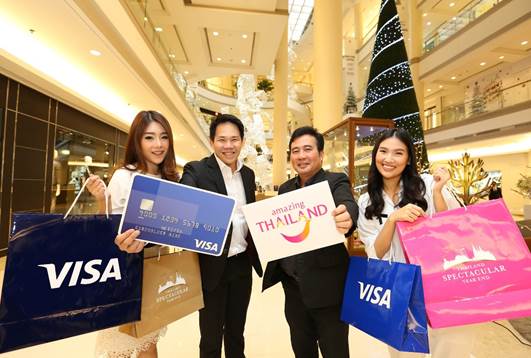
    Suripong Tantiyanon (left), Visa Country Manager, Thailand and Noppadon Pakprot (right), Deputy Governor for Tourism Product and Business, Tourism Authority of Thailand (TAT), launch Thailand Spectacular Year End 2016, aiming to boost inbound tourist spending during the festive seasons.

    The joint promotional campaign rewards non-Thai Visa cardholders with special privileges and complimentary gifts when they spend at 14 shopping complexes throughout Bangkok, from now until January 31, 2017. TAT forecast that more than 375,000 tourists will visit Thailand during the four-day New Year period, generating more than THB 5.5 billion of revenue for the country, a 12-percent increase from the same period last year.