Blog

  • Japan retail sales underwhelm

    Japan retail sales underwhelm

    Japan’s retail sales rose a marginal 0.2 per cent in December – the sixth consecutive monthly year-on-year increase.

    Analysts had expected a stronger one per cent increase, despite challenging economic circumstances largely due to the nation’s declining and ageing population.

    Department stores were the weakest link, with data from the Japan Department Stores Association showing a same-store sales fall of 1.7 per cent year-on-year – the ninth consecutive fall. The fall would have been greater if not for a cushioning effect from increased shopping by Chinese tourists.

    However, contributing to December’s figure was one less Sunday in the month, compared with December 2013, and the association noted that severe severe snowstorms hit northern regions during the month impacting on store footfalls.

    Food and beverage sales in December rose 1.4 per cent, compared with November’s 2.7 per cent. Apparel sales rose 3.1 per cent, down on November’s 4.2 per cent.

    December’s total retail sales of 13.52 trillion Yen marked the highest monthly total since March last year, when shoppers splurged in advance of an April sales tax rise.

    The preliminary data from Japan’s Ministry of Economy, Trade and Industry showed full year figures were more encouraging: an overall increase of 1.7 per cent, compared with a one per cent rise in 2013.

  • Lower Australian dollar means clothing price rise “inevitable”, suppliers say

    Lower Australian dollar means clothing price rise “inevitable”, suppliers say

    Clothing prices are expected to rise across the board for the first time in five years as suppliers and retailers raise prices after a 17 percent slump in the Australian dollar.

    Suppliers have warned retailers that prices for fashion clothing, underwear and basic apparel will rise significantly in the second half of calendar 2015, as currency hedges roll off and new-season stock comes into stores.

    The Australian dollar has fallen 17 percent against the US dollar since June and 10 percent over the past 12 months, pushing up the cost of clothing sourced from China, Bangladesh, Sri Lanka, Thailand and Vietnam.

  • Thailand’s Mangpong turns to attraction of cosmetics

    Thailand’s Mangpong turns to attraction of cosmetics

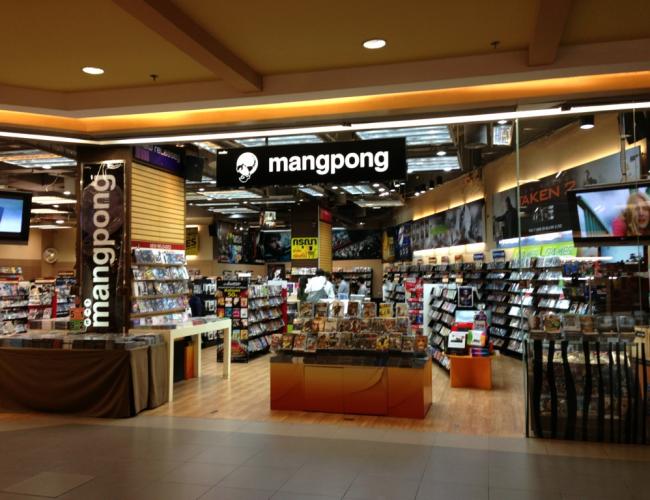
    Thailand’s Mangpong 1989 Plc (MPG) has diversified into the beauty and cosmetics retail chain in a bid to cash in on opportunities from the country’s THB200-billion (USD6.15b) cosmetics market. The company sells and rents home entertainment products.

    It’s looking for new locations to open Stardust beauty shops. It believes the beauty and cosmetics business will generate healthy sales and a good return on investment as Thai women have a modern lifestyle and prefer to be good looking.

    Mangpong has partnered with more than 100 beauty and cosmetics brands to present over 10,000 units from L’Oreal Paris, Anna Sui, Kenzo, Paul Smith and Calvin Klein. The company also plans to launch its own brand in the third quarter this year.

  • Hawaiian coffee concept lands in Seoul

    Hawaiian coffee concept lands in Seoul

    A Hawaiian coffee concept already popular in Tokyo has now made its debut in Korea.

    Lanai Cafe is a Hawaiian Kona Coffee shop serving coffee, pancakes, desserts and drinks.

    Kona is ranked as one of the world’s top three coffee beans alongside Jamaican Blue Mountain and Kenyan Kilimanjaro. It is brewed by pour over for each cup which draws its unique aroma and flavour.

  • Asia Pacific Travel Retail Association launches seminars

    A new schedule of Responsible Retail Training seminars, enhancements to the Duty Free & Travel Retail Database, topical research studies and advocacy support are among the immediate priorities for the Asia Pacific Travel Retail Association (APTRA) this year.

    A wide-ranging research program, conducted for APTRA by M1nd-set, has kicked off this year with a study of the shopping behaviour of Chinese travellers on domestic and international journeys, including their motivations for shopping and not shopping, their product preferences as well as the customer segmentation on selected routes.

    The headline results of this study, which is sponsored by Diageo, will be presented at the TFWA China’s Century Conference, organised in partnership with APTRA, in Shanghai on March 12.

    Future research topics will include the behaviour & attitudes of Asia Pacific (AsPac) travellers (China, Korea, Japan, Thailand, Indonesia, Philippines, Vietnam) in the region; a focus on Russian travellers in Asia Pacific; the behaviour & attitudes of non-AsPac passengers in the region; in-flight shopping – perceptions & the impact of promotions; behaviour & attitudes of AsPac vs non-AsPac passengers in Asia Pacific; evaluation of future in-flight shopping & concepts.

    The Responsible Retail Training Program, which has already been adopted by several major retailers, will be extended to other retailers in the region in order to ensure that there are consistently high standards across the duty free & travel retail spectrum in the Asia Pacific region.

    The APTRA Seminars, aimed at bringing useful insights on successful travel retailing to member companies and at offering networking opportunities to facilitate growth of the industry, will be organised at various locations throughout the year.

    The popular APTRA Duty Free & Travel Retail Database will be populated with the contact details of even more airports, airlines, ferry companies, retailers, distributors and suppliers to facilitate easy access to the right person in the right market.

    Key to the success of duty free & travel retail in the Asia Pacific region is an open dialogue

    between stakeholders and regulatory authorities and in 2015 APTRA will continue its support of this ideal through advocacy.

    APTRA president Jaya Singh said: “These research, training, advocacy and database initiatives are fundamental to the missions of the association, namely safeguarding the interests of all stakeholders and driving industry growth. In the last year we saw our membership grow by 20 per cent and revenues grow by almost 40 per cent as more and more companies recognise the benefits they gain from the work accomplished and the need for a strong regional association.”

    APTRA is the trade association for the duty free and travel retail industry in the Asia Pacific region, serving all members and the industry to help grow the business and protect it when challenges arise. For more information about the work of APTRA visit www.aptra.asia.

     

  • Bang & Olufsen spreads out

    Bang & Olufsen spreads out

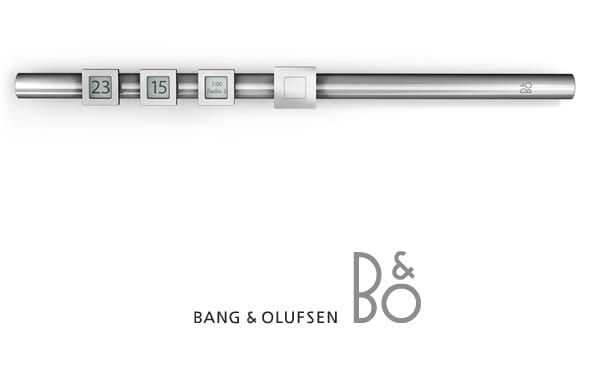
    One of the luxury brands in home and car sound systems, Bang & Olufsen (B&O), has readied its retail foray. Till now, operating mostly in the rarefied world of custom-made audio systems installed in the homes of celebrities and business barons, or pre-installed in luxury marques such as Audi, B&O is finally launching stand-alone stores that will not only afford an experience of its products but also, perhaps, whet the aspirations of those dropping by.

  • Counterfeit appliance business exposed

    Counterfeit appliance business exposed

    Vietnamese authorities have cracked a counterfeit appliance retailing business passing off cheap Chinese appliances as branded European goods.

    Thanh Nien News reports that a company called Romal Vietnam was selling gas ranges, electric stovetops, ovens and blow dryers inside supermarkets, online and at shopping centres in many provinces and cities across the nation.

    A nationwide crackdown has now been launched by teams of inspectors from the National Steering Committee for Combating Smuggling, Commercial Fraud and Counterfeit Goods (also known as Committee 389).

    A Romal Vietnam shop in Hanoi was raided on January 22 and 185 Chinese products bearing Italian and German brand names on labels were seized.

    Another 85 products were seized in the central seaside town of Danang and Ho Chi Minh City police sealed a Romal store after “the manager locked its doors and fled” according to Thanh Nien News.

    The company’s director, Nguyen Thi Ninh, and her husband Nguyen Huy Tho have been summoned by police for questioning. A police source told the newspaper that Ninh, Tho and their employees admitted importing Chinese products from Zhongshan Company in Guangdong since 2008.

    Labelling the goods as European allowed the shop to import the products for between $150 and $200 and sell them for as much as $750 to $800. The fraud had netted the business several hundred thousand dollars annually.

  • Korean d-store sales slide

    Korean d-store sales slide

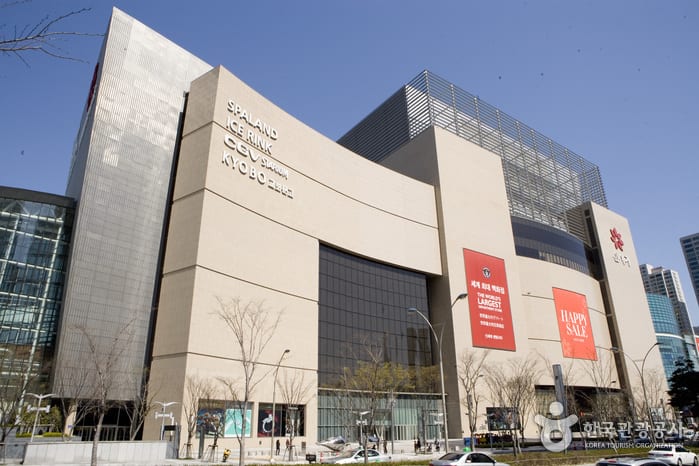
    South Korea’s department store industry is still struggling to arrest falling sales as consumers tighten spending and turn to online.

    New figures released by the trade ministry Tuesday show sales at top department and discount stores in December fell at a sharper rate than initially expected – by 0.9 per cent compared with the earlier projected 0.3 per cent.

    That makes the fourth successive month that combined sales from stores managed by Hyundai Department Store, Lotte Shopping and Shinsegae Co have declined.

    However, the new data still reflects a significant improvement from the 6.5 per cent drop in November.

    The ministry blamed the slump on falling in-store clothing purchases due to consumers preferring to shop online. Rising sales of food and beverages cushioned the effect of apparel’s fall.

    Discount store sales fell 3.8 per cent in December year-on-year, compared to 4.7 per cent in November.

  • Asia drives skin giant’s growth

    Asia drives skin giant’s growth

    After weeks of retail giants blaming Hong Kong for falling sales, global skincare brand L’Occitane says the city was one of its fastest growing markets in the first nine months of the financial year.

    In a filing with the Hong Kong Stock Exchange, L’Occitane, registered in Luxembourg, reported a 9.8 per cent global sales increase for the nine months to December 31.

    Sales in core Asian markets outperformed all other: In Hong Kong and Macau on a constant currency basis they rose 15.8 per cent, in Japan, by 19.5 per cent and in China by 13.4 per cent.

    The group’s net sales were euro 882.3 million, the 9.8 per cent rise dwarfing the 0.3 per cent improvement for the concurrent period a year earlier.

    Local currency growth was 10.8 per cent.

    L’Occitane said its online retail channel continued to outperform with a 33 per cent year-on-year growth at constant exchange rates during the first nine months.

    Overall Same Store Sales Growth was 5.9 per cent.

    Russia, China and Japan were among countries with strong same store sales growth for the nine months.

    L’Occitane has been investing heavily in store refurbishments and openings during the last two years. It added 75 stores to its global network during the last nine months and upgraded or relocated 86.

    It added 19 stores in China, where it now has 144, four in Hong Kong to expand to 35, three in Japan, (now 107) and one in Taiwan (now 54).

  • PE investor sells Indonesian d-store stake

    PE investor sells Indonesian d-store stake

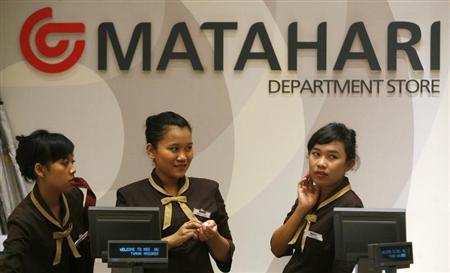
    UK-based CVC Capital Partners has sold a 12 per cent stake in Indonesian retail giant PT Matahari.

    Matahari owns hypermarkets and department stores across the nation – and is actively expanding its footprint as Indonesia’s middle class expands.

    CVC has declined to comment on the transactions, which came to light through regulatory filings.

    The company now has just two per cent of Matahari’s shares, suggesting they, too, will be offloaded in the near future.

    The timing of the transactions has surprised some analysts who have a ‘buy’ rating on the retailer’s stock, suggesting CVC might have extracted more value had it sold later.

    The shares were sold in two blocks – the first for £195 million for eight per cent of the stockholding to mainly institutional investors.

    The second stake, of four per cent, was sold to an unidentified private investor.

    Matahari was founded in 1982. It recently opened its 108th hypermarket and has more planned for the 2015 calendar year.

  • Good to be old

    Good to be old

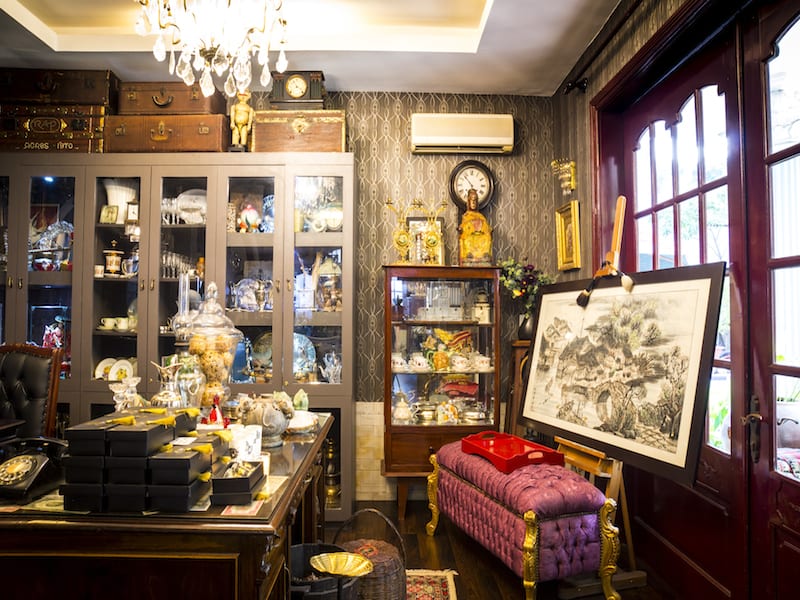
    In suburban Ho Chi Minh City, a unique ‘collectibles boutique’ draws stock from all over the world.

    Villa Royale, is now a year old, starting as an antique shop and has since also turned into one of the city’s top 10 cafes.

    A walk around the District 2 villa is like a curated tour of the world’s best bazaars and antique markets courtesy of owner David Campbell. A 200-year-old religious European painting shares space with a stunning embroidered Mongolian saddle and a gorgeous hanging Moroccan glass lamp. The inventory for the shop marries two of Campbell’s passions: travel and shopping.

    Before moving to Vietnam, Campbell travelled extensively as global director of sales for the Raffles hotel group, furnishing two homes with things acquired on his journeys. Instead of leaving these finds in storage, he decided to take them with him, keeping some for his own home and opening Villa Royale with the rest.

    “These are pieces I know intimately because I bought them myself,” he says as he fingers a pair of vintage paper mache rhinos from Cambodia.

    “I can explain where it was bought, its provenance, how old it is…”

    It also contributes to the sensible pricing for these fine collectibles.

    “I try and price everything reasonably so the stock moves. I just need enough to be able to pay staff and the rent and for me to travel again to buy more,” he says with a smile. This year alone, Campbell has made shopping trips to Istanbul, Paris, London and Morocco, taking the best finds back to Saigon.

    Popular with interior designers searching for truly one-of-a-kind pieces and furniture stores looking for props with wow factor for photo shoots, Villa Royale has something for everyone.

    “Tourists want to buy things reminiscent of Asia like temple baskets, gongs, Cambodian dancer statues and antique dressing mirrors. Locals get something unique, not from the markets, but something a bit more thoughtful as gifts and for themselves.”

    For the woman in your life, Campbell says trios (tea sets comprised of an individual cup, saucer and plate) are trendy items for hen parties and high teas instead of complete matching sets, as are perennial favourites like silver tea pots, crystal sugar bowls, chandeliers and candelabras.

    Gifts for men also abound in the form of vintage typewriters, antique humidors, old trunks that are amazing stacked into a side table, antique Vietnamese ceremonial drums and impossible-to-find decanters.

    “When you go to a shopping center, just about everything is made in China,” he notes. “Coming here, you have things from Italy, France, Germany, England… and in lots of different styles as far as shapes and designs go. You can tell which era it’s from: art deco, nouveau, retro, from the Empire period. Even if you say you like everything, we’re all drawn towards one era in particular.”

    When everyone else is striving after the latest version of the same cookie cutter product, a unique gift that may literally be the only one of its kind in Saigon or even in Vietnam, speaks of thoughtfulness and care.

    “Even hand-painted vintage Vietnamese teapots with chips and showing signs of wear are fascinating because they’ve been used. They’re not brand new but have been in people’s families for decades. If every piece could talk, they’d have a hundred stories to tell,” says Campbell.

    Part of the shop’s charm is sitting down with Campbell to talk about the pieces over a slice of the shop’s delectable homemade cakes (in a past career, he was also a chef along with having an art background) or over high tea with a gourmet selection of 24 TWG flavours.

  • EBay to cut 2,400 jobs, spin off or sell enterprise unit

    EBay to cut 2,400 jobs, spin off or sell enterprise unit

    EBay plans to cut 2,400 jobs, or 7 percent of its staff, in the first quarter to simplify its structure and boost profit ahead of a planned separation of its business.

    The job cuts will fall across its marketplaces, PayPal and enterprise businesses.

    They come as the e-commerce company reported on Wednesday that its fourth-quarter net income rose 10 percent on continued strength of its PayPal payments business, which it expects to spin off in the second half of the year.

  • Retailers offer cross-border privileges

    Retailers offer cross-border privileges

    Five retail giants have teamed up with a Thai mall operator to offer a cross-border privileges programme for shoppers.

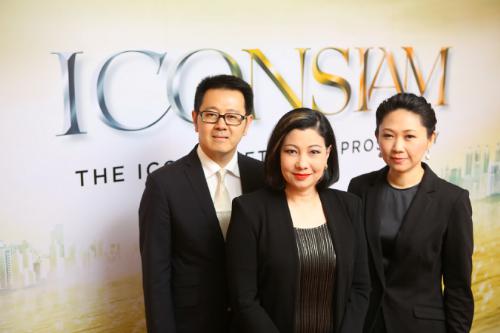
    Siam Piwat, owner of Siam Paragon, Siam Center, Siam Discovery and Paradise Park, is partnering with South Korea’s Lotte, Hong Kong’s Times Square, Robinsons of Singapore, Sapporo Parco of Japan and Galeries Lafayette of France in the Global Privilege Partnership program.

    Together, the retailers will launch a “massive international campaign”, offering both local and international shoppers “ultimate shopping experiences and above average privileges”. The partnership is the first of its kind in Thailand’s retail sector.

    Mayuree Chaipromprasith, Siam Piwat’s senior vice-president for business promotion, said Siam Piwat is honoured to lead the campaign and to be trusted by the five retailers who selected Siam Piwat as their exclusive partner in the customer relationship management (CRM) programme across the borders to ensure cardholders enjoy maximum benefits.

    “Siam Piwat sees working together in the form of partnership and collaboration as a way to develop a mechanism to stimulate more international consumer spending in Thailand. At present, the majority of visitors to Siam Piwat’s shopping venues are of the B group and higher. They have high purchasing power, love to travel, live a modern lifestyle, are into trendy innovations and expect above average services,” said Chaipromprasith.

    She added that Siam Piwat expects 400,000 visitors a year to participate in the programme, which should generate 6 billion Thai baht annually in consumer spending.

    “The Global Privilege Partnership has the largest number of leading countries working together. Not only will it serve to grow traffic to Siam Paragon, Siam Center and Siam Discovery, but it also offers value for money in terms of benefits and privileges enjoyed by members of the Platinum M Card for shoppers at Siam Paragon and VIZ Card for shoppers at Siam Center, Siam Discovery and Paradise Park.”

    The Global Privilege Partnership programme offers premium privileges to Platinum M Card and VIZ Card members of Siam Piwat as well as holders of membership cards issued by the five international partners. Shoppers enjoy benefits, including five to 50% discounts from more than 2,000 stores in the five popular shopping destinations and the same VIP service as they would have in their home countries.

    Among those services are personal assistants on hand to give members information at the partner shopping venues, welcome gifts worth more than THB 3000 and service at an exclusive lounge.

    Siam Piwat expects to expand the programme to include five more countries next year.

  • Alibaba invests in AdChina

    Alibaba invests in AdChina

    Chinese e-commerce giant Alibaba will take a majority stake in AdChina, which calls itself China’s leading digital marketing platform, to develop online and mobile marketing, the internet powerhouse says.

    Alibaba had made a strategic investment in AdChina, it said in a statement, without giving the amount.

    An Alibaba spokeswoman said financial details were not disclosed.

    Alibaba, which listed on the New York Stock Exchange last year, said the deal would allow the company to grow its online and mobile marketing “ecosystem”.

    The two companies will also develop online marketing services and data marketing products for businesses, media clients and third party service providers, the statement said.

    Alibaba is often described as the Chinese version of eBay, and like the US company has its own payments system.

    It has no product stocks itself, instead connecting buyers and sellers.

    The company’s consumer to consumer platform, Taobao, is estimated to hold more than 90 per cent of the Chinese market with more than 800 million product listings and around 500 million registered users.

  • Kodak makes comeback

    Kodak makes comeback

    Kodak – the famous photography brand almost killed off by the digital revolution – has made a comeback.

    In a digital form, of course.

    Kodak has unveiled a new smartphone at this week’s CES consumer electronics show in Las Vegas, the product of a joint venture with specialist mobile device maker Bullitt Group.

    Called the Kodak IM5 smartphone it’s a 5″ high definition Android-based smartphone its makers describe as being “as easy to use as it is smart”.

    Not surprisingly, photography is what the phone is touted as doing best, with a 13megapixal auto-focus main camera with unique image management software which lets users quickly edit photographs and either display them on the device, share them on social media or print them using a customised app compatible with home printers as well as future printing and sharing services.

    “This is a phone for consumers who appreciate the value and heritage of the Kodak brand,” said Oliver Schulte, CEO of Bullitt Mobile. “It looks great, is easy to use and offers real value for money.”

    Rochester, New York, based Kodak once dominated the photographic industry, but from the late 1990s – as digital technology took over, it began to struggle, despite having invented some of the core technology behind digital cameras.

    It filed for Chapter 11 bankruptcy protection in 2012 and the following year announced it would cease making digital cameras, pocket video cameras and digital picture frames and focus on the corporate digital imaging market. It emerged from bankruptcy in the latter half of 2013 after selling many of its patents to a group of companies including Facebook, Amazon, Apple, Microsoft, Google and Adobe for some $525 million, paying down debts and liabilities. In November 2014 it announced a $19 million quarterly profit.

    The new IM5 phone is largely the product of a brand licensing initiative by which Kodak receives royalties for products bearing its name. And Kodak is certainly a brand with street cred despite its recent misfortunes. But Kodak does appear to have had an active role in the camera and photographic processing technology inside.

    Eileen Murphy, VP brand licensing at Kodak said in a statement: “Too many memories stay stuck on mobile phones, often because the process for sharing them is too complicated for users; that’s why we’ve partnered on the IM5, the first device in a range of mobile products that takes our heritage and experience in photographic technology and combines it with Bullitt’s expertise in designing high-quality devices for a specific target consumer.”

    For the technically minded, the Kodak IM5 has an octa-core 1.7Ghz processor, 8GB standard ROM and 1GB of RAM, expandable to 32GB via a Micro SD card. It also comes with a dedicated app store (called simply “Apps”) that allows users to access a hand-picked selection of applications suited to their interests as well as full access to Google Play.

    Aimed at consumers who want a smartphone that is easier to use than what they are currently using (or being offered), Kodak and Bullitt believe the IM5 serves a market segment that – to date – has been poorly served by handset manufacturers.