Blog

  • Voylla.com to open 25 offline retail stores in offline expansion plan

    Voylla.com to open 25 offline retail stores in offline expansion plan

    Voylla.com, a jewellery and accessories shopping website run by Bengaluru-based Voylla Retail Private Limited, is planning to set up exclusive offline stores to consolidate its presence in the Indian fashion imitation jewellery industry, said its founder and chief executive officer Vishwas Shringi.

    The two-year-old company, which currently has three offline stores, including one in Bengaluru, is gearing up to launch 25 shop-in-shops across the country in tie-up with retail chains like Future Group’s Central within the next one-and-a-half year.

    Voylla.com is the latest to join the league of ecommerce players entering the offline retail business. While Flipkart has opened its first brick-and-mortar store “Fliptomania” in Bengaluru and online jewellery store Bluestone.com launched outlets in Bengaluru, Mumbai and New Delhi in 2014, online fashion retailer Myntra.com is gearing up to roll out offline stores in due course.

  • FENDI launches e-commerce globally

    FENDI launches e-commerce globally

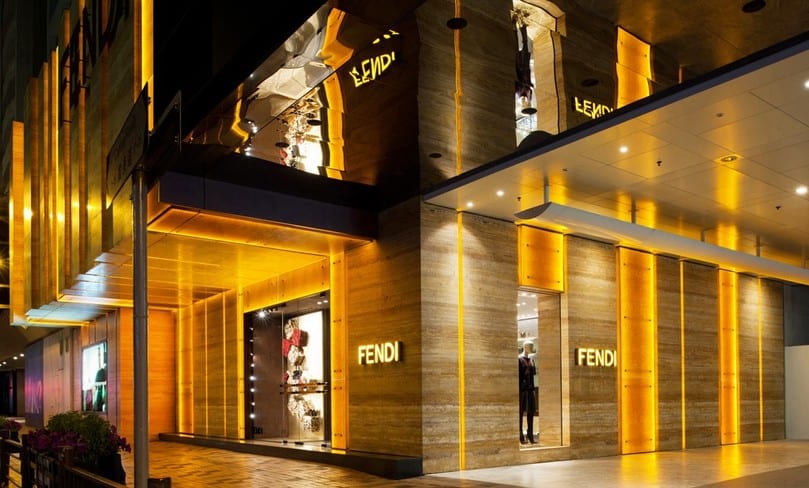
    FENDI (LVMH Group) announces the launch of its e-commerce in 28 European countries starting with this year. Japan will be followed by the US in 2016. The strategic retail approach towards e-commerce follows many other top luxury fashion brands, with several to follow suit by the end of this year.

  • Indonesia set to ban liquor sales in mini markets

    Indonesia set to ban liquor sales in mini markets

    Indonesians looking to buy a cold beer from one of the country’s ubiquitous minimarts come the end of the month will soon find themselves out of luck.

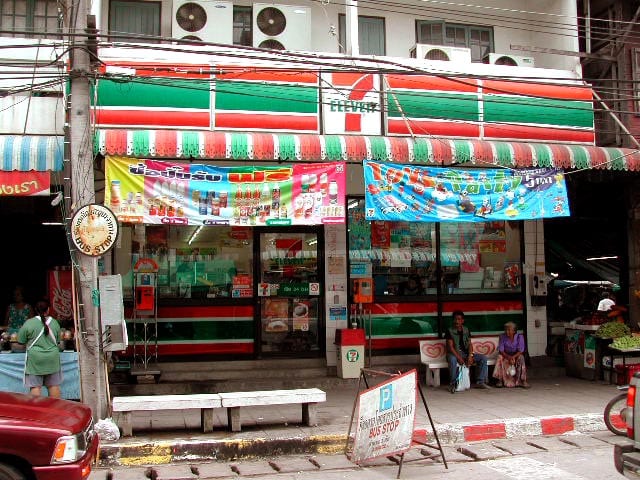
    Trade Minister Rahmat Gobel has reportedly signed a regulation that will ban small, modern retail chains such as Indomaret, Alfamart, Circle K and 7-11, from selling alcoholic beverages, including beers and pre-mixed drinks with less than 5 percent alcohol.

    The regulation, which local media have reported was signed by the minister on 16 Jan., affects mini markets only. Supermarkets and hypermarkets, such as Carrefour, will still be able to sell booze.

  • India malls turning friendly for the disabled

    India malls turning friendly for the disabled

    Malls are doing their bit to make the world a better place for people with disability. With Braille signage, wheelchair on call, disabled-friendly washrooms and specially allotted parking space, malls are looking to increasing footfalls by becoming more socially conscious.

    Interestingly, several States such as Maharashtra, Karnataka and Tamil Nadu have also asked mall managements to remove “infrastructure snags” and create a conducive environment for people with disabilities.

    According to the 2011 Census, the number of disabled in India is 26.8 million — 15 million men and 11.8 million women.

  • Kathmandu names Xavier Simonet new CEO

    Kathmandu names Xavier Simonet new CEO

    New Zealand-based outdoor clothing retailer Kathmandu on Friday announced the appointment of Xavier Simonet as the new CEO of the company.

    Simonet is currently the CEO of Radley, a London-based brand with a product range covering women’s handbags, luggage and a wide range of accessories. Simonet will relocate to Melbourne to take up the role after working out his notice period with Radley.

    Prior to joining Radley, Simonet was Vice President & General Manager, International for apparel & underwear group DB Apparel and prior to that he was the International Director of Seafolly Group based in Sydney.

    Simonet began his career with LVHM where he worked for 11 years in France, Scandinavia, Singapore, Australia, Hong Kong, and the UK and Ireland before returning to Australia to join Seafolly.

    “We have undertaken a comprehensive international search to fill the role and we are delighted Xavier has agreed to join Kathmandu as our new Chief Executive Officer,” said David Kirk, the Chairman of Kathmandu.

    “Xavier has wide experience in retailing and brand development in Australia and in many international markets. He has a proven track record building brands and developing successful retail businesses in fashion, apparel, accessories and related products,” Kirk added.

  • Hooters in major Asian roll-out

    Hooters in major Asian roll-out

    Hooters of America has signed an extensive development agreement to open 30 new Hooters QSR restaurant locations throughout Southeast Asia over the next six years.

    After introducing the concept to Thailand with the opening of Hooters Phuket, international franchisee Destination Resorts has set sights on Cambodia, Indonesia, Laos, Malaysia, Myanmar, the Philippines, Singapore, Thailand and Vietnam, as well as Hong Kong and Macau.

    The initial focus will be on Hong Kong, Thailand and the Philippines.

    Hooters is already well established through other partnerships in mainland China and Singapore.

    “The moment the doors opened to Hooters Phuket we realised the tremendous opportunity to greatly broaden our efforts to develop the Hooters brand across Asia,” said Gary Murray, CEO, Destination Resorts Co.

    “We pride ourselves on introducing fresh, exciting concepts to our guests, and the unparalleled Hooters dining experience fits that profile.”

    Hooters, derided by many for its concept of attractive women in tight or skimpy clothing serving ordinary, primarily deep fried food to customers, appears to have exhausted its growth potential in its home market and has failed to capture customers in forays into other western market, such as Australia. Now it is eyeing Asia for growth, recognising locals are currently ready to embrace pretty much any US fast food concept or brand.

    Less than a year after Hooters Girls first welcomed guests in Patong, Phuket, Destination Resorts says it will dedicate “significant capital and resources” to an expanded Hooters venture, continuing growth in Thailand and concentrating heavily on Hong Kong and the Philippines and on the other new countries.

    “Destination Resorts Co. brings a wealth of hospitality and restaurant industry expertise, overseeing premier resorts and travel destinations in multiple Asian markets,” said Mark Whittle, senior VP of global development with Hooters of America.

    “Following the warm welcome of Hooters Phuket, we’re confident our franchise partner will realise continued success as we work together to spread Hooters wings in additional markets.”

    Headquartered in Bangkok, Destination Resorts is also behind DoubleTree Resort by Hilton Phuket t Surin Beach, DusitD2 Phuket Resort, Sri Racha International Golf at Sri Racha Hills, Hard Rock Café Phuket at Patong Beach, Novotel Phuket Karon Beach Resort & Spa, Novotel Hua Hin Cha Am Beach Resort & Spa, Swissotel Resort Phuket and Four Points by Sheraton Bangkok Sukhumvit 15.

  • Index seals deal for Philippines

    Index seals deal for Philippines

    Thai homewares giant Index Living Mall has signed a Philippines partner as its Asian expansion continues.

    Index will team up with the Philippines largest retail and mall operator SM Group to run the franchise for the concept for at least five years.

    Index managing director Kridchanok Patamasatayasonthi told the Bangkok Post newspaper Index chose the Philippines due to its huge market potential.

    “There’s no furniture or furnishings chain like us in the country, just small local and imported furniture stores.”

    Index opened its first store in Vietnam about three years ago and its first in Malaysia last month, in the capital city of Putrajaya. It plans 30 stores across Malaysia over a 15-20 year timeline.

    The company is also eyeing opportunities in Indonesia and hopes to double its foreign sales within five years. It will soon have 25 stores in its home market.

  • AmorePacific sold one Cushion product every 1.2 seconds in 2014, driving Asia Cushion frenzy

    AmorePacific sold one Cushion product every 1.2 seconds in 2014, driving Asia Cushion frenzy

    Craze for Cushion, which started in Korea, is now drawing worldwide attention and revolutionising the makeup routine for women around the world.
    Amore Pacific Group said on Tuesday that the global sales of Cushion products under its brands are expected to exceed 50 million units on a cumulative basis during January 2015. With the total sales of Cushion products increasing 105 percent year on year (YoY) to 26 million units, an AmorePacific Group’s Cushion was sold every 1.2 seconds in 2014. In particular, the sales of the Cushion products outside of Korea surged a whopping approximately 140 percent YoY and led a remarkable growth in the global market. The three largest markets outside of Korea comprised Mainland China, Taiwan and Hong Kong, where Cushion products have become an essential for every makeup bag.

    According to 2013 survey conducted by the Korea Tourism Organisation, more than 50 percent of the foreign visitors to Korea have purchased Korean cosmetics products, indicating that the influence of K-Beauty (Korean beauty) is ever-growing. Among the Korean cosmetics products, Cushion, which has changed the way Korean women wear makeup, is now creating a global beauty trend beyond its popularity in Korea.
    Another study conducted by the global research firm TNS Korea that interviewed 800 Korean female consumers found that 75 percent of Korean women have used or are currently using Cushion products. The respondents chose the portability and the convenience of creating the natural-looking flawless skin as their reasons for choosing Cushion.

    Moreover, the survey showed that Cushion was in fact has changed the makeup habits of Korean women by reducing the steps and time needed in creating the skin-looks they prefer. 75 percent said that since using Cushion their makeup routine was shortened, and 76 percent replied that they were now easily reapplying makeup and sunscreen with Cushions. 55 percent of women responded that their sole base makeup product was Cushion. The survey showed more than 8 out of 10 most-favoured Cushion brands were from the category creator AmorePacific Group, including IOPE and LANEIGE.

    Cushion refers to a makeup compact built with a specially-designed urethane foam that safely contains and preserves makeup liquid comprised of foundation, sunscreen and skincare formula. Already popular as the “must-have” item in Korea for easy, flawless skin makeup, Cushion has more recently gained keen attentions in the global cosmetics market.

    Amore Pacific Group began its research and development for Cushion in January 2007 and introduced the “IOPE AIR CUSHION” in March 2008. The sales of IOPE AIR CUSHION totalled 3.8 billion KRW in the first year launched and surpassed 200 billion KRW in 2014, which made it one of the best-selling items in the Korean cosmetics market.

    And with the industry-leading technology, AmorePacific has launched numerous Cushion products with different functional benefits through its brands, such as the LANEIGE BB Cushion, Sulwhasoo Evenfair Perfecting Cushion, Innisfree Mineral Melting BB Cushion and ETUDE HOUSE Precious Mineral Any Cushion.

    The LANEIGE BB Cushion series in particular was re-tailored for each global market to meet local skin conditions. As a result of localised marketing strategy, about 1.17 million units of LANEIGE BB Cushion were sold in China in 2014. As of January 2015, AmorePacific Group offers a total of 19 Cushion products from its 13 brands in more than ten countries in the Asian and North American regions, leading the “globalisation” of the Korean-born Cushion.
    “Cushion, created from AmorePacific Group’s innovative technology, is a revolutionary product that is changing the makeup routines of women across the world and is going to be at the centre of global beauty trend in 2015,” said Suh Kyung-Bae, Chairman & CEO of AMOREPACIFIC Group. “AMOREPACIFIC Group will continue to pioneer and lead the global Cushion market with the company’s unparalleled technology and superior products.” he added.

  • Tesco launches new online supplier community

    Tesco launches new online supplier community

    Tesco recently launched a new interactive platform that is expected to collaboration, innovation and sustainability across its suppliers worldwide.

    The Tesco Supplier Network would benefit over 5,000 members as they would be able to connect directly with Tesco teams, learn more about Tesco and learn from each other on issues such as energy, food waste or innovation.

    “This new community of Tesco teams, suppliers and producers from around the world gives us the opportunity to improve communication, share ideas and continually improve the products that our customers enjoy,” said Jason Tarry, Head of Commercial at Tesco.

    The Tesco funded site brings together two pre-existing communities; the Tesco Producer Network, which served fresh food producers, and the Tesco Knowledge Hub, which was open to branded manufacturing and processing suppliers.

  • Aussie sushi chain lands in Hong Kong

    Aussie sushi chain lands in Hong Kong

    An Australian sushi restaurant chain has opened its first outlet in Hong Kong.

    And now Wasabi Warriors plans more stores in the city, along with expansion into the Philippines in February and Dubai later in the year.

    Hong Kong ‘Business Warrior’ Elga Wong said response to the first store’s opening was overwhelming.

    “It’s been so busy I haven’t even had a minute to catch my breath.

    “The experience has been phenomenal and we’ve received extremely positive feedback from customers with fresh and tasty being the most common words heard on the opening day.”

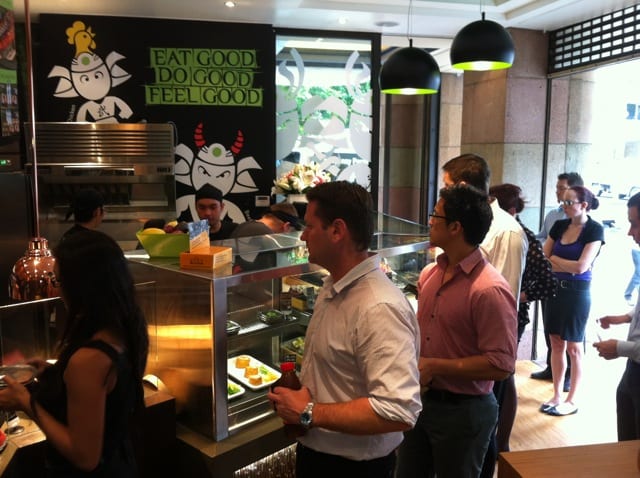
    Wasabi Warriors is owned by Australia’s Pacific Retail Brands, which also has Go Sushi and Kick! Juice Bars in its portfolio. The sushi concept is very environmentally focused, carefully sourcing ingredients from carefully selected suppliers. Using sustainable, free range and locally sourced authentic sushi, the brand says in Hong Kong it is staying true to its cause to ‘Eat good, Do good, Feel good’ by honouring their commitment to the ocean, earth and the animals.

    The chain’s menu includes freshly made sushi rolls, packs, gyozas and dragon bites.

    The Hong Kong store is on the ground floor of World Trust Tower, 50 Stanley St, in Central.

  • Pure Gold for Changi

    Pure Gold for Changi

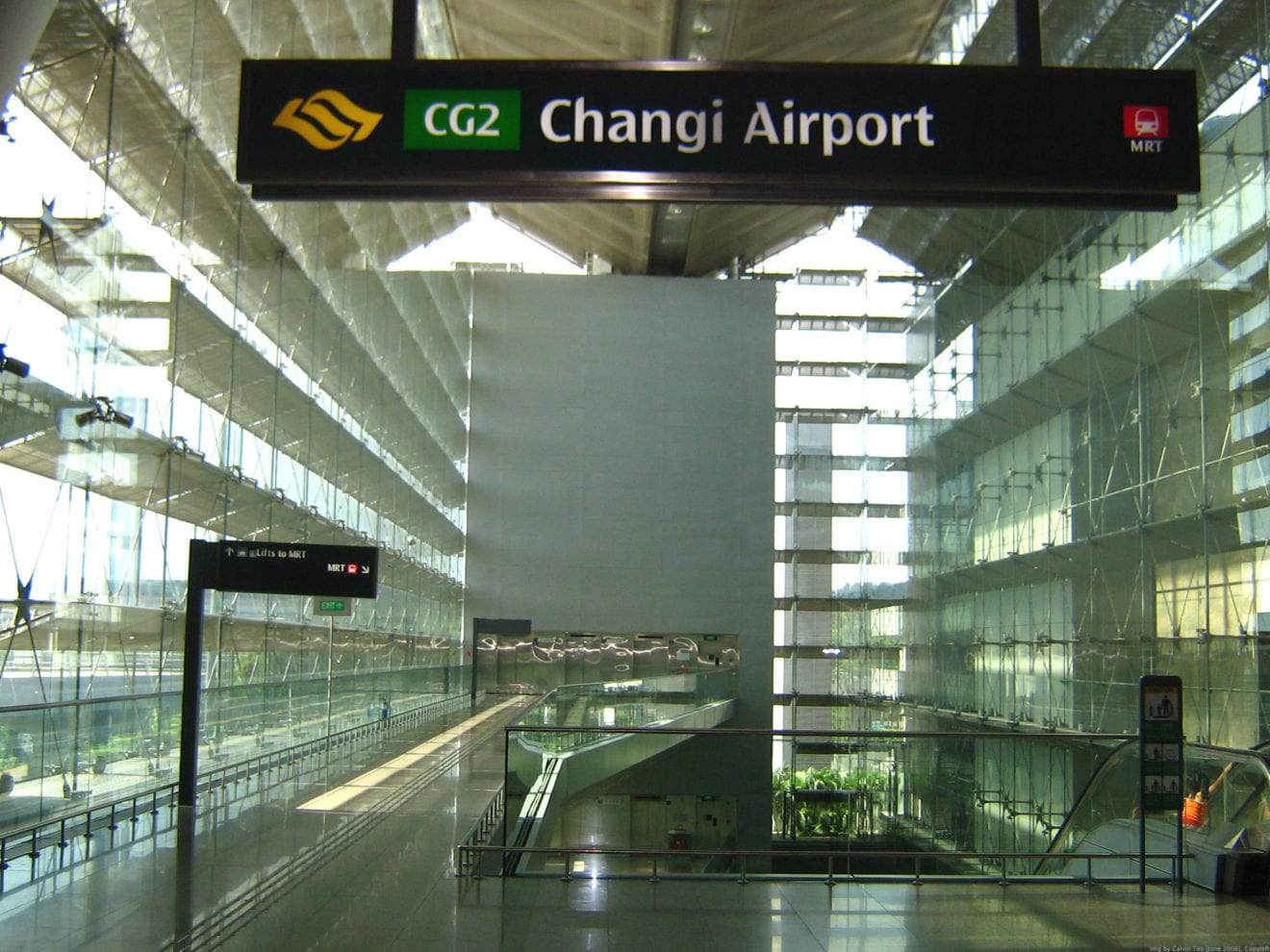
    Pure Gold has become the first Middle Eastern jeweller to be granted a concession at Singapore’s Changi International Airport.

    It will open a jewellery store in Terminal 1.

    Pure Gold is a private family-owned business founded 20 years ago which now has 125 stores in the Middle East and Asia. It plans to open a further 200 by 2018, selling products sourced from its factories in China and India.

    Chairman and founder Firoz Merchant said Changi airport is one of the busiest and best performing airports in Asia and being awarded a concession to open in the airport terminal is a big boost to Pure Gold’s travel retail business.

    “This achievement is in line with our plans to become the largest travel retailer in jewellery globally. Passengers passing through Singapore Changi International Airport can now choose from our extensive range of gold, diamond, pearls, precious and semi-precious gemstone jewellery in the latest styles and best prices.”

    Pure Gold already has a strong duty free business in the Middle East, operating at all terminals in Kuwait and Abu Dhabi international airports, and within the duty free retail facilities in Jordan, Kuwait, Muscat, Dubai and Sri Lanka.

    CEO and MD Karim Merchant added in a statement: “Travel Retail is a key area of business for us and is becoming an increasingly important sector of our overall operations. Winning the concession at Changi Airport, which has an average number of 50 million passengers per year, will help us to further strengthen our business.”

  • Esprit warns of profit decline

    Esprit warns of profit decline

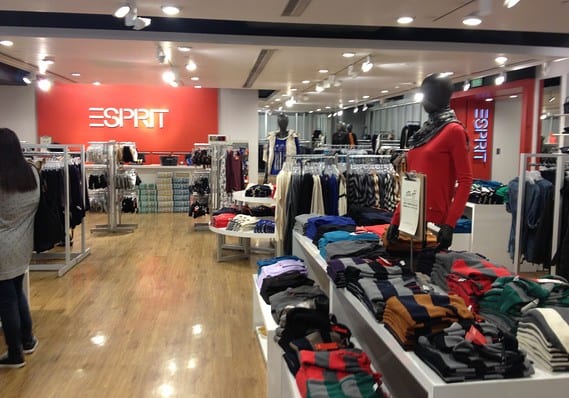
    Apparel chain Esprit has wanted shareholders its half year profit to December 31 is likely to be between HK$40 million and $50 million – half the $95 million of the same period a year earlier.

    The company said based on preliminary accounting figures, the expected lower net profit is based on falling turnover. This was due to a combination of prolonged unusually warm weather in Europe for majority part of the period, resulting in much lower than expected sales of its autumn and winter products together with special return agreements in China to address aged inventory in the wholesale channel. Although these returns were completed in the first quarter, it impacted on top line performance in the half year.

    “Notwithstanding the anticipated lower net profit in the first half of the financial year, the group has continued to devote maximum efforts to significantly improve our products, particularly in terms of design, quality, and value for money, by implementing faster and more cost efficient product development and supply chain processes as part of a vertical business model (New Business Model).

    “The New Business Model has been in place since the beginning of this financial year, in July 2014. The Spring/Summer 2015 collections, the first that have been entirely developed under the New Business Model, will arrive at stores from February onward. The products developed under the New Business Model have thus far received a positive response from our wholesale partners.

    “While the end consumer response can only be fully tested once the products reach the shop floors, we remain confident of the progress made in our product development,” the company said.

    The company will announce its interim results for the six months to December 31 in February.

  • Japanese eyes on California

    Japanese eyes on California

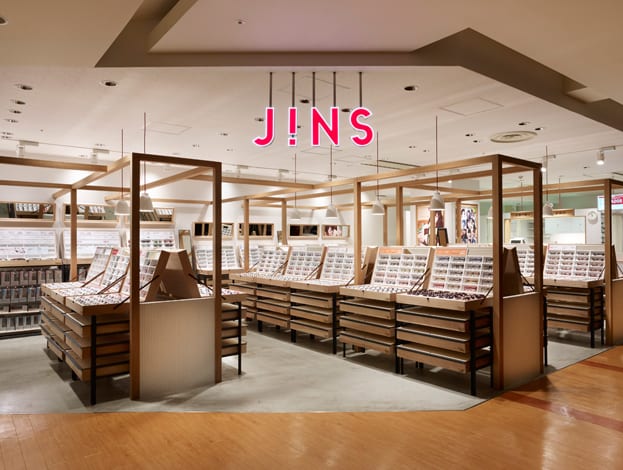
    Japan’s largest eyewear retailer Jins is to launch in the US, opening an inaugural flagship store in San Francisco’s Union Square this spring.

    Tokyo-based Jins launched its first store in 2001 and now operates more than 300 retail locations across Japan and China.

    The 4900 sqft flagship will be located at 151 Powell St and Jins promises it will stock one of the most expansive collections of eyeglasses in the city.

    In tandem with the store, Jins will launch a US eCommerce site in Spring 2015. Customers nationwide will be able to purchase Jins eyewear online with an existing prescription and San Francisco/Bay Area residents will have the opportunity to purchase their glasses online and pick them up in the store on the same day.

    Jins promises to “reinvent the in-store eyewear shopping experience” in the US, offering “unprecedented simplicity and speed”. At the new store, customers can browse, purchase and receive their prescription eyewear with custom fitting all in the same visit. Customers no longer have to wait weeks to receive their glasses in the mail because all Jins’ aspheric prescription lenses are assembled in-store using its Kanna lens lab.

    The company promises customers can receive their glasses from start to finish in approximately 30 minutes.

    The Jins store will house more than 1200 different styles, priced from US$60-120, including premium lenses.

    “We chose the Bay Area as our first stop in the US because it perfectly reflects Jins’’ progressive spirit and passion for innovation,” said Shinsuke Tomita, president of Jins Eyewear US.

    “With the opening of the San Francisco store, we hope to change the way people think about shopping for glasses in the US. Similar to how we shop for shoes or jewellery, we want our customers to explore countless designs and color options without being limited by the unnecessary complexities and inflated prices that are still the norm in the eyewear industry today.”

    Jins describes itself as “an early innovator in creating high-quality, fashion-forward prescription and nonprescription eyewear at affordable prices”.

    Jins’ point of difference is quality craftsmanship. “Jins pioneered the concept of affordable, high-quality eyewear in Japan, and has always believed that quality should never be delivered with an added surcharge for consumers. Every pair of Jins glasses is created with the passion and spirit of Japanese craftsmanship, using only the best materials, and metal frame parts sourced exclusively from Japan.”

  • Protests squeeze Clarks profits

    Protests squeeze Clarks profits

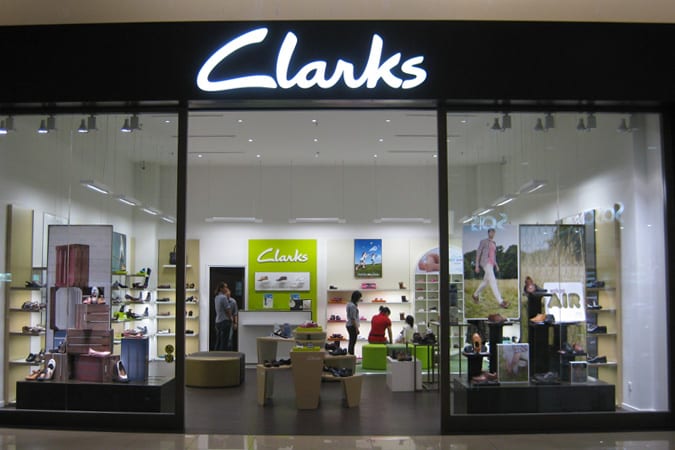
    Hong Kong distributors of shoe label Clarks has blamed the Occupy Central protests for a 45 per cent profit slump in the year to December.

    S.Culture has the exclusive distribution rights for a number of international lifestyle comfort footwear brands, including Clarks, Josef Seibel, The Flexx and Yokono. It has retail outlets in Hong Kong, Macau and Taiwan trading  under the brands S.Culture, Shoe Mart and Scoops as well as sole brand stores for Clarks, Clarks Originals and Josef Seibel.

    “The board believes the significant decrease in the unaudited consolidated net profit is mainly attributable to an unexpected deterioration of the general atmosphere of the consumer market in Hong Kong commencing in the third quarter of 2014 leading up to the Occupy Central event and its negative lingering effect until the fourth quarter of 2014.”

    However, there was a rosier side to its profit warning lodgement. It said the addition of 10 stores had taken its retail network to 122 as at December. Due to the protests and downturn in spending by Chinese mainland tourists, these new stores had yet to break even and had incurred costs in leasing, staff recruitment, stock and other overheads

    Despite the significant decrease in the unaudited consolidated net profit for the fourth quarter of 2014, the group recorded a same store sales growth of approximately 1.3 per cent.

  • A S Watson snaps up Dutch chain

    A S Watson snaps up Dutch chain

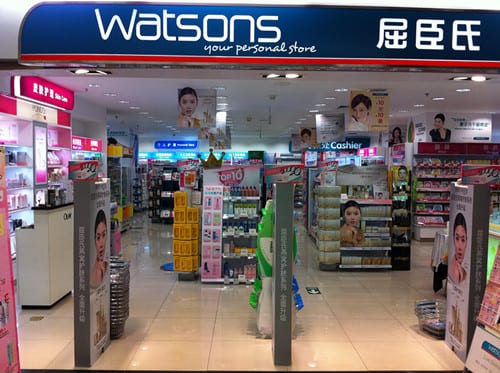
    Hong Kong based A S Watson has bought a 50-strong chain of pharmacies in the Netherlands.

    The deal with Dirx Drugstores will see all 50 stores of the Dirx health and beauty retail network fall under Watson ownership, along with five additional locations currently under development. Most of the stores are in the Randstad region.

    All Dirx employees will join A S Watson, parent of Kruidvat and Trekpleister chains in Holland. The Dirx stores will be converted to either Kruidvat or Trekpleister branding once the transaction is completed.

    The deal remains subject to approval from the Netherlands Authority for Consumer and Market. The purchase price has not been revealed.

    Gerard van Breen, CEO of A S Watson Health & Beauty Benelux said the acquisition will expand the company’s national coverage making its stores accessible to even more consumers.

    Rick Groen, director of Dirx Drugstores, said that with only 50 plus stores, the business was too small a player to independently expand in the market.

    “The A S Watson approach and focus of providing the best offers to customers at affordable prices is consistent with our philosophy. We are convinced that A S Watson is an excellent match to successfully move the business forward with our employees.”

    Kruidvat, together with Trekpleister and Prijsmepper, is part of A S Watson Health & Beauty Benelux and a major player in the Dutch and Belgian markets.

    Kruidvat, with almost 900 stores in Holland, ranked among the top three most indispensable brands in the Netherlands in a 2014 study. The chain is also active in Belgium with more than 200 stores. Trekpleister (with more than 140 stores) distinguishes itself as a neighbourhood drugstore, where expert staff plays an important role in addition to a bargain-priced range of products.

    A S Watson Health & Beauty Benelux is part of the A S Watson Group, which has more than 11,000 stores in 25 markets worldwide. It is the world’s largest international health & beauty retailer in Asia and Europe, a subsidiary of Hong Kong-based Hutchison Whampoa.