Blog

  • Jonathan Waecker Completes First Year as Michael Hill CEO

    Jonathan Waecker Completes First Year as Michael Hill CEO

    Jonathan Waecker marked his first 12 months as chief executive of jeweller Michael Hill on August 27. His arrival followed an international search and a sombre period for the retailer.

    Former chief executive Daniel Bracken died unexpectedly in February 2025, followed by founder Sir Michael Hill in July.

    Leadership Transition at the Jeweller

    Waecker took charge of the retail network just weeks after Sir Michael died. The double loss forced the company to manage executive succession and institutional continuity at the same time.

    Directors turned to Waecker to execute long-term strategy while protecting brand equity across the store fleet. Maintaining operational discipline during senior turnover remains the board’s primary focus.

    “I’ve approached it with enormous respect for what Sir Michael and Lady Christine built,” Waecker said. “There’s so much magic in this brand and its history.”

    Succession After Twin Losses

    Retail chains facing sudden leadership gaps often risk strategic drift. Michael Hill countered that threat by moving rapidly through a global search to fill the vacancy left by Bracken.

    Executive stability gives regional landlords and investors clear assurance on leasing commitments and store funding. Sector rivals continue to fight for discretionary spend, leaving management little room for operational disruption.

    Stewardship Across Core Markets

    Before Waecker took charge in August 2025, the group relied on Bracken to direct brand elevation and store network refinements. Losing both the operational chief and the founder within five months tested governance across the business.

    Attention now turns to annual trading performance and network expansion targets across the brand’s core markets.

  • Singapore Retail Sales Growth Slows to 1.5% in July as Luxury Holds Firm

    Singapore Retail Sales Growth Slows to 1.5% in July as Luxury Holds Firm

    Singapore retail sales excluding motor vehicles rose 1.5 per cent year-on-year in July to SG$3.7 billion (US$2.9 billion), slowing from a 4.1 per cent gain in June.

    Official Department of Statistics data released on Monday showed shoppers pared back daily supermarket and fuel spending while sustaining double-digit increases on high-end discretionary items. Online transactions generated 18.3 per cent of total retail turnover during the month.

    Discretionary Spend Defies Inflation

    Recreational goods rose 13.9 per cent year-on-year, propelled by sports equipment purchases. Turnover for watches and jewellery climbed 11.1 per cent over the same period, giving both categories three consecutive months of double-digit expansion.

    Everyday retail categories faced a sharper contraction. Fuel receipts dropped 1.1 per cent in July after an 8.0 per cent expansion in June, reflecting a mid-year drop in pump prices before crude costs picked up again heading into late third-quarter trading. Supermarkets, convenience stores, mini-marts, and food and alcohol retailers all posted annual revenue declines.

    Right now, this is a market where retailers serving the masses are struggling, while those attracting the wealthy thrive.

    Josh Gilbert, lead analyst for Apac at Etoro, noted that households have adjusted their budgets around elevated living expenses by cutting routine spending to protect big-ticket purchases.

    Department Stores Squeezed

    Department stores suffered their sixth contraction in seven months. The persistent slide exposes structural problems for general merchandise retailers competing against specialized mono-brand stores on one side and cross-border e-commerce platforms on the other.

    Landlords across central shopping corridors face an increasingly split tenant base. Prime retail space dedicated to athleisure, fitness gear, and hard luxury continues to deliver higher sales densities, while suburban grocery anchors and legacy multi-brand floors yield lower turnover rents.

    Distortions and the Next Baseline

    Part of the drag on staple retail reflects a high comparative base from July 2025, when households spent state-issued SG60 vouchers across neighborhood stores and supermarkets.

    August retail numbers will reveal whether renewed oil price volatility and the complete runoff of previous fiscal stimulus further weaken food receipts, ahead of fourth-quarter lease renegotiations across major shopping mall portfolios.

  • Tetra Pak Names Michael Wu Managing Director for Oceania Operations

    Tetra Pak Names Michael Wu Managing Director for Oceania Operations

    Tetra Pak appointed Michael Wu as managing director of its Oceania business, taking charge of operations across Australia and New Zealand effective September 1.

    Wu brings 18 years of executive experience across the Swiss-Swedish packaging giant, stepping into the role after serving as market operations quality and sustainability director.

    Leadership Track Across Southeast Asian Markets

    Before his latest global role, Wu led Tetra Pak businesses across Malaysia, Singapore, the Philippines and Indonesia. His appointment shifts an executive with deep Southeast Asian operating experience into the mature Oceania dairy, beverage and liquid food packaging market.

    Food manufacturers across Australia and New Zealand face tight regulatory mandates on packaging circularity and emissions reductions. Placing a former quality and sustainability lead in charge of Oceania reflects packaging producers aligning commercial leadership directly with compliance demands from major supermarket chains and brand owners.

    Shifting Packaging Demands in Oceania

    For beverage processors and dairy co-operatives in the region, processing and packaging machinery upgrades require heavy capital expenditure. Wu inherits client relationships across Australia and New Zealand where processors are balancing automation investments against shifting retail carton consumption.

    Competition from alternative barrier packaging and local carton converters adds pressure on supply agreements. Tetra Pak has relied on integrated equipment and service contracts across Australasia to protect its volume footprint against cheaper imported carton blanks and plastic formats.

    Regional Supply Chain Realities

    Wu oversaw rapid packaging volume growth across Southeast Asian beverage markets before his transition into global sustainability and operations quality management. That background gives him direct insight into regional raw material flows and converting plant efficiency.

    His immediate focus turns to commercial execution across key Oceania accounts as dairy and beverage brand owners finalise processing equipment budgets for the coming operating cycle.

  • TCL Affiliate RayNeo Launches GT and iO Smart Glasses Across 40 Markets

    TCL Affiliate RayNeo Launches GT and iO Smart Glasses Across 40 Markets

    RayNeo launched its GT Series and iO smart glasses across 40 retail markets on September 4, 2026. Pricing ranges from US$329 to US$549.

    The Chinese hardware maker held a 23.7 per cent global market share in the first quarter of 2026. That made it the world’s largest consumer augmented reality vendor.

    Hardware Pricing and Regional Distribution

    Sales started immediately through Amazon and the company’s direct web store. Distribution spans 40 countries and territories, including Singapore, Malaysia, Thailand, Vietnam, Japan, Australia, New Zealand, Saudi Arabia, the United Arab Emirates, the United States, Canada, Mexico, the United Kingdom and the European Union.

    Products fall into two distinct hardware tiers. The 33-gram RayNeo iO operates as a heads-up display for navigation, teleprompting, live translation and voice recording summaries. It costs US$499 with a standard case, or US$549 with a charging case bundle. For entertainment, the RayNeo GT retails at US$329, and the GT Max costs US$429. Both GT models feature audio co-tuned with Danish specialist Bang & Olufsen. They also support Dolby Vision playback when paired with the companion RayNeo Pocket TV Pro accessory.

    Competitive Shift in Consumer Wearables

    For electronics retailers and distributors in Southeast Asia, the rollout signals a shift from crowdfunding campaigns to volume consumer retail. At an entry price of US$329, the TCL-backed company takes direct aim at portable monitors and external displays rather than bulky mixed-reality headsets.

    Hardware margins in this segment stay tight. That puts pressure on companion accessories, such as the Pocket TV Pro and optical prescription inserts, to generate operating profit. Ecosystem lock-in presents the main commercial risk. Smart glasses still rely heavily on external host processing and content partnerships to attract buyers beyond early adopters.

    From Domestic Lead to Global Retail Footprint

    RayNeo built up to the Berlin release with several hardware announcements earlier in 2026. It debuted eSIM-enabled glasses at CES in January and introduced the Air 4 Pro at Mobile World Congress in March. Tracking databases from IDC, RUNTO, CINNO Research and AVC all ranked the company first for shipments in China.

    Demonstrations and executive interviews run through September 8 at Hall 21A at IFA 2026 in Berlin. Buyers can access introductory promotional discounts of US$30 during this opening sales window.

  • Australian Grocery Baskets Rise 8.5% as Shoppers Trade Down

    Australian Grocery Baskets Rise 8.5% as Shoppers Trade Down

    Australian households face an 8.5 per cent jump in standard grocery costs, pushing four-person families to spend an average of $245 weekly at supermarket checkouts. That identical basket of goods climbed to $232 in July 2026 from $214 in March 2025, according to tracking data from consumer research firm Canstar.

    Overall household grocery spending rose two per cent year on year from an average of $240 per week, held down only because shoppers are actively ditching premium items and buying cheaper alternatives. Research from ANZ Institutional shows consumers are managing higher food costs by swapping beef for chicken, picking private-label staples like pasta and canned tomatoes, and structuring purchases around promotional cycles.

    Trading down to private labels

    Price scrutiny has altered basket composition across major supermarket chains. Canstar survey data indicates 40 per cent of shoppers cut back on discretionary treats and snacks, while 38 per cent spend extra time evaluating unit pricing on shelves. Another 30 per cent target marked-down stock, and 25 per cent now buy supermarket home brands instead of proprietary labels.

    The shift demonstrates how consumer adaptation blunts headline shelf inflation. Families who alter their purchasing baskets shield their weekly budgets, while those maintaining rigid preferences for items like fresh beef, dairy and convenience foods absorb the full weight of cumulative price gains.

    “Food inflation doesn’t just change prices; it changes habits,” said Matthew Mann, director of research and analysis at ANZ Institutional.

    Margin squeeze for national brands

    For packaged goods manufacturers and tier-one food brands, this behavioral pivot threatens market share in key dry-grocery and dairy categories. Major supermarket operators in Australia continue to expand their private-label ranges, securing margin while offering entry-level price points that squeeze branded suppliers off shelf space.

    Suppliers unable to fund trade promotions or justify premium pricing risk permanent volume losses as private-label loyalty solidifies. The margin pressure sits heavily on domestic food processors, who must navigate higher logistical and ingredient costs without full pricing power at the retail negotiating table.

    Tracking the checkout shift

    Cost pressures built steadily through 2025 before escalating into mid-2026, compounded by wider supply chain friction and energy costs. University of Sydney retail researcher Lisa Asher noted that real wage growth has failed to keep pace with cumulative food cost increases over that window.

    The key metric for Australian retail suppliers through the final quarter of 2026 is volume recovery in branded meat and snack categories as promotional discounting deepens.

  • Destination Italy Adds Two Frozen Pizza Lines Across Australia and New Zealand

    Destination Italy Adds Two Frozen Pizza Lines Across Australia and New Zealand

    Destination Italy expanded its frozen pizza lineup across Australia and New Zealand on September 7, 2026, launching two Italian-made varieties into regional supermarket freezers.

    Made in Italy, Woodfired Puttanesca and Woodfired Salame ship directly to Australian and New Zealand retailers catering to demand for imported convenience meals.

    Ingredients and Recipe Formats

    The Woodfired Puttanesca pizza uses a traditional tomato and mozzarella base topped with black olives, capers, and oregano. Woodfired Salame pairs that same base with sliced salami, produced in Italy before frozen transport.

    Both products rely on Italian-baked woodfired crusts to stand out from local alternatives. The format targets shoppers who want regional recipes without paying foodservice prices.

    Premium Competition in the Freezer Aisle

    Major grocers across Australia and New Zealand have steadily reallocated freezer space to imported and specialty private-label items over the past three years. Mainstream frozen pizzas face ongoing margin compression. That pressure has prompted distributors to push higher-value imported SKUs onto shelves.

    For retailers, imported lines offer higher basket values in a category historically dominated by discount domestic labels. Cold-chain freight costs and exchange-rate swings between the euro and the Australian dollar remain key operational hurdles, squeezing margins when shipping volumes fluctuate.

    Retail Distribution Timelines

    Destination Italy built its initial ANZ footprint around core woodfired SKUs before widening the range with specialized regional flavor profiles. Across the supermarket frozen sector, brands are taking similar premium routes, using origin-certified manufacturing to defend shelf share.

    Supermarkets will roll out the two new varieties across national freezer networks through the remainder of the month.

  • Taiwan Targets Silicon Photonics to Cut AI Chip Power Use by 50 Percent

    Taiwan Targets Silicon Photonics to Cut AI Chip Power Use by 50 Percent

    Taiwan is mobilising its chipmaking sector to commercialise silicon photonics and copackaged optics, with the Ministry of Economic Affairs backing efforts to overcome artificial intelligence computing bottlenecks.

    The island holds over 90 percent of global manufacturing capacity for chips at 7 nanometers or below, while more than 30 firms including Taiwan Semiconductor Manufacturing Co and MediaTek Inc formed an industry alliance in 2024.

    Silicon photonics replaces conventional copper wiring between chips with optical signals. Because optical transmission generates negligible heat, the technology cuts device power consumption by 30 to 50 percent, according to the Ministry of Economic Affairs. That saving eases cooling limits in high-density AI data centres. It also clears the 1.6-terabit-per-second bandwidth ceiling that hampers electronic links.

    Optics Replace Copper Interconnects

    Heavy capital is pouring across the hardware supply chain. Nvidia invested US$4 billion into silicon photonics development in March. The chipmaker needs architectures that sustain real-time AI workloads and high-definition streaming without overheating server racks.

    Taiwanese authorities have folded the technology into their New 10 Major AI Infrastructure Projects. Funding flows through the government’s A+ Enterprise Innovation research programme. The scheme subsidises domestic research teams and equipment developers building local manufacturing tooling.

    Alliance Mobilises Heavyweights

    Execution on the ground rests on the Silicon Photonics Industry Alliance, a consortium established in 2024 with industry group SEMI. The group brings together more than 30 technology suppliers. Members include Taiwan Semiconductor Manufacturing Co, ASE Technology Holding, MediaTek and Hon Hai Precision Industry.

    Asian hardware vendors and server assemblers face shifting procurement cycles. Traditional printed circuit board layouts will yield to integrated optical packaging. As a result, component suppliers must retool production lines for optical transceivers and precision glass substrates.

    Manufacturing risks centre on packaging yields and costs. Integrating laser sources and optical waveguides directly alongside silicon dies requires packaging tolerances tighter than standard wire bonding. These yield hurdles could delay volume delivery.

    Race for Next-Generation Packaging

    Foundry and packaging operators have spent years researching optics to counter the slowdown of traditional transistor scaling. Physical node shrinking now delivers diminishing returns. Advanced packaging formats like copackaged optics have become the primary path to computing efficiency.

    Prototype lines are now running across alliance members to finalise copackaged optics standards before volume production begins for 2026 data centre hardware cycles.

  • Jefferies-Linked Fund Seeks Singapore Injunction Against Radiant World

    Jefferies-Linked Fund Seeks Singapore Injunction Against Radiant World

    LAM Trade Finance Group II applied for a freezing injunction against iron ore trader Radiant World and founder Pinkesh Nahar in Singapore on Sept 7, court records show.

    The filing in the Supreme Court escalates legal pressure on the trading house. Commercial banks have frozen accounts, and trading partners cut ties over questioned invoices.

    Court Filings and Named Entities

    Court documents name Radiant World entities alongside Nahar, as well as iron ore trading firm Sapphire Minmetals and its chairman Rakesh Sethi. LAM Trade Finance Group II filed the application ahead of a Sept 9 hearing. US investment bank Jefferies holds a minority stake in the fund.

    British judges granted the fund a separate freezing order against Radiant World a week earlier. Radiant World denies all allegations of wrongdoing. Representatives for the named firms and executives did not respond to requests for comment.

    Trade Finance Exposure and Market Fallout

    Legal actions across London and Singapore show how fast credit lines vanish when financiers question collateral documents. A freezing order in Singapore stops an operator from moving capital through Southeast Asia’s primary financing hub. Commodity desks across the region are tracking the case.

    Lenders are moving to ring-fence recovery positions rather than waiting for formal restructuring. Trade finance specialist Incomlend is pursuing separate litigation against Radiant World and Nahar in Singapore. Meanwhile, Japan’s Mizuho Bank took legal steps to oust the management of Radiant World’s local operating entity.

    Police Raids and Cross-Company Ties

    Troubles for the trader widened in August 2026, when the Singapore Police Force opened an investigation into Radiant World following official reports on its operations. Glencore chief executive Gary Nagle said that month that the mining giant treated Radiant World and Sapphire Minmetals as parts of a single group. Sethi disputes that claim.

    Singapore’s Supreme Court will hear the freezing injunction application from LAM Trade Finance Group II on Sept 9.

  • Xiaomi Launches 18 Fold Smartphone at 10,999 Yuan with Custom Silicon

    Xiaomi Launches 18 Fold Smartphone at 10,999 Yuan with Custom Silicon

    Xiaomi launched its flagship 18 Fold smartphone in Beijing on Monday, pricing the device from 10,999 yuan (US$1,639) to compete directly with high-end foldables from Huawei and Apple.

    The phone carries Xiaomi’s proprietary Xring O3 processor and LPDDR6 memory from ChangXin Memory Technologies, with sales opening on Thursday at 10am across mainland retail channels.

    Founder and chief executive Lei Jun detailed the hardware specifications at the Beijing presentation. The device includes a 7.58-inch inner display, a reinforced hinge mechanism, an aluminium chassis, and strengthened cover glass. The 24-billion-transistor Xring O3 artificial intelligence processor raises central processor performance by 60 per cent over the prior Xring O1 generation while cutting energy consumption on select workloads by 25 per cent. Lei said Xiaomi has earmarked 50 billion yuan specifically for custom chip development, part of a wider 200 billion yuan research and development budget planned over the next five years.

    Silicon Independence and Electric Vehicle Pricing

    Alongside the phone, Xiaomi rolled out its Pad 9 Pro Max tablet starting at 4,799 yuan, also powered by the Xring O3, and priced its extended-range Skynomad sport utility vehicles. The five-seat N70 Pro SUV starts at 209,900 yuan, while the seven-seat N90 Max begins at 269,900 yuan. Both undercut Tesla’s Model Y L, which retails from 339,000 yuan in China. The extended-range powertrain uses an auxiliary petrol engine to charge the battery pack, delivering a driving range exceeding 1,000 kilometres on a single cycle.

    For consumer tech retailers and premium device vendors across Asia, Xiaomi’s dual offensive in mobile silicon and electric mobility tightens pricing pressure across two categories simultaneously. By pairing domestic memory from CXMT with proprietary processors, the company shields its bill of materials against international component shortages that are squeezing entry-level hardware margins. The aggressive SUV pricing also demonstrates that Xiaomi is treating hardware margins as secondary to ecosystem lock-in, forcing traditional carmakers and handset specialists to defend their retail territory on compressed margins.

    Premium Tier Resists Smartphone Downturn

    The product blitz lands during an intense competitive window in China. Huawei unveiled its Mate XT 2 trifold handset on Monday starting at 19,999 yuan, using its Kirin 9050 Pro processor. Richard Yu Chengdong, chairman of Huawei’s Consumer Business Group, confirmed that Huawei has sold more than 1 million trifold devices worldwide. Meanwhile, Apple is scheduled to present its product line-up on Wednesday in California, where analysts anticipate the launch of a foldable model priced above US$2,000.

    This surge in premium launches contrasts sharply with the broader consumer hardware environment. Counterpoint expects global smartphone shipments to contract 12.4 per cent this year, hit by surging memory costs and lengthening replacement cycles among budget consumers. Premium foldables remain an exception. Counterpoint projects cumulative worldwide foldable shipments will cross 100 million units by year-end, with annual category shipments set to expand 37 per cent in 2027.

    Xiaomi built up to this release after spending 105.5 billion yuan on research and development over the past five years and first previewing the Skynomad vehicle architecture in late July. The group had previously rolled out the first-generation Xring O1 chip last year to test its custom silicon pipeline in select devices.

    Market attention now shifts to Thursday morning retail sell-through figures for the 18 Fold, followed by initial delivery volumes for the Skynomad SUV series ahead of fourth-quarter earnings.


  • Bonds Launches Resale Marketplace After Tracking 30,000 Secondary Listings

    Bonds Launches Resale Marketplace After Tracking 30,000 Secondary Listings

    Australian apparel brand Bonds launched a dedicated secondhand marketplace called Village Marketplace on September 1, aiming to capture transactions after tracking more than 30,000 listings across third-party platforms.

    The service lets shoppers buy and sell pre-owned Bonds garments directly on the retailer’s primary website. Bonds built the peer-to-peer system in partnership with re-commerce technology provider Treet, focusing initially on children and baby clothing before rolling the model out to other high-demand product lines.

    Reclaiming Secondary Market Traffic

    Third-party resale platforms have built sizable volumes on staple family apparel, pulling consumer traffic and margin away from brand storefronts. By creating an owned resale channel, Bonds captures secondary transaction data and keeps existing shoppers inside its digital network rather than losing them to generalist marketplaces like eBay or Depop.

    Brand-managed resale platforms also solve authentication and condition concerns for parents buying second-hand children’s wear. Operating the marketplace directly gives the retailer a steady engagement loop with families as children outgrow sizes every few months.

    “Our new ‘Kids & Baby’ marketplace gives pre-loved Bonds items a new lease of life, making it easier for parents to pass on pieces they’ve loved and discover quality items for their own little ones,” said Kedda Ghazarian, head of marketing at Bonds.

    The Economics of Owned Re-Commerce

    Apparel retailers across the Asia-Pacific region are shifting toward structured resale platforms to protect brand equity and extract incremental revenue from garments already in circulation. For basic apparel brands with high unit volumes, customer retention often hinges on whether the trade-in process offers immediate digital store credit to fund the next full-price basket.

    Managing peer-to-peer fulfillment carries operational friction, particularly around customer disputes and reverse logistics. Partnering with specialized software vendors allows apparel groups to run resale storefronts without holding used inventory on their own warehouse balance sheets.

    Expanding Beyond Babywear

    Bonds developed the dedicated exchange after an internal audit revealed tens of thousands of its branded garments circulating unmonitored on independent peer-to-peer networks. That audit prompted the company to formalize an in-house channel rather than let external platforms monetize its secondary market.

    The company plans to expand Village Marketplace from children’s wear into higher-margin adult basics and seasonal apparel categories as listing volumes scale across Australia.

  • Furla Opens 75Sqm Boutique at the Venetian Macao

    Furla Opens 75Sqm Boutique at the Venetian Macao

    Italian accessories brand Furla has opened a boutique at Shoppes at The Venetian Macao in September 2026, adding more than 75 square metres of retail space to its Asia-Pacific network.

    It carries the brand’s full range of handbags, small leather goods, eyewear, textiles and charms under an updated store format.

    Modular Layout and Interior Fit-Out

    Inside, the boutique features dedicated product zones and a magnetic display wall for seasonal arrivals. The setup lets staff reconfigure floor layouts without structural work.

    Italian materials anchor the interior, mixing natural oak and painted metal with lacquered surfaces, tiles and light gold accents. A palette of ivory, latte, white, grey, burgundy and aqua green runs across the display fixtures and perimeter shelving.

    Casino Footfall and Regional Push

    Casino mall retail relies heavily on mainland tourist traffic. Leases demand steady transaction velocity from transient shoppers rather than local repeat footfall. In this corridor, premium leather goods makers face direct competition from heritage luxury houses upstairs and accessible fashion labels fighting for discretionary travel spend.

    A compact 75-square-metre footprint keeps operating costs down while the brand tests product turnover along high-density casino walkways. Success at The Venetian will depend on converting foot traffic during peak holiday windows when mainland visitor volumes surge.

    Greater Bay Footprint

    Founded in Bologna in 1927, the company expanded its retail presence earlier in the year with a refreshed store format in Hong Kong. That rollout introduced lighter fixtures and revised zoning across urban locations.

    The Macao opening extends that format across the Pearl River Delta, where retail performance tracks incoming visitor arrivals alongside cross-border ferry and bridge volume.

  • ShardLab Backs StoreHub to Roll Out Payment-Linked Merchant Rewards

    ShardLab Backs StoreHub to Roll Out Payment-Linked Merchant Rewards

    Singapore-based venture studio ShardLab has made an undisclosed strategic investment in StoreHub to build payment-linked rewards products across Southeast Asia, the companies said on Wednesday.

    The partnership gives ShardLab direct access to StoreHub’s network of more than 20,000 merchant locations across Malaysia, the Philippines, Thailand and Japan, which together process over 200 million transactions worth roughly US$3.5 billion annually.

    Alongside the equity investment, the two firms will establish a joint venture to build consumer payment and loyalty software. The products aim to tie merchant promotions directly to payment processing rather than relying on separate stamp cards or third-party apps.

    Plugging loyalty into payment hardware

    ShardLab operates as the innovation arm of South Korean blockchain investment firm Hashed, established through a partnership with Thai financial group SCBX. The venture studio develops programmable loyalty systems designed to embed rewards rules directly into point-of-sale transactions.

    For small restaurants and boutique retailers, managing fragmented payment options, ranging from cash and bank transfers to QR codes and mobile wallets, often makes running structured loyalty programmes impractical. StoreHub sells cloud-based point-of-sale hardware and management software that consolidates sales, inventory and ordering for small businesses.

    StoreHub chief executive Wai Hong Fong said the joint venture is part of a broader push to automate merchant operations, including rebuilding the core platform around artificial intelligence tools to handle demand forecasting and staff scheduling.

    Distribution over experimental software

    Point-of-sale software providers across Southeast Asia are competing to control the merchant checkout counter. StoreHub contends with regional competitors including Singapore-based Qashier and Oddle, Indonesia’s iSeller, and global platforms such as Block and Lightspeed.

    While blockchain and Web3 developers have spent years running digital loyalty pilots, most failed to scale because they required separate consumer onboarding or complicated checkout steps. Tying reward issuance directly to StoreHub’s existing register hardware removes friction for both shop staff and shoppers during peak business hours.

    The joint venture partners plan to roll out their first joint payment and rewards features in select Southeast Asian markets before expanding across StoreHub’s regional store network.

  • Eastern Communications Targets Regional Enterprise Deals at BATIC 2026

    Eastern Communications Targets Regional Enterprise Deals at BATIC 2026

    Eastern Communications pitched its enterprise connectivity portfolio to regional partners at the Bali Annual Telkom International Conference in Nusa Dua, Indonesia, seeking cross-border deals across Southeast Asia. The four-day summit brought together regional operators and digital infrastructure providers to negotiate wholesale bandwidth, enterprise links, and cloud interconnects.

    The push comes as Philippine telecommunications operators prepare more than USD 2.2 billion in capital expenditures for 2026 network upgrades. Eastern Communications, which is approaching its 150th year of operations, wants to capture more corporate traffic flowing between Manila and regional hubs like Singapore and Jakarta.

    Enterprise Focus in Bali

    Company co-coordinators Atty. Aileen Regio and Jaeson Evangelista led discussions at the Bali International Convention Center from August 25 to 28. Management focused talks on international enterprise clients that require dedicated bandwidth and cross-border connectivity across the Philippine archipelago.

    “Technology may connect the world, but it is people who make those connections meaningful,” Regio said, pitching the company’s customer support and service model to international carriers looking for local landing partners.

    Regional Wholesale Traffic

    Competition for regional enterprise traffic has intensified across Southeast Asia as businesses digitize supply chains and shift workloads to distributed data centres. Philippine carriers are actively securing bilateral agreements with regional telcos to defend enterprise margins against domestic rivals and international network providers.

    Eastern Communications plans to roll out additional enterprise data products and international partner links before the end of the year.

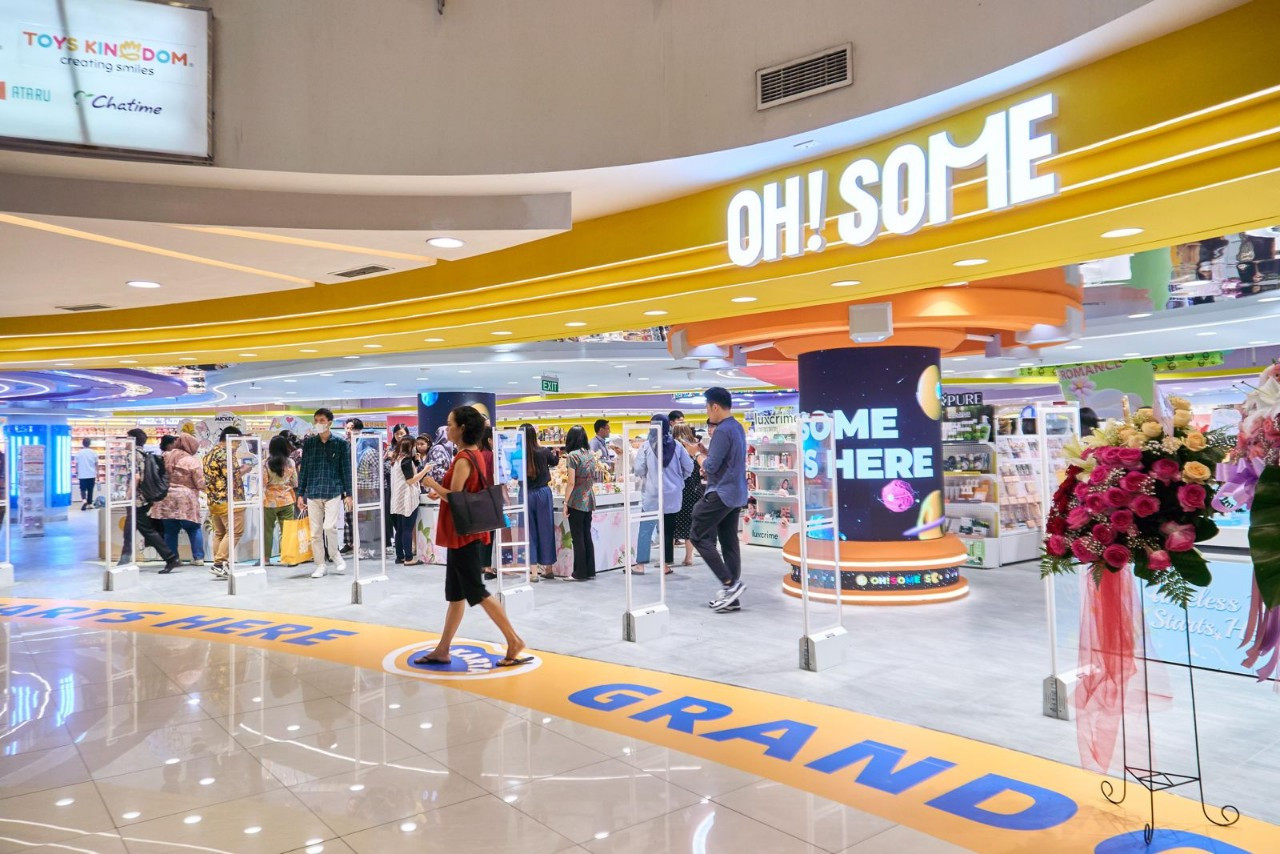
  • Oh!Some Scales Back in Vietnam 16 Months After Opening Flagship

    Oh!Some Scales Back in Vietnam 16 Months After Opening Flagship

    Chinese lifestyle chain Oh!Some is closing stores across Vietnam. The closures come 16 months after it opened a 2,000-square-metre flagship in central Ho Chi Minh City.

    The retailer entered Vietnam in April 2025 and expanded quickly. Mounting losses soon forced a reassessment. High mall rents, logistics expenses and rising wages squeezed margins across its Vietnamese outlets, according to people familiar with the operations.

    Retreat across regional hubs

    Vietnam is not the only market where the chain has pulled back. Oh!Some has already shut all stores in Singapore, where parent firm Blue Origin Group is based. Its only branch in Hong Kong also closed recently.

    Oh!Some sells beauty products, homeware, accessories, toys and daily essentials. The group had targeted Southeast Asia for rapid expansion. It drafted launch roadmaps for Thailand and Cambodia, and named Indonesia as its main regional engine.

    High overheads pinch lifestyle chains

    Budget lifestyle chains across Southeast Asia face stiff competition from rivals like Miniso and local value merchants. Massive central footprints make the problem worse. Oh!Some took a multi-level site at Vincom Center Dong Khoi, leaving the low-margin business exposed when basket sizes failed to cover prime leasing costs.

    Blue Origin Group has not stated whether it will exit Vietnam entirely or keep a smaller store footprint in secondary shopping centres.

  • F&N Magnolia Launches Sanrio Ice Confection Line Across Singapore

    F&N Magnolia Launches Sanrio Ice Confection Line Across Singapore

    F&N Magnolia rolled out a limited-edition strawberry and yoghurt ice confection across Singapore retail channels on September 3, priced at S$2.20 for single sticks and S$8.40 for four-packs.

    The launch pairs the heritage dairy brand with Sanrio characters My Melody and Kuromi across impulse and take-home formats. Alongside the stick multipacks, the company introduced a repackaged My Melody and Kuromi raspberry ripple ice cream tub priced at S$6.42.

    Channel Distribution and Pricing

    F&N split the product formats by channel to target distinct shopping occasions. Convenience stores carry the single-serve stick line at S$2.20, while leading supermarket operators stock the four-stick multipacks at S$8.40 and the redesigned tubs at S$6.42. All items carry halal certification to serve the broader domestic market.

    To drive basket size in grocery aisles, the brand attached a gift-with-purchase promotion running through the end of October 2026. Shoppers who buy two multipacks receive a branded travel organiser set valued at S$19.90, subject to stock availability.

    Character Licensing in Dairy Retailing

    Packaged food manufacturers across Southeast Asia rely heavily on co-branded character tie-ups to drive short-term volume in crowded freezer cabinets. Licensing recognizable IP allows legacy dairy labels to capture younger demographics and impulse buyers without reformulating entire permanent portfolios.

    The promotion runs across participating supermarket chains until October 31, 2026, or until premium gift stocks are exhausted.