Retail News CRM

Tag: 4G

  • Vietnam Sets the Stage for 4G and 5G Growth with 700 MHz Spectrum Re-Auction

    Vietnam Sets the Stage for 4G and 5G Growth with 700 MHz Spectrum Re-Auction

    Vietnam is gearing up for a pivotal moment in its telecommunications landscape, re-launching the auction of two crucial frequency bands in the 700 MHz spectrum. This re-auction follows an earlier attempt that did not meet expectations, indicating a renewed urgency to boost 4G and 5G mobile services in the nation. The Ministry of Science and Technology has announced that the B1-B1’ (703–713 MHz/758–768 MHz) and B3-B3’ (723–733 MHz/778–788 MHz) bands are now available for bidding, starting at over VND 1.95 trillion (approximately USD 75 million). Licenses will grant operators rights for a period of 15 years.

    A Crucial Step for Connectivity

    This auction is more than just numbers on a spreadsheet; it serves as a crucial step in enhancing mobile network coverage, particularly in rural and underserved regions of Vietnam. The 700 MHz spectrum is internationally recognized for its long-range and high-penetration capabilities, making it an ideal candidate for improving service quality, not just in bustling urban centers but also in remote areas where connectivity can feel like a pipe dream.

    Notable Absence in the Bidding

    Interestingly, state-run Viettel Group, which snagged the B2-B2’ band in May 2025 in a spirited two-round bidding session, will sit this one out. That prior victory, which also spans 15 years, forms part of Viettel’s strategy to bolster nationwide 4G and 5G connectivity, essential for pioneering initiatives like smart cities and intelligent agricultural systems that could make even farmers do a double-take.

    Ready or Not, Here Come the Bidders

    Operators interested in tapping into this new wave of opportunity have 30 days from the official auction notice to validate their eligibility. This strategic reallocation of the 700 MHz band comes on the heels of Vietnam’s switch from analog to digital TV broadcasting, unlocking valuable spectrum for the mobile telecommunications sector.

    Racing Ahead with 5G

    As of January 2025, Viettel reported hitting a remarkable milestone of 4 million 5G subscribers in a mere few months after launching its service in October 2024. The telecommunications giant’s 5G network, supported by around 6,500 base stations, boasts impressive speeds of up to 1 Gbps and near-zero latency. With ambitious plans to install over 20,000 additional 5G stations by the close of 2025, Viettel aims to provide comprehensive coverage to 99% of the population by 2030.

    Innovation in the Lab

    In tandem with its ambitious rollout, Viettel has established two dedicated 5G labs in Hanoi and Ho Chi Minh City. These innovation hubs allow developers to experiment with new 5G and Internet of Things (IoT) technologies tailored for local applications. The telco’s infrastructure supports both standalone (SA) and non-standalone (NSA) architectures, covering a stunning array of over 130 use cases across various sectors, including logistics, healthcare, and energy.

    Competition Heats Up

    Viettel isn’t alone in this race; competitors such as VNPT and MobiFone have also stepped into the 5G arena. VNPT launched its 5G services in December 2024, followed by MobiFone in March 2025, utilizing the 3.8–3.9 GHz frequency band. Both operators are deploying a mix of NSA and SA 5G models, ensuring that the competition remains fierce and consumers stand to benefit.

    Looking Ahead to the Auction

    As Vietnam prepares for the renewed 700 MHz auction, industry insiders anticipate a wave of interest from operators eager to broaden their mobile reach and upgrade the nation’s digital infrastructure. The stakes are high, but so are the rewards — a vibrant, connected future awaits just around the corner.

    Questions & Answers

    What significance does the 700 MHz spectrum hold for Vietnam’s mobile services?
    The 700 MHz spectrum is essential for enhancing mobile network coverage, particularly in rural areas, as it offers long-range and high-penetration capabilities that improve service quality.

    Why is Viettel Group not participating in the upcoming auction?
    Viettel Group, which previously secured the B2-B2’ band, is ineligible to bid in this auction, allowing other operators a chance to expand their networks.

    How is Viettel planning to expand its 5G infrastructure?
    Viettel aims to install over 20,000 additional 5G base stations by the end of 2025, with an ambitious goal of covering 99% of the population by 2030 following rapid subscriber growth.

  • BSNL Set to Expand with 100,000 New 4G Towers, Paving the Way for Upcoming 5G Rollout!

    BSNL Set to Expand with 100,000 New 4G Towers, Paving the Way for Upcoming 5G Rollout!

    Bharat Sanchar Nigam Limited (BSNL) is gearing up to bolster its network with plans to deploy an additional 100,000 4G towers across India. This initiative follows the successful installation of nearly 100,000 towers, marking a significant step in their ongoing infrastructure expansion.

    Government Approval on the Horizon

    Union Minister of State for Communications, Chandra Sekhar Pemmasani, expressed optimism about the upcoming proposal: “After successfully installing 100,000 towers with optimal 4G equipment, we will approach the Cabinet and Prime Minister Narendra Modi to approve another 100,000 towers.” He also highlighted the plan to enhance BSNL’s cash flow, which would facilitate the installation of more 4G and 5G equipment and enable the monetization of BSNL’s assets.

    Strategic Partnerships for Growth

    BSNL’s ambitious journey took a significant turn in May 2023, when it awarded a major contract to a consortium led by Tata Consultancy Services (TCS). This partnership also includes Tejas Networks, the Center for Development of Telematics (C-DOT), and ITI Ltd., covering the supply of 4G equipment for the new 100,000 towers, along with necessary network components and a 10-year maintenance contract.

    Pemmasani acknowledged initial equipment challenges but noted substantial improvements: “There were some problems with the equipment in the beginning. But now, it’s functioning well. We expect it to operate near perfection by the end of July or August next year.” He also emphasized the technological lead enjoyed by global telecom firms like Nokia and Ericsson, whose legacy spans decades, compared to India’s homegrown solutions that are still in their infancy.

    Stiff Competition and Future Plans

    BSNL currently faces tough competition; with its limited 4G infrastructure, retaining customers has been a challenge. Pemmasani pointed out, “One major limitation is that we currently have only 100,000 4G towers. In comparison, Reliance Jio and Airtel each have more than 500,000 towers.” However, he is confident that as the 4G rollout progresses, customer retention will improve significantly.

    Looking ahead, BSNL plans to launch its 5G network by June 2025. Telecom Minister Jyotiraditya Scindia confirmed that the transition to 5G will only occur once the 4G network stabilizes and meets quality standards: “Once the 100,000 towers are up and the network is stabilized, and once we see that the QoS is up to the mark, then we can start switching.”

    Homegrown Technology Takes the Lead

    In a bold move, the Indian government has ruled out foreign involvement in BSNL’s 5G deployment, insisting on the use of domestically developed technology. BSNL aims to roll out 5G standalone services using the 900 MHz and 3.3 GHz spectrum bands, starting with an initial target of 100,000 subscribers. The company is also set to introduce 5G fixed wireless access (FWA) services, ensuring cutting-edge connectivity for urban users.

    In a nod to its readiness, BSNL has successfully tested its indigenous 5G technology in New Delhi, across locations like Nehru Place, Chanakyapuri, and Minto Road, signaling that they’re primed to push forward once their 4G foundation is firmly in place. Who knew the race for digital dominance could feel so thrilling?

    Questions & Answers

    What is BSNL’s plan for expanding its 4G network?
    BSNL intends to deploy an additional 100,000 4G towers across India, building on its existing infrastructure to enhance customer retention and prepare for 5G.

    When does BSNL expect to launch its 5G network?
    BSNL aims to launch its 5G services around June 2025, contingent on stabilizing its 4G network.

    What is unique about BSNL’s approach to 5G technology?
    BSNL will rely solely on domestically developed technology for its 5G deployment, ensuring that all equipment and services are homegrown.

  • China Mobile Hong Kong to Shut Down 3G Services by the End of June

    China Mobile Hong Kong to Shut Down 3G Services by the End of June

    The decision comes following a steady decline in 3G users, who now make up less than 0.25% of CMHK’s total mobile customer base, including post-paid, pre-paid, and virtual network operator-related subscribers. CMHK has been notifying customers of the upcoming transition since late 2023 and continues to assist affected users in upgrading their 3G phones, devices, or SIM cards.

    In a separate statement, the Communications Authority (CA) confirmed it granted CMHK prior approval to cease 3G services under Special Condition 10.4 of the company’s Unified Carrier Licence. The CA acknowledged that only a small number of users were affected and highlighted CMHK’s continued efforts to support them through service upgrades and transition arrangements.

    Customers who do not wish to upgrade will be offered reasonable termination options. The CA has also mandated that CMHK maintain adequate 3G service quality until the shutdown date.

    The CA also encouraged customers to consider upgrading to newer mobile services for improved quality and features.

  • AIS Leads the Way in Southern Thailand with SEA COVERAGE Network

    AIS Leads the Way in Southern Thailand with SEA COVERAGE Network

    The network is equipped to handle the anticipated increase in usage during the year-end and peak tourism season in the south. It incorporates advanced technology to enhance its digital infrastructure and serve various sectors, including government, services, fisheries, tourism, hospitality, restaurants, and both local and international tourists.

    Kitti Ngarmchatetanarom, Chief Technology Officer at AIS, expressed, “Our goal is to establish a comprehensive digital infrastructure in the southern region that is extensive, advanced, and well-connected to the Ecosystem Economy in all aspects. This means that every area covered by the AIS signal network not only facilitates digital communication but also promotes the growth of the southern economy, including tourism, services, tour operators, hotels, ferry services, yacht and speedboat businesses, restaurants, and even the coastal and deep-sea fisheries industries.”

    Paiboon Rinsakun, Head of Regional Operations, South, AIS, added, “AIS has significantly enhanced service quality, network reliability, and SEA COVERAGE (both the Gulf of Thailand and Andaman coasts), encompassing coastal regions, islands, and sea routes—by land, sea, and air. We have developed our network structure to continuously expand coverage while integrating signal transmission systems, technological advancements, and renewable energy to tackle the unique challenges posed by geographical features from coastal areas to the open sea.”

    Currently, AIS’s 5G and 4G networks blanket more than 95% of southern Thailand, focusing on prominent tourist spots recognized globally, such as Ratchaprapa Dam in Surat Thani, Maya Bay in Krabi, and Surin Islands National Park in Phang Nga. These initiatives aim to meet the demands of tourists who want to capture photos, videos, and create content to share instantly on social media.

    “To accommodate both Thai and international tourists exploring the natural wonders of southern Thailand during the peak season, we assure that AIS SEA COVERAGE will ensure optimal performance. We are confident that AIS’s robust digital infrastructure will play a crucial role in supporting the recovery and expansion of the tourism sector and contribute to the sustainable development of the ocean economy,” Ngarmchatetanarom concluded.

  • ZTE and Pakistan’s Zong Launch Dual-Band FDD Massive MIMO

    ZTE and Pakistan’s Zong Launch Dual-Band FDD Massive MIMO

    ZTE, together with Zong, Pakistan’s digital services front-runner, has commercially launched the dual-band FDD Massive MIMO in Zong’s existing 4G network, well satisfying the expansion requirements necessary for increasing 4G users and traffic.

    With ZTE’s FDD Massive MIMO solution, the deployment area’s 4G data traffic capacity has jumped by 21% while the average user throughput has increased by 40%, resulting in a 60% reduction in high-loaded cell counts.

    Zong has been leading the data market in Pakistan with its rapid growth in 4G users and data traffic. Total 4G data traffic in the year 2021 increased nine times over that of 2018, while the proportion of high-load cells increased from 3% to 17%. Therefore, Zong’s network effective solutions to meet its expanding network requirements.

    Zong is also a pioneer of exploring new technological solutions. It is known that FDD Massive MIMO is one of the key 5G technologies. It has now been successfully applied in the 4G network, bringing about great advantage. In September 2021, Zong together with ZTE successfully commercialized the first FDD Massive MIMO site in Peshawar. The FDD Massive MIMO has been operating well on 4G for both 1.8GHz and 2.1GHz dual bands, with the highest output power of 320W in the industry. In addition,, it has enabled the industry’s unique Smart Spatial Cell Groups (SSCG) technology, which realizes intelligent cell coverage adjustment based on user distribution, and improves cell capacity and spectrum efficiency.

    “Digital everything” is becoming a new priority of the telecommunications industry. FDD Massive MIMO is a much-needed technology to support global telecommunications operators in a highly-competitive market.

    By the end of May 2022, more than 170 sites were on air. Such large-scale commercialization of FDD Massive MIMO is becoming a new way of improving capacity and spectrum efficiency in 4G networks. Moving forward, Zong and ZTE will be committed to expanding the large-scale commercialization of the FDD Massive MIMO to further improve the capacity and spectrum efficiency of 4G networks.

  • Food poisoning and protests shut Foxconn plant building iPhone 12 5G in India

    Food poisoning and protests shut Foxconn plant building iPhone 12 5G in India

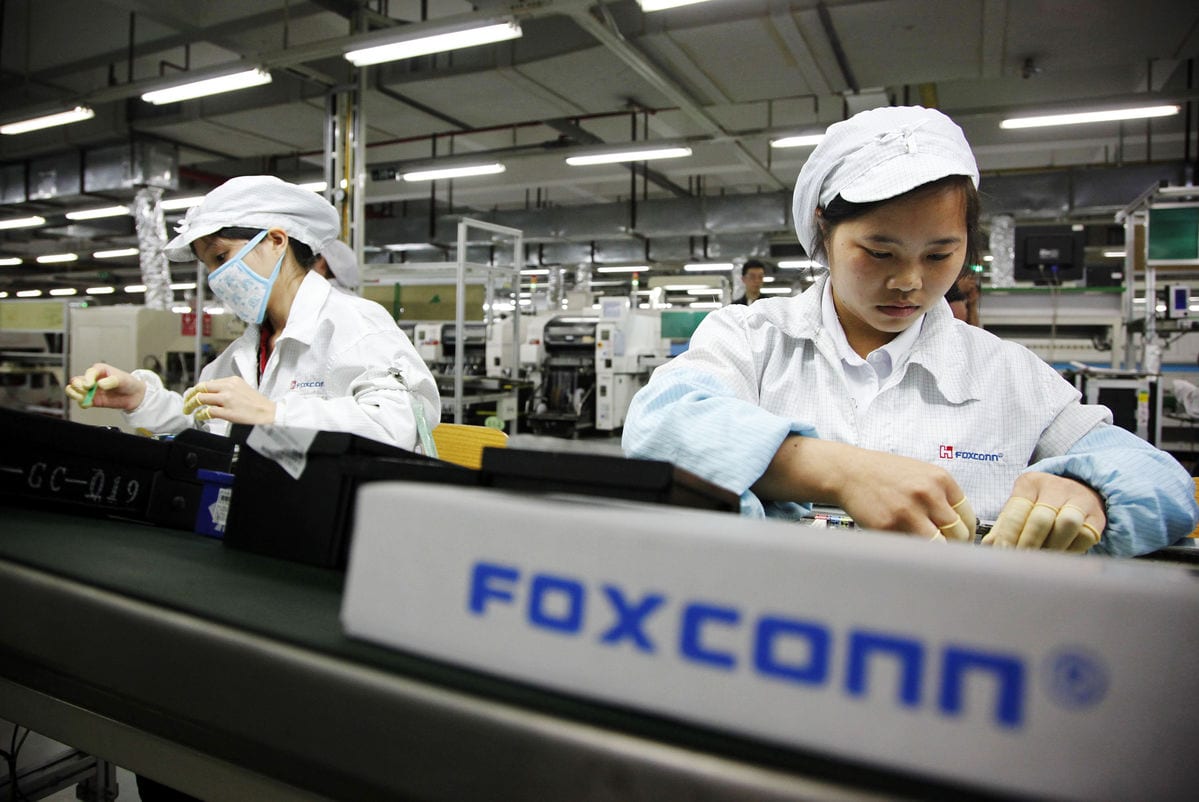
    News that the Foxconn factory near the city of Chennai in Southern India has closed means that iPhone production in the country will be negatively impacted. The plant churns out iPhone 12 models and factory workers have suffered through a bout with food poisoning which will leave the assembly lines shut down for the remainder of the week. With 150 employees in the hospital, the healthy workers started to protest the incident which also disrupted production.

    A senior official at the directorate of industrial safety and health in Tamil Nadu (which calls Chennai it’s capital) said, “The factory has been shut since Saturday and will be shut till coming Sunday.” Confirming the shutdown, two more senior state officials reiterated that the plant is not running.

    Protesters were arrested after blocking an important highway following the food poisoning incident. Yesterday, those arrested were released. While the factory, as we noted, currently produces the iPhone 12, Apple has been testing iPhone 13 assembly at the facility, and with the factory closed, that testing has been stopped.

    The decision to close the plant was made by Foxconn according to a police officer from the office of the Superintendent of Police in Kancheepuram. This police officer also said that employees at the factory who have been complaining for months about food poisoning and other issues should lodge their complaints with the state labor ministry.

    According to Navkendar Singh, India research director at market research firm IDC, “The impact on Apple is expected to below as it is a lean period … until at least February. In (the first half of 2022) we expect sales to pick up from new product launches and much-needed easing of supply chain issues.” Besides the iPhone, the factory also manufactures the Amazon Fire Stick and some devices for Xiaomi.

    This is the second incident in India over the last year that saw worker unrest at a factory that builds Apple products. Last December, a Wistron factory hosted a riot when 2,000 workers complained that they did receive their wages, and the incident caused $60 million in damages.

    India is the second-largest smartphone market in the world after China and the three contract manufacturers building the device for Apple, Foxconn, Wistron, and Pegatron, have budgeted $900 million over five years to make iPhone units in the country. But because India is a developing market, Apple has focused its Indian production of the iPhone on less expensive older models.

    Apple also plans on building some iPad tablets in India as the country, along with Mexico and Vietnam, have become alternative supply chain centers for Apple as the company seeks to lessen its reliance on factories in China. Apple is afraid that with tensions between the U.S. and China so high, getting access to factories based on the mainland won’t always be a sure thing.Those employees working on the assembly lines usually pay some of their wages for room and board in facilities found near the factory. The riot last year started when Wistron promised an engineering graduate Rs 21,000 ($285) per month, but instead, he was paid Rs 16,000 ($217) the first month which was reduced to Rs 12,000 ($163) over the last three months.

    Considering that Foxconn workers, like the ones toiling for Wistron, are paying their employer for food, the fact that many of them contracted food poisoning was enough of an issue to spark the protests that shut down the highway near the factory, and the factory itself.

    Apple had to get involved in last year’s riot because of the damage to the equipment at Wistron’s factory. This year, it appears that Foxconn was able to keep its production facilities intact.

  • Huawei lands 4G licensing deal for Volkswagen cars

    Huawei lands 4G licensing deal for Volkswagen cars

    Huawei announced it has reached a license agreement with a supplier of Volkswagen Group. The agreement includes a license under Huawei’s 4G standard-essential patents (SEPs), which covers Volkswagen vehicles equipped with wireless connectivity. This agreement marks Huawei’s largest licensing deal in the automotive industry.

    Song Liuping, Chief Legal Officer of Huawei, says: “As an innovative company, we own a leading patent portfolio for wireless technologies, which creates great value for the automotive industry. We are pleased that key players from the automotive industry recognize that value. We believe this license will benefit worldwide consumers with our advanced technology.”

    Huawei expects more than 30 million vehicles to be licensed under its patents based on existing license agreements.

    Over the past 20 years, Huawei has entered into more than 100 patent license agreements with major global companies across Europe, the United States, Japan, and South Korea. Huawei will continue to bring digital connectivity to more vehicles globally to establish a fully connected, intelligent world.

  • Singapore offers best mobile experience in South East Asia

    Singapore offers best mobile experience in South East Asia

    At a country-level, Singapore won in all metrics tested, with the most important win being the highest Excellent Consistent Quality in South East Asia, with 84.5% of connections having a network experience suitable for use-cases like 1080p video streaming, real-time mobile gaming and HD video calling. Singapore also had the highest Core Consistent Quality in the region at 94.4%.

    Consistent Quality is a set of metrics that Tutela has developed to objectively evaluate when connections are (or are not) enabling users to do the things they want to on their mobile devices. There are two sets of thresholds, Excellent and Core. A connection that hits the Excellent threshold is sufficient for use-cases like 1080p video streaming, HD video calling, and multiplayer gaming, while a Core connection should be sufficient to stream standard-definition video or handle day-to-day activities like web browsing or uploading photos to social media. The percentages seen in this report represent the percentage of tests for subscribers on a given operator that was above the Excellent or Core thresholds.

    Singapore also had the fastest download speed at 26.2 Mbps, the fastest upload speed at 14.7 Mbps, and the most responsive network with a latency result of 9.0 ms. However, Vietnam was always very close behind, with second-place winnings for both Excellent Consistent Quality (72.3%) and Core Consistent Quality (86.1%).

    The report was released by Tutela Technologies, a global crowdsourced mobile data company, and evaluated over 55 million speed and latency tests, conducted on the smartphones of real-world users of national mobile operators within Common Coverage Areas, between August 1st and January 31st, 2021.

    Per country findings were as follows:

    Singapore:

    • By operator in Singapore, StarHub dominated in four of the seven metrics tested, including the highest Excellent Consistent Quality with 87.3% of users having a network experience suitable for 1080p video streaming or HD group video calling.
    • StarHub also had the highest Core Consistent Quality, Tutela’s measure of whether a connection is good enough for everyday uses, like email, social media, and SD video streaming, the fastest download speeds, and the most responsive network in the country.

    Indonesia:

    • Telkomsel won six out of the seven metrics tested, with Indosat Ooredoo being the only other operator to make it onto the leaderboard in Indonesia with the fastest median upload speed.
    • Telkomsel was in first place for Excellent Consistent Quality with 65.0%, and also in first for Core Consistent Quality with 83.5%. However, there was only a 3% difference between the operator and second-place Indosat Ooredoo.

    Malaysia:

    • In Malaysia, the leaderboard was shared by at least four operators, with U Mobile offering its users the best mobile experience in the country. The operator won the highest Excellent and Core Consistent Quality, and fastest upload speed.
    • Digi had the fastest median download speed in Common Coverage Areas across Malaysia with 10.6 Mbps but came third in the upload speed test with 6.2 Mbps. Maxis had the most responsive network in the country, while Celcom had both the best 5G/4G coverage and total coverage.

    Thailand:

    • By operator in Thailand, AIS won in four of the seven categories tested, including the highest Excellent Consistent Quality and most responsive network. However, TrueMove was also on the leaderboard in three of the seven categories including the highest Core Consistent Quality and both the fastest download and upload speeds.
    • With only two operators in the Philippines to compare, Smart outperformed Globe in six out of the seven categories tested, with Globe taking out one category with the best total coverage.

    Vietnam:

    • Viettel Mobile in Vietnam offered the best mobile experience to its users, winning in five categories and tying for first place with Vinaphone for fastest median download speeds.
    • MobiFone was on the leaderboard in one category with the highest Core Consistent Quality.
  • Vodafone Idea acquires spectrums in five telecom circles to enhance 4G capacity

    Vodafone Idea acquires spectrums in five telecom circles to enhance 4G capacity

    Being India’s third-largest telecom operator in the 4G spectrum auctions, Vodafone Idea entered with the largest quantum of spectrum with a very small fraction. “This was administratively allocated and used for GSM services, coming up for renewal,” the company said.

    With the telecom industry gearing up for the 5G revolution, VI hopes that a large quantum of spectrum would be made available for all operators in the future at fair prices. The operator had reportedly submitted an earnest money deposit of Rs 475 crore. Yet, the company did not disclose the exact quantity of spectrum bought.

    In line with the government’s effort to innovate the country’s telecom sector, Vodafone Idea claimed that the Indian telecom segment is well-positioned to drive the Digital India agenda, as long as sufficient spectrum availability and an adequate number of market players are involved.

    Broadly speaking, India has 22 telecom circles. All major telecom operators — Reliance Jio Infocomm Ltd, Bharti Airtel Ltd, and Vodafone Idea — participated in the auction. According to the department of telecommunication (DoT), they put on the block 2,308.8MHz of spectrum at a base price of ₹3.92 trillion in the auction. Moreover, spectrum in the 700MHz, 800MHz, 900MHz, 1,800MHz, 2,100MHz, 2,300MHz, and 2,500MHz bands were put up for sale.

  • NASA awards Nokia a $14.1 million contract to build a 4G LTE network on the Moon

    NASA awards Nokia a $14.1 million contract to build a 4G LTE network on the Moon

    If you’re planning on taking a trip to the Moon in the near future to escape the madness of this planet, we have some good news and some bad news. The good news is that Nokia has been awarded a $14.1 million contract from NASA to build the first 4G network on the Moon. The bad news is that for now, the Moon will not have 5G service. NASA’s current plans call for a sustainable human presence on the Moon by 2028. Elon Musk’s SpaceX, Jeff Bezo’s Blue Origin, and a company named Dynetics will develop the human landers that will deliver humans to the Moon.

    In late 2022, Nokia Bell Labs will “build and deploy the first ultra-compact, low-power, space-hardened, end-to-end LTE solution on the lunar surface.” Nokia will integrate the network into Intuitive Machines’ lunar lander and when deployed, the network will self-configure to produce the first LTE system on the Moon. The network isn’t being made just so astronauts can use TikTok. Nokia says, “The network will provide critical communication capabilities for many different data transmission applications, including vital command and control functions, remote control of lunar rovers, real-time navigation and streaming of high definition video. These communication applications are all vital to long-term human presence on the lunar surface.”

    Nokia says that its LTE network is perfect for any activity that astronauts might need it for including “voice and video communications capabilities, telemetry and biometric data exchange, and deployment and control of robotic and sensor payloads.” The lunar LTE network is designed to survive the harsh conditions of the launch and the landing on the moon. NASA says that “the system could support lunar surface communications at greater distances, increased speeds, and provide more reliability than current standards.”

    If you’re bummed out that connectivity on the Moon is limited to 4G, don’t fret. Nokia says that it will work on developing space applications for 5G connectivity. Imagine how fast you’ll be able to download Apollo 13 on your 5G handset to prepare for your space flight to the Moon. The manufacturer is the second-largest networking equipment supplier to Huawei.

    In its blog post, Nokia says “As a market leader in end-to-end communication technologies for service provider and enterprise customers globally, Nokia develops and provides mission-critical networks adopted by airports, factories, industrial, first-responders, and the harshest mining operations on Earth, for automation, data collection and reliable communications. By deploying its technologies in the most extreme environments, Nokia Bell Labs will validate the solution’s performance and technology readiness level, and further, optimize it for future terrestrial and space applications.”

  • Qualcomm’s anti-competitive business practices get support from the Trump administration

    Qualcomm’s anti-competitive business practices get support from the Trump administration

    Back in May, Judge Lucy Koh (of Apple v. Samsung fame) made a ruling that still might change the way Qualcomm sells its chips to phone manufacturers. The judge ruled in favor of the Federal Trade Commission and against the chipmaker after a 10-day non-jury trial was held at the beginning of the year. The FTC argued that Qualcomm’s “no license, no chips” policy is anti-competitive.
    Other Qualcomm policies attacked in court included the way royalty payments are calculated based on the entire price of a phone instead of the chip being used. And Qualcomm was also cited for not licensing its standards-essential patents (SEP). These are patents that must be licensed by rivals to guarantee that their products meet technical standards; as a result, they are supposed to be licensed on a fair, reasonable and non-discriminatory fashion (FRAND). In its defense, Qualcomm says that the argument of royalties is an issue of contract law that should not be heard in a forum designed for antitrust cases. And it also says that there is nothing wrong with getting compensated for the money it spends on R&D.
    In her decision, Koh said that Qualcomm needs to renegotiate its current contracts with phone manufacturers. In her written decision, Judge Koh said, “Qualcomm’s licensing practices have strangled competition in the CDMA and the premium LTE modem chip markets for years, and harmed rivals, OEMs, and end consumers in the process.” As you might expect, Qualcomm has appealed the decision and even managed to get the Ninth U.S. Circuit Court of Appeals to issue a stay. This prevents Qualcomm from having to follow Koh’s orders until all of its legal options have been exhausted. The firm did have a compelling reason to request a stay; it would be a waste of time and energy to renegotiate all of its contracts only to win on appeal and reverse all of the changes made.
    And speaking of the appeal, the FTC is actually on the opposite side of the Trump administration. Before Judge Koh released her decision, Trump officials asked her to limit any penalties that she was planning to impose on the chipmaker. And now that the case is being heard in appeals court, the administration is concerned that a Qualcomm loss will negatively impact America’s global leadership in technology and national security. And the Justice Department, under the leadership of U.S. Attorney General William Barr, has contradicted the FTC by stating that there is nothing anti-competitive about Qualcomm’s business practices. That is unusual because the FTC and the DOJ both handle antitrust cases. The Justice Department is joined by the Defense Department and Energy Department which told the appeals court that a ruling against Qualcomm could affect the country’s military and its energy and nuclear infrastructure.
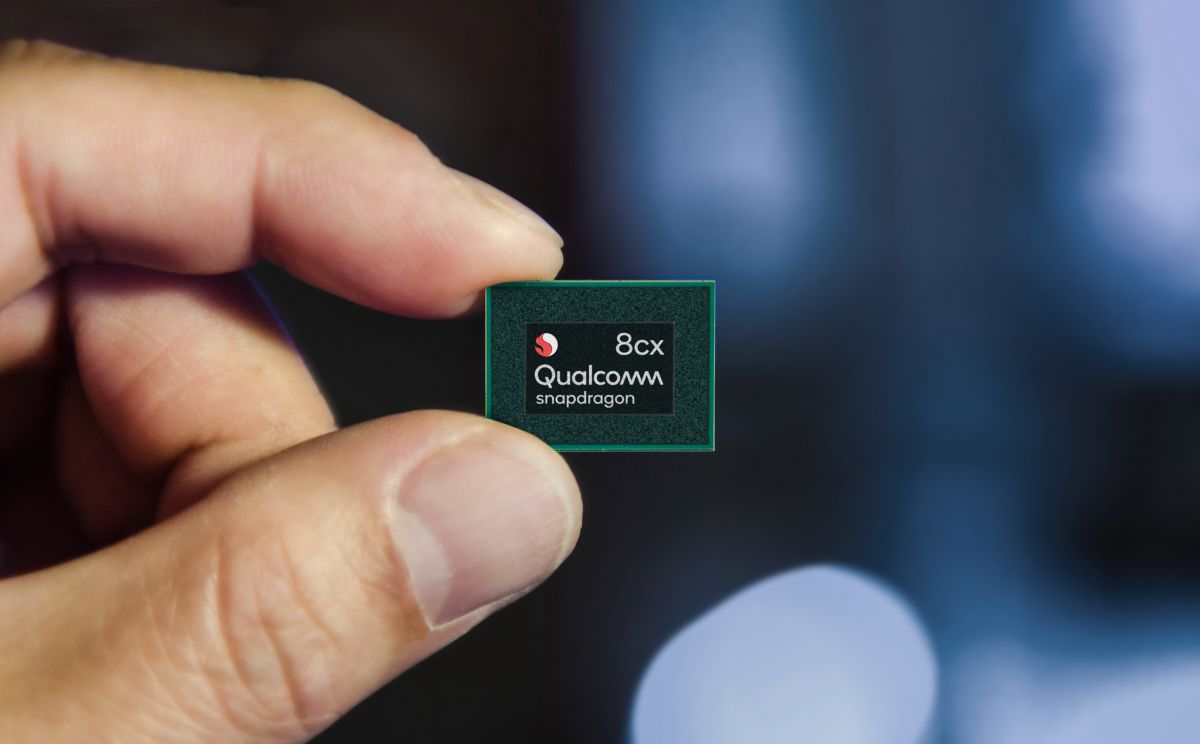
    But perhaps even more important to the Trump administration is the possibility that should Qualcomm lose on appeal, it will negatively impact the rollout of 5G in the states. The next generation of wireless connectivity will initially deliver download data speeds 10 times faster than 4G LTE and will lead to the creation of new businesses and industries. The nations that harness 5G first will have a big advantage in the global economy. Qualcomm’s Snapdragon X50 and X55 modem chips allow smartphones to connect to 5G networks. The former is compatible with the super zippy ultra-high mmWave spectrum while the latter works with both mmWave and sub-6GHz  airwaves.
    But as far as the FTC is concerned, Qualcomm and the Justice Department have not shown how Judge Koh’s ruling “threatens national security in any way — or how those considerations could justify allowing Qualcomm to continue to violate” U.S. antitrust law. The 9th circuit appeals court, located in San Francisco, could start hearing arguments in February and issue a ruling sometime in 2020. For Qualcomm, there is plenty at stake.
  • Telesat completes 5G backhaul demo over LEO satellite

    Telesat completes 5G backhaul demo over LEO satellite

    Satellite operator Telesat, Vodafone Group and the University of Surrey in the UK have successfully completed the world’s first 5G backhaul demonstration using a low earth orbit (LEO) communications satellite.

    The successful trial demonstrates that LEO satellites can provide effective backhaul transport for mobile operators, including for 5G services, the participants said.

    During the live test last month, Telesat’s Phase 1 LEO satellite connected to the University of Surrey’s 5G testbed, with the support of specialist Vodafone engineers.

    The satellite-delivered a round trip latency of between 18-40ms, which is among the lowest latency recorded for a satellite connection.

    The backhaul was used to support video chat, web browsing and simultaneous streaming of up to 8K video, as well as 4K video transferred to the edge of the 5G network.

    “Providing cost-effective, high-performance backhaul services to MNOs seeking to extend their 4G and 5G networks is an important market for Telesat’s LEO program,” Telesat LEO VP Erwin Hudson said.

    “Telesat is collaborating with leading customers like Vodafone, who are experts in their markets, to perform tests and demonstrations on our Phase 1 LEO satellite that help us optimize the design of our LEO system to most effectively meet their future requirements.”

  • Qualcomm support China Unicom’s 5G announcement

    Qualcomm support China Unicom’s 5G announcement

    U.S. based chip designer Qualcomm announced on Monday that it supports the introduction of  China Unicom’s 5G services in the largest smartphone market in the world. Qualcomm’s latest and greatest Snapdragon 855 Mobile Platform and Snapdragon X50 5G modem chip were used on 5G phones from manufacturers like (in alphabetical order) nubia, OnePlus, Oppo, Vivo, Xiaomi and ZTE. Devices from these companies were part of Monday’s event. China Unicom said that it is the first Chinese carrier to announce that it will offer 5G wireless service to consumers in the country.

    Starting tomorrow and running through April 25th, Qualcomm, China Unicom and the aforementioned phone manufacturers plan on showing live demonstrations of 5G at the 2019 China Unicom Partner Conference in Shanghai. These demonstrations will show OTA connections made using China Unicom’s 5G network and devices powered by Qualcomm’s 5G solutions. Consumers in China hope that 5G phones and service will be made available later this year. Those attending the conference will get to see HD video streaming, cloud gaming, web browsing and realtime sharing of data between devices and the cloud all over a 5G network.

    “For the past decades, our technology has been a foundation for the wireless evolution. It takes many years of R&D, specification, prototyping, testing, trials and product development to bring a new generation of mobile technology to China and the world. Like previous generations, 5G is the result of more than a decade of collaborative efforts by Qualcomm Technologies and our ecosystem partners, with the mission of preparing the mobile industry for 5G rollout starting this year. We’re excited for Chinese consumers to experience 5G’s truly transformative wireless experience in 2019.”-,” said Frank Meng, Chairman, Qualcomm China.

    5G data speeds run up to 10 times faster than 4G LTE speeds. The next generation of wireless connectivity is expected to lead to the launch of new services and businesses world wide in the same way that 4G LTE networks gave rise to new businesses. For example, the ride sharing industry was born thanks to the replacement of 3G data with faster 4G LTE service. The creation of this industry helped birth multi-billion dollar companies like Uber and Lyft.

  • The Apple-Qualcomm deal instantly kills 5G competitor

    The Apple-Qualcomm deal instantly kills 5G competitor

    As we heard earlier today, the Apple-Qualcomm battle has ended. With those two companies making up, there were likely to be repercussions around the mobile world, but we didn’t really expect the fallout to come so quickly. With Apple and Qualcomm striking a deal, Intel has announced that it will be quitting the mobile game.

    Or at least, Intel said it will be exiting the smartphone 5G modem business. Intel put out a press release saying that it would continue to support its 4G modems, but it was cancelling its plans for 5G modems for smartphones, which were originally scheduled to be ready in 2020. Intel said it would still be investing in 5G infrastructure and making 5G modems for laptops and Internet of Things devices.

    Intel didn’t mention Apple or Qualcomm in the press release, but the timing of the announcement is almost certainly no coincidence. Part of Apple’s settlement with Qualcomm was to sign a new exclusive six-year deal for iOS devices to use Qualcomm modems. Intel might have been able to keep going with Android devices, but losing the Apple money seems to have been too much.

    While the Apple-Qualcomm deal wouldn’t have impacted Intel’s efforts in mobile processors, we can’t say we weren’t hoping a bit that Intel would give up on that business too. Intel’s mobile processors in smartphones have been pretty bad, but to be fair their tablet efforts have gotten (somewhat) better. Still Intel has a long way to go before it’s considered a major player in mobile.

  • Indians bought 50% more 4G devices in 2018 says CMR

    Indians bought 50% more 4G devices in 2018 says CMR

    The latest CMR report, the Annual 4G LTE Devices India Market Review Report 2018, revealed that Indian consumers purchased 50% more 4G LTE devices in 2018 year-on-year, with shipments surpassing 200 million units. 4G devices include mobile phones, tablets and data cards. In 2018, 4G devices had a 64% market share.

    While 4G LTE enabled mobile device shipments crossed 60%, the 4G LTE tablets accounted for 44% of the total tablet shipments. 4G LTE contributed for 100% of the data cards shipped in calendar 2018.

    “4G is enabling Indians everywhere to raise above their social and economic challenges and connect with new possibilities. The 4G device penetration in India continues to gain traction, with 4G mobile phone and 4G tablet shipments on the rise. Reliance Jio Infocomm has been the X-factor,” said Prabhu Ram, head – Industry Intelligence Group (IIG), CMR.

    During the year, LYF led in the 4G LTE mobile handset segment with 33% market share, while Lenovo dominated the 4G LTE tablet market with 40% market share. LYF is the only Indian brand in the leaderboard shipping 4G LTE mobile handsets.

    Narinder Kumar, lead analyst-IIG, CMR, predicts 4G adoption will continue in CY2019 driven by 4G feature phones and bundled offerings at the entry level contributing to growth in 4G device shipments. Video and music streaming will fuel this 4G growth. “Over the long run, we anticipate 4G to play a major role in smart cities, and especially smart homes,” said Kumar.

    CMR analysts see 4G continuing to dominate the Indian market until 2024. That said, 5G should see a spike in adoption in India by 2023. CMR anticipates a modest spike for 5G by 2023, with CMR internal estimates pointing to 5G smartphone shipments in India to top 140M by 2025.

    “At CMR, our internal research estimates point to the 5G enabled devices contributing to 3% of the total smartphone shipments by 2021, and potentially reaching 16% by 2025. The course of 5G in India will be driven by how Jio plays its cards,” added Prabhu.