Retail News CRM

Tag: 4G

  • Thai 4G: Deputy PM tightens reauction timeline

    Thai 4G: Deputy PM tightens reauction timeline

    Deputy Prime Minister Wissanu Krueangam who has stepped into the mess left after Jas Mobile Broadband walked away without paying for its 900-MHz licence. He has stated that there would be no need to invoke the junta’s absolute power clause in the interim constitution just yet – though he did give the telecom regulator strict marching orders.

    He said the NBTC must successfully auction off the spectrum at a price that is not less than what Jas bid and must do so within one year. It it fails then Jasmine must be held responsible for any shortfall.

    Earlier NBTC Takorn Tantasit had put a timeframe of 4 months for an auction with the starting price of Jas’ winning bid and a second auction one year after that if it fails to go.

    Takorn said the starting price might be lowered to Dtac’s last bid of $1.98 billion (70.18 billion baht)  instead of Jas Mobile’s winning bid of $2.14 billion (75.65 billion baht) or even a round figure of 70 billion baht.

    The auction guarantee would rise to between 10 to 30% of the revised opening bid (previously it was 5% of 12.88 billion baht opening bid)

    Takorn said the draft auction rules would be finished by April 12 which would then be put out for public comment between April 18 to May 23 and should be formalised in the Royal Gazette by 31 May. The auction will be held by June 20 at the latest.

    Takorn said that Dtac had protested TrueMove’s inclusion in the auction given that they already had won half the 900-MHz spectrum. However, Takorn said the NBTC insists that True will be eligible to take part.

  • E-commerce ‘unstoppable’ as 4G rollout goes rural in Thailand

    E-commerce ‘unstoppable’ as 4G rollout goes rural in Thailand

    On The Ground: Mobile will be the catalyst for digital-focused communications and online retail—aided by a data sector in its infancy. Apart from King Bhumibol Adulyadej, there is another unifying force in Thailand: mobile.

    Thailand is the world’s leader in mobile internet usage, ahead of Saudi Arabia and Malaysia, with four hours of web time per day, about 44 percent of a Thai’s total internet time. “Thailand is a mobile-led society, as is most of Southeast Asia except Singapore,” said Grant Bertoli, CEO of Marketbuzzz.

    Thailand did not see internet adoption kick in until the end of the Web 2.0 wave in 2007, and most of the access to the internet was through mobile. “Thailand leapfrogged straight to mobile as the primary device, and as people dwell longer on it, the mobile is increasingly becoming the device,” indicated Pathamawan Sathaporn, managing director of Mindshare Thailand.

    Smartphone ownership, largely driven by lower costs, has accelerated to a point where current We Are Social numbers show that 69 percent of Thais own at least one smartphone. Mobile connections, thanks to budget packages in the competitive telco market, stand at 122 percent as a percentage of the total population.

    With the realisation of 4G service in Thailand (more of which in tomorrow’s On The Ground feature), mobile will be the catalyst for digital-focused communications and rich-media content in 2016, said Rattakorn Potharam, general manager and executive creative director of MRM Thailand.

    “This is noteworthy as rural areas are now given a better chance at mobile ubiquity.” Potharam already observes content in three prominent categories: tear-jerking dramas, Thai-humour comedies and gossipy ‘insights’ transcending above-the-line formats to digital.

    Above average social use

    As the pool of mobile internet users in Thai provinces expands, social-media users will follow suit accordingly. Thai urbanites already spend more time on social networking than the global average, with Facebook being the most popular platform. In fact, Bangkok is the number one city of Facebook users in the world with over 104 percent penetration, according to Social Bakers. And 65 percent of all locals use Facebook to search for brand information according to eMarketer—the fourth highest in APAC.

    According to TNS, 74 percent of Thais also use instant messaging daily, well above the 55 percent worldwide figure. Line is the leading app in Thailand with more than 33 million users—that is half the Thai population using Line.

    These social platforms are playgrounds of expression for Thai consumers, but they are open only in their digital lives while more conservative in person. “Whatever we are expressing on Facebook, when it comes to reality we may not do so, as rooted in the Thai culture of being accommodating,” said Yupin Muntzing, chief executive officer of McCann Thailand. This dynamic can be inspiring for future developments in brand communications.

    E-commerce opportunities abound

    Coupled with that, there are numerous implications for marketing without the burden of a PC-internet legacy. Thailand being a mobile-first market allows businesses a unique position to capitalise.

    On the commerce side, Lazada began operations only a few years ago and made a bold statement to become the Amazon of Southeast Asia. And they were one of the first e-commerce players in the region to launch both iOS and Android apps. Now, the brand claims that more than half of its traffic comes from mobile.

    New faces in the e-commerce sector include Shopee, a mobile-only discounted marketplace, Eatigo offering daily lifestyle deals, and GrabBike (rebranded to Grab) delivering urban commuting services.

    In 2015, overall internet retail recorded healthy value growth of 30 percent to stand at THB47 billion (US$1.33 billion), according to Euromonitor, with fashion and consumer electronics significant contributors.

    The Thai e-commerce market is expected to more than triple in size to THB138.86 billion (US$3.94 billion) between now and 2020, according to DHL that introduced a next-day logistics addition to its delivery infrastructure in January for this reason. At present, Thailand’s share of the market is still relatively low compared to other high-growth economies, according to DHL E-commerce Asia Pacific CEO Malcolm Monteiro. Only 1.7 percent of DHL’s total sales in Thailand are from e-commerce, compared to more than 10 percent in China.

    Anisa Ngandee, research analyst at Euromonitor, is of the view that pure internet retailers such as Lazada, WeLoveShopping and iTrueMart perform much better than multi-channel players due to the shift in buying behaviour. The provision of mobile payments, especially when facilitated offline, will be a differentiator, Marketbuzzz’s Bertoli advised.

    “Although Thai people like shopping online, they find it more convenient to pay upon delivery, especially consumers within provincial areas. Sales are still limited to younger generations,” added Ngandee.

    In the meantime, MRM’s Potharam feels e-commerce will be “unstoppable and borderless”, at least among younger buyers on social media. “Thai consumers are born social. They are yearning for relationships, rapport and chemistry. In this sense, social commerce is undergoing a makeover to match this demand for socialising, while Line, Instagram and Facebook are becoming storefronts for interaction and conversation.”

    Social and content collide

    As a result, smaller Thai brands have embraced their entrepreneurial spirit in these mobile times, selling their products and services in as many ways as possible, whether Luuk Thep dolls or clothes. Preetanjali Kukreja, strategy director at Brand New Day, has noticed local businesses “getting a lot more aggressive” on Instagram, prioritising these accounts over official websites or Facebook pages. “Somehow it feels less intrusive on Instagram compared to Facebook,” she said. “It’s simple, quick, visual, and cheap as a sales tool. People just scroll through pictures of products, click to see the price, then ‘line’ the vendor and you’re done.”

    It is of little wonder that Line is one of the go-to channels for SMEs to reach consumers, not simply for shopping, but for lifestyle solutions as well, like content. The Feb 2015 launch of Line TV, competing with digital television, provided exclusive content to customers via mobile.

    Thailand now has a “huge appetite” for content across all forms—a push factor for advertising, media and even telecoms operators, said Sunee Paripunna, CEO of Omnicom Media Group Thailand. True Digital Plus, a Thai telco, has increased its budget from US$1 million to US$3 million to buy digital content in 2016, for example.

    In the past, Thai advertisers have focused their attention on content creation in the pursuit of digital marketing, but have missed opportune moments of context now made possible by mobile technology, said MRM’s Potharam. To reap the benefits of mobile, the key is gearing towards “contextual content” that is targeted and personalised. “The context will matter a lot and unveil new spot-on insights into creativity,” he said.

    Data driving integrated marketing

    Also, mobile development will open more doors for brands to collect real-time data generated by consumers who are connected online. Big data, though in its infancy stage, will transform communications, particularly for retail, telecoms, finance and lifestyle services, said Potharam.

    For starters, Julien Chalté, co-founder and co-CEO of WearYouWant, has gathered data to identify the bulk of the online retailer’s classic customers. “In December 2015, the profile that emerged was a 36 year old woman, living in Bangkok who likes to shop on Wednesdays between 11 am and 2 pm,” he said. Half of WearYouWant purchases were made during this shopping peak of the year. Outside of Bangkok, 20 percent of customers filled shopping carts from Chiang Mai, with white shoes being the favourite purchase during December. In Nonthaburi, home to a fifth (19 percent) of shoppers, skincare and makeup products were the top category. A tenth of customers placed orders in Chonburi and was mainly looking for black outfits (79 percent of all orders).

    With more data like the above, real integrated communication—“something marketers have dreamed of”, said Potharamhas potential to blossom in 2016. In the past, marketers have “tried to be visible everywhere in the digital world but were seldom standouts”. To steal a march on their rivals, brands need a “unified ecosystem of experiences under one enriching brand story”, he said.

    That represents a new canvas for shoppable content, stated Mindshare’s Sathaporn. “People will move more quickly from seeing to shopping”.

    As Thai advertisers compete to reach multi-tasking, ad-avoidant consumers, the type of content that will stick are reality shows, singing contests and other international content formats adapted for Thailand, said Sathaporn, who expects the domestic advertising industry to grow by only three to six percent in 2016—a lower growth forecast than 2015 amid economic uncertainties.

    So, even as Thailand’s king ails and its economy slithers, advertisers may be able to rely on mobile and content for continued joy.

  • Reliance retail business thrives

    Reliance retail business thrives

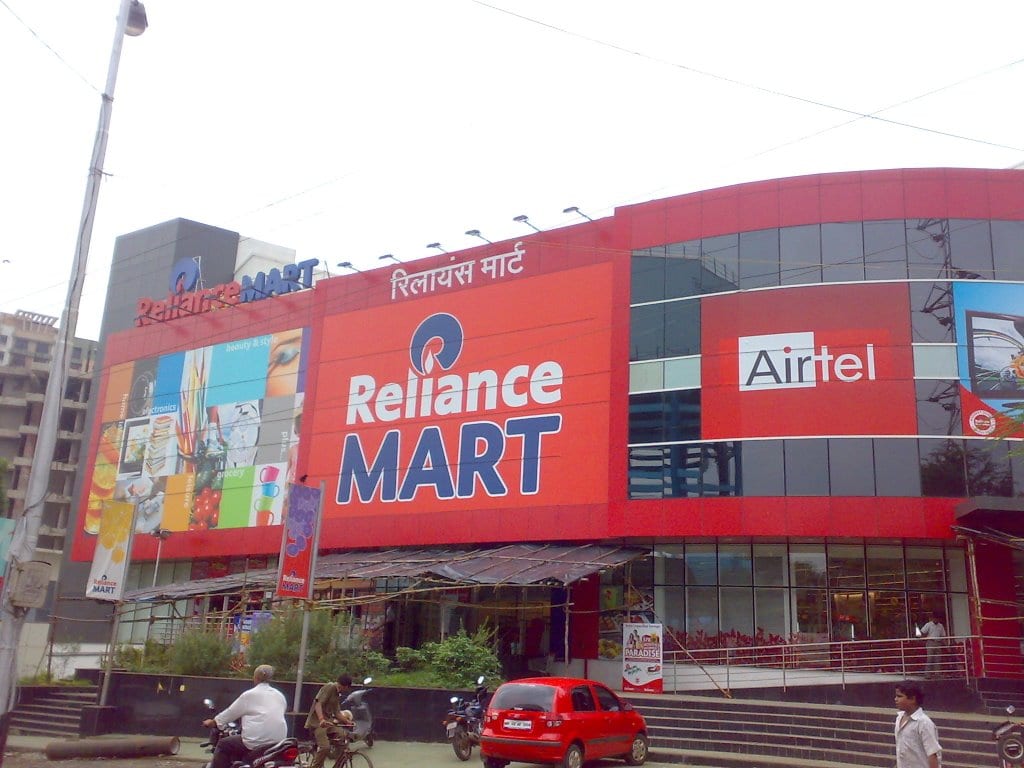
    Indian retailer Reliance Industries has reported a 50 per cent growth in sales in its consumer electronics category for the quarter to December 31.

    Reliance Retail also consolidated its leadership in the grocery category, optimising its network to enhance profitability. Several private-label products were launched in the grocery and general merchandise categories during the quarter. The contribution of private-label sales to overall sales increased to 14.6 per cent from 8.6 per cent in the same period the previous year.

    There are now more than 2 million registered members across 37 countries for Reliance Mart stores. These 1537 outlets specialise in consumer electronics. Strong year-on-year growth in this category was helped by Digital Express Mini rapidly scaling up during the quarter to reach more than 1250 outlets across the country in a short time since launch.

    Also delivering a strong performance, the fashion and lifestyle category was 16 stores opened byReliance Trends during the quarter.

    A Reliance Retail joint venture with Marks & Spencer continued to grow with new store openings, whileReliance Brands launched Dutch lingerie brand Hunkemöller, and also opened the first airport store in India for UK games and toys retailer Hamleys, in Delhi.

    Initiatives encompassing fashion and lifestyle e-commerce are also proceeding through beta testing. The development of a marketplace platform and distribution ecosystem for 4G devices are on track and being rolled out. It will be the largest distribution reach for devices in India, says the company.

    Meanwhile, the company is training 4G sales specialists while integrating supply chain and service centres. Reliance Retail also launched its own brand of 4G LTE smartphones, under the brand LYF, during the quarter.

  • Thai e-commerce poised to touch $58b in 2015; rise in online shopping, 4G services to push growth

    Thai e-commerce poised to touch $58b in 2015; rise in online shopping, 4G services to push growth

    The ETDA’s survey cites that top three verticals that account for the highest income from e-commerce in 2015 are accommodation and food services worth 658.9 billion baht ($18.39 billion), followed by manufacturing 350.29 billion baht ($9.78 billion) and retail and wholesale 325.08 billion baht ($9.07 billion).

    The B2C e-commerce in 2015 will rise 15.29 per cent from 410 billion baht ($11.44 billion) in 2014, and the B2G will surge 3.96 per cent from 390 billion baht ($10.88 billion) last year. However, the B2B e-commerce is expected to slightly shrink by 0.34 per cent from 1.23 trillion baht ($34.33 billion) in 2014.

    “Thai e-commerce market remains highly attractive as more people open up to online shopping. Also, 4G will drive the growth of the e-commerce market in Thailand,” ETDA’s chief executive officer Surangkana Wayuparb said.

    In early November, Ascend Group announced to invest 5.3 billion baht ($147.92 million) to expand its e-commerce businesses, iTrueMart and ‘Weloveshopping’, into ASEAN countries.

    It plans to invest in warehouses, logistics and marketing activities in the Philippines this year, followed by six other countries – Indonesia, Malaysia, Vietnam, Singapore, Myanmar and Cambodia – in 2016.

    “We aim to be the e-commerce market leader in ASEAN by 2018,” Punnamas Vichikulwongsa, president of Ascend Group, told local media.

    A report by Euromonitor International states that the B2C e-commerce market for retail in the AEC will surge by 20 per cent per year from nearly $5 billion this year to $7 billion in the next two years.

    Considering Thailand as a centre of the ASEAN, foreign investors have eyed on the opportunities to use Thai e-commerce market as a springboard to other countries.

    Japan’s e-commerce solution provider Transcomos, for example, recently made a joint venture with Ookbee, a Thailand-based leading e-bookstore platform, to tap into the e-commerce business under Ookbee Mall.

    Even the world’s top e-commerce site Alibaba is in talks with Thailand’s Crown Tech Advance to co-invest in both logistics and e-commerce in Thailand. However, both companies have not finalised the deal yet.

  • 4G auctions set to generate B1.3tn

    4G auctions set to generate B1.3tn

    A woman walks past telecom and cable lines along Phahon Yothin road. The 4G auction is expected to spur huge investment in telecom lines. PATTARAPONG CHATPATTARASILL

    The imminent fourth generation (4G) spectrum auctions could stimulate direct and indirect investment valued at 1.3 trillion baht over the next five years.

    The development will also transform Thailand into an internet-empowered economy and add impetus to the country becoming an Asean digital infrastructure hub by 2020, said Takorn Tantasith, secretary-general of the National Broadcasting and Telecommunications Commission (NBTC).

    The private sector, meanwhile, believes that having faster high-speed mobile network technology will promote the country’s e-commerce.

    The NBTC expects to receive at least 73 billion baht from the 4G spectrum auctions of four licences in November. The revenue will pass directly to state coffers, Mr Takorn said at a seminar entitled ‘4G: the turning point of the country’.

    The winning bidders of the 4G auctions must roll out networks worth a combined 160 billion baht in 2016.

    An additional 260 billion baht will come from telecom-related businesses and employment in 2017, plus another 300 billion baht in 2018.

    Based on an internal estimate, Mr Takorn said all direct and indirect investment stemming from the 4G auctions would reach 1.3 trillion bay by 2020, in line with a study by the economics faculty of Chiang Mai University.

    “Thailand can no longer afford to lose this opportunity for the sake of our country and our people,” he said.

    There are 104 million mobile subscribers in Thailand, only 4 million of whom are 2G users.

    Worawoot Aunjai, chief executive of Central Online Plc, said having a 4G infrastructure would directly benefit the local e-commerce and online trading industry. It will also encourage small and medium-sized enterprises to grab a bigger slice of the e-commerce market.

    “Companies without technology will find it nearly impossible to flourish in the current business environment,” he said.

    Mr Worawoot said development of the 4G infrastructure was essential to accommodate the rapidly changing needs and growth of businesses.

    He said Thailand’s retail trade via online transactions accounted for only 1% of total retail trading value, compared with 5.8% of the average global retail market and 12% in China.

    Global online trading is expected to account for some 20% of total retail trade by 2020.

    Mr Worawoot said online trading was expected to reach 8% of the total retail trade in Thailand by 2020.

    “The growth of online trading will be in line with the quality of wireless connection and affordable mobile devices,” he said, adding that 4G service will play a crucial role in driving the local e-commerce industry.

    Mr Worawoot said Central Group’s annual retail sales were expected to reach 260 billion baht this year, half of which will be conducted via mobile devices.

    Ariya Banomyong, managing director of Line Thailand, said the quality of wireless connections and telecom infrastructure could attract foreign investment from global tech companies such as Google, Facebook, Amazon and Apple.

    “This will promote Thailand as a regional digital infrastructure hub,” he added.

    Vichai Bencharongkul, honorary president of the Telecommunications Association of Thailand, said developing an internet-based economy would essentially need a high-speed telecom infrastructure, developing knowledge workers and building organisational confidence with digital practices.

    4G service is expected to ensure wireless service continuity and provide business recovery experience, thanks to the greater speed of wireless data services, said Mr Vichai.

  • XL subscribers in Bandung,  Jakarta to enjoy 4G services

    XL subscribers in Bandung, Jakarta to enjoy 4G services

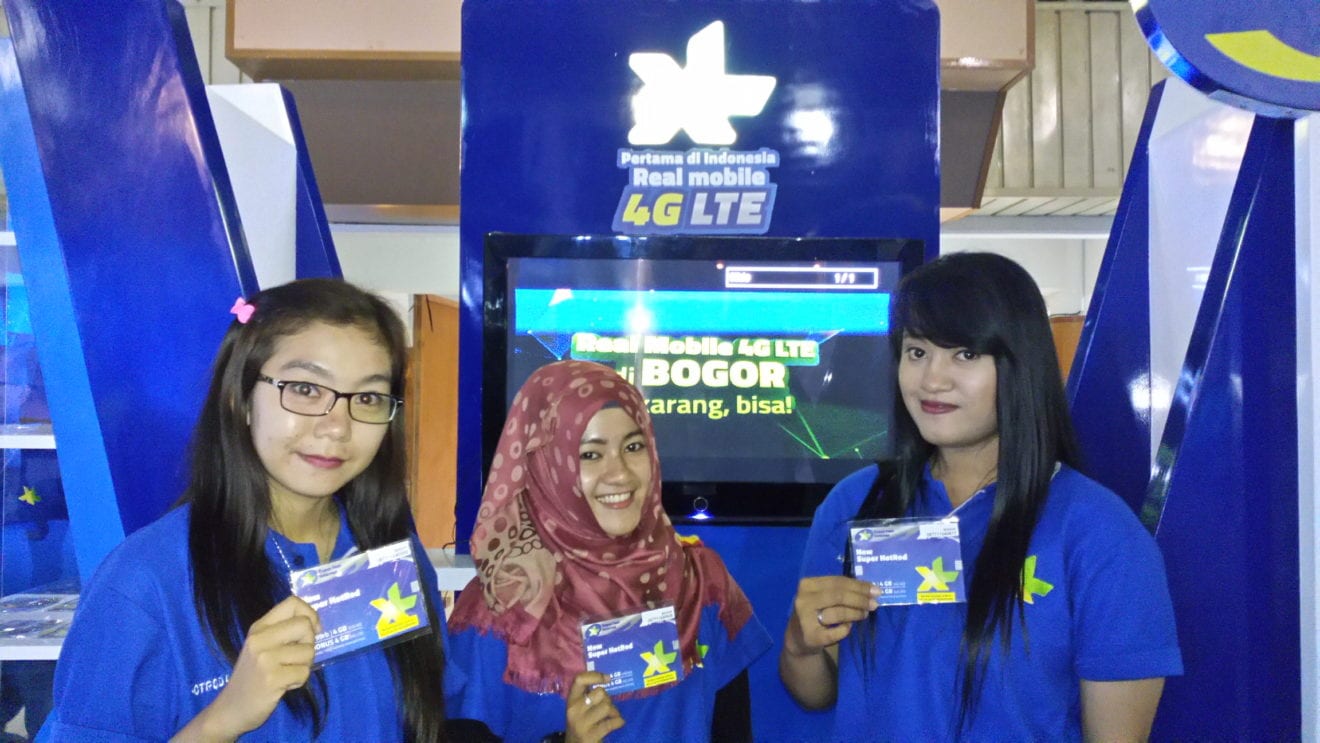
    Telecommunications firm XL Axiata says that its 1,800 MHz 4G/LTE services will likely be available in Bandung, West Java by the end of the month, while subscribers in Jakarta may enjoy the service in November after the company concludes its nationwide band refarming.

    “There have been minimal obstacles in the refarming process. That’s why we are confident to say that we are able to have 4G/LTE services operating in Bandung by the end of October, and in Jakarta by November,” XL Axiata CEO Dian Siswarini told reporters at the XL office in Central Jakarta on the sidelines of the company’s 19th anniversary celebrations late last week.

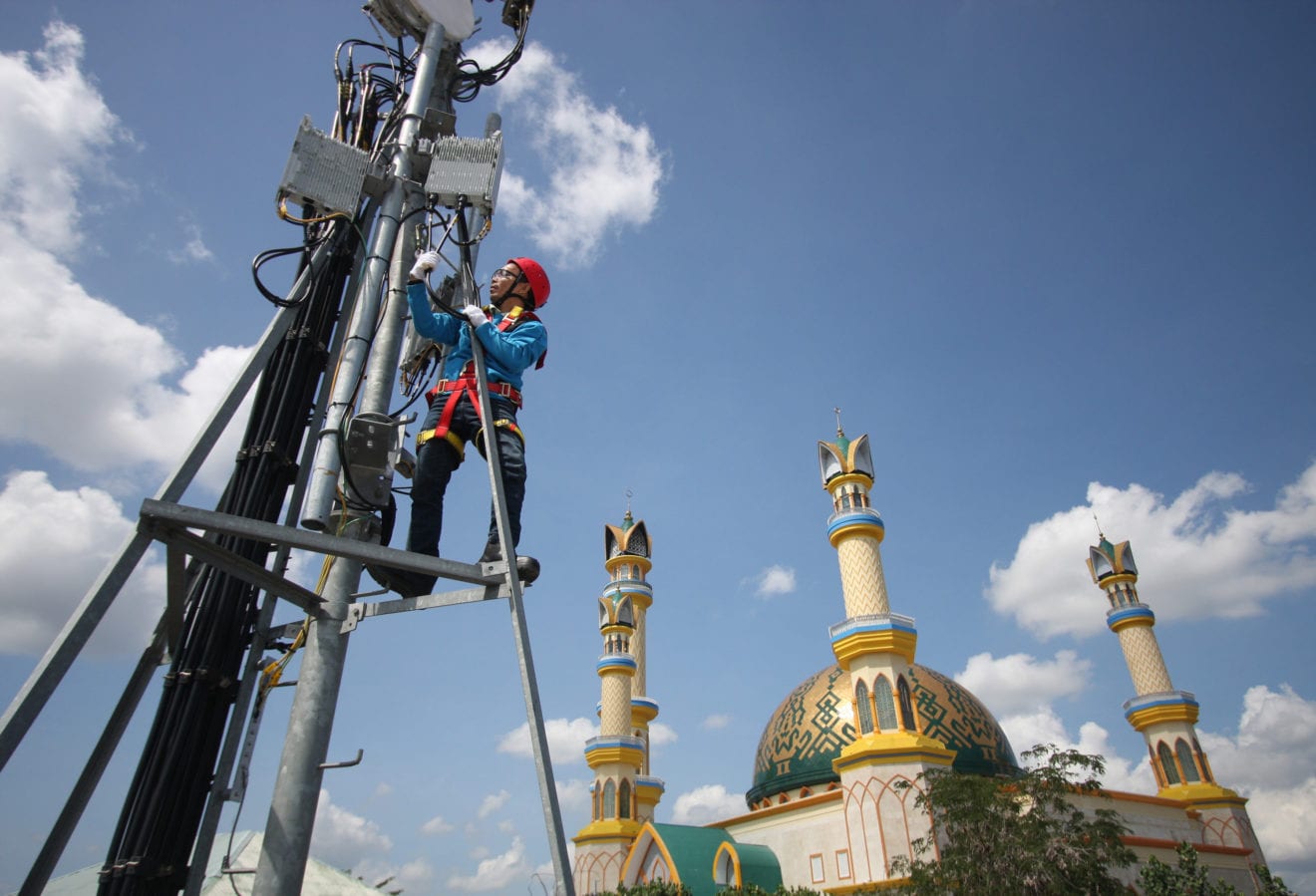
    In the nationwide band refarming, major telecommunication companies XL, Telkomsel, Indosat and 3 have been involved in preparing regions with structural capability to support 4G/LTE services.

    Dian said that XL’s band refarming process had reached Central Java and would conclude in November.

    Dian assured that despite the introduction of 4G/LTE services, there would be no changes to the existing 2G network service “since our 4G band does not need to reuse or recycle any of the 2G frequencies.”

    The four firms have been in the process of band refarming for 1,800 MHz since May starting from Papua, Sumatra, Sulawesi, Kalimantan, Bali, Nusa Tenggara and ending in Java. The last region to be refarmed will be Greater Jakarta because it is the most crowded in usage terms.

    According to Dian, XL will only provide the 4G/LTE services in select cities considering different market potentials and smartphone penetration.

    “Smartphone usage in Indonesia is not spread evenly. That is why the potential for usage is only feasible in several [major] cities. We also have to look at our customer database to see which markets would be the best bets,” she added.

    XL launched its initial 1,800 MHz 4G/LTE services in Lombok, West Nusa Tenggara in July and followed with Denpasar in Bali and Surabaya in East Java.

    The Communications and Information Technology Ministry had set a deadline for the band refarming on Nov. 23.

    Around 1.2 million XL users are actively using the carrier’s current 4G network, which operates on the 900MHz frequency. However, consumers have complained that 4G services on the 900 MHz frequency are not much faster than then those running on the 3G network.

    In another development regarding the government’s recent plan to tighten procedures on

    the purchase of mobile SIM cards, Dian said that her company had prepared for the regulation in terms of its data systems and forging standard operating procedures (SOPs) with retail outlets to make them aware of the regulation.

    XL’s data system, said Dian, was prepared to register customers’ identities on a large scale in preparation for the deadline. Informational awareness efforts have been taking place since May 2015.

    “We have completed the first phase on information dissemination to our retail outlet partners over mandatory ID requirement upon the purchase of SIM cards. The phase is still ongoing,” Dian said.

    The ministry and the Telecommunications Regulatory Body (BRTI) issued a regulation in September, requiring customers to show an ID upon the purchase of prepaid SIM cards starting Dec. 15.

  • ZTE Supports Smartfren Launch 4G LTE-Advanced Service in Indonesia

    ZTE Supports Smartfren Launch 4G LTE-Advanced Service in Indonesia

    ZTE Corporation (0763.HK / 000063.SZ), a major international provider of telecommunications, enterprise and consumer technology solutions for the Mobile Internet, is pleased to help PT Smartfren Telecom launch 4G LTE-Advanced network in Indonesia, giving users access to the highest-performance mobile broadband services.

    The new 4G LTE-Advanced, which supports both the FDD-LTE and TDD-LTE standards, was launched commercially by Smartfren in Jakarta on 19 August, and coverage areas already include the 22 major cities of Indonesia. The new network deploys ZTE’s market-leading 4G LTE solutions including eNB (evolved node B), Cloud Radio and eHRPD to deliver the best user experience to subscribers.

    “The nationwide launch of our 4G LTE-Advanced service follows successful trials and the June launch of our Andromax range of LTE Smartphone and portable WiFi devices. We believe that 4G LTE-Advanced technology will open many opportunities for our customers and further accelerate the Information and Communication Technology Industry as a backbone for Indonesian economic growth. 4G LTE-Advanced will enable our customers to enjoy improved multimedia streaming, online games, cloud storage and video conferencing. Smartfren is committed to bring the best of 4G LTE technology to Indonesia to deliver not only higher speeds but a more stable and reliable 4G LTE experience,” said Smartfren Chief Executive Officer Paul Hodges.

    “Smartfren just launched the widest LTE Advanced Service in Indonesia. We leverage both TDD and FDD technologies to get best of both technologies: high capacity and throughput on TDD at 2300 MHz and large coverage with FDD at 850 Mhz. With this combination, we can offer the best broadband experience. We have chosen ZTE for this deployment due to our long time relationship and their leadership with TDD networks,” said Smartfren Chief Technology Officer Christian Daigneault.

    “We are glad to partner with Smartfren to roll out their 4G LTE Advanced network in Indonesia,” said Shi Lirong, President of ZTE Corporation, “We are fully committed to delivering a state-of-the-art LTE ecosystem, which will help Smartfren offer the best mobile broadband services to their customers. This alliance has allowed ZTE to further cement our position as the partner of choice for telecom operators in the country in developing and maintaining their LTE ecosystem. This partnership also fits into our long term vision of developing a sustainable LTE network in Indonesia.”

    With ZTE’s powerful Universal Subscriber Profile Platform (USPP), Policy and Charging Rules Function (PCRF), and Online Charging System (OCS) products, the core NEs of both CDMA and LTE networks are highly integrated to provide a unified user database and policy control and charging policies, allowing the LTE network to be deployed rapidly, facilitating maintenance and operation of 3G and 4G networks in the future, and lowering operational costs. Smartfren can take advantage of the sophisticated OCS system to launch flexible tariff packages in the market to attract upscale users with an urgent need for mobile broadband services.

    By the end of June, ZTE has concluded 185 4G LTE/EPC commercial contracts globally, partnering with the world’s biggest operators including Bharti Airtel, China Mobile, China Telecom, Hutchison, Softbank, Telenor, TeliaSonera, Vodafone, VimpelCom, MTN and Telefonica.

  • Indonesians pressure the country’s largest telco to lower data costs

    Indonesians pressure the country’s largest telco to lower data costs

    Indonesians are pissed off about Telkomsel’s data package pricing policy. While they’re considered expensive for Jakartans, Telkomsel – Indonesia’s state-owned and largest mobile carrier – charges up to twice as much for the same amount of data if you happen to live in a bad “zone.”

    To protest this, activist Djali Gafur started a petition called “Internet for the people“. It has already accumulated over 10,000 signatures.

    Telkomsel divides the archipelago into 12 districts. Jakarta, as well as most parts of Java and the surrounding islands are in Zone 1, and tariffs actually go up as the areas get more remote. West Papua’s Raja Ampat district, for example, is in Zone 12.

    “We in Zone 12 don’t have a choice,” says Gafur in the petition on Change.org. It’s true because Telkomsel is often the sole carrier in remote areas. The others don’t even bother because the infrastructure costs outweigh the opportunities.

    Gafur demands that people in his area get access to the internet for an equal price, so that they too can participate in things like education, tourism, government, and creative industries online. “If [the connection] is a little slow, that doesn’t even matter so much,” he adds.

    Indonesia’s ICT Minister Rudiantara has since responded to the petition, and met with Telkomsel’s president director to discuss the matter, according to local media.

    Rudiantara said that the government is looking into subsidizing Telkomsel in areas where it is the only operator on the ground, supported by the Universal Service Obligation (USO) fund.

    The USO in its current form has been in place since 2005. Mobile phone carriers operating in Indonesia have to contribute 1.25 percent of their gross revenue into a shared pool, which non-profit government agencyBP3TI deploys toward connectivity programs in remote areas.

    Apparently, BP3TI is not quick enough to keep up with the demand for affordable mobile internet connectivity in the remote parts of Indonesia.

    Indonesia currently has no regulation on data tariffs, but according to Rudiantara, discussions on this will take place in 2016. In order to allocate funds from the USO to support Telkomsel in said remote zones, USO’s structure has to be changed. That will take time. For now, it’s up to Telkomsel to respond to the increasing frustration from people in zone 12.

  • Five Indonesian telcos launch LTE on 1800-MHz

    Five Indonesian telcos launch LTE on 1800-MHz

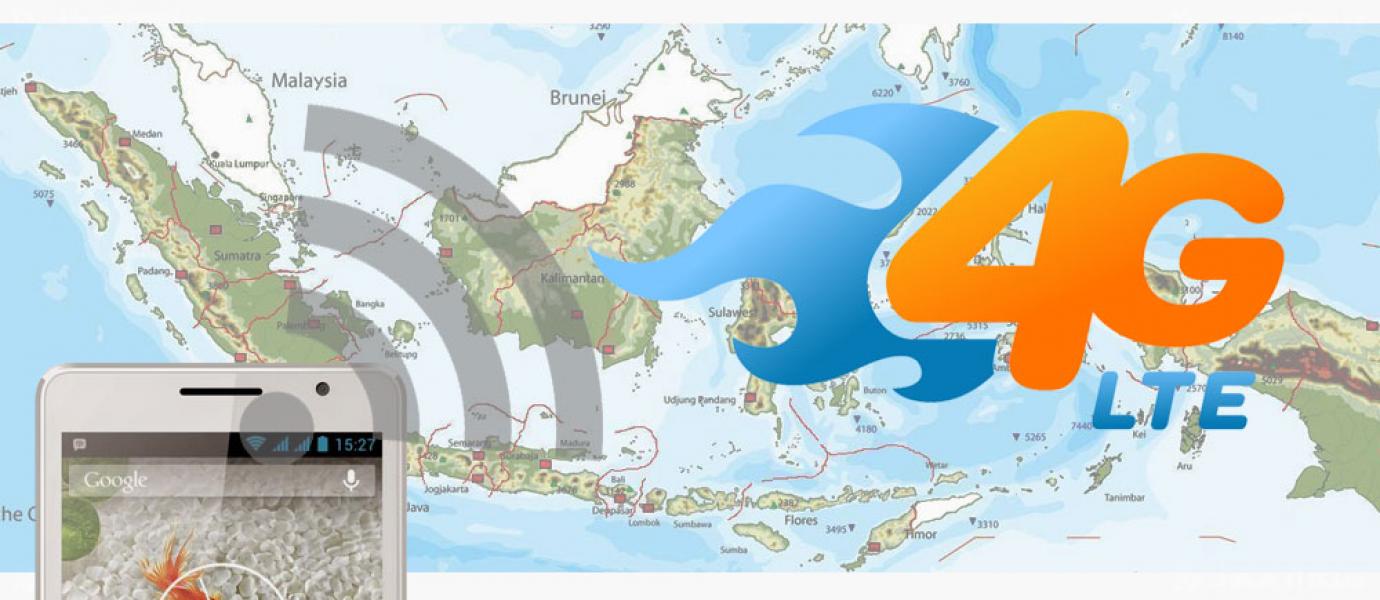
    Indonesia’s five largest mobile operators have all launched 1800-MHz LTE services, while a new player has indicated an intention to enter the LTE market.

    Telkomsel, PT Indosat, XL Axiata, Hutchison’s 3 and Smartfren all recently rolled out 4G services over the band in various cities and regions.

    Telkomsel switched on its network in Makassar, South Sulawesi, Indosat went live in Balikpapan, East Kalimantan, XL held a lunch on the island of Lombok, 3’s network has been rolled out to Banjarmasin, South Kalimantan, while Smartfren activated its network in Batam, Riau Islands.

    Mobile operators have been rushing to roll out LTE services in Indonesia after the government opened up use of the 1800-MHz band for 4G.

    Telkomsel, XL Axiata and Indosat have already launched LTE over the 900-MHz band. Incumbent Telkomsel already has 620,000 LTE subscribers, while XL Axiata has around 200,000.

    The report adds that Berca Hardayaperkasa, a unit of Central Cipta Murdaya, has revealed plans to enter the increasingly crowded 4G market as well. The company is targeting a launch in Bali, Makassar and Pekanbaru in October.

    Central Cipta Murdaya has committed up to $150 million to deploy the service in the three cities. The company is ultimately planning to launch in 12 cities outside Java. Berca was originally a Wimax operator, having secured 2300-MHz spectrum in 2009.

  • XL Axiata launches LTE in Lombok; Indosat to accelerate 4G rollout

    XL Axiata launches LTE in Lombok; Indosat to accelerate 4G rollout

    Indonesian mobile operator XL Axiata today launched a commercial 4G Long Term Evolution (LTE) service in the 1800MHz band in Mataram, Lombok. The firm’s director of service management Ongki Kurniawan explained that the decision to choose Lombok was based on its ‘special relationship’ with the area. ‘Since entering this region, we [have built an] affinity [with the people living here]. People accept and have confidence in XL when it comes to their telecommunication needs, and [that relationship is] now evolving into data and internet services. Our market share currently stands at more than 85% in Lombok,’ he said, ahead of the official launch of the service in the area.

    XL Axiata has deployed 14 4G base transceiver stations (BTS) in the Capital NTB area, as well as covering centres of government and business, and some shopping centres such as Mataram Mall. The cellco claims it can offer peak download speeds of 100Mbps on the new network which is supported by a range of affordable 4G handsets and devices from the likes of LG, Sony, Huawei, Sharp, Siemens and Lenovo. Its new service also supports Voice-over-LTE (VoLTE) it says and, having launched in Mataram, XL Axiata is now looking to roll out 1800MHz BTS in Bandung, Surabaya, Denpasar and Jakarta later this year. Additionally, the operator notes that cities that already have 4G LTE service capability in the 900MHz band – namely Medan, Bogor, and Yogyakarta – will also benefit from 1800MHz services in the near future. To date, it claims to have deployed more than 200 LTE-900 BTS in these cities and has amassed a total of 200,000 4G subscribers.

    In a separate development, XL Axiata rival PT Indosat claims that it is ready to accelerate its own 4G rollout throughout Indonesia. The cellco says its readiness to speed up its LTE deployment is thanks to its nationwide Indosat Network Modernisation programme which is designed ultimately to upgrade its entire infrastructure to support LTE with peak speeds of 185Mbps/41Mbps (down/uplink). The national programme kicked off two years ago, initially with the aim of boosting coverage, improving internet access speeds and providing clearer voice call quality (i.e. high definition voice) services. By the end of this year Indosat aims to have upgraded 42 cities and their environs (equivalent to districts/municipalities across Indonesia), under the expansion plan. IndoTelko quotes Indosat head of corporate communications, Fuad Fachroeddin, as saying that in April it launched its Super 4G-LTEservice in Jakarta, Bandung, Yogyakarta and Bali, and aims to add other cities throughout Indonesia in the near future. ‘We are optimistic we will soon be able to accelerate the deployment of 4G LTE throughout Indonesia under the ongoing Network Modernisation programme,’ he said.

  • Sharp launches Aquos Crystal 4G smartphone in Indonesia

    Sharp launches Aquos Crystal 4G smartphone in Indonesia

    Japanese electronics company Sharp has launched its first Aquos wireless phone, the Sharp Aquos Crystal, in Indonesia, The Jakarta Post reports. The Aquos Crystal will be on sale in Indonesia for IDR 3.99 million (approximately USD 302.9). Sharp targets sales of over 100,000 Aquos Crystal units during the first six months of this year.

    The 4G-ready smartphone runs on Android 4.4 KitKat and features a 5-inch edge-to-edge HD screen, Clari-Fi technology for enhanced digital sound quality, an 8-megapixel rear-facing camera, a 1.2-megapixel front-facing camera, HD voice, an embedded 2,040mAh battery, a 1.2GHz quad-core processor, and 1.5GB RAM and 8GB ROM.

    Indonesia accounts for 40 percent of Sharp’s total sales in India, Southeast Asia, Oceania and the Middle East, said Sharp Electronics Indonesia president director Fumihiro Irie. “Our target is to obtain sales from the middle to high-end market, which accounts for only 30 percent of the country’s smartphone market. We won’t enter into low-end products that account for 70 percent of the market,” Irie said.

    According to Sharp Electronics Indonesia’s national sales manager for smartphone, David Leonard, the manufacturer already has 20,000 ready-stocks available across distribution channels owned by its distributor partner Surya Citra Multimedia. “We’re also partnering with online store blibli.com to sell the product. We remain open to similar partnerships with other online stores or marketplaces,” he said.

  • Singapore pulls plug on 2G mobile networks, to reuse airwaves for newer 4G services

    Singapore pulls plug on 2G mobile networks, to reuse airwaves for newer 4G services

    All 2G voice and messaging services will end in Singapore as the airwave-starved island moves to reuse existing 2G airwaves to boost the capacity and speeds of newer 4G services.

    The three local telcos Singtel, StarHub and M1 said in a statement on Monday afternoon that the number of customers affected are an “extremely small percentage” of their current base.

    “Mobile networks have evolved since the launch of 2G services in 1994… Singapore’s extensive modern 3G and 4G mobile networks have led to high smartphone ownership and usage,” the telcos said.

    “To cater for consumers’ increased demand for mobile data and faster access speeds, the spectrum currently used for 2G will be used to provide faster, more advanced 3G and 4G services.”

    The Infocomm Development Authority (IDA) of Singapore said there are some 250,000 2G mobile users today, forming only 3 per cent of the total mobile user base of 8 million subscriptions. The authority expects the proportion of 2G users to taper off in the next two years.

    Customers on 2G-only handsets will only need to place their existing SIM cards into a 3G or 4G handset. Their mobile services will not be disrupted. Those currently using 3G and 4G handsets will also not be affected.

    In the last few years, the three telcos said they have been conducting outreach programmes to encourage customers to migrate to newer networks. They have pledged to continue reaching out to affected 2G users through SMS, calls and posters at their retail outlets in the run-up to the service cessation.

    Singapore is not the first country to end 2G services. Korea and Japan ceased offering 2G services in March 2012. Australia is expected to pull the plug on its 2G networks, starting with Telstra, by the end of next year.

  • Internux Sues Shop for Unlocking Bolt! Modems

    Internux Sues Shop for Unlocking Bolt! Modems

    Internux, the company behind Bolt! 4G mobile broadband service, is suing Cumi Laut Software Development, a local shop, for allegedly providing unlocking services for the company’s modem devices.

    Bolt!, which is the first 4G mobile broadband provider in Indonesia, has been offering its broadband service with modem and smartphones since its introduction last year — attracting more than 1 million customers.

    The company, however, found out that several parties including Cumi Laut, has been unlocking the modem to make it compatible with other operators’ broadband services.

    “[This] is an illegal practice that breaches patents and costs our clients,” said Ignatius Supriyadi, Internux’s lawyer in a statement on Wednesday.

    Dicky Moechtar, Bolt!’s chief executive, said that the company would also take legal actions against other parties besides Cumi Laut.

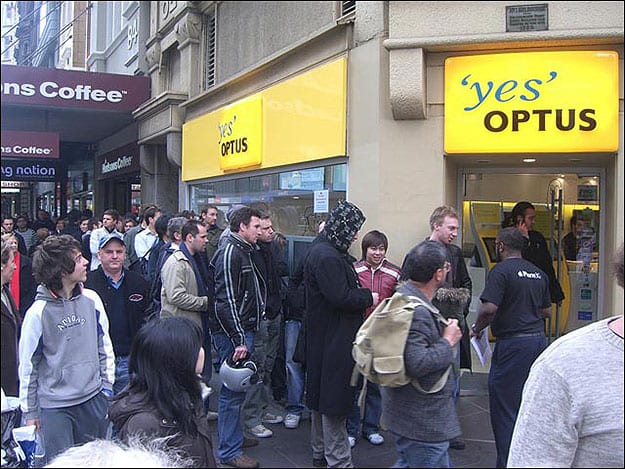
  • Optus boosted by customer growth

    Optus boosted by customer growth

    New customers spending more on data have boosted revenue for Optus, but the telco continues to be outpaced by Telstra.

    Australia’s second largest telco achieved a 6 percent rise in revenue in the three months to December, as it added 100,000 mobile customers to 8.25 million.

    Data revenue rose 12 percent, as more customers moved to the company’s 4G network and new handsets, including the iPhone 6, were released.