Tag: 4G

  • Idea to expand 4G to nine more circles

    Idea to expand 4G to nine more circles

    India’s third largest mobile operator Idea Cellular has revealed plans to expand its 4G network to nine additional telecoms circles by March next year.

    The operator plans to add around 57,000 new 4G cell sites this year alone.

    With the expansion, Idea Cellular plans to launch of 4G in the circles of Uttar Pradesh East and West, Gujarat, Mumbai, Bihar, Rajasthan, West Bengal, Assam and Jammu & Kashmir.

    This will take Idea’s total 4G footprint to 20 of India’s 22 telecoms circles. The 20 circles together account for 94% of Idea Cellular’s revenue and 90% of all industry revenue.

    Idea is using the spectrum it acquired in the recent $9.8 billion spectrum auction to pursue the 4G expansion.

    India’s 4G market is heating up due to the entry into the market of disruptive Pan-Indian 4G operator Reliance Jio Infocomm.

    Idea’s wireless broadband network currently spans 17 circles, with the operator aiming to achieve a total of 250,000 sites this financial year.

    To better compete against Reliance Jio, Idea is also increasingly pursuing a content strategy, starting with branded games. The operator plans to expand to movie and music services in the near future.

  • YTL launches 4G LTE data, VoLTE services

    YTL launches 4G LTE data, VoLTE services

    YTL Communications in Malaysia has deployed Elitecore’s Revenue and Customer Management (RCM) Platform to roll out its 4G LTE high speed data & VoLTE services.

    The platform will enable the operator to roll out new business models like, HD Voice (VoLTE), Enterprise LTE and LTE Roaming, in addition to the Double Double buckets, one for wireless broadband and another for mobile internet, VoLTE and data services bundled with devices.

    YTL Communications said it is the only operator in Asia Pacific to commercially launch nationwide Voice over LTE (VoLTE) services.

    Elitecore’s NFV ready and Virtualized platform comprises of integrated policy and charging, 3GPP AAA, convergent billing, fulfillment, mobile self-care catering to voice, data and VAS services supporting multiple networks such as LTE, Wi-Fi and Wimax.

    “Elitecore’s product roadmap alignment with YTL’s business vision and proven experience in convergent billing and integrated policy and charging supports our growth strategy and helped us migrate from our legacy billing and operational support systems,” said Ali Tabassi, COO of YTL Communications. “The platform offers high agility for faster time-to-market and feature rich functionalities.”

    Elitecore said its RCM is a modular and feature ready platform that offers operators the speed and flexibility to roll out, new monetization and personalization use cases needed to innovate in next-generation data services. The platform promises significant contribution to capex and AMC cost reduction.

  • Vodafone India to launch 4G in 8 more circles

    Vodafone India to launch 4G in 8 more circles

    Vodafone India has revealed plans to roll out 4G services in eight additional telecoms circles by March 2017, giving it a 4G presence in 17 of India’s 22 service areas.

    The operator aims to deploy 4G in 2,400 additional towns over the next four months, in the circles of of Maharashtra and Goa, Odisha, Punjab, Rajasthan, Tamil Nadu, Uttar Pradesh West, Assam and North East.

    Vodafone’s SuperNet 4G service already covers nine circles – Mumbai, Delhi and NCR, Kolkata, Karnataka, Kerala, Haryana, Gujarat, Uttar Pradesh East and West Bengal.

    Vodafone was the biggest winner of India’s recent $9.8 billion spectrum auction, securing 2x 82.6MHz of FDD and 200MHz of TDD spectrum across the 1800-MHz, 2100-MHz and 2500-MHz bands. The auction gave the company 4G capability in 17 of India’s 22 telecoms circles.

    Now the company plans to leverage this spectrum to expand its 4G network. This will allow Vodafone to better compete against disruptive new pan-India 4G operator Reliance Jio Infocomm, which has been shaking up the market with its mobile data focused approach. Jio’s unlimited voice and SMS plans threaten to further cut into existing Indian mobile operators’ low margins.

  • VinaPhone launches Vietnam’s first 4G services

    VinaPhone launches Vietnam’s first 4G services

    Vietnam’s VinaPhone has become the market’s first operator to launch 4G services, commencing with a deployment providing full coverage of Phu Quoc Island.

    The VNPT mobile subsidiary has deployed 100 4G base stations to provide total coverage of the island.

    The operator plans to rapidly deploy 4G services in 2017, installing 21,000 base stations nationwide.

    Pricing will be set at the same or in some cases lower rates than 3G services. The company will use the network for services including mobile TV and cloud video conferencing.

    VinaPhone began commercial 4G trials in January, and was awarded a commercial license in the 1800-MHz band last month, along with MobiFone and Viettel.

    Viettel has separately revealed plans to launch its own 4G services in the first quarter of next year. The operator is ready to deploy services nationwide following extensive testing in the province of Vung Tau.

    According to the report, Viettel plans to differentiate by focusing on nationwide expansion, in contrast to deploying in major cities first. The company took a similar approach during it 2G rollout around a decade earlier.

  • HKBN Mobile launches Greater China 4G plans

    HKBN Mobile launches Greater China 4G plans

    Hong Kong Broadband Network’s new Mobile Services MVNO division has launched a line of Greater China 4G plans for corporate customers who frequently travel between mainland China, Hong Kong, Macau and Taiwan.

    The new mobile plans include data allocations shareable across the four markets via a single SIM. HKBN is using China Mobile Hong Kong’s 4G network to provide the service.

    HKBN secured an MVNO a license in July, and launched mobile services in September, introducing a range of consumer plans including a HK$446 ($57.50) unlimited 4G service.

    The new corporate 4G plans range from HK$198 for 1GB of data shareable across the four markets to HK$448 for 10GB of data.

    Each plan comes with unlimited voice calls and SMS, as well as free call management value added services during the contract period and free use of the MobileOffice Plus app, which allows smartphone users to remotely make and receive calls from their designated business number from anywhere.

    “With increasing business travelling between Mainland China, Hong Kong, Macau and Taiwan, cross-border data services are in high demand,” HKBN chief commercial officer for enterprise solutions Billy Yeung said.

    “By partnering with CMHK, we are best positioned to offer our customers high-value and cost-effective Greater China service plans.”

  • Nepal Telecom receives 4G license

    Nepal Telecom receives 4G license

    Nepal Telecom has finally received a 4G operating license, clearing the company to launch services on January 1.

    Regulator the Nepal Telecommunications Authority has resolved to issue the license based on the detail rollout plan the operator submitted recently.   Nepal Telecom submitted the rollout plan after receiving initial approval for its 4G application earlier this month.

    With the decision, Nepal Telecom has become the market’s first operator to be cleared to launch 4G services. The operator will use the 1800-MHz spectrum it has been using for 2G services.

    Nepal Telecom plans to commence its rollout in the Kathmandu Valley area and Pokhara, before progressively expanding to other parts of the country.

    The operator had initially proposed to launch services on December 15, but the regulator has decided to delay the launch so the operator can smoothly complete the required preparatory works.

    Two other operators had applied for 4G licenses. One of these applications – submitted by Smart Telecom – has been rejected. The government has yet to make a decision on the second application, submitted by Ncell.

  • SmarTone deploying 4G at two new HK rail lines

    SmarTone deploying 4G at two new HK rail lines

    Hong Kong mobile operator SmarTone is extending its 4G coverage to two new MTR rail network extensions.

    The operator announced it has provided full turnkey multi-operator integrated radio systems to the new Kwun Tong Line Extension, covering the Whampoa and Ho Man Tin stations, under contract from MTR Corporation (MTRC).

    By the end of the year SmarTone also plans to extend 4G coverage on all South Island Line (East) stations.

    The mobile systems will incorporate the latest LTE-Advanced technologies including tri-band carrier aggregation.

    “With the extension of our 4G coverage, SmarTone customers enjoy an outstanding mobile experience on the new MTR Kwun Tong Line Extension. We have also been working closely with MTRC to upgrade and expand the capacity of the existing MTR urban lines, which include the high-traffic stations on the Island Line, Kwun Tong Line and Tsuen Wan Line,” SmarTone CEO Stephen Chau said.

    “SmarTone will continue to invest in spectrum and LTE-Advanced Pro / pre-5G technologies within the next few years to provide a superior customer experience and to evolve SmarTone’s network into an advanced, dynamic and cloud-based network architecture.”

  • GTel Mobile has become Vietnam’s fourth 4G licensee

    GTel Mobile has become Vietnam’s fourth 4G licensee

    GTel Mobile has become Vietnam’s fourth 4G licensee, joining MobiFone, Viettel and VNPT in securing a license.

    As with the major operators, GTel Mobile has secured permission to deploy 4G services on the 1800-MHz band.

    GTel Mobile is owned by Vietnam’s Global Telecommunications Corporation (GTC).

    The operator was originally established as a joint venture between Russia’s Vimpelcom and GTC, providing services under the Beeline brand, but Vimpelcom sold its indirect 49% stake in April 2012. The company now provides services under the Gmobile brand.

    The news comes days after the government revealed it had allocated 4G licenses to MobiFone, Viettel and VNPT. The telecoms ministry has set a target of ensuring at least 95% of Vietnam’s population is covered with 3G or 4G infrastructure by 2020.

    GTel’s license acquisition leaves Vietnamobile as the market’s only operator yet to secure a 4G license, the report adds.

  • Vietnam grants 4G licenses to three cellcos

    Vietnam grants 4G licenses to three cellcos

    Vietnam has granted 4G licenses to three of the market’s major mobile operators – MobiFone, military-run Viettel and state-owned VNPT.

    The operators have been granted permission to roll out LTE services over the 1800-MHz band.

    Each of the three operators have been piloting LTE and LTE-Advanced services in multiple cities, with Viettel launching a trial in late 2015, VNPT testing services since January this year and MobiFone commencing a pilot in July.

    The licenses will be allocated as part of Vietnam’s government-approved telecommunications development plan, which includes a target of covering 95% of the population with 3G and 4G services by 2020 as part of efforts to ensure nationwide coverage of broadband infrastructure.

    According to the report, major operators have indicated they will be ready to launch LTE soon after receiving the licenses. They will be valid until 2024.

  • Nepal Telecom’s 4G application approved

    Nepal Telecom’s 4G application approved

    State-owned operator Nepal Telecom has become the nation’s first operator to secure approval to deploy a 4G service.

    Regulator the Nepal Telecommunications Authority has asked the operator to submit a detailed 4G  rollout plan before the license is formally issued.

    The proposal will need to include a detailed work plan, including the location and date the operator plans to use to commence the service.

    Nepal Telecom has previously indicated that the operator plans to roll out services within two months of securing approval.

    But the regulator has deferred the decision whether to approve the allocation of a license to private operator Ncell due to undisclosed reasons.

    As expected, the application of a third 4G hopeful, Smart Telecom, has been rejected due to failing to meet certain required criteria.

  • Nepal set to approve 4G launches

    Nepal set to approve 4G launches

    Nepal’s telecoms regulator will soon approve two of the three applications it has received from operators seeking to operate 4G services.

    The Nepal Telecommunications Authority’s (NTA) Frequency Management Department has recommended that the regulator allow both Nepal Telecom and Ncell to launch 4G services.

    But the department rejected the proposal of a third operator, Smart Telecom, after finding that the operator failed to meet certain prerequisites. Eligibility was determined based on factors an operator’s current services and its performance under the Unified License issued to it.

    As soon as the NTA board passes the recommendation, Nepal Telecom and Ncell will be able to launch 4G services.

    The operators have been requesting to launch 4G for months, by repurposing the 1800-MHz spectrum currently being used to provide 3G services.

    But the NTA was not able to approve the proposals until the government passed amendments to the existing radio frequency policy. The ICT ministry has now endorsed the amendments to the policy.

    According to the report, Nepal Telecom has asserted it will be able to launch 4G services within two months of receiving a license.

  • Video to account for 75% of 4G traffic by 2020

    Video to account for 75% of 4G traffic by 2020

    By 2020, mobile video usage will have increased to about 75% of total 4G traffic, from 15% in 2016, according to Huawei and Ovum.

    A paper from the companies predicts that 4K UHD video, social media video, mobile video, VR/AR applications, 5G/FTTx network penetration will be among the driving forces of increased video usage.

    Also contributing will be the latest IT technology trends, including cloud computing, bid data and Telco OS.

    Enterprise video is also becoming a major factor of this growing video trend. On top of existing incumbent provided video services such as training, meetings with clients and remote medical services, a series of new video conferencing tools is being broadly deployed in various industries.

    Video conferencing is quickly shaping the strategic infrastructure business of telcos. Major players are exploring new ways to implement successful strategies for enterprise video, striving to be the leaders in the field amidst the video business transformation opportunities.

    Important steps to success

    Since big video has already been identified as a strategic imperative, the paper points out that IPTV, SVOD and the broad application of video services will influence how telcos build their big video business strategies. Three important steps to success are:

    First, telcos will need to fully capitalize on the opportunities offered by targeted bundled services: identify individual, family and enterprise groups as the three major markets into which telcos should provide target-oriented and innovative bundled services, such as aggregated online or mobile video services and TV entertainment offerings.

    Second, telcos should strive to ensure customer loyalty and retention by exploring new video business monetization models from simply paying for services to paying for a differentiated, high-quality video user experience.

    Third, yet as important, telcos should attempt to drive integration across the entire video industry ecosystem to maximize the market opportunities for all participants in the video distribution value chain.

  • Ericsson and China Mobile trial 5G drone prototype

    Ericsson and China Mobile trial 5G drone prototype

    Ericsson and Nokia are both trialing using drones to dynamically improve coverage of next-generation mobile networks.

    Ericsson and China Mobile recently announced they have completed a 5G drone prototype field trial on the operator’s network.

    During the trial in Wuxi, a drone was flown using the operator’s mobile network with 5G-enabled technologies and handovers across multiple sites.

    In a statement, the companies said the trial marks “an important step toward 5G networks in which part of a network can be distributed and dynamically deployed at the cellular edge in order to reduce end-to-end latency, and to serve a range of 5G use cases at the same time.”

    Nokia has meanwhile been collaborating with EE to trial using drones to carry tine base stations to remote areas. Nokia said the testing showed that drones can help to very quickly establish mobile coverage over ranges of several kilometers.

    Mobile operators would be able to provide temporary 4G coverage in remote areas or rapidly extend capacity at large events such as sports matches or festivals.

    During the trial high-quality LTE calls, video streaming and a peak data throughput of 150Mbps were all achieved without the need to connect to an external core network.

    The development follows shortly after Nokia and SK Telecom announced that they had completed trials of an all-in-one portable public safety LTE system, which contains all the equipment needed to establish a temporary LTE network in hardware compact enough to fit in a backpack.

  • China Telecom taps Nokia to expand 4G coverage

    China Telecom taps Nokia to expand 4G coverage

    China Telecom has contracted Nokia to enhance the operator’s 4G coverage and capacity to meet growing subscriber demand.

    The companies have signed an agreement to expand the deployment of 4G in 19 provinces nationwide, which will include preparing China Telecom’s network for the planned launch of VoLTE services next year.

    Nokia will provide equipment including its Flexi MultiRadio base stations for the deployment, as well as project management, network design and installation and hardware and software maintenance services.

    The agreement covers the provinces of Shanghai, Jiangsu, Shandong, Zhejiang, Hunan, Hubei, Guangxi, Fujian, Jiangxi, Shaanxi, Heilongjiang, Hebei, Henan, Sichuan, Anhui, Liaoning, Guizhou, Xinjiang and Inner Mongolia.

    China Telecom added 31 million 4G users during the first six months of 2016 alone, taking its total to 90 million from an overall mobile subscriber base of nearly 207 million.

    Last year 4G traffic meanwhile grew more than sixfold, and is expected to account for more than 90% of the operator’s total mobile data traffic by 2017.

    “This agreement with China Telecom builds on our long history of collaboration. Our deep-rooted knowledge of the Chinese market will enable China Telecom to meet the demands of an ever-growing and dynamic 4G subscriber base,” Nokia Networks China head Mike Wang said.

  • Telenor Pakistan launches 4G services

    Telenor Pakistan launches 4G services

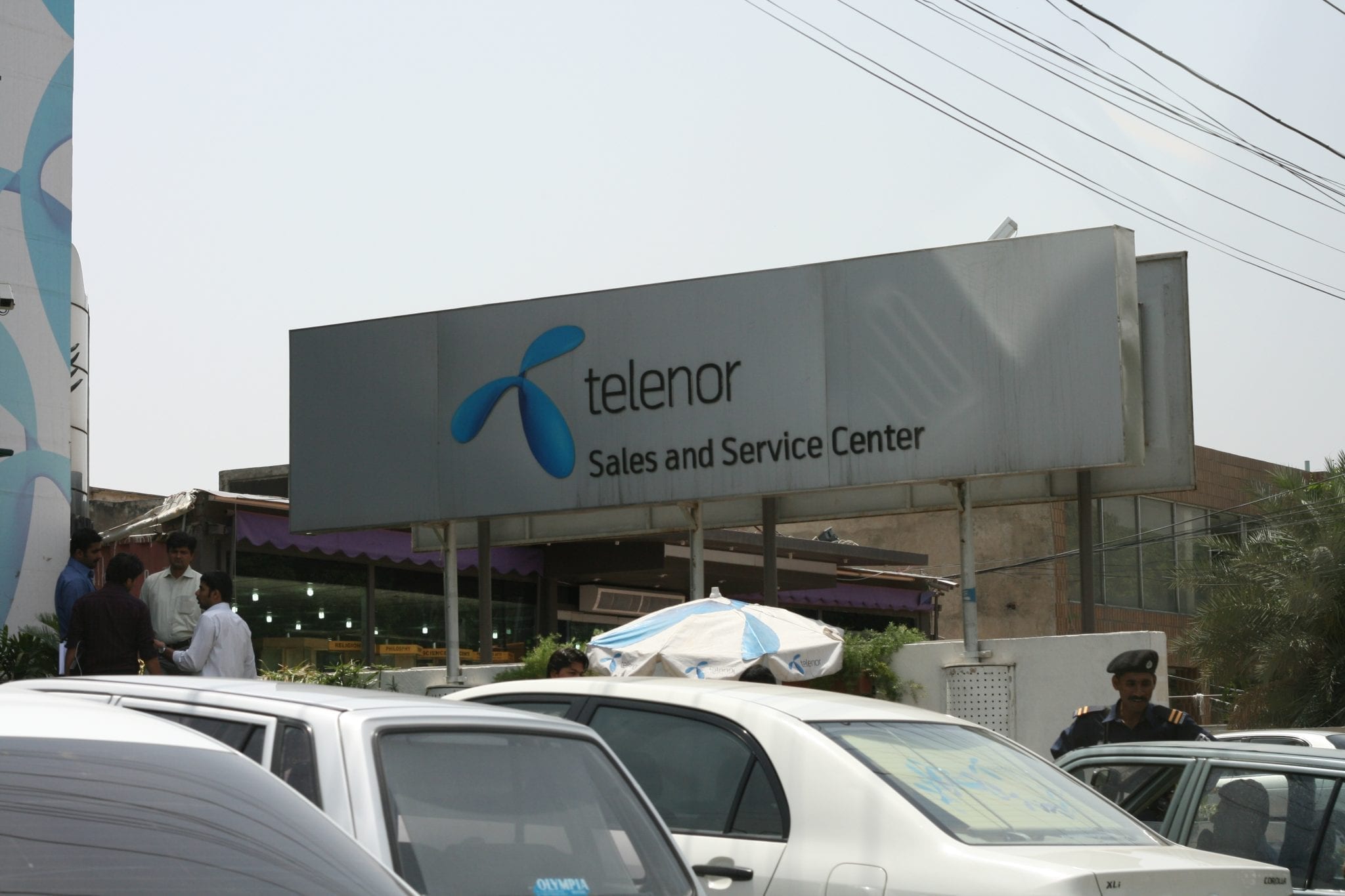
    Telenor Pakistan has commenced a nationwide 4G rollout. launching services in six cities.

    The company will offer 4G services to customers free of cost as a promotional exercise in the initial launch areas, which include select locations in Karachi, Lahore, Islamabad, Multan, Peshawar and Swat.

    Customers in the cities will be able to obtain 4G SIMs at the operator’s sales and service centers and franchises.

    Telenor Pakistan plans to rapidly roll out the service to other cities in the nation, the operator said in a statement.

    “For Telenor Pakistan, this represents a huge leap forward towards realizing our ambition of bringing Internet for All and empowering Pakistan with digital technology,” the statement reads.

    Telenor Pakistan was the only bidder for 4G spectrum during a recent auction of a 10 MHz block in the 850-MHz band. The operator secured the spectrum for $395 million.

    The operator will be competing against China Mobile subsidiary Zong, which this week announced it has expanded its 4G coverage to over 100 cities nationwide.