Retail News CRM

Tag: 4G

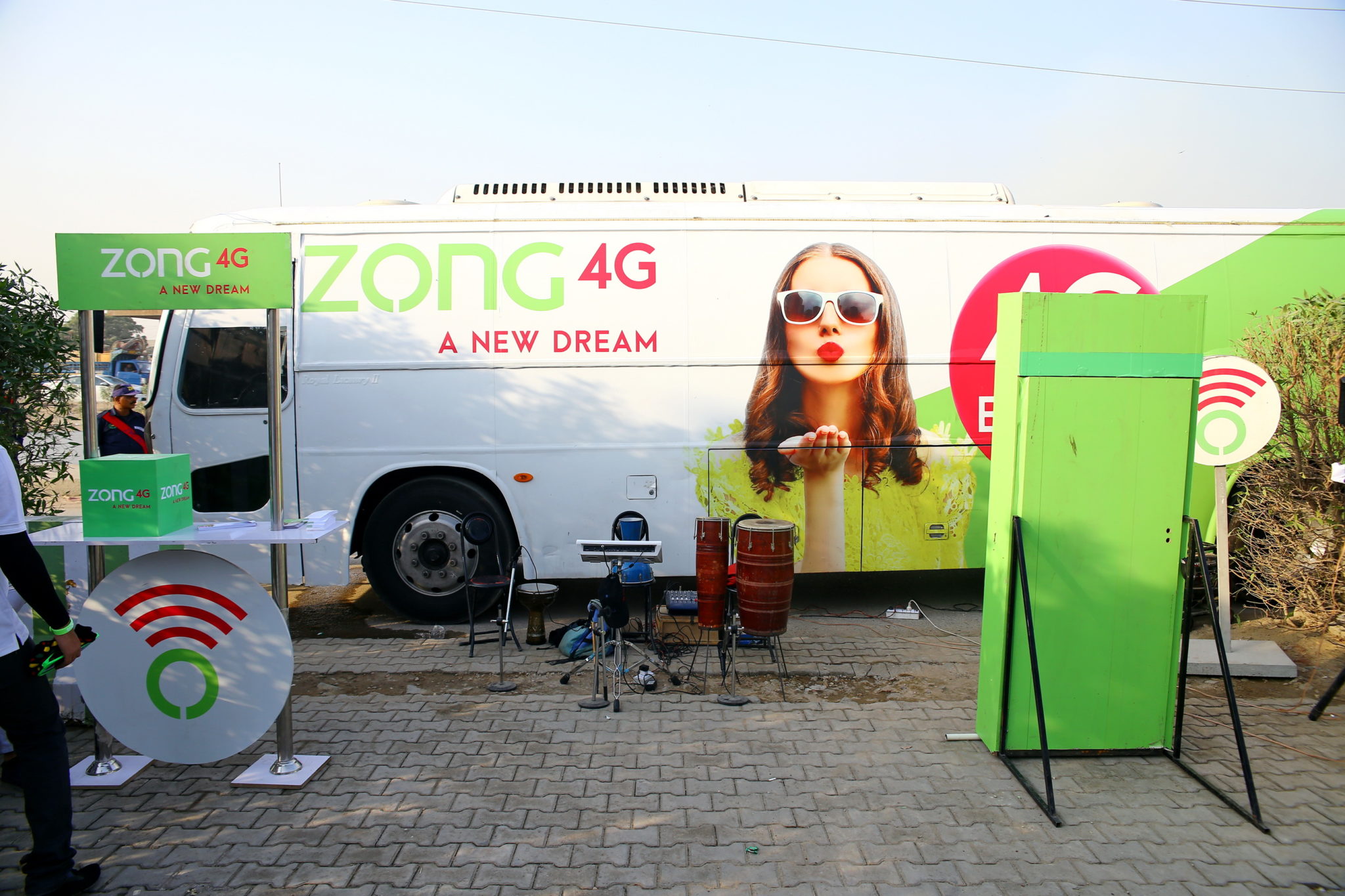
  • Zong 4G – No.1 Data Company of Pakistan Continues its Expansion Nationwide

    Zong 4G – No.1 Data Company of Pakistan Continues its Expansion Nationwide

    In a prolific development, Pakistan’s largest telecom network Zong 4G has launched its operations in the port city of Gwadar, a future international business hub which has already seen foreign and local investment amounting in billions of dollars and rupees.

    The launch of fastest 4G services in Gwadar implies that foreign citizens from across the globe and local residents who have been pursuing their respective business endeavours in the port city will have unhindered access to the fastest 4G technology against reasonably affordable tariff. The move is likely to boost online businesses in the fast developing international city and the adjoining belt of rural Sindh.

    With its 4G consumer-base already having exceeded the 6 million mark, Zong eyes to keep expanding its matchless voice and data services.

    “Zong 4G’s network expansion symbolises our customer-centric approach to ensure that the interests of consumers stay above all the rest by offering them best and affordable network,” the telecom company said in a statement.

    “We keep expanding our operational portfolio to ensure enhanced operations in cities, towns, villages, and far-flung areas,” it said.

    The ongoing momentum of the rapid network expansion implies that Zong 4G continues to invest heavily in modernisation of the mobile network to respond to growing market needs.

    Innovation, performance and reliability have long been Zong’s hallmark. The No.1 Data Company of Pakistan epitomises professional excellence and digitised supremacy coupled with its customer-oriented policies with an aim to deliver the best but at highly affordable rates.


  • Malaysia 4G service performance below global average

    Malaysia 4G service performance below global average

    The race for LTE dominance in Malaysia is still in its infancy as operators scramble to deliver consistent quality of service nationwide.

    Statista data points to smartphone penetration in Malaysia of 62.8% in 2017 with a forecast of 68.46% by 2022. Adoption is fueled by nationwide mobile connectivity with usage in areas such as mobile shopping, social media and general internet surfing according to market research firm GfK.

    “Shopping apps, especially, are also gaining popularity, paving the path for mobile payments. More consumers today are contributing to the growth of mobile commerce (m-commerce) in Malaysia, making payments through their mobile devices for retail items, airline tickets, and services such as Grab and Uber,” observed Stanley Kee, Managing Director for Southeast Asia, GfK.

    According to the EY report “Decoding the Malaysian digital DNA: from smart to savvy” 78% of surveyed Malaysians use of the technology has improved their communication with friends and family, albeit at the expense of sleep (25%).

    As more consumers turn to their smartphones to research new products or services (83%) or make purchases online rather than in person (38%), experience and speed will trump convenience as a metric for selecting the best service provider. That said, price remains an important factor in Malaysian buying psyche.

    With more operators defaulting to LTE or 4G as the solution to consumer’s appetite for connectivity, OpenSignal published a comparative study of the performance of the mobile operators in the country.

    Four years since Maxis launched the first LTE service in Klang Valley (January 2013), five operators now claim to offer 4G service although OpenSignal reported only two operators as having LTE availability scores higher than 75%. 4G services aren’t yet ubiquitous, but they’re getting there.

    “Yes held onto our 4G availability award with a score of 92.5%, but Unifi Mobile (the new brand name for Telekom Malaysia’s Webe) and Celcom demonstrated the biggest growth spurts in our availability results. Unifi’s 4G availability increased by 10 percentage points in six months, while Celcom’s score increased by more than 7 percentage points,” said Kevin Fitchard, Open Signal lead analyst.

    Maxis has extended its lead in 4G speed metric, averaging LTE downloads to 24.4Mbps. Celcom came in second with a 16.3Mbps LTE download average. But Malaysia’s other operators fell short of the global 4G average of 16.9Mbps. U Mobile and Unifi in particular are struggling to boost LTE speeds. Both scored below 10Mbps in OpenSignal test.

    Asked about the growing interest among operators for 5G service Fitchard took a pragmatic view saying: “Countries that are still building out their 4G networks and services like Malaysia will likely be occupied with that task for the next several years. But today 5G isn’t really an option for any operator globally, so everyone has to wait,” he concluded.

  • MyTel launches 4G services

    MyTel launches 4G services

    Myanmar’s fourth operator MyTel has launched 4G services, and plans to expand its network to all 15 states and regions of the nation next month.

    The operator started selling SIM cards in Nay Pyi Taw, eastern Bago and Kayin State earlier this month.

    MyTel plans to differentiate by focusing its rollout more in regional areas and provinces away from large cities. The company has previously indicated plans to cover around 90% of the population with 4G-only services by the end of 1H18.

    The operator has set its base rates at 10 kyat ($0.0075) per minute for in-network calls and 23 kyat per minute for out of network calls, and 10 kyat per SMS.

    As a promotion, MyTel has also introduced a new plan offering 750MB of data and a 100 minute welcome bonus, as well as 50% top-up bonuses per recharge.

    MyTel completed its first call over its network last month during a ceremony in Nay Pyi Taw.

    MyTel is 49% owned by Vietnamese state-owned operator Viettel and 51% owned by a consortium of 11 local ICT companies. The joint venture was established to secure Myanmar’s fourth and last telecoms license.

  • Teletalk and Robi sign network sharing deal

    Teletalk and Robi sign network sharing deal

    Bangladesh operators Teletalk and Robi Axiata have arranged to share network sites across the country to improve the network experience for their respective customers.

    The two operators have signed an agreement on the network sharing deal at a meeting this week attended by company executives including Robi CEO Mahtab Uddin Ahmed and Teletalk managing director Kazi Md Golam Kuddus.

    The agreement is also aimed at accelerating the 4G network rollout process once LTE licenses are awarded to mobile operators.

    Bangladesh’s 4G auction is scheduled to take part in February, and is expected to draw participation from the two operators as well as Grameenphone and Banglalink.

    CityCell, which recently had its operations suspended as a result of failure to pay required license and related fees, has also raised the prospect of participating in the auction in order to re-enter the market.

    The auction will encompass spectrum in the 2100-MHz, 1800-MHz and 900-MHz bands. The deadline for applying to take place is January 14 and the auction will be held on February 14. Operators will need to deploy a 4G network nationwide within 36 months as part of the auction terms.

  • Taiwan to switch off 3G networks at year end

    Taiwan to switch off 3G networks at year end

    Taiwan’s telecoms regulator has revealed that the nation’s 6.4 million 3G users will need to migrate to a 4G network by the end of the year, when operators’ 3G licenses are due to expire.

    The 3G licenses are scheduled to expire on December 31 and services will terminate in 2019, as reported.

    Four operators are still offering 3G services – Chunghwa Telecom, Taiwan Mobile, Far EasTone Telecommunications and Taiwan Star. Asia Pacific Telecom switched off its 3G service in 2017.

    According to the report, officials expect the 3G switch-off to be smoother than last year’s 2G service termination, as operators have retained ownership of their 2,100-MHz spectrum holdings and will be able to use these frequencies to serve their 3G users.

    Operators are also expected to continue to use circuit-switched fallback technology to offer voice over 3G.

    But the nation’s 6.4 million 3G customers may need to switch to a 4G SIM and a new 4G plan in order to continue using services. This represents around a fifth of the market’s mobile customers and compares to roughly 22 million 4G users.

  • LG U+, Huawei validate 4G-5G dual connectivity

    LG U+, Huawei validate 4G-5G dual connectivity

    South Korea’s LG U+ has collaborated with Huawei to complete technology verification for 4G-5G dual-connectivity technology.

    The field test involved linking a 3.5-GHz base station with a 28-GHz base station to allow terminals to simultaneously connect to both, achieving a peak downlink rate of around 20Gbps.

    It involved the use of two base stations at a LG U+ 5G testbed in Seoul. The operator had already verified the technology in a laboratory environment.

    LG U+ director of 5G strategy Kim Dae Hee said dual connectivity technology will provide the foundation for 4G-5G heterogeneous networks.

    “By demonstrating ‘Dual-Connectivity’ technology, which will play a key role in multi-operation of 4G and 5G wireless base stations, we will develop various next-generation technologies to provide a 5G service.”

    LG U+ and Huawei have been collaborating on 5G development since the two companies signed a 5G collaboration agreement in July 2015. Last month, the companies completed the first phase of an urban field test of 5G over the 28-GHz band.

    The companies pledged to continue to carry out 5G technical cooperation and verification activities in advance of the planned commercial deployment of the technology in time for the 2018 Winter Olympics in PyeongChang.

  • Telkomcel launches 4G in Timor Leste

    Telkomcel launches 4G in Timor Leste

    Timor Leste’s Telkomcel has launched 4G services using equipment from technology partner Ericsson.

    Telkomcel has deployed Ericsson’s virtual EPC and LTE RAN Ericsson Radio System software to allow it to provide LTE services to its customer base.

    Ericsson also provided a hyperscale data center system for the deployment to deliver a network capable of supporting high-capacity environments and solutions.

    Telkomcel was established in 2012 by parent company Telin from neighboring Indonesia, and now has around 450,000 mobile customers from a total population of 1.2 million. The operator has been a longstanding Ericsson customer.

    “This cooperation represents a significant milestone as it further strengthens our partnership with Telkomcel and is another testament of our commitment to our customer’s success,” Ericsson president for Indonesia and Timor Leste Jerry Soper said.

    “With the availability of 4G subscriber services, the people of East Timor will be able to enjoy even more of the features of smartphones that have significantly influenced the way people live and do business.”

  • STI to expand 4G services to Bali

    STI to expand 4G services to Bali

    Sampoerna Telekomunikasi Indonesia (STI) has announced plans to expand its Net1 Indonesia branded LTE services to the island of Bali.

    The operator’s 450-MHz LTE service will be deployed to all areas of Bali ranging from Gilimanuk on the west to the eastern end in Gili Selang, the operator announced. STI is targeting rural areas before entering urban areas.

    “Bali is one of the provinces on Indonesia that support the nation’s economy through its tourism industry, STI CEO Larry Ridwan said.

    “Over time, the tourism industry is not only talking about traveling or merely to market travel destinations, but also to provide growth for supporting industries, especially in remote parts of Bali island. That is why we have a strong commitment to support local economy of Bali through the provision of reliable telecommunication access.”

    STI is in the process of migrating its CDMA subscribers to its 4G network and plans to complete the migration by the end of the year.

    STI is Indonesia’s only operator to have deployed in the 450-MHz band using CDMA2000 1x technology. The operator holds a nationwide license and has so far deployed coverage on the islands of Sumatra, Java, Kalimantan, Sulawesi, Bali, Nusa Tenggara Barat, and Maluku.

    As part of its 4G migration, STI recently entered a partnership with telecoms vendor PT INTI to jointly produce devices supporting the 450-MHz spectrum.

  • Telstra’s 4G population coverage hits 99%

    Telstra’s 4G population coverage hits 99%

    Australia’s Telstra has revealed that its 4G network now covers 99% of the nation’s geographically dispersed population.

    Following upgrades in regional areas of Western Australia, Victoria, Queensland and South Australia, the company’s 4G network now offers coverage across more than 1.4 million square kilometers, Telstra COO Robyn Denholm said in a blog post.

    Telstra is meanwhile upgrading its transmission network to help meet projected traffic demand. Denholm said only 20% of the projected capacity Telstra will require by 2020 existed at the start of the year.

    To achieve this Telstra is deploying optical transport technology across its transmission network, starting with an upgrade to the cable connecting the island state of Tasmania to the mainland across the Bass Strait. The upgrade will increase the capacity on each of the two cables from 400Gbps to 1Tbps.

    “Importantly, the next generation optical transport technology offers huge upside for supporting growth. With future system deployments we anticipate we can scale up to 100Tbps or more,” Denholm said.

    “We will now be progressively upgrading our optical transport capability around Australia, with Victoria, New South Wales and South Australia the next in line to benefit from from inter-capital upgrades.”

    Finally, Telstra has activated LTE Cat M1 across its 4GX (LTE-Advanced) network footprint, and plans to deploy range extension capability that will take the footprint of the IoT network to more than 3 million square kilometers.

    The company has also commenced testing of software that supports NB-IoT and expects to introduce this capability later this year.

  • Vietnam’s 4G population coverage hits 95%

    Vietnam’s 4G population coverage hits 95%

    Vietnam’s 4G networks now cover 95% of the nation’s population, attendees to the 4G LTE 2017 International Conference learned.

    The conference, organized by the Vietnam Internet Association and IDG Vietnam, was told that around 43,000 4G base stations have now been deployed nationwide.

    Vietnam issued 4G licenses in the 1800-MHz and 2600-MHz band last year. There are now four 4G licensees in Vietnam – Viettel, Vinaphone, MobiFone, and Gmobile – with the first three of these having launched services.

    Speaking at the event, deputy minister for information and communications Pham Hong Hai called on operators to launch 4G network to create opportunities for explosive growth in 4G services.

    He said the arrival of the 4G era in Vietnam will also create opportunities in fields including the IoT and smart cities.

  • Reliance Jio launches “free” 4G phone

    Reliance Jio launches “free” 4G phone

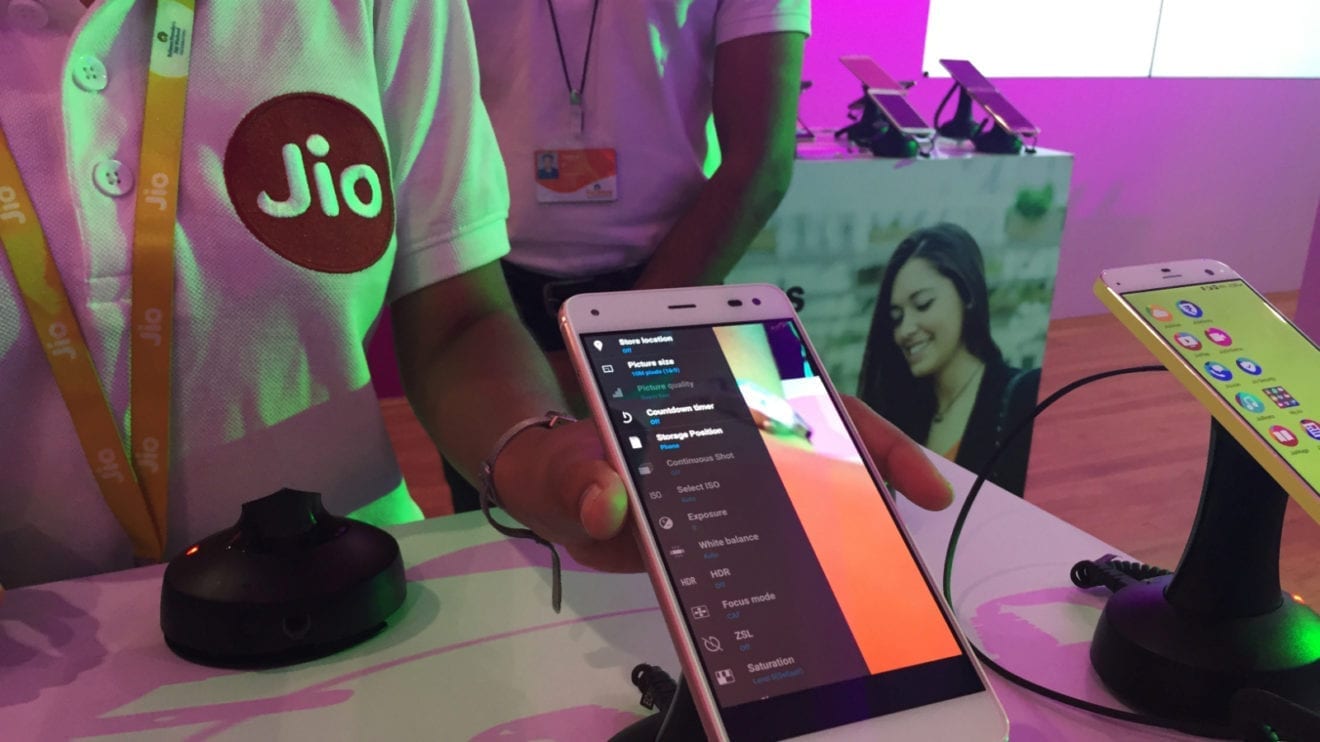
    India’s Reliance Jio Infocomm has disrupted the mobile market once again with the launch of a “free” 4G handset named the JioPhone.

    The operator is offering the JioPhone for a security deposit of 1,500 rupees ($23.29), fully refundable after three years.

    The handset is being produced in India. It will be offered under a plan worth 153 rupees per month for free voice calls and SMS as well as unlimited data with a daily fair use cap of 500MB.

    The device has a keypad and a 2.4-inch, 240×320 display. It supports Bluetooth, NFC payment and access to Jo services including JioTV and JioMovies, and has a rear camera, SD card slot and headphone jack.

    An additional data plan worth 309 rupees per month will allow mirroring of the phone screen to any TV to support streaming services at home.

    Announcing the handset, Reliance chairman Mukesh Ambani said around two thirds of India’s mobile users do not have smartphones, leaving them unable to access Jio’s 4G-only network and leaving Jio unable to attract these customers. The Jio Phone is intended to help the company reach this audience.

    Preorders of the Jio phone will commence next month. The introduction of the device will only increase the intense competition in India’s mobile market triggered by Jio’s explosive entry onto the scene with its pan-India 4G network.

  • Pakistan’s Jazz secures 4G license

    Pakistan’s Jazz secures 4G license

    Pakistani mobile operator Jazz has formally secured its 4G license after submitting the sole bid for a 10 MHz block of 1800-MHz spectrum in May.

    The license was officially awarded to the company during a ceremony on Friday.

    Jazz has become Pakisan’s third operator to be granted a 4G license, after China Mobile’s Zong and Warid Telecom.

    Jazz submitted the minimum bid of $295 million for the block of spectrum just before the auction deadline. The company chose to pay the whole price upfront rather than taking the option of paying in six instalments with interest applied.

    While Ufone had been expected to participate in the auction as the only remaining operator without the capacity to launch 4G services, the company declined to take part citing the high cost of 4G services and handsets in the market that it claims are out of reach for the average Pakistani consumer.

    Zong also sat out of the auction after stating that the operator will not does not require additional bandwidth in the near future.

  • Gigabit LTE set to make up 30% of LTE subs by 2026

    Gigabit LTE set to make up 30% of LTE subs by 2026

    Gigabit LTE – a configuration of the LTE Advanced Pro standard – is on track to grow to account for 30% of total LTE subscriptions by 2026, according to ABI Research.

    The research firm predicts that Gigabit LTE will grow to nearly 2 million subscriptions by the end of this year, which will be less than 5% of total LTE Advanced Pro subscriptions.

    But the configuration is expected to grow to account for 70% of LTE Advanced Pro subscriptions and 30% of overall LTE subscriptions by 2026.

    ABI Research senior analyst Prayerna Raina said Gigabit LTE demonstrates that 4G still has a lot to offer.

    “Gigabit LTE… is a critical network milestone for operators in an increasingly competitive environment in the evolution to 5G,” he said. “It is essential for operators to support the ever-rising bandwidth needs of consumers, while also upgrading the network to support 5G networks in future.”

    The first Gigabit LTE service for mobile devices was launched in the US by Sprint in March. Australia’s Telstra meanwhile launched a Gigabit LTE mobile hotspot service in Sydney in February and is expected to support Gigabit LTE mobile devices as they become available.

    Market trends indicate that LTE Advanced and Gigabit LTE will coexist with 5G for some time, Raina said.

    “Today, operators globally are in various stages of upgrading their LTE networks. Over the next four to six years, we expect mobile networks to evolve considerably with the proliferation of LTE Advanced, LTE Advanced Pro, and Gigabit LTE on one hand and the launch of 5G on the other hand,” Raina said.

    “The vendor ecosystem is essential to this network evolution with device availability being critical for the service launch. It is, therefore, imperative for vendors to align their competitive strategies with the operators’ network transition timeline as well as alliances in the ecosystem.”

    LTE overall is meanwhile forecast to grow to account to around 30% of total mobile subscriptions this year and 50% by 2024, ABI Research forecasts.

  • Ncell launches 4G despite PAC directive

    Ncell launches 4G despite PAC directive

    Nepal’s Ncell has announced the launch of 4G services, despite reports that the company is to have its 4G license withheld due to a tax dispute.

    In a statement, Ncell said it has launched 4G in Kathmandu, Nagarkot, Banepa and Dhulikhel, and has set a target of rolling out 4G to 15% of the country by the end of the year.

    Ncell will allow customers to replace their existing SIMs with a 4G compatible USIM for free at Ncell stores, and will provide 1GB of bonus data with a three day validity to celebrate the launch of 4G.

    The company said customers can expect download speeds of between 10Mbps and 37Mbps and upload speeds of 3Mbps to 18Mbps.

    The statement made no mention of the recent directive from the parliamentary Public Accounts Committee (PAC) that Ncell be prohibited from launching 4G until the dispute is resolved over capital gains tax associated with the sale of TeliaSonera’s indirect controlling stake in Ncell to Malaysia’s Axiata in 2015 for $1.03 billion.

    The PAC has “serious reservations” over the launch, and will call a meeting this week to decide on a formal position over whether to oppose the issuance of Ncell’s 4G license under Nepal’s technology neutrality policy.

    According to the report, Ncell had launched 4G before regulator the Nepal Telecommunications Authority (NTA) had a chance to reach a decision over the validity of the 4G license.

  • Ncell’s 4G license to be withheld

    Ncell’s 4G license to be withheld

    The Nepal Telecommunications Authority (NTA) has backtracked on its decision to grant Ncell a 4G license in response to a directive from the parliamentary Public Accounts Committee (PAC).

    The committee recently directed the regulator to prevent Ncell from launching 4G services until an ongoing dispute over capital gains tax is settled. The NTA has announced it will abide by this decision.

    Ncell was granted approval earlier this month to launch 4G services despite an earlier decision by the PAC not to allow the launch until the tax dispute is settled.

    In making its decision, the NTA said the directive has been issued in the spirit of Nepal’s technology neutral spectrum policy, as well as in response to a finding from Nepal’s Development Committee that withholding a license would negatively affect consumers and state funds.

    The tax dispute revolves around the sale of Sweden’s TeliaSonera’s indirect majority stake in Ncell to Malaysia’s Axiata for $1.03 billion in 2015.

    But the government has been split on whether the tax should be paid by the buyer or the seller and may require Ncell to pay on behalf of the international companies. There is also disagreement over whether Nepalese tax law even applies to the transaction, as it involved the sale of a holding company listed in a tax haven.