Retail News CRM

Tag: 4G

  • Google Duo’s update saves users from overages and throttled data speeds

    Google Duo’s update saves users from overages and throttled data speeds

    Google Duo is the company’s video chatting app that allows users to stream video, make audio-only calls, and send video and voice messages. The app is available for Android and iOS users. As you might imagine, engaging in a video chat uses plenty of data. So Duo users used to be able to toggle on a feature that would limit the amount of mobile data they consumed while employing Duo.

    An update to the app replaces the Limit Mobile Data toggle with Data Saving Mode, which is turned off by default. The new feature works to lower the consumption of both cellular data and Wi-Fi data when Duo is being used. After all, many wireless carriers and home Wi-Fi providers have data caps. Breaching these caps can result in overages or throttled data speeds, two punishments that no Duo user wants to receive.

    To lower mobile and Wi-Fi data consumption, Google drops the quality of a video chat to a lower resolution. Before you decide whether to use Data Saving Mode on a video chat, a preview will show you what the video chat will look like with the feature disabled (again, the default setting) and what it will look like in the lower resolution used when the feature is enabled. With Data Saving Mode toggled on, you won’t be the only one saving mobile and Wi-Fi data. That’s because the party on the other end of the video chat will also be viewing and sending videos in low resolution, helping to lower his/her mobile and Wi-Fi data usage as well.

    This new feature, found on version 51 of Duo, is being sent out via a server-side update. If you’re an impatient sort, you can find this version of the app offered on the Google Play Store.

  • 3 seconds for mobile video to loadon Singapore’s 4G networks

    3 seconds for mobile video to loadon Singapore’s 4G networks

    In Opensignal’s recent State of Mobile Video report, we lauded Singapore’s high achievements in Video Experience. It was one of a handful of countries that earned a Very Good score on our 100-point Video Experience scale, and individually, all three of Singapore’s major operators met the same high standard in our operator breakdown of video quality. But what’s behind that “Very Good” score? We thought this would be a good opportunity to examine the particulars of operators’ high ratings in Singapore over LTE networks, which account for the vast majority of our video tests in the country. We focused on two major components of our Video Experience calculation: 4G Video Loading Time and 4G Video Stalling Occurrence.

    Our first metric, 4G Video Loading Time, is fairly self-explanatory. It’s the average period of time mobile users have to wait for a streamed video to begin playing over an LTE connection. Singapore consumers, quite frankly, don’t spend much time staring at loading icons as you can see in our first chart. The longest Video Load Time in our measurements was on Starhub’s networks, and that wait was only 2.7 seconds. Singtel and M1 were statistically tied at 2.4 seconds, making them incrementally faster in Video Load Time than StarHub, but the differences between the three were practically negligible.

    Our next metric 4G Video Stalling Occurrence measures the proportion of users that experience an interruption in playback after a video begins streaming. If a video halts to buffer or stutters due to a weak connection, then those moments when pictures aren’t moving are all factored into our Video Stalling Occurrence metric.

    While 10% 4G Video Stalling Occurrence isn’t uncommon even in countries with advanced 4G infrastructures, Singapore’s operators came in well under that mark. Starhub had the highest rate of stalling at 4.3% in our analysis, followed by Singtel at 2.9%, but the real star of the show was M1. Its 4G Video Stalling Occurrence score was just 1.6%, meaning interruptions in video playback were rare among our users.

    No single factor explains why mobile video quality is so good in Singapore. It’s true that Singapore is one of the fastest countries in the world when it comes to download, but while speed does have some impact on Video Experience, faster isn’t always better when it comes to video quality. Countries with higher download speed averages than Singapore actually often do much worse in Video Experience, according to our analysis. Latency has a bearing on Video Loading time, as the faster a video request traverses the network the sooner that content begins buffering and playback starts. And our analysis has shown Singapore’s operators are among the best in the world in maintaining nimble, low-latency networks.

    Finally, consistency of connection speed plays a major role in Video Experience. Last month, Opensignal published a report titled The 5G Opportunity, which highlighted the wild swings in 4G Download Speed over the course of a day we see on networks around the world.

    Video is particularly sensitive to fluctuations in speed. A video that plays without difficulty one moment may find itself suddenly starved for bandwidth in the next if download speeds suddenly drop due to congestion or other factors. In Singapore we found the same speed fluctuations as in other countries, but the difference was Singapore’s operators were able to maintain strong connections despite those fluctuations. According to our analysis, average 4G Download Speeds in Singapore never dropped below 41.4 Mbps no matter the hour of day. And a consistent 40 Mbps connection is more than enough to support all but the most demanding HD video streams.

    Singapore is preparing for the entrance of TPG, a fourth operator that aims to shake up competition in the Singapore mobile scene. While TPG will likely try to challenge Singapore’s three incumbents in pricing, it will be interesting to see if TPG can also be competitive from a mobile network experience perspective. The three incumbents have already set a very high bar in Video Experience as well as speed, availability and latency. It will be difficult for a network to match those standards right out of the gate.

  • Ericsson to provide 5G NR equipment for KT

    Ericsson to provide 5G NR equipment for KT

    South Korea’s KT has awarded Ericsson a 5G contract aimed at allowing the operator to launch commercial 5G services early next month.

    South Korean operators have agreed to launch 5G services at the same time in April at the request of regulator KCC.

    Under the contract with Ericsson, the vendor will provide 5G new radio hardware and software for KT’s 3.5-GHz non-standalone 5G network.

    KT selected Ericsson as a key 5G supplier in November last year as part of its preparations for a commercial launch.

    “Having worked successfully with Ericsson on 4G LTE, we are pleased to continue that partnership to make our 5G ambitions a reality with Ericsson’s leading 5G technology,” KT VP of access network design Jinho Choi said.

    “Korea is one of the most competitive and technology-advanced markets in the world. By taking a global lead to enable nationwide commercial 5G services through commercially available 5G smartphones, KT is demonstrating our commitment to our customers and showing how we can drive a global 5G ecosystem where Korea plays a key role.”

  • Vodafone Fiji to spend $97m to expand 4G coverage

    Vodafone Fiji to spend $97m to expand 4G coverage

    Vodafone Fiji is investing $207 million Fijian dollars ($96.9 million) to expand its LTE-Advanced coverage to around 96% of the population, from the current 60%. The operator has announced plans to expand the coverage of its “4G plus” network to almost all of Vanualevu, Tavueni, Rabi and the Laucala Island. The 5G-ready upgrade will also cover expanding capacity to meet demand for high speed mobile broadband coverage in the uva-Nausori-Lami Corridor, and the Western Division areas.

    The phased rollout program will involve expanding the number of base stations from 390 to more than 600, almost all of which will support LTE-Advanced. In addition, 100 existing 3G base station will be converted to 4G+ and pre-5G base stations.

    Announcing the investment, Vodafone Fiji regional CEO Pradeep Lal said data usage on the company’s network has surged from 10 petabytes to 400 petabytes over the past two years.

    “Globally, for network technology providers like us, the demand for data is driven largely by Internet of Things (IoT) and the need for access to data at any time anywhere,” he said.

    “It has therefore become a business imperative for network technology providers like Vodafone to provide ubiquitous access to data 24/7. Every electronic gadget that now gets produced in the world, comes with the option to be connected to the internet either through a SIM card or WIFI.”

    Fiji’s smartphone penetration has meanwhile grown to 78%, ahead of the global average of 75%, while the number of active connections to the Vodafone Fiji network now exceeds 1 million.

  • SK Telecom builds 5G mobile edge computing open platform

    SK Telecom builds 5G mobile edge computing open platform

    SK Telecom unveiled its mobile edge computing (MEC) open platform, which it says can enhance response times in 5G data communications. The operator plans to open up its MEC platform to enterprise customers to enable them to offer new services.

    MEC, which will be used in 5G networks to deliver ultra-low latency data, enables operators to cut down on latency by installing tiny data centers at 5G base stations. SK Telecom says MEC can cut latency by 60%. Applications such as AR/VR services, cloud gaming services, autonomous driving and fleet management, and real-time live broadcasting will all make use of MEC in 5G networks.

    “By opening up the ‘5G Mobile Edge Computing Platform’, SK Telecom will secure the basis for expanding the MEC-related ecosystem and accelerating the release of 5G services,” said Park Jin-hyo, CTO of SK Telecom, in a statement. “SK Telecom will join hands with diverse companies throughout the globe to boost the adoption of MEC-based services.”

    SK Telecom is releasing an API that enterprise customers can use to develop MEC-based 5G services. The company is betting enterprise customers can use the platform to improve efficiency and QoE by reducing latency in communications. A smart factory, for example, can use the MEC platform and a 5G network to increase response time of manufacturing robots.

    At Mobile World Congress this year, the operator teamed up with MobiledgeX to demo a MEC-based industrial AR service. SK Telecom is also working with the Telecom Infra Project (TIP), the Facebook-backed tech initiative, to build out an ecosystem for MEC developers.

    SK Telecom also successfully conducted a 4G-5G network dual connectivity test with Samsung, using Samsung’s E-UTRAN New Radio Dual Connectivity (EN-DC) tech, which is based on the 3GPP 5G NR standard.

    The test checked network device interoperability using dual connectivity technology on 4G and 5G networks using Samsung’s Galaxy S10 5G smartphone and its virtual core (vCore) product that supports 4G and 5G simultaneously. The companies were able to achieve data rates of 2.65 Gbps on a 5G smartphone, with 1.5 Gbps coming from 5G using 3.5-GHz frequency and 1.15 Gbps coming from LTE using 1.8-GHz, 2.1-GHz, and 2.6-GHz frequencies.

    SK Telecom says the technology can be used to improve transmission data speed by 80% by leveraging the 4G and 5G dual connectivity.

  • Jazz contracts Nokia for 4G network expansion

    Jazz contracts Nokia for 4G network expansion

    Pakistan’s Jazz has contracted Nokia to expand the operator’s 4G network capacity and coverage.

    Under the five-year agreement, Nokia will provide its radio solutions for Jazz’s network in the central and southern Punjab province as well as the Sindh and Baluchistan provinces.

    The rollout area will cover densely populated cities including Faisalabad, Multan, Bhawalpur, Rahimyar Khan and Sukkur, allowing Jazz to provide improved services for customers.

    The deployment will include Nokia AirScale base stations for expanded 4G coverage and Massive MIMO technology for enhanced capacity and speed.

    “Expanding 4G coverage across all cities and towns in Pakistan is one of the key strategic pillars of Jazz to fuel the consumption of broadband services,” Jazz chief technology and information officer Khalid Shehzad said.

    “Nokia’s advanced equipment coupled with its commitment to provide quality professional services will ensure that our subscribers enjoy superior service experience. It will help us maintain our growth momentum and attract new subscribers.”

  • Vodafone Idea doubles 4G speeds in Mumbai

    Vodafone Idea doubles 4G speeds in Mumbai

    India’s Vodafone Idea has announced it has doubled 4G download speeds in the Mumbai metro area as part of a major network modernization program in the city.

    The operator is deploying new technologies in the metro area including Massive MIMO, small cells and more TD-LTE cell sites, and has so far deployed more than 5,000 such sites across several regions.

    As part of the network upgrade, Vodafone Idea has also installed over 1,900 pieces of dedicated indoor coverage equipment at high rises and commercial buildings.

    Vodafone Idea’s capacity and coverage in Mumbai has also benefited from 4G spectrum refarming conducted as part of the network consolidation between the former Vodafone India and Idea Cellular, which combined to become Vodafone Idea last year in a $23 billion merger.

    “I am happy to announce that ‘Mumbai just got two times faster’ which means that our customers will now experience two times the download speeds on the 4G network,” Vodafone Idea business head Sunil Tolani said.

    This is based on statistics from Valu Connex Telecom Services indicating that average download speeds in Mumbai have improved by 2.16 times compared to prior to the modernization program.

    “We will be utilizing multiple [advertising] media like OOH [out-of home], radio and digital to reach out to our audience and hope they will enjoy the benefits of our focused network initiatives in Mumbai,” Tolani concluded.

  • Google has yet to fix a serious issue with the Pixel 3 and Pixel 3 XL

    Google has yet to fix a serious issue with the Pixel 3 and Pixel 3 XL

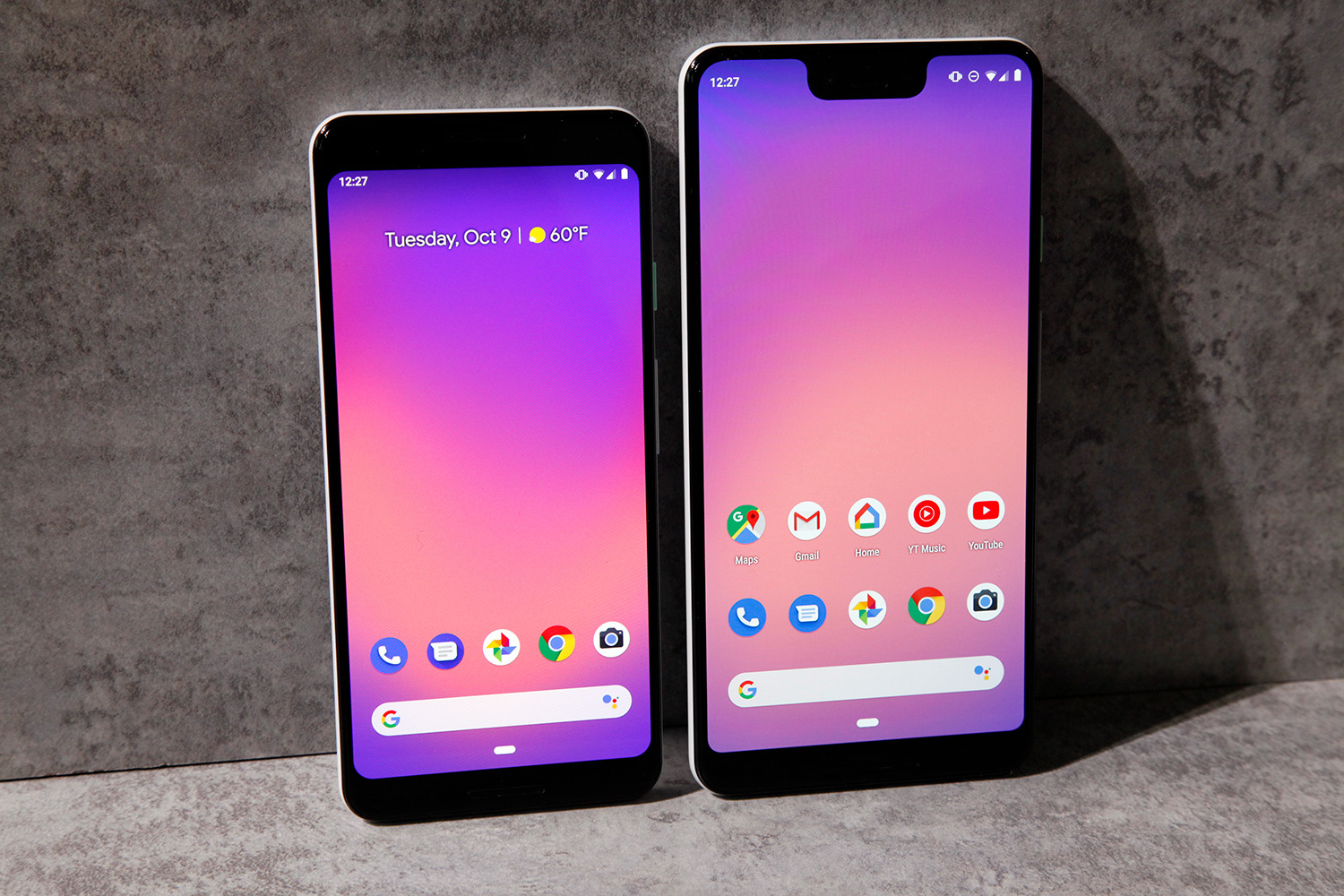
    Back in December, we told you that several Google Pixel 3 and Pixel 3 XL users were having an issue getting the person on the other end of a phone call to hear them properly. The Pixel series has been notorious for having a number of problems out of the box that are fixed by a subsequent software update. You might recall that the Pixel 2 and Pixel 2 XL had so many issues out of the gate that a law firm was recruiting users of the 2017 models to join a class action suit against Google, LG and HTC.

    According to Android Authority, it appears that Google never got around to fixing the problem with phone call connectivity with the 20218 Pixels. On the Google Product Forums are the posts that we discussed in our original story. But newer comments have been posted as recently as last month. It seems that when a Pixel 3 or Pixel 3 XL user is on a regular phone call, the person on the other end of the line is hearing an echo, choppy audio that cuts off words, silence, and more.

    Some troubleshooting tips (factory reset, going into safe mode, switching to 3G from 4G) failed to resolve the issue for everyone, which puts the ball back squarely in Google’s court. Hopefully there will soon be a software update disseminated that will allow those engaged in a phone call with an affected unit to hear the Pixel owner’s voice crystal clear.

  • Google Fi, the next carrier?

    Google Fi, the next carrier?

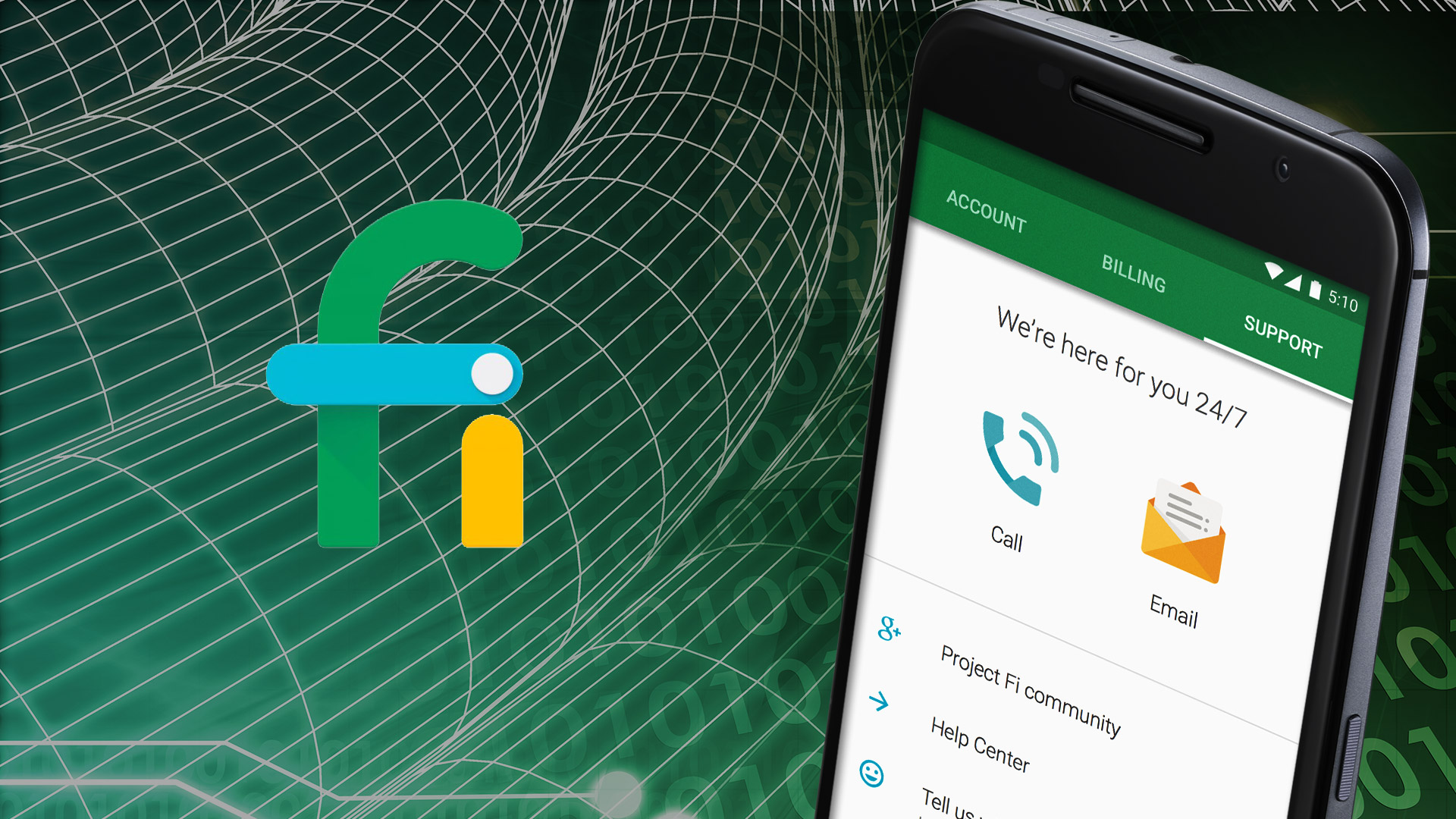
    If you are satisfied with your current phone but would prefer to switch carriers, hybrid MVNO Google Fi has a deal for you. First, some explanation. Google Fi uses two million Wi-Fi hot spots to bring you service. When you are out of Wi-Fi range, your phone checks to see which of the three 4G LTE networks that Fi supports (T-Mobile, Sprint and U.S. Cellular) has the strongest signal at the moment, and connects you to it. Doing this allows Google to keep Fi’s prices down.

    Now, let’s talk about the free month of service that Google Fi is offering to those bringing their compatible phone and number to the MVNO from another wireless provider. The offer is available from now through March 24th, and a list of supported handsets can be found here. You must sign up for a full service plan (not just data) and the phone must remain activated on Fi for 30 consecutive days.

    A week after activating your phone on Fi, you will get an email confirming the credit, which will show up on the following invoice. The credit that Google gives you will cover “a single subscriber’s unlimited talk and text, data usage, and taxes and fees for one month.” The offer is limited to one per person, or six per group plan and requires Google Payments and Google Fi accounts.

    Something else to consider, is that you cannot change your phone while in the aforementioned 30-day period. One Fi subscriber had problems with the Samsung Galaxy phone he moved over to the MVNO and could not dial out about 90% of the time. He bought a Fi compatible LG handset, and while it worked without a hitch, Fi denied him the free month.

    Google Fi costs $20/month for unlimited domestic talk and text for one person ($15 additional for each added subscriber up to a total of six), unlimited international texts, and access to cellular coverage in over 200+ countries. High-speed data costs $10/GB each month, but once you hit 6GB, the rest of the month is free. This means that for an individual, the monthly bill cannot exceed $80 (before taxes and fees) or $205 for a family of four. But there is a catch. Once you consume more than 15GB of data in one month, your data speed is throttled until the next billing cycle begins. Or, you can decide to continue receiving high-speed data by paying $10/GB for any amount of high-speed data you use over 15GB in the same month.

  • New Zealand bans Huawei from 5G mobile network

    New Zealand bans Huawei from 5G mobile network

    From offering mobile payment services such as WePay and Alipay to hiring front-desk staff proficient in Mandarin, the New Zealand Chinese Travel and Tourism Association was not short of advice for Kiwi tourism operators on how to benefit from an influx of mainland Chinese visitors to New Zealand this year.

    “Chinese tourists enjoy spontaneous travel so there are a lot of last minute bookings. For businesses who’d like to attract Chinese tourists, this is the major challenge for them,” association chairman Simon Cheung said in a promotional video.

    But preparations for the 2019 China-New Zealand Year of Tourism – a campaign by both governments to strengthen economic and bilateral ties – were cast in doubt when China postponed the launch event, which was expected to take place in Wellington next week. Huawei is banned, but where is the backlash in New Zealand?

    New Zealand Prime Minister Jacinda Ardern on Tuesday acknowledged that the country’s relationship was complex and not without challenges, but dismissed talk there was a rift. But she revealed that dates for her first official trip to China, planned for the end of last year, still had not been finalised.

    “I have been issued with an invitation to visit China, that has not changed. We continue to find dates that would work,” she said.

    Her admission fuelled concerns from opposition parties and the media that ties, already tense after Ardern’s government blocked Chinese telecom giant Huawei from the nationwide roll-out of a 5G data network over “significant national security concerns”, were deteriorating further.

    Last weekend, an Air New Zealand flight en route to Shanghai was turned back to Auckland, with some reports suggesting it was due to how paperwork on board the plane had referred to Taiwan. According to Bloomberg, the airline said the Boeing 787-9 Dreamliner was not yet certified to fly to China, but had been “unfortunately assigned” the flight.

    The Civil Aviation Administration of China last year told foreign firms and airlines not to refer to Taiwan as anything other than a Chinese territory on their websites.

    Former New Zealand government trade consultant Robert Scollay said from the point of view of those in the country, China’s latest actions “raised the question of whether this is a temporary expression of displeasure or if it means something more significant”.

    After Wellington’s decision on Huawei, which it took in support of its fellow members in the Five Eyes intelligence alliance, there was a debate on whether it had finally chosen a side in its long-running balancing act between the United States and China – its two most important economic partners.

    But Chinese foreign ministry spokesman Geng Shuang on Friday dismissed the suggestion, saying both countries had a common interest in ensuring healthy and stable ties. “China is willing to work with New Zealand on the basis of mutual respect, equality and mutual benefit to promote the continued development of China-New Zealand relations,” Geng said.

    Noakes from the University of Auckland said he was not convinced ties had deteriorated, despite recent events. “The really unlucky thing is that the perceived souring of ties dovetails with commonly held misperceptions of what China is and what engagement with China means for New Zealanders.”

    Jason Young, director of New Zealand Contemporary China Research Centre at the Victoria University of Wellington, had a more ominous take.

    “This can become a self-fulfilling prophecy,” he said. “We talk ourselves into having a bad relationship with China, and that’s quite dangerous.”

  • Huawei’s woes in U.S. give pause to Korea, too

    Huawei’s woes in U.S. give pause to Korea, too

    The arrest of Huawei’s Chief Financial Officer Meng Wanzhou in Canada has triggered alarms in the Korean telecommunications industry, especially after LG U+ moved onto a fifth-generation (5G) network this month that uses Huawei network devices.

    The Chinese telecommunications giant has maintained a sizeable influence since it first entered the Korean market in 2002. While it was originally focused on the cable infrastructure business, Huawei moved on to offering wireless telecommunications devices in 2007 as local telecommunications companies introduced third-generation wide-band code-division multiple access services.

    In 2013, Huawei received orders for fourth-generation 4G long-term evolution (LTE) wireless base stations from LG U+ for services in Seoul, Incheon, and areas in Gyeonggi and Gangwon.

    The 5G equipment market in Korea is estimated to be worth 10 trillion won ($8.89 billion).

    While Huawei is a leading supplier to the telecommunication industry, concerns about the security of its devices has held the company back. Only LG U+ decided to use Huawei equipment for 5G. Huawei has claimed that it had no such security problems in the 170 countries that it operates in and would follow inspection requests by the Korean government.

    LG U+ signed a deal with Huawei to introduce around 30,000 base stations in the Seoul, Incheon, and the Gyeonggi and Gangwon regions by next March. The deal is reportedly worth around 300 billion won, not including maintenance fees.

    The decision by Korea’s smallest telecommunications company made business sense as it used Huawei equipment for its 4G network.

    Huawei’s equipment, however, will not be installed in areas occupied by United States Forces Korea (USFK) such as in Pyeongtaek, Dongducheon, Yongin in Gyeonggi. The U.S. government has requested that Huawei equipment not be used out of concerns about a Chinese cyberattack. USFK has been suspicious about Huawei equipment. When LG U+ chose Huawei equipment for its 4G network, around 10,000 USFK soldiers switched carriers.

    The current situation has left LG U+ in a difficult position. Its deal with Huawei is already inked, and the 5G service works in sync with the existing 4G system, so it is impossible for the company to simply not use Huawei equipment.

    The recent banning of Huawei equipment by Britain, Australia, Canada, New Zealand and Japan, along with growing worries in Korea, places more pressure on the telecommunications unit.

    A senior LG U+ official expressed frustration at the current situation and the Korean government’s inaction.

    “Our government is just trying to not upset either China or the United States,” said the official. “Shouldn’t the government come forward and clear things up?”

    Meanwhile, the government maintains its stance that the selection of telecommunications equipment is an issue for companies to decide.

    “Inspecting security is the responsibility of the business operator. It is not appropriate for the government to take part in an area that a company should make a decision on,” said Park Jun-guk, an official at the Cyber Security Industry Bureau in the Ministry of Science and ICT.

    “[We] will, however, strengthen security inspections in the form of a technology advisory conference.”

    While 5G has stirred controversy, Huawei has an even stronger presence in the country with its cable and optical transmission equipment businesses. In the cable business, all three telecommunications companies, SK Telecom, KT and LG U+, are customers of Huawei.

    Huawei has also won orders from Koscom, a state-run financial IT solution company, and from electric utility Kepco.

    Last month, the Chinese company won an order with KT to connect the sales network of the National Agricultural Cooperative Federation and the National Livestock Cooperatives Federation worth around 120 billion won.

    According to market researcher IHS Markit, Huawei is the biggest global telecommunications equipment maker, with a market share of 22 percent. While Samsung Electronics holds a strong position in the Korean market, a 45 percent market share, it commands a paltry 4 percent share of the global market.


  • Zong 4G – The First Company to Reach 10,000 4G sites

    Zong 4G – The First Company to Reach 10,000 4G sites

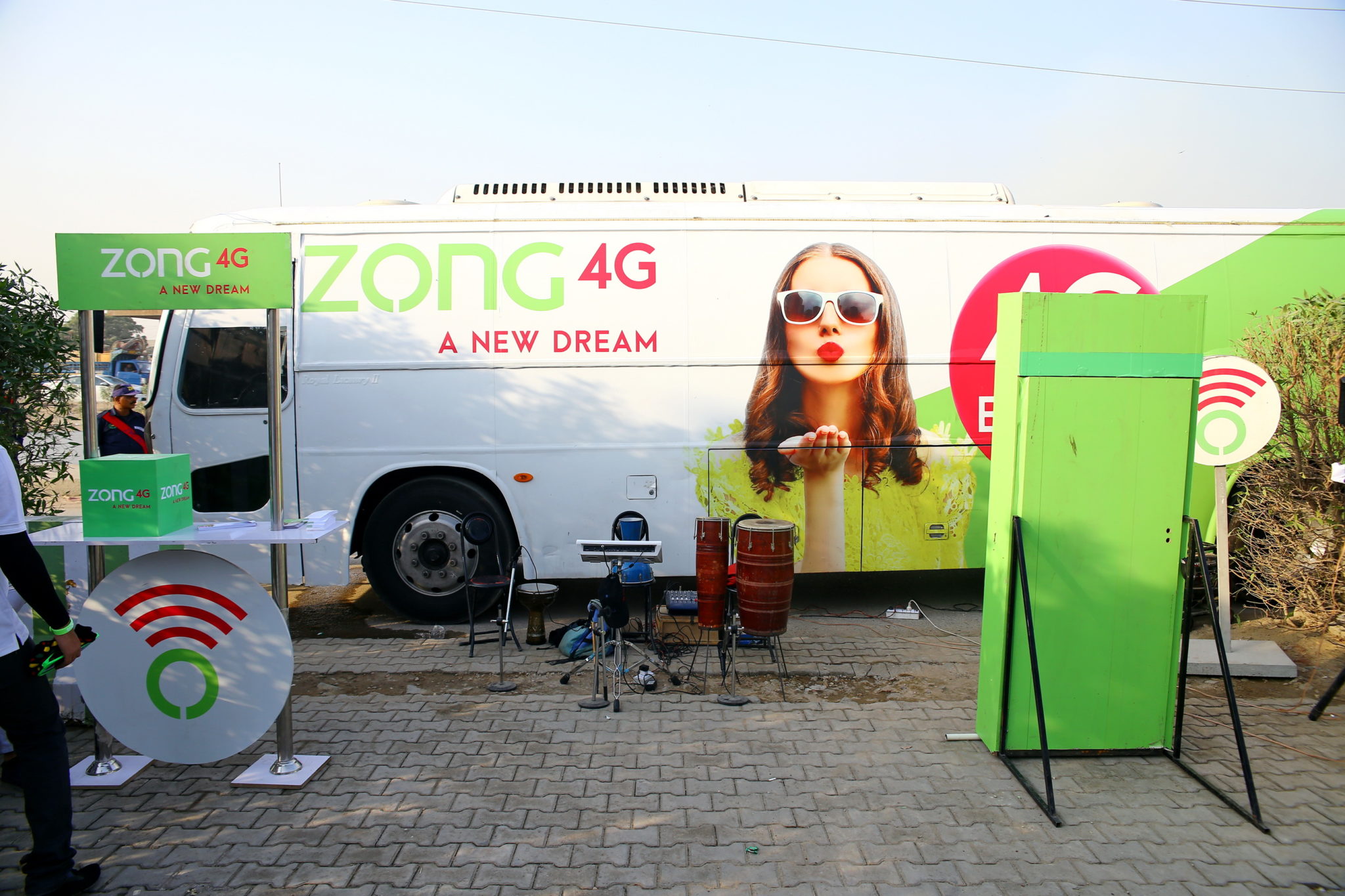
    Pakistan’s No.1 Data Network brings widest 4G coverage for its valued subscribers. Having pioneered the 4G in country, Zong 4G is the first telecom company in the country to successfully deploy and cross the prolific 10,000 4G sites mark.

    With 4G presence in already more than 300 cities, the company’s current development implies that Zong 4G has not only become the first telecom entity to own over 10,000 operational 4G sites but also the one and only to secure widest 4G coverage at every nook and corner of the country.

    Additionally, Zong 4G plans to roll out over 5,000 4G sites in the next three years to cater to the growing demands of its 4G customers whose number has been exponentially increasing with every passing day.

    “Zong 4G has taken the lead to connect Pakistan with the rest of the world. We have upgraded all our sites to 4G and developed the most seamless and technologically advanced network which is second to none,” said the telecom company’s spokesperson in a statement.

    “For a telecom company, this kind of technological excellence not only enhances the professional quotient but also brings along a host of responsibilities—to shoulder the demands of our ever growing network that offers unmatched connectivity from Peshawar to Gwadar. Being fully cognizant of the situation, Zong is eyeing to add 5,000 additional sites in next three years as we believe that our customers should experience the largest 4G coverage in country- which is unrivaled for in reliability and connectivity. With our customer focused planning and strategic investments, we will always remain geared up to provide nothing less than the best!” continued the telecom company’s spokesperson in a statement.

  • Soaring 3G, 4G use to boost mobile ads, commerce

    Soaring 3G, 4G use to boost mobile ads, commerce

    Widespread adoption of 3G and 4G networks in Vietnam presents a lucrative growth opportunity for mobile advertising and commerce.

    Vietnam had more than 123.9 million mobile subscribers active on 2G, 3G and 4G networks as of June this year, according to the Ministry of Information and Communications.

    The number of 3G and 4G subscribers had soared by 29.2 percent year-on-year. Preliminary statistics showed that the combined adoption of 3G and 4G reached 51.5 million subscribers in early 2018.

    Mantosh Malhotra, Southeast Asia and Pacific head of telecom equipment giant Qualcomm, said the growth was impressive and predicted 3G and 4G numbers to rise to 120 million by 2020, or 67 percent of all mobile devices.

    Doan Duy Khoa, head of consumer insight, banking and technology industry division at Nielsen Vietnam, said that the extensive 3G and 4G adoption in Vietnam would create huge opportunities for mobile advertising and commerce.

    Vietnam is ranked third in consumers’ internet access in Southeast Asia, behind only Singapore and the Philippines, he said. “Vietnamese spend 24.7 hours a week on average on the internet compared to nearly 26 hours in developed countries like Singapore.”

    Two-thirds of local internet users surveyed by Nielsen said they regularly use smartphones to browse the net.

    Khoa said this trend has been fostered by the upgrades to the 3G and 4G telecom infrastructure and the increasing mobile connection speeds on smartphones.

    By 2020 some 60 percent of Vietnam’s population is expected to use smartphones.

    Khoa quoted statistics from market research company eMarketer as saying Vietnam’s mobile advertising revenues were worth $77 million last year, double that of the previous year.

    He presumed the growth is on the rise.

    Mobile advertising growth would be driven by new ad formats like in-app ads, mobile video ads and mobile search services, Khoa said. “The rising trends of connectivity and smartphone use also give impetus to mobile commerce growth.”

    Smartphones inspire consumers to search online for brands, products and services before buying, and share their impressions after a purchase, he said.

    Khoa recommended that marketers should use smartphones as a tool to build brands and loyalty programs and promote sales. “Many providers of air, accommodation, and tourism services are leading the mobile commerce charge in Vietnam.”

    eMarketer predicted the mobile retail sector to grow by 24.3 percent to $1.14 million this year. The figure is expected to climb to $1.8 million in the next three years.

    But Khoa warned that mobile advertising and mobile commerce sectors face challenges since consumers tend to quickly turn off ads or even block and skip them. “Thus, to get past this, the advertising content must be very good.”

    “Consumers’ attention span is very short when it comes to mobile phones, especially compared to tablets and laptops. So, ads must be designed to run for six or 12 seconds instead of the 30 or 60 seconds of traditional ads,” he added.

  • 4G investments impacting ratings of APAC telcos

    4G investments impacting ratings of APAC telcos

    Half of the companies covered in Fitch’s APAC Telecommunications – Peer Comparison report now have limited rating headroom based on our downgrade guidelines, after investments to roll out 4G networks and, in most cases, higher dividend commitments caused net leverage to rise in recent years.

    The ratings agency noted that only PT Telkom achieved high rating headroom, while PLDT, Telekom Malaysia, SK Telecom and Singtel have the least.

    Some companies have gained temporary relief through cost management, asset disposals and dividend reduction, which also reflect their commitment towards deleveraging. PLDT and Advanced Info Service Public Company reduced dividends to manage their cash flows.

    Rating triggers are typically less stringent for companies with strong business fundamentals and supportive market structures, which present a lower business risk profile.

    Fitch considers competitive position and financial structure as key differentiating factors for APAC telcos, attaching high importance to these two sub-factors.

    Competitive position captures the significance of scale benefits, strong market position and low competitive intensity in driving a robust business risk profile. Meanwhile, an issuer’s capital allocation and debt capacity underpin its financial structure.

  • Net1 Indonesia Holds Digital Activity #MauAda4Gdimana?

    Net1 Indonesia Holds Digital Activity #MauAda4Gdimana?

    Net1 Indonesia, provider of 4G LTE broadband data services, holds an exciting digital activity named #MauAda4Gdimana meaning “where should 4G access exist?”, from May 7 – July 7, 2018. Basically, this is a competition to invite people playing an active role to determine certain locations in Indonesia where data broadband should be easily accessed. People from all around the country can select a number of locations in Indonesia to obtain LTE 4G network that will be realized by Net1 Indonesia.

    So far, many areas in Indonesia cannot access internet yet. Adequate 4G data access can be something priceless for people in remote area to support their activities. According to a data from the Ministry of Communication and Information Technology, Republic of Indonesia, by end of 2017 there have been 55.000 eNodeB or Long Term Evolution radio network elements (LTE) to support 4G signal coverage in Indonesia. Net1 Indonesia is committed to increase these figures. One of its effort to mapping the location is by holding #MauAda4Gdimana digital activity.

    Meanwhile, katadata.co.id mentioned that 73.53% of provinces in Indonesia or 25 provinces have been exposed with 4G network. However, only 55.05% among the villages/sub-lower districts in Indonesia (45,811 villages/sub-lower districts) can be reached by 4G signal service. Based on the data and as a data broadband service provider, Net1 Indonesia is eager to provide internet connection, especially in rural areas and remote areas in Indonesia.

    “Digital activity #MauAda4Gdimana is an initiative from Net1 Indonesia to invite the community to have an active role and participate in our big mission, which is spreading the data broadband services to regions where 4G does not exist yet, especially for society in underserved, rural and remote area. Thus, we are committed to present 4G LTE service in the most voted area,” said Larry Ridwan, CEO of Net1 Indonesia.

    Competition #MauAda4Gdimana is open to all Indonesian citizens ages 18 years old above. As a further requirement, participants who are interested in entering this competition must have an active Facebook account and Like the Fanpage Facebook of Net1 Indonesia, following Instagram @net1_id and Twitter @net1id.

    Competition Mechanism

    Participants interested to join #MauAda4Gdimana competition can open microsite www.mau4g.net1.co.id to select #MauAda4Gdimana. Then, participants can choose a location that is championed as a 4G network receiver from Net1 by selecting VOTE in the options provided.

    Before joining the campaign of #MauAda4Gdimana, participants need to register by filling some information in the provided form, then participants can login with mobile phone number. To get support for a voted location in order to win the 4G LTE access from Net1 Indonesia, participants can invite their Facebook friends and promote it through their Facebook account using hashtag #MauAda4Gdimana. Most voted location will be prioritized to obtain 4G LTE network from Net1 Indonesia.

    Net1 Indonesia will select the win voters and appreciate with 9 units of Net1 Argo mobile Wi-Fi device, 99 credits worth IDR100,000 and 999 credits worth IDR50,000. Winners will be announced on July 14, 2018 through www.mau4g.net1.co.id and all Net1 Indonesia social media accounts at the end of the competition period. #MauAda4Gdimana competition is free of charge for the participants.

    Net1 Cooperation with Local Government

    Net1 Indonesia has also cooperated with a number of local governments in district and province level throughout Indonesia. The local governments cooperate with Net1 Indonesia to provide data broadband access for societies in sub urban and remote areas in their domain. Among others, Musi Banyuasin Regency, West Halmahera Regency, Talaud Islands Regency, Tual City, Siau Tagulandang Biaro (Sitaro) Islands Regency, Sangihe Islands Regency, Teluk Bintuni Regency and Kaimana Regency, are mentioned to sign a Memorandum of Understanding (MoU) to working together building 4G based communications infrastructure with Net1 Indonesia.

    The cooperation with a number of local governments that have been started since 2017 is a first step for Net1 Indonesia to be able to meet the needs of data access for 260 million Indonesian population who lives in more than 140.000 islands.