Retail News CRM

Tag: 4G

  • Nepal’s Smart Telecom secures 4G license

    Nepal’s Smart Telecom secures 4G license

    Nepal’s Smart Telecom has become the market’s third mobile operator to secure a 4G license from the Nepal Telecommunications Authority (NTA).

    The regulator has authorized Smart Telecom to launch 4G over its existing 1800-MHz spectrum holdings from July 30.

    The license has been granted based on Nepal’s technology neutral spectrum principle, but has the condition that Smart Telecom must pay all unpaid spectrum, renewal and frequency fees by the July 30 deadline.

    Smart will also be required to submit 4G operation reports to the regulator every three months, the report adds.

    With the approval, three operators have now been cleared to launch 4G services. Nepal Telecom secured a license in October, while Ncell’s application was approved earlier this month.

    Smart Telecom has announced plans to commence its 4G rollout in major cities including Kathmandu, Lalitpur, Bhaktapur, Pokhara, Birgunj and Bhairahawa. The operator is Nepal’s smallest mobile player by subscribers, with a market share of less than 1%.

    Of the market’s six mobile operators, only United Telecom has also expressed an interest in launching 4G. But the regulator has yet to decide whether to grant a 4G license to the operator.

  • Samsung, Cisco, Verizon to pioneer multi-vendor 5G Trials

    Samsung, Cisco, Verizon to pioneer multi-vendor 5G Trials

    Samsung Electronics America and Cisco are working with Verizon in what they described as the successful deployment of the first multi-vendor end-to-end 5G field trial, which took place in Detroit, Michigan.

    Earlier this year, Verizon announced plans for customer trials of 5G technology for home broadband service (Fixed Wireless Access). Five US cities are scheduled to begin trials in the second quarter of 2017, with pilot trials in a total of 11 markets expected by midyear.

    Each location offers a unique set of test parameters, including vendors, geographies, population densities and demographics, and the Ann Arbor location in Detroit was the first to tackle a multi-vendor deployment of 5G.

    The solution includes a 5G virtualized packet core as part of the Cisco Ultra Services Platform with Cisco Advanced Services and Samsung virtual RAN solutions (vRAN), paired with Samsung’s 5G Radio base stations and 5G home routers that will deliver broadband services to Verizon’s trial customers.

    Based on Verizon’s 5G Technical Forum specification, the three companies followed a series of comprehensive network vendor interoperability tests (NVIOT) that demonstrated seamless interworking between core network, radio edge and user devices that showcased a core principle of next-generation network virtualization via multi-vendor support.

    This trial demonstrates that service providers can deploy 5G networks specialized to their unique market needs by selecting individual network infrastructure components from a selection of multiple vendors.

  • Nepal Telecom Authority clears Ncell to launch 4G services

    Nepal Telecom Authority clears Ncell to launch 4G services

    The Nepal Telecommunications Authority (NTA) has cleared operator Ncell to launch 4G services over its existing 900-MHz and 1800-MHz spectrum holdings, paving the way for the operator to compete with Nepal Telecom.

    The telecoms regulator has informed Ncell it is clear to launch 4G services using its spectrum holdings from June 1.

    But the move goes against the decision of Nepalese parliament’s Public Accounts Committee (PAC) not to allow Ncell to launch 4G services until it pays a capital gains tax the government has been demanding from the operator.

    According to the report, the committee had approached the regulator asking why Ncell had been permitted to roll out 4G services despite the tax dispute. The NTA responded that it had given the directive in the spirit of the technology neutrality spectrum policy.

    Nepal’s Development Committee had also directed NTA to allow a launch on the grounds that consumers have been negatively affected by the decision to delay providing approval, undermining the committee’s authority.

    In light of the PAC’s concerns, the regulator noted that while Nepal Telecom has been granted new spectrum to support its 4G foray, Ncell so far has not.

    The tax dispute centers on Ncell’s former shareholder TeliaSonera’s decision to exit the Nepalese market. The Sweden-headquartered operator sold its indirect majority stake in Ncell to Malaysia’s Axiata Group for $1.36 billion during a deal announced in April last year.

    The Nepalese government has demanded that capital gains tax be paid on the transaction, but because TeliaSonera had already exited the market and had disputed the assertion that the transaction is taxable, it has been leaning on Ncell to resolve the issue and potentially pay the tax on TeliaSonera’s behalf. But Ncell has resisted this pressure.

  • Jio has India’s fastest average download speeds

    Jio has India’s fastest average download speeds

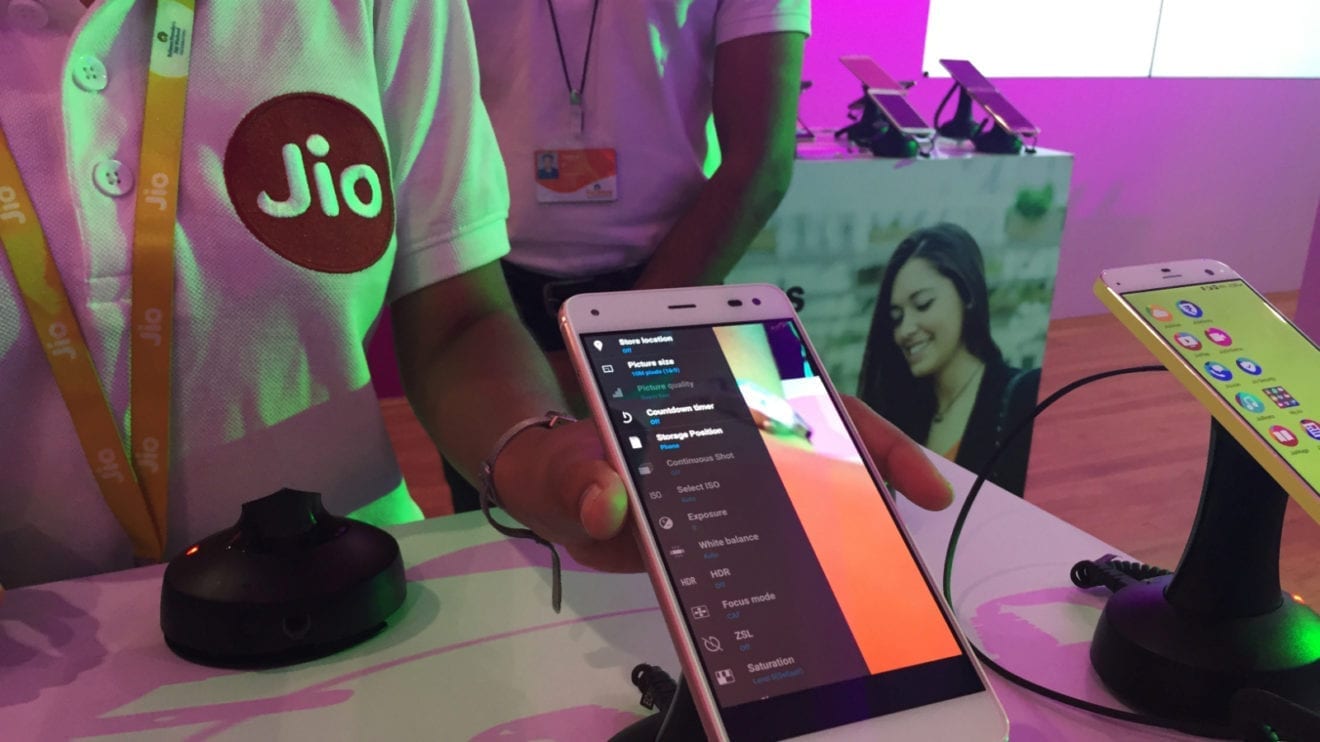
    India’s newest mobile operator Reliance Jio Infocomm had the fastest average download speeds  during March by a wide margin, according to the latest figures by regulator Trai.

    Jio recorded an average download speed of 16.48Mbps for the quarter, roughly double that of rivals Idea Cellular (8.33Mbps) and Bharti Airtel (7.66Mbps).

    As a 4G-only operator Jio has an inherent advantage in terms of average download speeds.

    Vodafone meanwhile recorded average download speeds of 5.66Mbps, compared to 2.64Mbps for Reliance Communication, 2.52Mbps for Tata DoCoMo, 2.26Mpbs for BSNL and 2.01Mbps for Aircel, Trai’s figures indicate.

    But the findings of the debut report from wireless coverage mapping company OpenSignal into the state of the Indian mobile market appear to contradict the official figures.

    OpenSignal’s analysis indicates that Airtel tops the rankings in terms of average 4G, 3G and overall speeds. The company measured Airtel’s average LTE download speed of 11.5Mbps, and said that both Vodafone and Idea have faster average speeds than Jio, which scored a mere 3.92Mbps.

    But Jio topped the rankings in terms of LTE availability, finding that testers on Jio’s network were able to find a 4G signal 91.6% of the time. No other Indian operator scored higher than 60%.

  • Japanese telco taps Redknee for 4G service upgrade

    Japanese telco taps Redknee for 4G service upgrade

    A Tier 1 communication service provider in Japan has awarded Redknee Solutions has won a multi-million dollar.

    The operator is experiencing increasing demand for 4G services while its subscriber base expands rapidly. The solution will upgrade Redknee’s integrated policy and charging solution to support more than 30 million subscribers.

    The solution will also add support for new capabilities such as Voice-over-LTE (VoLTE). The win will see Redknee scale its solutions to meet the needs of a growing Tier 1 CSP while supporting 4G service offerings that require an agile and innovative approach to achieve customer satisfaction and success.
    Consumers are increasingly using data rich services such as HD voice and multimedia services, and this is prompting CSP’s to invest in new technologies that support increasing volumes of data and traffic. VoLTE is quickly being adopted because it can deliver faster onboarding, shorter call setup times, and improved spectral efficiency.

    “Redknee understands the importance of customer success. Redknee’s agile and scalable solutions support new technologies and service offerings, such as VoLTE, which allow our customers to improve quality of service, drive innovation, and deliver successfully to all of their subscribers,” said Danielle Royston, Redknee’s CEO.

  • Airtel to buy Tikona Digital’s 4G business

    Airtel to buy Tikona Digital’s 4G business

    India’s Bharti Airtel has arranged to acquire ISP Tikona Digital’s 4G business for around 16 billion rupees ($244.6 million), to help shore up its ability to compete against Reliance Jio and the combined Vodafone-Idea Cellular.

    The company will acquire 4G assets including 20 MHz of 2300-MHz 4G spectrum in five of India’s 22 telecoms circles, as well as 350 existing cell sites in these circles.

    The five circles are Uttar Pradesh East and Uttar Pradesh West, as well as Rajasthan, Gujarat and Himachal Pradesh.

    The merger is expected to fill gaps in Airtel’s spectrum holdings, particularly in the former three circles, and allow the operator to secure a pan-India footprint in the 2300-MHz band.

    This could prove crucial to Airtel’s efforts to stay competitive against disruptive pan-India 4G operator Reliance Jio Infocomm, as well as the entity that will be created with the planned $23 billion merger of Vodafone India and Idea Cellular – which is expected to overtake Airtel to become the market’s largest operator by subscribers.

    But Airtel could have some hurdles to clear in order to close the deal. Tikona Digital co-founder Rajesh Tiwari is objecting to the deal on the grounds that the companies have not provided details of how the proceeds will be split among shareholders, the report states.

    Tiwari, which owns just over 1% of the ISP, has filed a legal notice seeking to block the deal until he is provided this information.

  • Nokia, Ciena providing gear for Jio’s major 4G rollout

    Nokia, Ciena providing gear for Jio’s major 4G rollout

    Nokia and Ciena have both detailed their roles in providing equipment for disruptive Indian newcomer Reliance Jio Infocomm’s greenfield pan-India 4G rollout.

    Reliance Jio finally launched LTE services for the public in September last year, and has signed on 100 million new users in just 170 days due to its aggressive strategy of initially offering all services for free.

    Nokia announced that its optical deployment for Jio covers over 90,000km across India, making it one of the biggest 100G deployments in the world.

    The vendor provided switches with 100G DWDM capabilities as well as generalized MPLS intelligence to support capacity management and restoration

    “In only 170 days, Jio has signed on 100 million new users. With growth rates of this magnitude we had to ensure we deployed the highest capacity, most resilient transport network to build out the 4G network,” Reliance Jio president Jyotindra Thacker commented.

    “Nokia’s next-generation DWDM portfolio provides the ability to scale easily as Jio continues to expand the network to reach the underserved areas of India with digital services in key areas such as communication, education, healthcare, payments and multi-media entertainment.”

    Ciena meanwhile deployed multi-terabit converged packet optical technology for Jio’s 4G network core, operating at speeds of up to 200Gbps.

    The Ciena packet optical platforms use Ciena’s WaveLogic coherent technology for the core network, which connects all major cities of India.

    • “With Ciena we are not only able to provide robust scalability to offer new levels of data consumption, which is already 8 to 10 times above market levels, but also a supreme level of confidence in our network’s reliability and level of service that stands out in our marketplace,” Thacker said.
    • “Ciena’s coherent technological offerings and proven control plane technology is helping to make us the fastest growing 4G network in the world.”
  • Nepal Telecom reaches 500,000 4G subscribers

    Nepal Telecom reaches 500,000 4G subscribers

    Nepal Telecom has revealed that its 4G subscriber base has passed 500,000 less than three months after launching the services.

    The operator, currently Nepal’s only 4G provider, announced that it now has over 524,000 subscribers. Nepal Telecom launched 4G services at the start of January, initially in the Kathmandu and Pokhara areas.

    But of the operator’s total 4G subscriber base, only around 67,500 are postpaid, whereas the remainder are prepaid. Nepal Telecom launched prepaid LTE services in February.

    The total 4G base also currently only makes up a small portion of Nepal Telecom’s roughly 8.1 million mobile internet users, the report indicates.

    Nepal Telecom is also currently limited to providing 4G using a mere 5 MHz of 1800-MHz spectrum, capping peak data rates at 32.4Mbps, but is currently seeking more spectrum from the government to offer faster services.

    To mark the occasion of this year’s Holi spring festival in Nepal, the operator has meanwhile introduced new data and SMS offers for subscribers, including 200MB of bonus data for GSMA/CDMA prepaid users on a top up of 200 rupees ($1.88).

  • Nepal Telecom to launch prepaid 4G on Feb 4

    Nepal Telecom to launch prepaid 4G on Feb 4

    Nepal Telecom signed up around 40,000 LTE customers in the first 15 days since launching Nepal’s first commercial 4G network.

    The state-owned operator launched LTE services in the Kathmandu and Pokhara areas on January 1, and has seen a growing trickle of 4G subscribers, MyRepublica reported, citing comments from managing director Kamini Rajbhandari to Nepal’s parliament.

    According to the report, 4G services will be enabled for iPhones shortly, and for prepaid customers from February 4. The operator is also targeting nationwide 4G services within a year.

    But the parliamentary committee pressured the operator to address commonly-cited problems including weak network quality and credit recharge problems within a month.

    The committee also instructed Nepal Telecom to provide internet services in rural areas through the Rural Telecommunication Development Fund.

    Nepal Telecom, the Ministry of Information and Communications and regulator the Nepal Telecommunication Authority (NTA) have also been instructed to amend the nation’s 20 year old Telecommunications Act, as well as the 2003 Telecommunications Policy.

  • Idea may offer unlimited free 4G data

    Idea may offer unlimited free 4G data

    India’s Idea Cellular is reportedly considering launching its own unlimited free 4G data offer to compete against disruptive new market entrant Reliance Jio Infocomm.

    Idea is considering offering unlimited data in certain plans with a validity of 1 to 1.5 years, potentially only for 4G customers, citing sources.

    According to the report, Idea may also introduce free incoming calls for international roaming and new loyalty plans for existing customers.

    The entry of pan-Indian 4G operator Reliance Jio has shaken up India’s telecoms market, due in part to the operator’s decision to offer free services for customers for its first six months of operation, ending in March 31.

    Rival operators have been pressed to respond with their own offers to attract and retain customers. Bharti Airtel recently introduced an offer for 3GB of extra data per month until December this year.

    In line with this development, Vodafone India has introduced a new prepaid plan offering unlimited 3G or 4G data roaming for an hour for just 16 rupees ($0.235). The company will also offer unlimited in-network local voice calls for an hour for 7 rupees. Vodafone’s 2G customers will be able to buy an hour of unlimited data for 5 rupees.

  • Nepal Telecom launches 4G services

    Nepal Telecom launches 4G services

    State-owned operator Nepal Telecom has launched 4G services over the 1800-MHz band in the Kathmandu and Pokhara areas. The operator has upgraded 308 base stations in the Kathmandu area and 25 in Pokhara to support 4G services.

    Currently Nepal Telecom is only able to provide 4G using 5 MHz of 1800-MHz spectrum, limiting peak data speeds to 32.4Mbps. But the operator has asked regulator NTA for another 5 MHz, which will allow a speed increase to 100 Mbps.

    According to the report, the company is currently providing 4G data services at 3G rates – a base rate of 1 rupee ($0.0091) per megabyte – but plans to reduce the tariff shortly.

    The network is at present only available for Nepal Telecom’s GSM postpaid customers. The operator is also yet to make a deal with Apple to allow the use of iOS devices on its 4G network

    Nepal Telecom secured a 4G operating license in October, after the NTA approved the operator’s 4G application the previous month. The operator plans to progressively roll out 4G nationwide.

  • AIS, True must launch low-cost 4G SIMs for poor

    AIS, True must launch low-cost 4G SIMs for poor

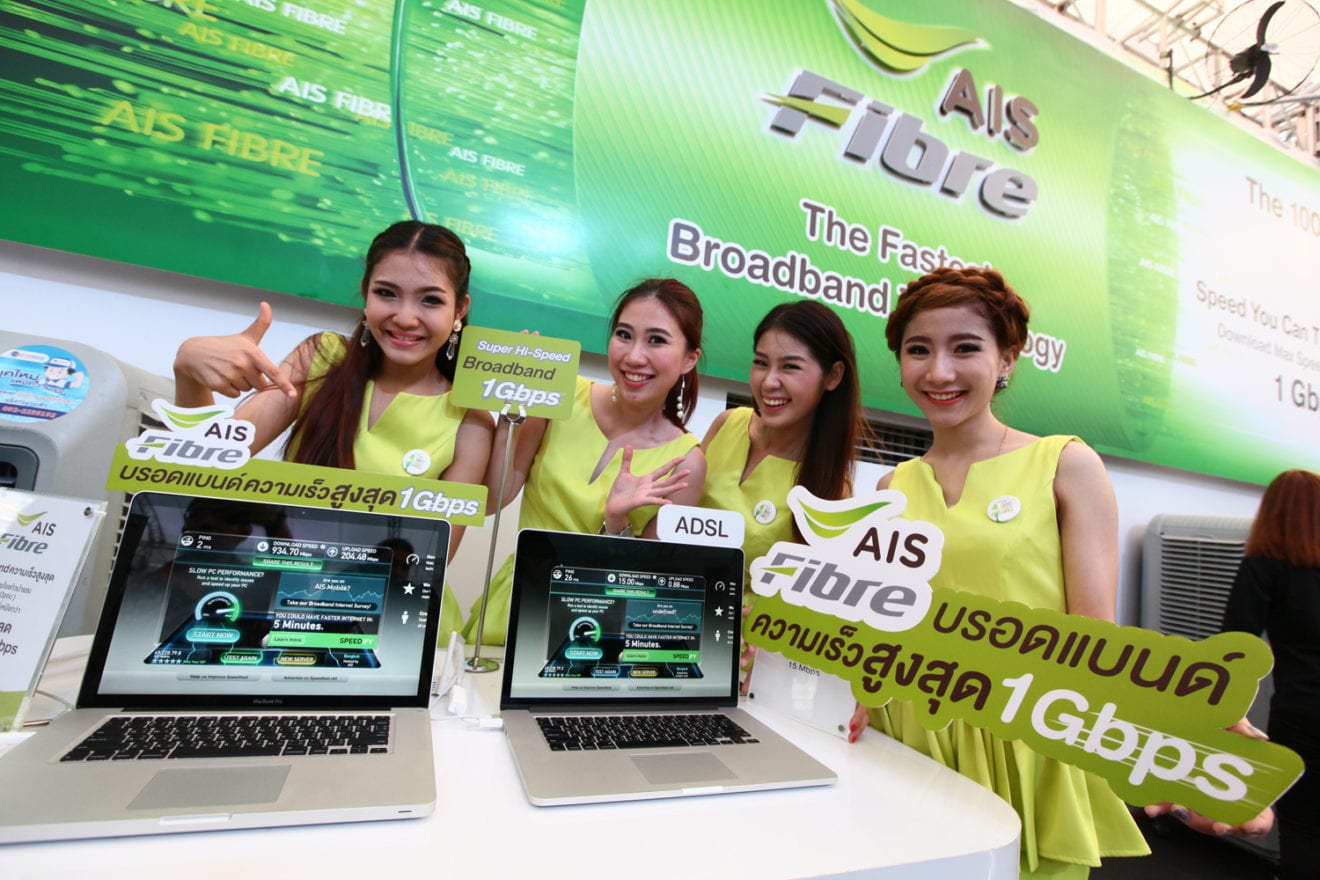
    Thailand’s telecoms regulator NBTC has issued an order requiring AIS and True Move to provide low-cost 4G SIMs for disabled and low-income citizens.

    The order is based on the terms of the licenses for 1800-MHz and 900-MHz 4G spectrum won by the two operators in an auction last year.

    As per the order, low-cost 4G SIMs must provide tariffs at least 10% cheaper than the maximum cap on 4G voice and data tariffs imposed by the regulator.

    Caps in the 1800-MHz and 900-MHz bands have been set at 0.69 baht ($0.019) per minute for voice calls and 0.26 baht per megabyte for data services.

    The new low-cost SIMs will need to be available by March, and the operators will be required to design a process to meet this deadline.

    The NBTC is yet to set definitions of disabled and low-income for the purposes of determining eligibility for the discount plans, but has suggested that low-income may be defined as earning less than 10,000 baht ($281) per month.

    According to NBTC secretary-general Takorn Tantasith, last year’s 900-MHz and 1800-MHz auctions had the explicit purpose of bridging the digital divide, and all Thais must be able to benefit from national resources including spectrum.

  • Jio extends free services offer to March 31

    Jio extends free services offer to March 31

    Disruptive Indian 4G operator Reliance Jio has extended its free services offer until March 31, and announced it has already achieved 52 million customers.

    The operator has announced a new “Happy New Year” offer involving the supply of free voice, data and Jio apps to both new and existing customers until March 31.

    Existing customers will automatically be signed up to the Happy New Year offer, without having to buy a new SIM.

    But the new offer comes with a daily fair-use limit of 1GB, with broadband speeds shaped if this is exceeded.

    According to the report, only 20% of users of the earlier Welcome Offer free services consumed over 1GB per day, and their heavy usage resulted in network congestion. The earlier offer had a fair-use limit of 4GB per day.

    The new offer has come under scrutiny from the Telecommunications Regulatory Authority of India (Trai), which is investigating the deal to determine whether it falls afoul of regulatory limits on promotions.

    India only allows telecoms promotional offers to run for three months, but Jio has asserted that it is an entirely new campaign. The company has also argued that it would be unfair to charge customers while the operator is still dealing with congestion issues.

    Jio also revealed it had reached over 52 million customers in 83 days, and has been signing up  600,000 customers per day over this time. Jio soft-launched 4G services for its employees and those of its partners months before the launch to the public, so the company already had a subscriber base.

    This rate of growth makes Jio the fastest growing technology company in the world, according to parent company Reliance Industries’ owner Mukesh Ambani.

  • Myanmar plans 1800-MHz auction in March

    Myanmar plans 1800-MHz auction in March

    Myanmar plans to hold an auction for 1800-MHz spectrum in March next year, some three months later than initially expected.

    The Ministry of Transport and Communications will allocate spectrum to allow operators Telenor Myanmar, Ooredoo Myanmar and MPT to expand their 4G networks.

    The report cites the ministry’s deputy director of posts and telecommunications U Myo Swe as stating that spectrum will be made available to all operators equally.

    But it is unclear whether the planned fourth entrant into the market, the consortium between Vietnam’s military-run Viettel and a group of local ICT and other companies, will be included in the process.

    Myanmar’s mobile operators have been constrained in their efforts to roll out 4G services by a shortage of spectrum, and have been eagerly anticipating the release of 1800-MHz spectrum.

    Telenor and MPT had initially applied to take part in an auction of 2600-MHz spectrum,  but later decided to withdraw from the running and wait for the 1800-MHz allocation instead.

  • Idea to expand 4G to nine more circles

    Idea to expand 4G to nine more circles

    India’s third largest mobile operator Idea Cellular has revealed plans to expand its 4G network to nine additional telecoms circles by March next year.

    The operator plans to add around 57,000 new 4G cell sites this year alone.

    With the expansion, Idea Cellular plans to launch of 4G in the circles of Uttar Pradesh East and West, Gujarat, Mumbai, Bihar, Rajasthan, West Bengal, Assam and Jammu & Kashmir.

    This will take Idea’s total 4G footprint to 20 of India’s 22 telecoms circles. The 20 circles together account for 94% of Idea Cellular’s revenue and 90% of all industry revenue.

    Idea is using the spectrum it acquired in the recent $9.8 billion spectrum auction to pursue the 4G expansion.

    India’s 4G market is heating up due to the entry into the market of disruptive Pan-Indian 4G operator Reliance Jio Infocomm.

    Idea’s wireless broadband network currently spans 17 circles, with the operator aiming to achieve a total of 250,000 sites this financial year.

    To better compete against Reliance Jio, Idea is also increasingly pursuing a content strategy, starting with branded games. The operator plans to expand to movie and music services in the near future.