Retail News CRM

Tag: 4G

  • Singtel, Ericsson demonstrate LAA on live 4G network

    Singtel, Ericsson demonstrate LAA on live 4G network

    Singtel and Ericsson announced they have completed a live trial of pre-standard License Assisted Access (LAA) technology on Singtel’s network.

    The trial in an office building at Serangoon North involved a 20 MHz block of licensed 1800-MHz spectrum, augmented with 20 MHz in the unlicensed 5-GHz band.

    A stationary live test achieved an LTE LAA throughput of 275 Mbps, while a second test demonstrated LAA’s ability to co-exist with Wi-Fi signals without degrading the Wi-Fi user experience.

    The trial also involved coverage testing to validate the technology’s ability to improve link performance, coverage and medium access control compared to Wi-Fi access points.

    Announcing the results, Singtel said the testing showcases the potential for LAA to improve network capacity for mobile customers, in a market where nearly 85% of mobile traffic is generated indoors.

    Due to the success of the trial the operator plans to progressively deploy LAA technology in Singapore over a two-year period starting in the first half of 2017, as part of efforts to evolve its networks in preparation for the introduction of 5G.

    The company said in the future, customers with LAA-capable handsets will be provided with peak download throughput of up to 450 Mbps.

    “To provide our customers with a superior mobile experience when they are indoors, we are continuing to invest in new technologies that will increase indoor 4G speeds,” Singtel managing director of networks consumer Singapore Tay Yeow Lian said.

    “We are pleased to be the first in Singapore to showcase LAA technology live. This is an integral part of the LTE-Advanced evolution and will bring us one step closer to our 5G goals.”
  • China Telecom said to be interested in Egypt 4G license

    China Telecom said to be interested in Egypt 4G license

    China Telecom has reportedly expressed an interest in expanding into Egypt through the acquisition of a 4G license in the market.

    The operator, along with Saudi Telecom Company, have been in contact with the communications ministry regarding potentially securing licenses in Egypt, a ministry official told.

    But neither operator has yet submitted a formal request, and 4G licenses will only be offered to new entrants if existing players reject the terms of the licenses, the report states.

    Incumbent operators have reportedly been slow to accept the terms offered by the government for 4G licenses. In an example of these terms, Orange’s Egyptian affiliate has been asked to pay 3.54 billion Egyptian pounds ($398.6 million) for a license, and to decide whether to agree by August.

    The fact that international operators are interested in acquiring licenses could increase pressure on the existing entrants to agree to the terms.

    At least some analysts believe that all of Egypt’s existing players will ultimately apply for 4G licenses, which would mean the government would not have sufficient reason to approve the entry of a newcomer. It is therefore uncertain whether China Telecom will be entering the Egyptian market.

  • Philippines’ new ICT chief orders spectrum audit

    Philippines’ new ICT chief orders spectrum audit

    The chief of the new Philippines Department of Information and Communications Technology (DICT) has ordered the inventory of used and unused telecoms spectra.

    In his first public speaking engagement and media interview since assumption into office on July 1, DICT Secretary Rodolfo Salalima said frequency is a scarce public resource and the patrimony of the nation.

    “I do not want public telephone entities to be warehousing frequencies, meaning getting assigned frequencies from the government, storing it without using it but using it for speculative purposes,” he said.

    He clarified that this act is contrary to the Philippine Constitution and a public service law which states that frequency must be assigned only to those who can make it effective and efficient use of it.

    “If they (telecommunications companies) have not used these frequencies within a reasonable time as stated in the position of giving or assigning to them the frequency, we better start revoking these frequencies because it ought to be assigned to telcos that can effectively and efficiently utilize them,” he added.

    The DICT Chief, however, gave assurances that due process will be observed if the department will resort to revocation of spectrum licenses or permits if some telcos are found to have not used them within the prescribed period.

    “We will hear them out,” he said, further clarifying that what telcos pay for is only the use of the frequency. “They do not become owners of these frequencies because they can never be owned under the Philippine Constitution.”

    The issue stemmed from the recent co-purchase of the telco business of San Miguel Corporation (SMC) by the country’s two dominant carriers – PLDT and Globe Telecom, which the government’s antitrust body, the Philippine Competition Commission (PCC) now wants investigated.

    Salalima said frequency is crucial to the operations of telecommunications companies in servicing the public.

    “This is the reason why to my mind, PLDT and Globe have to purchase control of the holding company of SMC so that at least they can have part of the frequency (not the entirety) needed for them to further improve the service,” he said.

    He clarified though that he is leaving it to the PCC to decide on the issue of whether the telco buyout deal is in the best interest of the public. His concern is the efficient use of spectrum, especially in light of the need to improve internet connection speed in the country and public services.

    Newly elected President Rodrigo Duterte has given local telecommunications players one year to shape up telco services and internet speed or ship out.

    The DICT, which was given the mandate to make policies and plans in regard to telco services and the country’s ICT infrastructure, is still in the transition period. It is currently awaiting the Implementing Rules and Regulations (IRR) of the law that created the new department only last May.

  • Airtel cleared to buy 4G spectrum from Aircel

    Airtel cleared to buy 4G spectrum from Aircel

    India’s Bharti Airtel has received approval for its 35 billion rupee ($521.2 million) acquisition of 4G spectrum from Maxis-owned Aircel.

    The Telecom Ministry has agreed to allow Bharti Airtel to acquire 20 MHz of 2300-MHz spectrum in eight of India’s 22 telecoms circles.

    Airtel announced in a stock exhange filing that it has now concluded the acquisition in six of the eight circles – Tamil Nadu, Bihar, Jammu and Kashmir, West Bengal, Assam and North End.

    The operator announced it will issue a new market update once the transactions are closed for the remaining two circles of Andhra Pradesh and Orissa.

    Airtel was required to surrender 1.2 MHz of spectrum in one circle as the acquisition would have left the company is breach of regulations limiting operators from holding more than 25% of the total spectrum allocated in a single circle, sources told Press Trust of India.

    But Maxis, which owns 74% of Aircel, is facing legal action from an activist lawyer over proposed deals with Airtel and RCom. The lawyer, Prashant Bhushan, had called for the spectrum.

  • Telenor Myanmar launches 4G services

    Telenor Myanmar launches 4G services

    Telenor Myanmar has officially launched 4G services, starting in capital city Nay Pyi Taw.

    With the launch the operator has become Myanmar’s second mobile operator to launch LTE services, following Ooredoo Myamar’s debut in May.

    Telenor Myanamr CEO Petter Furberg said in addition to the debut in the capital, the company is continuing to test 4G in other cities, and will progressively roll out the technology nationwide.

    “While Telenor users in Nay Pyi Taw now can enjoy 4G services we aim to expand the service to other cities gradually. To provide high speed 4G services all over the country Telenor will need more spectrum,” he said.

    “Telenor is looking forward to participating in the spectrum auctions planned by the Union Government later this year. Due to explosive growth of data and increasing data demand by the Myanmar people we believe it is urgently required to expand our services to 4G all over Myanmar.”

    He noted that 60% of the operator’s 16 million customers are now data users, and that Telenor has Myanmar’s largest internet network with more than 5,800 towers across the country in all states and regions.

    “Myanmar is experiencing an extensive growth of mobile subscriptions and we are also witnessing higher demand for mobile data,” Petter said. “Our 4G service is one more important step in the rapid development of the Myanmar telecom sector.”

  • Chunghwa Telecom aims to add 2m 4G users in 2016

    Chunghwa Telecom aims to add 2m 4G users in 2016

    Taiwan’s Chunghwa Telecom has set a target of attracting at least 2 million new 4G users this year to help maintain its market share.

    The operator aims to boost its 4G subscriber base to up to 7 million in 2016. This would represent an annual growth rate of around 59% – which is lower than last year.

    With this rate of growth the company would meet its target of having a 40% share of Taiwan’s 4G market, compared to 38% last year. IDC forecasts Taiwan’s total 4G user base could grow to reach 18 million this year.

    To help improve 4G migration rates the company has established a marketing campaign involving popular Singaporean singer JJ Lin.

    Chunghwa Telecom meanwhile has a capex budget for the year of around TW$30.6 billion ($944.5 million), which includes the recent purchase of 4.4 billion worth of equipment to enhance 4G coverage and capacity.

    The operator aims to gradually phase out flate-rate packages for 4G services, having recently raised the minimum threshold to TW$1,100 per month.

  • True Corp deploys world’s largest 4T4R 4.5G network

    True Corp deploys world’s largest 4T4R 4.5G network

    Thailand’s True Corporation has deployed what it says is the world’s largest commercial 4-transmit-4-receiver (4T4R) 4.5G network using Huawei RAN technology.

    Huawei provided its SingleRAN 4T4R technology for the rollout. To date True Corporation’s wireless division True Move has deployed over 6,300 4T4R sites

    Announcing the deployment, Huawei said compared to conventional 2T2R networks, the deployment has improved downlink throughput at cell edge by over 38% and uplink throughput by 50%.

    True Corp is conducting the deployment to support Thailand’s booming demand for mobile data. Currently Thailand’s most common data charge model involves unlimited monthly packages and data usage per subscriber exceeds 1GB.

    “Spectrum is extremely precious resource for all operators. Any technology which improves the spectrum efficiency attracts operators.” True Corporation executive advisor Steven Christopher Hopcraft said.

    “[The] 4T4R solution improves the spectrum efficiency, and that’s the reason why True chose 4T4R. Along with the mature ecosystem, we think that the deployment of 4T4R is a wise choice.”

    In January, True Move revealed that it will spend 56 billion baht ($1.59 billion) this year to roll out an LTE-Advanced network covering 97% of the population.

  • Nepal preparing to allocate 4G spectrum

    Nepal preparing to allocate 4G spectrum

    Nepal’s Ministry of Information and Communications is reportedly planning to amend spectrum usage policy to allow the nation’s operators to commercially launch 4G services.

    The ministry has decided to adopt a technology neutral policy to allow operators to launch 4G using the 1800-MHz spectrum band.

    The ministry had asked previously asked telecoms regulator NTA to devise a 4G action plan within a week that would involve allocating 4G spectrum by the end of the fiscal year in mid-July, the report states.

    In response the NTA appointed a consultant to determine spectrum prices, and expects to have the action plan and pricing policy ready to present by tomorrow.

    The NTA has repeatedly denied requests from operators including Nepal Telecom and Ncell to allow them to launch 4G services due to confusion over spectrum usage policy. Amending the legislation would clear up this confusion and pave the way for rollouts.

    The ministry has also asked the authority to submit a draft of a new M&A policy for telecom operators and prepare a detailed plan for the proceeds of the Rural Telecom Development Fund.

  • Telstra to address rural 4G black spots

    Telstra to address rural 4G black spots

    Australia’s Telstra has revealed plans to roll out 135 small cell 4G base stations in remote communities across the nation as part of the government’s Mobile Black Spot program.

    The operator is also making the investment as part its efforts to expand its 4G footprint to 99% of the Australian population by June next year.

    Telstra has made an A$165 million ($123.1 million) commitment to improve coverage in regional Australia, and will already expand 3G and 4G coverage to 429 other remote communities as part of round one of the black spot program. But the latest small cell roll out will be solely funded by Telstra.

    “When we made our bid under Round One, our core objective was to maximise new coverage to regional communities, which is why we made this additional pledge to further expand mobile data services at our own expense,” Telstra group managing director for networks Mike Wright said.

    “We worked closely with the Federal Government to identify the communities who were eligible for this small cell technology and we are proud to be part of this important initiative which will connect so many more regional communities.”

    While the small cell technology can currently only provide data services, Telstra said it is working on implementing VoLTE technology over the base stations.

  • Telenor wins 4G license in Pakistan for $395m

    Telenor wins 4G license in Pakistan for $395m

    Norway’s Telenor has secured a 4G license in Pakistan for $395 million as the sole bidder for an 850-MHz spectrum block.

    Telenor Pakistan will join China Mobile subsidiary Zong in holding a 4G license following the auction. The operator is seeking to capitalize on burgeoning demand for mobile broadband in a market where smartphone shipments soared 123% in the first quarter of last year.

    As of the end of April, the number of broadband users in Pakistan grew to nearly 29 million, the report states, marking a higher population penetration than India, Nepal and Bangladesh.

    Telenor Pakistan was the lone bidder for the 10 MHz block of 850-MHz spectrum, even though the auction was open to both domestic and international participants. The government had been hoping to use the auction to attract a new entrant into the market.

    The operator will be allocated the spectrum within 30 days of making its payment.

  • Ooredoo Myanmar launches 4G services

    Ooredoo Myanmar launches 4G services

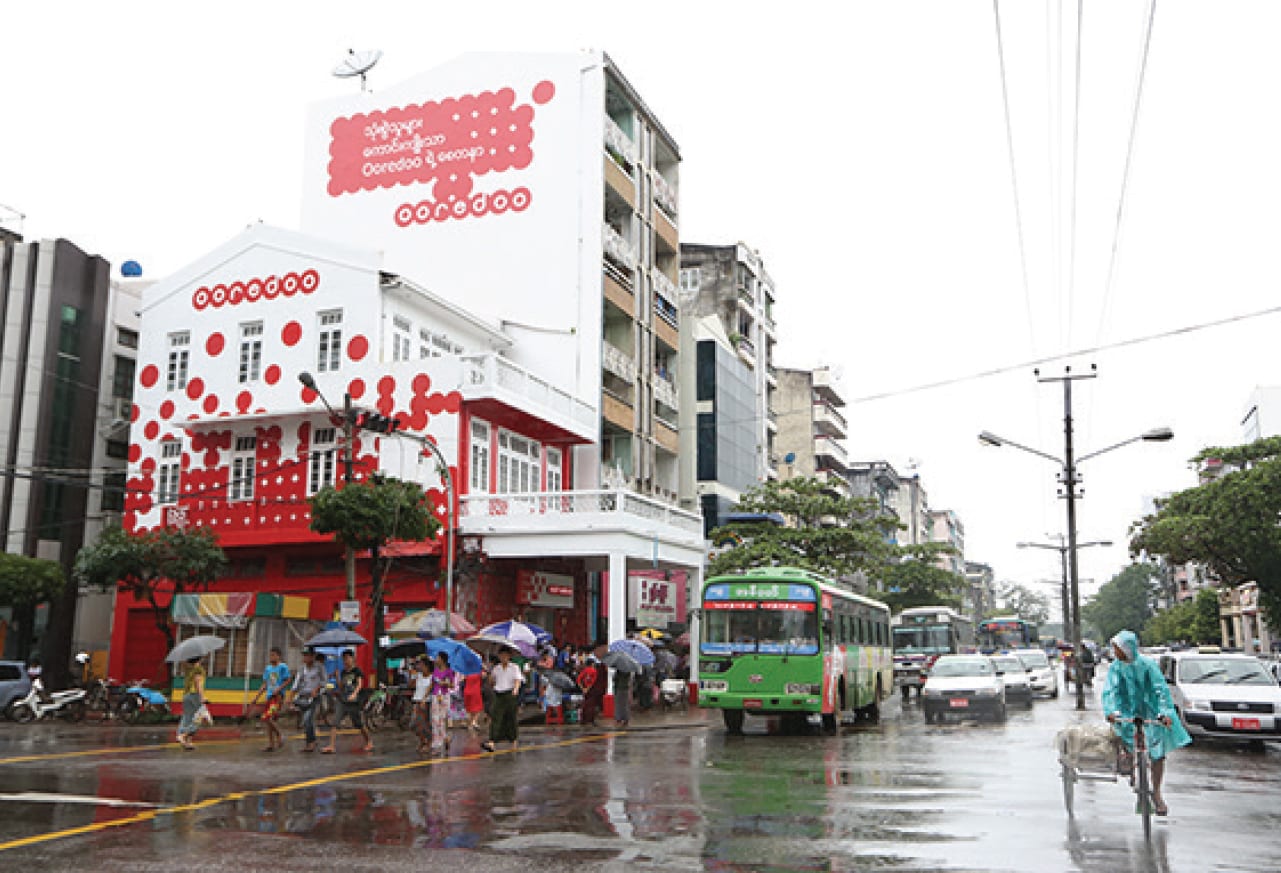
    Ooredoo Myanmar has become the nation’s first operator to launch 4G services as part of a staged rollout.

    The operator has introduced 4G in parts of Yangon, NayPyiTaw and Mandalay, according to an FAQ on the company’s website.

    The company plans to cover half of Yangon’s townships, around 90% of NayPyiTaw’s townhips and all of Mandalay with the service.

    Over the next couple of months, Ooredoo Myanmar plans to upgrade around a quarter of its more than 3800 cell sites to 4G.

    But further rollouts will require more spectrum and cell sites, according to CEO Rene Maza. Ooredoo Myanmar plans to continue to expand its 4G network as it acquires these assets.

    Myanmar’s new Ministry of Transport and Communications recently revealed plans to auction 2600-MHz spectrum as part of its 100-day plan.

    Ooredoo Myanmar is offering 4G services at the same price as its existing 3G offerings.

    The operator’s main rival Telenor Myanmar is also gearing up to launch 4G services following successful tests in Yangon, Mandalay, Myawaddy and Muse.

  • Ooredoo Myanmar to launch 4G this month

    Ooredoo Myanmar to launch 4G this month

    Ooredoo Myanmar has revealed plans to launch 4G services in two cities this month, becoming the first operator to introduce 4G into the market.

    Ooredoo Myanmar CEO Rene Meza told that the operator plans to introduce 4G in Yangon and Mandalay first.

    A more wide-scale deployment will require more spectrum, Meza said. Ooredoo has applied to purchase additional spectrum as stipulated in the terms of its license, and this application was recently granted.

    Meza said that while the government has not yet provided a concrete date for when additional spectrum will be released, it is expected to be over the next 12 months.

    The availability of spectrum is a hot topic among the players in Myanmar’s mobile industry. The nation’ telecoms ministry is considering making spectrum in the 900-MHz, 2100-MHz bands available, along with the 700-MHz, 1800-MHz, 2300-MHz and 2600-MHz bands.

    Myanmar’s mobile industry has undergone rapid development since the liberalization of the nation’s telecoms sector in 2013, which has contributed to growing demand for spectrum.

    The government recently selected Viettel as the foreign partner for a consortium of local companies that will be granted the market’s fourth telecoms license. The consortium will be competing against Ooredoo Myanmar, as well as Telenor Myanmar and the joint venture between Japan’s KDDI and Myanmar’s MPT.

  • New 4G MVNO launching in Singapore

    New 4G MVNO launching in Singapore

    A new 4G MVNO is launching in Singapore that aims to give consumers a new way to interact and consume telco services.

    Digital telco Circles.Life will target the data savvy consumer segment in Singapore. The operator will use M1’s infrastructure under an MVNO model similar to the one Virgin Mobile had with Singtel when the company entered the market in 2001.

    “Virgin Mobile was some time ago,” Circles.Life co-founder and director Abhishek Gupta said.

    “Rigid network technology in the past did not provide MVNOs flexibility in service offerings. They were not able to track data usage and customer buying patterns and found it difficult to respond to customer needs quickly. Our approach is unique because we take advantage of the latest technologies to build a next generation full service 4G digital mobile network.”

    Gupta added that as an MVNO, the company can work towards highly efficient usage of their resources and prioritize innovation to deliver improved services and a richer experience to customers.

    Circles.Life co-founder Rameez Ansar added that as an incentive to subscribers, the telco would also hand out periodic free boosts to their data plans determined by length of contract and other factors.

    Using a digital platform the company designed, Circles.Life will allow consumers to pick and choose bundles they want. The basic plan priced at S$28 a month comes with 3GB of mobile data, 100 minutes of talktime, and bonus data that range from 0.5GB to 4GB when customers use the firm’s app or perform actions like referring friends to sign up.

    The CirclesCare app also gives customers a personalized dashboard to allow them to tweak their plans such as top up mobile data or buy talk-time. These will be reflected in the next billing cycle, which follows the calendar month.

    Users also get free caller number display, free roaming, and unlimited data on Whatsapp.

    Circles.Life registration starts today and is offering new sign-ups bonuses like a low $4 registration fee, free SIM card, free delivery, and free number porting or 80% off “lucky numbers”.

  • Celcom excludes Nokia from 4G upgrade project

    Celcom excludes Nokia from 4G upgrade project

    Malaysia’s Celcom Axiata has excluded Nokia from its new five-year 4G network upgrade project, cutting its selection of vendor partners down to just Huawei and Ericsson.

    The company has signed an infrastructure agreement with Huawei and Ericsson for a project expected to have capex costs of up to 2.2 billion ringgit ($566.7 million).

    Celcom’s existing network infrastructure was built based on a three-partner collaboration of Nokia, Ericsson Malaysia and Huawei. But Celcom chief of operations Ramanathan Sathiamutty said the operator is cutting its partners down to two to streamline partner management

    Under the new contract, Ericsson and Huawei will be responsible for the full turnkey delivery of a radio access network to support the 4G rollout and prepare for the introduction of 5G.

    Celcom has budgeted between 1.8 billion and 2.2 billion ringgit as capex for the rollout. The amount spent will be contingent on whether Malaysia introduces spectrum refarming for the 900-MHz and 1800-MHz bands – if refarming is announced, the budget will be 2.2 billion ringgit.

    The operator said the upgrade will allow the company to offer broader coverage with fewer sites, allowing it to realize group-level cost savings.

  • RCom to upgrade CDMA network to 4G from May

    RCom to upgrade CDMA network to 4G from May

    India’s Reliance Communications (RCom) has revealed plans to progressively upgrade its CDMA customers to 4G starting in May.

    The operator will upgrade its CDMA network to LTE using the newly liberalized 800-MHz spectrum starting on May 4, citing a letter sent from the company to the Department of Telecom.

    RCom will progressively move its roughly 5 million CDMA customers onto 4G as the rollout progresses.

    RCom has already liberalized its 800-MHz spectrum in 16 of India’s 22 telecom circles and recently received clearance from India’s cabinet to do the same in four more.

    The first round of spectrum liberalization cost a hefty 53.83 billion rupees ($806.5 million), while the second will cost around 1.3 billion rupees. In the remaining two circles, RCom has already paid for liberalized 800-MHz spectrum.

    The sources stating that RCom plans to take advantage of its spectrum sharing pact with Reliance Jio Infocomm by deploying its own network but mostly using Reliance Jio’s infrastructure to provide the 4G services.

    RCom and Reliance Jio plan to leverage each others’ spectrum to ensure they are both capable of providing pan-India 4G coverage and competing against the nation’s three largest operators, Bharti Airtel, Vodafone India and Idea Cellular, which have already launched 4G.