Tag: 5G

  • FCC sets record with auction of key spectrum for 5G use

    FCC sets record with auction of key spectrum for 5G use

    During 2021, U.S. carriers will take another huge step toward completing the build-out of their 5G networks. The FCC last week wrapped up an auction of mid-band spectrum in the C-band. These airwaves lie in the range of 3.7GHz-3.98GHz and heavy demand for the rare mid-band spectrum helped generate a record $80.9 billion in proceeds related to the auction. There were 57 bidders vying for a total of 5,684 licenses. Mid-band spectrum is very much in demand by U.S. carriers and T-Mobile has made these airwaves the key part of its layer-cake approach to 5G. The previous record for money generated by an FCC auction for spectrum was the $44.9 billion generated by the FCC’s 2014 AWS-3 auction.

    T-Mobile, the first U.S. carrier to launch nationwide 5G in the states, used its 600MHz low-band spectrum as the foundation for its nationwide 5G service. These signals travel great distances making them the perfect foundation for its network. But what they don’t do is deliver download data speeds much faster than 4G LTE. High-band spectrum can only travel short distances making them perfect for urban areas where the population is densely packed. While these signals do not easily penetrate buildings, they do deliver fast 5G download data speeds often hitting 1Gbps and faster.

    In between the two extremes is mid-band spectrum. Sprint’s mid-band holdings were exactly what T-Mobile was targeting when it offered $26.5 billion to buy its fellow wireless provider back in April 2018. The deal closed this past April giving T-Mobile control over Sprint’s 2.5GHz mid-band spectrum. These signals travel further than those of the high-band variety and are faster than low-band 5G. Many analysts expect T-Mobile to become the fastest 5G provider in the states thanks to its mid-band holdings once all the work is done.

    Other carriers wanted the opportunity to purchase mid-band spectrum for themselves. In November 2019, U.S. Cellular, Verizon, AT&T, Bluegrass Cellular, Pine Belt Wireless and the C-Band Alliance sent an electronic letter to the FCC requesting an auction of mid-band airwaves in the C-Band (3.7GHz-4.2GHz). At the time, U.S. Cellular President and CEO Ken Meyers says that it is “critical” for U.S. carriers to obtain as much mid-band spectrum as they can find. The executive made it clear that the FCC had to take action ASAP to make sure that there would be enough mid-band spectrum to go around.

    FCC Chairman Ajit Pai, who is leaving the regulatory agency this Wednesday afternoon when the transition to the Biden administration takes place, said, “These results represent a strong endorsement by the private sector of the service rules and transition plan put in place by the FCC to quickly make the C-band a critical part of 5G rollout in the United States. And they vindicate the hard choices the FCC made during the C-band proceeding—and that we made them. The FCC confronted a host of technical, legal, practical, and political challenges in structuring this auction. It would have been easy to delay. But we rightly pushed ahead and overcame every one of those obstacles. As a result, we significantly advanced United States leadership in 5G and have enabled America’s wireless consumers to more quickly benefit from 5G services.”

    Satellite owners who are giving up their spectrum in the auction are being transitioned to the upper 4.0-4.2 GHz range. To prevent interference from the satellite transmissions to impact the wireless providers, a 20MHz band will be used as a “guard band.”

    The next step in the process requires the auction winners to bid for licenses related to specific frequencies. The FCC will release a notice to the public containing the date and time when this assignment phase will take place.

  • Samsung files with ITC to ban U.S. imports of Ericsson’s 5G base stations

    Samsung files with ITC to ban U.S. imports of Ericsson’s 5G base stations

    Samsung on Thursday filed a complaint with the International Trade Commission (ITC) demanding that U.S. imports of Ericsson’s 5G base stations be blocked. Just the week before, Ericsson had filed its own case with the ITC seeking to block U.S. imports of Samsung phones, tablets, and televisions. At the heart of this matter is a battle over a patent-licensing agreement that needs to be renewed. Cases are often filed with the ITC because, at an average of 15 months, final decisions are reached more quickly.

    Sammy’s argument is that Ericsson’s base stations, which connect mobile phone users to a network, employ equipment patented by Samsung. Both companies are arguing over whether a court in Texas or one in Wuhan will decide the royalties paid by Samsung for using Ericsson’s 4G and 5G inventions covered by the standard-essential patents. The latter are patents that a manufacturer must license in order for a product to comply with a technical standard. Rates charged for using these patents must be determined on a Fair, Reasonable, And Non-Discriminatory (FRAND) basis.

    Both companies have patents that the other one needs. Ericsson says that on balance it is owed money because it has more telecom patents than Samsung and the latter has more devices that require the licensing of Ericsson’s patents. If both firms can’t reach an agreement on a new licensing pact, Ericsson could end up taking something of a hit to its bottom line. After all, Samsung is the world’s largest shipper of smartphones.

    Samsung says that it is unfair to allow Ericsson to use its patents since the latter does business in the states and Samsung has yet to establish its base station business in the U.S. Ericsson filed a new lawsuit against Samsung on January 1st and Samsung filed a patent infringement suit against Ericsson in response. Ericsson spokeswoman Mikaela Idermark said the company is aware of Samsung’s new complaint and “willfully review what has been filed before deciding on any further comment.

  • Ooredoo welcomes Maldives to a new digital age with the roll out of 5G Services & 5G AirFibre

    Ooredoo welcomes Maldives to a new digital age with the roll out of 5G Services & 5G AirFibre

    Telecom giant Ooredoo announced the commercial launch of its 5G services in the Maldives, with the initial rollout covering a large percentage of the capital city of Male’, including key business hubs, hospitals, public spaces and more.

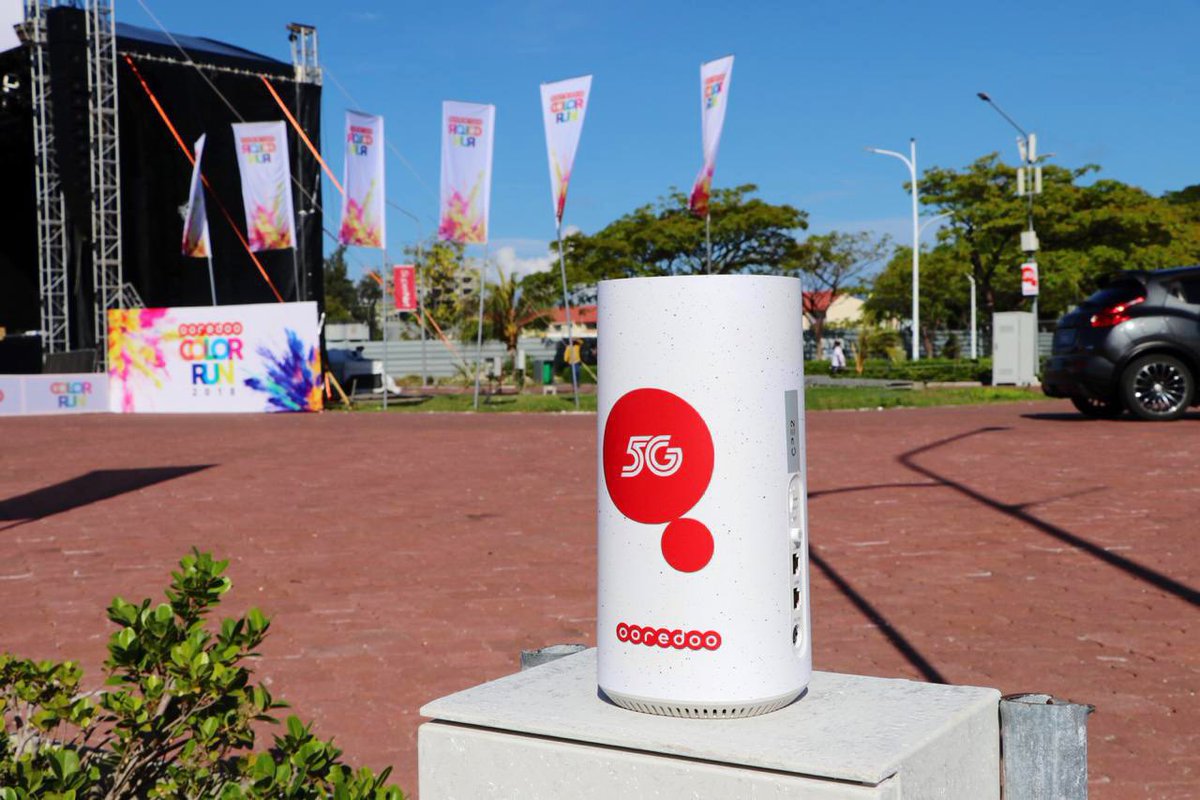
    At a special event held today to celebrate the kickstart of the 5G era for the company, Ooredoo Maldives also launched 5G AirFibre – the first 5G powered Home Broadband services in the Maldives providing speeds that are tenfold.

    The event was attended by the Minister of Communication, Science & Technology, Hon. Mohamed Maleeh Jamal who officially launched Ooredoo 5G services in the Maldives, the Minister of Economic Development, Uz. Fayyaz Ismail, Chief Executive of CAM, Ilyas Ahmed, Chief Technology Officer of Presidents Office, Mr. Hamid Shafeeu, as well as the Chairman of Ooredoo Maldives, Mr. Andrew Kvalseth, the Board of Directors and employees of Ooredoo Maldives who joined the event virtually to be part of this historic moment for the company.

    Speaking at the event, the Minister of Communication, Science & Technology, Hon. Mohamed Maleeh Jamal said: “5G technologies have the potential for extraordinary breakthroughs across industries, which is now being witnessed worldwide. As the role of internet connectivity continues to become more and more crucial for the country’s social and economic growth, the roll-out of 5G technologies in the Maldives creates a strong digital infrastructure on which creative new solutions can be built on for the betterment of our communities. I would like to thank the management and staff of Ooredoo Maldives for their strong commitment towards a Digital Maldives, by continuing to invest in creating a stronger and more capable network which can power new technologies and innovations, at a time when it is needed more than ever.”

    Najib Khan, Managing Director and CEO, Ooredoo Maldives said: “Over the past year, we have seen a huge shift towards digital across industries, from healthcare, education, communication, governance, e-commerce and more. Despite the challenges faced by the pandemic, our team has prioritized the roll-out of 5G services, understanding its unparalleled capabilities to unlock the full power of a connected society – something that is of pivotal importance in the new normal. We are equally proud to launch the first 5G broadband services in the Maldives, which overcomes the challenges faced in installation of fibre optic cables in congested areas such as Male’. A flexible alternative which offers comparable internet speeds to fiber broadband, 5G AirFibre services will accelerate fiberisation through airwaves of Ooredoo 5G. Today, we welcome a new digital age in the Maldives, enabling endless possibilities and innovative new digital services for people and businesses. We reaffirm our commitment to the people of Maldives, ensuring our support in transforming their digital lifestyles to achieve the full benefits of the digital world.”

    5G technology not only promises a fundamental boost in speed, but offers significantly lower latencies, increased capacities and is much more reliable. Paired with IoT Technologies, this unlocks a wave of advances such as intelligent homes, smart cars, drone deliveries and much more than can transform life as we know it and power healthcare services, education and even entertainment such as sporting events & gaming.

    Available for both prepaid and postpaid customers, Ooredoo 5G covers a large percentage of the capital city, on certified handsets. With the official launch of 5G, we are working with global operators to certify the network on additional handsets as soon as possible. The coverage map for Ooredoo 5G is available on Ooredoo Maldives website.

    In addition to 5G mobile services, customers in the capital city can also experience the superfast speeds of 5G via 5G AirFibre Home Broadband. The enhanced connectivity with 5G AirFibre will provide incredibly high speeds which is extremely positive news for local communities and businesses; especially for small and medium business working remotely or working from homes. Customers in Male’ can now check the eligibility of their area and pre-book their 5G AirFibre devices via Ooredoo Maldives website.

    Ooredoo Maldives also announced 5G Experience zones, for customers who are curious to test out 5G and 5G AirFibre services. This includes the first 5G powered VR Café’ in the Maldives and Ooredoo Club Premier Lounge.

    Ooredoo was the first operator in the world to have launched a live commercial 5G network in Qatar in early 2018 which marked a major technological breakthrough for Ooredoo and the global telecommunications industry. Following its vision to create communities powered by digital services, the company continuously made investments in North Africa, the Arabian Gulf to Southeast Asia to enhance customers’ digital experiences. Ooredoo Maldives will continue to enhance its network across the nation in order to connect customers to the best technologies and services that the digital world has to offer.

  • Data from Qualcomm suggests that Apple could produce 176 million 5G iPhone units this year

    Data from Qualcomm suggests that Apple could produce 176 million 5G iPhone units this year

    With a little bit of math and plenty of fingers and toes, Sina Finance has calculated that Apple purchased approximately 176 million 5G modems from Qualcomm for this year. This calculation dovetails with estimates calling for Apple to produce 5G and non-5G iPhone models in the neighborhood of 190-200 million units for 2020. On the other hand, another report written by Taiwan’s Appledaily calls for Apple to roll out 120 million 5G iPhones this year indicating that the higher figures overestimate reality. Another possibility is that Apple expects strong sales for the iPhone 12 series this year and next year. One other option is that Apple ordered more modem chips than they needed because the company plans on using them on some future Apple devices. There has been talking about a 5G iPad tablet in the future and Apple might have ordered enough chips for such a device.

    Each 12-inch wafer that TSMC ships to Qualcomm can yield 2,211 modem chips for Apple; with 80,000 wafers shipped, we can estimate that Apple received 176 million 5G modem chips. This tells us that Apple expects to deliver 176 million 5G handsets this year. You might recall that Apple and Qualcomm were the Silicon Valley equivalent of the Hatfields and McCoys in 2019 with both firms taking each other to court for various patent infringements. Apple was frantically trying to find a source for 5G modem chips. On April 16th, 2019, just after Apple concluded its opening statement in a court battle with Qualcomm, a settlement between the two companies was announced. In return for a large sack of cash from Apple (estimated to be $4.5 billion), the chip designer gave Apple a six-year licensing agreement with an option for an additional two years. The settlement also included a supply agreement that covers the purchase by Apple of Qualcomm’s 5G modem chips. All legal action filed by both companies against the other was dropped.

    In more news related to this subject, Qualcomm is now TSMC’s largest customer for chips made used the 7nm process node. The process node is based on the number of transistors that fit in a square mm. TSMC’s 7nm process node sports 96.5 million transistors in that little space compared to 171.3 million with the latest 3nm process node. The larger the number of transistors inside a chip, the more powerful and energy-efficient it is. The 7nm process is used to manufacture the Snapdragon X55 modem chip and the current flagship Snapdragon 865 and Snapdragon 865+ chipsets.

    Apple does not ever want to be in the position again where it needs a specific component from a third-party supplier. So it has been working on developing its own modem chip. This would be dome similar to how Apple designs its own chipsets and has it built by a contract foundry such as TSMC or Samsung. Last year, Apple spent $1 billion to acquire most of Intel’s smartphone modem chip business. 2,200 Intel employees joined Apple with the transaction. Apple hopes to start using its own 5G modem chips perhaps by 2023. This could save Apple some money which in turn might allow the firm to cut pricing on future 5G enabled devices.

    That Apple went ahead and purchased Intel’s smartphone modem business suggests how strongly it wants to design its own chips. A $1 billion acquisition is unusual for Apple which usually involves itself in smaller transactions covering niche components that it plans on using for the iPhone or other devices within the next year or two. The largest acquisition made by Apple was its purchase of Beats Audio for $3 billion in 2014.

  • Vietnamese telcos begin testing 5G services in earnest

    Vietnamese telcos begin testing 5G services in earnest

    Vietnam’s three major telecom companies are racing to test 5G services to achieve the government’s goal of making the country one of the earliest to adopt the technology.

    State-owned Vinaphone last week became the first to conduct 5G commercial tests in both Ho Chi Minh City and Hanoi.

    In Hanoi, VnExpress reporters using 5G devices were able to reach download speeds of 721 megabit per second (Mbps), or 10 times higher than 4G speeds. In HCMC, it reached 1,000 Mbps, with downloading a 1.16 gigabyte (GB) app taking around 34 seconds.

    Vinaphone also unveiled its 5G routers developed in partnership with Finland’s Nokia.

    The device collects 5G waves and broadcasts it as wifi signals, enabling Internet use in households without the need for fiber-optic cables.

    Military-run Viettel commercially tested its 5G broadcast in Hanoi on November 30, achieving 10 times the download speeds of 4G when the user is in one place and five times when traveling in a vehicle.

    Viettel has put up 100 base stations in the city’s three downtown districts, and users with 5G devices can start experiencing the technology without the need to change their sim cards.

    Of the 100 stations, it produced 15 in-house and bought the rest from Sweden’s Ericsson.

    The company plans to expand to Da Nang and HCMC soon.

    Le Dang Dung, the chairman of the company, said when 5G transmission is stable it could help doctors perform surgeries through the Internet and factories could be completely automated.

    Another state-owned telecom firm, MobiFone, began commercially testing 5G services in HCMC on November 27, achieving average speeds of 600-800 Mbps, going up to 1,500 Mbps.

    The company plans to install 50 stations in the city this month.

    But it will take time for smartphone makers and networks to perfect 5G operations.

    Some Huawei, Xiaomi, Asus, Nokia, and Oppo devices can use 5G, but Samsung devices have to wait until the end of the year at least, and it is unclear when iPhone devices will be able to connect in Vietnam.

    The subscription rate is a concern among users. Currently, operators are providing free data to promote the new technology, but it is unclear what the tariffs will be.

    During the commercial test period, the Ministry of Information and Communications has limited the rates to the same level as for 4G, but operators can later change them.

    Pham Ngoc Tu, head of Vinaphone’s services research and development department, said it is still too early to determine 5G rates, and the company needs to establish around 50,000 stations to calculate prices.

    Communications minister Nguyen Manh Hung said in 2018 that Vietnam would be one of the first countries in the world to launch 5G services.

    It was seven or eight years behind in adopting 3G and 4G technologies, but not with 5G, he promised last month, adding that it would be widely available in the country from next year.

  • Huawei, Qualcomm, and Oppo are arguably the three most innovative firms in wireless technology

    Huawei, Qualcomm, and Oppo are arguably the three most innovative firms in wireless technology

    This might not come as a surprise to some people living in China, or to those who make a living by following the goings on of the wireless world, but there is a good case for calling Huawei the most innovative outfit in this realm. The company’s Mate series phones are traditionally one of the top technologically based smartphones in the world each year. However, the powerful 5nm chips it designed for this year’s Mate 40 line can no longer be shipped to the company because of a new U.S. export rule. The rule bans foundries like TSMC from shipping cutting-edge chips to Huawei without a license if said chips were produced using American technology.

    An industry report cited by the South China Morning Post states that from the beginning of this year through the end of October, Huawei filed 8,607 patent applications related to wireless technology. That put the firm at the top of the pack, well ahead of San Diego, California based chip designer Qualcomm; the latter sought 5,807 patents during the same January to October time period. Chinese smartphone manufacturer Oppo was third with 5,353 patent applications. Database provider incoPat, headquartered in Beijing, is responsible for the data used to compile the list.

    According to incoPat, both China and the U.S. led the way with each making up 32% of the patents filed from January through October. Japan was next with 15% followed by the 7% submitted by South Korea. IncoPat says that the information it uses comes from patent filings available to the public in the field of wireless communications. This includes patents filed to protect inventions related to 5G technology. The report issued by incoPat notes “As a key area of modern communications, wireless communication network technology has always been a very important part in the 5G research and development process. With the new technological competition and new globalisation situation, wireless communication network technology is becoming an important strategic choice for enterprises to face international competition.”

    5G is the next generation of wireless connectivity and the countries that control 5G will have an advantage economically. That is why, seeing how innovative Huawei is and not wanting to be left behind, back in June the U.S. Commerce Department amended the entity list ruling that prevents Huawei from working and doing business with U.S. based firms. Now, American tech companies are allowed to work alongside Huawei to help create global 5G standards. The U.S. feared that being left out of the meetings attended by Huawei would hold the U.S. back in terms of the development of 5G.

    Huawei is also the leader in helping the 3GPP develop standards for 5G. 3GPP (the 3rd Generation Partnership Project) is a term that covers standards organizations that help create protocols for mobile telecom. After Huawei, Ericsson and Qualcomm provide the most contributions to 3GPP for 5G standards. According to SCMP, this year 3GPP completed its next set of standards for 5G which include possible applications for 5G such as autonomous driving, smart factories, and remote surgery.

    Earlier this month, China’s Ministry of Industry and Information Technology (MIIT) said that the country has built nearly 700,000 base stations in 2020 topping its original target of 500,000 for the whole year. As the world’s leading provider of networking equipment, Huawei is also an important supplier of 5G base stations. In fact, published reports indicate that Huawei will replace Ericsson this year to become number one in 5G base stations. Ericsson is expected to see its market share decline from 30% last year to 26.5% in 2020. Huawei, on the other hand, should see its 5G base station share rise from 27.5% last year to a leading 28.5% in 2020. That is, along as it can find enough 5nm Kirin 9000 chipsets to power these base stations. As we mentioned earlier in this article, the U.S. is preventing Huawei from receiving cutting-edge chips from TSMC.

  • Apple is giving away three free months of Arcade with the purchase of a 5G iPhone 12 handset

    Apple is giving away three free months of Arcade with the purchase of a 5G iPhone 12 handset

    Last year, Apple awarded those purchasing a new iPhone or another Apple product 12-free months of Apple TV+. And while that freebie continues to this day, starting on October 22nd anyone purchasing a new iPhone, iPad, Mac, iPod touch, or Apple TV gets three free months of Apple Arcade. With Arcade, subscribers get to play ad-free games and there are no in-app purchases. And you can start a game on your iPad and take it on the road with your iPhone seamlessly. In fact, you can switch among the aforementioned list of five Apple products and keep your place in a game that you’re currently playing.

    You can also download games to play regardless of whether you are online or offline. And if you’re a parent. you can use Screen Time to make sure that your kids aren’t spending the whole day playing games. After a one month free trial, Arcade costs $4.99 a month. So if you do buy a new Apple device, including one of the new iPhone 12 models, you are getting a bonus worth $14.97.

    Keep in mind that if you don’t cancel the free trial before it expires, you will be billed $4.99 a month. If you happen to enjoy more than one of Apple’s subscription services, you might want to sign up for Apple One. For $14.95 a month you save $6 per month on an Individual Apple One subscription which includes Apple Music, TV+, Arcade, and 50GB of iCloud storage. For $19.95 a month, the Family subscription of Apple One (which saves $8 per month) includes everything in the individual plan except with support for six subscribers and 200GB of iCloud storage. The Premier subscription is priced at $29.95 per month and saves subscribers $25 a month. It comes with Apple Music, TV+, Arcade, 2TB of iCloud storage, News+, and Fitness+ (which starts later this year). Apple One will launch later this year.

    While Apple is handing out nearly $15 in free Arcade subscriptions to those purchasing a device from the 5G iPhone 12 series, it is taking the charging adapter and the wired earpods out of the box. While the company spins this as a move to help cut carbon emissions, some see it as a move by Apple to save money and force customers to buy a new charging brick.

    Apple this fiscal year will hit the $50 billion revenue goal it has for its Services unit right on time. And it hopes to keep this part of its business surging by giving device buyers a little taste of some of the Services it is offering. The tech giant is hoping that its customers enjoy TV+ and Arcade so much over the trial period that they decide to subscribe once the trial period is over.

  • Singtel launches Singapore’s first 5G standalone trial network for enterprises

    Singtel launches Singapore’s first 5G standalone trial network for enterprises

    Singtel has deployed the nation’s first 5G standalone (SA) trial network at its 5G Garage testing facility. The network, which utilizes 3.5GHz spectrum and Ericsson’s advanced Massive MIMO (Multiple-input multiple-output) technology to deliver ultra-fast speeds and low-latency or response times, provides enterprises with early access to 5G to develop and trial 5G solutions.

    Mr Bill Chang, Chief Executive Officer of Group Enterprise at Singtel said, “COVID-19 has brought a new urgency to digital transformation for many sectors. Having unveiled our first 5G use case with our 24/7 unmanned pop-up retail store in September, our 5G SA trial network offers enterprises from across industries the opportunity to develop and test applications to accelerate automation and digitalization. With 5G’s low latency and scalability, enterprises can not only drive efficiencies and make better and more cost-effective decisions but also deliver richer customer experiences. The launch of this 5G SA trial network is also an important step as we get ready for commercial 5G SA. We welcome enterprises to harness the power of 5G to future-proof their businesses and catalyze their digital transformation at 5G Garage.”

    Global cloud gaming provider, Ubitus, is the first enterprise to use Singtel’s 5G SA network for a 5G cloud gaming trial. The trial demonstrated a 5G cloud gaming experience that consistently delivered 85% lower latency of between 8 to 11 milliseconds compared to cloud gaming on 4G. It was conducted on Singtel’s multi-access edge computing (MEC) platform which integrates 5G’s ultra-low latency and high bandwidth capabilities with powerful cloud computing performance. This allows rich graphics to be processed on dedicated servers and transferred directly to devices, significantly cutting lag times, which is critical to the gaming experience.

    “We are very excited about the potential of Singtel’s 5G SA and MEC to push the envelope on cloud gaming. The trials will inform our designs for exciting games which will test gamers’ reflexes and instincts. We will leverage the ultra-low latency of 5G and MEC to offer immersive, hyper-realistic gaming experience,” said Mr Wesley Kuo, Ubitus’ Chief Executive Officer.

    5G and MEC’s ability to integrate with technologies such as Internet of Things, analytics, robotics, artificial intelligence and augmented, virtual or mixed reality enables enterprises across industries to leverage the low latency in applications requiring little or no lag times. These include remote surgery, smart manufacturing, autonomous driving, remote robotic repair and maintenance and virtual reality-enabled live concerts. By removing the need for data to be sent all the way to public clouds to be processed and sent back, MEC is not only able to better serve mission-critical data connectivity, it also enables enterprises to optimize their total cost of ownership for hosting, dedicated link provisioning and data transfer.

    Since the launch of 5G Garage with Ericsson and Singapore Polytechnic in January 2019, Singtel has successfully developed ten 5G use cases together with more than 20 start-ups and enterprises in areas such as robotics, virtual reality, artificial intelligence and drones. Singtel has also collaborated with PSA to trial maritime 5G use cases to optimize port operations at the future Tuas Port. In addition, Singtel is working with the Agency for Science, Technology and Research’s Advanced Remanufacturing and Technology Centre, and JTC to enable enterprises to develop and test advanced 5G-powered manufacturing solutions.

    Singtel’s 5G SA cloud gaming trial follows the recent unveiling of UNBOXED, its 5G-powered unmanned pop-up retail store, and the launch of Singtel’s 5G NSA network trial that offers consumer and enterprise customers an early taste of ultra-fast 5G mobile speeds.

  • Huawei welcomes a thorough examination of its 5G technology to prove it’s not a security threat

    Huawei welcomes a thorough examination of its 5G technology to prove it’s not a security threat

    Since 2012, Chinese phone and networking equipment manufacturer Huawei has been considered a national security threat. Perceived ties with the Communist Chinese government have the current administration concerned that Huawei collects personal and corporate data using back doors placed inside the company’s handsets and networking gear. Even though this has never been proven and has been denied by the company, President Donald Trump cited “security” for placing Huawei on the Entity List last year preventing the firm from accessing its U.S. supply chain.

    Being placed on the Entity List forced Huawei to scramble to find replacement suppliers for some of the key parts it needs to build phones and networking gear. Losing the ability to license the Google Mobile Services version of Android also meant that Google’s Android apps like Search, Maps, YouTube, Gmail, Drive, and others could not be installed on Huawei phones. In China, where Google’s apps are banned anyway, the absence of these apps wouldn’t affect sales of the manufacturer’s phones. But outside of the firm’s home country, sales of the International Models were reportedly impacted by Huawei’s inability to license Google’s Android ecosystem.

    On the first anniversary of its placement on the Entity List, the U.S. tightened the screws a little more by changing certain export rules. Now, a foundry anywhere in the world must obtain a license before shipping chips made with U.S. technology to Huawei. That includes new cutting-edge 5nm Kirin 9000 semiconductors that are supposed to power Huawei’s most technologically advanced phones this year, the Mate 40 series. These chips are also vital to the production of two-way radios and other gear required for the firm’s 5G networking equipment. The number one provider of such equipment worldwide, the U.S. had asked its allies last year not to use Huawei gear for their 5G networks. Some countries followed the U.S. request while others, like Britain, did not. But now Britain is feeling buyer’s remorse and is thinking about stripping Huawei’s parts out of its new networks.

    According to Reuters, the head of Huawei’s Italian unit, President Luigi De Vecchis, said that the company is ready and willing to have its facilities examined with a fine-tooth comb to prove that its technology does not create a security risk to those countries that use Huawei’s gear in their 5G networks. In Rome on Wednesday, De Vecchis spoke at the opening of the company’s new cyber-security center and stated, “We will open our insides, we are available to be vivisected to respond to all of this political pressure. I am speechless that a country the size of the United States attacks another country through the demolition, via groundless accusations, of a company of that country.”

    Coincidentally, U.S. Secretary of State Mike Pompeo arrived in Italy to begin a two-day visit to the country at the same time that Huawei was opening its cyber-security center. De Vecchis added that the company will not leave the Italian market and in fact is looking to create products for the country in different fields including the energy industry. The Huawei executive said, “It’s extremely unlikely Huawei will leave the market because of the current situation.”

    The U.S. continues to put pressure on Chinese tech firms. U.S. companies now need a license to export certain materials to SMIC, China’s largest foundry (SMIC). And the Trump administration is thinking about adding SMIC to the Entity List as well. Of course, we’ve been closely following what is going on between the White House, short-form video app TikTok, and the latter’s parent ByteDance. Once again it comes down to the same fear over the safety of personal data belonging to American consumers and corporations. And yet, there has been no smoking gun to date.

  • Qualcomm’s newest 5G chipset is announced

    Qualcomm’s newest 5G chipset is announced

    Qualcomm unveiled a new 5G enabled chipset from the Snapdragon 7-Series. The Snapdragon 750G enables “truly global gaming” according to the San Diego-based company, along with True HDR gaming (with 10x brighter colors), and on-device AI. The chipset supports both sub-6GHz and mmWave 5G; the latter delivers signals that travel far, easily penetrate structures but provide slower 5G download data speeds than what is available from mmWave 5G signals. The Snapdragon 750G chip offers some features from Qualcomm’s Snapdragon Elite Gaming that allow for smooth gameplay with low latency.

    The Snapdragon 750G comes with the Adreno 619 GPU providing users with as much as a 10% hike in graphics rendering compared to the Adreno 618 GPU found on the Snapdragon 730G. Qualcomm states that the new chipset delivers “stunning, life-like imagery” and the 5G support allows users to play multiplayer contests or stream games through their smartphones using 5G cloud gaming platforms.

    AI tasks will be handled by the fifth-generation Qualcomm AI Engine supporting voice translation, smart camera, and video, AI-enhanced gaming experiences and advanced AI-based imaging. The AI Engine handles up to 4.0 Trillion Operations Per Second (TOPS), a 20% improvement compared to Snapdragon 730G. The chip is powered by the Kryo 570 CPU core allowing for a 20% hike in “enhanced user experience,” also compared to the Snapdragon 730G. Integrated into the Snapdragon 750G is an AI-based audio and voice communication suite that allows users to hear speech loud and clear despite dogs barking in the background, the sounds of construction, loud traffic, and more.

    The Qualcomm Spectra 355L Image Signal Processor produces noise-reduced sharp images and 4K HDR videos can be recorded. The chip will work with image sensors supporting a pixel count of up to 192MP.

    The CPU runs at a clock speed as fast as 2.2GHz and works with Bluetooth 5.1. It is Wi-Fi 6 ready and does work with a 120Hz rapid refresh rate on screens with a resolution of FHD+. The maximum display that can be driven by the Snapdragon 750G is QHD (1440p) with a standard 60Hz refresh rate. The chip is manufactured using an 8nm process node and the first devices to be powered by the chip are expected to be commercially available at the end of this year.

    Verizon’s Chris Emmons, executive director device and product marketing, says, “As Verizon continues to lead 5G innovation with 5G Ultra Wideband and our soon-to-be-launched 5G Nationwide network, we know we can count on technology partners like Qualcomm Technologies to provide the superior solutions for sub6 and mmWave spectrum needed to run the next-generation 5G devices our customers rely on.”

    >Andreas Bussmann, program manager 5G Devices Deutsche Telekom, states that “Deutsche Telekom and Qualcomm Technologies have a strong strategic collaboration in driving innovation together. We are excited as this announcement will further help scale 5G for everyone and improve the overall consumer experience.” Lastly, Quanxin Wang, general manager of product and technology, Xiaomi International, said that “Xiaomi is committed to developing cutting-edge devices to address the growing consumer demand for 5G. We are proud to work with Qualcomm Technologies to launch the first commercial smartphone based on the latest Snapdragon 750G to consumers.”

    Speaking of 5G, the Snapdragon 750G offers peak speeds of up to 3.7Gbps (download) and 1.6Gbps (upload) with 5G connectivity. Peak LTE speeds are up to 1.2Gbps (download) and 210Mbps (upload).

    So now we know that a Xiaomi branded 5G handset will be the first powered by the Snapdragon 750G when the integrated circuit is released later this year.

  • Samsung to manufacture Qualcomm’s upcoming 5G chipset for premium phones

    Samsung to manufacture Qualcomm’s upcoming 5G chipset for premium phones

    Samsung is the sole manufacturer of Qualcomm’s upcoming Qualcomm Snapdragon 875 chipset, South Korean media reports. Apparently, the South Korean giant is about to ink a deal with the US chipset maker for the manufacture of the premium chipsets that will power flagships launching in 2021 and beyond.

    The deal worth about $1 billion elevates Samsung from a relatively large chipset supplier for the smartphone market to a major position. Reports claim Samsung’s offer was slightly better than TSMC’s, but no numbers were revealed in the report.

    Qualcomm’s Snapdragon 875 chipset (tentative name) is manufactured using a 5-nanometer process and it’s aimed at premium smartphones. The new chipset is expected to be unveiled in December, but the first devices powered by Snapdragon 875 won’t be ready until next year.

    Samsung Galaxy S21 and other flagships from Xiaomi and Oppo will be among the first to pack Qualcomm’s new Snapdragon 875 processor, which also includes 5G support. Samsung Electronics has already started the mass production of the new chipset at its foundry line in South Korea.

  • Nokia will build U.S. Cellular’s 5G network throughout 2020

    Nokia will build U.S. Cellular’s 5G network throughout 2020

    U.S. Cellular, one of the smaller carriers in the country, has teamed up with Nokia to enhance its 5G network. Since Huawei is no longer an option, there are very few choices that US carriers have at their disposal whenever they need to deploy 5G equipment or upgrade new ones.

    Nokia and Ericsson would be the most obvious choices, but both offer more expensive services than Huawei did. In any case, U.S. Cellular wants to extend the capabilities of its 5G mmWave network with the addition of 24 GHz and 28 GHz spectrum bands, which are absolutely needed for 5G.

    In that regard, Nokia will be deploying its AirScale radio solution to support U.S. Cellular’s customers with 5G and IoT services. The discussion can get very technical going forward, so let’s just summarize and say that U.S. Cellular hopes to start providing 5G services to its customers in 2021.

    Nokia will work throughout 2020 on making sure that U.S. Cellular’s 5G network will meet the demand capacity and speed required. Good things are coming to U.S. Cellular customers, just not this year.

  • Ooredoo and Ericsson Reach a Record System Throughput of 4.2Gbps over a Bandwidth of 200MHzs

    Ooredoo and Ericsson Reach a Record System Throughput of 4.2Gbps over a Bandwidth of 200MHzs

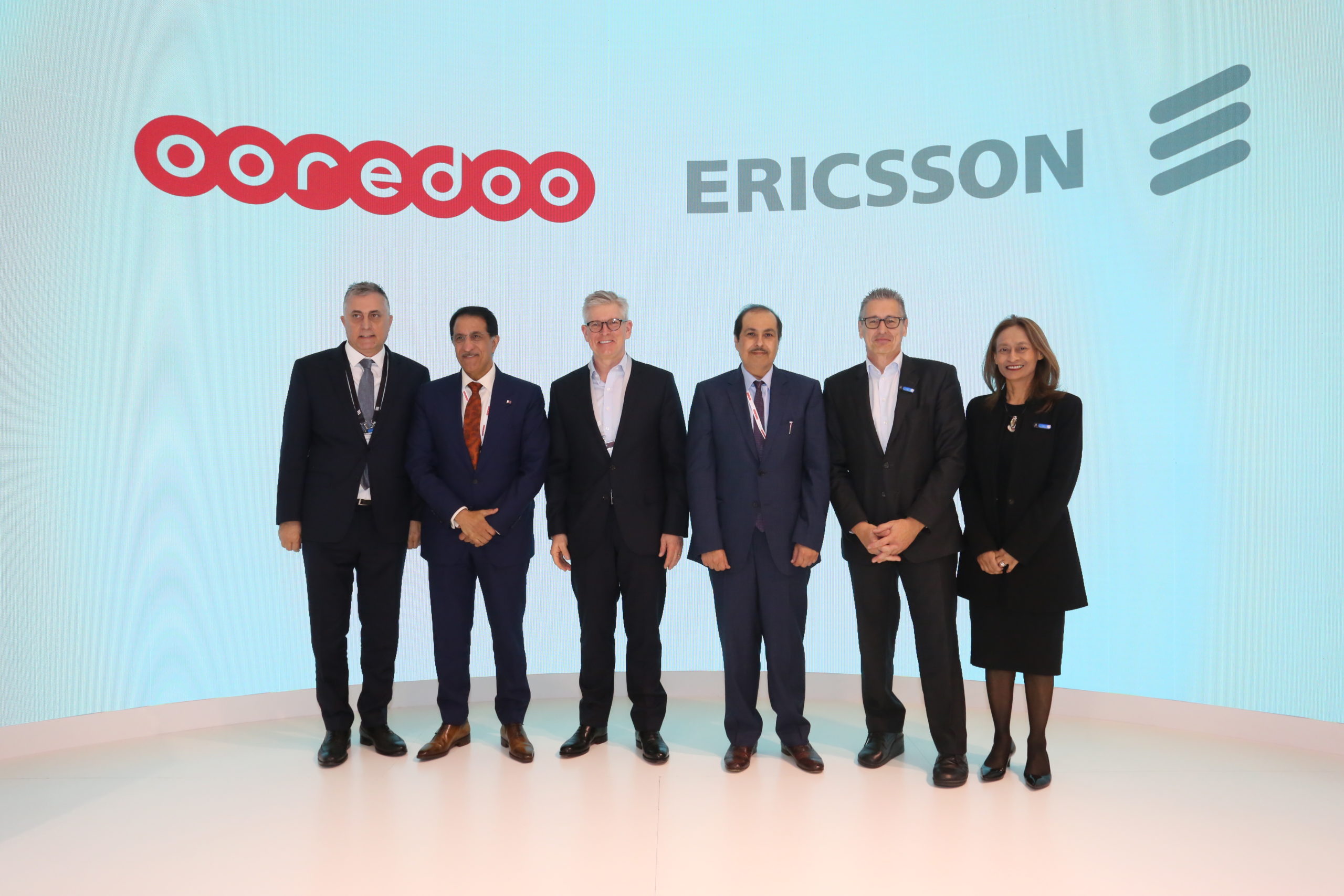
    Ooredoo Qatar, working with technology giant Ericsson, has successfully tested the 200MHz spectrum and achieved a record system throughput of 4.2Gbps, as part of the growing shift towards complete 5G delivery.

    The technology, deployed within Ooredoo’s network, uses advanced 5G and 4G carrier aggregation functionality, increasing the data rate per user by assigning multiple frequency blocks to the same user. This innovation is expected to play an important role in the build-up to achieving 90 percent 5G coverage throughout Qatar by the end of 2020.

    Increasingly, Ooredoo Qatar is positioned as a key digital enabler. With this recent breakthrough in both speed and delivery, customers will be able to maximize the benefits of streaming services, virtual learning environments, cloud gaming and augmented and/or virtual reality applications. Likewise, it will allow businesses to pursue new customer bases, while potentially streamlining their contribution to such endeavors as smart cities, telemedicine, and logistics.

    Sheikh Mohammed Bin Abdullah Al Thani, CEO at Ooredoo Qatar says: “5G is a phenomenal evolution that opens doors to a world of new possibilities — many of which we have already tested — and we are proud to be at the forefront of the 5G revolution amongst global telecom operators. Keeping our customers connected and enabling them to enjoy the best of the internet is at the core of what we do, and this partnership with Ericsson will enable us to achieve our strategic goals in network development and expansion. We are making use of the latest innovative technology to apply 5G in existing frequency bands and deploying the latest 5G radios to shift our subscriber experience to a whole new level; with the addition of 5G, we are committed to offering Qatar the best mobile digital infrastructure, which will result in enhanced user experience ahead of the major world sporting events set to be held in Qatar.”

    Fadi Pharaon, President of Ericsson Middle East & Africa, says: “We are pleased to be working with our long-standing partner Ooredoo Qatar helping them achieve the full potential of 5G. Today’s trial cements Ooredoo’s commitment to bring the latest technology and prepares its network for the new era of 5G use cases. This announcement highlights Ericsson’s 5G leadership enabling wider opportunities, innovative solutions, and applications that 5G will bring.”

    By reaching this milestone, Ooredoo Qatar is taking a crucial step forward for an efficient and seamless roll-out of the latest mobile technology, offering enhanced network performance.

  • T-Mobile isn’t the only U.S. carrier with a nationwide 5G network

    T-Mobile isn’t the only U.S. carrier with a nationwide 5G network

    Move over T-Mobile, you’re no longer the only nationwide 5G network in town. AT&T announced Thursday that it has added 5G in 40 more markets; as a result, the country’s second-largest wireless provider now covers 205 million Americans with its 5G signal. Helping AT&T speed up the process so quickly was the launch last month of dynamic spectrum sharing (DSS) in parts of Florida and Texas. DSS responds in real-time to demand on AT&T’s network for either 4G LTE or 5G spectrum. Thus the use of the word “Dynamic” in DSS.

    With DSS, the same channel can be employed for 4G and 5G users at the same time. The technology is “traffic-aware” so 4G LTE and 5G resources are allocated based on the makeup of the traffic. Using its 850MHz low-band spectrum, AT&T’s coast-to-coast 5G can be found in 395 markets. T-Mobile’s nationwide 5G uses the carrier’s 600MHz low-band spectrum and can be accessed by 225 million people, 20 million more than AT&T. Besides offering 5G over its low-band spectrum, in limited parts of 35 markets, AT&T’s 5G+ service employs its faster mmWave spectrum.

    On August 7th, AT&T will offer its 5G service to customers of its least expensive unlimited plan at no additional cost. The Unlimited Starter postpaid plan costs $140 for 4 lines ($35 per line/per month). Customers on more expensive unlimited plans already had 5G service. The wireless provider’s prepaid customers will also have access to 5G via the Unlimited Plus plan, which costs $75 per month or $50 with autopay. That service also begins on August 7th.

    Chris Sambar, Executive Vice President of Technology Operations said, “Our strategy of deploying 5G in both sub-6 (5G) and mmWave (5G+) spectrum bands will provide the best mix of speeds, latency and coverage that are needed to enable revolutionary new capabilities to fuel 5G experiences for consumers and businesses. Our competitors are still working to provide that same mix, which for them could take months or even years. What we offer is available to consumers and businesses today, and we’re not slowing down.”

    5G phones that AT&T sells include the Samsung Galaxy Note10+ 5G, the Galaxy S20 series, the Galaxy A71 5G, and the LG V60 ThinQ 5G. The LG Velvet 5G is now available and orders for the Galaxy Z Flip 5G will start shipping on August 7. Customers of AT&T’s Cricket Wireless prepaid brand will be able to activate 5G service on a Samsung Galaxy S20+ 5G starting on August 21st.

    While all three major carriers plan on using low-band, mid-band, and high-band spectrum to build-out their 5G networks, right now T-Mobile is the only one using mid-band airwaves for 5G thanks to the 2.5GHz spectrum it took control of after closing on the Sprint merger. Keep in mind that the merger was always about obtaining those assets from Sprint. Verizon is focusing on its mmWave spectrum which is why it is taking so long for it to complete. You see, the 600MHz and 850MHz airwaves used by T-Mobile and AT&T respectively, travel farther and penetrate structures better than mmWave spectrum. The latter, though, delivers faster data speeds and can handle larger amounts of traffic than low-band spectrum.

    While mid-band spectrum is rare in the states, all three carriers will take part in an auction of Priority Access Licenses (PALs) for 3.5GHz spectrum that is shared with the Navy in the Citizens Broadband Radio Service (CBRS). However, purchasing a PAL will allow a carrier to have first crack at using the spectrum.

    AT&T also announced today that it spent $1 billion to buy new spectrum that will be used for its 5G network. At the same time, the company said that it lost 151,000 postpaid subscribers during the second quarter. But that figure includes 338,000 subscribers that AT&T counts as a lost subscriber because they didn’t pay their bills. But AT&T continued to deliver service to these accounts during the quarter because of the Keep America Connected Pledge that the wireless firms agreed to in March. Under the pledge, customers who could not pay their bill were not given the boot, late charges were waived, and non-customers had access to a carrier’s mobile hotspot. The Keep America Connected Pledge expired on June 30th, the last day of the third quarter.

  • Forget 5G, Samsung says that now is the time to begin work on 6G

    Forget 5G, Samsung says that now is the time to begin work on 6G

    Just when you’ve finally been able to wrap your mind around 5G and understand the difference between sub-6GHz and mmWave airwaves, and know why low-latency is better than high-latency (which puts you way ahead of the average consumer by the way), Samsung throws you a curveball and releases a “White Paper” about 6G. A “White Paper” is supposed to make a complicated issue easier for the public to understand.

    The paper, titled “The Next Hyper-Connected Experience for All,” says that the company’s goal is to bring 6G “to every corner of life.” Samsung sees 6G standards completed by 2028 with mass commercialization starting two years later. While 5G is based on performance goals, Samsung says that three requirements must be met for 6G service to become available: For example, to be called 6G the download data speed must be no lower than 1,000 Gbps. As a comparison, Open Signal says that in the states Verizon currently has the fastest average 5G download data speed just shy of 500Mbps. With 6G, latency is expected to be less than 100 microseconds or one-tenth the latency of 5G.

    Samsung says that by 2030, the number of connected devices (500 billion) will exceed the human population (8.5 billion) by a factor of 59. Mobile devices will include AR glasses, VR headsets, and hologram devices. These screens will be connected to 6G networks and these networks will be built for machines rather than humans. The dominant users of 6G will be machines and Samsung’s report states that “the capability of human eye is limited to a maximum resolution of 1/150° and view angle of 200° in azimuth and 130° in zenith. On the other hand, machine vision capability is not constrained by such limitations, since it can take advantage of many cameras with various functions. Considering such high capabilities of machines, the performance requirements for the 6G system could be extremely high for relevant service scenarios.”

    6G will help the world by addressing social issues with its hyper-connectivity according to Samsung. “A wide deployment of 6G will reduce differences in regional and social infrastructure and economic opportunities and thereby provide alternatives to rural exodus, mass urbanization, and its attendant problems. We expect, in summary, that 6G mobile communications will…tremendously contribute to the quality and opportunities of human life.”

    The White Paper discusses technologies that are not available now due to the limitations of today’s technology. Truly Immersive XR, which combines AR, VR, and mixed reality, will be an important tool for entertainment, medicine, science, education, and manufacturing. But current mobile devices do not have the current processing power required and battery capacity needed.

    High-Fidelity Mobile Holograms will require data speeds hundreds of times faster than 5G is capable of delivering. Even at 5G’s peak data speed of 20Gbps, faster rates are required and 6G will be able to deliver this. In addition, a full-sized human hologram requires a large number of pixels. The paper also mentions Digital Replicas. Samsung explains what this is by saying, “With the help of advanced sensors, AI, and communication technologies, it will be possible to replicate physical entities, including people, devices, objects, systems, and even places, in a virtual world.” These are called digital twins and users will be able to interact with them using VR devices or holographic displays.

    Samsung says that improvements in technology have allowed standards for each new generation of wireless to be created in only eight years down from the 15 years that it used to take. The report says that as soon as next year, the International Telecommunication Union (ITU) could start working on its 6G vision. You might think that this is all crazy talk considering that 5G is far from finished. The company explains in its conclusion that it is actually the right time to start preparing for 6G.