Tag: 5G

  • AT&T continues its 5G expansion to 13 new markets

    AT&T continues its 5G expansion to 13 new markets

    It looks like AT&T is expanding its 5G network to new markets every week. Early this month, the carrier added more than a dozen cities to its 5G service map and just a week ago another 13.

    Today, the carrier announced another expansion of its 5G network to 13 markets. Of course, we’re talking about AT&T’s low-band 5G, not the uber-fast 5G+ that’s only available in 35 cities in the United States at the moment.

    Anyway, here are all 13 new markets that now benefit from AT&T’s 5G mobile service: Chattooga County, GA, Hunterdon County, NJ, Las Cruces, NM, Long Branch, NJ, New Brunswick, NJ, New Haven, CT, Ocean County, NJ, Orange County, NY, Portland, OR, Utica-Rome, NY, Vallejo, CA, Whitefield County, GA, and Wilmington, DE.

    With the addition of the 13 new markets announced this week, AT&T now provides 5G mobile service in 58 cities across the US. Truth be told, you’ll only get 5G data speeds in parts of these cities, but it’s better than nothing.

    Hopefully, you already own a Samsung Galaxy Note 10+ 5G or plan to buy a 5G-enabled Galaxy S20, otherwise, you won’t be able to take advantage of AT&T’s 5G service.

  • Apple’s chip supplier sees strong demand for 5G phones

    Apple’s chip supplier sees strong demand for 5G phones

    Despite the current coronavirus pandemic, trade wars, and uncertain economic times ahead, the world’s largest independent foundry sees strong growth in the near future. Taiwan Semiconductor Manufacturing Company (TSMC) is sinking billions more into its chip manufacturing business. Last week, the firm’s board of directors announced that it was going to budget $6.74 billion to build more fabrication facilities and increase its production capacity.
    Last month, the company said that it planned on spending between $14 billion and $15 billion for capital expenditures this year up from the $10 billion-$11 billion it spent last year. The 2020 spending includes $2.5 billion for its 5nm process chips and $1.5 billion for its 7nm chips. Let’s back up a bit. What TSMC does is manufacture chips for companies that design their own components but don’t have the facilities to actually produce them. That includes some of your giant tech companies like Apple, Qualcomm, Huawei, and others. Last week, TSMC said that the coronavirus has not led to any reduction in orders from its customers.
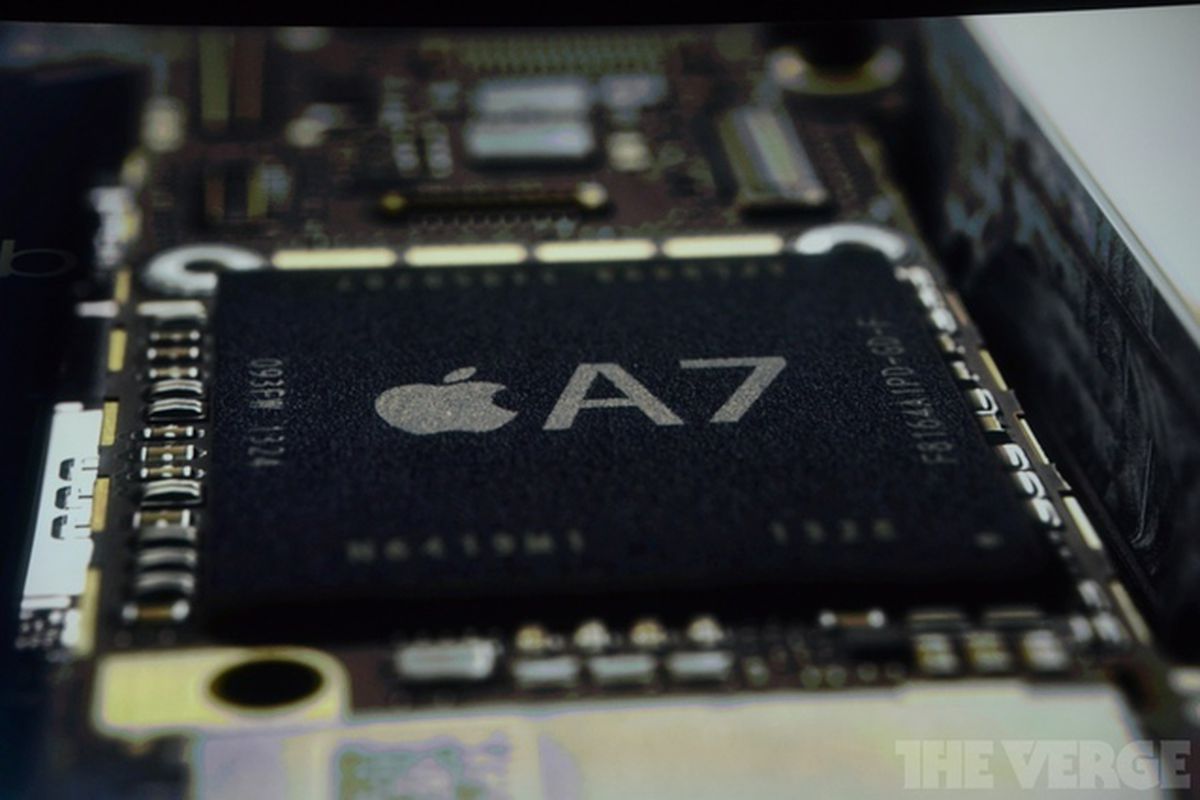
    The process node refers to the number of transistors that can fit into a dense area like the inside of an integrated circuit. The lower the number, the larger the number of transistors inside a chip. That is important because as more transistors are placed inside an IC, the more powerful and energy-efficient it is. For example, Apple’s current A13 Bionic SoC containing 8.5 billion transistors is manufactured using TSMC’s enhanced 7nm process.
    Starting in the middle of this year, the company will begin producing 5nm chips and the Apple A14 Bionic will reportedly be packed with 15 billion transistors making it more powerful and energy-efficient than the A13 Bionic. This means that Apple could have a huge performance lead over most Android phones when it releases the 2020 iPhone models later this year. That’s because the Qualcomm Snapdragon 865 Mobile Platform, the chip that will power most flagship Android phones in 2020, is manufactured by TSMC using its 7nm process node. The only Android phones that could match the 2020 iPhone’s performance this year could be the Huawei Mate 40 line. That’s because Huawei’s 5nm flagship chipset is due to roll off of TSMC’s assembly line later this year.
    Speaking of the A13 Bionic, Apple recently said to increase the production of the chip due to higher than expected demand for the iPhone 11 series. Additionally, the upcoming iPhone 9, due to be introduced next month, will employ the A13 Bionic chip. Reliable TF International analyst Ming-Chi Kuo believes that Apple could sell as many as 30 million iPhone 9 units this year and each one will be powered by the A13 Bionic chip. With a price rumored to start at $399 and up, the iPhone 9 will look just like the iPhone 8 but will sport the more powerful chip and include a 50% hike in memory from 2GB to 3GB of RAM.
    As for the A14 Bionic, TSMC sees strong demand for the new 5G iPhone models that will be powered by this SoC. The latest rumor has Apple releasing four iPhone models this year including the iPhone 12 (5.4-inch screen, dual cameras), iPhone 12 Plus (6.1-inch screen, dual cameras), iPhone 12 Pro (6.1-inch screen, triple cameras) and the iPhone 12 Pro Max (6.7-inch screen, triple cameras). All four will be equipped with the TSMC built Snapdragon X55 5G modem chip which supports both sub-6GHz and mmWave 5G spectrum. That means the new iPhones will be compatible with the 5G signals disseminated by all four major U.S. wireless carriers.
    Last year, the semiconductor industry had its worst year since the dot com collapse of 2001 with revenue declining 12% on an annual basis to $412 billion. But TSMC’s decision to throw billions into new production facilities indicates that at least one of the industry’s leading firms is confident that the business is turning around.
  • ZTE commissions 5G networks in Chinese hospital amid coronavirus outbreak

    ZTE commissions 5G networks in Chinese hospital amid coronavirus outbreak

    ZTE Corporation, a major international provider of telecommunications, enterprise and consumer technology solutions for the Mobile Internet, today announced that it has assisted China Mobile, China Telecom, China Unicom and China Tower deploy telecommunications networks, including 5G networks, in Dabie Mountain Medical Center in Huanggang, to cope with the outbreak of new coronavirus pneumonia in Wuhan.

    On January 25th, ZTE’s technical personnel performed an on-site investigation and developed a solution. On January 26th, ZTE retrieved devices from operator warehouses and local ZTE warehouse. Some devices were in short supply and sent from ZTE headquarters in Shenzhen. ZTE actively coordinated with the local government to apply for a pass for goods transfer from Wuhan. All the devices arrived at the operators’ offices in Huanggang before 12 am on January 26th. The devices were commissioned on January 27th and put into use together with the hospital.ZTE assisted operators in commissioning wireless macro-station equipment, wireless indoor coverage equipment, and IPTV networks, and achieved good cell phone signal coverage and TV signal transmission in the building, thereby fully meeting the requirements of medical staff for communication, video transmission, and radio and TV broadcasting.The Huanggang Municipal Government of Hubei Province has decided to transform the unfinished Dabie Mountain Medical Center into a hospital and set up more than 1,000 beds to treat fever patients in a centralized manner. The hospital will be built within 48 hours and put into use on January 27.

    Huanggang City is adjacent to Wuhan, but its medical conditions and resources are far inferior to that of Wuhan. The epidemic control situation in Huanggang is very serious. Moreover, the medical center is in a remote location. To ensure smooth information transmission, the telecommunication networks need to be built immediately.

    ZTE will continue to pay close attention to the epidemic situation, respond to the temporary construction requirements of communications networks in various places in real-time, and make every effort in the production, distribution, construction, and commissioning, to ensure smooth communication in responsible areas and help contain the new coronavirus pneumonia as soon as possible.

  • Verizon’s 5G network goes live in three more cities

    Verizon’s 5G network goes live in three more cities

    Verizon’s 5G network covered 31 cities in the United States until recently but starting today, three more cities will benefit from Verizon’s 5G mobility service. The carrier announced its 5G network is now live in three more cities: Little Rock, Kansas City, and Cincinnati.

    Just like every other city on the list, these three won’t feature full 5G network coverage. If you live in one of these cities, here is where you should be able to take advantage of 5G blazing-fast data speeds.

    • Little Rock: parts of Midtown, University District, Birchwood, Otter Creek and near landmarks such as UAMS College of Medicine, the University of Arkansas at Little Rock, Rock Creek Square Plaza Shopping Center, and Outlets of Little Rock.
    • Kansas City: parts of Downtown, Midtown-Westport, Plaza Midtown, Olathe and near landmarks such as The Garment District, Kauffman Center for the Performing Arts, Rockhurst University as well as inside and around the professional football stadium.
    • Cincinnati: parts of Downtown, Mt. Adams, West End, Evanston, Walnut Hills, Corryville, Clifton, Price Hill, Over-The-Rhine, Mt Auburn, Avondale, Newport (KY), Dayton (KY), Bellevue (KY) near landmarks such as Great American Ballpark, Duke Energy Convention Center, Serpentine Wall, City Hall, Xavier University, Cincinnati Zoo, Hebrew Union College, Cincinnati Christian University and Newport Waterfront (KY).

    Besides the three cities included in today’s announcement, Verizon’s 5G network is live in parts of Cleveland, Columbus, Hampton Roads, Charlotte, Greensboro, Grand Rapids, Miami, Salt Lake City, Spokane, Hoboken, Memphis, Des Moines, Los Angeles, Boston, Houston, Sioux Falls, Dallas, Omaha, Chicago, Minneapolis, Denver, Providence, St. Paul, Atlanta, Detroit, Indianapolis, Washington DC, Phoenix, Boise, Panama City, and New York City.

  • FCC approval commercializes much needed mid-band spectrum

    FCC approval commercializes much needed mid-band spectrum

    The mid-band spectrum is the prize behind T-Mobile’s proposed merger with Sprint. The latter owns a hoard of 2.5GHz spectrum and T-Mobile wants it. Why? As T-Mobile CEO John Legere said under oath earlier this month, with Sprint’s spectrum T-Mobile will “triple the total 5G capacity of standalone T-Mobile and Sprint combined.” If the deal doesn’t get done, Legere says that the company will “exhaust capacity in the next two to four years” in some markets. T-Mobile is looking to combine the best attributes of its 600MHz low-band spectrum, Sprint’s 2.5GHz mid-band spectrum, and T-Mobile’s ultra-high mmWave spectrum.

    Low-band airwaves travel farther and penetrate buildings better, but they don’t offer the download data speeds and capacity that mmWave does. And T-Mobile says it needs Sprint’s spectrum to help it cover more rural and low-income Americans with 5G signals. If the merger is not approved, you can expect Legere and company to participate in the C-Band auction. You might recall that in 2017, the wireless provider spent $7.99 billion to snap up 31MHz of 600MHz spectrum during an FCC auction.

    There is another way for U.S. carriers to obtain mid-band airwaves. Last month we told you about the Citizens Broadband Radio Service (CBRS) that makes up a 150MHz wide section of the 3.5GHz band (3.5GHz to 3.7GHz). Also known as Band 48, the FCC today certified four companies from the CBRS Alliance giving them the ability to use this band. Those four outfits are CommScope, Federated Wireless, Inc. (Federated), Google and Sony, Inc. (Sony). The quartet will be able to run full commercial operations in the 3.5GHz band.
    FCC Chairman Ajit Pai seemed to be pretty pleased with today’s action by his agency. Pai said, “The FCC has made it a priority to free up mid-band spectrum for advanced wireless services like 5G. And today, I’m pleased to announce the latest step to achieve that priority: the approval of four systems that will enable the 3.5 GHz band to be put to use for the benefit of American consumers and businesses. As with all of our efforts to execute on the 5G FAST plan, we’re pushing to get next-generation wireless services deployed in the 3.5 GHz band as quickly and efficiently as possible. I would like to thank Commissioner Mike O’Rielly for his leadership throughout this proceeding as well as the FCC staff and those in the private sector who have worked so hard to achieve this milestone.”
    U.S. wireless providers who are planning on using Band 48 are no doubt aware that the military first had control of these frequencies and if they require the use of some of the spectrum, they will get the first crack at it while commercial users will be reassigned to other airwaves.
    Band 48 is being called On-Go and right now phones that can use it include the Google Pixel 4, Pixel 4 XL, LG G8 ThinQ, LG G8X ThinQ, LG V50 ThinQ 5G, OnePlus 7 Pro, OnePlus 7T, Samsung’s 2019 flagships, and the 5G Moto Mod. At first, these airwaves will be used for LTE signals with plans on using Band 48 for 5G in the near future.
  • Nokia’s partnership ecosystem prepares for local 5G and private wireless LTE in Japan

    Nokia’s partnership ecosystem prepares for local 5G and private wireless LTE in Japan

    Nokia has announced that its partnership ecosystem is preparing to introduce local 5G/private wireless LTE to industrial as well as government customers in Japan.

    By the end of December, the spectrum designated for local 5G will be released for enterprise use. The firm will help to boost IoT for industries in Japan by uniquely offering an end-to-end industrial-grade private wireless portfolio. By the end of 2019, the Japanese government will be launching the 5G spectrum specially designated for individual companies and local governments.

    The company has also formed a partnership ecosystem with five leading firms spanning a number of segments that includes Hitachi Kokusai Electric for smart social infrastructure and smart cities with video solutions, NS Solutions for factory IoT, Internet Initiative Japan for Full MVNO, Equinix for multi-cloud and global data centers and Marubeni for global IoT. With the help of these strategic alliances, enterprise customers get the opportunity to explore end to end, reliable, secure, low-latency connectivity powered by Nokia’s technologies and solutions.

    Earlier, Nokia and AT&T announced their partnership on a new innovation studio in Germany in order to boost the growing worldwide adoption of current and next-generation Internet of Things solutions. The studio will offer a chance to business to meet with experts and work together on solutions to global business challenges.

    Sanjay Goel, president of global services at Nokia said: “The collaboration will help set the stage for the evolution to global 5G and network slicing that allows a single network to be partitioned into multiple networks and deliver specific capabilities to certain IoT customers without impacting their entire network.”

  • KT and Samsung to develop 5G-powered medical service

    KT and Samsung to develop 5G-powered medical service

    KT Corporation, along with with Samsung Medical Center (SMC), has announced the launch of a 5G-enabled medical service as an initial step to set up a 5G-based smart hospital. The pilot project, which is developed by the Seoul-based South Korean telecom giant, developed service environments in operating and proton therapy rooms and performed a test operation.

    Based on the results from the pilot, both KT, formerly Korea Telecom, and SMC are planning to continue the development of smart patient care and 5G-powered new medical practices and better the hospital operational efficiency. Park In-Young, vice president of KT’s ICT convergence business department, said: “KT, in partnership with the Samsung Medical Center, is pioneering innovative medical services for the new 5G era. We will continue to further refine 5G-powered medical technology by applying VR and AR technologies for real-time education.”

    In the coming years, 5G-enabled medical services would, in theory, speed up surgery and other treatment processes by allowing uninterrupted access to surgeons that will help them obtain pathological data that is critical in determining the serious conditions of patients. The network would also provide quick access to CT and MRI data on proton therapy.

    Last September, KT entered into roaming agreements with Italy’s TIM, Switzerland’s Sunrise, and Finland’s Elisa, allowing the company’s 5G subscribers to use the 5G networks provided by the three European operators. The Korean operator has standing agreements with operators in 185 countries for 3G and LTE roaming and now is extending those contracts to 5G as soon as 5G services go live in those countries.

    According to reports from the South Korean Ministry of Science and ICT, the country hit the milestone of four million 5G subscribers last December. As of October, the Ministry reported 3.98 million 5G subscribers in the country and in September, it said that 516,000 more people subscribed to the 5G services.

  • New Digi partnership introduces VR experiential tourism using 5G

    New Digi partnership introduces VR experiential tourism using 5G

    Visitors to the launch enjoyed a 360-degree view of Gunung Machinchang, one of the island’s most popular mountains and tourist destinations, using a cable car gondola and a virtual reality (VR) experiential zone.

    A camera that was installed at the Langkawi Skycab middle station enabled the event to be live-streamed from 20 kilometers away.

    The Digi 5G showcase, part of the 5G Demonstration Projects, have been made successful thanks to the tireless efforts of the Malaysian Communications and Multimedia Commission (MCMC) to encourage, develop and organize 5G use cases in a live but controlled environment.

    Digi’s CEO Albern Murty explained that the Langkawi 5G virtual tourism pilot is part of the telco’s objective in creating a 5G ecosystem with the support of its partners.

    “We are excited at the possibilities of 5G bringing next-gen virtual tourism to many other local destinations and connect more people to experiences that matter most to them. In partnership with Malaysia Airports and Panorama, we are pleased to bring a piece of Langkawi’s heritage to tourists from the moment they arrive at the airport,” Murty said.

    Panorama Langkawi acting COO Ir. Abu Hashim Abdul Rahman said, “We believe that 5G has the potential to deliver new and engaging digital activities that can improve tourist experiences and enhance the appeal of Langkawi and Malaysia in the eyes of foreign tourists.”

  • Vietnam eyes 5G equipment sale to US

    Vietnam eyes 5G equipment sale to US

    Vietnam hopes to sell locally-made 5G equipment to the U.S. as it prepares the commercial launch of the telecom technology this year.

    Information and Communications Minister Nguyen Manh Hung proposed to a delegation of the U.S. House of Representatives Monday that they initiate discussions of 5G technical standards to see if made-in-Vietnam equipment could enter the U.S. market.

    Vietnam plans to commence commercial operations of 5G this year, becoming among the first countries in ASEAN to do so, he said.

    The minister had set the stage for launching the new telecommunications technology by making the first 5G phone call on January 17, using equipment manufactured by Vietnamese telecom giant Viettel.

    The military-run Viettel is set to become the sixth firm in the world to launch its own 5G equipment after Ericsson, Nokia, Huawei, Samsung, and ZTE.

    Viettel plans to commercially launch 5G services this June. It has been testing and installing equipment since last year.

    Hung, a former Viettel CEO, has been pushing 5G research in Vietnam since taking over as communications minister towards the end of 2018. He asked local firms to produce their own equipment so that Vietnam is among the first countries in the world to launch 5G technology.

    The number of 5G subscriptions in Vietnam could hit 6.3 million by 2025 or 6 percent of total mobile subscriptions, technology conglomerate Cisco has forecast.

    In ASEAN, Singapore is expected to lead the way in launching 5G in 2020, followed by Vietnam, the Philippines, Malaysia, and Thailand, according to U.S. consulting firm AT Kearney.

    5G is said to offer speeds 100 times faster than 4G and support new applications like remote medical procedures and autonomous driving.

  • Smartphone shipments will grow thanks to 5G

    Smartphone shipments will grow thanks to 5G

    It’s no big secret that the smartphone market has gone through an extended rough patch in the last few years, but as repeatedly predicted in 2019 by multiple research firms, global shipments should get a healthy boost in 2020 largely thanks to the advent of 5G.

    While the world’s first 5G-enabled handsets came out last year, scarce availability, high prices, and perhaps most importantly, slow network rollouts made it essentially impossible for their sales numbers to count for much in the grand scheme of things. Of course, Gartner’s top analysts expect the status quo to be gradually altered, as the overall market share of 5G smartphones could rise from 12 percent in 2020 to as much as 43 percent “by 2022”, and finally, more than 50 percent in 2023.
    In other words, at least one in two smartphones shipped worldwide just three years down the line should be able to achieve those vastly improved 5G download speeds envisioned by both device manufacturers and mobile network operators. Hopefully, Verizon will manage to cover more than small portions of dense metropolitan areas with its 5G network “built right” by then, while T-Mobile may or may not close its highly publicized Sprint merger in these next few years.
    Keeping the focus on the immediate future, it’s definitely worth highlighting that Gartner doesn’t expect global mobile phone shipments to grow by a large margin this year compared to 2019. The latest forecast calls for a modest 1.7 percent hike to 1.77 billion units, followed by a tiny decline predicted for 2021 and a bigger one in 2022, when sales could drop as low as 1.75 billion units.
    Otherwise put, the overall market boost generated by the spread of 5G-capable handsets will be short-lived, but at least the sales total is not forecasted to fall as abruptly as it did in the last couple of years. When looking at phones and computers together, the situation is unsurprisingly a bit bleaker, as the PC market is expected to continue shrinking through 2022 after unexpected progress of 0.6 percent reported for 2019 compared to 2018.
  • Mobile dominates Southeast Asian internet, says Google’s Year in Search report

    Mobile dominates Southeast Asian internet, says Google’s Year in Search report

    Google has released its Year in Search 2019 report for Southeast Asia, showing that 90 percent of the region’s 360 million internet users now connect primarily via mobile phones.

    The report offers five key search insights for brands in the territory seeking to drive business impact in the new year.

    The Year in Search notes that Southeast Asian consumers are becoming increasingly sophisticated consumers with higher expectations, seeking high-quality products and services that improve productivity; expect convenience at a relatively low cost; are using search to make comparisons, ultimately guiding their purchase decisions. Indonesian consumers are increasingly searching for “best” products, while Malaysian consumers are more proactively researching what goes into their food and beauty products.

    Southeast Asian consumers are increasingly dependent on the internet as a source of entertainment and trusted advice, turning to search in higher numbers to seek reviews before making purchases and as a platform for entertainment. Thai users have shown a huge surge in “near me” related queries for food.

    Users in the region are increasingly socially conscious and concerned with the social impact of their purchase decisions. From trending search terms, Google’s Year in Search report shows that users are increasingly influenced by environmental news and regulations around them.

    The report also discovered growth opportunities beyond metros, with more people living in rural areas fast catching up with the urban population on the use of the internet. Google expects its potential to grow to be twice as fast in areas outside the big cities, bringing all Southeast Asians on board with online retail.

    Finally, the report identified growth in digital financial adoption as influencing the way consumers make their payments. According to Google, the digital financial services sector is set to grow in Southeast Asia and strongly shape the way consumers pay for their goods and services.

  • Samsung ships nearly 7 million Galaxy 5G devices in 2019

    Samsung ships nearly 7 million Galaxy 5G devices in 2019

    Even though 5G services are still in the early stages of development, consumers have already started to invest in 5G devices. Samsung is one of the biggest providers of 5G smartphones, at least according to the numbers revealed today by the South Korean company.

    During 2019, Samsung has shipped no less than 6.7 million Galaxy 5G devices, which accounts for nearly 54% of the global smartphone market. Currently, Samsung offers five 5G-enabled smartphones, including the Galaxy S10 5G, Note 10 5G, Note 10+ 5G, Galaxy A90 5G, and Galaxy Fold 5G.

    Also, Samsung will launch the Galaxy Tab S6 5G, the world’s first tablet to feature 5G support, in the first quarter of 2020. The slate should be initially released in South Korea, but customers in the United States will be able to buy it soon afterward.

    Samsung Electronics’ president TM Roh promised that 2020 will be the year of Galaxy 5G and that his company will slowly bring the technology to more device categories, so expect even more 5G Galaxy devices to arrive in the coming months.

    On a side note, Samsung confirmed that it is now providing network equipment for the 5G commercial service in South Korea and that it’s been selected to offer 5G network equipment for three major US carriers.

  • 5G tops list of top 10 technology trends for 2020

    5G tops list of top 10 technology trends for 2020

    Juniper Research has revealed its top 10 technology trends for 2020, with 5G data network the standout.

    Other trends involve brands Huawei, Google and Netflix with the list rounded out by a strong warning for consumers.

    Juniper Research’s top 10 technology trends for 2020 are:

    1. 5G – Last-mile fibre rollouts will be replaced by 5G connectivity.
    2. OTT TV – Over-the-top television services will prompt advertising services to develop a functional attribution ecosystem to preserve marketing message channels for brand clients.
    3. Mobility as a Service – Open data in transportation will start to drive MaaS beyond Europe.
    4. Games – Subscription models will flourish in the games market, but ‘live’ elements will diminish in popularity.
    5. Netflix will have to seek out new sources of revenue growth as competition increases.
    6. Google will expand its Rich Communications Services in Europe.
    7. Google will leverage its newly acquired Fitbit division’s health credentials to mount a challenge to Apple Watch.
    8. Huawei’s ban will expand, resulting in uneven growth of the 5G network internationally.
    9. Robotics – Consumer robots will launch via subscription models.
    10. Voice Assistants – Security concerns will come to a head bringing trouble for smart-homes devices.

    Juniper says with the first commercial launches of 5G networks occurring this year, next year –  2020 – will be the one in which 5G connectivity starts to replace costly rollouts of fibre networks in remote areas.

    “We anticipate that the high bandwidth and throughput of 5G networks will provide a highly appealing and cost-effective alternative to the rollout of fibre,” said a Juniper spokesperson.

    Meanwhile, number two in Juniper’s top 10 technology trends for 2020 – the launch of new OTT (Over-the-Top) TV services will experience launches of functional advertising attribution systems that will align advertising closer to the wider digital advertising ecosystem.

    Juniper also believes that open-data initiatives will provide the perfect platform to expand the presence of MaaS (Mobility-as-a-Service) deployments outside of Europe.

    “We predict that increasing transparency between stakeholders will create new levels of efficiency for services launches in regions such as North America and Asia Pacific over 2020.”

  • Nokia will reveal its plans for 5G phones

    Nokia will reveal its plans for 5G phones

    A little more than a week ago, Nokia first teased that it will be launching its next smartphone on the 5th of December. Of course, no details were given — whether it would be a flagship or not is left to speculation. Luckily, we have a new leak that lets us speculate at will!

    Chief Product Officer Juho Sarvikas has tweeted out that he will be getting up on stage at the upcoming Qualcomm Snapdragon Tech Summit — the event where Qualcomm will talk about its future chips. According to Mr. Sarvikas, we will also get to learn about Nokia’s plans for 5G phones. The exact date when this would happen is Tuesday, December 3rd.

    So, Nokia is talking about its 5G plans on the 3rd and launching a new phone almost immediately, on the 5th of December. Could the latter actually be Nokia’s first 5G-equipped flagship?

    We’d wager chances are thin. Earlier rumors suggest that Nokia is, indeed, planning to release a value-priced 5G top-tier phone, but that’ll happen at MWC 2020. Heads up, though — that’s actually happening in late February, so it won’t be a long wait. The Qualcomm conference on the 3rd of December might at least reveal if this is really happening.

  • ZTE, China Telecom and China Unicom join forces to consolidate 5G network verification

    ZTE, China Telecom and China Unicom join forces to consolidate 5G network verification

    The verification, based on the real 5G commercial network environment, covers the basic functions of network selection and anchor carrier triggering, network management functions of rights management and northbound interface in the DT environment, as well as multi-dimensional deep network sharing capability verification, such as multi-vendor, multi-operator mobility.

    The co-build co-share mode is capable of providing the broadband multi-operator 5G services on the same 5G base station, and reasonably allocating spectrum resources based on user requirements and service requirements. It fully demonstrates the system’s stability and outstanding performance, as well as its complete capacity for large-scale commercial use.

    In addition, compared with the original construction strategy that each operator builds its own 5G networks, 5G co-build co-share sites across operators will effectively save investment in 5G networks. By promoting the sharing of infrastructure between operators, the co-build co-share mode can help operators build 5G networks with lower costs and more effective methods.

    On September 9, 2019, China Telecom and China Unicom signed the 5G network co-build co-share framework cooperation agreement. As a strategic partner of China Telecom and China Unicom, ZTE fully supports its network construction and service operation. ZTE has innovatively proposed a flexible ultra-broadband spectrum application solution to support the co-build co-share mode, which helps reduce infrastructure construction costs, thereby further realizing the economic and social value of 5G.

    In the future, ZTE will continue to partner with China Telecom and China Unicom to explore the applications of new 5G technologies in commercial networks, improve network quality, build more high-quality 4/5G networks, in a bid to provide users with better services.