Tag: 5G

  • Nokia partners with Spark to bring 5G technology to New Zealand

    Nokia partners with Spark to bring 5G technology to New Zealand

    As one of the radio access network (RAN) equipment suppliers for Spark’s 5G upgrade, Nokia will deploy its AirScale RAN solution at more than 200 sites, allowing Spark to target both consumers and enterprises with new services and offers. Nokia will also deploy other products and services from across its end-to-end portfolio including digital design and deployment services.

    Spark New Zealand and Nokia have a long-standing relationship, which crosses multiple domains, including IP, optical and wireless. This new commercial 5G partnership marks the next chapter of the relationship between Spark and Nokia, providing New Zealanders with the technology that enables them to benefit from the fast-evolving digital world economy and applications.

    The agreement follows the launch earlier this year of New Zealand’s first 5G trial customer service. The trial, which took place in Alexandra, South Island, used the latest Nokia radio equipment to offer select business and consumer customers the opportunity to experience high-speed wireless broadband delivered by 5G. Nokia is currently working with Spark to deploy 5G capability to an additional 5 sites before the Christmas period.

    This Spark agreement demonstrates Nokia’s solid 5G momentum, which now reaches 50 commercial 5G contracts globally, including most early adopters. Nokia is currently powering 16 live networks globally.

    Rajesh Singh, General Manager of Value Management at Spark New Zealand, said, “We are delighted to be continuing our partnership with Nokia in building our 5G network across New Zealand. The local teams have collaborated extensively on a 5G solution that delivers on the outcomes we want to drive in 5G, not just in the RAN, but also in the end-to-end network.”

    Tommi Uitto, President of Mobile Networks at Nokia, said, “I am thrilled to see Nokia 5G equipment chosen to power 5G initially in Spark’s heartland areas. We are committed to keeping New Zealanders at the cutting edge of technology and are confident they will benefit from Nokia’s global reach, expertise and agility.

  • Qualcomm’s anti-competitive business practices get support from the Trump administration

    Qualcomm’s anti-competitive business practices get support from the Trump administration

    Back in May, Judge Lucy Koh (of Apple v. Samsung fame) made a ruling that still might change the way Qualcomm sells its chips to phone manufacturers. The judge ruled in favor of the Federal Trade Commission and against the chipmaker after a 10-day non-jury trial was held at the beginning of the year. The FTC argued that Qualcomm’s “no license, no chips” policy is anti-competitive.
    Other Qualcomm policies attacked in court included the way royalty payments are calculated based on the entire price of a phone instead of the chip being used. And Qualcomm was also cited for not licensing its standards-essential patents (SEP). These are patents that must be licensed by rivals to guarantee that their products meet technical standards; as a result, they are supposed to be licensed on a fair, reasonable and non-discriminatory fashion (FRAND). In its defense, Qualcomm says that the argument of royalties is an issue of contract law that should not be heard in a forum designed for antitrust cases. And it also says that there is nothing wrong with getting compensated for the money it spends on R&D.
    In her decision, Koh said that Qualcomm needs to renegotiate its current contracts with phone manufacturers. In her written decision, Judge Koh said, “Qualcomm’s licensing practices have strangled competition in the CDMA and the premium LTE modem chip markets for years, and harmed rivals, OEMs, and end consumers in the process.” As you might expect, Qualcomm has appealed the decision and even managed to get the Ninth U.S. Circuit Court of Appeals to issue a stay. This prevents Qualcomm from having to follow Koh’s orders until all of its legal options have been exhausted. The firm did have a compelling reason to request a stay; it would be a waste of time and energy to renegotiate all of its contracts only to win on appeal and reverse all of the changes made.
    And speaking of the appeal, the FTC is actually on the opposite side of the Trump administration. Before Judge Koh released her decision, Trump officials asked her to limit any penalties that she was planning to impose on the chipmaker. And now that the case is being heard in appeals court, the administration is concerned that a Qualcomm loss will negatively impact America’s global leadership in technology and national security. And the Justice Department, under the leadership of U.S. Attorney General William Barr, has contradicted the FTC by stating that there is nothing anti-competitive about Qualcomm’s business practices. That is unusual because the FTC and the DOJ both handle antitrust cases. The Justice Department is joined by the Defense Department and Energy Department which told the appeals court that a ruling against Qualcomm could affect the country’s military and its energy and nuclear infrastructure.
    But perhaps even more important to the Trump administration is the possibility that should Qualcomm lose on appeal, it will negatively impact the rollout of 5G in the states. The next generation of wireless connectivity will initially deliver download data speeds 10 times faster than 4G LTE and will lead to the creation of new businesses and industries. The nations that harness 5G first will have a big advantage in the global economy. Qualcomm’s Snapdragon X50 and X55 modem chips allow smartphones to connect to 5G networks. The former is compatible with the super zippy ultra-high mmWave spectrum while the latter works with both mmWave and sub-6GHz  airwaves.
    But as far as the FTC is concerned, Qualcomm and the Justice Department have not shown how Judge Koh’s ruling “threatens national security in any way — or how those considerations could justify allowing Qualcomm to continue to violate” U.S. antitrust law. The 9th circuit appeals court, located in San Francisco, could start hearing arguments in February and issue a ruling sometime in 2020. For Qualcomm, there is plenty at stake.
  • Nokia, Hitachi union will support local enterprises through 5G and private LTE solutions

    Nokia, Hitachi union will support local enterprises through 5G and private LTE solutions

    As part of the collaboration, the Nokia Digital Automation Cloud platform with its secure, reliable and low-latency connectivity will be used for applications including video analytics, AI, machine learning and IoT, as well as drones, group communication, and AR/VR. It will also enable autonomous transport vehicles, such as trucks, trains, forklifts and straddle carriers, to increase productivity at factories, utilities, airports and ports.

    The Japanese government is releasing 5G spectrum designated for individual companies and local governments (known in Japan as local 5G) at the end of 2019. This will enable enterprises, regional authorities and other organizations in Japan to deploy the next-generation of industrial-strength wireless connectivity based on LTE and 5G technologies to create local private, reliable networks.

    Nokia and Hitachi Kokusai Electric will collaborate to provide an eco-system of solutions to support the deployment of new digital automation services. Hitachi Kokusai Electric will share its expertise as a leader in driving the adoption of private LTE networks for industry use and disaster prevention in Japan. Nokia will lend its private LTE/4.9G and 5G wireless connectivity solutions, which have established a global marketplace footprint across energy, transportation, public sector, manufacturing and logistics.

    Kaichiro Sakuma, Representative Director, President and Chief Executive Officer of Hitachi Kokusai Electric, commented, “Industrial grade private wireless networks will be very important for our industry customers, helping them to become more efficient, automating dangerous operations, and improving worker safety. Our collaboration with Nokia is helping to speed the delivery of these innovative capabilities to the Japanese market.”

    John Harrington, Head of Nokia Japan, said, “Partnerships such as this help us to better serve the increasing needs of local 5G and digitalization technology in Japan. Collaborating with partners with in-depth knowledge and expertise across industry segments is critical to the widespread adoption of digital automation and private wireless solutions in industrial settings. Thanks to our comprehensive end-to-end-portfolio, we are ideally placed to support Hitachi Kokusai Electric and its customers to benefit from secure, highly reliable, ultra-broadband wireless networking.”

  • China’s 3 mobile carriers kickstart commercial 5G rollout to the public

    China’s 3 mobile carriers kickstart commercial 5G rollout to the public

    Recently, China Mobile released the results of centralized procurement of Phase I NFV network equipment in 2019. This broad range of procurement involves 31 provincial companies in eight regions of China, which undoubtedly indicates that the full commercial deployment of 5G led by China Mobile has begun.

    NFV network is the only way leading to 5G era

    As we know, the 5G core network defined by 3GPP is a comprehensive cloud-based network architecture in order to meet the deployment requirements of edge diversified services in the 5G usage scenario of uRLLC (Ultra-reliable low latency communication), eMBB (enhanced mobile broadband), and network slicing. 4G will coexist with 5G in foreseeable future. The smooth evolution of 4G core network to 5G requires moving 4G EPC to the cloud, which call for a new technology: Network Function Virtualization (NFV).

    NFV is an important enabling technology in 5G core network era, which can decouple the network functions of traditional vertically integrated dedicated NEs into software and deploy them on COTS servers and switching devices, so that services can be rapidly deployed and launched. Besides, with NFV, 5G networks become more flexible, so as to better support access to different vertical business and meet differentiated service quality requirements of users in different industries.

    At present, SDN/NFV-based network cloudification and network reconstruction have become the common idea of the industry. With the issuance of 5G commercial licenses in various countries, NFV has indeed ushered in large-scale commercial deployment worldwide. China’s three mobile carriers have successively released their network reconstruction plans focusing on SDN/NFV, which include NovoNet 2020 in China Mobile, CTNet 2025 in China Telecom and CUBE-Net 2.0 in China Unicom. In February 2019, Smart Communications, Inc., the Philippines’ leading wireless provider, officially announced the successful commercial use of the world’s first NFV/SDN collaboration all-cloud core network. The US Media reported that the commercial deployment of NFV by AT&T International, Inc., an US mobile carrier, is also entering the turning point.

    The arrival of 5G will undoubtedly accelerate the network virtualization process, and NFV is the only way leading to that Era.

    5G brings huge market opportunities to NFV

    According to the disclosed information, this procurement covers PS domain NEs (vMME, vSAE GW, vPCRF, and vDNS) and IMS domain NEs (vCSCF, vVoLTE AS, vSBC, and vENUM/DNS) from 31 provincial companies in eight regions of China, which almost involves all NEs in the core network. It not only means that China Mobile NFV network project will officially enter the stage of large-scale construction, but also be regarded as the beginning of the full deployment of China Mobile’s 5GC, which will certainly further accelerate the maturity and commercialization of the domestic NFV industry chain.

    At the “China SDN/NFV/AI Conference 2019,” Wei Leping, Executive Deputy Director of Communication Technologies Commission of MIIT, said, “Now the industrial process of NFV in our country is relatively slow. The three mobile carriers should use NFV without hesitation, especially by taking advantage of the opportunity of 5G.” According to the NFV industry report released by Global Market Insights, the NFV market will exceed $70 billion by 2024. About 79% professionals in telecom industry view NFV as a key strategic focus for the next five years’ development.

    NFV becomes the “New Promising Technology”, virtualization services providers embrace bright future

    As we know, all cloud-based telecom networks must be realized the decoupling of hardware and software, which poses challenges and higher requirements for traditional telecom equipment manufacturers. According to the centralized procurement results of China Mobile, traditional equipment manufacturers such as Huawei, Ericsson, and ZTE still occupy the favorable position, providing China Mobile with virtualized NEs, virtualization layers, distributed storage, MANO, and integration services. Take ZTE for example, it is reported that ZTE will construct Virtualized Network Elements (VNF) for 12 provinces, including regional control plane NEs and provincial user plane NEs (GW-U, SBC-U). The telecom cloud resource pool that bears the NFV network is built with servers provided by Inspur and ZTE. Therefore, domestic telecom equipment manufacturers already have the capability to build large-scale NFV networks, and their NFV solutions and products have also been widely used in both global operators’ and government/enterprises’ networks. In this tender, ZTE demonstrated its comprehensive strength in providing end-to-end NFV solutions and a full range of NFV products.

    China is racing ahead in 5G with the largest 5G market. According to a report, total spending on 5G in China will account for about one-fourth in the world. This procurement from China Mobile alone can provide services for hundred millions of users. This not only reflects the technical and service strength of the bid-winning enterprises, but also indicates that virtualization service providers will embrace bright future in the NFV field of 5G era.

    With NFV, 5G can realize low-cost, open, and flexible, and 5G commercial use promotes the maturity and development of NFV industry chain. So, the common progress of 5G and NFV provides broad space for telecom equipment manufacturers.

  • Nokia is trying to recover from a really bad decision it made about 5G chipsets

    Nokia is trying to recover from a really bad decision it made about 5G chipsets

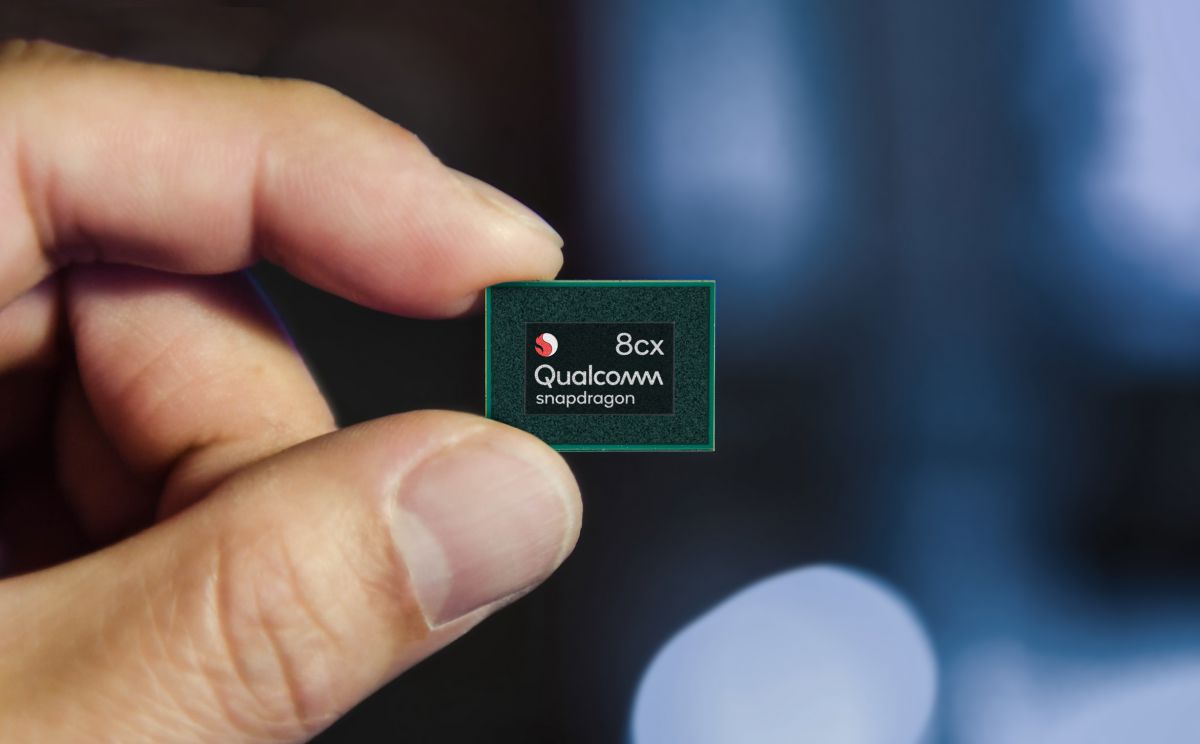
    Last year when Nokia started planning its 5G networking equipment, it made a decision that came back to bite the company in the, uh, chipset. For Nokia’s line of “ReefShark” chips, used for its 5G radio, baseband and massive MIMO antennas, it decided to go with field-programmable gate array (FPGA) silicon. This type of chip can be programmed by the customer, thus giving Nokia an advantage in getting its 5G gear into the marketplace before the competition. But Nokia CEO Rajeev Suri had to admit that producing FPGA chips cost Nokia more money which reduced its profit margin for the component. As reported by FierceWireless, after reporting its Q3 numbers last week, Nokia lowered its full-year guidance

    Nokia wants to resume production of custom chipsets for its 5G products and to this end, it has hired 350 new employees in Finland to help it develop custom chips. Such development can take two years to complete. Nokia’s global head of Mobile Networks Marketing, Sandro Tavares, said that the company has been working on these SoCs for some time and has started shipping products with the SoCs replacing the FPGAs.

    Tavaras notes that the reasons that Nokia chose the programmable chip is because it can “put together the efficiency characteristics of an SoC but with the flexibility of being able to program via firmware. But it has the flip side of cost and power consumption. FPGAs do cost more in unit price, and they do use more power.” Additionally, Nokia at the time was working to integrate Alcatel Lucent and using FPGA, as previously noted, seemed like the best way to get to market quickly. Tavaras also points out that one supplier let them down. Nokia CEO Suri said that the company is not only designing its own custom SoCs, it also is working with a number of chipmakers including Intel. But the executive says that all of these actions won’t lower Nokia’s cost of building its 5G products until 2021.

    One analyst says that Nokia’s problems run deeper than just having to migrate from FPGA. Stefan Pongratz, senior director at Dell’Oro Group, says that 5G build-out is happening faster than expected and that competition is fierce. Pongratz says that “Nokia also has to deal with the consolidation of multiple platforms following the Alcatel Lucent merger.”

    Nokia has contracts with all four major U.S. carriers to deliver 5G networking equipment and the company was said to be responsible for Sprint’s delay in rolling out 5G service to four cities back in August. But this has been typical of the reputation that Nokia has when it comes to 5G. The company has been accused of lacking steady leadership and during a four-year period, it had three different people running the mobile networks division. That unit is now run by Tommi Uitto who earns nothing but praise from CEO Suri. “Tommi and his team have developed a comprehensive plan to ensure Nokia is competitive in 5G, and they are relentlessly executing against that plan,” Suri says. “Tommi is a strong leader, and he has my full support.” As for the 350 new employees being hired, Suri states, “We are repositioning our workforce to work on topics that are more critical for 5G development. We are hiring people in Finland and in other parts of the world and moving people from different programs to our 5G radio products.”

    Earlier this month, there was talk that the Trump administration had considered offering huge lines of credits to Nokia and its rival Ericsson. This would be done to help the two compete with the global leader in networking equipment, Huawei. The latter is considered a national security threat in the states and with funding from state-run Chinese banks, Huawei can offer generous financing terms to customers. Trump officials hoped to counter this advantage by arranging financing for Nokia and Ericsson, but outside of the initial rumors, there has been no word on whether the U.S. is still considering this option.

  • VinSmart to launch 5G smartphones next year

    VinSmart to launch 5G smartphones next year

    Smartphone maker VinSmart says it will launch its first 5G smartphone next July, and use its own 5G stations and equipment.

    “We have built a lab for researching and developing 5G smartphones and other 5G telecom equipment,” Ngo Hoang Anh, head of the company’s embedded software department, said at a forum Wednesday.

    The company is also partnering with U.S. tech giants Cisco and Intel to develop the 5G technology, Anh said. In June, VinSmart signed partnerships with Japan’s Fujitsu and the U.S.’s Qualcomm to develop its 5G smartphones.

    VinSmart has requested the Ministry of Information and Communications for bandwidth to test its 5G stations next August, he added.

    Tech expert Pham Hong Phuoc said that VinSmart developing 5G services is a rational move, as the local market is set to see more 5G smartphones this year and the next, and Vietnam aims to commercialize 5G next year.

    VinSmart’s announcement follows similar moves by telecom giant Viettel, which begun testing 5G broadcasting in September, and its competitor VNPT, which has announced plans to do so.

    No 5G smartphone has been manufactured or officially distributed in Vietnam so far, instead, they are hand-carried on overseas flights.

    Minister of Information and Communications Nguyen Manh Hung said last year that Vietnam should be one of the first countries in the world to launch 5G.

    5G is said to offer speeds 100 times faster than 4G, primarily used for smartphones and other similar devices. 5G is also expected to support new applications like remote medical procedures and autonomous driving.

  • Docomo to launch 5G soon

    Docomo to launch 5G soon

    The first phase will include building a non-standalone 5G system based on trials that have already started in 2017, she said, adding that spectrum will be allocated by end of March 2019. Docomo is striving to commercialize 5G services in 2020, just in time for the Summer Olympics in Tokyo.

    “Since the standardization is set, it’s time to consider how to deploy a 5G network. We need to strategically deploy 5G in the necessary areas, with the necessary functions, and with adequate frequencies,” Lan Chen said.

    According to her, the first element of a successfully built 5G network is its ability to adapt to the continuous growth in data traffic and handle new business cases across various industries.

    Docomo started to shift from being a global communications company into a value co-creation company by partnering with key actors in the vertical market. The main driver of this transformation was the daunting challenges mobile operators face across the world, in addition, to need to get ready for 5G.

    In February, the company launched its 5G Open Partners Programme, with more than 1,400 companies already joining the initiative. “Our aim is to use 5G technology to enhance the user experience and use AI technology to expand the market,” Docomo president and CEO said.

  • Australia gets first 5G-enabled Wi-Fi hotspots

    Australia gets first 5G-enabled Wi-Fi hotspots

    “We have said we intend to lead on 5G and with these 5G-enabled Wi-Fi hotspots Australian consumers will be among the first people in the world to try the technology,” Mr. Wright said. “Taking 5G technology out of a lab and into the hands of consumers is another key milestone on Telstra’s roadmap to offering 5G services in 2019.”

    There are no 5G compatible commercial smartphones or tablets available today. By connecting 5G backhaul and infrastructure in the Southport Exchange, to a standard Wi-Fi access point then people can use the technology on their existing device, Telstra explained in a press release.

    Using Wi-Fi access as part of Telstra’s 5G technical program is a way to show the benefits of 5G capability in real-world conditions. The 5G hotspots will be open to anyone in the area and are free with a download limit of 10 GB per day per device.

    “Wi-Fi has limited throughput so a single hotspot alone cannot come close to reaching the limits of 5G at our Innovation Centre. By using multiple hotspots with potentially hundreds of smartphone users served through a single 5G device we are able to get closer to demonstrating 5G in a real-world environment,” Wright said. “Our 5G backhaul is capable of delivering download speeds of more than 3Gbps, which is capable of supporting around 1,000 HD movies being streamed simultaneously.”

    Telstra is also using mmWave spectrum and its 5G Innovation Centre to put a connected car on the road with the Intel 5G Automotive Trial Platform, one of the most advanced 5G prototype devices available in the world today.

    “Working with global technology companies Ericsson and Intel, we have put Australia’s first 5G connected car on the road. We are in the very early stages of development and are achieving download speeds approaching 1Gbps inside the car and the vehicle is also equipped with a Wi-Fi access point,” Wright said.

    “This shows how quickly technology is evolving. At the beginning of the year, our 5G prototype device was the size of a bar fridge and weighed more than 200 kilograms.  Now, in collaboration with Intel and Ericsson, we have one that has been shrunk down to the size of a personal computer and can be installed in a car.”

    The Connected Car will help Telstra to start getting real results on mobile performance over mmWave and ensure 5G network readiness.  These advances are part of a series of 5G related activities that Telstra, Ericsson, Intel and other technology companies will undertake on the Gold Coast in 2018.

    The 5G Innovation Centre is central to a $60 million investment Telstra has made to upgrade infrastructure on the Gold Coast to support growing demand and major events in the area.

    Actual broadband speeds experienced on the 5G enabled Wi-Fi hotspots and Connected Car will vary and are likely to be lower than the maximum depending on factors, Telstra said, such as the type of device being used, distance from the hotspot and the number of people connected to the hotspot at the one time. 

  • Vietnamese operators to begin 5G testing as of 2019

    Vietnamese operators to begin 5G testing as of 2019

    Starting from the capital, Hanoi, the country aims to upgrade its mobile network along with the southern commercial hub of Ho Chi Minh City.

    “Vietnam should be among the first nations to launch 5G services in order to move up in global telecom rankings,” said Nguyen Manh Hung, the country’s minister of Information and Communications.

    Hung, previously the chairman and general director of Viettel Group, wants to reacquire Vietnam’s rank among the top countries worldwide in terms of major exporter of 5G gear through boosting the development of local equipment. He also plans to make the licensing and approval process easier for Vietnam’s IT sector.

    Several partnerships have been made in order to facilitate the procedures: VNPT has teamed up with Nokia on 5G, while MobiFone signed an agreement with Samsung Electronics to cooperate on 4G and 5G networks earlier this year.

    In 2017, Ericsson held the first 5G demonstration in the country in partnership with the Vietnam Authority of Radio Frequency Management.

    While MobiFone and VNPT are on the list of state-owned companies slated for privatization by 2020, Viettel is to remain in government hands.

  • Australian enterprise markets show optimism in 5G adoption

    Australian enterprise markets show optimism in 5G adoption

    With 5G being available in the enterprise market, it is expected to generate around AUD45 billion ($31.1 billion) in value per year by the mid-2020s. The economic earnings will come from next-generation application development, IT services, platforms, and connectivity.

    In fact, a survey by the research company found 68% of IT and business leaders consider 5G as an integral part of their business strategy to make progress. Half of these respondents said it is as important for future development as it is for supporting existing services.

    The company stated that what future services are mainly expecting in 5G are the large data transfer capabilities, more reliable connectivity, and lower latency 5G will offer. This will provide a unity to change software architectures to account for real-time services and cloud-based AI architectures.

    The top three barriers to 5G investment cited were integration with current systems (34 percent); a lack of business cases (23 percent); and security concerns (17 percent). A lack of skills is also an issue with more than 25 percent indicating they will be looking for an outsourcing partner for developing services.

    Almost half of businesses surveyed assume the number of connected devices running on internal systems to increase at least five times within five years. Telsyte said the jump is powering innovation and experimentation in the IoT segment, as it found that one in four companies have already IoT-capable devices, but no formal strategy around them.

  • Telstra launches first 5G device in Australia

    Telstra launches first 5G device in Australia

    The Australian-based company began marketing its broadband plans for the new HTC 5G Hub and will soon start selling the Samsung Galaxy S10 5G. They also plan to introduce their mobile plans for the new technology by the end of June.

    The company said it would offer free 5G access for around 12 months.

    “We have already started building our 5G coverage in some areas and, as we did with 3G and 4G, we will progressively roll out the new technology over time,” said Telstra’s chief executive officer Andrew Penn in a statement.

    The operator is currently working on rolling out 5G in ten cities and plans to expand the coverage to around 35 other cities within the next 12 months.

    Telstra turned on 5G base stations back in December 2018 in some parts of Sydney and Melbourne all of which amounted to 187 5G-compatible sites in the two cities.

    They acquired 3.6GHz spectrum for AUD 386 million. The company claims to have around 60Mhz of contiguous 5G spectrum in Australia’s major capital cities and around between 50 to 80Mhz of contiguous spectrum in regional areas.

    “Our launch of the HTC 5G Hub is the moment 5G becomes a reality for Australian consumers,” said Penn.

    “Since 2016, we have been working with some of the world’s leading technology brands to ensure Australians are among the first in the world to be able to access 5G.”

  • SoftBank turns to Nokia for commercial 5G offering

    SoftBank turns to Nokia for commercial 5G offering

    As an existing supplier of multiple technologies to SoftBank, Nokia’s selection for 5G Radio re-enforces the strong relationship between the two companies, as SoftBank turn to Nokia’s end to end portfolio for 5G.  Nokia’s 5G AirScale supports multiple frequencies, in both distributed and centralized architectures, giving SoftBank tremendous flexibility in its network evolution.

    Nokia’s 5G AirScale will be deployed across Japan, bringing 5G RAN to businesses and consumers alike. The 5G investment will benefit consumers by bringing them a 5G enhanced Mobile BroadBand (eMBB) service, with 5G Ultra-Reliable Low Latency Connectivity (URLLC) and enhanced Machine Type Communication (eMTC) enabling multiple new applications and services for industries in the 5G era.

    John Harrington, Head of Nokia Japan, said, “We are delighted to continue our long-term relationship with SoftBank and to be working with them as a trusted end to end partner at such an important milestone in the transformation to 5G. We are committed  helping SoftBank launch its commercial 5G network.”

    Nokia now has 38 5G commercial contracts, including 20 with named customers. These contracts well illustrate the vendor’s strong thought leadership in 5G. Nokia will continue to be one of the best partners for customers by providing an end-to-end solution and contribute to transform both networks and businesses.

  • South Korea discloses number of 5G subscribers

    South Korea discloses number of 5G subscribers

    Consumers have however filed some complaints related to the coverage and speed of 5G. The main problem was that mobile devices were displaying a 5G symbol when users on LTE were near base stations compatible with 5G. The Ministry confirmed that facing such issues is very normal given that operators are still building base stations and upgrading software.

    A total of 54,202 5G base stations have been deployed so far, an increase of 7 per cent from 22 April, however coverage in the country was still restricted to urban and more populous areas.

    Korea has been pioneering the journey to 5G deployment, being one of the first in the world to offer 5G to mobile consumers. Operators in the country had also launched commercial 5G services to businesses using mobile routers.

    Out of the 260,000 subscribers, KT, the country’s second largest operator, has announced it secured 100,000 subscribers so farm whereas SKT and LG Uplus are yet to reveal their figures.

  • ZTE, Ooredoo Myanmar alliance to display multiple 5G use cases

    ZTE, Ooredoo Myanmar alliance to display multiple 5G use cases

    This standard specifies the technical requirements of centralized control of shared air-conditioners, setting a benchmark for the centralized control operation of the shared economy in the home appliance industry. It is another breakthrough in the wake of the joint release of the industry’s first shared air-conditioning technology standard based on NB-IoT in September 2018 by ZTE, China Telecom Shanghai Research Institute, Haier AC and other partners.

    ZTE, China Telecom and Haier AC carried out a comprehensive evaluation and pre-commercial verification of the shared air-conditioner centralized control model at University of Shanghai For Science and Technology. China Telecom and ZTE provided indoor and outdoor wireless network coverage to ensure stable and reliable signal quality, data transmission, and service applications in the centralized control area. The centralized control based on NB-IoT wireless network can effectively address the problems of traditional centralized control, such as difficult engineering, complex cabling, and overwhelming maintenance.

    With the release of the shared home appliance industry standard, the NB-IoT network can realize the centralized control of temperature, mode and switch of the shared air conditioners, hence the wide application in campus, apartment and hotel scenarios.

    ZTE has always been exploring continuous innovations in the field of IoT. Based on its self-developed IoT platform and its leading edge in the 5G field, ZTE has created a series of end-to-end 5G+ integrated industry solutions in various fields, including 5G+ Smart Campus, 5G+ Industrial Park, 5G+ Smart Water Control, 5G+XR Cloud Coordination, 5G+ Cloud Education, 5G+ Smart Stadium, Smart Home, and Internet of Vehicles. By integrating the cutting-edge technologies, such as big data and AI, with the IoT, ZTE is committed to promoting the incubation and deployment of innovative IoT solutions.

    “We have been exploring the opportunities in each industry with our industry partners to create values by virtue of our experience and capabilities in the ICT field,” said Mr. Yin Gang, vice president of ZTE Corporation. “We’re happy to join hands and connect closely to build a bright future together.”

    ZTE is a provider of advanced telecommunications systems, mobile devices, and enterprise technology solutions to consumers, carriers, companies and public sector customers. As part of ZTE’s strategy, the company is committed to providing customers with integrated end-to-end innovations to deliver excellence and value as the telecommunications and information technology sectors converge. Listed in the stock exchanges of Hong Kong and Shenzhen (H share stock code: 0763.HK / A share stock code: 000063.SZ), ZTE sells its products and services in more than 160 countries.

    To date, ZTE has obtained 25 commercial 5G contracts in major 5G markets such as Europe, Asia Pacific, MEA (Middle East and Africa), etc. ZTE commits 10 percent of its annual revenue to research and development and has leadership roles in international standard-setting organizations.

  • 5G Asia 2019: Collaboration is the key for 5G

    5G Asia 2019: Collaboration is the key for 5G

    The 5G Asia event held in Singapore brought together the industry’s best and brightest names to discuss the invaluable influence that the 5G phenomenon is having all over Asia and across multiple enterprises.

    Pamela Clark Dickson, the practice leader for digital communications and social networking at Ovum, kick-started day 1 with an analytical introduction about the global state of play for 5G and what is to be expected from it in the next 24 months. She described the 5G network as “huge, fast and complex” and that “telcos would need to collaborate” in order to get 5G into the market.

    This was followed by number of other keynotes from industry leaders and even a panel discussion on “Defining the killer 5G app in Asia” where some of the most influential figures in telecoms converged to exchange views about the prospect and widespread influence of a 5G driven telecommunications sector.

    During the panel, the Executive Vice President and CEO of TM One Ir. Ts. Azizi Hadi took the opportunity to introduce the company’s 10 transformative smart solutions, which was launched in August, to drive Malaysia’s commitment towards industrial innovation and growth.

    5G Asia was held between the 10th and 12th of September in Marina Bay Sands and it is one of Asia’s largest events focusing on the expansion of 5G technology in the region. Some of the topics that were explored during the event were 5G deployment choices, the journey to cloud-native, edge computing and revenue generation for companies using 5G, just to name a few.