Tag: 5G

  • Britain close to final decision on whether to ban Huawei from its 5G networks

    Britain close to final decision on whether to ban Huawei from its 5G networks

    Despite constant pressure applied by the U.S. not to allow Huawei’s networking equipment inside Britain’s 5G networks, in January the British announced that it would not heed the warning. Gear from the world’s largest networking equipment supplier would be used on the country’s 5G networks although the parts would be placed away from sensitive areas. At the time, a spokesman said, “The United States is disappointed by the U.K.’s decision.” British Prime Minister Boris Johnson felt that there was no other decision he could make because of Huawei’s technological and financial advantages over the competition.

    But according to the U.S. government, Huawei is a national security threat because of its rumored ties to the communist Chinese government. Huawei, of course, has denied this repeatedly. The U.S tried to convince Britain that it wouldn’t be able to pass along the intelligence to its allies if Huawei was involved in the country’s 5G network. And finally, there were some cracks in the prime minister’s resolve. Johnson could announce as soon as this coming Tuesday’s National Security Council meeting that Huawei equipment will be banned from British networks before the end of next year.

    In the U.S. Huawei products, including both phones and networking gear, are banned from use by the military and by telecom firms. Some rural wireless providers have Huawei equipment in their older networks which the current administration would like to see removed.

    While the U.S. did apply enough pressure to get the ball rolling in Britain, what really convinced the Brits to think twice about Huawei’s presence in its 5G networks was the recent export rule change by the U.S. Under the new rules, a foundry using American technology to produce chips cannot ship any product to Huawei without a license from the U.S. As a result, Huawei could be forced to use “untrusted” chips which greatly lessens the security of any 5G network that employs Huawei’s gear. A review in Britain concluded that under these conditions, the country will not be able to control the security of its 5G networks.

    The Conservative Party that Prime Minister Johnson belongs to has been pushing for a reversal of the decision to allow Huawei equipment to be used. Bob Seely, a member of the Conservative Party, praised the U.S. sanctions for getting Britain to revisit its initial decision. “The sanctions have changed the dynamic, he said. “The government is listening, and it’s important to give them credit for trying to do the right thing.” Seely said that Members of Parliament want a “no new kit date” and a “rip out date.” After the former date, no company would be able to install Huawei equipment in Britain. By the latter date, all Huawei equipment would have to be removed in the country. The politician would like to see the “no new kit date” set for late 2021 while there is a debate over where the “rip out date” should fall on the calendar. The range under consideration is a date between 2023 and 2025.

    Some Conservatives aren’t pushing for such draconian terms. Neil O’Brien said he wasn’t so concerned about the timing of the removal of Huawei gear and is also not terribly worried about the removal of equipment from older networks. That’s because the latter “will come to the end of its life over a couple of years.” That mirrors the comments made by Damian Green who also isn’t worried about older equipment. He simply wants to see a new equipment ban “in this parliament by 2024.

    The next generation of wireless connectivity, 5G will deliver download data speeds up to ten times faster than 4G LTE. Not only will it allow users to download movies in seconds instead of minutes, but it should also help to create new technologies and businesses.

  • Vingroup produces first 5G smartphones

    Vingroup produces first 5G smartphones

    VinSmart, a subsidiary of Vietnam’s largest listed company Vingroup, has produced its first 5G smartphones in cooperation with the U.S.’s Qualcomm.

    The Vsmart Aris 5G model is equipped with a Snapdragon 765G 5G module platform and a quantum security chip, the company stated, adding it also features a Super Amoled 6.39″ display, 8GB RAM and a 4,000 mAh battery.

    Nguyen Phi Tuyen, director of the measurement center of the Department of Telecommunications under the Ministry of Information and Communications, said the unit has repeatedly tested Vsmart’s Aris 5G, showing the network speed was eight times higher than 4G.

    VinSmart has not yet announced the official price of the Aris 5G, nor when it would hit the market, or how many units it intended to produce.

    No 5G smartphone has been manufactured or officially distributed in Vietnam so far, instead, they are hand-carried on overseas flights.

    VinSmart’s move came as local telecom firms compete in the 5G race. Telecom giant Viettel for the first time broadcast from its network of 5G base transceiver stations in Ho Chi Minh City last September while competitor VNPT has announced similar plans.

    VinSmart, which launched its first products at the end of 2018, is currently focusing on the low-end segment of the market, with 12 Vsmart phones all priced at below VND5 million ($212).

  • France won’t ban Huawei gear from its 5G networks but will ask carriers not to install it

    France won’t ban Huawei gear from its 5G networks but will ask carriers not to install it

    Huawei is the world’s largest supplier of networking equipment although some countries like the U.S. are worried about how close the company is to the communist Chinese government. Just the other day we told you that England is now looking to stop the installation of Huawei gear in its 5G networks and also plans on pulling out the company’s equipment that has already been installed. The New York Post published a story about how France is going to handle the use of Huawei’s industry-leading technology in the country’s 5G pipelines.

    Guillaume Poupard, who runs French cybersecurity agency ANNSI, says that the country won’t “totally” ban Huawei from 5G networks in France although it will try to get French carriers not to use the Chinese manufacturer’s gear. Poupard said to a French newspaper, “What I can say is that there won’t be a total ban. (But) for operators that are not currently using Huawei, we are inciting them not to go for it.” He also said, “For those that are already using Huawei, we are delivering authorizations for durations that vary between three and eight years.”

    Earlier this year, sources told Reuters that while France wouldn’t ban Huawei, it would try to keep its gear out of the country’s core mobile networks. These networks carry the personal data belonging to customers of the country’s wireless companies which means that keeping Huawei equipment from these networks is of paramount importance. That’s because Huawei has been accused of using its networking gear to spy on consumers and corporations and send the data to Beijing. No evidence of this has ever been discovered and Huawei has repeatedly denied the allegations.

    What France decides to do will be critical to half of the country’s four major wireless providers; about 50% of the networks employed by carriers Bouygues Telecom and SFR use Huawei’s technology. Orange, which is controlled by the French government, has decided to use equipment supplied by Huawei rivals Nokia and Ericsson.

    The head of ANNSI said that starting next week, wireless operators who have yet to receive authorization to use Huawei equipment for their 5G networks should consider a non-response to be a rejection of their request. Poupard stated, “This is not Huawei bashing or anti-Chinese racism. All we’re saying is that the risk is not the same with European suppliers as with non-Europeans.”

  • Singtel ushers in 5G era with 5G licence

    Singtel ushers in 5G era with 5G licence

    Singtel today was officially awarded the 3.5GHz and the millimeter wave spectrum as part of the 5G license issued by the Infocomm Media Development Authority. This paves the way for Singtel’s nationwide 5G rollout that will not only massively boost the quality of connectivity of its services but set the stage for extensive digital innovation that will prove transformative for industries, businesses, and how people work and live.

    “We are excited to get this greenlight to lead and shape 5G in Singapore by building a world-class, secure, and resilient 5G network that will serve as the backbone of Singapore’s digital economy. More than a business investment, we see this as a significant investment in Singapore’s digital future as 5G spurs innovation among enterprises and industries, creating new businesses, jobs, and economic value in the process,” said Singtel Group CEO Ms Chua Sock Koong. “This license is also very timely in light of Covid-19 and the ensuing reliance on robust infrastructure and connectivity. Our existing network capabilities have allowed us to pivot quickly to the needs of the public and businesses at this critical time and 5G will help extend and accelerate the digital adoption we’ve witnessed as we navigate our way out of Covid-19 towards recovery.”

    Singtel will build on the momentum created from ongoing 5G trials in the fields of port operations, manufacturing, and cloud gaming to offer the most transformative services and solutions to support Singapore’s digital economy.

    “As a company, we intend to move beyond access and connectivity to create new enterprise use cases and innovative platforms, applications, and services to reposition ourselves for growth in the converging eco-systems of tech and telecoms,” Ms Chua added. “As our subsidiary Optus in Australia and our regional associates forge ahead with their 5G strategies, the Group will leverage this experience and scale to build a robust 5G ecosystem with the right partners across our footprint.”

    After a rigorous tender process, Singtel has selected Ericsson to commence a period of negotiation to provide the 5G SA Core, RAN and mmWave network, with a view to finalising the contractual terms as soon as practicable.

    Singtel has been test-bedding new consumer and enterprise 5G solutions through various trials with key technology vendors and public service agencies. This includes working with the PSA on developing port-related 5G use cases such as drones and crane automation at the Pasir Panjang Terminal, exploring how 5G can enable Industry 4.0 manufacturing technologies at the Agency for Science, Technology and Research’s Advanced Remanufacturing and Technology Centre, and testing network readiness for 5G cloud gaming with IMDA and Razer. Singtel is also driving 5G innovation at the 5G Garage together with Ericsson and Singapore Polytechnic, a live facility where enterprises can develop and test 5G solutions. In the same vein, Singtel’s Centre of Digital Excellence helps enterprise customers realise the value and speed up the adoption of 5G in their digital transformation journeys.

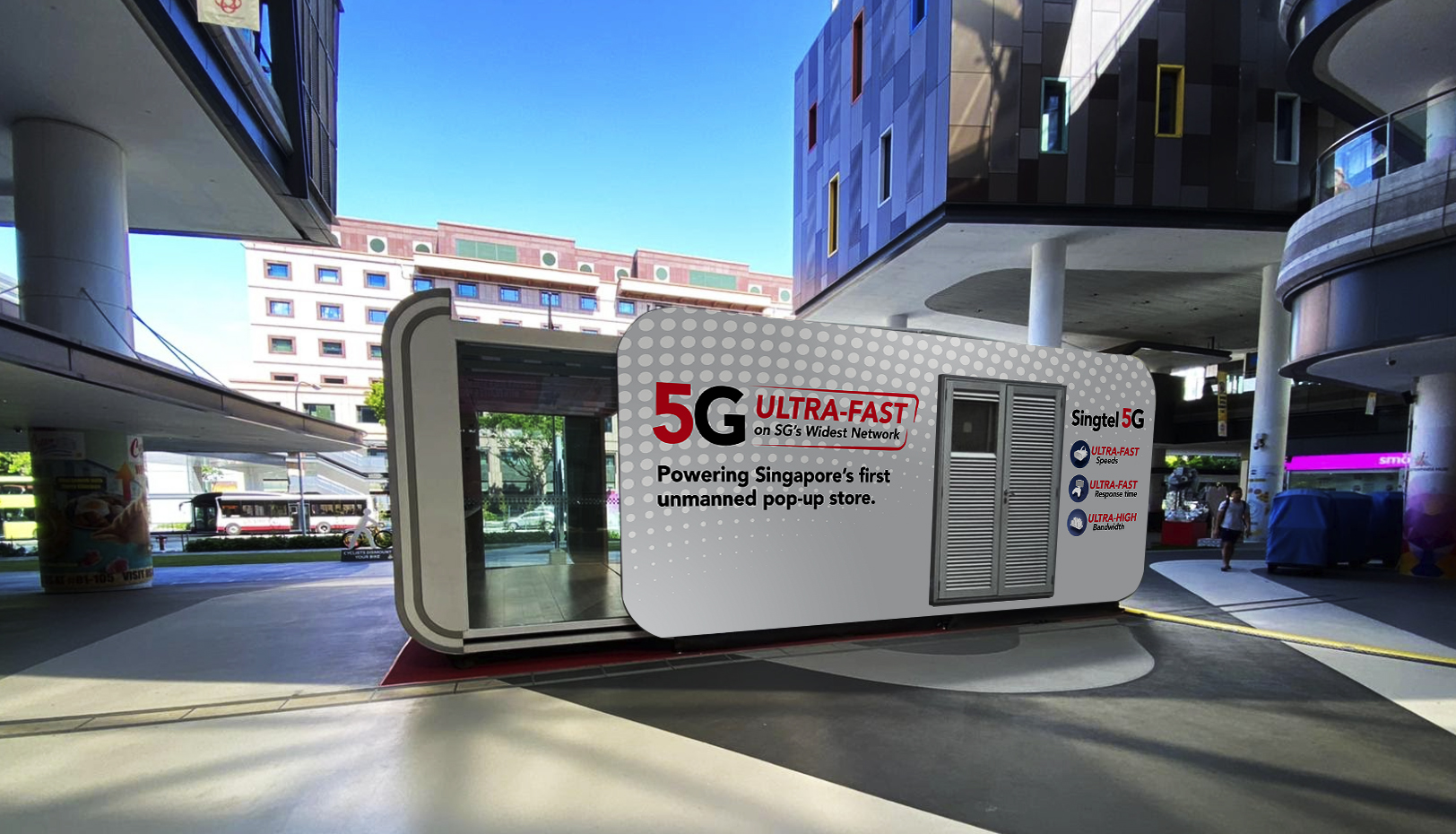
    In a first for Singapore, Singtel is bringing 5G to life for consumers at its unmanned 24/7 pop-up retail store, UNBOXED, which has been outfitted with live 5G connectivity. With 5G powering all self-serve Singapore Telecommunications Limited Company registration number: 199201624D

    kiosks and sentinel surveillance systems within the store, UNBOXED can now be relocated anywhere without laying fibre cables and serve customers with faster transactions. From late July, customers can get a taste of a 5G future while trying out applications such as cloud gaming, 360⁰ immersive entertainment, augmented reality education, as well as checking out the latest 5G mobile devices. Consumers will be able to visit UNBOXED at its current location at Tampines Hub or find out more about 5G at www.singtel.com/5g.

  • Qualcomm’s new Snapdragon 690 chipset brings 5G to the masses

    Qualcomm’s new Snapdragon 690 chipset brings 5G to the masses

    As more carriers expand 5G services to more markets, demand for 5G-enabled smartphones starts to increase. In theory, that’s supposed to increase prices as well, but only if there are few offerings. Qualcomm is making sure that you will no longer have to pay a fortune for a 5G smartphone going forward.

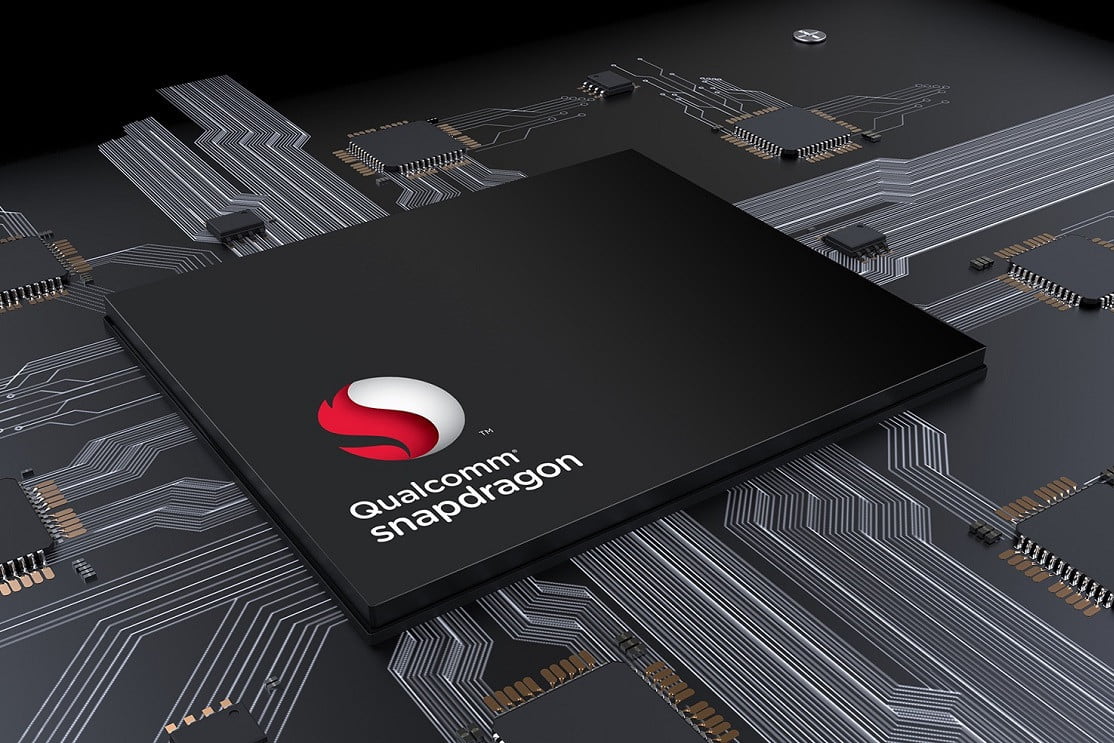
    The new Snapdragon 690 chipset fully supports 5G connectivity and is meant to be embedded in mid-range devices. With the new SoC (system-on-chip), Qualcomm plans to make 5G broadly available worldwide with the help of smartphone makers.

    The first companies to confirm they will launch smartphones equipped with the new Qualcomm Snapdragon 690 chipset are Motorola, LG, HMD Global, Sharp, and TCL. Other important players in the market are likely to embrace this new piece of tech, but they’ll probably wait for the first wave of devices to hit the market.

    Qualcomm’s new Snapdragon 690 5G is the first mid-range chipset to feature 4K HDR support to capture pictures at up to 192 megapixels. Moreover, the chipset includes support for 120hz displays for very fast refresh rates.

    Hardware-wise, the Snapdragon 690 chipset accommodates a Qualcomm Kryo 560 processor that should provide up to 20% performance improvement compared to its predecessor. The included Snapdragon X51 5G modem is optimized for the 6-series platform and offers blazing-fast speeds and superior 5G coverage.

    Also, the chipset comes with an Adreno 619L GPU (graphics processing unit) that delivers up to 60% faster graphics rendering. Last but not least, the Snapdragon 690 is fully compatible with Qualcomm’s Quick Charge 4+ technology that charges up to 4x faster than conventional charging.

    If you’re dying to get your hands on the new devices equipped with the Snapdragon 690 5G chipset, you’ll be pleased to know that the first smartphones are expected to be commercially available in the second half of the year.

  • AT&T starts rolling out a potentially game-changing 5G technology

    AT&T starts rolling out a potentially game-changing 5G technology

    There’s been a lot of talk over the last few months about T-Mobile’s great progress in terms of 5G coverage and speeds, as well as Verizon’s early (and impressive) lead in the latter department. Meanwhile, Sprint’s own early 5G rollout efforts and development resources are now in Magenta’s hands, positioning “New T-Mobile” as an industry trendsetter and possible market leader in the not-so-distant future.

    But where does that leave AT&T in the grand scheme of the nation’s 5G deployment equation? The short answer is… in a pretty awkward place. We’re talking about a carrier that technically offers three different flavors of commercial 5G services, nonetheless ranking behind Verizon and Sprint in average download speeds and behind T-Mobile and Sprint in 5G availability in the latest in-depth Opensignal report.

    That’s because Ma Bell’s 5G Evolution technology is little more than a publicity stunt (and a misleading one at that), the “standard” 5G signal is based on low-band spectrum and therefore not very fast, while the 5G+ network suffers from the same coverage limitations and problems as Verizon’s 5G “Ultra-Wideband” service. On top of everything, AT&T also doesn’t own as much dedicated 5G low-band spectrum as T-Mobile, making it impossible for America’s second-largest carrier for the time being to challenge Magenta’s 5G availability numbers.

    Fortunately, that’s where a groundbreaking technology dubbed Dynamic Spectrum Sharing (DSS) comes in. Unfortunately, this is not ready for nationwide primetime just yet either. The way DSS works is essentially by allowing mobile network operators to, well, dynamically share spectrum. In other words, AT&T can now use the same “channel” for both 4G and 5G users “dynamically”, aka simultaneously.

    Even simpler put, the carrier doesn’t need to permanently switch off its 4G LTE signal and repurpose said spectrum to exclusively serve 5G-enabled smartphones. Instead, DSS is what AT&T calls a “traffic-aware” technology, instantly responding to changes on its network to allocate and split 4G and 5G resources depending on demand.

    In theory, that sounds like an absolute game-changer with the potential to significantly shorten AT&T’s path to nationwide 5G, but in reality, there are still a number of kinks to iron out, as well as many important unanswered questions.

    Although both Verizon and T-Mobile plan to embrace Dynamic Spectrum Sharing… eventually to help with their own 5G support expansion efforts, the “Un-carrier” has been very vocal about its skepticism regarding the technology’s wide-scale implementation in the short run.

    T-Mobile President of Technology Neville Ray anticipated “a tough year on DSS” back in February, further highlighting that the potential industry game-changer was “still bumpy” just last month due to a previously unforeseen delay in the rollout schedule of one unnamed major network equipment vendor.

    While AT&T didn’t care to elaborate what equipment vendors made its recent DSS launch possible, it’s definitely worth pointing out that the software-based technology is currently only live in “parts” of Ma Bell’s network in North Texas.

    Obviously, the carrier hopes to “continue expanding” its 5G coverage “throughout the year, bringing the power of 5G to more customers from coast to coast”, but at least for the time being, there are no other details to share on actual dates or places.

    The list of “5G devices already upgraded in the field” to support Dynamic Spectrum Sharing is also disappointingly short, merely including Samsung’s Galaxy S20, S20+, S20 Ultra, and Galaxy Note 10+ 5G, as well as LG’s V60 ThinQ.

    Last but certainly not least, there’s the question of the actual user benefits DSS is expected to facilitate. The answer is unlikely to make AT&T customers very happy, as the mobile network operator anticipates significant improvements in speed… further down the line. Until the technology is refined, upgraded, and deployed on a larger scale, you’ll have to settle for pretty much the same download numbers you usually get on LTE.

  • Huawei announces a breakthrough in 5G antenna design

    Huawei announces a breakthrough in 5G antenna design

    While many of you know Huawei as the world’s second-largest smartphone manufacturer, it is also the leading provider of networking equipment on the planet. And no matter what you think of the company and its perceived ties to the communist Chinese government, Huawei does produce some outstanding handsets. Its networking gear is said to be 12 to 18 months ahead of the competition which includes companies like Nokia and Ericsson, and this technological superiority comes at a cheaper price.

    Over the weekend, Huawei announced a breakthrough in the design of 5G antennas. Called CableFree, the new design improves the capabilities of 5G base station antennas. With 5G, new bands have been introduced and more antenna connections are used. The new design improves high-band coverage for 5G. According to the company, “…high-band coverage is essential for ensuring 5G experience consistency. CableFree improves antenna radiation efficiency by approximately 20%, boosting high-quality coverage of the 5G era.”

    To support the higher capacity and additional antenna connections used for 5G, the antennas deployed must be able to work with 1 KW of power; previous generations of wireless connectivity required only 500 to 600 Watts. CableFree increases the antenna power capacity by more than 80% to meet these requirements. CableFree also reduces the weight of the antennas making them easier to install. A six-band antenna using CableFree is over 22 pounds lighter and by keeping the weight of multi-band antennas under 110 pounds, a crane is not required during installation. This not only saves time, but it also saves money as well.

    CableFree reduces the use of screws and soldering points by 80% reducing the chance of passive intermodulation, or signal distortion and interference caused by large metal objects. The reduction in the use of these components makes it easier to automate the production of antennas while keeping their quality consistent. Zhang Jiayi, President of Huawei Antenna Business Unit, said: “Antennas are crucial for 5G networks. Higher performance and integration are the main trends of antenna innovation in the 5G era. CableFree breaks the antenna design bottleneck, representing an inevitable trend of the antenna industry. Huawei always innovates based on customer requirements for 5G target networks to help customers build efficient and high-performance networks and achieve business success in the 5G era.”

    Huawei says that CableFree “features a number of revolutionary technologies and techniques” that will increase the integration of an antenna improving its performance. CableFree has been used with Huawei’s Munich Pro, Golden Mini, and London Pro series antennas, as well as 32T32R Massive MIMO products. MIMO (multiple-input and multiple-output) allows for multiple signals to be simultaneously sent over the same radio channel. This creates extra data-carrying capacity allowing signals to be sent at faster data rates.

    The bottom line is that Huawei says CableFree will help its customers build efficient and high-performance 5G networks to help their businesses succeed. While this all sounds promising, recently Huawei has had a slight set back. Conservative party members in the U.K. are asking for Huawei’s networking gear to be removed from 5G networks in the region due to national security threats. Reportedly, this would be done using a three-year plan that results in the removal of Huawei from 5G networks in the U.K. and all other networks by 2023. The Trump administration had been pressuring allies not to use the company’s gear in their 5G networks and while Japan and Australia heeded the warning, Germany and the U.K. originally did not. This past January the U.K. agreed to use Huawei’s parts for its 5G networks after Prime Minister Boris Johnson said that he felt that he had no choice. Originally, a U.K. spokesman said that Huawei’s parts would not be allowed near “sensitive functions.”

  • Comprehensive new report highlights the pretty terrible state of US 5G networks

    Comprehensive new report highlights the pretty terrible state of US 5G networks

    We were warned well in advance of the world’s first 5G rollouts not to expect the game-changing wireless technology to, well, instantly change the game in terms of widespread download speeds, but obviously, some progress was made over the last year or so pretty much everywhere around the globe.

    Because not all 5G mobile networks are created equal and many countries haven’t even started the transition from 4G LTE, you shouldn’t be surprised to find out there are major geographical differences to report as far as everything from raw speeds to video experience and the availability of the “outdated” aforementioned cellular standard is concerned.

    While it’s clearly not easy to collect enough data to get a full and accurate picture of the way everyday smartphone users regularly connect to 4G LTE and 5G networks worldwide, especially during a pandemic, OpenSignal impressively managed to perform more than 87 billion measurements on over 43 million devices between January 1 and March 30, 2020.

    After comparing all that information with similar data gathered in the first three months of last year, the mobile analytics company released an in-depth report full of interesting findings and detailed examinations of regional differences. Here are just a few of the conclusions that captured our attention:

    While all 20 “leading” 5G countries assessed by OpenSignal for its latest report saw their download speed “experience” index grow between Q1 2019 and Q1 2020, said growth was far from impressive in places like Kuwait, Romania, the UK, Spain, and… the US.

    Due to T-Mobile’s initial nationwide focus on low-band 5G technology, which is barely faster than 4G LTE across many areas, and the modest footprint covered by Verizon’s blazing fast mmWave 5G network, it’s hardly surprising to see the US ranked below Germany, Sweden, Finland, Qatar, UAE, Denmark, Switzerland, Australia, Norway, Japan, and South Korea in this key metric.

    Believe it or not, US users are getting less than half the average 5G download speeds of their South Korea-based counterparts, although for what it’s worth, the 26.7 Mbps score is 25 percent higher than the regional speed result from the same period last year.

    If you thought ranking 12th out of the aforementioned 20 leading 5G countries for download speed experience was bad, wait until you see where the US is positioned in OpenSignal’s latest 5G video experience chart. With 56 points (on a scale to 100), the “land of the free” managed to edge out Puerto Rico and finish the global competition second to last.

    Although the 56 score does technically put the US in the “Good” category, 5G users in seven countries enjoyed an “excellent” average mobile video experience during the first quarter of 2020, while another 11 countries earned a “very good” rating.

    Adding other countries into the equation paints an even more embarrassing picture for the US wireless industry, as the nation sits in the 73rd spot of the overall top 100 charts for mobile video experience, making far too little year-on-year progress to raise any hopes for short-term future improvement.

    Canada doesn’t need widespread 5G connectivity to rule the general download speed hierarchy, incredibly jumping from 42.5 to 59.6 Mbps in the space of 12 months and totally crushing the 26.7 Mbps US score, which saw a modest surge from 21.3 Mbps a year ago.

    If it makes you feel any better, the US did manage to defeat two G7 countries (Italy and the UK) in download speeds while ranking dead last in the group as far as the video experience is concerned. Overall, the US sits in the 25th spot out of 100 countries in the download speed experience chart, which is a little better than the nation’s abysmal video performance.

    On the other hand, the US continues to shine when it comes to 4G availability (which is not the same as coverage, mind you), with a remarkable 96.1 percent score that’s only surpassed by Japan and South Korea. At least in theory, that should allow the nation’s largest wireless service providers to deploy a 5G signal faster than carriers in many other countries. Unfortunately, that’s not enough to also guarantee remarkable nationwide speeds… yet.

  • Samsung to double down on cheaper 5G phones to tackle sales slump

    Samsung to double down on cheaper 5G phones to tackle sales slump

    Smartphone shipments are expected to fall by over 10% this year because of the ongoing COVID-19 pandemic. The situation is affecting all brands yet it seems Samsung is in an even tougher position following the poor reception of the Galaxy S20 series.

    Samsung has been betting heavily on 5G-ready smartphones ever since it announced the premium Galaxy S10 5G in early 2019. That phone was eventually followed by the Galaxy Note 10+ 5G and the Galaxy A90 5G, two very expensive offerings.

    This year the strategy is all about taking the technology mainstream. The South Korean giant has already introduced the Galaxy A51 5G and Galaxy A71 5G, priced at $499 and $599 respectively, but is now expected to double down on next-gen network support.

    The exact plans remain unclear at this stage but Samsung is reportedly working on an updated Galaxy A series that incorporates even more 5G-ready smartphones. Crucially, these will be even cheaper in the hope of attracting consumers on tighter budgets.

    The global financial crisis is going to make selling smartphones this year harder than ever – global sales tumbled a humongous 38% annually in February – and Samsung along with other top manufacturers aren’t under any illusions that the worst is behind them.

    But Samsung does believe that, if something is going to convince people to upgrade in 2020, it will be 5G. After all, next-gen networks grant access to unprecedented upload and download speeds that make cloud gaming and video streaming, among other things, easier and more seamless than ever.

  • YouTube will now delete videos claiming that 5G is linked to the coronavirus outbreak

    YouTube will now delete videos claiming that 5G is linked to the coronavirus outbreak

    After recent events, related to some conspiracy theories linking the ongoing coronavirus pandemic with the development and launch of 5G networks around the world, social media giants were urged to better moderate misinformation and harmful theories on their platforms. BBC now reports that YouTube has decided to impose a more strict policy in regards to related to the topic video content.

    Recently, 5G conspiracy theories have gained popularity and are now causing people to even vandalize cell towers. Groups, inciting violence, have been emerging on Facebook and the company has already removed several of them.

    YouTube, however, classified such theories as “borderline content” and its algorithm was only restricting their popularity on the platform. However, this seems to be changing now, as YouTube removed a video with an interview with the conspiracy theorist David Icke, who linked the virus outbreak to the existence of 5G networks.

    The theory has been denounced by scientists that indicated that 5G radio frequency is not strong enough to damage living cells and is even weaker than the electromagnetic frequency radiation of sunlight.

    In consequence of David Icke’s already removed YouTube interview, more people were calling for attacks on 5G towers.

    A YouTube spokesperson stated that videos that promote medically unsubstantiated methods to prevent the coronavirus are against YouTube’s policy and will be removed. Additionally, every content that disputes the existence or transmission of the virus, as described by the World Health Organization or local health authorities, will be considered against the policy and therefore, will also be deleted.

  • Here’s how much of an impact 5G has on battery life

    Here’s how much of an impact 5G has on battery life

    Just how much of an impact does 5G have on a phone’s battery life over 4G? Lu Weibing, general manager of Xiaomi sub-brand Redmi, took to Chinese microblogging site Weibo to explain. In his post, he points out that the power consumption of Qualcomm’s 800 series of chips is about 20% greater than that of the 700 series, and a 5G phone consumes 20% more power than a 4G phone.

    Mr. Weibing’s statement comes only days after the 5G-capable Redmi K30 Pro was announced. The phone is powered by a Snapdragon 865 chip, and despite that huge 4700mAh battery inside it, Redmi’s estimates are rather modest, saying that the phone is designed to last one day.

    The Samsung Galaxy S20, Galaxy S20+, and Galaxy S20 Ultra are also among the newest Snapdragon 865 phones with 5G support. They have battery capacities of 4000, 4500, and 5000mAh respectively – a significant boost compared to last year’s S10 series, and surely one related to increased power demand by the 5G hardware inside them.

    As 5G is making great global progress compared to 4G LTE in its early days, phone manufacturers will need to start adapting to the overall increase of power consumption required for this new technology. And while 5G matures and Qualcomm strives to optimize the power consumption of their 5G chips, things are bound to get better with time.

  • Huawei says China has recovered enough to buy new 5G flagship phones

    Huawei says China has recovered enough to buy new 5G flagship phones

    Huawei unveiled its new camera-based P40 series (P40, P40 Pro, and P40 Pro+) today and the phones will be available starting next month priced at the equivalent of $878 USD and up. Each of the three new models supports the next generation of wireless connectivity, 5G. Yu says that he thinks that this will be the first year that 5G will “take off” which is why all of the P40 handsets available have a 5G modem which is integrated into the Kirin 990 5G chipset that drives these phones.

    The new phones are still offered without Google Mobile Service (GMS) due to the manufacturers continued placement on the U.S. Commerce Department’s entity list. Due to the company’s perceived ties with the communist Chinese government, the U.S. considers Huawei to be a national security threat; last May the Trump administration placed the company on the list which bans it from accessing its U.S. supply chain. While Huawei has discovered some ways around the ban, it is not allowed to license the Google ecosystem including the latter’s version of Android and its core Android apps. That means that Huawei phones cannot run the Google Play Store, Google Search, Google Maps, Gmail, Drive, and others. Inside China, this means nothing since most Google apps are banned there anyway. But Huawei’s international sales have been hurt by the inability of Huawei’s phones to run these apps.

    With the P40 line, Huawei debuts its own ecosystem and Huawei Mobile Service. This includes the company’s AppGallery storefront and a brand new digital assistant called Celia. Google Assistant is not available on the open-source version of Android used by the manufacturer. Yu says that he hopes something can be worked out with the U.S. government that would allow his company to partner once again with Google. “We want to continue our partnership with Google,” he said, revealing that Huawei is in discussions with the company. “We hope this issue can be solved, but we’re not the government so we can’t make the decision. They’re a smart government, and I hope they can give a license.”

    The Huawei executive also commented about the second generation of the foldable Mate X that it released last month powered by a more powerful chipset with an integrated 5G modem. Yu said that the firm is not making any money on the device but demand is outstripping supply. Talking about the Mate Xs, Yu states that “With time and more production we can bring the cost down and make it more competitive.”

    Talking about today’s unveiling of the new P40 line, Ben Wood, chief of research at CCS Insight, said that although “arguably there could not be a worse time to launch a set of premium smartphones, Huawei may be in a better position than some rivals.” Wood notes that China appears to be on the mend and added that “given that Huawei has been shipping over 40 million units a quarter in China in recent times, this provides a strong foundation for the business.”

    Meanwhile, Huawei’s Yu wished the rest of the world a rapid recovery from the COVID-19 pandemic. He said, “I hope the U.K. and the world recovers soon from coronavirus. The experience from China was that the government very strictly limited the mobility of people, and quickly everything came under control. I think governments in the rest of the world are taking action like China and will quickly control it too.”

  • Samsung expects 5G demand to drive chip sales higher in 2020

    Samsung expects 5G demand to drive chip sales higher in 2020

    Thanks to the coronavirus, most of the world’s tech manufacturers are facing a situation that they’ve never had to deal with before. Navigating a global economy that has been turned upside down because of the disease, Samsung Chief Executive Kim Ki-nam cited the pandemic and the U.S.-China trade dispute for continued weakness in the global smartphone market. While Kim is negative on the outlook for smartphones this year, he is positive about the company’s chip business; he expects a rebound in 2020 after weak global demand and the U.S.-China trade war ate into Sammy’s chip business last year. The unit accounts for half of the company’s operating profit.

    Koh Dong-jin, president of Samsung’s mobile and network business, told the annual general meeting in Seoul that “The global smartphone market was expected to turn to growth this year, but with virus showing signs of being prolonged, the smartphone market is contracting. But 5G smartphone demand is expected to rise.” Samsung just released its first-half flagship phones and the early word is that sales of the Galaxy S20 line are well below the pace seen after the release of previous Galaxy S models.

    The coronavirus surely has a lot to do with that and while the Space Zoom feature with a 100x hybrid zoom sounds enticing, the $1,400 price tag on the Galaxy S20 Ultra 5G is quite daunting in a world where a small bottle of hand sanitizer now costs over $100-if you can find one. For global consumers with no idea whether they will still have a job a few weeks from now, making the purchase of an expensive new phone seems unnecessary when the mortgage is due and the children need to be fed.

    Still, Samsung’s consumer electronics chief Kim Hyun-suk said that it is too early to figure out how COVID-19 will affect the company’s consumer business. Kim said, “We had expected the consumer electronics market to rise slightly this year, but with the coronavirus fast-spreading, uncertainties are growing faster than ever, and it is very difficult to predict the future.”

    But then it comes to chips, Samsung feels positive about 2020, unlike rival chipmakers who have been chipping away at their sales forecast. Samsung sees strong demand for chips used in 5G wireless networks, data centers, and automobiles. While demand for chips will rise, supply will shrink according to Kim as foundries (including Samsung’s) move to 5nm chip production instead of increasing capacity. At 5nm, Samsung’s chips will carry 127 million transistors per square mm making them more powerful and energy-efficient than current chips made using the 7nm node.

    The report helped Samsung’s shares rise .6% earlier today against a broader market decline in South Korea of .5%. The number of people attending Samsung’s stockholders’ meeting dropped from 1,000 last year to 400 this year because of the coronavirus outbreak. Those showing up at the gathering were scanned with a thermal camera and had their temperature taken when they first arrived at the venue. They also were seated two seats away from each other to help prevent attendees from spreading the virus. The company also instituted electronic voting for the meeting and suggested that stockholders vote online.

    It has been a busy first quarter for Samsung with the release of the Galaxy Z Flip foldable phone and the launch of the Galaxy S20, Galaxy S20+ and Galaxy S20 Ultra 5G. Later this year, we should see Samsung release the Galaxy Fold 2, and the Galaxy Note 20. Last year Samsung remained the largest smartphone manufacturer in the world followed by Huawei and Apple.

  • Samsung’s new television ad promotes its 5G Galaxy phones

    Samsung’s new television ad promotes its 5G Galaxy phones

    By now, you would have to be Rip Van Winkling your way through life not to know that wireless operators worldwide are building out their 5G networks. Why is 5G so important? As the next generation of wireless connectivity, 5G offers download data speeds 10 times faster than 4G LTE. That will help with the creation of new industries and technologies, most of which haven’t even been thought of yet. Consider that the move from 3G to 4G LTE helped create the rideshare industry which has a pair of billion-dollar companies competing for business (Lyft and Uber). In other words, the countries that are first to embrace 5G will be the first to benefit from the coming 5G economic boom.
    Now that’s not to say that individuals won’t see amazing changes as well. Videos that currently take minutes to download will take seconds to load on a 5G phone. In fact, that is one of the advantages of running a 5G Galaxy phone on a 5G network according to a new television commercial released Friday by Samsung. The timing of the spot coincides with the official release date of the company’s latest flagship series, the Galaxy S20. The new line is comprised of three models, the Samsung Galaxy S20, the Galaxy S20+, and the Galaxy S20 Ultra 5G. All three phones are available with support for 5G.
    Besides rapid downloads of streaming video content, Samsung points out that its Galaxy 5G phones will also be able to offer faster video gaming, enhanced video chats, and more immersive live events. In the commercial, Samsung shows a Galaxy 5G user sitting on a bus while at the same time she is able to experience a live concert through her phone (and view it from any seat in the house).
    Right now, not everyone’s 5G experience is going to be the same; much depends on their wireless provider. T-Mobile was the first to launch nationwide 5G service in the states thanks to the use of its low-band 600MHz spectrum. These airwaves have the advantage of traveling farther than high-band signals which is why T-Mobile already covers 200 million Americans with 5G. And while these low-band airwaves penetrate structures better than high-band signals do, they cannot offer the blazing-fast download speeds that high-band mmWave spectrum delivers. In addition, mmWave signals can carry more traffic and provide lower latency. That means that the time it takes to send data from one device to another is shorter. Low latency is one of the features of 5G that could lead to driverless vehicles.
    Verizon is advertising that its 5G network is “Built Right.” The nation’s largest carrier is talking about the use of mmWave spectrum to build its 5G network. While this will require Verizon to spend more time to complete the network, when it is finished it will deliver faster download data speeds than the competition. Last month, Open Signal released the results of its real-world tests and Verizon’s 5G network, using mmWave spectrum, had the fastest average download data speed in the states at 722.9Mbps. T-Mobile’s 600MHz 5G network had an average download speed of 47.5Mbps. Sprint’s 2.5GHz mid-band 5G signal (which will soon belong to T-Mobile) averaged 183Mbps down and AT&T’s consumer 5G service, using its 850MHz spectrum, recorded an average download data speed of 59.3Mbps.
    There is a long way to go before the next generation of wireless connectivity starts to reach its potential. But 5G is available now and with the Galaxy S20 series officially released, you can now own a phone that supports both mmWave 5G signals and signals produced by sub-6GHz networks. The question is whether you want to spend big bucks now for technology that is clearly in its infancy. Samsung is hoping that this commercial will motivate you to make the switch to 5G now.
  • Huawei lawsuit against ‘unconstitutional’ ban in the US is thrown out

    Huawei lawsuit against ‘unconstitutional’ ban in the US is thrown out

    A judge has ruled against a lawsuit filed by Huawei in the US relating to a ban on government personnel using the company’s devices.

    Huawei filed the lawsuit on the basis that the ban was “unconstitutional” back in 2018. Since then, Huawei has faced increased US-led scrutiny globally over claims the company is controlled by Beijing – an allegation the company denies.

    US District Court Judge Amos Mazzant ruled that Congress has the right to ban federal agencies from using equipment manufactured by specific firms.

    In a 57-page ruling on Tuesday, Mazzant wrote: “Contracting with the federal government is a privilege, not a constitutionally guaranteed right—at least not as far as this court is aware.”

    Huawei is now considering its options and said in a statement the “approach taken by the US Government in the 2019 NDAA provides a false sense of protection while undermining Huawei’s constitutional rights.”

    Earlier this month, the Department of Justice charged Huawei and its subsidiaries with racketeering and conspiracy to steal trade secrets.

    Last week, a bipartisan US delegation voiced their concerns about Huawei during this year’s Munich Security Conference.

    Secretary of State Mike Pompeo claimed that Huawei, and other firms backed by Beijing, are “trojan horses for Chinese intelligence”. Meanwhile, Defense Secretary Mark Esper said China is conducting a “nefarious strategy” through companies like Huawei.

    From the other side of the House, Republican Speaker Nancy Pelosi said the use of Chinese telecoms equipment would be “choosing autocracy over democracy” and “putting the state police in the pocket of every consumer in these countries”.

    February is typically a great month for those in telecoms as it’s a time when everyone convenes at MWC in Barcelona to show off their latest technologies, make deals, and celebrate the industry. Of course, this year’s MWC has been canceled over fears about the spread of the deadly coronavirus.

    The best recent news for Huawei arrived last month when the UK government announced it will be allowing the company to have a “limited role” in national 5G networks following a comprehensive security review.

    Huawei will be hoping for fewer months like February for the rest of 2020.