Tag: 5G

  • First 5G network broadcasts in Vietnam

    First 5G network broadcasts in Vietnam

    Telecom giant Viettel broadcast its first 5G network Saturday from its network of 5G base stations in Ho Chi Minh City.

    “The official broadcast of 5G in Ho Chi Minh City is an important milestone in Viettel’s strategy to make Vietnam one of the first countries in the world to commercialize 5G services,” Viettel deputy director Tao Duc Thang said in a statement.

    The 10 stations will be used by Viettel, the nation’s largest telecom firm, to comprehensively check and assess its 5G service before launching it commercially next year.

    Military-run Viettel installed the first 5G station in Hanoi early this year and made the first 5G phone call in May. It was the first firm in the country to receive permission to trial 5G services in January, followed by MobiFone.

    Last November, Information and Communication Minister Nguyen Manh Hung said at a conference that Vietnam should test 5G in 2019 and ensure nationwide coverage by 2020.

    “Vietnam should be one of the first countries to launch the network, at least in Hanoi and HCMC,” he had said. The country had been one of the last in Southeast Asia to roll out 4G services.

    5G is said to offer speeds 100 times faster than 4G, primarily used for smartphones and other similar devices. 5G is also expected to support new applications like remote medical procedures and autonomous driving.

  • How 5G will revolutionize our retail industry as a great enabler

    How 5G will revolutionize our retail industry as a great enabler

    Mobile communication is about to experience its greatest revolution in the 12 years since Apple invented the smartphone. This time, however, it is not handsets that will drive the change, rather the network technology we have come to know as 5G. 5G technology offers data speeds 20-times faster than existing 4G long-term evolution (LTE) networks, promotes mass adoption of Internet of Things (IoT) by enhancing information exchange across different appliances, and better supports artificial intelligence (AI), virtual reality (VR) and augmented reality (AR) thanks to the low latency. In some cases, 5G will offer speeds 100-times faster.

    South Korea became the first country in the world to launch fully-fledged 5G commercial services in April. By June of this year, 5G subscribers in the country had surpassed the 1 million mark, encouraged by aggressive network promotional campaigns, along with Samsung’s new 5G-enabled Galaxy S10 smartphone. Next year, networks will be established in Australia, Japan, Hong Kong, and Singapore, initially in dense city environs before moving into smaller population centers. The worldwide rollout is inevitable. An Apple executive has confirmed that some of its next-generation iPhones scheduled for release next year will be 5G enabled.

    “The next chapter of IoT is just beginning,” wrote Carrie MacGillivray, vice-president for IoT and mobility at research house IDC, in a recent report. “We see a shift from digitally enabling the physical to automating and augmenting the human experience with a connected world.” Not surprisingly, that massive increase in speed and response time is delighting gamers, news services, and entertainment broadcasters: graphics or video imagery will be able to be streamed seamlessly in high definition.

    But are retailers ready? How many even understand the potential of the new-generation technology which is set to change our daily lives, let alone are making plans to ride the wave. To imagine the impact 5G will have on retail business, think of every single function of a retail store that becomes digital: the in-store AR experience, the product(s) presented to customers through Omni-channels, the seamless payment gateways, and the logistics required to fulfill customers’ order. Now think of them functioning at 20 times the current speed. That’s 20 times the data transfer rate. Now think of it happening at 100 times the current speed. That is 5G.

    Massive benefits for retailers

    Retailers will discover massive benefits using 5G. To customers, at the start of the process when consumers are researching and purchasing products during the delivery process, the incorporation of 5G and other technologies will, without doubt, uplift their experience. Despite the frustration faced by the early adopters of VR and AR technologies, both consumers and marketers, because of the latency, dropouts and limitations on the imagery definition; the arrival of 5G will eventually enable a seamless, free-moving experience outside a fixed, usually indoor environment.

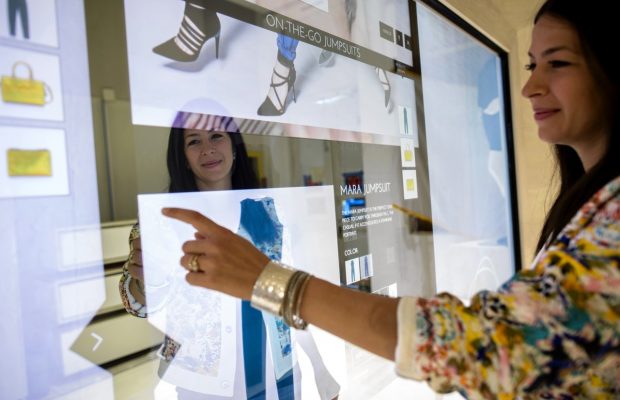
    The high network speeds will allow a vastly more complex level of engagement between retailers and shoppers. It will allow high-quality imagery, seamless streaming 3D video and personalized product matching, including previews of how a product will look alongside a previous purchase; or for homewares or furniture, for example, inside a living space or office.

    5G also brings transparency. Put simply, faster data means it will soon be easier for your customers to compare your offer with those of your competitors. There won’t be secrets anymore on pricing, product specification, determining suitability for purpose, and more importantly, a store’s credibility – making the reviews from customers after checking out the shopping basket all the more important.

    Price, once a bedrock of customer decision, is being overtaken by value as a leading consideration. Consumers who connect through 5G devices will be able to access as much information as they want online faster than ever before: that includes price comparison sites, product review blog posts, unboxing videos by KOLs. Such content has been available in the past, and more are coming along with the rise of micro-influencers, which has accelerated since 2017. “The advent of 5G is going to be a make-or-break moment for retailers,” says Corey Pierson, co-founder, and CEO of US advanced customer analytics consultancy Custora. “And those that can effectively leverage the data at their disposal only stand to gain.”

    Research by Mintel found consumers lack trust in the online shopping process, a major barrier to online shopping; not just trust in data protection issues, but also the high chance of buying counterfeit products – more than 70 percent of them are sold online, and whether an unbranded product is true to the online description is sometimes also questionable.

    Improved consumer confidence and trust will remove a pain point for shoppers, potentially reducing return rates as well. But to make the most of this opportunity, retailers will have to embrace technologies like AR, VR, chatbots, and video streaming to replicate the in-store shopping experience for customers in a digital environment.

    A synonym of agility

    5G will be a synonym of agility, allowing changes of actions and vast amounts of information to be transmittable in an instant. An order could be canceled while the product is en route to the recipient: warehousing management tools could simultaneously update the inventory records and if there is another order waiting, redirect the product to another customer, sending all relevant details to the delivery driver in a heartbeat.

    With connectivity everywhere, technology like autonomous vehicles that are currently in limited testing in several countries such as Singapore and the US, will soon be commonplace in the major cities worldwide.

    On the other hand, imagine customers being able to see their shipments in real-time via AR through their smartphones, a service more than just the tracking of location thanks to the improved IoT; and logistics companies being able to increase the automation of sorting and delivery of packages, resulting in higher accuracy and speed to reaching the customers. 5G is a key to realizing the future of e-commerce fulfillment.

    5G is an enabler

    As new 5G networks are rolled out in more and more cities, it is imperative that companies embrace technologies based on 5G connectivity to remain competitive and responsive to consumer needs. As more and more consumers purchase and experience 5G devices, their expectations will rise: they will demand the brands and suppliers they deal with are keeping up with them, whether selling products, providing services such as delivery or providing content.

    5G is as much a cornerstone of customer engagement and connectivity in the next decade as smartphones and social media were in the last.

    But it is critical to remember that 5G is an enabler, not a solution in itself.
  • Telenor Pakistan gets ready to bring 5G to Pakistan

    Telenor Pakistan gets ready to bring 5G to Pakistan

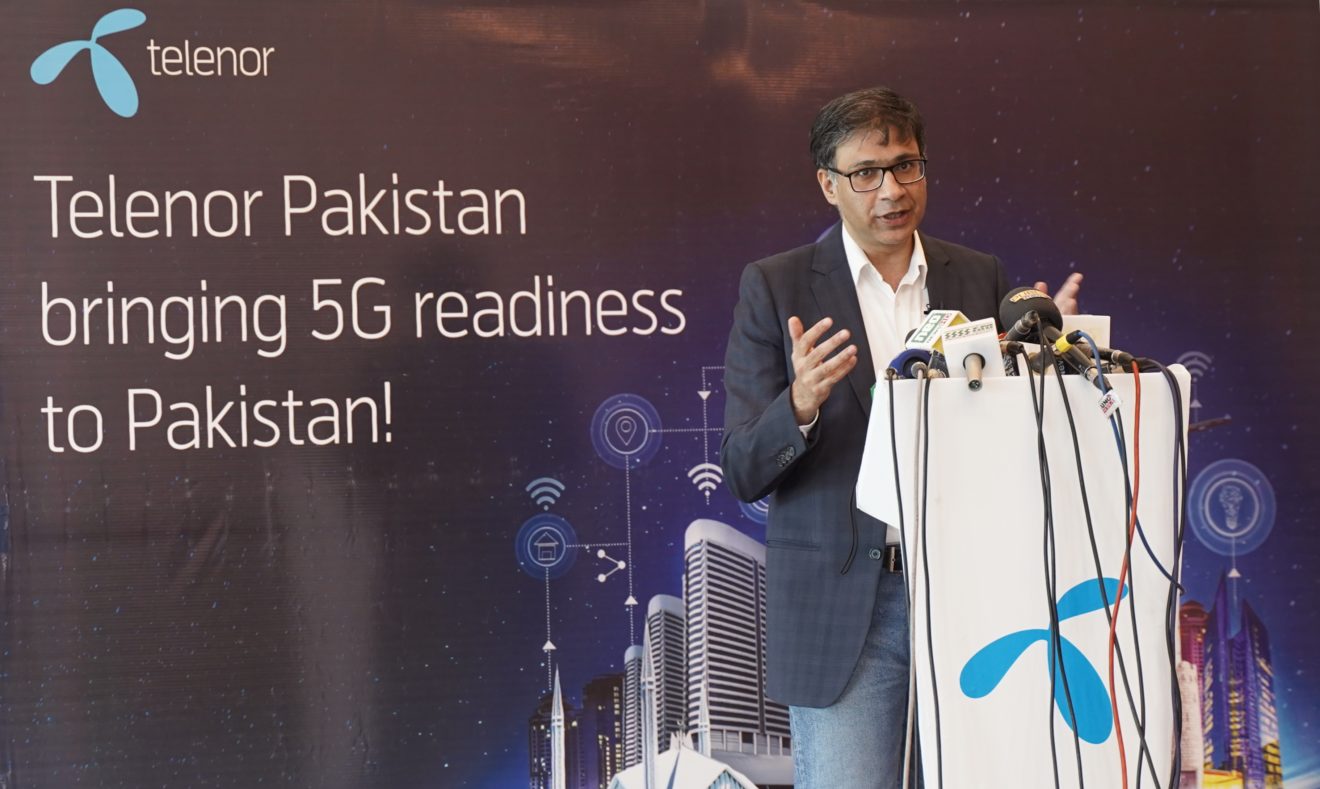
    Taking another stride towards network transformation and digitalization, Telenor Pakistan and its network partners have geared up to make the network 5G ready to pass on the benefits of this transformative technology to the people of Pakistan in the coming years.

    5G is the fifth-generation cellular network technology that offers faster data transfer speeds and enables advanced solutions such as smart homes, smart cities, autonomous driving, automated emergency services, remote medical diagnosis, smart manufacturing, cloud gaming, and enhanced content & media experiences to name a few.

    The development cements and once again demonstrates Telenor Pakistan’s position as the frontrunner of innovation and digital transformation in the country. Today, the company has the country’s first and only 4.5G network and takes the lead with such industry-first initiatives as IoT, Cloud Services, and overall digital ecosystem development comprising innovative solutions for gaming, entertainment, and 3G/4G devices portfolio, etc.

    Telenor Pakistan took the first step towards 5G enablement last year by beginning the evolution of its network core from legacy architecture to state-of-the-art virtualized hybrid core, taking the lead towards 5G readiness. The latest development takes Telenor Pakistan one step closer to the successful launch of end-to-end 5G trials to demonstrate the potential of futuristic technologies and solutions for socioeconomic advancement.

    “As Pakistan gears up for future technologies that will be integrated into governance, businesses and people’s lives, the role of 5G becomes imperative,” said Irfan Wahab Khan, Chief Executive Officer Telenor Pakistan and Head of Telenor Emerging Asia Cluster, while sharing his thoughts on the development. “With this latest step towards digitalization and network transformation, Telenor Pakistan is opening up new possibilities for millions of Pakistanis who will be the actual winners in the development. We look forward to continued government support as a digitalization partner for adequate spectrum allocation for adoption and penetration of 5G over the next few years.”

    “Staying devoted to our vision of empowering the people, we have made use of innovative technologies to bring them newer and better opportunities,” said Bilal Kazmi, Chief Marketing Officer, Telenor Pakistan while speaking to the media at Telenor Pakistan Headquarters. “We are happy to further our goals of communications innovation and digitalization across sectors, which is exactly what this development aims for. We will continue to play our part to leverage technology as the greatest equalizer and enhance the ecosystem that we set out to build years ago through network transformation and expansion, data solutions, content services and introduction of affordable devices.”

    Telenor Pakistan, driven by its vision of empowering societies, continues to take groundbreaking initiatives to lead Pakistan towards a digital economy. Connectivity and data being the enablers that empower people, the company believes that connecting people to what matters most to them is truly realized only if it continues to innovate and impact millions of lives.

  • AT&T launches 5G service in New York City

    AT&T launches 5G service in New York City

    After Sprint and Verizon, it’s AT&T’s turn to bring 5G to another US city. The carrier has just announced that starting today, customers in New York City will be able to use its 5G service if they own a compatible device.

    However, AT&T’s 5G network won’t cover the entire city and it will be available in limited areas initially. Sadly, unlike other US carriers, AT&T wouldn’t list areas in New York City where customers will be able to access its so-called 5G+ network.

    For the time being, select customers in NYC can access AT&T’s 5G+ network using the Samsung Galaxy S10 5G on the carrier’s AT&T Business Unlimited Preferred plan. As such, the AT&T 5G service is only for business customers, at list initially.

    NYC is the 21st city in the US with AT&T 5G, but the carrier announced plans to offer nationwide 5G in the first half of 2020, so there’s more to come.

  • Huawei promo video explains why mobile gamers can’t wait for 5G

    Huawei promo video explains why mobile gamers can’t wait for 5G

    What is the first thing that comes to mind when you think about 5G? Most likely you think about the faster download speeds that have peaked thus far at over 2Gbps (according to AT&T). With these data speeds, users will be able to download an HD movie in seconds instead of minutes. New businesses and industries will spring up to take advantage of the speed of the new networks similar to how 4G LTE connectivity enabled the creation of the ride-sharing industry; the latter now has two billion-dollar companies in Uber and Lyft.

    Another advantage of 5G, one that you don’t hear about often, is low latency. Latency measures the time it takes you to get a response to information that you send. For example, if you’re playing a game and shoot the opponent, latency measures the lag between the time you fire the blast and the time you know whether you’ve succeeded in hitting your target. So 5G is obviously positive for those playing mobile games in the cloud.

    Today, Huawei released a promo video for its Mate 20 X 5G that not only shows the huge difference in speed between 4G LTE and 5G, it also mentions the reduction in latency. In fact, the clip claims that game players won’t experience any lag at all when this phone runs on a 5G network.

    The Mate 20 X 5G features a 7.2-inch AMOLED display sporting a 1080 x 2244 resolution. Huawei’s Kirin 980 SoC is under the hood and the device employs Huawei’s own Baloong 5000 5G modem chip. A triple camera setup is in the back (40MP primary + 8MP telephoto with a 3x optical zoom + 20MP Ultra-wide) and a 24MP selfie snapper is in the front. A 4200mAh battery keeps the lights on, and the handset supports the Huawei M-Pen.

    No, you’re not going to see this phone sold in the U.S., but the video does point out a reason why mobile game players in the states should be looking forward to getting 5G up and running in their city.

  • Verizon launches its fifth 5G device in its fifth 5G market

    Verizon launches its fifth 5G device in its fifth 5G market

    Verizon is taking another small step today towards a nationwide 5G coverage dream that continues to seem so annoyingly distant by expanding the list of cities embracing the next standard in mobile connectivity to five. As expected, St. Paul, Minnesota is joining Denver, Chicago, Minneapolis, and Providence, but fret not, as this sluggish rollout is about to substantially speed up.

    Big Red is not giving up on its rather ambitious goal of spreading the 5G love to “more than” 30 cities by the end of the year, although some of those locations remain under wraps and there are no words on future release dates. It’s also important to highlight Verizon’s “true” 5G Ultra Wideband network is only accessible in certain parts of the five aforementioned cities for the time being.

    As far as St. Paul is concerned, the new ultra-low latency and insanely high download speeds are available in “parts” of Downtown, Lowertown, and West Seventh neighborhoods “around” landmarks including the Minnesota Children’s Museum, the Minnesota Museum of American Art, the Fitzgerald Theater, Cathedral Hill Park, and the Alexander Ramsey House. That doesn’t exactly sound impressive, but it’s a start.

    Besides, the nation’s largest wireless service provider promises your 5G device will be able to seamlessly switch to 4G LTE connectivity where a 5G signal is out of reach. Speaking of devices, the Inseego 5G MiFi M1000 hotspot is exclusively available for Verizon subscribers starting today at an outright price of $650.

    This is the fifth 5G-enabled gadget released by Verizon, targeting both businesses and everyday consumers. The ultra-advanced hotspot allows up to 15 devices to connect simultaneously, supporting “near real-time” virtual reality and augmented reality experiences, as well as 4K and 8K video streaming with “near real-time downloads and virtually no buffering delays.”

    If $650 feels a little rich for your blood, you can get that price point down to $499.99 with a two-year contract or pay $27.08 a month for two years. Don’t forget you also need to pay a little something extra on your monthly plan to actually get 5G access.

  • Apple decision forces Intel to auction its smartphone modem patents

    Apple decision forces Intel to auction its smartphone modem patents

    Intel confirmed plans to exit the smartphone business a few months ago, but news about the auction of its smartphone modem assets emerged only today. The announcement follows Apple’s decision to buy 5G smartphone modems from Qualcomm rather than Intel.

    Although the US company said it will continue to produce 4G smartphone modems and honor all orders, it will no longer invest in 5G modem product line following the announcement. Instead, Intel will shift focus on its 5G network business, which is expected to grow in the coming years

    According to a new report from IAM, Intel has decided to auction all its IP relating to cellular wireless connectivity. There are no less than 8,500 patents that Intel is now looking to sell in order to recover some of the resources it invested. The report also mentions that Intel is launching this auction separate to its efforts to sell the smartphone modem division, hoping that a potential buyer for both will appear.

    Intel’s inability to meet Apple’s deadlines proved to be fatal for the business in the end, as the Cupertino-based company decided to make sure it’s got enough 5G modems in 2020. Left without the main client for its smartphone modem division, Intel is forced to cut its losses and refocus on those businesses that apparently bring much more money.

  • Docomo, Ericsson complete 5G glass antenna trial

    Docomo, Ericsson complete 5G glass antenna trial

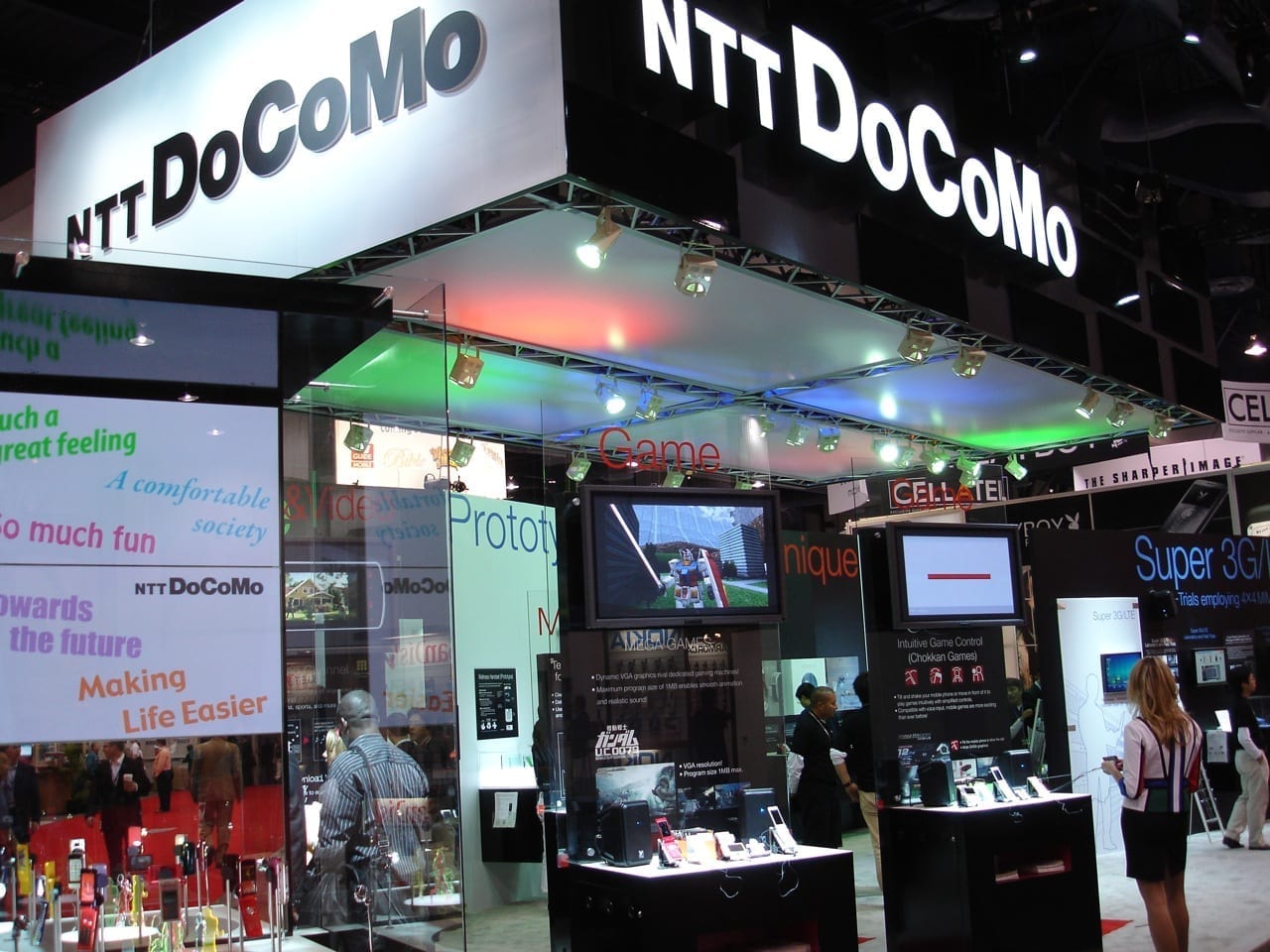
    Japanese operator NTT Docomo and glass solution provider AGC Group have collaborated with Ericsson to complete what the companies believe to be the world’s first trial of 5G communications using a glass-embedded antenna.

    The trial used an antenna embedded in synthetic fused silica glass to transmit and receive 28-GHz 5G radio signals.

    Validation testing used a vehicle fitted with multiple antennas and traveling about 30 km/h. Using the antenna, the companies achieved downlink speeds averaging 1.3Gbps within a 100 meter range, and maxing out at 3.8Gbps at 400 MHz.

    The glass antenna prototype has the potential to overcome challenges associated with high-band 5G spectrum being unable to adequately penetrate windows, the companies said.

    It could potentially be attached to window surfaces in buildings, vehicles and railway cars to enable stable, high-speed 5G communications under challenging indoor and in-vehicle conditions.

  • SoftBank signs 5G deals with Ericsson, Nokia

    SoftBank signs 5G deals with Ericsson, Nokia

    Japan’s SoftBank has signed 5G deployment contracts with both Ericsson and Nokia as it prepares to launch services over its newly-granted 5G spectrum.

    Ericsson has announced it has been selected as a primary vendor for the deployment of a multi-band 5G network utilizing Softbank’s 3.9-GHz to 4-GHz and 29.1-GHz to 29.5-GHz spectrum bands.

    SoftBank will deploy radio access network equipment including products from the Ericsson Radio System portfolio to allow it to enhance its existing LTE network while optimizing its 5G network.

    SoftBank and Ericsson have been trialing 5G technologies since 2015, and have since expanded their collaboration to include 5G testing of multi-bands, including 28-GHz and 4.5-GHz.

    SoftBank and Ericsson have been partners since the 2G era and we are thrilled to support them on this latest part of their technology journey,” Ericsson SVP and head of North East Asia Chris Houghton said.

    “With the help of our advanced product portfolio, SoftBank can unlock the potential of 5G for Japanese society and we look forward to building on our long-standing partnership.”

    Meanwhile SoftBank will deploy Nokia’s 5G AirScale technology across Japan, enabling the delivery of 5G mobile broadband, ultra-reliable low latency connectivity (URLLC) and machine type communication (eMTC) services.

    SoftBank plans to launch 5G services with Nokia’s AirScale solution in both distributed and centralized RAN configurations, according to Nokia Japan head John Harrington.

    “We are delighted to continue our long-term relationship with SoftBank and to be working with them as a trusted end to end partner at such an important milestone in the transformation to 5G. We are committed to help SoftBank launch their commercial 5G network.”

  • 5G will hit the IoT market in late 2020

    5G will hit the IoT market in late 2020

    5G will make its first appearance in the IoT market in late 2020 and struggle for years before it can become a mainstream technology, says a new report from Berg Insight.

    According to the IoT analyst firm, the first 5G cellular IoT modules will become available for developers this year.

    While this allows early adopters to create the first IoT devices based on the 5G standard, the report also states that it will take some times for 5G to become popular in the context of IoT.

    The technology will account for just 3% of the total installed base of cellular IoT devices by 2023, predicts Berg Insight.

    “5G still has some way to go before it can become a mainstream technology for cellular IoT”, said Tobias Ryberg, principal analyst and author of the report.

    Just like 4G when it was first introduced, the initial version of 5G is mostly about improving network performance and data capacity, he added.

    “This is only relevant for a smaller subset of high-bandwidth cellular IoT applications like connected cars, security cameras and industrial routers. The real commercial breakthrough will not happen until the massive machine type communication (mMTC) use case has been implemented in the standard,” explained Ryberg.

    The report also identifies homeland security as an area where 5G cellular IoT can have a major impact already in the early 2020s.

    “5G enables the deployment of high-density networks of AI-supported security cameras to monitor anything form security-classified facilities to national borders or entire cities”, said Ryberg.

    “How this technology is used and by whom is likely to become one of the most controversial issues in the next decade.”

    In a separate report, Berg Insight predicts the global number of cellular IoT subscribers will reach to 9 billion in 2023 from 1.2 billion in 2018, largely driven by the “momentum scale” of deployment in China.

  • Telstra to launch HTC 5G Hub next week

    Telstra to launch HTC 5G Hub next week

    Australian operator Telstra has is taking pre-orders for what it is calling the country’s first 5G mobile device. The HTC 5G Hub will be available in Telstra stores from next Tuesday.

    The HTC 5G hub is a 5G and 4GX (LTE-Advanced) media hotspot designed for both enterprise and consumer use.

    The hotspot can support up to 20 Wi-Fi enabled devices as well as a gigabit Ethernet connection and provides an all-day battery life.

    For corporate customers, the device offers corporate VPN authentication and remote wipe capability. For the consumer segment, the device offers a voice-activated remote control for other home smart devices and media hub capabilities.

    Telstra CEO Andy Penn said the launch of the device was an important milestone in the operator’s transition to 5G.

    “Our launch of the HTC 5G Hub is the moment 5G becomes a reality for Australian consumers. Since 2016, we have been working with some of the world’s leading technology brands to ensure Australians are among the first in the world to be able to access 5G,” he said.

    “HTC has been a key partner for Telstra, innovating new technologies and driving greater connectivity for our customers. This launch of Australia’s first 5G mobile device is a testament to that partnership and we are proud to be launching it today”.

    At launch, customers will be able to access 5G in selected areas of Adelaide, Brisbane, Canberra, the Gold Coast, Hobart, Launceston, Melbourne, Perth, Sydney and Towoomba, he said.

    “This is just the start. The roll out of 5G coverage is ongoing and, as 5G develops, there will be more devices and more technologies to come. But this is an important step we take today, as the first Australian network to offer mobile 5G”.

  • Cisco expects 5G windfalls in the future

    Cisco expects 5G windfalls in the future

    Cisco is primarily known for its switches and routers for service providers and enterprises. It has not been a big competitor in the radio access networking space against vendors such as Ericsson and Nokia. But on its fiscal third-quarter 2019 earnings call this week, Cisco CEO Chuck Robbins mentioned “wired and wireless” networking a few times.

    “We are moving into an era of truly immersive and pervasive wireless connectivity, which generates demand for high density, low latency performance, for real-time experiences over both wired and wireless networks,” said Robbins, according to a Seeking Alpha transcript. “Our guys like to say behind every great wireless network is a great wired network,”

    In fact, the company has been hired by Rakuten to help it build its new greenfield mobile network in Japan. Cisco is building Rakuten’s network functions virtualization infrastructure (NFVi) with 4,000 edge nodes. In addition to software, Cisco is delivering routing and switching hardware. And Cisco is also the primary systems integrator for Rakuten’s virtualized telco cloud.

    On its earnings call, Robbins said, “With our newest Catalyst 9000 family additions, we have completed the most comprehensive enterprise networking portfolio refresh in our history. We have rebuilt our entire access portfolio with intent-based networking across wired and wireless.”

    Robbins also mentioned 5G, saying Cisco is helping telcos build out their core networks ahead of large-scale 5G rollouts. Although Cisco is already selling packet core technology to carriers for their new 5G networks, “the big play for us is when they begin to evolve their networks to accommodate the traffic,” he said. “And we’ve always said we felt like that would be sometime in calendar 2020.”

    Carriers are leveraging their existing core networks to run the early trials on 5G. “We believe that sometime in the future when the number of connections increases and the capacity gets to a point, then they’re obviously going to begin to build out these new backbones dedicated to the 5G infrastructure, where we will generally come into play,” he said.

    Although Robbins focused on telcos’ core networks in the earnings call, the company has investments in Altiostar, a startup that has developed RAN virtualization technology. Altiostar is also working with Rakuten.

    Finally, Robbins talked a bit on the earnings call about Wi-Fi 6. Cisco recently announced new Wi-Fi 6 access points across its Catalyst and Meraki portfolios, as well as the Catalyst 9600 core switch family.

    “Wi-Fi 6 is effectively what used to be called 802.11ax,” said Robbins. “And, what’s happening now is when you get these high-performance access points into the organizations and you get the low latency immersive experience possibilities, then it’s also going to drive the need to upgrade the backbones.”

  • DoT aims to issue trial 5G spectrum in June

    DoT aims to issue trial 5G spectrum in June

    India’s Department of Telecom has reportedly put facilitating 5G technology trials at the top of the agenda within its 100-day action plan for whichever party wins the upcoming Lok Sabha (lower house) elections.

    The allocation of 5G trial licenses could take place as soon as the new government takes over, which could be in June.

    The 100-day action plan also includes developing policy on trial spectrum and technology testing, standardization, regulatory policy and the establishment of use case labs, the report states.

    Areas of focus include simplifying the process of obtaining experimental licenses as well as approvals for experimental products and services.

    Depending on their readiness, operators could commence 5G network trials in June. The telecom ministry has recommended that the trial run for a three month period, with options to expand this to up to a year if operators need more time to prepare.

    Samsung, Nokia and Ericsson have been approved to participate in the trials with incumbent operators Reliance Jio Infocomm, Bharti Airtel and Vodafone Idea. The government has not yet decided whether to allow the participation of Chinese vendors including Huawei.

  • Huawei is now looking to capture the 5G chipset market

    Huawei is now looking to capture the 5G chipset market

    While Huawei and 70 of its affiliated companies now need U.S. government approval to buy parts from the U.S., the company doesn’t have to worry about accessing SoCs from San Diego based Qualcomm. That’s because Huawei designs its own chips for the firm’s high-end handsets. The next such chip, the Hi-Silicon Kirin 985, is due out in the second half of this year. The Kirin 985 is designed for Huawei’s 4G LTE phones. However, the chip can be outfitted with Huawei’s own Balong 5G modem; this will allow phones powered by the Kirin 985 to connect to mobile 5G sub 6GHz networks.

    The Kirin 985 chipset with the 5G Balong modem will first appear on the Huawei Mate 30 line due out in the fourth quarter of this year. The chip will be manufactured by TSMC using the 7nm+ mode, with trial production runs scheduled for this quarter. By the third quarter of this year, the Kirin 985 should be rolling off of TSMC’s assembly lines in volume.

    Following the release of the Kirin 985, Huawei is expected to introduce 5G SoCs that comes with an integrated 5G modem. These chips are expected to roll out sometime between late 2019 and early 2020. Early next year, Huawei is also planning on offering chips that will be used on smartphones supporting mmWave 5G connectivity. The latter uses very high-frequency radio signals in the 24GHz to the 90GHz range. While mmWave 5G speeds could be faster than those achieved over sub 6GHz airwaves, the wavelengths are shorter. As a result, it will take less time to build out a nationwide 5G network using sub 6GHz. This is why T-Mobile expects to be first in the states with a coast-to-coast 5G platform next year using sub 6GHz only.

    Huawei’s Hi-Silicon unit plans to compete with Qualcomm to become one of the top two suppliers of 5G SoCs to phone manufacturers. The report notes that MediaTek will have a 5G chipset for sub 6GHz smartphones before the end of this year. It also expects Apple to design a 5G SoC in time for the launch of the 2020 iPhone models.

    Huawei’s road map is not unique. Other global chip designers are said to be creating chipsets for mobile devices that can be produced with a 4G or 5G modem chip as the slow migration from 4G to 5G begins. These firms will start offering 5G SoCs with integrated 5G modem chips as well as chips supporting mmWave 5G next year.

    Interestingly, Huawei offered to sell Apple its Balong 5G modem chip last month. This came at a time when Apple was unsure about which company it would source the component from. Due to its legal battles with Qualcomm, Apple appeared committed to using 5G modem chips that were being developed by Intel. Still, there were questions about whether Intel could deliver them in time for a 2020 launch, which led Apple to talk with Samsung and MediaTek. Finally, the company reached a settlement with Qualcomm that included a multi-year supply deal for the chipmaker’s 5G smartphone modem.

    Huawei’s first 5G phone, barring any Galaxy Fold-like delays, will be the Mate X. This is a foldable phone that folds out instead of in like Samsung’s device does. The Mate X will use the same Kirin 980 SoC found on the current P30 line but will include a 5G Balong 5000 modem chip. The $2,600 device will probably not be seen in the U.S. since President Trump is expected to sign order soon that will ban Huawei products from entering the states.

  • Ooredoo Myanmar signs 5G agreement with ZTE

    Ooredoo Myanmar signs 5G agreement with ZTE

    Ooredoo Myanmar has signed an agreement with ZTE to collaborate on 5G network deployment as part of the operator’s network modernization program.

    The two companies have signed a memorandum of understanding that will cover Ooredoo Myanmar’s 5G evolution from trials through to commercial deployment.

    During the first stage of the partnership, Ooredoo Myanmar and ZTE will evaluate potential test environments for Ooredoo’s 5G network. The network tests will be used to evaluate the performance of the 5G network ahead of commercial deployments.

    “It is a great pleasure to announce our MOU with ZTE Corporation, one of the leaders in advanced telecommunications technology,” Ooredoo Myanmar acting CEO Alok Verma said.

    “Ooredoo is the first telecom operator in Myanmar to launch initiatives towards 5G development, recognizing the potential of 5G, which will unlock the next generation of wireless technology with high speeds, ultra-low latency and greater capacities, unleashing new possibilities in mobility, manufacturing, healthcare, transportation and several other industries.”

    Ooredoo Myanmar’s parent company Ooredoo launched what it claims as the first live 5G network in Qatar during May last year. The company plans to arrange more 5G trials and commercial launches across its operating companies around the world over the next few months.