Tag: 5G

  • Verizon expands 5G to 20 more cities

    Verizon expands 5G to 20 more cities

    Following the launch of 5G services in Chicago and Minneapolis, US operator Verizon announced 20 new cities where it will turn on its 5G Ultra Wideband network this year. Verizon previously said it will launch 5G services in parts of at least 30 cities in 2019.

    The new cities include Atlanta, Georgia; Boston, Massachusetts; Charlotte, North Carolina; Cincinnati, Cleveland, and Columbus, Ohio; Dallas and Houston, Texas; Des Moines, Iowa; Denver, Colorado; Detroit, Michigan; Indianapolis, Indiana; Kansas City, Missouri; Little Rock, Arkansas; Memphis, Tennessee; Phoenix, Arizona; Providence, Rhode Island; San Diego, California; Salt Lake City, Utah; and Washington, DC.

    Verizon also said it will roll out its fixed wireless 5G Home broadband service to some of those markets, but didn’t specify which ones would see the service. The 5G Home service delivers 300 Mbps to subscribers for $50 per month for customers with Verizon wireless service or $70 per month for those without.

    Verizon said it’s now taking pre-orders for the Samsung Galaxy S10 5G, the first 5G-capable phone to launch in the US. Verizon has a limited period of exclusivity for the phone before carriers T-Mobile and AT&T can begin offering the device.

    “The Galaxy S10 5G on Verizon’s 5G Ultra Wideband network will give our customers access to incredible speeds and the latest and greatest streaming, augmented-reality, gaming, and consumer and business applications that bring us into a future powered by 5G,” said Brian Higgins, Verizon’s vice president, device and consumer product, in a statement.

    Verizon is offering new and existing customers the opportunity to trade in an eligible smartphone and save up to $450 off the S10 5G, which retails for $1,300. Verizon is offering the 256GB version of the device for $54.26 per month for 24 months with its device payment plan; while the 512GB version is available for $58.33 per month for 24 months.

    Access to Verizon’s 5G network is available only to customers who have an “Above” and “Beyond Unlimited” plans and a 5G phone. Both plans include unlimited 5G Ultra Wideband data, hotspot and 4K HD video streaming in areas where the 5G network is available. During the company’s first 5G network launches in Chicago and Minneapolis, Verizon was charging customers an extra $10 per month, but the carrier will waive that fee for a limited as a promotion.


  • Verizon to waive $10 5G fee for three months

    Verizon to waive $10 5G fee for three months

    Verizon will waive for three months the $10 fee it planned to charge subscribers for accessing its 5G network. After launching in Chicago and Minneapolis earlier this month, the carrier announced an additional 20 cities across the US where it will turn on 5G services this year.

    Verizon said it’ll waive the charge for subscribers in Chicago and Minneapolis. A few of the reviewers reported disappointing results using the network, and some recommended consumers don’t pay for the service until the network is expanded and the kinks are worked out.

    While most people who tested the network reported achieving speeds of 300-600 Mbps, there were plenty of problems with finding the 5G network signal, or keeping the Motorola Z3 phone connected to it.

    During Verizon’s quarterly earnings call April 23, Verizon CEO Hans Vestberg said the network in those initial two cities was “performing as expected on a brand new technology being deployed for the first time in the world.”

    “As more features within the network become available for deployment through ongoing software innovation, we will provide increased coverage, improved capacity and greater throughput,” Vestberg said, according to a transcript of the call provided by Motley Fool.

    Verizon’s deployments in Chicago and Minneapolis used the carrier’s millimeter wave (mmWave) spectrum technologies to deliver high speeds in dense urban areas. But as Wave7 Research’s Jeffrey Moore told FierceWireless this week, mmWave technologies tend to have weak signal propagation, pointing to concerns about the urban use case for the technology when there are large buildings and other obstacles that can block the signal.

    Vestberg seemed to concede that there are challenges with mmWave during the earnings call. “We all need to remind ourselves, this is not a coverage spectrum,” he said. It’s unclear if those considerations factored into Verizon’s decision to wave the $10 fee for its 5G network.

  • 5G helps Ericsson swing to profit in Q1

    5G helps Ericsson swing to profit in Q1

    Ericsson swung back to a 2.4 billion kronor ($254.3 million) net profit for the first quarter of 2019, partly as a result of the growth opportunities being afforded by 5G.

    Total sales increased 13% year-on-year to 48.9 billion kronor, driven by growth in North America due to the market’s early lead in the deployment of 5G.

    Ericsson CEO Börje Ekholm commented that the company has to date announced an industry-leading 18 commercial 5G deals.

    Meanwhile Ericsson managed to improve its gross margin to 38.5% from 35.9% due to improvements in its networks and managed services segments.

    But while network equipment sales grew 10% year-on-year during the quarter quarter, managed services revenue fell 5% over the same period as a result of scheduled contract exits.

    “As previously communicated, we continue to take strategic contracts and incur costs for 5G field trials and, in addition, by end of 2019 we expect large-scale deployments of 5G to commence in parts of Asia,” Ekholm said.

    “Combined, this will gradually impact short-term margins but strengthen our position in the long term. The impact of strategic contracts and 5G field trials was limited in Q1. The 5G market is gaining momentum and we are well positioned to capture opportunities.”

    Meanwhile Ekholm revealed it is now in the early stages of negotiating a settlement to close an investigation by both the US Securities and Exchange Commission (SEC) and the Department of Justice (DOJ) into allegations the company was involved in a bribery scheme in certain EMEA markets.

  • United Kingdom said to reject calls for Huawei 5G ban

    United Kingdom said to reject calls for Huawei 5G ban

    The UK government has reportedly approved Huawei supplying some 5G equipment for operators in the nation despite warnings from intelligence agencies and the US government of a potential security risk.

    Leaked discussions believed to have been held at the UK government’s National Security Council meeting from Tuesday indicate that Huawei will be able to supply non-core 5G network components including antennas.

    According to the leaked details, the UK’s prime minister Teresa May ignored warnings from some senior ministers to make the decision.

    Approval would also put the UK government at odds with its Five Eyes allies the US and Australia, which have made moves to ban Huawei from providing 5G equipment in their respective markets.

    While the UK government has denied that a final decision has been made, government ministers are also calling for a full investigation into the leak of the National Security Council discussions about Huawei.

    Huawei has repeatedly denied concerns from the US and some other nations that its equipment could be used to facilitate espionage by the Chinese government.

  • Qualcomm support China Unicom’s 5G announcement

    Qualcomm support China Unicom’s 5G announcement

    U.S. based chip designer Qualcomm announced on Monday that it supports the introduction of  China Unicom’s 5G services in the largest smartphone market in the world. Qualcomm’s latest and greatest Snapdragon 855 Mobile Platform and Snapdragon X50 5G modem chip were used on 5G phones from manufacturers like (in alphabetical order) nubia, OnePlus, Oppo, Vivo, Xiaomi and ZTE. Devices from these companies were part of Monday’s event. China Unicom said that it is the first Chinese carrier to announce that it will offer 5G wireless service to consumers in the country.

    Starting tomorrow and running through April 25th, Qualcomm, China Unicom and the aforementioned phone manufacturers plan on showing live demonstrations of 5G at the 2019 China Unicom Partner Conference in Shanghai. These demonstrations will show OTA connections made using China Unicom’s 5G network and devices powered by Qualcomm’s 5G solutions. Consumers in China hope that 5G phones and service will be made available later this year. Those attending the conference will get to see HD video streaming, cloud gaming, web browsing and realtime sharing of data between devices and the cloud all over a 5G network.

    “For the past decades, our technology has been a foundation for the wireless evolution. It takes many years of R&D, specification, prototyping, testing, trials and product development to bring a new generation of mobile technology to China and the world. Like previous generations, 5G is the result of more than a decade of collaborative efforts by Qualcomm Technologies and our ecosystem partners, with the mission of preparing the mobile industry for 5G rollout starting this year. We’re excited for Chinese consumers to experience 5G’s truly transformative wireless experience in 2019.”-,” said Frank Meng, Chairman, Qualcomm China.

    5G data speeds run up to 10 times faster than 4G LTE speeds. The next generation of wireless connectivity is expected to lead to the launch of new services and businesses world wide in the same way that 4G LTE networks gave rise to new businesses. For example, the ride sharing industry was born thanks to the replacement of 3G data with faster 4G LTE service. The creation of this industry helped birth multi-billion dollar companies like Uber and Lyft.

  • Apple’s 5G iPhone Using Samsung Modems to be released in 2020

    Apple’s 5G iPhone Using Samsung Modems to be released in 2020

    In one fell swoop, Apple cut the Gordian knot of 5G modem supply and it is smooth sailing from here, as it paid Qualcomm undisclosed amount to settle the patent litigation and secure a multi-year contract for 5G iPhones.

    “It’s personal. I don’t see anybody who can bridge this gap,” tipped the WSJ recently about Apple and Qualcomm CEOs relationship but the big boys ironed out their differences quickly. Apple could have tried Intel, Samsung or Huawei, but each of those choices comes with drawbacks.

    Intel threw in the towel on 5G modem development when it learned that Qualcomm resolved its patent issues with Apple, while America’s homeland security institutions would balk at Huawei’s involvement due to geopolitical considerations. Despite all rumors, Huawei company reps said during its Analyst Summit 2019 yesterday that they have “no communication with Apple on 5G modems.”

    Samsung, on the other hand, simply can’t make enough of its own 5G modems to exclusively supply huge customer like Apple. It recently declined Apple’s advances for its Exynos 5100 5G modem. Not only does the company need its production for the Galaxy S10 5G that is now shipping, but it could very well need it for the Note 10 Pro, too, and others down the line.  According to one “electronics industry official” there:

    Apple inquired about the supply of 5G modem chip from Samsung Electronics System LSI division. However, we know that Samsung Electronics System LSI answered that the supply volume of its smartphone 5G modem chip is insufficient.

    Well, the most renowned Apple supply chain analyst, Ming-Chi Kuo of TF International Securities, has spoken, and Apple will seemingly hedge its Qualcomm bets with Samsung as a side dish. If you are wondering why, Apple is most likely planning to use the more advanced Qualcomm modems in placed where mmWave spectrum 5G networks are being established, while Samsung’s likely cheaper solution will remain for the sub-6 GHz crowd.

    Apart from all these juicy dual supplier predictions, Ming-Chi Kuo is advocating for a fall 2020 release date of the future 5G iPhones. That’s the same timeframe as before but this time around, Apple is in a position to use the best that the 5G market can offer without triggering the NSA, CIA and other three-letter agencies’ wrath.

    South Korea just launched its nationwide 5G network, with the Galaxy S10 5G being its poster child. Upon the phone’s release there, Korea will have all of its largest networks offering 5G plans. In fact, Korea Telecom announced three 5G price tiers. Among those, there is a “Super Plan” that offers truly unlimited 5G data without speed caps, and this one will go for the equivalent of $70, a pretty good price no matter how you slice it. In fact, the Super 5G Plan is somewhat cheaper than the current unlimited 4G LTE plans in Korea, so the 5G future seems bright, and we are expecting more and more 5G handsets to enter the fray this year, especially towards the tail end of 2019.

    A true nationwide shift to 5G networks is not happening this year in the US anyway, so iPhone users won’t be missing all that much until then. Next year, however, most of the flagship phones of the spring season will probably have some sort of 5G connectivity support, be it with a Qualcomm, Samsung or Huawei modem, and Apple could feel the pinch in that regard.

    Had Apple gone alone in developing a 5G modem, either by acquiring Intel’s wireless modem assets, or starting from scratch, it would have taken it years to reach a sufficiently good unit that is worthy to put in millions of iPhones. Wireless connectivity modems are perhaps the most complex of chips in a phone, and 5G ones require so much filters and software control to avoid interference and still be backwards compatible that this option would have meant either a lot of extra expenses for Apple in order to deliver a 5G iPhone in 2020, or falling behind the competition by launching one that is a cycle or two behind.

    “Apple knows our phone number, we are still in San Diego,” tipped Qualcomm recently, giving a glimmer of 5G hope, and patching thing up with Qualcomm turned to be the smartest solution, just as we expected. There you have it – Apple resolves the bad blood between the companies, Qualcomm is likely to assist it with the 5G push, and Samsung will be its sidekick. The 5G future is so bright, we have to wear shades. According to Kuo, the launch of the 5G iPhone is expected to unleash a big upgrade cycle for Apple, and he upped his forecast for iPhones sold in 2020 to the whopping 200 million, from the current 190 million prognosis.

  • Qualcomm’s next Snapdragon processor could take 5G mainstream Easily

    Qualcomm’s next Snapdragon processor could take 5G mainstream Easily

    Support for 5G networks is currently limited to a handful of flagship devices such as the Galaxy S10 5G, LG V50 ThinQ 5G, and Huawei Mate 20 X 5G. This situation is unlikely to change anytime soon, but in order to boost the adoption rate, Qualcomm is apparently developing a 5G-ready chip that’ll make its way into future mid-range smartphones.

    Dubbed the Snapdragon 735, the upcoming chip is expected to succeed the recently-announced Snapdragon 730. Like Qualcomm’s flagship processors, this new one will reportedly be manufactured on the 7-nanometer manufacturing process. Concrete details about this are yet to be revealed, but compared to the older Snapdragon 710 it should result in a performance boost of up to 20% and an increase of 50% in terms of efficiency. Additionally, efficiency gains of up to 20% are to be expected over the Snapdragon 730.

    As mentioned above, the Snapdragon 735 will introduce support for 5G networks. But rather than utilizing the separate Snapdragon X50 modem found inside the Galaxy S10 5G, the Snapdragon 735 will apparently use an integrated 5G modem. This should result in thinner and lighter 5G smartphones. It should also reduce the overall cost associated with the technology.

    Moving on to some of the more technical details, the included CPU will boast an octa-core 1+1+6 setup. This will include six efficiency cores clocked at 1.6GHz, a slightly faster one at 2.4GHz, and a high-performance core clocked at 2.9GHz. There will also be an upgraded GPU in the form of the Adreno 620.

    Lastly, the Snapdragon 735 should allow manufacturers to build mid-range smartphones with as much as 12GB of RAM. Additionally, the chip will support 21:9 displays with 3360x1440p resolutions, 4K video recording at 60FPS, and a dedicated NPU that’ll help with AI features.

    The Qualcomm Snapdragon 735 is expected to arrive during the final quarter of this year, perhaps alongside the flagship Snapdragon 865. In terms of a release, the first Snapdragon 735-powered devices should arrive during the first half of 2020.

  • Huawei Launches ‘World’s First’ 5G Communications Hardware For Automotive Industry

    Huawei Launches ‘World’s First’ 5G Communications Hardware For Automotive Industry

    China’s Huawei Technologies launched on Monday what it said was the world’s first 5G communications hardware for the automotive industry, in a sign of its growing ambitions to become a key supplier to the sector for self-driving technology.

    Huawei said in a statement that the so-called MH5000 module is based on the Balong 5000 5G chip which it launched in January. “Based on this chip, Huawei has developed the world’s first 5G car module with high speed and high quality,” it said.

    It launched the module at the Shanghai Autoshow, which began last week and runs until Thursday.

    “As an important communication product for future intelligent car transportation, this 5G car module will promote the automotive industry to move towards the 5G era,” Huawei said.

    It said the module will aid its plans to start commercializing 5G network technology for the automotive sector in the second half of this year.

    Huawei has in recent years been testing technology for intelligent connected cars in Chinese cities such as Shanghai, Shenzhen and Wuxi and has signed cooperation deals with a swathe of car makers including FAW, Dongfeng and Changan.

    The company, which is also the world’s biggest telecoms equipment maker, is striving to lead the global race for next-generation 5G networks but has come under increasing scrutiny from Washington which alleges that its equipment could be used for espionage. Huawei has repeatedly denied the allegations.

  • Intel pulls out of 5G smartphone modem market

    Intel pulls out of 5G smartphone modem market

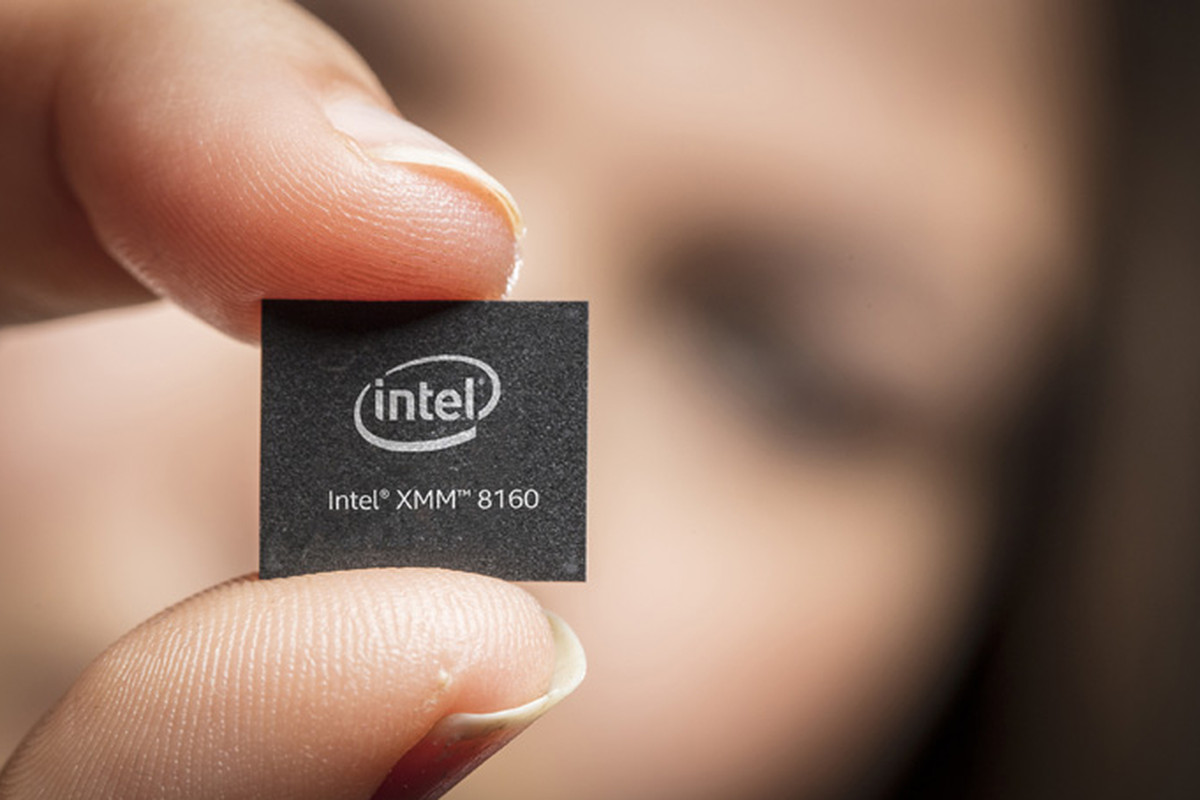
    Intel has announced plans to exit the 5G smartphone modem business hours after Apple announced it was settling its legal battles with Qualcomm over modem patent licensing.

    Apple and Qualcomm announced they have reached an agreement whereby Apple will sign a six year patent licensing deal and agree to buy Qualcomm chipsets, in return for ceasing all litigation.

    Apple had ceased using Qualcomm chips for its smartphones and replaced them with Intel chipsets after accusing Qualcomm of using its patents to maintain a monopoly on the modem chip market, and Qualcomm countered by accusing Apple of violating its patents.

    But with Apple seemingly throwing in the towel, Intel announced it no longer expects to launch 5G modem products for smartphones.

    The company pledged to continue to meet current customer commitments for its existing 4G smartphone modem product line, and said it still intends to invest in its 5G network infrastructure business and assess opportunities for 4G and 5G modems for PCs, IoT devices and other data-centric devices.

    “We are very excited about the opportunity in 5G and the ‘cloudification’ of the network, but in the smartphone modem business it has become apparent that there is no clear path to profitability and positive returns,” Intel CEO Bob Swan said.

    “5G continues to be a strategic priority across Intel, and our team has developed a valuable portfolio of wireless products and intellectual property. We are assessing our options to realize the value we have created, including the opportunities in a wide variety of data-centric platforms and devices in a 5G world.”

  • First 5G smart hotel launched in China

    First 5G smart hotel launched in China

    InterContinental Shenzhen, Shenzhen Telecom Engineering and Huawei have signed a strategic cooperation agreement to create the world’s first 5G smart hotel.

    By introducing the hotel industry’s first end-to-end 5G network with integrated terminals and cloud applications, the project will enable InterContinental Shenzhen to provide guests with an innovative luxury experience and open the door for digital transformation of entire hotel industry through 5G technology.

    Shenzhen Telecom is deploying Huawei’s 5G network equipment in the InterContinental Shenzhen to achieve continuous indoor and outdoor 5G coverage, which will serve as the platform for a new generation of hotel services.

    Guests will experience 5G hotel applications through 5G smartphones and customer-premises equipment (CPE) terminals, including 5G welcome robots, 5G cloud computing terminals, 5G cloud games and 5G cloud virtual reality (VR) rowing machines.

    For the project’s kick-off ceremony, Shenzhen Telecom and Huawei jointly deployed a 5G Digital Indoor System on the hotel’s first floor and in the presidential suites.

    In the hotel lobby, guests can access the 5G network through CPEs or their smartphones to experience high speed 5G downloads and uploads. Service efficiency is improved with 5G intelligent robots that provide services including guest information, destination guidance, and delivery.

    The presidential suites covered by the new network provide guests with 5G hotel services such as cloud VR rowing machines, cloud games and 4K movies.

    Dr. Peter Zhou, chief marketing officer of Huawei Wireless Solution, said: “5G is here – from the 4K ultra high-definition live broadcast of CCTV’s Spring Festival Gala early this year to today’s 5G entertainment and business transformation of the InterContinental Shenzhen’s presidential suites, 5G technology has penetrated into different industries.”

  • Indians bought 50% more 4G devices in 2018 says CMR

    Indians bought 50% more 4G devices in 2018 says CMR

    The latest CMR report, the Annual 4G LTE Devices India Market Review Report 2018, revealed that Indian consumers purchased 50% more 4G LTE devices in 2018 year-on-year, with shipments surpassing 200 million units. 4G devices include mobile phones, tablets and data cards. In 2018, 4G devices had a 64% market share.

    While 4G LTE enabled mobile device shipments crossed 60%, the 4G LTE tablets accounted for 44% of the total tablet shipments. 4G LTE contributed for 100% of the data cards shipped in calendar 2018.

    “4G is enabling Indians everywhere to raise above their social and economic challenges and connect with new possibilities. The 4G device penetration in India continues to gain traction, with 4G mobile phone and 4G tablet shipments on the rise. Reliance Jio Infocomm has been the X-factor,” said Prabhu Ram, head – Industry Intelligence Group (IIG), CMR.

    During the year, LYF led in the 4G LTE mobile handset segment with 33% market share, while Lenovo dominated the 4G LTE tablet market with 40% market share. LYF is the only Indian brand in the leaderboard shipping 4G LTE mobile handsets.

    Narinder Kumar, lead analyst-IIG, CMR, predicts 4G adoption will continue in CY2019 driven by 4G feature phones and bundled offerings at the entry level contributing to growth in 4G device shipments. Video and music streaming will fuel this 4G growth. “Over the long run, we anticipate 4G to play a major role in smart cities, and especially smart homes,” said Kumar.

    CMR analysts see 4G continuing to dominate the Indian market until 2024. That said, 5G should see a spike in adoption in India by 2023. CMR anticipates a modest spike for 5G by 2023, with CMR internal estimates pointing to 5G smartphone shipments in India to top 140M by 2025.

    “At CMR, our internal research estimates point to the 5G enabled devices contributing to 3% of the total smartphone shipments by 2021, and potentially reaching 16% by 2025. The course of 5G in India will be driven by how Jio plays its cards,” added Prabhu.

  • Lack of clarity will stump 5G growth

    Lack of clarity will stump 5G growth

    As the first commercial deployments of 5G start to appear, the stage is set for consumers finally to find out what the powerful next-generation mobile standard promises can bring: an ambitious and far-reaching technological advance that transforms virtually all aspects of human activity—how we experience life, conduct business, create goods, and build societies.

    That’s the theory and the hope.

    For many in the industry 5G will set the stage for incredible change. However with standards are still being rolled out, it remains a confusing landscape, with varied and sometimes conflicting interpretations of what 5G is and what to expect from it.

    This confusion is impacting not just consumers but also complicating the industry’s ability to measure itself against a standard set of 5G expectations and requirements.

    To optimize short-term and long-term 5G adoption, it is imperative that clarity regarding what 5G is and when each capability will be available is established for both consumers and the ecosystem. To that end, IHS Markit follows the official 3GPP definition of 5G but also believes that this description needs to be understood within the context of everyday experience and concepts.

    According to the IHS Markit whitepaper, The promise and potential of 5G, 5G will improve existing services and enable new use cases, such as driverless cars, immersive entertainment, zero-delay virtual reality, uninterrupted video and no-latency gaming. On the industrial front, 5G will be key to expanding and realizing the full promise of the internet of things (IoT), with the technology’s impact to be felt in smart homes, smart cities and smart industries.

    “The marketplace implicitly understands 5G represents an unprecedented growth opportunity, with the initial smartphone rollout set to generate record shipment volumes,” said Francis Sideco, vice president at IHS Markit. “However, fewer people understand the iterative nature of major technology rollouts such as the one we are going through now with 5G—a process involving multiple major updates that will add new capabilities in the coming years. With each of these updates having the potential to significantly disrupt the market’s competitive dynamics, it’s critical for companies to clearly understand the implications of each rollout or risk falling behind the competition.”

    New 5G technical standards will eventually enable the creation of applications that could open new opportunities, inform new business models and transform everyday life for multiple industries and billions of users throughout the world.

    However, many of these capabilities won’t be available in initial 5G rollouts, but instead will arrive in subsequent releases of the standard to be implemented over the next few years. Each of the releases will deliver new challenges and opportunities not only for the wireless industry but also every industry for which the new use cases are envisioned. To fully realize the potential of these opportunities, competitors will need to understand and capitalize on new capabilities even before they are fully introduced.

    The 5G standard’s next release is already on the horizon, with the expected introduction of Release 16 in late 2019. The upcoming release will deliver highly desirable enhancements, including far greater reliability and peak data rates of 20 Gbps downlink and 10 Gbps uplink.

    “This next phase of implementation and rollout will trigger a race among mobile network operators to meet and take advantage of these performance enhancements. The winners of this race are likely to gain a competitive advantage as they gear up for the next wave of growth,” Sideco said.

    Future revisions will spur similar competitive battles, as 5G adds major new capabilities and expands into other markets beyond mobile communications, such as mission-critical applications and massive internet of things (IoT) deployments.

    “For companies throughout the technology supply chain—from network operators, to smartphone brands, to industrial and automotive device manufacturers and electronics suppliers—it will become increasingly important to understand the changes brought by each phase of the 5G deployment and to be ready to capitalize on the latest capabilities to gain a competitive advantage,” concludes Sideco.

  • Cloud gaming could make up half of 5G data traffic by 2022

    Cloud gaming could make up half of 5G data traffic by 2022

    Cloud gaming could generate as much as 50% of 5G data traffic by 2022, based on the rapid progression of cloud gaming services in recent months.

    That was one of the key findings presented during a recent livecast hosted by Openwave, which was attended by over 50 operators, including Vodafone, Orange, Deutsche Telekom, Verizon, AT&T and Telefónica.

    According to Openwave, most operators believe cloud gaming could represent 25% to 50% of 5G data traffic by 2022.

    As mobile operators deploy 5G networks, it’s vital that mobile operators prepare for the disruptive impact that cloud gaming could pose, the company noted.

    “The recent emergence of cloud gaming platforms including Google Stadia, Apple Arcade, Microsoft xCloud and Snap Games has not escaped the attention of the operator community,” said John Giere, president and CEO of Openwave Mobility. “Over-the-top (OTT) players have ambitious plans to become the ‘Netflix for gaming’, hosting libraries of thousands of instantly accessible games that, ultimately, will consume three to four times the amount of bandwidth on 5G networks, compared to standard definition video traffic. Needless to say this will impact mobile operator data strategies.”

    “While 5G network rollouts are still in their infancy, OTTs are already planning augmented, virtual and mixed reality services, in addition to cloud gaming. Combined with the expected continued growth of streaming video, these services will rapidly eat into the additional bandwidth provisions of 5G.”

  • 5G to drive backhaul revenue growth through 2028

    5G to drive backhaul revenue growth through 2028

    The global satellite backhaul market is expected to reach over $32 billion in revenue by 2028, with 5G supporting one third of the overall market, according a new report released from NSR.

    According to the report, mobile wireless backhaul is the largest opportunity in this space, as satcom becomes a mainstream solution and 5G opens opportunities for satellite to seamlessly integrate with the global telecom ecosystem.

    Trunking also appears to be re-born via lower capacity costs and slowdown in fiber expansion, while hybrid networks represent a long-term play for emerging OTT content distribution models, the research firm said.

    The direct impact of 5G in satcom won’t be seen before mid-2020s, but growth will be sizable, generating one of every three new dollars for backhaul capacity revenues through 2028.

    The ground segment has a key role to play in the integration of satcom into 5G, by responding to new performance requirements and making the solution transparent and easy to adopt for mobile operators.

    “The combination of competitively priced capacity with advanced ground segment makes satcom a relevant solution for mobile network operators continually seeking new sources of revenue and who are increasingly capex-conscious and risk-averse,” stated Lluc Palerm, NSR senior analyst and report author.

    “The transition to broadband is accelerating in areas like Latin America, where for the first time in 2018, 4G generated the highest share of traffic over satellite versus 2G and 3G.”

    Satcom can also find the upside of OTT in hybrid networks.

    NSR said satellite is still king for content broadcasting, and as content moves to the edge to support the explosion on IP Video and new formats like UHD and eventually VR/AR proliferate, satcom will emerge as a key tool in the ecosystem.

    Business models are evolving quickly, resulting in the increased demand for managed services.

    “With MNOs focusing on core services and minimizing capex exposure, managed services are the perfect match between satcom’s streamlined operations for remote areas and the MNO need to continue expanding coverage profitably,” the research firm noted.

    “New technologies like small cells expand the addressable market into the most ARPU-constrained and remote locations, where revenue-sharing schemes are gaining traction.”

  • Viettel deploys Vietnam’s first 5G base stations

    Viettel deploys Vietnam’s first 5G base stations

    Vietnamese military-run operator Viettel has installed Vietnam’s first 5G base stations in Hanoi ahead of planned 5G trials.

    The operator has deployed three test 5G base stations at various offices, and expects to switch them on for trials in early May.

    Viettel plans to test 70 5G base stations in Hanoi and Ho Chi Minh City in June in preparation for a large-scale deployment, the report states.

    Viettel plans to be one of the early adopters of 5G, targeting a commercial launch in 2020. Viettel is taking the lead in the deployment of the technology in the market.

    At the recent ASEAN Conference on 5G in Vietnam, minister of information and communications Nguyen Manh Hung said 5G represents an opportunity for Vietnam to change its global rankings by stimulating growth in the digital economy.