Tag: 5G

  • 211 operators globally investing in 5G

    211 operators globally investing in 5G

    At least 211 operators across 87 countries are investing in 5G, according to statistics compiled by consultancy company Hadden Telecoms.

    Operators investing in 5G are at a variety of stages, ranging from network deployments, to technology testing, demonstrations and pilot trials.

    To date, 15 operators have commercially launched 5G services, including Telstra and Optus in Australia, which are offering fixed wireless 5G services on the 3.6-GHz band. Vodafone Australia and the market’s national broadband network operator NBN Co are also investing in 5G.

    South Korea’s KT, LG U+ and SK Telecom meanwhile switched on their 3.5-GHz 5G networks last year, initially for enterprise customers only, and are planning to simultaneously launch commercial services for consumers shortly.

    The list of operators investing in 5G in Asia Pacific also includes China’s big three operators China Mobile, China Telecom and China Unicom, Hong Kong’s 3 Hong Kong, China Mobile Hong Kong, HKT and SmarTone, and India’s Bharti Airtel, BSNL and Reliance Jio Infocomm.

    In Japan, KDDI, NTT Docomo, Rakuten Mobile and Softbank are spending heavily on 5G, while Malaysia’s Celcom, DiGi, Maxis, Telekom Malaysia and U Mobile and the Philippines’ Globe and PLDT are also trialing the technology.

    Singapore’s M1, Singtel and StarHub, Sri Lanka’s Dialog Axiata and Mobitel, Taiwan’s APT, Chunghwa Telecom, Far EasTone and Taiwan Mobile, Thailand’s AIS, Dtac, TOT and TrueMove and Vietnam’s Viettel are also at various stages of 5G development.

    “Operators globally are preparing for the large-scale introduction of 5G, the first services have launched, and the devices ecosystem is rapidly building and poised for the imminent scale availability of a range of smartphone models,” Hadden Telecoms director Alan Hadden said.

    “Dozens more operators are expected to launch their respective 5G services in the coming 12 months.”

  • 5G crucial to Vietnam’s development

    5G crucial to Vietnam’s development

    Vietnam’s deputy prime minister Vu Duc Dam has thrown his support behind the adoption of 5G in the nation, stating that 5G will be crucial to Vietnam’s development.

    During the recent ASEAN Conference on 5G, the deputy prime minister acknowledged that the government will need to proactively support businesses to ensure they are more confident in investing in 5G, the official newsletter of the Communist Party of Vietnam.

    During the conference, Dam said the technology will not only provide major speeds improvements but involve changes in global production methods. He suggested that participants use the Vietnam-organized conference to discuss the pathway to 5G development in the ASEAN region.

    Vietnam aims to become one of the world’s early adopters of 5G. Several Vietnamese operators have been allocated licenses to trial the technology in Hanoi and Ho Chi Minh City ahead of a commercial launch.

    Also at the event, Vietnam’s ICT minister Nguyen Manh Hung also stated that 5G will be the most vital part of the infrastructure required for the future digital economy.

  • T-Mobile promises cheap 5G services

    T-Mobile promises cheap 5G services

    T-Mobile has just announced that it’s starting limited home internet pilot, an invitation-only test for in-home internet service on LTE, which is meant to connect up to 50,000 homes by the end of the year, in both rural and underserved markets in the United States.

    The carrier states that due to LTE network and spectrum capacity constraints it can’t expand the pilot to more than 50,000 households, but if T-Mobile’s pending merger with Sprint is approved, it will most certainly cover more than half of US households with 5G service by 2024.

    If you’re interested, then you’ll be happy to know that the T-Mobile Home Internet pilot is offered exclusively in areas the carrier expects to deliver speeds of around 50 Mbps through fixed unlimited wireless service over LTE (no data caps). The cost is $50 per month with AutoPay, and there are no annual service contracts, no hidden fees, and no equipment costs.

    Considering customers pay at least $80 per month for wired in-home broadband service these days, T-Mobile pilot programs seems quite a good deal. Moreover, the carrier claims that if the merger with Sprint is approved, it will be able to cover more than half of US household with 5G broadband service by 2024 possibly at the same price.

    Upgrade from LTE to 5G for free, but the monthly fee could be different

    If you’re eligible and chosen to take part in T-Mobile’s Home Internet pilot, a small router will be shipped to you and you’ll be given simple step-by-step instructions on how to install it. You’ll also have to install a mobile app on your phone to optimize placement of router in the house, but that’s just about all you need to do to access T-Mobile’s LTE speeds.

    The router will be upgraded to provide customers 5G services when they will be available in their region, at no additional costs. However, it’s yet unclear whether or not the monthly price will be increased when that happens.

    It’s not the first time that T-Mobile’s CEO John Legere promises something, but it’s also worth mentioning that he kept his promises most of the time.Two weeks ago, I laid out our plans for home broadband with the New T-Mobile. Now, we’re already hard at work building toward that future. We’re w alking the walk and laying the foundation for a world where we can take the fight to Big Cable on behalf of consumers and offer real choice, competition and savings to Americans nationwide.

    Even if 5G services won’t be as cheap as we want them to be, it’s quite clear that thanks to competition customers will have at least a couple of alternatives that will fit their budget. And when it comes to competition, T-Mobile has been able to undercut its rivals many times in the past.

    T-Mobile’s Home Internet pilot is an admirable initiative

    Although all major US carriers announced plans to roll out 5G networks across the country by the end of the year, none have been willing to share anything about prices. Well, at least T-Mobile says it will offer lower prices if Sprint merger is approved.

    T-Mobile’s initiative is quite admirable considering that almost half of American households have no competitive choice for high-speed in-home broadband with speeds of 100Mbps, and in rural areas, more than three quarters have no high-speed service or only one option at their disposal.

    The Un-carrier won’t just bring better internet speeds to rural and underserved areas, but it will also allow 9.5 million households to cut the cord if the merger with Sprint is approved.

    At the other end, AT&T and Verizon are expected to announce their 5G network pricing as well, as both are preparing to launch home 5G services before bringing them to smartphones. It’s a fight between three giants that will have at least one winner: consumers.

  • Ericsson to provide 5G NR equipment for KT

    Ericsson to provide 5G NR equipment for KT

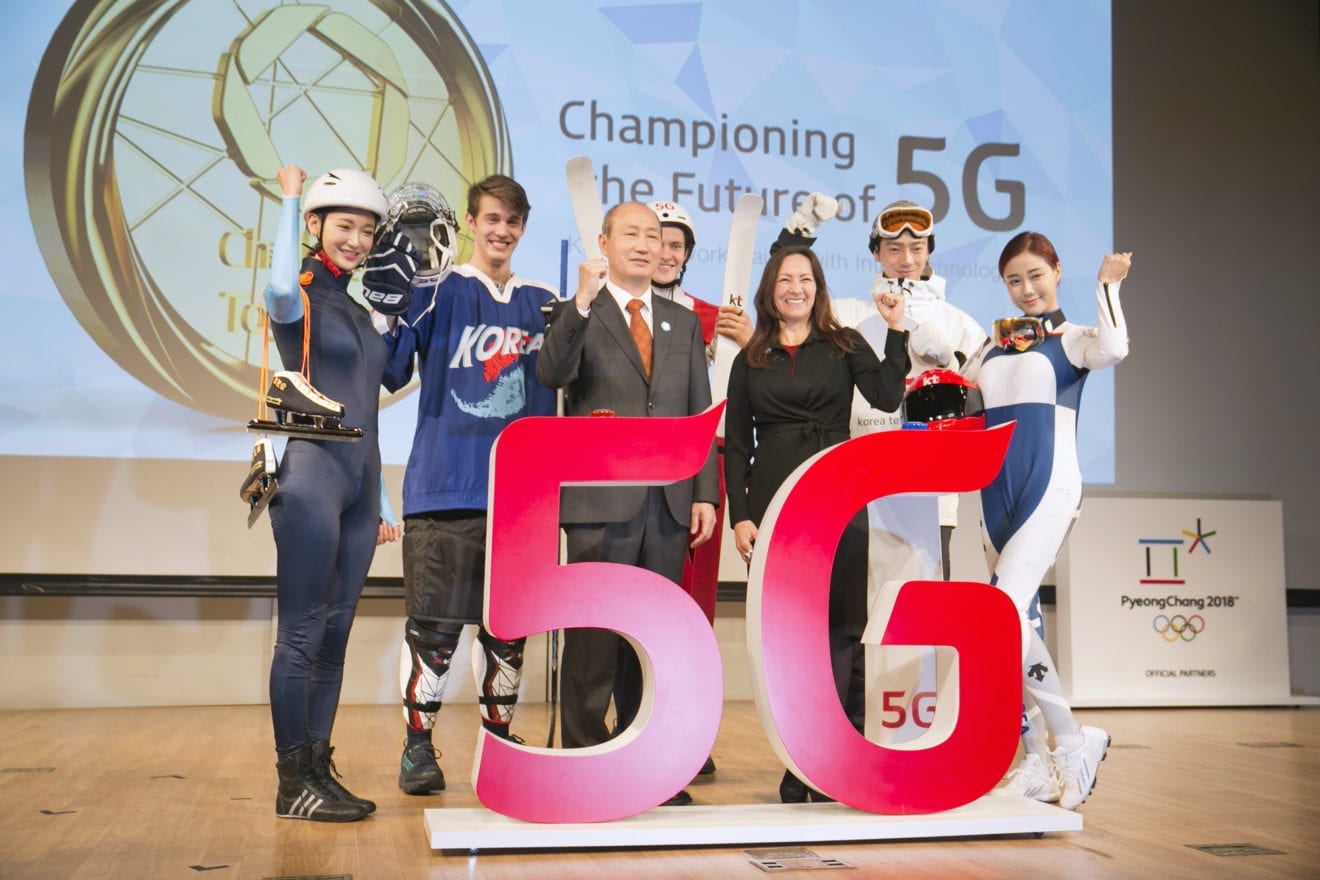
    South Korea’s KT has awarded Ericsson a 5G contract aimed at allowing the operator to launch commercial 5G services early next month.

    South Korean operators have agreed to launch 5G services at the same time in April at the request of regulator KCC.

    Under the contract with Ericsson, the vendor will provide 5G new radio hardware and software for KT’s 3.5-GHz non-standalone 5G network.

    KT selected Ericsson as a key 5G supplier in November last year as part of its preparations for a commercial launch.

    “Having worked successfully with Ericsson on 4G LTE, we are pleased to continue that partnership to make our 5G ambitions a reality with Ericsson’s leading 5G technology,” KT VP of access network design Jinho Choi said.

    “Korea is one of the most competitive and technology-advanced markets in the world. By taking a global lead to enable nationwide commercial 5G services through commercially available 5G smartphones, KT is demonstrating our commitment to our customers and showing how we can drive a global 5G ecosystem where Korea plays a key role.”

  • 5G to account for 57% of China tech spend in 2019

    5G to account for 57% of China tech spend in 2019

    Spending on 5G will account for the majority of China’s technology spending in 2019 as the nation continues to spend heavily to ensure it leads the global race to implement the mobile technology, Forrester Research predicts.

    China will spend a total of $256 billion on technology goods and services this year, with 5G spending to account for 57% of this, the research firm said in a new report.

    The nation is best positioned to win the global race to implement 5G after having outspent the US in this area by around $24 billion since 2015.

    Meanwhile China and Japan are set to dominate technology spending in Asia-Pacific, collectively accounting for 60% of the total market. India will be third with anticipated spending of $70 million, Forrester said.

    India, China and the US will also see the strongest growth amid a slowing global technology market. Total growth in spending is expected to slow to 4.5% in 2019, and to 3.8% in 2020.

    The report also found that Asia-Pacific still lags the US and Europe in terms of cloud adoption, because the infrastructure in most Asia-Pacific markets is not mature enough to support cloud solutions.

  • SK Telecom using quantum cryptography for 5G security

    SK Telecom using quantum cryptography for 5G security

    South Korean mobile carrier SK Telecom said it will use quantum cryptography technology to ensure security of its 5G mobile networks.

    The mobile carrier said Monday it has completed applying Quantum Random Number Generator (QRNG) technology of ID Quantique (IDQ), to its 5G subscriber authentication center. The move is designed to prevent hacking and ensure quantum-safe security.

    “The subscriber authentication process is the first and essential step in verifying a mobile device user before he/she is granted access to any voice and video data service, SMS, etc,” SK Telecom said in a statement.

    “Security in this process is crucial since the leakage of authentication key value can lead to serious crimes such as eavesdropping and hacking.”

    In February 2018, SK Telecom invested $65 million into IDQ to accelerate development of quantum technologies for the IoT and telecoms markets.

    SKT plans to expand the use of QRNG in its long-term evolution (LTE) networks in April.

    The mobile carrier will also strengthen security further by applying IDQ’s quantum key distribution (QKD) technology to its 5G and LTE networks between Seoul and Daejeon – the area which has highest mobile data traffic in the country- next month.

    QKD provides cryptographic security based on the laws of quantum mechanics. It enables two parties to produce a shared random secret key known only to them, which can then be used to encrypt and decrypt messages, the mobile carrier noted.

    “As security emerges as one of the most important issues in the 5G era, SK Telecom is determined to provide the most secure 5G network and focus on expanding the ecosystem by developing quantum cryptography technologies,” SK Telecom CTO Park Jin-hyo said.

    SKT will further enhance the safety and security of its mobile networks by expanding the application of quantum cryptography technologies by stages, Park added.

  • SK Telecom builds 5G mobile edge computing open platform

    SK Telecom builds 5G mobile edge computing open platform

    SK Telecom unveiled its mobile edge computing (MEC) open platform, which it says can enhance response times in 5G data communications. The operator plans to open up its MEC platform to enterprise customers to enable them to offer new services.

    MEC, which will be used in 5G networks to deliver ultra-low latency data, enables operators to cut down on latency by installing tiny data centers at 5G base stations. SK Telecom says MEC can cut latency by 60%. Applications such as AR/VR services, cloud gaming services, autonomous driving and fleet management, and real-time live broadcasting will all make use of MEC in 5G networks.

    “By opening up the ‘5G Mobile Edge Computing Platform’, SK Telecom will secure the basis for expanding the MEC-related ecosystem and accelerating the release of 5G services,” said Park Jin-hyo, CTO of SK Telecom, in a statement. “SK Telecom will join hands with diverse companies throughout the globe to boost the adoption of MEC-based services.”

    SK Telecom is releasing an API that enterprise customers can use to develop MEC-based 5G services. The company is betting enterprise customers can use the platform to improve efficiency and QoE by reducing latency in communications. A smart factory, for example, can use the MEC platform and a 5G network to increase response time of manufacturing robots.

    At Mobile World Congress this year, the operator teamed up with MobiledgeX to demo a MEC-based industrial AR service. SK Telecom is also working with the Telecom Infra Project (TIP), the Facebook-backed tech initiative, to build out an ecosystem for MEC developers.

    SK Telecom also successfully conducted a 4G-5G network dual connectivity test with Samsung, using Samsung’s E-UTRAN New Radio Dual Connectivity (EN-DC) tech, which is based on the 3GPP 5G NR standard.

    The test checked network device interoperability using dual connectivity technology on 4G and 5G networks using Samsung’s Galaxy S10 5G smartphone and its virtual core (vCore) product that supports 4G and 5G simultaneously. The companies were able to achieve data rates of 2.65 Gbps on a 5G smartphone, with 1.5 Gbps coming from 5G using 3.5-GHz frequency and 1.15 Gbps coming from LTE using 1.8-GHz, 2.1-GHz, and 2.6-GHz frequencies.

    SK Telecom says the technology can be used to improve transmission data speed by 80% by leveraging the 4G and 5G dual connectivity.

  • Mass-production of a key component for 5G Apple iPhone about to Start

    Mass-production of a key component for 5G Apple iPhone about to Start

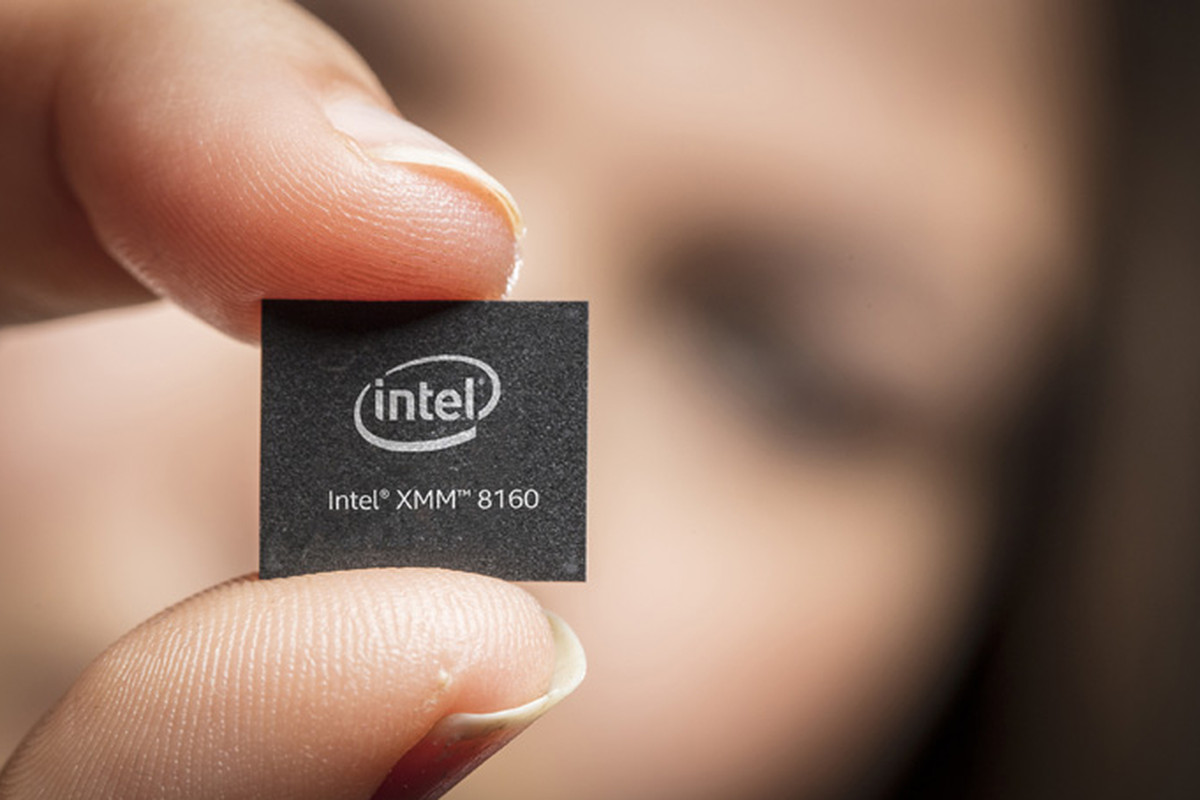
    Since Apple is expected to use Intel’s modem chips for its first batch of 5G compatible phones, we know not to expect 5G iPhones to be unveiled until 2020. That’s because Intel won’t have its modem chip for the next generation of wireless connectivity ready until next year. The chip maker will start work next quarter on the engineering projects it needs to finish in order to begin volume production of its 5G modem.

    Once Intel starts producing its 5G modem chip in 2020, it will compete with Qualcomm’s recently introduced Snapdragon X55 5G modem, the sequel to the Snapdragon X50 5G modem. The latter will be used on most 5G Android phones this year. It also will go up against the 5G modem chip designed by MediaTek. All three firms could still be in play to become the source of Apple’s 5G modem chips, although previous reports state that Intel has already won this battle. Sources cited in yesterday’s report say that Intel will also continue to generate revenue from selling its 4G modem chips to Apple for older iPhone 7 and iPhone 8 models.

    Apple currently has a contentious relationship with Qualcomm; over the last few months both sides have squared off in court on issues ranging from patent infringement to royalty payments. Just yesterday, one judge ruled that Qualcomm owed Apple close to a billion dollars in royalty payments it promised to rebate to the company (the actual figure is much. much higher says FOSS Patents). Meanwhile, a jury in San Diego yesterday ordered Apple to pay Qualcomm $31 million after it found Apple liable of infringing on a trio of patents. On March 26th, the International Trade Commission will rule on Qualcomm’s request for an exclusion order to be imposed on the iPhone in the U.S. Such an order would result in a sales and import ban of certain iPhone models in the states.

    Intel is now the exclusive source of modem chips for the iPhone

    During yet another trial held earlier this year (FTC v. Qualcomm), the plaintiffs called Apple supply chain executive Tony Blevins to the stand. Blevins testified that Apple had looked at sourcing 5G modems from Samsung and MediaTek. There is also speculation that Apple will design its own 5G modem chip, like it does for the A-series chipset that powers the iPhone and iPad. But Apple isn’t expected to deliver an in-house 5G modem design until 2021 at the earliest.

    From 2011 to 2015, Qualcomm was the exclusive provider of modem chips for the iPhone. That changed in 2016 when both Qualcomm and Intel were responsible for the modems used on the iPhone. That continued in 2017, and last year Apple sourced all of the modem chips used on the latest iPhone models from Intel.

    Apple is expected to be among the last major phone manufacturers to produce a 5G phone. Samsung has already unveiled its first 5G phone, which will debut on Verizon this summer. Huawei, LG and Oppo should also release 5G phones this year, and the 5G Moto Mod will allow the Motorola Z3 to support the faster data speeds as soon as Verizon flips the switch to turn on its new service. Once 5G service becomes more mainstream and less a curiosity, the faster data speeds will allow new services and businesses to be created. With 5G, a television series that takes 10 minutes to 15 minutes to download over 4G, will take only seconds to complete the task.

    When the industry transitioned from 3G to 4G LTE, Apple was one of the last major manufacturers to deliver a phone that supported the then-new technology. While a number of Android phones were launched with support for 4G LTE in 2011, Apple didn’t release a 4G LTE enabled handset until 2012’s iPhone 5.

  • 22 5G devices announced to date

    22 5G devices announced to date

    A total of 22 5G user devices from 14 manufacturers have been announced to date, according to figures from mobile industry consultant Hadden Telecoms.

    The devices span a number of form factors, including smartphones, customer premises equipment, MiFi devices and USB models, and include the new category of foldable phones.

    These devices are expected to launch this year to support early 5G launches, with some announced devices being carrier or market specific.

    According to Hadden Telecoms’ research, as of this month 5G smartphones have been announced from Huawei, LG, Motorola, OnePlus, Oppo, Samsung, TCL, Xiaomi, and ZTE.

    Meanwhile Huawei has announced the largest number of CPE products at four. D-Link, HTC, Inseego, Netgear, Nokia, Samsung, and TCL have also unveiled 5G CPE.

  • US trails world in 5G mid-band spectrum

    US trails world in 5G mid-band spectrum

    The mid-band spectrum is critical to 5G but the United States trails other countries in mid-band availability, according to a 2018 Analysys Mason study, which shows other countries plan to make over four times more licensed mid-band spectrum available than the US by 2020.

    Next-generation 5G networks rely on a mix of high-, mid- and low-band spectrum. Low-band spectrum carries signals over long distances and was the foundation for the first four generations of wireless networks. High-band spectrum travels much shorter distances, but offers the greater capacity required for data-intensive applications. Mid-band spectrum blends the attributes of both, delivering high capacity across larger geographic areas.

    In 2018, Analysys Mason compiled the mid-band spectrum plans of 13 countries, including the United States, to produce a report for US wireless industry association CTIA.

    Among the key findings of a 2018 compilation of mid-band spectrum plans in 13 countries around the world suggests that by the end of 2020:

    • On average, countries included in the study will make 4 times more licensed mid-band spectrum available than the United States.
    • Japan is planning to make ten times more licensed mid-band spectrum available than the United States.
    • China is planning to make more than seven times more licensed mid-band spectrum available than the United States; the United Kingdom is planning to make nearly five times more licensed mid-band spectrum available.

    “Resources available to US operators are improving, but spectrum in the mid-band remains limited compared to other leading 5G markets,” said Janette Stewart, a principal with Analysys Mason and the lead author of the report, “Mid-band spectrum will be key to wider-area 5G coverage.”

  • 5G will power outdoor robots in the future, but not now

    5G will power outdoor robots in the future, but not now

    Low latency and cloud intelligence are the two main features of 5G that will significantly change the deployment of mission critical and business critical robots, particularly those deployed outdoors. ABI Research argues that the commercialization of a 5G network is expected to usher in the significant growth of commercial robotics.

    Shipments of 5G robots are expected to reach 570,000 by 2027, largely deployed in mission critical and business critical settings. Outdoor applications that will be enabled by 5G connectivity include public safety and first responders, critical asset inspection, last mile delivery and transportation, precision agriculture, field extraction, and haulage.

    Traditionally, high-speed broadband connectivity is only available to robotics systems in indoor environments via Wi-Fi and broadband fiber. Therefore, existing outdoor commercial and industrial robots are often fully autonomous devices with onboard intelligence. With 5G, robots’ capabilities will be upgraded.

    “Existing onboard capabilities, such as object and people detection, path planning, and optimization can be shifted to the cloud to benefit from a larger set of data lake,” said Lian Jye Su, Principal Analyst at ABI Research.

    “At the same time, robotics systems will have access to capabilities that could not be previously hosted on existing systems. At present, remote control appears to be the focus, with Toyota’s T-HR3 and Naver’s AMBITEX, but the real game-changers will be conversational Artificial Intelligence (AI) and swarm intelligence. 5G’s low latency will enable robotics vendors to augment the onboard intelligence or even move parts of it to the cloud to introduce new capabilities to existing robotics hardware. Enterprise users will be able to connect their fleet of outdoor robots to the cloud and enjoy the performance, scalability, and flexibility of the cloud-based intelligence.”

    In order to enable 5G capabilities, robotics vendors must work closely with connectivity and chipset vendors in their design and prototyping phase to maximize the benefits of ubiquitous connectivity. Qualcomm has recently launched the Robotics RB3 Platform, powered by its Snapdragon 845 SoC with future 5G upgradability and Inseego has partnered with CloudMinds to provide 5G connectivity to the XR-1 Cloud Robot.

    By integrating LTE and 5G connectivity from the onset, robotics vendors can provide a clear roadmap in terms of future upgrades. The clear connectivity roadmap will provide the industry guidance on the future capabilities that cellular connectivity can enable.

    This includes multi-access edge computing that provides computing, networking, and caching at the network edge and wide area machine-to-machine communication that facilitates situational awareness and information exchange between mobile robots, cloud platforms and surrounding infrastructure.

    “In the long run, 5G will become the de facto connectivity method for outdoor robots. As a global standard, 5G enjoys economies of scale. This brings down the total cost of ownership of 5G networks and the price of 5G modem chipsets, allowing robotics developers to integrate 5G connectivity with ease,” Su concluded.

  • Ericsson to supply gear for XL Axiata’s 5G transport network

    Ericsson to supply gear for XL Axiata’s 5G transport network

    Indonesia’s XL Axiata has awarded Ericsson a contract to contribute to the deployment of the operator’s planned 5G ready transport network. Under the expanded partnership, Ericsson will provide 5G ready routers for the rollout over the next three years, commencing in the second quarter. Ericsson will provide its Router 6000 for all sites selected to be modernized under the contract. The router is optimized for 10G/100G connectivity, as well as the low latency, high accuracy internal clock and IPsec security capabilities required in 5G backhaul networks.

    “We are looking forward to continuing our partnership with Ericsson with state of the art transmission equipment,” XL Axiata director Yessie D Yosetya said.

    “We believe this will increase our network capacity performance and also beneficial for our customers to deliver a good user experience. This is one of our initiatives into the 5G era.”

    XL Axiata announced during Mobile World Congress in Barcelona that it has partnered with Huawei to construct Southeast Asia’s first 5G-ready simplified transport network covering all of Indonesia.

    Huawei is providing its Optical Networking 2.0 solution to help the operator simplify network architecture and build a simplified transport network.

  • SK Telecom, IT&E to deploy 5G network in Guam and Saipan

    SK Telecom, IT&E to deploy 5G network in Guam and Saipan

    South Korean mobile carrier SK Telecom announced that it is in discussion with Citadel and IT&E to deploy a 5G network in Guam and Saipan. In a statement, SKT and IT&E will work together to commercialize the 5G network with fixed wireless access (FWA) offering in Guam and Saipan in the second half of 2019.

    SKT said IT&E has already secured 1150MHz bandwidth in the 28-GHz frequency band for 5G communications and aims to become the first operator to launch commercial service in the region.

    The 5G network will initially cover dense central areas of cities, local business customers, and areas that lacked fixed broadband infrastructure. This will be expanded gradually to wider areas.

    According to SKT, the decision to deploy 5G FWA initially came as a result of an analysis of the region’s fixed broadband infrastructure, topographic features and the needs of residential and enterprise customers. FWA provides IT&E with a more cost-effective and efficient alternative to offer broadband services in areas with limited access to fixed broadband infrastructure.

    As part of the collaboration, SKT will help IT&E design a 5G network optimized for the local environment, support network deployment and perform field trials and network optimization.

    SKT said the pair have also discussed cooperation in other areas, such as deploying SK Telecom’s security solutions to IT&E’s 5G network, and adopting mobile edge computing and quantum cryptography technologies to enable faster and safer 5G services.

  • Executives blind to disruptive nature of 5G

    Executives blind to disruptive nature of 5G

    Accenture says business and technology executives underestimate the disruptive potential of 5G technology. Fifty-three percent of respondents in a global survey of 1,800 executives in 10 countries believe there are “very few” things that 5G will enable them to do that they cannot already do with 4G networks. Only 37% expect 5G to bring a “revolutionary” shift in speed and capacity.

    Competitive advantage

    5G is believed to have important competitive implications. Up to 60% of surveyed executives believe 5G will cover nearly all the population by the year 2022, and 70% believe that 5G applications will give them a competitive edge with customers. Speed will be a key advantage according to 46% of respondents while 42% cite its capacity.

    “The reality is that 5G will bring a major wave of connectivity that opens new dimensions for innovation and commercial and economic development,” said George Nazi, Accenture’s Network practice global lead. “Breakthroughs in three-dimensional video, immersive television, autonomous cars, and smart-city infrastructure will unleash opportunities that are difficult to imagine today but will soon be transformative. Telecommunications companies will play a pivotal role in bringing these prospects to light.”

    Role of carriers

    Up to 72% of executives said they need help to imagine future possibilities and use cases of 5G. These see telcos as just the right partner on their 5G journeys, cited by 40% of respondents. Hampering this partnership is the recognition by 60% of respondents who cite telcos’ lack of industry knowledge as a key challenge.

    Other barriers include the need for upfront investment (36%), security (32%) and employee buy-in (29%). While 78% of executives believe that using 5G in the workplace will make their business more secure, 32% have concerns about the security of the new connectivity standard.

    Anders Lindblad, Accenture’s Communications & Media industry lead for Europe, said, “Despite the knowledge gap, there is excitement among business leaders about the value that 5G can bring to enterprises. This value is currently trapped within the perceived risks and uncertainty around 5G, which can be unlocked by organizations that understand customer needs, can overcome barriers to adoption and can drive collaboration among service providers.”

  • Public safety applications among early use of 5G sUAVs

    Public safety applications among early use of 5G sUAVs

    Public safety agencies in big markets have started to deploy mobile broadband communication networks to replace their existing narrowband technology, such as FirstNet in the United States and the Emergency Services Network in the United Kingdom.

    The transition to 5G New Radio will unlock a myriad of civil use cases for small Unmanned Aerial Vehicles (sUAVs), said ABI Research.

    As compared to a few years ago, sUAVs have been widely deployed in various public safety applications. This includes asset surveillance and monitoring, traffic management, crowd surveillance, and control, as well as search and rescue.

    However, all these applications are performed using remote control and within visual line of sight. Existing communication technologies, such as LTE, Wi-Fi, Bluetooth, and unlicensed spectrum, all have their limitations and restrictions.

    “The biggest strengths of 5G are high throughput and low latency,” said Lian Jye Su, a principal analyst at ABI Research. “The high throughput enables the seamless transmission of high-resolution images and videos that are critical for search and rescue missions. Low latency, on the other hand, allows sUAVs to be controlled by a centralized command and control in beyond visual line of sight (BVLOS) flight. Path and route information, sensor information, geospatial, and telemetry data can be exchanged with the command and control almost instantaneously.”

    With the increasing number of sUAVs sharing the airspace, public safety agencies will need UAV Traffic Management (UTM) system to control and manage national airspace. Each sUAV that is connected to the network will have a unique identifier which allows tracking and tracing across all kinds of terrains and environments. This will help public safety agencies track down rogue sUAVs and preserve the safety and security of the airspace.

    In addition, 5G also enhances existing geo-positioning technology. Currently, satellite communications such as GPS and GLONASS are used for sUAV tracking, but satellite signals face a canyoning effect in dense urban landscapes and are subjected to interruption by buildings and natural landscapes. In indoor environments, sUAVs rely on optical flow and ultrasonic sensors for positioning and navigation, but this system is limited to the hardware available on the sUAVs. Cellular technology can augment satellite by using a radio fingerprinting technique, which matches cellular signal measurements against a central calibrated database and does not require an extra device or upgrade to the public safety network.

    “The mission critical nature of public safety use cases demands a high level of reliability, scalability, and redundancy. Despite still being in the early stage of deployment, 5G has strong potential to solve the pain-points of public safety use cases. The telecommunications industry will start to roll out 5G equipment and devices in 2019 and it is just a matter of time before we start to see 5G sUAVs being deployed by public safety agencies,” concluded Su.