Tag: 5G

  • Singtel, Ericsson to establish 5G CoE

    Singtel, Ericsson to establish 5G CoE

    Singtel and Ericsson have announced plans to jointly establish Singapore’s first 5G Center of Excellence to spearhead Singapore’s evolution to 5G.

    The center will receive co-funding from both Singtel and Ericsson, with the companies committing an initial $2 million investment for the next three years.

    It will seek to train 100 Singtel engineers in the critical competencies involved in designing and operating a 5G network, with Ericsson conducting workshops, field testing and providing hands-on experience.

    The center will also be open to Singapore’s wholly-owned Australian subsidiary Optus as well as its network of minority-owned regional mobile associates in Asia and Africa.

    “This is a critical next step in our journey to 5G. We’re pleased to partner Ericsson to enhance our 5G core competencies and create a robust 5G ecosystem that will allow Singtel and our enterprise customers to benefit from the anticipated growth opportunities 5G will bring,” Singtel group CTO Mark Chong said.

    “We invite customers in various verticals, such as transportation, port operations and next-generation manufacturing, to start shaping their new digital business models with us.”

    Singtel also plans to conduct 5G demos from its Comcentre headquarters to showcase potential future 5G applications such as immersive augmented reality experiences, haptic feedback for surgical operations and remote medical training.

    Next year Singtel also plans to deploy a 5G test bed to allow it to conduct live 5G field trials with enterprise customers, and engage research and tertiary institutions on potential collaborations to test 5G radios and use cases.
  • Ericsson opens 5G chip design center in US

    Ericsson opens 5G chip design center in US

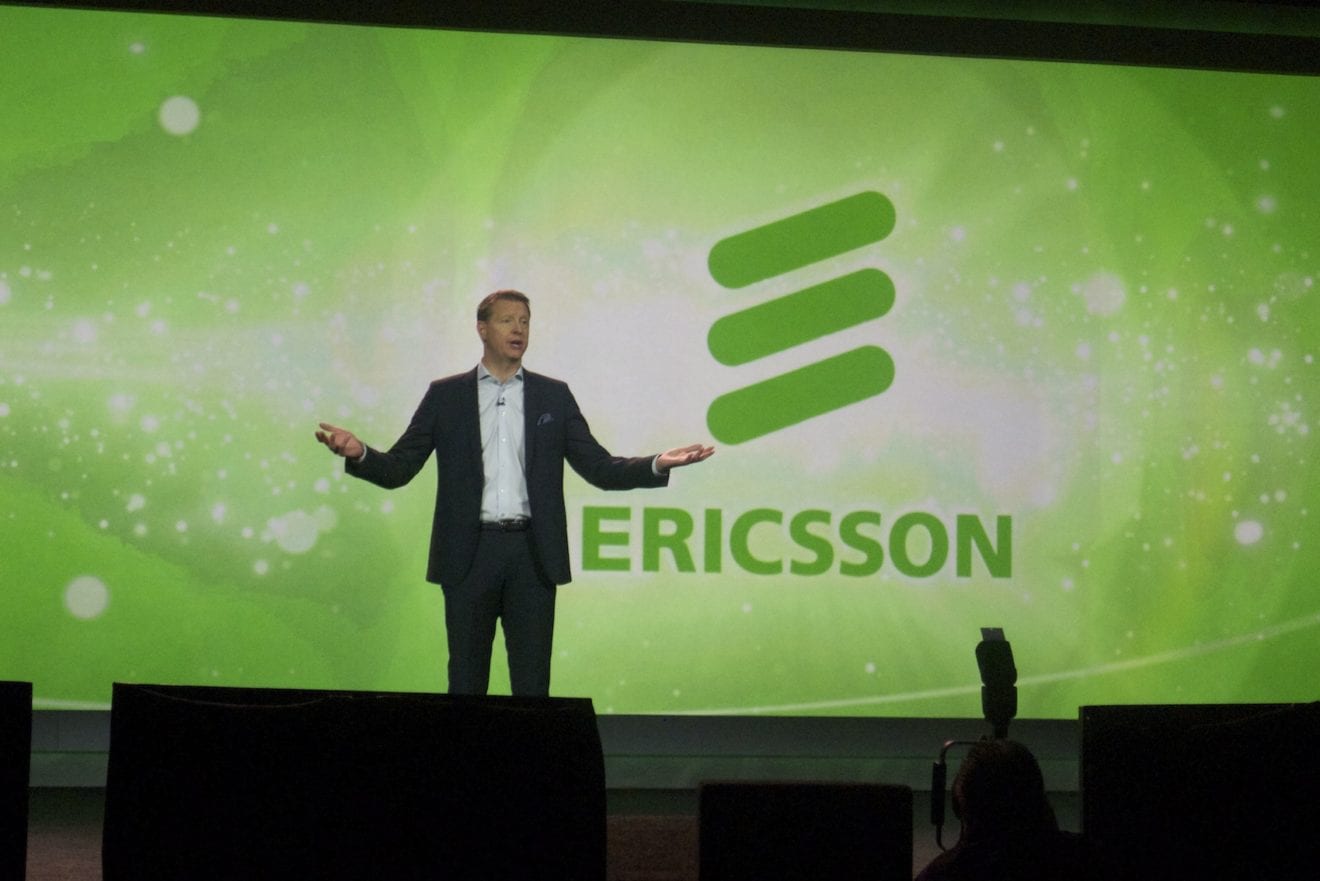
    Ericsson has opened a new design center in the US focused on microelectronics and accelerating the path to 5G commercialization.

    The ASIC (application specific integrated circuit) design center in Austin, Texas will work with core microelectronics bound for 5G radio base stations.

    It will work closely with major Silicon processor manufacturers in the area to develop dedicated 5G ASICs.

    ASICs are specifically designed for the computation needs of mobile infrastructure, and make up the core of all Ericsson Radio System products. Ericsson said such processors are a hundred times faster, more cost-efficient and less power hungry than general-purpose processors in PCs.

    “We are strengthening our radio design capability in one of the world’s 5G pioneer markets. We’ll be up and running with our first group of designers in Austin by the end of 2017,” Ericsson head of networks development Sinisa Krajnovic said.

    “Along with our ASIC design teams in Sweden and China, we’ll be making faster, better and greener 5G products to bring into the Ericsson portfolio by 2019.”

  • India to draw up 5G roadmap

    India to draw up 5G roadmap

    Both India and Pakistan have this week taken steps towards the introduction of 5G in their respective countries.

    The Indian government has set up a panel to draw up a roadmap for the rollout of 5G in the nation by 2020.

    With the 5G committee, the government aims to avoid a repeat of the delayed adoption of 4G, with telecoms minister Manoj Sinha stating that the government aims that India will be on par with other 5G adopters in 2020.

    In August, Indian telecoms regulator Trai launched a consultation on the design of 5G deployment regulations and standards, covering details including valuations, spectrum caps and rollout obligations for 5G spectrum.

    Indian operators are meanwhile preparing for the arrival of 5G, with incumbent operator Bharti Airtel announcing this week that it is deploying MIMO technology on its network.

    Meanwhile in Pakistan, the federal cabinet has approved the issue of a policy directive to regulator PTA that will allow local operators to conduct 5G tests.

    One operator – China Mobile’s ZONG – has already indicated it is ready to test 5G if given permission. But the PTA has not yet revealed its plans for assigning test 5G spectrum to various operators.

  • Ericsson, Intel complete 5G interop test in China

    Ericsson, Intel complete 5G interop test in China

    Ericsson and Intel have jointly completed a multi-vendor end-to-end 5G interoperability test using 3.5-GHz bandwidth as part of China’s pre-5G trials.

    The trial in Beijing involved Ericsson’s 5G 3.5-GHz radio prototype testbed and Intel’s 5G client test platform.

    Ericsson’s 5G 3.5-GHz radio prototype uses 5G candidate technologies including massive and multi-user MIMO (multiple input multiple output), as well as beamforming technologies allowing beam tracking to accurately track the location and movement of client devices in real time.

    Intel’s mobile trial platform is meanwhile powered by the latest Intel field-programmable gate arrays and Intel Core processors.

    The trial marked the completion of the first over-the-air interface interoperability verification as part of the Ministry of Industry and Information Technology’s 5G trials.

    Major vendors are meanwhile involved in China’s IMT-2020 (5G) Promotion Group’s pre-5G trials, with Huawei recently reporting it achieved a peak cell throughput of 20Gbps over 4.9-GHz C-Band spectrum. Operators including China Mobile are meanwhile planning to launch large-scale pre-commercial 5G trials in 2019.

  • ZTE verifies 5G dynamic resource deployment

    ZTE verifies 5G dynamic resource deployment

    ZTE announced it has become the first vendor to complete high-layer tests of experimental network equipment prototypes as part of phase II of China’s national 5G technical network architecture tests.

    The company was able to verify functions including base functions of split central unit/distributed unit architecture, dynamic resource deployment and dual-connectivity mobility. The testing phase also included verification of basic wireless network architecture and functions.

    During the high-layer test of experimental wireless network prototypes, ZTE used its cloud-ready central units as well as a one-click new radio system with central unit-distributed unit split architecture.

    The verification follows air interface tests as part of phase II of the IMT-2020 Promotion Group’s China 5G Technology Research and Development Trial.

    In these tests ZTE showcased a range of products including virtualized core networks. Connectivity tests were conducted with instrument and chip vendors, and the company also conducted lab and field tests. Testing results met the key performance requirements for 5G networks.

    “The 5G technical testing organized by the IMT-2020 (5G) Promotion Group plays an important role in 5G development, and is critical in promoting 5G key technologies, verifying 5G solutions, and supporting the freezing of a unified 5G standard,” ZTE GM Bai Gang said.

    “ZTE will continue to fully engage in phase III work.”

  • 5G subs to overtake 3G in Korea by 2020

    5G subs to overtake 3G in Korea by 2020

    South Korean operators’ plans to take an early lead in the deployment of 5G is expected to help them overcome stagnating traditional telecoms service revenues, research from GlobalData indicates.

    The market’s 5G subscriber base is expected to outnumber the 3G base by 2020, two years after the planned world’s first commercial 5G deployment during next year’s Pyeongchang Winter Olympics, GlobalData said.

    This will be a boon to operators at a time when mobile voice service revenues are expected to decline at an average rate of 7% per year through to 2021, GlobalData telecoms market analyst Malcolm Rogers commented.
    “Operators around the globe faced with the same challenge, evolve to something more than a pipe provider or offer services that come with more utility. However, the Korean operators have been among the most proactive in growing business outside the core of communication,” he said.

    “Whereas operators in some markets have been slow to react to the digital disruption caused by OTTs and internet giants like Google and Amazon, the players in South Korea have been investing in new digital business for years.”

    The market’s operators – SK Telecom, KT and LG U+ – are focusing on a range of non-core segments including industrial IoT, payment platforms, media and commerce, Rogers added.

    KT recently launched an AI-based home assistant service while both SK Teleom and LG U+ are offering cellular based wireless payment platforms. All three are meanwhile investing in business-to-consumer and business-to-business e-commerce offerings, an entirely new industry for the operators.

    Against this backdrop, 5G networks are expected to allow the operators to introduce new services targeting industry, government and consumer markets, according to GlobalData.

    KT is already exploring offering 5G-enabled entertainment services including 8k mobile video streaming, while SK Telecom and KT are developing driverless car solutions and security platforms based on 5G technologies.

  • SoftBank, Huawei demonstrate 5G use cases

    SoftBank, Huawei demonstrate 5G use cases

    Japan’s SoftBank teamed up with Huawei to demonstrate various real-world use cases for 5G.

    The companies demonstrated real-time ultra high definition (UHD) video transmission with a throughput of over 800Mbps, as well as remote rendering via a GPU server using edge computing.

    During the video tests, SoftBank and Huawei installed a UHD camera outside the demonstration room, then compressed the data from the camera in real-time using an encoder and transmitted it via 5G to a UHD monitor via a decoder.

    Scenery was also captured via a 180-degree camera equipped with four lenses pointed in different directions. Captured input was sent to smartphones and tablets over the 5G network to create a 180-degree panoramic video image. Huawei said this technology can be applied to virtual or augmented reality.

    In addition, the demonstration involved remote manipulation of a robotic arm with an ultra-low latency of less than 2ms for near real-time control.

    The technology was used to allow a robotic arm to play a game of air hockey, detecting the position and projected trajectory of the puck and returning the shot to the human player.a

  • 5G connections to reach 1.4b by 2025: Juniper Research

    5G connections to reach 1.4b by 2025: Juniper Research

    5G connections are forecast to reach 1.4 billion by 2025, an increase from just one million in 2019, the anticipated first year of commercial launch, according to Juniper Research.

    In a new research, Juniper warned that to be successful, 5G fixed wireless broadband would need to meet expectations in real-world scenarios to compete with fiber broadband.

    The research forecasts that China, US and Japan will have the highest number of 5G connections by 2025. Together these three countries will have 55% of all 5G connections by 2025.

    The US alone will account for over 30% of global 5G IoT connections by 2025, with the highest number of 5G connections for fixed wireless broadband and automotive services.

    However, in terms of commercial IoT revenues, Juniper forecast that the ARPC (average revenue per connection) would be disappointing, including smart cities and digital health. This was due to low data requirements and nominal duty-cycles.

    The research urged operators to develop new business models to minimize network operating costs, including software-based solutions to manage the diverse requirements of individual 5G IoT connections.

    Furthermore, Juniper advised that maximizing connectivity revenues through 5G fixed wireless broadband would prove crucial to offset this disappointment, with ARPC forecast to remain above $50 until 2025.

    “Operators and vendors must test their networks in a real-world environment at scale, ensuring speeds can compete with fiber services,” said research author Sam Barker.

    “Networks that can deliver the highest speeds and greatest reliability will command the highest ARPCs, hastening an operators’ return on 5G investment,” said Barker.

  • SK Telecom develops 5G repeater

    SK Telecom develops 5G repeater

    SK Telecom has developed and trialed a new 5G repeater as part of its preparations towards launching a commercial 5G network.

    The repeater has been applied to the operator’s 5G trial network near Gangnam Station in Seoul to provide denser coverage.

    It has been built with SK Telecom’s independently developed 5G relay technology to solve the issue of 5G coverage limitations caused by the narrow propagation characteristics of high-frequency radio signals in the above 6-GHz range.

    Park Jin-hyo, head of SK Telecom’s network technology R&D center, said the populous Gangnam area is one of the most difficult places to plan and build a network due to the presence of a large number of radio wave obstacles and high-density data traffic.

    “SK Telecom is moving closer to launching a commercial 5G network by applying key 5G technologies to our 5G trial network in Gangnam, an area with the highest data traffic,” he said.

    Using the 5G repeater, SK Telecom will now be able to more easily build 5G networks in other high-density areas, he added.

  • Nokia expands development, deployment of 5G First

    Nokia expands development, deployment of 5G First

    Nokia has announced plans to implement early 5G specifications, enhancing its ‘5G First’ portfolio with the 3GPP 5G Phase I protocol, to meet growing interest for 5G mobility applications emerging from operators, notably in markets like US, China, Japan and South Korea.

    In a statement, Nokia said the vendor will push for accelerated 3GPP industry standardization while building on early customer experiences with its Nokia 5G First end-to-end solution, launched last February.

    This 5G NR (New Radio) air interface standard, which is due in early 2018, is designed to support a wide variety of 5G devices and services.

    Nokia said it is building on extensive field experience already gained with Nokia 5G First, which has generated valuable insights into areas such as the use of radio propagation in higher frequencies, massive MIMO and beamforming, integration with existing networks versus standalone implementations, the use of small cells in 5G deployments, and the importance of cloud native core and cloud RAN technologies.

    ”Through 5G First, Nokia is evolving its 5G strategy to drive the industry rapidly towards the adoption of standards-based commercial applications as early as 2019,” said Marc Rouanne, president of mobile networks at Nokia.

    “Doing so will require broad cross-industry support, and we call upon regulators and governments to free up and enable the use of spectrum at low-, mid- and high-frequency bands for trials,” said Rouanne.

  • The most promising 5G operators named

    The most promising 5G operators named

    Although 5G is still a few years from becoming a reality, Juniper Research has identified five mobile carriers as the “most promising 5G mobile network operators” – namely SK Telecom, NTT Docomo, KT Corp, China Mobile and AT&T Mobility.

    South Korean mobile carrier SK Telekom ranked No 1 for the extent of 5G trials over the past 24 months in the fields of millimetre wave spectrum, MIMO (Massive Input, Massive Output) transmission and network slicing.

    The ranking process included analysis of time in development, breadth and value of partnerships and progression of 5G network testing, Juniper Research says in its new report.

    Additionally, the research firm forecasts that 5G operator-billed service revenues will reach $269 billion by 2025, rising from $851 million in 2019 – achieving 161% CAGR (compound annual growth rate) over the first seven years of 5G services.

    Two thirds (66%) of all the revenues will come from North America and Far East & China by 2025.

    Meanwhile, as 5G spectrum auctions and infrastructure build-out costs would necessitate a diverse range of strategies to maximize operator return on investment, this need is compounded by the ongoing fall of average revenues per connection.

    As such, adoption of software-based network solutions will lower investment costs, enabling operators to begin realizing a return on investment as early as 2024, Juniper predicts.

    The research firm also emphasizes the importance of these technological solutions in addressing varying 5G use cases.

    “Network virtualization will become increasingly prominent as operators aim to lower expenditures,” notes research author Sam Barker. “Adoption of the technology is critical to the wide-ranging demands of future 5G networks.”

    Juniper says the research is based on the latest market data and takes into account the accelerated status of current operator and vendor developments, with network launches expected to occur during 2019, a year earlier than originally anticipated.

  • China Mobile, SAIC, Huawei demo 5G remote driving

    China Mobile, SAIC, Huawei demo 5G remote driving

    China Mobile, SAIC Motor and Huawei have jointly demonstrated the first 5G-based remote driving technology with a consumer car.

    The demonstration at Mobile World Congress Shanghai involved using a Huawei-provided 5G solution connecting SAIC Motor’s smart concept car the iGS, with China Mobile providing the connectivity.

    The remote driving field test involved a driver located over 30km away from the vehicle, and used HD video cameras installed on the vehicle to send multiple real-time video feeds to provide the driver with a 240-degree view of the vehicle’s surroundings, more than the average binocular peripheral vision.

    Control signals for steering, acceleration and brakes were also transmitted over the 5G network in real time using 5G’s ultra-low latency capabilities.

    End-to-end latency for all vehicle control functions was less than 10 milliseconds, providing an eight centimeter distance between breaking and actual deceleration when the vehicle was traveling at 30km/h.

    Remote driving can be used to augment autonomous vehicles and has a range of potential applications, particularly in harsh or dangerous environments like mining or waste disposal sites, Huawei said.

    The technology could allow a single person to manage a fleet of autonomous vehicles, providing human intervention as needed such as in emergency situations.

  • China Mobile, Huawei showcase 5G SBA proto

    China Mobile, Huawei showcase 5G SBA proto

    China Mobile and Huawei have used Mobile World Congress Shanghai to showcase the world’s first 5G core network prototype using service-based architecture (SBA).

    The prototype is based on the 3GPP’s 5G SBA standard. Under SBA, core network functions are defined as loosely coupled, combinable services that can be flexibly scheduled based on standard interface protocol. These elements are self-contained, reusable and able to be independently managed.

    Functions of the 5G SBA prototype include service registration, discovery and authorization, as well as service operations and service-oriented 5G basic business processes such as device registration and connection establishment and release.

    “The service-based architecture shows that 5G is a truly Cloud Native design. It makes carrier networks more agile, flexible, scalable, and open,” China Mobile Research Institute GM Yang Zhiqiang said.

    “We will work to reduce its complexity, and look forward to working with all industry players to accelerate completion of international standards and product R&D. Our goal is to quickly put SBA into large-scale commercial use and enable 5G operations.”

    The companies said the successful demonstration of the 5G SBA prototype provides a foundation for the IMT-2020 Promotion Group’s 5G core network testing.

  • 5G connections in China to reach 428m by 2025: GSMA

    5G connections in China to reach 428m by 2025: GSMA

    Chinese operators are on track to launch commercial 5G networks by 2020 and are expected to establish the nation as the world’s largest 5G market by 2025, Mats Granryd, director general of the GSMA, said during a keynote at the Mobile World Congress Shanghai.

    5G connections in China will reach 428 million by 2025, accounting for 39% of the 1.1 billion global 5G connections expected by that point, Granryd said, citing a new study by GSMA Intelligence and the China Academy of Information and Communications Technology (CAICT) released Wednesday.

    “In its early phase, 5G will offer an enhanced mobile broadband experience that will enable next-generation consumer services such as augmented and virtual reality, while at the same supporting mission-critical applications across a range of industry verticals,” the executive said.

    Granryd said mobile operators – China Mobile, China Unicom and China Telecom- in China plan to run a phased testing period for 5G networks from 2017 to 2019 before launching commercially in 2020.

    The trio is expected to deploy ‘standalone’ 5G networks, which will require the construction of new base stations to site 5G equipment, backhaul links and a core network.

    Yet, some mobile operators in Asia are considering to deploy ‘non-standalone’ 5G networks that would run on existing infrastructure supplemented by targeted small cell deployment in areas of high density, allowing 4G and 5G services to run in parallel, the report noted.

    Granryd said 4G penetration is China has increased fivefold to 61% over the two-year period to March 2017 and there remains significant headroom for 4G growth.

    That said, 4G and 5G networks are expected to co-exist in China for a considerable period of time. The rate of 5G network rollout and adoption in China is also expected to be slower than it was for 4G, which Chinese operators were able to deploy rapidly earlier this decade within a mature 4G ecosystem.

    Granryd added that 5G investment in China will follow a more gradual path and over a longer timeframe than 4G, roughly seven years, from 2018 to 2025 – with capex not expected to account for more than 25% of operator revenue prior to commercial launch.

    In their early phase, 5G networks will concentrate on boosting the capacity of 4G networks to support rising cellular data traffic demands.

    Meanwhile 5G will also enable enhanced mobile broadband (eMBB) services such as 4K/8K Ultra-HD video and augmented reality (AR) and virtual reality (VR) applications.

    Though some services will require devices with new form factors, the smartphone is expected to remain the principal 5G interface at launch. The first 5G smartphones are likely to be priced at a premium to 4G models, as they will require an enhanced chipset and RF module supporting multiple sub-6 GHz, and possibly extremely high frequency bands (mmWave), as well as, potentially, a 4K or 8K screen.

    Enterprise is considered to offer operators the largest incremental revenue opportunity. Key vertical markets for 5G applications include automotive and transport, logistics, energy and utilities monitoring, security, finance, healthcare, industrial and agriculture.

  • SK Telecom conducts 5G trials in 3.5-GHz

    SK Telecom conducts 5G trials in 3.5-GHz

    SK Telecom, Samsung and Nokia have jointly conducted a 5G trial demonstration using the 3.5-GHz frequency band.

    The operator worked with Samsung to develop a 3.5-GHz 5G end-to-end network comprising a 5G virtualized core, virtualized RAN, distributed baseband and radio unit and test device based on the 3GPP 5G new radio (NR) standards established so far.

    The 3GPP has standardized the key physical component technologies of the 5G air interface. The companies’ trial 5G NR system has been developed based on this specification, incorporating innovations including subcarrier spacing of 60 kHz, transmit time interval (TTI) length of 0.25ms to reduce latency and low-density parity-check channel coding.

    SK Telecom has also collaborated with Nokia to co-develop 5G base station equipment and test devices for 3.5-GHz spectrum, achieving Gbps level throughput during a field trial near the operator’s Bundang Office Building.

    The trial also involve the measurement of link quality depending on the distance between a moving vehicle and base station to generate data to be used in the design of optimal 3.5-GHz 5G networks.

    SK Telecom plans to deploy commercial networks using both 28-GHz or another above 6-GHz frequency and the 3.5-GHz band, using the former in highly-concentrated areas and the latter to achieve wide area coverage.

    “With the successful demonstration of 5G communications using the 3.5GHz spectrum, SK Telecom has secured all key technologies for building commercial 5G networks using 3.5-GHz and 28-GHz frequency bands,” SK Telecom SVP and head of network R&D Park Jin-hyo said.

    “We will maintain our leadership in 5G by enhancing our technologies for both above 6-GHz and below 6-GHz frequencies, while playing an active role in the standardization and commercialization of 5G technologies.”