Tag: 5G

  • 3GPP freezes standalone 5G NR specifications

    3GPP freezes standalone 5G NR specifications

    The 3GPP has approved the completion of standalone Release 15 specifications for 5G at the Technical Specifications Group’s 80th plenary meeting.

    The meeting brought together more than 600 representatives of the world’s major operators and network, smartphone and chipset vendors to witness the historic freeze of standalone 5G new radio (5G NR) specifications.

    It flows the release of the 5G NR specifications for non-standalone operation in December, and paves the way for the expected launch of the first 5G mobile broadband networks in the US later this year.

    The new standard introduces a brand new end-to-end architecture for mobile network and will facilitate the introduction of new business models and an era of unparalleled connectivity.

    “The 5G System specification has now reached its official stage of completion, thanks to the intense efforts of hundreds of engineers over the past three years,” 3GPP TSA chairman Erik Guttman said.

    “A special acknowledgment is due to those who led this remarkable effort in diverse committees. 5G promises a broad expansion of telecommunications, as an ever more central component of our economies, societies and individual activities.”

    Telecoms industry representatives at the meeting included delegates from China Mobile, APT, the China Academy of Information and Communications Technology (CAICT), China Telecom, China Unicom, Chunghwa Telecom, KDDI, KT, LG Uplus, NTT Docomo, SK Telecom, Softbank,  Vodafone.

    Multiple equipment vendors were also represented, including Ericsson, Huawei, Fujitsu, LG Electronics  Lenovo, NEC, Nokia, Samsung, Sony Mobile Communications, Xiaomi and ZTE.

    Meanwhile Ericsson, Intel, the China Mobile Research Institute and China Mobile Jiangsu have announced the completion of the first live 3GPP compliant standalone 5G new radio interoperability tests.

    The tests, which were completed based on the shared physical layer specifications of the non-standalone and standalone 5G NR standards, used Ericsson’s 5G NR base stations and Intel’ 5G mobile trial platform in a live network operating on 100MHz of 3.5-GHz midband spectrum.

    “Successfully completing the first 3GPP-compliant Standalone 5G NR call marks another milestone with our ecosystem partners on the path to 5G commercialization, building on our years of research and standardization,” Ericsson EVP and head of networks Fredrik Jejdling said.

    “Together, we’re delivering on our commitment to realize a standard-compliant and easily deployable technology that will bring benefits to our customers and end users.”
  • Juniper Networks unveils 5G-ready routing platform

    Juniper Networks unveils 5G-ready routing platform

    Juniper Networks has announced plans to launch a 5G and IoT ready routing platform to help operators, cloud providers and enterprise customers manage the growing complexity of next-generation service delivery.

    The MX Series 5G Universal Routing Platform will support extensive feature programmability, as well as hardware accelerated 5G control and user plane separation (CUPS) functionality.

    The 3GPP CUPS standard is designed to allow customers to separate the evolved packet core user plane and control plane to allow operators to scale each independently as needed.

    Juniper’s new Penta Silicon chipset will power the new platform. The company said the new chipset supports both MACsec and an IPsec cryptography engine, and can originate and terminate thousands of IPSec sessions without sacrificing performance.

    According to Juniper Networks chief product officer Manoj Leelanivas, research from the company found that operators consider the cost and complexity of orchestrating a distributed network to be among the top challenges associated with being able to offer 5G and other next-generation network services.

    “Cloud is eating the world, 5G is ramping up, IoT is presenting a host of new challenges and security teams simply can’t keep up with the sheer volume of cyber attacks on today’s network,” Leelanivas said.

    “One thing service providers should not have to worry about among all this is the unknown of what lies ahead. That’s why we’ve continued innovating our flagship MX platform to deliver more speed, flexibility, programmability and security capabilities, giving our customers the peace of mind they need as a variety of demands continue to put pressure on the network.”

    The first router products powered by the new platform are expected to launch during the second half of the year.

  • China Mobile Hong Kong plans more 5G trials

    China Mobile Hong Kong plans more 5G trials

    China Mobile Hong Kong has participated in the Hong Kong 5G Industry Forum 2018 organized by the Communications Association of Hong Kong.

    The forum addressed Hong Kong’s 5G mobile development roadmap and the crucial role that mobile operators will play in supporting the HKSAR government’s smart city and 5G development plans.

    At the event, CMHK principal engineer for network planning and implementation Alex Cheng said the company commenced 5G testing in March after being assigned trial permits and since launching its China Mobile 5G Innovation Center Hong Kong Open Lab.

    He said the operator plans to continue rolling out more 5G lab tests and demonstrations from the open lab, and expects to be able to release results from the first round of tests from the second half of the year.

    Cheng also expressed support for the government’s 5G spectrum release plan, which is expected to be announced as early as next year.

    The company is working with business partners on constructing a trial 5G network environment and testing applications over the network. In addition, CMHK intends to collaborate with local universities to promote the development of 5G applications. These activities will cover areas including 5G technical research and IoT application innovations.

  • China leads global 5G race by narrow margin

    China leads global 5G race by narrow margin

    China holds a narrow lead in overall 5G readiness ahead of South Korea and the United States, according to Analysys Mason. In a separate report, Recon Analytics said US 4G leadership drove significant economic benefits suggesting the need for the US to maintain its global leadership in the burgeoning new communication standard.

    In evaluating the current status of the global race to 5G, Analysys Mason studied 5G spectrum and infrastructure policies as well the commercial industry plans of ten countries and ranked these in terms of their 5G readiness.

    Establishing 5G leaders

    At the top of the pole is China, followed by South Korea, the United States and Japan. China’s narrow lead is due to a combination of both proactive government policies and industry momentum. The United States is hanging on to its position mostly on the back of significant investments in next-generation networks by the country’s wireless operators.

    All major Chinese providers have committed to specific launch dates and the government has committed to at least 100MHz of mid-band spectrum and 2000MHz of high-band spectrum for each wireless provider.

    Countries around the world are moving quickly to make spectrum available for 5G. This year alone, the UK, Spain, and Italy are all holding 5G spectrum auctions.

    Meredith Attwell Baker, CTIA president and CEO noted that “today’s research highlights the importance of policymaker action in 2018 to reform local zoning rules and unlock access to mid-band spectrum as part of a broader spectrum pipeline plan. I’m optimistic we will leapfrog China because key leaders in the Administration, on Capitol Hill, and at the FCC are focused on the reforms needed to win the race.”

    At the end of 2018, the USA will rank sixth out of the 10 countries in mid-band (3–GHz to 24-GHz) spectrum availability, a critical band for 5G. The USA joins Russia and Canada as the only countries currently without announced plans to allocate mid-band spectrum on an exclusive basis to mobile by the end of 2020.

    Kester Mann, principal analyst covering operators at CCS Insight, corroborated Baker’s analysis, adding that “the industry might be struggling to establish the business models for investment in 5G, but this isn’t stopping leading operators battling for bragging rights to launch the first networks. Competitive forces and the need for capacity are the leading drivers of early deployment, although we caution this could set unrealistic expectations for initial network capability”.

    Countries like the UK and regions like the European Union are taking significant steps to modernize infrastructure rules to facilitate the deployment of 5G networks.

    “When countries lose global leadership in a generation of wireless, jobs are shed and technology innovation gets exported overseas,” Recon Analytics founder Roger Entner said.

    “Conversely, leading the world in wireless brings significant economic benefits, as the USA has seen with its 4G leadership. These are the serious stakes that face American policymakers in the escalating global race to 5G.”

    Losing wireless leadership had long-term negative effects on Japan and Europe, contributing to job losses and the contraction of their domestic wireless industries.

    Opportunity

    CCS Insight’s forecast estimates total global 5G connections in 2020 at almost 60 million, rising more than 50% against October 2017 estimates, and presenting a stronger outlook for 2021 at 280 million connections — a 25% improvement. CCS Insight still expects the 1 billion mark to be breached in mid-2023, and its projection for 2025 has inched up to 2.7 billion.

  • 5GAA, Audi, Ford, Qualcomm demo C-V2X direct comms

    5GAA, Audi, Ford, Qualcomm demo C-V2X direct comms

    The 5G Automotive Association (5GAA), Audi, Ford and Qualcomm have announcedwhat they claim is the world’s first demonstration for cellular vehicle-to-everything (C-V2X) direct communications technology operating across vehicles from different manufacturers.

    Using the C-V2X chipset from Qualcomm in Audi and Ford vehicles, demonstrations showcased various scenarios of how C-V2X communications can alert nearby vehicles to potential hazards when the driver’s view may be obstructed. A case in point is to use vehicle-to-vehicle (V2V) communications to alert surrounding vehicles when cars were turning left or braking.

    Additional use cases were featured, including a vulnerable road user (VRU) demo showcasing what can be possible with future vehicle-to-pedestrian (V2P) communications, 5GAA said in a statement.

    Use cases for vehicle-to-infrastructure (V2I) communication were also demonstrated, which showcased how direct communications can work closely with traffic signal controllers to ensure reduction in carbon emissions and optimization of traffic efficiency in cluttered intersections and dense environments.

    5GAA said the demos showcased the benefits of using C-V2X real-time direct communications on the 5.9-GHz Intelligent Transport Systems (ITS) spectrum for V2V collision avoidance and improved road safety, independent of the cellular operator network involvement, credentials or coverage.

    In addition, initial field test results of the demos showed C-V2X direct communications had more than twice the range of 802.11p radio technology.

    The 5GAA, Audi, Ford and Qualcomm are scheduled to showcase another live C-V2X interoperability demo at the upcoming Intelligent Transportation Society of America (ITS-A) World Meeting in Detroit from June 4-7.

  • 5G-ACIA created to promote 5G in industrial production

    5G-ACIA created to promote 5G in industrial production

    A number of key players from the telecoms, automation and manufacturing sectors have banded together to create a new alliance that aims to promote adoption of 5G in industrial production and to design it for industrial capability from the outset.

    The 5G Alliance for Connected Industries and Automation (5G-ACIA), which was formed at the ZVEI in early April, brings together 26 leading companies including Ericsson, German Research Center for Artificial Intelligence, Fraunhofer Gesellschaft, Bosch, Huawei, Infineon, Intel, Mitsubishi, Nokia, Siemens, Vodafone, and Yokogawa.

    The 5G-ACIA is contributing to the standardization and regulation of 5G technologies. At the same time, the alliance is working to identify and analyze possible use cases and the associated requirements from the perspective of the industrial domain.

    Dr. Andreas Müller, chairman of 5G-ACIA, said the key objective of 5G-ACIA is to ensure the best possible applicability of 5G technology and 5G networks for connected industries, in particular the manufacturing and process industries.

    The alliance brings together important players in the fields of IoT and smart factories for the first time and will make it possible to align 5G with the needs of industries worldwide, Muller said in a statement.

    “5G will become the central nervous system of the Factory of the Future and will have a disruptive impact on industrial production,” he said. “There are many advantages to 5G, including a very powerful wireless networking technology that is suitable even for critical industrial applications.”

  • South Korea to hold 5G auction June 15

    South Korea to hold 5G auction June 15

    The South Korean government has announced plans to hold an auction for 3.5-GHz and 28-GHz 5G spectrum on June 15.

    The government has also decided to go with its first proposed option of distributing the spectrum evenly among the nation’s three operators – SK Telecom, KT and LG U+ – rather than allocating the largest portion of spectrum to the highest bidder.

    Likewise, the government plans to limit bid amounts to stop the auction from being overly competitive and burdening the winners with high spectrum costs.

    With the move, the ICT ministry hopes to set the stage for the commercialization of 5G technology in South Korea.

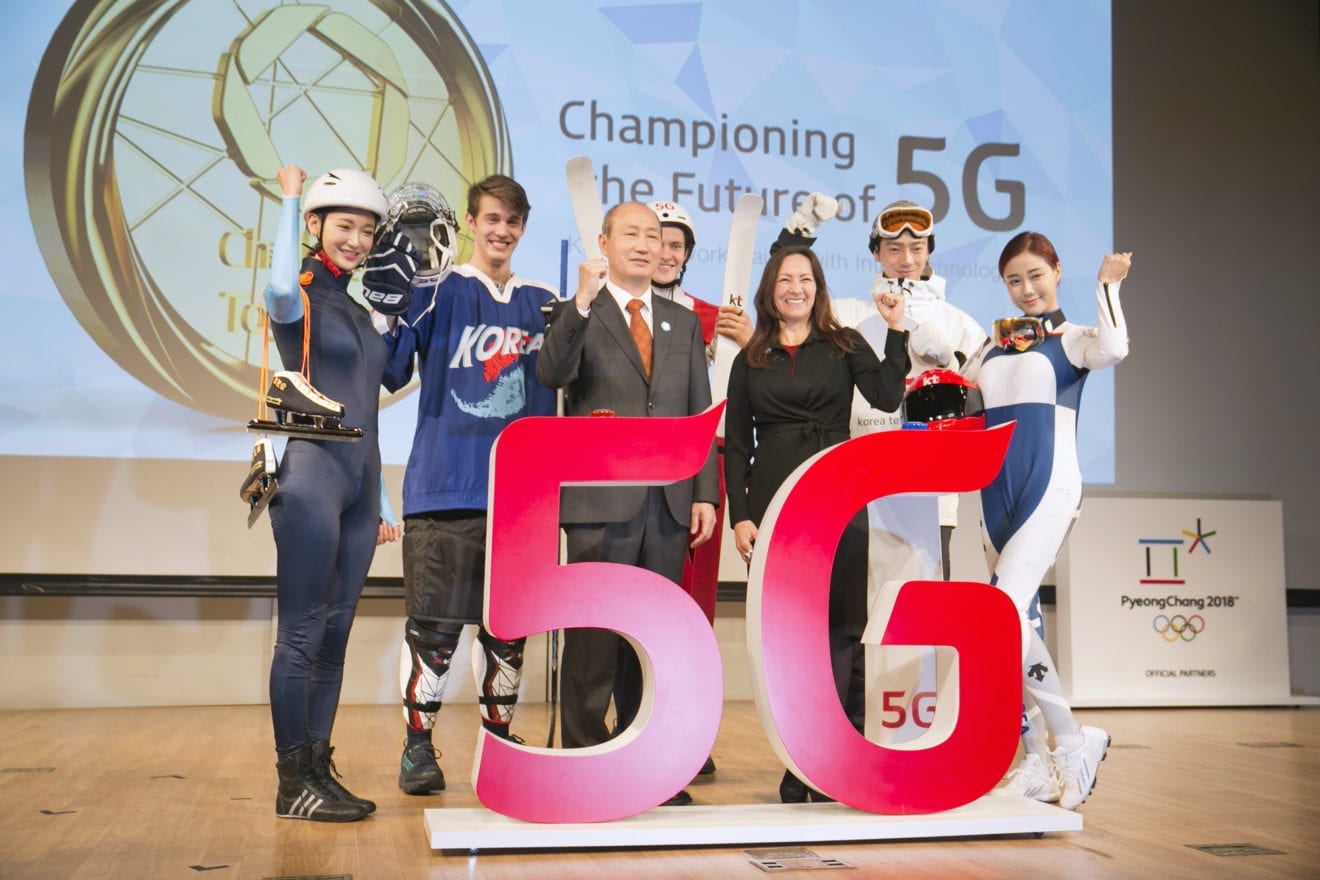
    South Korean operators are expected to be among the earliest adopters of 5G technology. Currently KT has announced plans to launch commercial 5G services in March, and is expected to be the first South Korean operator to go live with the technology. But both KT and LG U+ have significant 5G rollout plans of their own. The operators already trialed 5G during the recent PyeongChang Winter Olympics.

  • Taiwan price war could impede 5G development

    Taiwan price war could impede 5G development

    An ongoing price war in the Taiwanese mobile industry could hamper the development of 5G in the market, regulator NCC has warned.

    The regulator has asserted that operators merely competing to lure each other’s subscribers rather than developing innovative business models would not be positive for the development of 5G in Taiwan.

    The NCC’s comments come in the wake of Chunghwa Telecom’s introduction of a TW$499 ($16.85) per month unlimited 4G mobile data and phone call plan, and the subsequent introduction of plans at the same price by rivals Taiwan Mobile, Far EasTone and APT.

    While the NCC insisted that it respects the free market, a race to the bottom n price does not make the admissible market bigger and will not sustain operators through to the commercial launch of 5G services.

    Offering unlimited data and call services at unreasonably low prices will hurt operators’ development in the long term, the regulator added. Operators are already grappling with declining revenue as a result of the price war, coupled with the continued decline in voice revenues.

    The report adds that the NCC does not believe that Taiwan’s operators will be able to follow the models their overseas counterparts have been pursuing to sustain growth – such as expanding overseas or diversifying into original media content – due to Taiwanese operators’ relatively small size and regulatory restrictions.

  • 5G devices to save smartphone makers

    5G devices to save smartphone makers

    Global demand for smartphones will continue to be slow until 2022 when 2.02 billion phones are forecasts to be sold. The telecom industry is banking on 5G devices to reignite sales, but momentum will only begin from 2021. CCS Insight expects over 600 million 5G-enabled mobile phones will be sold in 2022.

    With new smartphones offering little more than an incremental update on previous models, the research firm fears that demand is unlikely to grow significantly for the next few years. Marina Koytcheva, CSS Insight VP adds, “Consumers in mature markets have been underwhelmed by the latest crop of flagship smartphones. Price hikes for top-end devices, with some of the latest and greatest devices hitting $1,000, have certainly not helped, and it’s little surprise more customers have decided they might as well stick with the device they already own.”

    Koytcheva notes that it’s not all doom and gloom [US and European markets]: “Although mature markets are suffering, there’s still growth potential in Africa, the emerging markets of Asia-Pacific, and India.

    CCS Insight believes the balance between developed and emerging markets will remain relatively stable, resulting in the global market for mobile phones edging up very slightly over the next five years, eventually delivering sales of more than 2 billion units in 2022.

    CCS Insight also believes that manufacturers are increasingly looking to 5G technology to reignite growth in mature markets. “The arrival of 5G handsets offers a glimmer of hope for embattled smartphone makers. They’re betting that this new, faster technology will give consumers a reason to upgrade their phones,” Koytcheva comments.

    She cautions, however, that phone-makers will have to be patient as they wait for this next wave of upgrade activity. “Although we expect the first 5G smartphones will hit the market in 2019, really significant demand won’t start until 2021, eventually having a positive impact in 2022, when we expect over 600 million 5G phones will be sold, accounting for 31% of the global market.”

    CCS Insight also notes that while advanced markets are focused on the transition to 5G, consumers in emerging markets are taking up smartphones more slowly than previously expected. Koytcheva comments, “The rising cost of components for entry-level smartphones and the arrival of affordable feature phones that support 4G networks mean that many people who otherwise might have bought their first smartphone are sticking with a feature phone for now”.

    CCS Insight’s research indicates that the trend is most prominent in India, but is also evident in other emerging markets. As a result, the research company believes smartphones will account for less than half of all mobile phones sold in India, emerging markets in Asia-Pacific and Africa in 2018.

    Koytcheva is optimistic: “Although the next couple of years are going to be tough, we’re certain that the shift to smartphones in emerging markets hasn’t evaporated — it’s merely been delayed. This year worldwide sales of smartphones will top 1.8 billion units by 2022.”

  • Docomo trials 5G for remote healthcare

    Docomo trials 5G for remote healthcare

    Japan’s NTT Docomo has completed a trial involving the use of 5G technology to conduct remote medical examinations.

    The trial in the sparsely populated Wakayama Prefecture used base station equipment provided by NEC.

    It was conducted in collaboration with the Wakayama Prefectural Government and Wakayama Medical University and hosted by Japan’s Ministry of Internal Affairs and Communications (MIC).

    The Wakayama Prefecture has previously established  a remote medical support internet based video conferencing system to connect 13 prefectural medical institutions and Wakayama Medical University, allowing doctors to receive advice from specialists, even in towns in mountainous areas.

    But the system has frequently met with problems including unclear images and transmission delays due to the underlying internet infrastructure.

    The trial marks an attempt to overcome these issues. It involves the deployment of a fiber cable to establish a remote medical examination service by using 5G to connect Wakayama Medical University and the Hidakagawa Kokuho Kawakami Clinic about 30 km from the university.

    An NEC base station supporting the 28-GHz band and meeting 5G specifications was deployed to enable real-time sharing of images taken by a 4K close-up camera, as well as HD echocardiographic video and MRI images.

    The trial demonstrated that using HD large-screen monitors and high-capacity data transmission it is possible for remote doctors to view the condition of a patient in minute detail, and to communicate more intimately with patients compared to the use of standard videoconferencing equipment.

    “Ultra-high-speed 5G communications are often associated with the entertainment industry. However, these trials showed us that 5G can play a role in solving social issues, such as reducing regional disparities in the delivery of health care,” NTT Docomo senior research engineer for 5G radio access network research Jun Mashino said.

    “We plan to create new business models and value by continuing to take advantage of 5G technologies in collaboration with ICT vendors, and a wide variety of companies and organizations in the near future.”

  • Huawei chief downplays 5G expectations

    Huawei chief downplays 5G expectations

    Eric Xu, rotating chairman of Huawei, has downplayed the expectations on 5G, warning that consumers will not likely see a fundamental difference between 5G and 4G.

    “Over the last couple years the entire industry, especially governments around the world, regards 5G too high, as if it’s a digital infrastructure for everything, Xu told attendees at Huawei’s Analyst Summit in Shenzhen on Tuesday.

    He said Huawei did have expectations on 5G, but they were not as big as some people might think. “[5G]It’s just a natural evolution of technology, from 2G to 3G to 4G, and now 5G,” he said. “If you look across the entire portfolio of Huawei business, 5G is just one product.”

    “We’re going to have 5G, but you don’t have a fundamental difference between 5G and 4G… you don’t’ have a material difference between 4G and 5G.” he said

    For the average consumer, he noted, they would only perceive a difference in speed.

    He pointed out that the full 3GPP Release 15 – which is expected in June this year – will only address part of future use cases for 5G, which is the enhanced mobile broadband for consumers. Only until 2019 will the industry have full 5G-compliant standards that cover massive connectivity and lower latency.

    Xu said the current 4G infrastructure is “pretty robust” and good enough to support most use cases and he doesn’t see many clear use cases or applications which can only be supported with 5G.

    That said, Xu is not expecting 5G to be used for nationwide coverage, at least to begin with. Instead, he expects 5G to be used for specific, more localized deployments where there is a need for increased speed and bandwidth.

    However, he noted, this doesn’t mean it’s not worth investing in 5G. “If you’re not investing in 5G, your customers won’t invest in your 4G,” Xu said.

    “It’s the same case for telecoms operators. They are driven by competition, if one telco in the market says, ‘I have 5G-enabled services,’ the other service providers will have to launch 5G, for marketing and branding reasons.”

    Xu said Huawei will continue to be committed in 5G investment and the company’s progress in this area is quite “encouraging.”

    “By the second half of this year we will launch end to end 5G solution to cater our operators customers who do have requirements for 5G. And we are going to launch 5G-capable smartphones in the third quarter of next year.”

  • China edges ahead in 5G race

    China edges ahead in 5G race

    China has edged slightly ahead of both South Korea and the US in the race to deploy 5G, according to a new report by Analysys Mason.

    China leads the world in 5G readiness, followed by South Korea, the US and Japan in that order, according to the report, which was commissioned by US-based trade organization for the wireless industry CTIA .

    The countries were ranked based on nations’ respective 5G spectrum and infrastructure policies as well as commercial plans by their respective wireless sectors.

    The report found that all three major Chinese operators have committed to specific 5G launch dates. The government has also committed to providing at least 100 MHz of mid-band spectrum and 2,000 MHz of high-band spectrum for each operator.

    In South Korea, the government is soon expected to free up a combined 1300 MHz of both mid-band 3.5-GHz and high-band 28-GHz spectrum, with an additional 2 GHz of high-band spectrum capable of being utilized for 5G.

    While all major US wireless providers are trialing 5G technologies and a number have committed to small-scale fixed wireless 5G launches by the end of the year, the country has yet to announce plan to allocate mid-band spectrum exclusively for mobile by the end of 2020.

    “The United States will not get a second chance to win the global 5G race,” CTIA president and CEO Meredith Attwell Baker said.

    “Today’s research highlights the importance of policymaker action in 2018 to reform local zoning rules and unlock access to mid-band spectrum as part of a broader spectrum pipeline plan. I’m optimistic we will leapfrog China because key leaders in the Administration, on Capitol Hill, and at the FCC are focused on the reforms needed to win the race.”

    In Japan, wireless providers are investing in 5G testing and regulators have committed to releasing mid- and high-band spectrum by early 2019.

  • Huawei completes 5G NSA core network test

    Huawei completes 5G NSA core network test

    Huawei said it has become the first vendor to pass China’s 5G Non-Standalone (NSA) core network test, which constitutes an important part of the country’s 5G R&D trials for operators that hope to deploy 5G commercial networks early and quickly.

    The test, which covers key core network technologies and service processes, was part of the third phase trial organized by the IMT-2020 Promotion Group and conducted at the Beijing lab of the China Academy of Information and Communications Technology (CAICT).

    The test is based on the commercial 5G core network solution released by Huawei at the Mobile World Congress 2018. Technologies tested include: gateway selection in control and user plane separation (CUPS) architecture, 5G ultra-high bandwidth, dual-connection to LTE and new radio (NR), independent billing for 5G NR, and terminal access management.

    The key service processes include: terminal registration, service requests, mobility management, and session management.

    China’s three major carriers – China Mobile, China Telecom and China Unicom – as well as the network technology workgroup of the CAICT were involved in the network test, Huawei said.

    As of year-end 2017, Huawei had built 15 pre-commercial 5G core sites around the globe.

  • KDDI sets up fund to boost 5G capabilities

    KDDI sets up fund to boost 5G capabilities

    Japan’s KDDI has teamed up with venture capital firm Global Brian to establish a new fund to support startups which can boost the operator’s capabilities in 5G and other technologies.

    The Japanese telco plans to invest 20 billion yen ($186 million) over the next five years via KDDI Open Innovation Fund 3 (KOIF3) in startups in areas such as AI, IoT and big data, which KDDI says will grow ever more crucial in the 5G era.

    The new fund will operate for 10 years and be managed by Global Brian, targeting startups “that hold promise for generating synergy with KDDI group companies in the coming 5G era,” KDDI says.

    The formation of the new fund, KDDI adds, is “in anticipation of the changes that will be brought about as 5G technology comes into widespread use”.

    KDDI and its group companies will use their networks, experience and knowledge to seek out promising venture firms in fields such as AI and IoT, the operator said, adding that there are already three programs being launched around AI, IoT and data marketing technologies.

    “The investment programs will also make it possible not just for KDDI but also for its group companies to proactively undertake joint development efforts with venture firms,” KDDI noted.

  • China to capture 40% of 5G subs by 2025

    China to capture 40% of 5G subs by 2025

    China is expected to dominate the 5G market by 2025, accounting for 40% of all subscriptions, according to CCS Insight.

    South Korea, Japan and the US are expected to be first out of the blocks with 5G, with launches planned on a limited scale as early as late 2018. But China will quickly take over, achieving 100 million connections in 2021 and over 1 billion in 2025, the research firm forecasts.

    Globally, 5G subscriptions are on track to reach 280 million in 2021 and grow to 2.7 billion in 2025, with most markets having deployed 5G by this time.

    CCS Insight has meanwhile raised its estimates for total 5G connections in 2020 by more than 50% from its previous forecast in October to nearly 60 million. Its projection for 2021 has also been increased by 25%.

    “The industry might be struggling to establish the business models for investment in 5G, but this isn’t stopping leading operators battling for bragging rights to launch the first networks,” CCS Insight principal analyst for operators Kester Mann said.

    “Competitive forces and the need for capacity are the leading drivers of early deployment, although we caution this could set unrealistic expectations for initial network capability.”

    Meanwhile the first 5G smartphones are expected to emerge in 2019, but there will be relatively few by this time, the company said. The real ramp up is expected in 2021, by which time over 350 million 5G handsets will be sold worldwide.