Tag: 5G

  • 5G Connections In APAC To Reach 400 Million In 2025

    5G Connections In APAC To Reach 400 Million In 2025

    A study published by a global organization of telecom operators suggests that in the next three years, 5G connections in Asia Pacific will soar to 400 million, four times higher than this year’s level.

    In its “Mobile Economy Asia Pacific 2022”, GSMA also indicated that the regional mobile network coverage today has reached 96% of the population. Of this, 1.2 billion users now have access to mobile internet services. This shows a penetration rate of just below 45% of the population. And among the reasons for this usage gap are the digital divide, the income gap and online safety issues.

    It meanwhile predicts a continuous acceleration of 5G’s momentum across the region as commercial 5G services are now accessible across 14 markets. This is due to the economic improvement following pandemic lows, as well as the increasing sales in 5G handsets and overall marketing efforts. Commercial 5G services are also expected to expand to other markets, including India and Vietnam in the coming years.

    The study also shows that the mobile ecosystem continues to propel the regional economy, as technologies and services brought in 5% of GDP, which is tantamount to 770 billion dollars of economic value added. The industry also supported nearly 8.8 million jobs in 2021, and enabled financial contributions to the public sector.

    According to the study, “The mobile industry continues to deliver social impact across Asia Pacific, primarily by providing the connectivity that enables the growth of small businesses and digital transformation of enterprises, and granting access to life-enhancing services and tools for citizens.”

    And amid the continuous deployments of 5G networks, the technology’s ability to empower next-generation offerings—cloud services, artificial intelligence, internet of things and edge computing—will boost digital economic development and innovation.

  • China’s Telecom Sector Logs Stable Growth In First Five Months Of 2022

    China’s Telecom Sector Logs Stable Growth In First Five Months Of 2022

    According to government information, the strength of its growth was seen in emerging businesses and 5G services.

    The Ministry of Industry and Information Technology reported that the telecommunications sector earned a total revenue of 665 billion yuan during that period, indicating an 8.5% jump compared to the same period last year.

    The ministry also noted in the statement that emerging businesses, such as those in the big data, cloud computing, internet data center and IoT sectors saw a continuous rise during that period.

    The collective earnings of these emerging businesses of the country’s three leading telecom players, namely China Telecom, China Mobile and China Unicom, also shot up to 128.3 billion yuan. This represents a 34.3% year-on-year increase, and accounts for 19.3% of the sectors’ overall revenue.

    As of May, there were already 1.7 million 5G base stations, which account for 16.7% of China’s mobile network base station total. Of these, about 275,000 5G base stations were installed from January to May of this year.

    The Ministry’s data also suggests that during this same period, there were 428 million 5G mobile phone users on these three major telecom networks, making up 25.8% of the country’s total mobile phone users.

  • China Broadnet Launches 5G Services

    China Broadnet Launches 5G Services

    China Broadnet has officially launched its services, joining China Mobile, China Telecom and China Unicom to become the country’s fourth mobile operator.

    The state-owned telecom operator launched its official website to debut 5G mobile phone services on 27 June 2022. Integrating local radio and TV carriers across China, this service brings new developments to the integration of national cable TV networks and 5G.

    In 2019, China Broadnet obtained its 5G commercial license from the Ministry of Industry and Information Technology. It has been assigned the 700 MHz band to cater for wireless network developments nationwide. China Broadnet has also entered into an agreement with China Mobile to share its network.

    According to China’s Ministry of Industry and Information Technology (MIIT), the total number of mobile phone users reached 1.66 billion as of end of May. Of which, 428 million were 5G users, up 73.34 million from the previous year.

  • Singtel and Hyundai to develop advanced manufacturing facility for 5G future

    Singtel and Hyundai to develop advanced manufacturing facility for 5G future

    Singtel has signed an agreement with Hyundai Motor Group (HMG) to deploy Singtel’s 5G infrastructure network solutions at its Hyundai Motor Group Innovation Centre in Singapore (HMGICS) which includes an electric vehicle production facility. The HMGICS, the first of its kind in the world, will leverage Singtel’s leading-edge 5G campus network with mobile edge core solutions that will provide uninterrupted high-speed connectivity and massive bandwidth to enhance HMGICS’s high-precision quality control in manufacturing operations.

    HMGICS is the HMG’s open innovation hub for research and development in advanced mobility ecosystems with the aim of revolutionising the future mobility value chain. Apart from introducing smart mobility solutions in areas such as electric vehicles (EV), autonomous vehicles, and new forms of mobility products and services in Singapore, the HMGICS will also serve as a testbed for human-centred intelligent manufacturing and verification of Industry 4.0 technologies. Augmented by Singtel’s capabilities in 5G, artificial intelligence (AI) and Internet of Things (IoT), and Hyundai’s deep expertise in smart automotive manufacturing solutions as well as robotics, HMGICS will be the leading facility for the development of a metaverse for the manufacturing industry.

    Lim Seng Kong, Managing Director, Singtel Enterprise Business, said, “Singtel’s 5G network and MEC solutions will overcome the performance limitations of WiFi to deliver the promise of digital twins and eventually metaverse for advanced manufacturing operations. With innovation from Hyundai and enablement from our 5G solutions, we are looking at a new concept of manufacturing where the station comes to the cell, unlocking opportunities for hyper-customisation and other novel applications. Together, we are paving the way for Singapore to be the centre for Smart Manufacturing in the region.”

    Singtel’s Paragon, an all-in-one platform for 5G networks, edge computing management and services orchestration, will enable the factory to manage and analyse the manufacturing process and performance of the networks, thus allowing real-time monitoring and feedback. Paragon will also support Hyundai’s new capability that allows customers to personalise their chosen vehicles and watch their cars being manufactured live via their smart devices. Once ready, the vehicles will be transported by specially designed autonomous guided vehicles to the Centre’s 620-metre-long Sky Track where customers can test drive them.

    Hong Bum Jung, Chief Executive Officer of HMGICS, said, “Through this partnership, HMGICS will feature the Hyundai Motor Group’s first deployment of a 5G network in vehicle manufacturing, leveraging 5G for a cloud-based centralised mobile robot management solution. We believe that Singtel’s 5G solution will not only redefine the manufacturing process, but the partnership will realise Hyundai’s vision of becoming the first mobility innovator to build a Meta-Factory concept, a digital-twin of an actual factory, supported by a metaverse platform. The game-changing Meta-Factory will enable us to test-run a factory virtually, in order to calculate the optimised plant operation and enable plant managers to solve problems without having to physically visit the plant.”

    Singtel’s 5G mobility network enables Hyundai to deliver on its “metamobility” concept, which refers to going beyond physical movements through robotics and into the metaverse to affect change in the real world – expanding the use of robots as a medium between the real and virtual worlds. Deployment of these solutions is currently underway and expected to be completed by Q4 2022. The partnership also includes continued support for another five years thereafter.

  • Thai PM Announced Thailand 5G Alliance

    Thai PM Announced Thailand 5G Alliance

    At the Thailand 5G Summit 2022, Thailand’s Digital Economy Promotion Agency (DEPA) announced the establishment of the Thailand 5G Alliance with the support of Thai Prime Minister H.E. General Prayut Chan-o-cha. The summit was co-hosted by Thailand’s Ministry of Digital Economy and Society (MDES), DEPA, GSMA APAC 5G Industry Community, and Huawei.

    Over 1,000 government officials attended the event’s opening ceremony, including researchers, partners, and journalists who came to experience and explore the possibilities of 5G-powered digital transformation created by the alliance’s partners like Huawei. Participants focused on the business potential and application cases of 5G and the efforts that have already been made to promote commercial 5G use and benefit the 5G business ecosystem in Thailand.

    During his “5G Leader in the Region” keynote at the event, the Prime Minister explained the alliance would be to help Thailand become a digital center for the entire ASEAN region. He said, “The government has assigned MDES to lay down the policy framework and action plans to promote applications of 5G technology and manage the telecommunication infrastructure that supports 5G technology. This framework will also encourage new product and services development based on 5G infrastructure and will promote continuing usage and a digital industry ecosystem from infrastructure deployment. Additionally, it will also promote collaboration between the public and private sector, through companies such as Huawei, to commercially drive Thailand’s 5G technology development in every industry and elevate Thailand’s competitive advantages towards the Thailand 4.0 era.”

    The alliance will include DEPA, and representatives from multiple Thai government agencies, the private sector, as well as industry associations such as the Office of the Digital Economy and Society Commission (ONDE), the Office of The National Broadcasting and Telecommunications Commission (NBTC), the Federation of Thai Industries, Advanced Info Service plc (AIS), True Corporation plc (True), the Thai IoT Association and the Telecommunications Association of Thailand Under the Royal Patronage. As a founding member, Huawei will also play an important role. The Thailand 5G Alliance’s main goal will be to increase the country’s economic value by promoting the use of industrial 5G applications to achieve service system upgrades in public health, security, education, transportation, factory management and modern agriculture. Ultimately, these advancements will elevate quality of life, equally, and economic efficiency in Thailand.

    The Prime Minister continued on saying, “The Thailand 5G Summit 2022 will be the starting point for domestic and international collaboration. It also showcases the telecommunication infrastructure that supports 5G technology in Thailand, which contributes to the development of digital startups and a digital workforce. This collaboration will expand technology and digital innovation, drive economic competitiveness and the digital economy, which will promote Thailand as an investment hub, and the 5G technology leader in the region – with telecommunication infrastructure that supports 5G applications.”

    Chaiwut Thanakmanusorn, Minister of Digital Economy and Society, also spoke at the event on the broader benefit industry collaboration in this field, “Technology development and digital innovation play a pivotal role in increasing digital applications in various sectors. 5G technology is a key infrastructure component for the country’s future economic and social transformation. The Ministry of Digital Economy and Society, through DEPA, is happy to be joining forces with partners like Huawei to organize events like this Thailand 5G Summit 2022.”

    Nuttapon Nimmanphatcharin, DEPA President and CEO, continued, “5G technology is an important digital infrastructure component. DEPA predicts that the Thailand 5G Summit 2022 will create up to 5 billion baht in economic value. It is an important collaboration between the public and private sector, including private supply chains and more than 60 domestic and international investors to help support the country’s development. This summit will coordinate between the government, the private sector, and educational institutions to set regulations for 5G applications and support the country’s development.”

    Simon Lin, President of Huawei Asia Pacific, praised this newest announcement, saying, “We are truly inspired by how Thailand has rapidly emerged as a 5G leader in the ASEAN region… 5G technology is a critical element in digital transformation, but it’s not a full solution in and of itself. So, beyond connectivity, Huawei will work with the industry to build a range of capabilities in areas like industry application, end-to-end system integration and innovation ecosystem.”

    Julian Gorman, Head of GSMA, Asia-Pacific Region, also noted that, “The establishment of the 5G Alliance is a significant milestone for Thailand as it is the first alliance to develop a 5G ecosystem in Southeast Asia. The GSMA APAC 5G Industry Community is pleased to collaborate with Huawei, the leading global ICT company, to drive applications of 5G technology in the Thai industrial sector to the maximum potential.”

  • India Approves 5G Spectrum Auction, Includes Bandwidth for Private Networks

    India Approves 5G Spectrum Auction, Includes Bandwidth for Private Networks

    India will be holding a 5G spectrum auction by the end of July, with frequencies set aside for private mobile networks.

    This was announced by the Union Cabinet chaired by Prime Minister Narendra Modi. 72 GHz of spectrum will be auctioned for a 20-year tenure across frequency bands including 600 MHz, 700 MHz, 800 MHz, 900 MHz, 1800 MHz, 2100 MHz, 2300 MHz, 3300 MHz, and 26 GHz. According to the Department of Telecommunications (DoT), 5G will be rolled out first in 13 major cities including Ahmedabad, Bengaluru, Chandigarh, Chennai, Delhi, Gandhinagar, Gurugram, Jamnagar, Hyderabad, Pune, Lucknow, Mumbai, and Kolkata.

    All three telecom operators, Reliance Jio, Vodafone Idea and Bharti Airtel are expected to participate in the upcoming auction. In addition, enterprises can acquire spectrum directly from the DoT to set up private networks to support applications in IoT and AI.

    Bandwidth reserved for private networks has been met with mixed sentiment. On one hand, the Cellular Operators Association of India (COAI) argues that this could diminish revenue. On the other hand, the Broadband India Forum (BFI) claims that this is a misconception.

  • AIS, Qualcomm and ZTE debut world’s first 5G NR-DC showcase with 2.6GHz and 26GHZ in Thailand

    AIS, Qualcomm and ZTE debut world’s first 5G NR-DC showcase with 2.6GHz and 26GHZ in Thailand

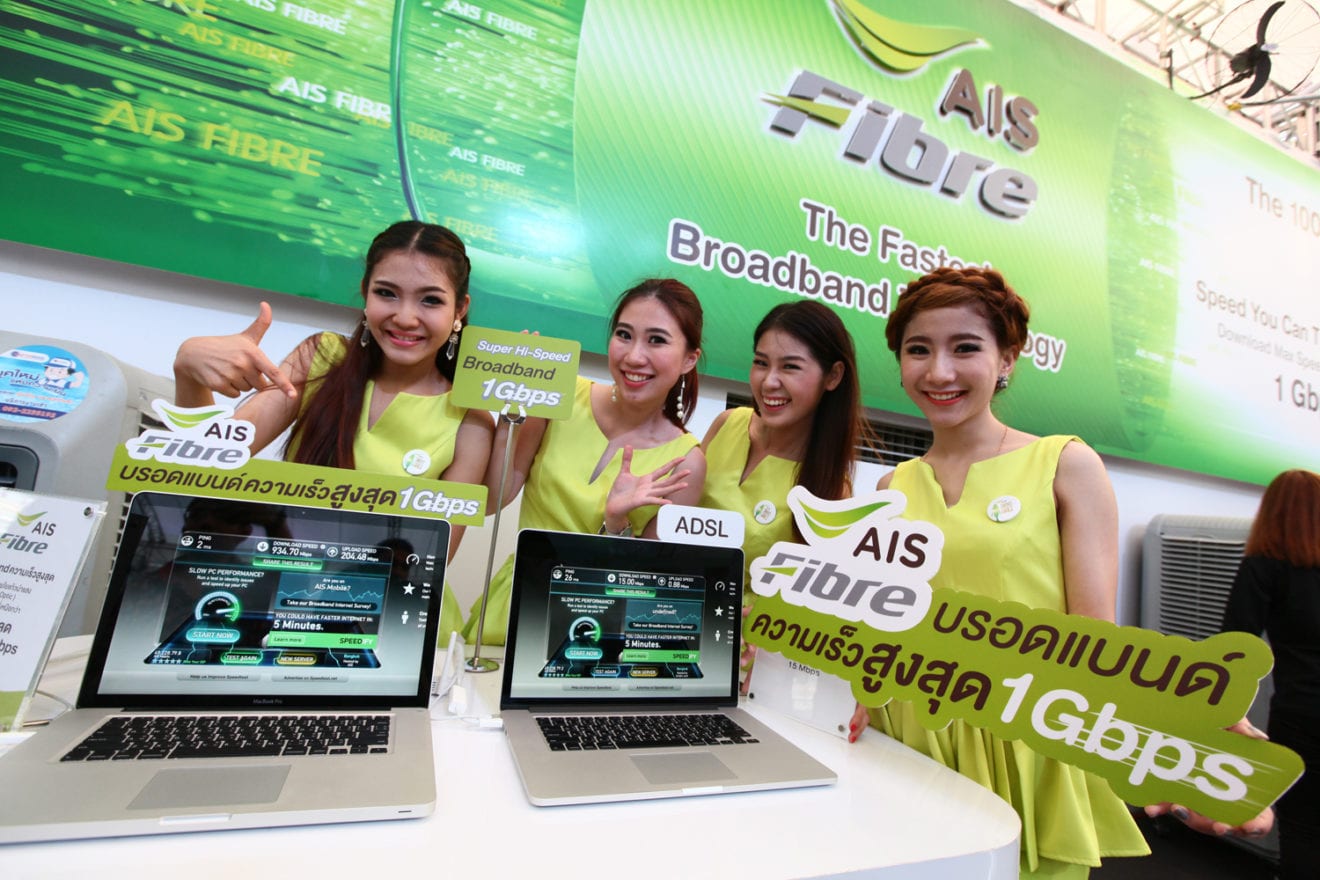
    AIS, Qualcomm Technologies, Inc. and ZTE have jointly announced the world’s first 5G NR-DC (new radio dual connectivity) showcase in the field with 2.6GHz and 26GHz, achieving 8.5Gbps peak downlink speed and 2.17Gbps peak uplink speed with a single mobile device. As part of the joint effort, this collaboration combines two major 5G frequency bands, sub-6 and 5G mmWave, to enhance the capabilities of Thailand’s 5G network and extend the 5G application landscape.

    The test was conducted at the AIS commercial 5G site in Korat, Thailand, using a smartphone form-factor test device powered by Snapdragon® X65 5G Modem-RF System, and ZTE’s latest mmWave AAU network infrastructure equipment.

    The NR-DC was implemented with one 100MHz carrier in 2.6GHz, and four 200MHz carriers in 26GHz. The test achieved 8.5Gbps peak downlink speed and 2.17Gbps peak uplink speed demonstrating the extraordinary capability and flexibility of NR-DC for diversified requirements from individual consumers and industry leaders.

    This NR-DC showcase drives the commercial progress of 5G mmWave into the fast lane in Thailand. AIS, Qualcomm Technologies and ZTE are together committed to accelerating and growing 5G for capability enhancement, efficiency improvement and application boundary extension.

    “AIS’s key goal is to develop the smart 5G network as a national infrastructure with investments of 30,000-35,000 MB,” Wasit Wattanasap, head of nationwide operation and support business unit at Advanced Info Service Pcl. (AIS), commented, “We are the licensee holding the most spectrum in low band, mid band and high band or mmWave, which has the outstanding feature of rapid data transmission with low latency. We have never stopped deploying innovations to level up the network, including 5G Non NSA/SA Voice over new radio (VoNR) and 5G carrier aggregation (CA), to provide increasingly improved experiences to Thai customers, which was our intention when we joined the auction for spectrum.”

    “Most recently, we have continued our collaboration with ZTE and Qualcomm Technologies, to jointly trial 5G NR-DC technology. It is a crucial step to combine different 5G spectrum, 2600 MHz (mid Band) and 26GHz (high Band) in a world-first. This enables downloads of up to 8.5 Gbps, and uplinks of up to 2.17 Gbps. This trial gave us a wider channel for the signal and extremely low latency. For instance, there could be streaming games online (cloud game), controlling driverless vehicles and commanding robots remotely in real-time. Moreover, the trial supports the development of new models of chipsets in the future, to speed up data transfer even more.”

    “This cooperation highlights how AIS is the only provider using its licensed spectrum of every waveband for development to support business growth in various dimensions. It is also continuous transformation and updates for Thai consumers. Taking this joint-trial as a good start, we are confident that AIS 5G network is ready to expand the use of mmWave technology and support growth of the business sector in various aspects,” concluded Wasit.

    “Our collaboration with AIS and ZTE proves the feasibility of deploying 5G mmWave in Thailand,” said ST Liew, vice president, Qualcomm CDMA Technologies Asia-Pacific Pte. Ltd. and president, Qualcomm South East Asia. “Qualcomm Technologies believes that 5G mmWave will be the key to unlocking the full potential of 5G. The possibility is endless and we are proud to take the first step in bringing the full benefits of 5G mmWave to the country.”

    “We’re pleased to work with AIS and Qualcomm Technologies to achieve this milestone, which lays a technology validation foundation for 5G mmWave commercialization,” said Mei Zhong Hua, senior vice president, ZTE Corporation. “With broader 5G opportunities enabled by mmWave, we will join hands with partners to continuously drive mmWave development, create ultimate experiences and usher in a wonderful 5G era.”

  • Malaysia confirms utilizing SWN model for 5G implementation

    Malaysia confirms utilizing SWN model for 5G implementation

    The Malaysian government is sticking to its plan of deploying 5G through a single wholesale network (SWN). In a joint statement from the ministries of finance and communications and multimedia, up to 70% equity in the wholly state-owned 5G company, Digital Nasional Berhad (DNB), will be available to telcos.

    Malaysian finance minister Tengku Zafrul Aziz emphasized that the maintenance of the SWN model is the government’s firm stance on policy continuity. “The implementation of 5G will drive the country’s socio-economic transformation and this is estimated to contribute RM 659 billion to the value of GDP until 2030,” Aziz explained.

    The finalized decision has come in contrast to the concerns among wireless carriers that a single, shared 5G network could hamper digital competitiveness. Nonetheless, the government will retain a 30% equity stake in DNB while the majority of the stakes are intended for operators. It is worthy to note that this special-purpose vehicle company was established in early March 2021 to drive 5G infrastructure development in Malaysia.

    Accessing DNB’s 5G network is estimated to cost less than what major local telecom operators such as Celcom Axiata, Digi, Maxis, and U Mobile have incurred during 4G rollouts. In line with this, DNB has offered free 5G services to service providers until March 31 as part of its commercial trial. Aiming to achieve 80% coverage of populated areas by 2024, the trial is bound to be extended until June 30 to allow more operators to sign up.

    Access to high-quality 5G services would accelerate the recovery of the post-pandemic Malaysian economy. Moreover, “the SWN model will help bridge the urban-rural digital divide to enable all Malaysians to enjoy high-quality 5G services and be widely available to them through telecommunications companies,” said Malaysian communications and multimedia minister Annuar Musa.

    In retrospect, the Malaysian government refused the prior recommendation of having a dual wholesale network (DWN) model and selected Ericsson to develop the country’s 5G network infrastructure.

  • Fourth radio interface technology added to 5G standards

    Fourth radio interface technology added to 5G standards

    Members of the International Telecommunication Union (ITU) have approved the fourth technology as part of ongoing standards development for 5G mobile services.

    Known as “DECT 5G-SRIT”, the new technology supports a range of uses, from wireless telephony and audio streaming to the industrial Internet of Things (IoT) applications, particularly in smart cities. It was added in the first revision to ITU’s key recommendation IMT-2020, which broadly encompasses fifth-generation, or 5G, networks, services, and devices.

    This ITU Radiocommunication Sector (ITU-R) Recommendation – providing a set of global technical 5G standards – reflects continual consultation and discussion among governments, companies, regulators, and other stakeholders dealing with radiocommunication worldwide.

    Along with fostering connectivity across borders, ITU promotes the global rollout of 5G as a key driver to achieve the UN’s 17 Sustainable Development Goals.

    “New and emerging technologies like 5G will be essential to build an inclusive, sustainable future for all people, communities, and countries,” said ITU’s secretary-general, Houlin Zhao. “Under the ongoing International Mobile Telecommunications or IMT program, our diverse global membership continues its long-standing contribution to advance broadband mobile communications, furthering our mission to leave no one behind in connecting the world.”

    ITU – the United Nations agency entrusted with coordinating radio-frequency spectrum worldwide – has published the specifications for the new technology as RecommendationITU-R M.2150-1.

    The technology is designed to provide a slim but strong technical foundation for wireless applications deployed in a range of use cases, from cordless telephony to audio streaming, and from professional audio applications to the industrial Internet of Things (IoT) applications, such as building automation and monitoring.
    The European Telecommunications Standards Institute (ETSI) laid the essential groundwork jointly with the DECT Forum, a worldwide association of the digital enhanced cordless telecommunications (DECT) or wireless technology industry.

    ITU’s radiocommunication director, Mario Maniewicz, said: “The highly collaborative process involves substantial input from and coordination with the ITU Member States, equipment manufacturers, network operators, standards development organizations, and the academic community. ITU provides a unique global framework to discuss the capabilities of new radio technologies.”

    Andreas Zipp, chairman of the DECT Forum, welcomed the addition of the new technology to IMT-2020. “Inclusion as part of ITU’s global 5G standards affirms the significance of this technology moving forward,” he said

    Other candidate radio interface technologies underwent the international mobile telecommunication (IMT) evaluation process over the past year, although only one qualified to be added at this stage.

    The revised IMT-2020 recommendation now includes the new standard, which European standards developers recognized could support 5G uptake everywhere.
    “The ETSI DECT standard received IMT-2000 approval more than twenty years ago,” noted ETSI’s chief technical officer, Adrian Scrase. “5G therefore presented an ideal opportunity to develop this new, non-cellular, radio standard, which is particularly suited for smart meters, Industry 4.0, building management systems, logistics and smart cities.”

    Based on the requirements set out in ITU’s evaluation process, the radio interface technology demonstrates worldwide compatibility in terms of operation, equipment, and roaming. Italso addresses the ultra-reliable low latency (URLLC) capability stipulated by IMT-2020 – the underlying global coordination framework for so-called 5G services.

  • Singtel launches industry’s first all-in-one platform for enterprise 5G edge computing and cloud services

    Singtel launches industry’s first all-in-one platform for enterprise 5G edge computing and cloud services

    Singtel expands its offering for the enterprise market with the launch of Paragon, a revolutionary platform that aggregates networks, edge computing, public cloud and applications ecosystems to accelerate enterprises’ digital transformation.

    Offering an all-in-one solution for digital transformation, Paragon seamlessly aggregates and manages low-latency networks and edge cloud resources, allowing enterprises to tap on Singtel’s 5G network to securely deploy applications across the edge at Singtel MEC and a public cloud of choice. Through a single interface, enterprises can activate network slices on demand, deploy mission-critical applications on Singtel MEC and access a robust ecosystem of partner applications.

    This significantly reduces the complexity and time needed to adopt 5G MEC and low-latency applications and services, giving enterprises the agility, flexibility and scalability needed to transform operations and adapt to new business models in a digital economy.

    “Many enterprises are undergoing rapid digitalization while exploring and developing tailored 5G solutions for deployment in their industries. We understand the challenges and complexities that they face in managing the various networks, edge cloud applications and services with the required cyber security, resiliency and demanding service assurances required, cost-effectively. Paragon was conceived, developed and delivered to help enterprises meet these needs through a single platform,” said Bill Chang, chief executive officer, group enterprise, Singtel.

    One-stop digital transformation platform and strong 5G MEC ecosystem

    Developed in-house, Paragon empowers enterprises to adopt Singtel’s 5G network to deploy their edge computing applications and services independently, securely and within minutes. These capabilities are bundled on the platform to provide enterprises a unified experience, delivering always-on connectivity and low latency with high bandwidth throughout to support industry 5G use cases including advanced logistics and manufacturing, smart transportation, and real-time fleet management and monitoring.

    Network 5G slices can be created almost instantly, autonomously and as many times as needed. A network slice can be utilised only when needed for an intended duration to ensure cost optimization. Since enterprises pay only for what they use, Paragon reduces the operational and costs overhead otherwise incurred by businesses.

    For enterprises, the benefits are a shorter innovation curve and time-to-market, as well as better performance and faster decision-making at the edge, critical for use cases including autonomous systems like robotics, drones and vehicles, immersive, video-rich experiences and powerful real-time edge AI use cases. Already, Paragon is being deployed for testbeds in the public sector. For instance, 5G trial uses cases are underway at Singapore’s Sentosa to bring about built environment and tourism transformations.

    Through the Paragon Marketplace, which operates like an app store, Singtel’s ecosystem of partners can integrate their offerings through robust industry-standard application programming interface (API) to rapidly build and deploy their solutions on the platform. As such, existing cloud-based 4G applications can migrate to 5G with ease. On the other end, end customers can easily source and adopt applications that solve their business challenges.

    Plans are in the pipeline to scale Paragon regionally and globally with other telcos. Partners on board Paragon can extend their solutions to multiple markets. Through the Singtel Partner Programme, Singtel aims to co-create and test more innovative solutions, driving wider 5G adoption across markets to bring forward a 5G future.

  • China’s telecom sector grows 8.1%

    China’s telecom sector grows 8.1%

    China’s telecom sector recorded a strong 8.1% year-on-year growth in the first 11 months of this year.

    According to official figures released by China’s Ministry of Industry and Information Technology, the combined industrial revenue grew by over RMB 1.35 trillion. This represents a decline of 0.1 percentage points for the period from January to October.

    The number of 5G mobile subscribers has reached 497 million by the end of November, representing an increment of 298 million from the end of last year. Of which, China Mobile, China Telecom, China Unicom added over 35 million 5G mobile subscribers in November alone.

    The world’s largest operator in term of subscribers, China Mobile has added a total of 209.38 million 5G subscribers since the start of 2021.

  • Vietnam to launch commercial 5G service in 2022

    Vietnam to launch commercial 5G service in 2022

    Vietnam is set to commercially launch 5G mobile services next year as it seeks to increase the number of internet users by reducing the number of 2G smartphones to under 5 percent.

    The Ministry of Information and Communications reported at a meeting Wednesday that the service will be operated with made-in-Vietnam devices. The country aims to have 25 percent of the population using 5G by 2025, it said.

    The government had earlier announced its intention launch 5G commercially last year but the service is still on trial. Some radio frequencies have been dedicated and 5G services are being tested in 16 localities since last year.

    4G services currently cover 99.8 percent of the country.

    State-owned telecom giant Viettel said it has completed research and development work of 5G services. It also said it has successfully run a complete network of 5G services this month.

    The communications ministry has said wants more people to switch to 4G and 5G technology by the end of next year.

    It plans to have 5 percent or less of the population using 2G phones by the end of next year and to shut down 2G services by 2023.

    “This means that by 2023, 100 percent of Vietnamese will be ready to use internet,” the ministry said.

    As of last year, Vietnam had 24 million 2G subscribers.

  • Singtel and Ericsson achieve Southeast Asia fastest download speeds on 5G SA NR-DC

    Singtel and Ericsson achieve Southeast Asia fastest download speeds on 5G SA NR-DC

    Singtel and Ericsson have made a technology breakthrough in 5G standalone (SA) New Radio-Dual Connectivity (NR-DC), becoming the first in Southeast Asia to reach download speeds of 5.4Gbps by aggregating Singtel’s spectrum holdings across mid-band spectrum 3.5GHz and 28GHz mmWave. This milestone was achieved in a demo with Ericsson’s 5G radio access network products and solutions and dual-mode 5G Core network solutions, as well as a test device from Qualcomm Technologies powered by its Snapdragon X65 5G Modem-RF System.

    5G SA NR-DC technology, which combines mid-band and mmWave frequencies, further enhances Singtel’s 5G SA speed and capacity to enable high-performance and latency-sensitive applications, and stimulate innovative new use cases across business, industry and consumer ecosystems. Applications can range from cloud gaming, immersive media, AR, VR, XR to autonomous vehicles or robotic control. This new development will push the boundaries of 5G technology, combining different frequency bands across the networks, to fully utilise Singtel’s 5G assets for an enhanced user experience.

    Mark Chong, Singtel’s group chief technology officer, said, “This 5G breakthrough demonstrates our commitment to continually innovate and maximise the potential of what this developing technology can deliver. The increased speeds will help pave the way for many new applications as we look to drive transformative benefits for consumers and businesses.”

    As one of the first 5G SA networks deployed globally, the future implementation of 5G SA dual connectivity in Singapore will help accelerate the adoption of 5G for both consumers and enterprises, create new business opportunities, strengthen the local 5G ecosystem, as well as drive the future-readiness of Singtel’s network. This achievement closely follows the latest win at the Asia Communications Award, where Singtel and Ericsson were jointly recognised for 5G deployment in Singapore.

    Martin Wiktorin, head of Ericsson Singapore, Brunei and Philippines, said, “At Ericsson, we have already deployed over 100 live 5G networks worldwide, building a strategy around multi-layer networks from low, mid-band to high-band 5G. In Singapore, we are constantly driving technology innovations together with Singtel. As 5G frontrunners, we strive to expand the potential of limitless connectivity, and further enhance digital transformation to benefit industries, consumers and societies.”

    his new 5G technology breakthrough builds on the strong collaboration between Ericsson and Singtel over the past 30 years as technology front runners in Singapore. Past milestones include achieving Singapore’s fastest 5G speeds of 3.2Gbps at Singtel’s unmanned pop-up retail store UNBOXED as well as Singtel’s GENIE, the world’s first portable 5G-in-a-box platform powered by Ericsson to enable enterprises to experience 5G’s capabilities and trial use cases in their own premises.

  • Thailand partners with Huawei to launch ASEAN’s first 5G smart hospital

    Thailand partners with Huawei to launch ASEAN’s first 5G smart hospital

    Thailand Office of The National Broadcasting and Telecommunications Commission (NBTC), Siriraj Hospital, and Huawei Technologies (Thailand) Co., Ltd. jointly launched the “Siriraj World Class 5G Smart Hospital.”

    Thailand General Prayut Chan-o-cha, Prime Minister and Minister of Defence, presided over the inauguration ceremony alongside Chaiwut Thanakamanusorn, Minister of Digital Economy and Society, Prof. Dr. Prasit Watanapa, MD, Dean of Faculty of Medicine Siriraj Hospital Mahidol University, Colonel Natee Sukonrat, Ph.D, Vice-Chairman of the National Broadcasting and Telecommunications Commission, Han Zhiqiang, Ambassador of the Embassy of the People’s Republic of China in Thailand, Abel Deng, Chief Executive Officer of Huawei Thailand, as well as Assoc. Prof. Visit Vamvanij, MD, Director of Siriraj Hospital, Assoc. Prof. Cherdchai Nopmaneejumruslers, Vice Director of Siriraj Hospital.

    This project marks the first and largest 5G smart hospital project in Thailand and the ASEAN region. It aims to bring more efficient and convenient experience to patients by introducing technologies such as 5G, cloud, and artificial intelligence, and promote Siriraj Hospital to become a model for smart hospitals in Thailand and the world. At the same time, Siriraj Hospital and Huawei will establish a Joint Innovation Lab to incubate innovative 5G applications. Currently, the two parties have started piloting 5G portable medical boxes, 5G unmanned vehicle, 5G medical carts, and 5G smart hospital beds. It is expected that 30 5G medical applications will be incubated and promoted nationwide in 2022.

    General Prayut Chan-o-cha, Prime Minister, addressed the national policy on 5G technology and digital economy, stating, “The Thai government understands the importance of technology, successfully drafting a plan for Digital Thailand, and today is an important first step in the utilization of digital technologies and 5G in the medical field. This will help reduce processes for medical personnel, decrease overall risk, and will improve the effectiveness and efficacy of healthcare for patients. We will use Siriraj 5G Smart Hospital as a pilot project with the aim of expanding to other hospitals in the future. We admire Siriraj Hospital and Mahidol University, and would like to thank Huawei, NBTC, private organizations, and all other partners involved in this project. We hope the project will act as a blueprint for all smart hospitals in Thailand going forward.”

    Prof. Dr. Prasit Watanapa, MD, Dean of Faculty of Medicine, Siriraj Hospital Mahidol University, shared the background and development of implementing Siriraj’s Smart Hospital Project with 5G and artificial intelligence (AI) to build a model for smart hospitals in collaboration with its partners – introducing 5G, cloud, AI, and digital disruption technologies for application in prevention, treatment, and rehabilitation to enhance the quality and productivity of medical services, bring about good experiences while using its services, provide people in remote areas with better opportunities to access advanced tertiary health care services, as well as minimize the disparity and serve as a model for new generations of medical services to the global public health industry. In addition, an innovation lab and other innovative platforms were also established to cultivate innovation projects in the future.

    Colonel Natee Sukonrat, Ph.D., Vice-Chairman of the National Broadcasting and Telecommunications Commission, addressed the NBTC’s support of the project by saying that “The NBTC, as the regulatory body of broadcasting and telecommunications businesses, has a key mission for licensing frequencies to accommodate high speed wireless communications in the 5G era, to promote the national telecommunications infrastructure development, and introduce the extension and utilization of technologies to various sectors. This is in line with the government’s policy after the National 5G Committee resolved to approve the pioneer Smart Hospital project as a prototype project for 5G application and foresaw the potential of Siriraj Hospital – equipped with specialists and fully-integrated medical equipment – as being instrumental in development into a smart hospital to produce apparent results.”

    Since the beginning of the pandemic, Siriraj Hospital and Huawei have established long-term cooperation in 5G technology development and application. In June 2020, Siriraj Hospital cooperated with Huawei Thailand to launch 5G self-driving vehicles for contactless delivery of medical supplies. In December 2020, Huawei signed a five-year Memorandum of Understanding with Siriraj Hospital to accelerate the intelligent operation of Siriraj Hospital using digital technologies such as 5G, including patient monitoring, diagnosis, and data collection, and provide technical training for doctors in the hospital. In 2020, Siriraj won the award from CommunicAsia Awards in the category of “Most Innovative 5G Trial in Asia Pacific Region.”

    Mr. Abel Deng, Chief Executive Officer of Huawei Technologies (Thailand) Co., Ltd., highlighted that “Huawei has collaborated with Siriraj Hospital to transform it into a world class 5G Smart Hospital, and introduced the Innovation Lab at Srisavarindira Building as part of its 5G infrastructure project for Siriraj Hospital last year. This signifies a model for upgrading Thailand’s public health industry in the future and contributes to Siriraj’s transition to becoming a smart hospital, in line with Huawei’s mission to Grow in Thailand, Contribute to Thailand.”

    This cross-sector collaboration will enhance and upgrade the services of Siriraj Hospital to progress it to become a smart medical center using digital technologies based on 5G, AI, big data infrastructure, and cloud edge processing for the purpose of patient tracking, disease diagnosis by AI on cloud, data storage and analysis, and allocation of resources.