Tag: 5G

  • Jio Debuts 5G-Powered Wi-Fi

    Jio Debuts 5G-Powered Wi-Fi

    To enable 5G-for-all, Reliance Jio has introduced JioTrue5G-powered Wi-Fi services in high-footfall areas such as educational institutes, religious places, railway stations, bus stands, commercial hubs and more. This is in addition to the JioTrue5G service and the Jio Welcome Offer, launched recently in Delhi, Mumbai, Kolkata, and Varanasi. Jio teams are working round the clock to make additional cities go live and increase the availability of True5G-ready handsets.

    As a Shubh-Aarambh, along with JioTrue5G services, Jio has started JioTrue5G-powered Wi-Fi services in the temple town of Nathdwara, in Rajasthan.

    Akash M Ambani, chairman, Reliance Jio Infocomm Limited, said, “Service to humanity is one of the most endearing facets of Indian culture, the roots of which can be found in our socio-religious traditions. As stated earlier, 5G cannot remain an exclusive service to the privileged few or those in our largest cities. It must be available to every citizen, every home, and every business across India. This is a step in that direction to enable every Indian with JioTrue5G.”

    “Today, we have powered the first True5G-enabled Wi-Fi service at the holy town of Nathdwara and the temple of Lord Srinath Ji. With this, we will power many more such locations and allow them to trial our services. In addition, we welcome Chennai as our latest city to be added to Jio True5G Welcome Offer.”

  • ZTE Seals 5G Innovation Cooperation Agreement

    ZTE Seals 5G Innovation Cooperation Agreement

    ZTE has signed a 5G innovation cooperation agreement with True Group, a leading digital lifestyle enabler in Thailand.

    Under the agreement, both parties will focus on the 5G joint innovation center to develop 5G networks, digital services, smart islands, intelligent manufacturing, research innovation, talent training and other fields, with a great commitment to comprehensively carrying out 5G-oriented innovative technology and business cooperation.

    According to the agreement, both parties will set up a joint innovation lab in Bangkok’s True Digital Park to test and verify 5G technologies and applications. The innovative products, solutions and applications developed by these joint efforts will be directly deployed in the “Super South+” test field in Phuket, bringing the latest digital service experiences to local users.

    “True is ready to support the sustainable intelligence development of Thailand. True Group, with the strong collaboration with leading domestic and world-class international partners, is the only operator that has the complete range and coverage of 7 frequency bands, as well as the smart 5G technology with extensive network coverage of 77 provinces in Thailand,” said Manat Manavutiveth, president of True Group. “Under such circumstances, we are delighted to form the cooperation with ZTE to jointly drive network and infrastructure development and bring changes to the telecommunication sector in various dimensions.”

    “One of the highlights is the joint innovation lab at True Digital Park, reflecting True Group’s intention to focus on innovation development to create value for society and the country as well as our potentials and expertise in True Lab Innovation Centers located in the famous universities across the country. What’s more, the cooperation in the ‘Super South+’ Project in Phuket will help improve mobile network to serve the tourism industry in the southern area, which is one of the major destinations for tourists in Thailand. We are confident that this cooperation will create a complete True5G eco-system, develop innovation technology for maximum benefits as well as strengthening True5G genius network in order to sustainably enhance the life quality and provide ultimate experiences for Thai people and forge Thailand ahead to digital transformation,” added Manavutiveth.

    “ZTE continues to practice its own positioning as a driver of digital economy and insists on continuous technological innovation. Through joint innovation, ZTE will give full play to ZTE ‘s advantages in 5G technology, R&D innovation and 5G industry application,” said Mei Zhonghua, senior vice president of ZTE Corporation. “We are deploying minimalist, green, low-carbon and intelligent 5G networks for True in southern Thailand. To meet the needs of numerous islands and offshore operations in south Thailand, we provide customized ultra-long-distance coverage products, which will enable 5G coverage to reach 100KM over the sea and high-speed 5G digital services for tourists and marine operations.”

    Moving forward, the joint innovation lab will also expand to local ecological partners to form end-to-end 5G innovative applications, further empowering industry verticals. From local pilot to mature promotion, the lab – by forming a 5G ecosystem with cross-industry integration – will further change the production method, create greater economic value for Thailand and support Thailand’s digital transformation to achieve the “Digital Thailand” vision.

  • Singtel and Ericsson to Roll Out Singapore’s Most Energy-Efficient Radio Cell on 5G Network

    Singtel and Ericsson to Roll Out Singapore’s Most Energy-Efficient Radio Cell on 5G Network

    Singtel has announced the deployment of Singapore’s greenest radio cell, the Ericsson AIR 3268, to its 5G network. This is part of Singtel’s ongoing sustainability and decarbonization measures towards achieving net-zero emissions by 2050 and paves the way for more such radio cells to be deployed across the country to augment its nationwide 5G coverage.

    The AIR 3268 radio is expected to save up to 18% more energy and weigh approximately 40% less than earlier generations of 5G radios. At just 12kg, its proportions simplify upgrades and make new site acquisitions and installations easy on towers, rooftops, poles and walls – even in challenging locations. It also makes a 5G site 76% lighter than a 4G site that typically requires multiple radios while providing the same network capacity. This further reduces Singtel’s overall 5G network energy consumption, up to 58% lower than 4G today.

    The AIR 3268 is designed to provide real-time channel estimation and ultra-precise beamforming – or elimination of undesirable noise interference – to accelerate 5G mid-band spectrum deployment and boost capacity, coverage and connectivity speeds, thus enhancing mobile experiences for customers.

    Anna Yip, chief executive officer, Consumer Singapore, Singtel, said, “We are always looking for ways to deliver Singapore’s greenest 5G network while further reducing our carbon footprint. By integrating energy-efficient technologies into our operations and infrastructure, we aim to build a better, more sustainable future as we continue to deliver the best network performance and user experience to consumers and enterprises through our 5G solutions and services. With an optimized network, even end-users will be able to conserve energy on their mobile devices, making them part of the movement of building a better future together.”

    Martin Wiktorin, head of Ericsson Singapore and Philippines, noted, “Sustainability and energy efficiency are a priority for us at Ericsson. Deploying our energy-efficient AIR 3268 radio as part of Singtel’s 5G network is a significant step in our larger sustainability plan, which is focused on breaking the energy curve by activating energy-saving software, building 5G with precision and operating the site infrastructure intelligently. This will serve to manage mobile traffic growth while reducing energy consumption.”

    Deployment Simplicity and Improved Energy Efficiency

    Singtel 5G is a greener technology with higher data transfer rates compared to any previous wireless technology generation, working on a wide spectrum of 100 MHz, which provides cell capacity comparable to four Singtel 4G bands combined.

    The deployment of the AIR 3268, the lightest and smallest Massive MIMO (multiple-input and multiple-output) in the industry, is another step in Singtel’s energy-saving improvements as it explores smart and sustainable mobile technologies that optimize power and energy utilization in its operations.

  • Malaysia’s 5G Journey Back on Track for Wider Coverage

    Malaysia’s 5G Journey Back on Track for Wider Coverage

    Four Malaysia mobile operators, namely Celcom, Digi, YTL and TM, have finally sealed agreements to take up 65% of the government-owned 5G agency, Digital Nasional Berhad (DNB), to roll out the country’s 5G services.

    Ahead of their impending merger, both Celcom and Digi will take a 12.5% stake each, while YTL and TM will each have a 20% stake. The remaining two telcos, Maxis and U Mobile, have also agreed to purchase wholesale capacity from DNB, after talks of the two operators retracting their decision to take stakes in the government agency as they reportedly did not see benefits in being minority shareholders.

    5G is an important pillar in the digital economy. In an effort to realize 5G, a state-controlled 5G single wholesale network by Digital Nasional Berhad (DNB), owned by the Ministry of Finance Malaysia, was established in March 2021 to undertake the deployment of 5G infrastructure and extend 5G as a wholesale network.

    However, the road toward 5G has not been smooth sailing, as all stakeholders find it difficult to see eye to eye on how 5G is to be deployed in the country.

    Earlier this year, mobile operators debated with the Malaysian Communication and Multimedia Commission (MCMC) over terms for the country’s wholesale 5G network, with the four largest operators – Maxis, Celcom Axiata, U Mobile and Digi – pushing for two wholesale networks.

    Jointly, the operators countered the government’s proposal to seek at least a 51% stake in DNB, citing concerns over unaffordable 5G pricing for consumers and enterprise as an initial stumbling block. However, the government did not waver on its August 31,   deadline. It believes that a shared network will be more cost-effective and enable infrastructure development to speed up. On the contrary, some industry players are of the opinion that this deprives operators of the competitive advantage of differentiating their services.

    However, after initial hesitations, all six mobile operators in the country agreed to the 5G agreement, but with Maxis and U Mobile deciding to retract their decisions at the eleventh hour.

    While all six mobile operators have now firmed up their decision to move forward, the MCMC foresees challenges ahead for state-level rollouts owing to bureaucratic red tape by local authorities.

    By the second quarter, Malaysia’s 5G rollout had reached 27%. While this indicates progress made in terms of 5G service coverage, MCMC’s Chief Operation Officer, Datuk Mohd Ali Hanafiah Mohd Yunus, noted that there is still room for improvement when it comes to addressing the requirements of local councils and states for resolving bureaucracy issues.

    Deputy Minister of Communications and Multimedia Datuk Zahidi Zainul Abidin has even called for the 5G contract to be given back to MCMC as telcos have not been aligned with the government. Zahidi also encouraged the public to inform MCMC if an area has poor internet access so that telcos can be instructed to place transmitters at respective sites.

    “We at MCMC can only ask them or implore them to place these transmitters to increase the strength of the transmitters while DNB don’t have the authority to force them or reprimand them for not doing so,” Zahidi said. “That’s why I kept saying in this house to give this 5G rollout project back to the MCMC so we can then instruct these telcos to follow our instructions as we have an Act to compel them to do so.”

    Gaining Momentum in 5G

    According to IDC, there will be 6.2 million IoT connections in Malaysia by 2025, nearly doubling from just 3.9 million connections in 2020. In the report, IDC stated that “IoT alone will generate significant IP traffic, which further highlights the need for expanded backhaul bandwidth to support both 5G cell sites but also fixed aggregation at factories, stadiums, and various government and smart city locations.”

    As 5G penetration takes root in Asia, Malaysia is reportedly aiming to extend approximately 80% of 5G network coverage in populated cities, including Kuala Lumpur, Cyberjaya and Putrajaya by the end of this year, with plans to extend 5G to other cities by the end of 2024. As defined by MCMC, “populated areas” refer to areas with at least 20 people per square kilometer.

    In a recent report by Opensignal, Kuala Lumpur has the second highest 5G download speed of 376.6 Mbps among 11 cities in Asia Pacific, behind only Seoul, with a 5G download speed of 453.1 Mbps. The report cited that the reason behind Kuala Lumpur’s high ranking is that YTL Communications’ Yes 5G is the first and only operator offering commercial 5G services in Kluang, Malaysia, and hence, DNB has a lighter 5G network load compared to other Asia-Pacific cities.

    According to the Malaysian Investment Development Authority, Malaysia is expected to have 2.1 million 5G subscribers by 2025, or an estimated penetration of 6.6 5G subscribers per 100 people. By then, 5G is projected to contribute about RM5.3 billion to Malaysia’s gross domestic product.

    Mohd Ali Hanafiah has said that the country is on track for Phase 1, which spans 2020 to , with Phase 2 to be scheduled for the end of 2022 through 2025. Under this project, Malaysia aims to lay out plans for private and public sectors to provide wider coverage and a better broadband quality experience for its people, as 5G adoption grows.

    Investments for Phase 1 of the project are estimated at RM28 billion. 60% will be funded by the private sector, while the government will contribute to the remaining 40% via the Universal Service Provision (USP) fund to ensure that rural areas will be well covered to bridge the digital divide.

  • PM Modi to Launch 5G in India This Week

    PM Modi to Launch 5G in India This Week

    Prime Minister Narendra Modi will be launching 5G services in India at the India Mobile Congress, according to the National Broadband Mission.

    Services will debut during the 4-day event, convening major telcos and ecosystem stakeholders as they discuss 5G plans and use cases. Leading telecom companies, including Reliance Jio, Bharti Airtel and Vodafone Idea, will be sharing 5G deployment plans then.

    This announcement comes a month after Union Minister Ashwini Vaishnaw informed all telcos to prepare for an impending 5G rollout. The government of India targets at least 80% 5G coverage in a short timeframe.

    The India Mobile Congress is jointly organized by the Department of Telecommunications and Cellular Operators Association of India. Through meaningful dialogue, India Mobile Congress 2022 will focus on the evolution path of existing technology and what it holds for businesses and individuals in the future.

  • Singtel and Intel Launch 5G MEC Incubator for Sustainable Enterprise Digitalization

    Singtel and Intel Launch 5G MEC Incubator for Sustainable Enterprise Digitalization

    Singtel has announced a strategic partnership with Intel to establish a 5G multi-access edge compute (MEC) incubator to unlock the potential of 5G connectivity and high-performance computing at the edge. This jointly established, next-generation 5G MEC incubator enables enterprises to develop new 5G use cases and advance the development of innovation applications across verticals.

    The incubator will be supported by Singtel’s Paragon, a one-stop orchestration platform for 5G edge computing and cloud services, and powered by Intel’s 4th Gen Xeon Scalable processors and Intel Data Center GPU, to enable enterprises to plan for 5G adoption in advance.

    Having reached nationwide 5G standalone coverage in Singapore recently, Bill Chang, chief executive officer, Group Enterprise and Regional Data Centre Business, Singtel, noted in his opening address that the latest collaboration with Intel marks an important milestone in the telco’s journey as a digital enabler for enterprises to transform with 5G.

    “Singtel’s 5G network and Paragon MEC platform are transforming operations in sectors such as advanced manufacturing, smart logistics, healthcare, retail, transportation and urban planning,” said CEO Chang . “With Intel, we’re collectively bringing together our best-of-breed knowledge, expertise, assets and ecosystem to help address business needs, improve operational efficiencies, unlock new opportunities and advance in a 5G world.”

    The alliance will focus on developing the application and ISV ecosystems to deliver transformational enterprise and consumer use cases like high-definition content delivery, cloud gaming, video analytics, virtual-augmented-mixed reality and metaverse.

    Christoph Schell, executive vice president and chief commercial officer at Intel, stated, “As enterprises navigate a significant digital transformation, technologies like 5G, edge, artificial intelligence and cloud play a key role in helping to deliver new use cases. Our collaboration with Singtel will help accelerate use of these technologies to solve real business challenges by utilising our unique combination of hardware and software spanning Xeon, GPUs, Smart Edge, OpenVINO and more, and also a broad portfolio of ecosystem innovations.”

    Through Singtel and Intel’s strong global ecosystem, enterprises can tap into expertise in connectivity, compute infrastructure, devices, applications and servers to power 5G use cases, including ready-to-deploy applications for rapid trials and pilots for R&D.

    Enterprises can expect always-on connectivity with high-performing applications that deliver lower latency and greater resilience to meet new business requirements. With this partnership, 5G MEC can be adopted more readily, reliably and affordably. Another key benefit is sustainable digitalization for enterprises, as Intel extends its expertise in CPU power and sustainable technology to provide sustainable technology from cloud to edge to help enterprises optimize power usage.

    As 5G continues to disrupt industries, Chang noted that growing 5G innovations with an ecosystem of partners “allows enterprises that scale 5G innovations built on the platform to gain a much larger market access through Singtel’s group of telcos in the region.”

  • M1 Debuts 5G Offshore Coverage for Singapore’s Southern Coast

    M1 Debuts 5G Offshore Coverage for Singapore’s Southern Coast

    M1 Limited has announced that it will undertake an ambitious multi-year project that aims to provide ubiquitous 5G standalone (SA) offshore coverage for the southern coast of Singapore, including the surrounding waters of the southern islands.

    Extending 5G offshore coverage enhances connectivity in the larger maritime ecosystem and unlocks new use cases and applications. This is an important step in the maritime industry’s digital transformation efforts and its goal of becoming the next engine of growth for Singapore.

    In collaboration with, and with co-funding from, the Maritime and Port Authority of Singapore (MPA) and the Infocomm Media Development Authority (IMDA), M1 will provide a 5G standalone (SA) network to trial, develop and deploy new maritime 5G use cases under the IMDA Innovation and Ecosystem Testbed Programme and the MPA Innovation Lab – making this the world’s first public and largest maritime testbed at sea.

    The potential 5G use cases are targeted at enhancing the efficiency and safety of maritime operations and management. The use of 5G connectivity includes telemedicine to enable crew welfare at sea, delivery drones, maritime surveillance, and autonomous vessels as well as remotely controlled task-based robots, such as ship inspection and autonomous fire-fighting robots, that are used for more dangerous and labor-intensive tasks.

    “The launch of M1’s 5G standalone network provides low-latency, responsive, secured and high-throughput mobile connectivity to ensure more precise and reliable communications between the ships and the port. 5G has the capability to resolve long-standing pain points, and it will become the natural technology of choice for the maritime industry. As the first country to extend 5G standalone coverage to sea for maritime operations, M1 is excited to partner  MPA and IMDA to co-develop 5G solutions that will not only transform the industry but benefit the whole of Singapore’s maritime economy,” said Manjot Singh Mann, CEO of M1.

  • India’s 5G to Rollout by October 12

    India’s 5G to Rollout by October 12

    India is expected to roll out 5G services by October 12, according to Ashwini Vaishnaw, union communication, electronics and information technology minister.

    Vaishnaw revealed that 5G prices will be reasonable for users and that 5G services will be scaled up after launch to reach more parts of the country in the coming two to three years, with a focus on delivering 5G connectivity to both urban and rural areas.

    India has entered its final stage of rolling out 5G services, with the government having issued spectrum allocation letters to telecom operators in preparation for the impending 5G rollout

    During the initial phase of rollout, 5G will reach 13 cities, namely Ahmedabad, Bengaluru, Chandigarh, Chennai, Delhi, Gandhinagar, Gurugram, Hyderabad, Jamnagar, Kolkata, Lucknow, Mumbai and Pune.

    Separately, PM Modi said during the Grand Finale of Smart India Hackathon 2022 that India is preparing to launch 6G by the end of the decade – which will be a boost to sectors such as gaming and entertainment.

  • M1 Onboards ZΩH as New MVNO Partner

    M1 Onboards ZΩH as New MVNO Partner

    M1 has announced ZΩH as its latest Mobile Virtual Network Operator (MVNO) partner. As a telecommunication service offering from enterprise network and ICT provider Lifeway Singapore, ZΩH will leverage M1’s advanced mobile network infrastructure to offer mobile services specifically to enterprise customers.

    ZΩH provides a diverse range of mobile and data roaming plans to corporate as well as SMEs. For M1, the collaboration gives it access to ZΩH’s customer base and enables the telco to expand its reach within the enterprise ecosystem.

    “M1 is proud to be the platform of choice for MVNOs in Singapore. We are delighted to be hosting ZΩH’s services on our network and ensuring that their customers are able to receive excellent coverage, reliability and speed. With our 5G roll-out, we look forward to supporting ZΩH’s enterprise customers and bringing state-of-the-art features to them,” said Alen Ng, head, corporate development, M1.

    “Partnering with M1 is an exciting step forward for Lifeway Singapore, to broaden customer reach and footprint as well as to improve customer experience in today’s digital world. Beyond that, the partnership gives us an opportunity to provide exciting offers and innovative bundles to meet customers’ specific needs,” added head of sales & marketing, Chris Loh, Lifeway Singapore.

    M1 continues to support MVNOs with new and unique value propositions that add to the telco industry’s overall development and infrastructure. M1 is the first telco in Singapore to establish a series of successful partnerships with MNVOs, beginning with Circles.Life in 2015 and more recently with Changi Recommends, MyRepublic and Geenet, enabling the MVNOs to deliver quality network services and experience.

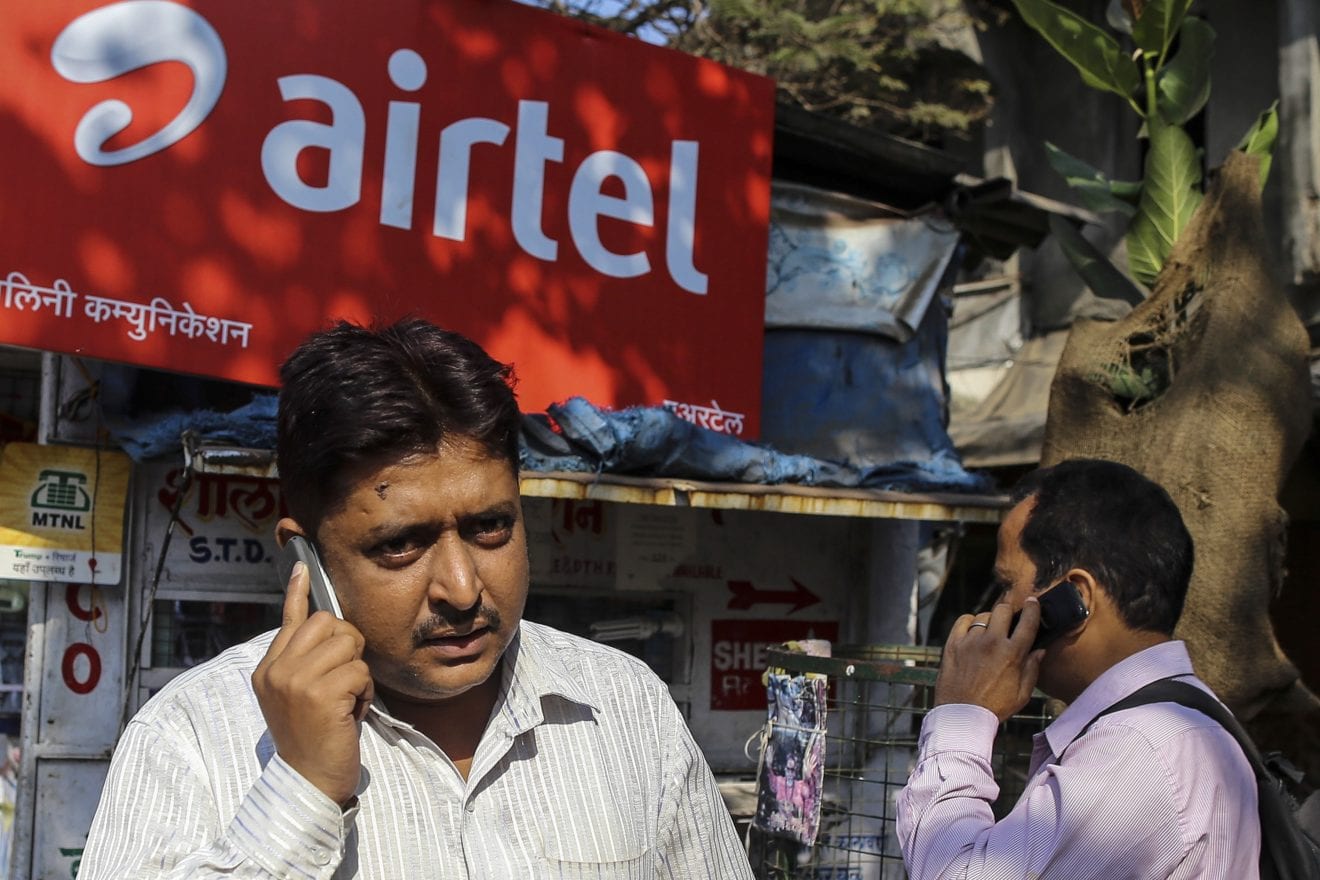
  • Airtel Pays 5G Spectrum Dues Upfront to Prep for 5G Roll Out

    Airtel Pays 5G Spectrum Dues Upfront to Prep for 5G Roll Out

    Airtel has paid Rs 8,312.4 crores to the Department of Telecom (Government of India) toward dues for spectrum acquired in the recently concluded 5G auctions.

    Airtel has paid four years of 2022 spectrum dues upfront. Airtel believes that this upfront payment, coupled with the moratorium on spectrum dues and AGR-related payments for four years, will free up future cash flows and allow Airtel to dedicate resources to concentrate on the 5G rollout single-mindedly.

    Over the last year, Airtel has also cleared Rs 24,333.7 crores of its deferred spectrum liabilities much ahead of scheduled maturities.

    Speaking about the pre-payment of dues Gopal Vittal, managing director and CEO of Bharti Airtel, said, “This upfront payment of 4 years allows us to drive 5G rollout in a concerted manner given our operating free cash flow. Airtel also has access to Rs 15,740.5 Cr in capital from the rights issue which is yet to be called. With the ideal spectrum bank, best technology and adequate free cash flow, we are excited to bring to the country a world-class 5G experience.”

    This month, Airtel announced that it has signed 5G network agreements with Ericsson, Nokia and Samsung to commence 5G deployment. The choice of multiple partners was said to enable Airtel to roll out 5G services spanning ultra-high-speeds, low latency and large data handling capabilities, which will enable a superior user experience and allow the pursuit of new, innovative use cases with enterprise and industry customers.

  • India Offers Free 5G Test Bed to Startups and MSMEs

    India Offers Free 5G Test Bed to Startups and MSMEs

    With an objective to boost the 5G ecosystem within India and to achieve the objectives of Aatmanirbhar Bharat and Make in India initiatives, the Government of India has decided to offer the use of Indigenous 5G Test Bed free of cost to the Indian government-recognized start-ups and MSMEs for the next six months up to January 2023.

    It will be available at a very nominal rate to all other stakeholders. The Department of Telecommunications, Government of India has strongly urged all 5G stakeholders – i.e. industry, academia, service providers, R&D institutions, government bodies and equipment manufacturers – to utilize the 5G testbed facilities and expertise to test and facilitate the speedy development and deployment of their products in the network.

    In keeping sight of India’s specific requirements and to take lead in 5G deployment, the Department of Telecommunications (DoT) approved a financial grant for the multi-institute collaborative project to set up an “Indigenous 5G Test Bed” in India in March 2018 with a total cost of Rs 224 crore.  The eight collaborating institutes in the project are IIT (Indian Institute of Technology) Madras, IIT Delhi, IIT Hyderabad, IIT Bombay, IIT Kanpur, IISc Bangalore, Society for Applied Microwave Electronics Engineering & Research (SAMEER) and Centre of Excellence in Wireless Technology (CEWiT).

    The Indigenous 5G Test Bed was dedicated to the nation by the Hon. Prime Minster Shri. Narendra Modi on 17 May 2022.

    The end-to-end test bed is compliant with the global 3GPP standard and the ORAN standard.  Indigenous 5G Test Bed provides an open 5G test bed that enables R&D teams of Indian academia and industry to validate their products, prototypes and algorithms, and demonstrate various services. Further, it provides complete access for research teams to work on novel concepts/ideas holding potential for standardization in India and on a global scale. It provides the facilities of 5G networks for experimenting and demonstrating applications/use cases of importance to Indian society like rural broadband, smart city applications and intelligent transport system (ITS) and will provide help to Indian operators to better understand the working of 5G technologies and plan their future networks.

    The development of this Indigenous Test Bed is a key milestone for India’s becoming self-reliant in the 5G technology domain and pushing towards 5G Aatmanirbhar Bharat. This test bed is providing the indigenous capability for testing and validation of 5G products being developed and manufactured by Indian start-ups, MSME, R&D, academia and industry users. This has resulted in huge cost efficiency and reduced design time, due to which, Indian 5G products are likely to become more market competitive globally.

    The development of this test bed has also resulted in the development of many 5G technologies/IPs that are available for technology transfer to Industry players which will facilitate for Industry players the smooth and speedy deployment of 5G in India.

  • Singapore Strengthens Role as 5G Regional Innovation Hub

    Singapore Strengthens Role as 5G Regional Innovation Hub

    5G enables technologies such as AI, Digital Twin, and augmented and extended realities to seamlessly work together, a key need for businesses at the forefront of digital transformation, providing consumers with a better-quality experience. In advancing Singapore’s 5G ecosystem, the Infocomm Media Development Authority (IMDA) is working with the industry to unlock the real value of 5G by shaping new business use-cases and enabling enterprises to commercialize locally and globally.

    Lew Chuen Hong, Chief Executive, IMDA, said, “Singapore will continue to push the boundaries of innovation through frontier technologies such as 5G. We are excited to work with our industry partners to unlock the real impact of 5G. We look forward to seeing new and exciting ways 5G will benefit our businesses and consumers.”

    Three new 5G projects have been introduced to boost Singapore’s 5G ecosystem. Under IMDA’s 5G Innovation Programme, S$30 million has been set aside to accelerate the adoption and commercialization of 5G solutions.

    IMDA has announced the awarding of projects for Asia Pacific’s first 5G mobile edge computing for Mixed Reality and Holomedicine capabilities in health tech; the region’s first outdoor mass 5G-enabled cinematic quality AR experience; and Southeast Asia’s first maritime 5G augmented reality/virtual reality smart glasses solution.

    PSA continues to make waves, as the world’s first 5G mmWave port operations trial sees progress. Automated guided vehicles (AGVs) achieved a reduction in latency by 50% compared to the current 4G network. This will enable PSA to scale AGV operations at Tuas Mega Port beyond 2000 vehicles. Automated rubber tire gantry cranes (aRTG) have also seen significant stability in terms of throughput and low latency. 5G will enable PSA to completely automate its RTG operations and empower its staff for higher-value job roles and upskilling in new areas of work.

    IMDA’s partnership with Razer has also seen significant results. This first-ever mmWave trial for Razer was conducted at Ngee Ann City and Singtel’s Comcentre, and findings from this trial enabled a re-imagining of the mobile gaming experience with 5G-enabled gaming controllers.  Based on learnings from this trial, Razer has launched the Razer Kishi V2, a universal mobile gaming controller that promises a “console-class gameplay experience” for smartphones. It also launched the Razer Arctech, a heat-dissipating mobile phone cover that supports the heavy processing load required for a seamless gaming experience.

  • China Now Has More Than 1.85 Million 5G Base Stations

    China Now Has More Than 1.85 Million 5G Base Stations

    China’s Ministry of Industry and Information Technology said that the country has now deployed more than 1.85 million 5G base stations nationwide as it pushes for its target of a total of 3.64 million by the end of 2025.

    According to the government website, fixed asset investment in the telecommunications industry has also increased by almost 25% year-on-year, now reaching 189.4 billion yuan during the first six months of the year.

    Data from the industry regulator shows that as of June, the country has deployed more than 1.85 million 5G base stations, and the number of 5G mobile users was at 455 million.

    The spokesman and chief engineer of the Ministry of Industry and Information Technology, Tian Yulong, stressed that initiatives should be undertaken to immediately begin a series of crucial projects in 5G, gigabit optical networks, the industrial internet and other new information infrastructure to both broaden investment and boost consumption.

    Officials also said that China is seeking to add 600,000 5G base stations this year and speed up their upgrade of the industrial internet.

  • Asia Pacific Spotlights on 5G for Growth

    Asia Pacific Spotlights on 5G for Growth

    As a region, Asia Pacific is poised to become the fast-growing in terms of 5G adoption. Representing two-thirds of the global population, GSMA reports that 5G mobile connections will grow by about 150 million to reach 1,789 million subscribers in 2025. Of which, South Asia will account for the largest growth.

    During this time, GSMA reports that 4G will remain the dominant technology in the region, while 5G takes off, propelled by national digital strategies that have identified digital transformation as a key pillar for economic growth. For instance, Indonesia has launched the Indonesia Digital Roadmap for 2021 to 2024.

    In the region, 14 markets have already launched 5G commercial services, namely Australia, Bhutan, Guam, Indonesia, Japan, Laos, Malaysia, Maldives, New Zealand, North Mariana Islands, Philippines, Singapore, South Korea and Thailand. On the other hand, 5G is still undergoing planning for countries including Nepal, Bangladesh, Brunei, Cambodia, Myanmar, Vietnam, Sri Lanka, Samoa, Pakistan and India. South Korea takes the lead in terms of average and peak 5G download speeds according to market research firm Statista.

    The Bangladesh Telecommunication Regulatory Commission (BTRC) for instance, is preparing to launch 5G after holding its auction for licenses in 2.3 GHz and 2.6 GHz bands in April 2022. In India, spectrum auctions will be held in late July, with spectrum to be allocated not only for telecom operators Reliance Jio, Airtel and Vodafone Idea, but also for private networks to enable enterprise 5G to address demands in Industry 4.0 applications.

    Also gearing up for 5G momentum after months of tussle, six of Malaysia’s telecom operators have finally reached a consensus with stated-owed Digital Nasional Bhd (DNB) to collectively own a 70% equity stake in the country’s 5G network infrastructure. As part of the nation’s digital ambitions, Malaysia plans to extend 5G nationwide to 80% in populated precincts by 2024. In Thailand, the Digital Economy Promotion Agency (DEPA) has recently established the Thailand 5G Alliance to promote commercial 5G use and grow the country’s 5G ecosystem, aimed to elevate Thailand to become a digital hub for ASEAN.

    Growing 5G Revenue with More Commercially Viable Solutions

    According to Frost & Sullivan, 5G revenue in the region is expected to grow from $2.13 billion in 2020 to $23.89 billion in 2025, representing a 62.2% CAGR, attributed by accelerated 5G connectivity. Network slicing will play a big part in growing 5G capabilities and delivering 5G services for enterprises.

    A notable trend is the rise of 5G private networks to ensure enhanced security and control, especially critical in growing smart factories and furthering Industry 4.0. In Southeast Asia, 5G private networks are expected to grow from $83.35 million in 2021 to $1,93 billion by 2030, at a CAGR of 41.9%, based on an analysis by Allied Market Research. In the region, mobile operators have embarked on commercial 5G private networks to capture new market opportunities created by growing demands for low latency, high-speed connectivity, as well as increased usage of artificial intelligence and other smart connected devices. In 2020, Indonesia contributed the highest market share in terms of revenue, accounting for 40% of Southeast Asia’s private 5G market. Being the fast-growing digital economy, Indonesia is projected to maintain its lead in the private 5G market until 2030, with Malaysia forecasted to report the largest CAGR of 48.6% during this period.

    In Malaysia, for instance, Cisco will be partnering with Telekom Malaysia to build a 5G-as-a-service center to springboard 5G adoption and develop proof of concepts for enterprises and vertical industries to help them gain strategic and competitive advantages. This is in line with the country’s digital goals to grow 5G adoption among Malaysia’s SMEs to positively impact the digital landscape.

    Offloading Towers to Grow High-Cost 5G

    A growing trend in the past couple of years, some operators are offloading towers to raise capital for high-cost 5G investments. For instance, PLDT in the Philippines has received six bids to sell off half of its mobile towers, amounting to 6,000 towers. In Singapore, Singtel sold off 70% sale of Australia Tower Network, a wholly-owned subsidiary that operates Optus, to raise funds for 5G rollout and growth. Elsewhere, New Zealand’s Spark finalized a deal to sell 70% stakes in its tower business to raise $900 million.

    In Australia, Telstra and TPG have struck a network sharing deal over 10 years to share RAN for both 4G and 5G services. This has since been hotly contested by Optus, as well as Commpete, a telco industry alliance that advocates greater industry competition, with claims by Commpete that the agreement can be perceived to be a merger of sort. As of the end of June 2022, Telstra is Australia’s incumbent with a 5G network that covers about 80% of Australia’s population.

    Regarding the adoption of 5G mobile services, Moodys’ revealed in a report that its adoption will be uneven across the region, with 5G frontrunners including China, South Korea, Australia and Japan forging ahead in their 5G pursuits, and pioneer 5G markets able to boost revenue with the launch of 5G services. In China, the country’s fourth carrier, China Broadnet debuted 5G mobile services in June 2022 after being granted a 5G commercial license by the Ministry of Industry and Information Technology.

    Moving forward, mobile operators will stay focused on growing 5G capabilities and services to monetize and ensure competitiveness.

  • China Now Has More Than 1.85 Million 5G Base Stations

    China Now Has More Than 1.85 Million 5G Base Stations

    China’s Ministry of Industry and Information Technology said that the country has now deployed more than 1.85 million 5G base stations nationwide as it pushes for its target of a total of 3.64 million by the end of 2025.

    According to the government website, fixed asset investment in the telecommunications industry has also increased by almost 25% year-on-year, now reaching 189.4 billion yuan during the first six months of the year.

    Data from the industry regulator shows that as of June, the country has deployed more than 1.85 million 5G base stations, and the number of 5G mobile users was at 455 million.

    The spokesman and chief engineer of the Ministry of Industry and Information Technology, Tian Yulong, stressed that initiatives should be undertaken to immediately begin a series of crucial projects in 5G, gigabit optical networks, the industrial internet and other new information infrastructure to both broaden investment and boost consumption.

    Officials also said that China is seeking to add 600,000 5G base stations this year and speed up their upgrade of the industrial internet.