Tag: ads

  • The rise of location-based advertising in a digitalized world

    The rise of location-based advertising in a digitalized world

    With the rise of IoT and connected devices as companies innovate to drive profitable growth, location data is becoming an increasingly important asset across myriad industries such as retail and logistics, where consumers are reached out to based on location data to create enhanced customer experiences.

    Compounded by the pandemic, there has been a widespread interest in harnessing location data as countries fight to contain the spread of the virus through contact tracing. In many countries worldwide, telecom operators have been sharing aggregated location data with the health authorities to help them access the effectiveness of prevailing measures. Countries such as China and South Korea are even using mobile data locations to track the location of quarantined individuals.

    Dubbed the backbone of connectivity across industries during this pandemic, the telecommunications industry has been witnessing heightened traffic and has amassed vast location data that can add real value internally and externally in a digitalized world.

    Globally, the location-based services market in APAC will experience the highest growth in the coming years. Of which, location-based advertising (LBA) accounts for a large part of this market across all regions.

    According to the Location Based Marketing Association (LBMA), the public’s perception of location data now goes beyond selling to include raising public health awareness as governments rely on location data during this pandemic. In Asia-Pacific (APAC) for instance, 79% of surveyed companies viewed location-based services ad targeting data as valuable. Of the location-based technologies, APAC utilized Bluetooth technology the most, followed by beacon technologies, Wi-Fi and GPS.

    As e-commerce is beginning to replace more brick-and-mortar, and as we’re recording an increase in smartphone penetration along with a more robust app landscape as businesses embrace digital transformation, the location-based market will continue to note an upward trend.

    The popularity of social media by consumers has also contributed to LBS across all industries in recent years. In the retail industry, for instance, geofencing has been a popular marketing strategy to drive customer loyalty through mobile apps. Businesses can present ads, promotions and coupons based on where their consumers are geographically located.

    With the rapid digitalization across business verticals, progressive businesses are recognizing the increased value of combining both location and timing to support more advanced marketing strategies and new market opportunities, utilizing real-time location-based marketing to effectively reach out to consumers. According to Research and Market, the global LBA market is expected to reach US$163.5 billion by 2026, representing a CAGR of 18% between 2020 and 2026.

    Location-based marketing outperforms traditional marketing methods. In a saturated or highly competitive market, for instance, operators can leverage real-time messaging to upsell or cross-sell products or services, sending promotional messages to subscribers when they are near or enter a specific store. Using geo-targeting, well-timed advertising campaigns not only facilitates enhanced service delivery but also yields higher conversions, greater success and ultimately, maximum return on investments. This is also one way to drive consumers away from competition to gain a larger market share.

    With plans to scale as digital services become more intertwined in our lives than ever before, Uberall recently announced an acquisition of a location marketing company in the US to further scale its businesses.

    Driven by the same agenda, Telenor Pakistan announced a partnership with Starcom earlier this month to monetize postpaid and prepaid customers’ data using location-based marketing. Currently, Pakistan does not have a data protection law.

    Location-based advertising is effective throughout a consumer’s journey, from purchase, to engagement and retention. Needless to say, location is just one factor, albeit an important one. Augmenting location with human-centric data, such as consumption patterns, comes into play in advanced analytics to tailor personalized services experiences.

  • HBO Max reveals plans to introduce ad-supported subscription tier in 2021

    HBO Max reveals plans to introduce ad-supported subscription tier in 2021

    HBO Max is the most expensive streaming service of its kind at the moment, as subscribers must pay $14.99 per month to access its offering. However, the company confirmed plans to introduce a cheap alternative for those who can’t afford the high price of a monthly subscription.

    The news was revealed as part of a recent call with investors, along with information about HBO Max’s expansion worldwide. First off, AT&T stated that it expects HBO Max to reach around 150 million subscribers by 2025, which will become possible after expanding the service to 60 international markets this year (39 in Latin America/Caribbean region and 21 in Europe).

    Also, AT&T confirmed plans to launch an ad-supported option (AVOD) in June but didn’t offer any details about pricing. WarnerMedia chief Jason Kilar reaffirmed HBO Max’s commitment to its customers to provide them with original shows and premieres of Warner Bros movies.

    However, he said that the new ad-supported plan will not have access to day-and-date premieres of Warner Bros movies, although everything else will be the same. Also, he confirmed that HBO Max doesn’t plan to put ads on HBO’s original series.

    According to the company’s estimations from October 2019, HBO Max and HBO have around 90 million subscribers. The ad-supported version of HBO Max will only be available in the US in June.

  • Optimizing Potential of Digital Advertising,  Indosat Ooredoo Launches iAds Service Based on Augmented Reality

    Optimizing Potential of Digital Advertising, Indosat Ooredoo Launches iAds Service Based on Augmented Reality

    The COVID-19 pandemic, which has been going on for over a year, has increased our reliance on digital in our daily lives. This has an impact on the business sector, where enterprises are “forced” to adapt to focus on digital marketing strategies as consumer behavior shifts to digital and online. Therefore, the strategy of running promotions through digital advertising is becoming attractive to enterprise in order to increase brand and product awareness, targeting the right consumers, and increase sales of product.

    As an experienced trusted digital partner, Indosat Ooredoo Business presents an innovative service “iAds” at the 4th Connex Webinar today to answer the promotional needs of these enterprise. iAds is a digital ad platform that is designed by utilizing Augmented Reality (AR), interactive messaging, and mobile video. iAds offers the excitement of advertising and the convenience of using innovative telecommunication media.

    Chief Business Officer of Indosat Ooredoo, Bayu Hanantasena said, “Indosat Ooredoo Business is committed to support the growth of Indonesia’s business sector by utilizing digital technology. Today we launched iAds to support the promotional needs of enterprise to be more innovative through social media and relevant to the current situation. We hope that through the 3 iAds services that we launched today, it will help enterprise not only survive, but also growing rapidly so that they can compete in both local and global markets, as well as supports Indonesia’s digital economy.”

    Through iAds, promotional activities can be more varied and attractive because Indosat Ooredoo Business offers several choices of digital promotion mediums, namely iAds, iAds Biz, and iAds MGram.

    • iAds

    Augmented Reality (AR) technology.

    • iAds Biz

    A broadcast and interactive SMS service solution that responds more precisely to promotional needs for target customers and is easily controlled through a dashboard by enterprise. Regular SMS, Premium SMS, and Interactive SMS are all promotional options provided by iAds Biz.

    • Ads MGram

    Consumers can engage with interactive promotion and digital transformation solutions through images and videos that can be viewed on a variety of mobile phones, feature phone or smartphone. The other benefit of iAds MGram is that it does not require a specific application and can be accessed without internet connection or data packages. Thus, it unlocks vast reach, customer engagement and business possibilities.

    iAds can target more than hundreds of thousands of large and medium-sized companies in Indonesia to inform their products to millions of mobile users as potential targeted consumers. This service is also in line with Indosat Ooredoo’s vision as the Indonesia’s leading digital telecommunication company that encourages a more rapid and effective growth of the digital economy.

    Indosat Ooredoo Connex: Maximizing the Potential of Digital Advertising and Innovation Augmented Reality

    This time, Indosat Ooredoo Company conducted a Connex Webinar with the theme “Maximizing the Potential of Digital Ads and Innovation in Augmented Reality,” continuing the previous series of Connex (Creating Innovation with Expert)

    In addition to presented Bayu Hanantasena (Chief Business Officer Indosat Ooredoo) and Linggajaya Budiman (SVP-Head of Marketing & Channel Management), this webinar also featured a Digital Marketing Specialist who has successfully elevated brand-it’s to the forefront of every industry field, including Levita Ginting (Chair of the Indonesian Chamber of Commerce’s Standing Committee on Franchising, Licensing, & Partnerships), R. Andi Kartiko Utomo (Digital Specialist, former Vice President of QNB Indonesia), and Irawan Soemardjo (Senior Partner of PINC Group).

    The speakers offered insight and addressed the effect of the pandemic on the business sector, shifts in consumer behavior, how Digital Advertising can optimize marketing strategies, the potential for Virtual Reality to improve consumer interaction, and iAds solutions to address consumer needs of promotion for enterprise and marketers during the panel discussion.

    “Hopefully today‘s Connex Webinar can provide a lot of positive information so that we all remain optimistic to survive and grow together in the future even in difficult situations,” Bayu concluded.

  • Apple tests a new location for ads in the App Store

    Apple tests a new location for ads in the App Store

    Besides allowing mask-wearing Apple iPhone users with an Apple Watch to unlock their handset without using a Passcode or Face ID, the iOS 14.5 beta has something else new. In an attempt to make some more money from the App Store (beyond Apple’s 30% cut of in-app revenue), Apple is placing ads on the App Store’s Search tab. The advertised app is listed as a suggested one for iPhone users to install.

    Keep in mind that since this is showing up only on the iOS 14.5 beta, there is a chance that it won’t be kept for the final version of the build. In that case, things would revert to how they used to work now with ads appearing only when advertisers bid on certain keywords. If Apple does keep the new feature, the ads appear before any type of keyword to search for is typed in by the user. It could be that Apple is using the beta period to collect important stats on how often users engage with the ads in this particular slot in order to decide whether to keep the ads in that location.

    The money generated by the ads will be included as part of Apple’s Services unit, its largest division by revenue. This group includes AppleCare+, iCloud, the App Store, Apple Music, Fitness+, Apple Arcade, Apple TV+, Apple News+, Apple One, Apple Pay, and more. Last year, the Services unit grossed $53.77 billion allowing Apple to meet and beat a goal to achieve $50 billion in revenue for the division by the fiscal year 2020.

    Apple Store search ads started in 2016. And Apple has started including ads for its Services features in the Settings app. This has upset many iPhone users who point out that they are paying over $1,000 for their phones in many cases and shouldn’t be subject to receiving ads designed to make Apple more money. But Apple likes to promote how it keeps iOS users’ data private. Soon, Apple’s App Tracking Transparency feature will demand that iOS user opt-in if they want to be tracked for advertising purposes. The average mobile app has six trackers that send user data to other apps. While most iPhone users are expected not to opt-in to be tracked, there are some who like the convenience of having ads for what they are shopping for found online.

    Facebook and Snapchat are believed to be the two apps most affected by Apple’s App Tracking Transparency (ATT) feature. Months ago, Facebook said that Apple’s moves could lead to a 50% drop in ad revenue for the year which would be an annual hit of more than $40 billion. A more recent analysis calls for quarterly declines of 2.11% to 13.59% for the second quarter of this year, when Apple’s ATT is expected to debut to all iOS 14 users. Worldwide, in the best-case scenario, this analysis sees 30% of Facebook users on iOS opting-in to be tracked, and only 10% in the worst-case scenario.

  • Microsoft reportedly not advertising on Facebook any longer but not for the reason you think

    Microsoft reportedly not advertising on Facebook any longer but not for the reason you think

    Microsoft has paused advertising on Facebook and Instagram, per a new Axios report. The outlet claims that US ad spending was suspended in May and Microsoft is now pulling out of marketing with Facebook on a global level. Axios is quick to note that the firm has not formally joined the #StopHateForProfit movement which is encouraging companies to halt spending on Facebook and Instagram to pressure CEO Mark Zuckerberg into taking a firmer stance to filter hate speech. Rather, Microsoft apparently has a problem with where its ads are displayed.

    According to an internal Yammer post, Microsoft CMO Chris Capossela said: Based on concerns we had back in May we suspended all media spending on Facebook/Instagram in the US and we’ve subsequently suspended all spending on Facebook/Instagram worldwide.

    While it’s hard to specifically point out what content the company found objectionable, the transcript refers to terrorist content, hate speech, and pornography.  Although the motive is somewhat similar to that of bigwigs like Coca-Cola, PepsiCo, Viber, and Starbucks, Microsoft has reportedly taken a much softer approach and is in talks with Facebook’s leadership to discuss its concerns and lay down the conditions that must be met in order for it to resume advertising.

    As things stand now, Microsoft expects the ad suspension to last through August.

    Facebook is surely feeling the heat. The company recently announced that it will start labeling posts that go against its rules, even if they are considered newsworthy. Previously, it did not touch posts that came from public figures like President Donald Trump.

    Facebook is financially too strong to be impacted by a boycott in the short term as much of its revenue is generated by small and medium-sized businesses, but its reputation can surely take a hit.

    In the long run, the financial situation could get messy too and the company’s shares have started tumbling already.

    Some brands had already stopped advertising on Facebook because of the pandemic and the new campaign will only make the matters worse. That said, some 8 million entities advertise on Facebook, and provided that ad pricing will likely reduce because of the current situation, other firms will likely step in to fill the gap and this will probably offset the financial loss.

    Some are also of the view that reduction in ad expenditure was already on the cards for many companies because of the pandemic and their support for the #StopHateForProfit campaign might very well be a PR stunt.

    Microsoft, on the other hand, supposedly likes to keep things private, something which Facebook will surely appreciate at a time when others are bailing on it publicly.

  • Apple takes a shot in the dark with its latest iPhone ad

    Apple takes a shot in the dark with its latest iPhone ad

    Apple also developed Deep Fusion which is similar to the Pixel’s HDR+. When a photo is snapped on the iPhone, nine different exposures are created including four short exposures, four standard exposures, and one long exposure. Three standard shots are combined with one long-exposure to create a “synthetic long-exposure” which is then combined with the sharpest of the four short-exposure images.
    Once that occurs, it takes just one second for the neural engine on the A13 Bionic chipset to select the best pixels to use from four different processing steps. The result is a sharper photograph with less-noise. Deep Fusion is used with most telephoto shots and when using the primary wide camera in medium to low light environments. The iPhone 11 series represents Apple’s entry into computational photography which Google had a head start on with the Pixel line.
    Remember when iPhone users were called “wall huggers” by Samsung? A commercial produced for the Galaxy S5 back in 2014 took place at an airport where iPhone users were all sitting on “stained carpeting” charging the battery in their phones. The Galaxy S5 not only had a replaceable battery, but it also featured Ultra Power saving mode that turned off all non-essential features and turned the screen to grayscale. Those days are now long gone, especially with the new batteries that Apple included with the iPhone 11 models. Ironically, based on our tests, the Apple iPhone 11 Pro Max provides 56% longer battery life than the Galaxy Note 10+.
    And you might recall that a 2017 ad from Samsung for the Galaxy Note 8  chronicled how a lifelong iPhone user ended up switching to the Galaxy Note 8. It’s the old story: boy meets girl and starts a relationship with her. We assume that they were compatible in most areas although she always had a Samsung phone. In one scene from that ad, both of their phones end up falling off a dock and into the water. Her phone was fine because of the IP68 rating on the Galaxy S7; his iPhone ended up in a bowl of white rice because it didn’t have official water protection back then. But now, Apple has enhanced the water protection on the iPhone 11 models. The iPhone 11 can be submerged to a depth of 2 meters (6.5 feet) for as long as 30 minutes while the “Pro” models can be submerged to a depth of 4 meters (13.12 feet) for as long as 30 minutes. The Galaxy Note 10+ can be submerged to a depth of 5 feet for up to half an hour.
    The 2019 iPhone models are also protected from splashes caused by soda, beer, coffee, tea, and juice. Just rinse it off with tap water and dry. Keep in mind that Apple, like all other phone manufacturers, still will not cover water damage with the iPhone’s warranty. Apple does note that “Liquid damage is not covered under warranty, but you might have rights under consumer law.”
    You’ll probably see the new ad for Night Mode plastered all over your television set this coming week.
  • Carousell merges with 701Search to form SE Asian classifieds giant

    Carousell merges with 701Search to form SE Asian classifieds giant

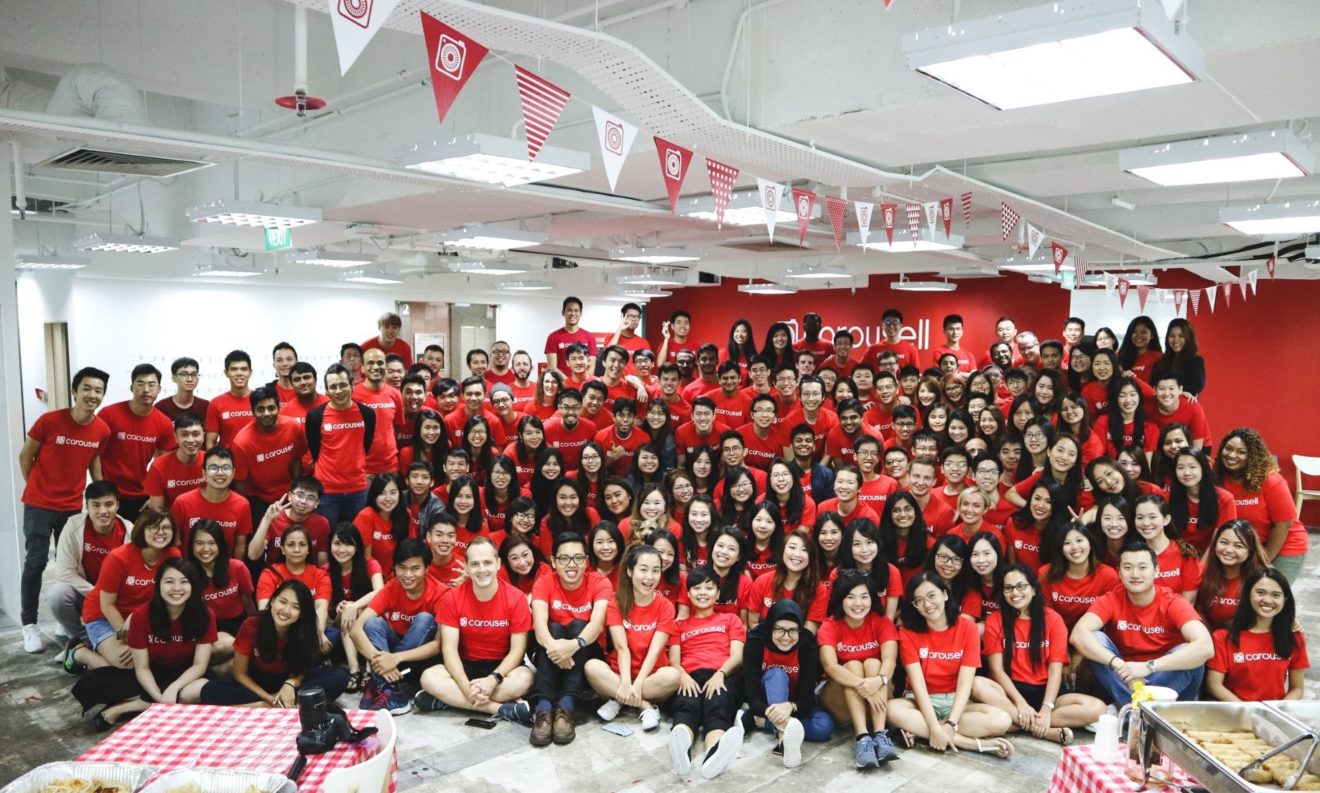
    Classifieds service Carousell has signed an agreement with telecommunications firm Telenor Group in part to merge with 701Search, which owns online marketplaces Mudah in Malaysia, Cho Tot in Vietnam, and OneKyat in Myanmar.

    Following the equity and cash agreement, Carousell will be valued at more than US$850 million with Telenor Group becoming the single largest minority shareholder in Carousell, owning 32 percent of the combined company.

    “This has been a significant year for Carousell, with the company achieving unprecedented results in market expansion and revenue growth,” said Carousell CFO Rakesh Malani. “We are driving rapid consolidation in the region with the OLX Philippines merger earlier in the year, and 701Search today. This transaction further cements Carousell as the leading online classifieds marketplace platform in Southeast Asia. With annualized revenues of over $40 million, a business of over 80 percent gross margin and two profitable markets, we are very well positioned to advance our combined business to the next level.”

    Following the merger, 701Search’s regional hub team that operates in Singapore will be fully integrated into Carousell, while Mudah, Cho Tot and OneKyat will retain their individual names and platforms, continuing operations in Malaysia, Vietnam and Myanmar respectively. The businesses will report to Carousell CEO Quek Siu Rui.

    “Our mission has remained the same since day one. We want to inspire every person in the world to start selling and buying,” shared Carousell co-founder and CEO Quek Siu Rui.  “Merging with 701Search will allow us to further this mission on an even greater scale and fortify our leadership in Southeast Asia as Mudah, Cho Tot and OneKyat are already leaders in their markets. I am excited to work with our new teammates to learn about the dynamics of these local markets, create win-win opportunities that are mutually beneficial for our community of users, and inspire even more people to start selling and buying.”

  • Facebook to ban ads dissuading Americans from voting

    Facebook to ban ads dissuading Americans from voting

    Facebook issued an update on its Civil Rights Audit today and notes that the platform now bans messages that praise, support or represent white nationalism and white separatism. The report adds that Facebook posts should be banned even if those exact terms are not used. This would be done by picking out certain “hate slogans and symbols” connected to white nationalism and white separatism.
    Facebook says that it has also updated its policies to prevent it from being used to organize events that are meant to “intimate or harass people based on their race, religion, or other parts of their identity.” And the site will no longer allow messages to be posted that encourage others to bring weapons to certain events. Facebook says that it has a trial program running in the U.S. where some of its content reviewers focus on hate speech instead of the usual “bullying, nudity, and misrepresentation.” The company says that by focusing on hate speech, these reviewers will become more accurate in deleting such speech from the platform. Facebook hopes that these reviewers get better at determining which content should be left up, and which should be taken down. The report notes that some civil rights groups are concerned that some content meant to point out and fight discrimination is being taken down by mistake
    And to prevent a repeat of what happened during the 2016 presidential election when Russian trolls posted misinformation and tried to get Americans not to vote, Facebook has a number of departments working full time on the matter. They are working to ban ads that tell people not to vote and hope to have a new policy in place before the 2019 gubernatorial elections. Facebook is also treating the 2020 census like an election with technology at the ready to prevent interference on this important subject as well.
    Facebook also played a big role in the election by allowing 87 million members to have their profiles used by Russian-American ex-Cambridge University professor Aleksandr Kogan who sold the data to Cambridge Analytica. The latter was a U.K. consultancy with ties to former Trump advisor Steve Bannon. Cambridge Analytica reportedly used this information to create psychological profiles helping the Trump campaign learn where it needed to beef up campaigning. It also posted pro-Trump ads on Facebook and YouTube while at the same time posting ads disparaging of Hilary Clinton.
    Facebook is expecting to be fined as much as $5 billion by the FTC because of the Cambridge Analytica scandal. The company had agreed to a consent decree with the regulatory agency back in 2011 that prevented it from allowing member profiles to be used by others without their consent. This agreement was broken when Cambridge Analytica obtained data on the aforementioned 87 million Facebook subscribers.
    Facebook’s Civil Rights Audit was conducted by civil rights advocate Laura Murphy. She also received support from the civil rights law firm Relman, Dane and Colfax. Today’s report follows the first Civil Rights Audit released last December.
  • Instagram announces ads will be served to users Explore feed

    Instagram announces ads will be served to users Explore feed

    Instagram has just confirmed it will bring ads to your Explore feed. As one of the go-to features for Instagram users who search for places, shops and connect with people businesses and creators, Explore looks like a great monetization tool.

    According to Instagram, more than 50% accounts on its social network use Explore every month to see photos and videos related to their interests from accounts they aren’t following. Apparently, the company considers brands an important part of the Instagram experience for its users, which is why over the next few months, it will introduce ads in Explore feed.

    Instagram says it will release ads in Explore “slowly and thoughtfully,” so not everyone will see them at the same time. Here is how it works for users: after tapping on a photo or video in Explore, you may see ads as part of your browsing experience just like in the main feed.

    For advertisers, it’s quite obvious that this is an opportunity to reach larger audiences in Explore. And they will be able to do that by extending their campaigns with a simple opt-in. So, there you have it, folks, expect to start seeing ads in your Explore feed pretty soon.

  • Spotify free-tier users will be targeted with more relevant ads

    Spotify free-tier users will be targeted with more relevant ads

    Spotify has found a way to better generate more revenue from the ads it delivers to users of its free music streaming service. Although today’s announcement is aimed at advertisers that will now be able to target ads based on the category of podcasts people listen to, users of Spotify’s free service are the ones affected by the decision.

    Up until now, Spotify’s free-tier users would be targeted by ads based on the music they listen to, such as genre or playlist, but starting today, advertisers will be able to target them more specifically based on the category of podcasts they like.

    Spotify said that this is just the first step towards building a solid advertising strategy around podcasts, which was started not long ago by the partnership with Samsung and 3M.

    We aspire to develop a more robust advertising solution for podcasts that will allow us to layer in the kind of targeting, measurement, and reporting capabilities we have for ads that run alongside other content experiences like music and video.

    The new ads will play between songs for those who don’t pay for Spotify Premium, so that doesn’t change. However, free-tier listeners will notice that there are now more specific, depending on the podcasts they listen. The new capability is now rolling out to 10 market: Australia, Brazil, Canada, France, Germany, Italy, Mexico, Spain, UK, and the US.

  • Google Will Start Pushing More Ads on Mobile

    Google Will Start Pushing More Ads on Mobile

    Google has just announced that it will soon start pushing out more ads on mobile to make it easier for Android and iOS users to find information about the products they want to purchase. The so-called Discovery ads will be rolled out to all advertisers globally later this year, as a new way to reach people across Google properties when they’re looking for something specific.

    Besides Discovery ads, Google revealed that it will deliver mobile users Gallery ads, a new search ads format delivered in the form of up to eight ads that they can swipe through.

    By combining search intent with a more interactive visual format, gallery ads make it easier for you to communicate what your brand has to offer. We’ve found that, on average, ad groups including one or more gallery ad have up to 25 percent more interactions—paid clicks or swipes—at the absolute top of the mobile Search results page.

    On top of that, standard ads will now pop up in Google’s discover feed that’s implemented in many Android home screens, in the Google app, as well as on Google’s mobile homepage.

    These ads are supposed to “inspire consumers with an open canvas” and allow them to learn about new brands or products in a swipeable image carousel, which is rendered natively across all Google’s properties.

    Last but not least, Google plans to bring Showcase Shopping ads to even more of its properties, such as Google Images, the feed on Discover, and YouTube. This is a highly visual ad format that includes rich lifestyle imagery into Shopping ads.

  • Google removes apps from the Play Store for Ad fraud

    Google removes apps from the Play Store for Ad fraud

    A successful Android app developer with over half a billion installs to its credit is having its apps removed by Google from the Play Store. DO Global, based in China, has had 46 apps erased from Google’s Android app storefront after an investigation conducted by BuzzFeed found serious issues with the apps. Before Google started taking action against the developer, DO Global had approximately 100 apps in the Google Play Store making this one of the biggest actions ever taken against an app developer by Google. The remaining apps will be removed shortly. DO Global had been a wholly owned subsidiary of well know Chinese internet firm Baidu. But last year, the unit was spun off and Baidu kept a 34% stake.

    The initial report from BuzzFeed said that at least six of the apps from DO Global would click on ads even if the app was not being used. Online security firm Checkpoint, in partnership with BuzzFeed, found the apps loaded with malware that it dubbed PreAMo.That’s because the apps fraudulently clicked on banner ads served up by mobile ad networks Presage, Admob, and Mopub. Checkpoint states that the malware was installed from these six apps a total of 90 million times.

    Some of the apps involved were credited to developers like “Pic Tools Group” and “Photo Artist Studio,” and their true ownership was hidden by DO Global. That’s another violation of Play Store rules. The developer contact information was also different on several of the apps, obfuscating their true owners. The actual titles include apps like RAM Master-Memory Optimizer; Photo Editor-Makeup Camera & Photo Effects and Crashy Cops. DO Global claims that its apps have 250 million monthly active users, and said that its mobile ad platform reaches 800 million people.

    “We fully understand the seriousness of the allegations. Therefore, after reading the reports about our apps, we immediately conducted an internal investigation on this matter. We regret to find irregularities in some of our products’ use of AdMob advertisements. Given this, we fully understand and accept Google’s decision. Moreover, we have actively cooperated with them by doing a thorough examination of every app involved…moving forward, we will strictly follow relevant regulations and continue conducting a comprehensive review of our products. Lastly, during this process, we have caused misunderstandings and great concern due to our being unable to communicate in a timely manner and provide complete information. We offer our sincere apologies.”-DO Global

    In a statement, Google said that it will always investigate malicious behavior by apps. When it finds violations, it will prevent a developer from monetizing an app through AdMob and/or remove an app from the Play Store.

  • Airasia keen to buy digital platforms to boost digital business

    Airasia keen to buy digital platforms to boost digital business

    Airasia Group Bhd is keen to acquire digital platforms abroad to boost its digital business segment.

    AirAsia Group chief executive officer Tan Sri Tony Fernandes said: “For sure…some will be M&A (merger and acquisition), some will be joint-ventures.”

    Asked which country the group was eyeing, he said: “Wait and see.”

    Fernandes was speaking to reporters after launching a brand new rooftop at AirAsia RedQ here, tonight. Also present was AirAsia executive chairman Datuk Kamarudin Meranun.

    Going forward, Fernandes said digital business would become a large part of the group’s revenue.

    “But I don’t want to make any prediction but many years ago I said ancillary income will be a big part of our business, and it became 25 percent. I believe digital will be much bigger,” he added.

    Commenting on the new rooftop, Fernandes said the idea was to drive integration between the staff from different departments toward an exciting digital future.

    “Digital is more about department working closely together. We are on a very exciting journey turning Airasia into more than just an airline,” he added.

  • Amazon Products Now Available in Australia

    Amazon Products Now Available in Australia

    Amazon has launched another key part of its business in the Australian market – it’s advertising products.

    Amazon Advertising, the part of the company that offers display and video ads and an online tool to programmatically buy ads, launched in Australia on Friday, according to a company blog post.

    This gives businesses a way to reach the millions of unique visitors who land on Amazon’s local website each month, according to figures the company cited from SimilarWeb.

    “With Amazon Advertising, agencies and advertisers – regardless of whether or not they sell on Amazon – can deliver relevant messages to customers on and off Amazon, throughout their customer journey,” the blog post reads.

    The launch comes amid a recent revamp of the US e-commerce giant’s advertising business. In 2017, the company added a new office and 2000 jobs, mostly in advertising, in New York City. It has also introduced self-service buying tools, among other new products, and started providing deeper insights into its enormous customer database.

    These efforts seem to be paying off. Advertising was part of Amazon’s fastest growing business segment last year. Revenue from the company’s “other” category, which includes advertising, grew 115 per cent in 2018, to US$10.1 billion. Research firm Magna estimated that advertising accounted for US$6 billion of that figure.

    Most of this growth has come at the expense of rival digital advertising giant, Google, according to a report last week

    The report stated that WPP PLC, the world’s largest ad buyer, spent about US$300 million on Amazon search ads in 2018, and about 75 per cent of that money came from Google search. This was up from the US$100 million to US$150 million it spent on Amazon search ads in 2017, according to sources familiar with the matter.

    Advertising at the point of purchase

    One reason Amazon may be attracting more advertising dollars is that it enables businesses to reach customers much closer to the point of purchase than Google or Facebook, although both tech giants – particularly Facebook, which owns Instagram – have been working to close the gap between the discovery and purchase stages of the customer journey for some time.

    But before retailers completely upend their advertising budgets, they may want to consider the metrics they’re using to allocate budget to begin with. New research from Monash University has revealed that ‘last touchpoint attribution’, a key metric most advertisers use to measure ad effectiveness and allocate budget, is not accurate.

    “At the moment, if a consumer buys a new toy online, Google can look at the search patterns that person has had over the past few days, or whether they’ve received any emails from a department store such as Kmart,” Peter Danaher, head of the department of marketing at Monash Business School, said.

    “They use a method called ‘last touchpoint attribution’. So, if the consumer last opened an email about toys, the email gets the credit. It they last did a Google search on toys before making the purchase, Google gets the credit.

    “The advertising industry has used this method for the past five years because it’s simple and effective. The problem is, this method ignores how long consumers remember an advertisement.”

    According to Danaher, last touchpoint attribution doesn’t take into account the cumulative effect of seeing ads in different places, and allocating budget based on this metric is less effective than allocating budget to maximise profit.